Custom Walk in Malaga, Spain by donna6441_398d2 created on 2025-10-06
Guide Location: Spain » Malaga
Guide Type: Custom Walk
# of Sights: 6
Tour Duration: 1 Hour(s)
Travel Distance: 2.6 Km or 1.6 Miles
Share Key: B23ZL
Guide Type: Custom Walk
# of Sights: 6
Tour Duration: 1 Hour(s)
Travel Distance: 2.6 Km or 1.6 Miles
Share Key: B23ZL
How It Works
Please retrieve this walk in the GPSmyCity app. Once done, the app will guide you from one tour stop to the next as if you had a personal tour guide. If you created the walk on this website or come to the page via a link, please follow the instructions below to retrieve the walk in the app.
Retrieve This Walk in App
Step 1. Download the app "GPSmyCity: Walks in 1K+ Cities" on Apple App Store or Google Play Store.



Step 2. In the GPSmyCity app, download(or launch) the guide "Malaga Map and Walking Tours".
Step 3. Tap the menu button located at upper right corner of the "Walks" screen and select "Retrieve custom walk". Enter the share key: B23ZL
1) Parque de Malaga (Park of Malaga) (must see)
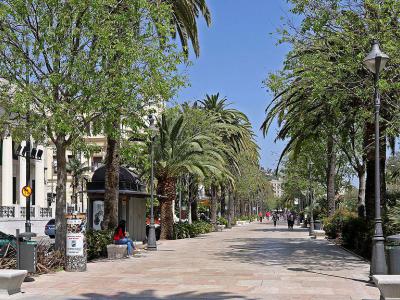
Designed as a flourishing Mediterranean garden, replete with tropical and subtropical species, Park of Malaga is one of the most outstanding parks in Europe. It has botanical contributions from five continents. The park was established in the late 19th century on land reclaimed from the sea.
There is a promenade running through the park lined with Baroque and Renaissance gardens on each side. Benches are covered with Sevillian tiles. Busts and obelisks are dedicated to people of Malaga. There are fountains like Muneca Fountain and Fountain of the Nymph. The Fountain of the Three Graces is in the General Torrijos Square.
The park reaches from the General Torrijos Square to the Marina Square. It lies between the Alameda Principal and the Paseo de Espana alongside Guadiaro Quay. There are three walkways. One on the north side of the Alameda Principal Extension and two on the south side.
The park covers 97,500 square feet, including the rose garden and trees by the City Council and the gardens of the Dark Gate. It is intended to be a place of serenity, marked with gardens, benches, a small open-air theatre, fountains and children's parks. It is also a refuge for the footsore tourist.
There is a promenade running through the park lined with Baroque and Renaissance gardens on each side. Benches are covered with Sevillian tiles. Busts and obelisks are dedicated to people of Malaga. There are fountains like Muneca Fountain and Fountain of the Nymph. The Fountain of the Three Graces is in the General Torrijos Square.
The park reaches from the General Torrijos Square to the Marina Square. It lies between the Alameda Principal and the Paseo de Espana alongside Guadiaro Quay. There are three walkways. One on the north side of the Alameda Principal Extension and two on the south side.
The park covers 97,500 square feet, including the rose garden and trees by the City Council and the gardens of the Dark Gate. It is intended to be a place of serenity, marked with gardens, benches, a small open-air theatre, fountains and children's parks. It is also a refuge for the footsore tourist.
2) Centre Pompidou Malaga
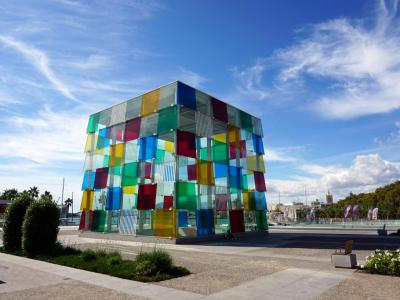
The Centre Pompidou Malaga, inaugurated on March 28, 2015, marks the first branch of the prestigious Parisian institution outside France. Located in the El Cubo, a striking cultural building overlooking Malaga’s marina, this innovative museum offers visitors a gateway to explore the art of the 20th and 21st centuries. Originally established as a five-year venture, its success prompted an extension of its partnership with the city until March 2025.
The museum boasts an impressive permanent collection of over 80 works by world-renowned artists, including Pablo Picasso, Joan Miro, Rene Magritte, Francis Bacon, Frida Kahlo, and Alberto Giacometti. The exhibitions are divided into thematic sections such as The Metamorphosis, The Body in Pieces, The Political Body, Self-Portraits, and The Man Without a Face. These themes highlight both the diversity and depth of modern and contemporary art.
Spanning 2,000 square meters, the Centre Pompidou Malaga also hosts temporary exhibitions each year, focusing on various disciplines like photography, design, architecture, and video art. Complementing the exhibitions is a vibrant program of cultural activities, including dance, performance, film, and interactive workshops aimed at younger audiences, making the museum a dynamic cultural hub.
As a city with a rich artistic heritage and the birthplace of Picasso, Malaga has embraced the Centre Pompidou as a cornerstone of its cultural renaissance. Visitors are invited to immerse themselves in the innovative and multidisciplinary spirit of one of the world’s most iconic art institutions, all set against the picturesque backdrop of Malaga's bustling port.
The museum boasts an impressive permanent collection of over 80 works by world-renowned artists, including Pablo Picasso, Joan Miro, Rene Magritte, Francis Bacon, Frida Kahlo, and Alberto Giacometti. The exhibitions are divided into thematic sections such as The Metamorphosis, The Body in Pieces, The Political Body, Self-Portraits, and The Man Without a Face. These themes highlight both the diversity and depth of modern and contemporary art.
Spanning 2,000 square meters, the Centre Pompidou Malaga also hosts temporary exhibitions each year, focusing on various disciplines like photography, design, architecture, and video art. Complementing the exhibitions is a vibrant program of cultural activities, including dance, performance, film, and interactive workshops aimed at younger audiences, making the museum a dynamic cultural hub.
As a city with a rich artistic heritage and the birthplace of Picasso, Malaga has embraced the Centre Pompidou as a cornerstone of its cultural renaissance. Visitors are invited to immerse themselves in the innovative and multidisciplinary spirit of one of the world’s most iconic art institutions, all set against the picturesque backdrop of Malaga's bustling port.
3) Alcazaba of Malaga (Malaga Fortress) (must see)
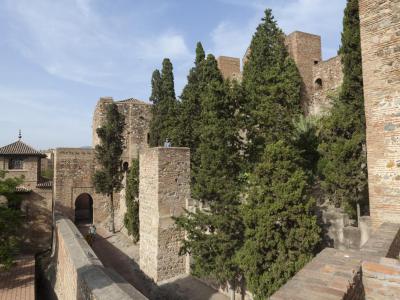
The Malaga Fortress is built on a hill near the center of Malaga. As a military installation, it is ideally situated. It overlooks both the city below and the sea. It is enclosed by two massive walls of stone. It was also attached to the city ramparts and it has strategically located defensive towers.
The outer fortress is accessed by the Vault Gate. The gate was designed to double back on itself, making it difficult for intruders to enter. These days, however, visitors may use the elevator.
A pathway leads up past gardens and ornate fountains through the Gate of Columns or Tower of Christ and then turns abruptly once again with intruders in mind. The inner fortress can be reached by the Gate of the Granada Quarters, which defends the western edge of the palace. The Tower of Tribute takes care of the eastern edge.
Inside this second defensive wall is the palace itself and houses which were built on three patios in the 11th, 13th and 14th centuries. Among them are the Quarters of Granada. The Quarters would serve as residences of governors and as Royal Apartments.
The Malaga Fortress is located at the foot the Gibralfaro hill. It is connected to the Arab defenses by a walled-in passageway called Coracha. The Roman Theatre and the customs building share a space. Here is the opportunity to compare Roman, Renaissance and Arab construction together.
Arab historians claim the palace was built by 1063 by order of King Badis of the Berber Taifa of Granada. Building materials were transported to the site for general construction and the columns while the old Roman theatre supplied materials for capitals and other like uses.
Ferdinand and Isabella seized Malaga in 1487 by one of the longest sieges of the Reconquest. They entered the fortress and raised their royal standard at the Tower of Tribute. That was the day Spain became Spain.
The outer fortress is accessed by the Vault Gate. The gate was designed to double back on itself, making it difficult for intruders to enter. These days, however, visitors may use the elevator.
A pathway leads up past gardens and ornate fountains through the Gate of Columns or Tower of Christ and then turns abruptly once again with intruders in mind. The inner fortress can be reached by the Gate of the Granada Quarters, which defends the western edge of the palace. The Tower of Tribute takes care of the eastern edge.
Inside this second defensive wall is the palace itself and houses which were built on three patios in the 11th, 13th and 14th centuries. Among them are the Quarters of Granada. The Quarters would serve as residences of governors and as Royal Apartments.
The Malaga Fortress is located at the foot the Gibralfaro hill. It is connected to the Arab defenses by a walled-in passageway called Coracha. The Roman Theatre and the customs building share a space. Here is the opportunity to compare Roman, Renaissance and Arab construction together.
Arab historians claim the palace was built by 1063 by order of King Badis of the Berber Taifa of Granada. Building materials were transported to the site for general construction and the columns while the old Roman theatre supplied materials for capitals and other like uses.
Ferdinand and Isabella seized Malaga in 1487 by one of the longest sieges of the Reconquest. They entered the fortress and raised their royal standard at the Tower of Tribute. That was the day Spain became Spain.
4) Teatro Romano (Roman Theatre)
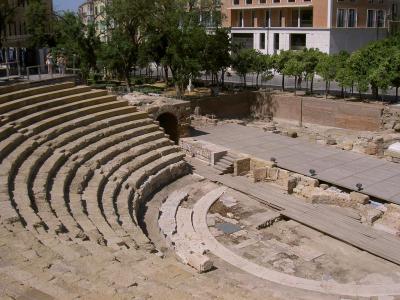
The Teatro Romano (or Roman Theater) was discovered while laying the gardens of the Palace archive and Libraries of Malaga. The theater is still in the process of restoration and preservation by archaeologists.
The theater dates back to the 1st century and was constructed during the reign of the Roman Emperor Augustus. At the time, Spain formed the Roman province of Hispania. The theater was used till the 3rd century. The remains were found in 1951 and the building in the location was demolished to facilitate excavation.
The radius of the semicircular space to seat spectators is 31 meters and the theatre is 16 meters high. It is divided by aisles. There is also a 15-meter semicircular space where the orchestra performed. Excavation is still in progress and signs of a larger Roman site are slowly visible. The present theater is a reproduction, although some of the old walls are preserved. The Moors used the stones from the original structure to build the Alcazaba Fortress.
There is a modern interpretation center inaugurated in 2010 where an audio-visual presentation of Roman history and details of the objects found during the excavation are related for the benefit of visitors. The Teatro Romano is located just below the Alcazaba. Visitors can get a full view of the Roman Theater from the top of the fortress.
Tip:
The best views are from the normal public pedestrianized walkways that pass by this the Roman amphitheater.
The theater dates back to the 1st century and was constructed during the reign of the Roman Emperor Augustus. At the time, Spain formed the Roman province of Hispania. The theater was used till the 3rd century. The remains were found in 1951 and the building in the location was demolished to facilitate excavation.
The radius of the semicircular space to seat spectators is 31 meters and the theatre is 16 meters high. It is divided by aisles. There is also a 15-meter semicircular space where the orchestra performed. Excavation is still in progress and signs of a larger Roman site are slowly visible. The present theater is a reproduction, although some of the old walls are preserved. The Moors used the stones from the original structure to build the Alcazaba Fortress.
There is a modern interpretation center inaugurated in 2010 where an audio-visual presentation of Roman history and details of the objects found during the excavation are related for the benefit of visitors. The Teatro Romano is located just below the Alcazaba. Visitors can get a full view of the Roman Theater from the top of the fortress.
Tip:
The best views are from the normal public pedestrianized walkways that pass by this the Roman amphitheater.
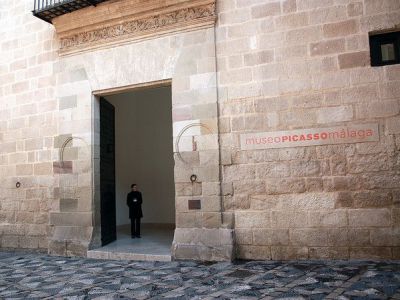
5) Museo Picasso Málaga (Picasso Museum) (must see)
Pablo Picasso's father, Jose Ruiz, was the curator of the city museum of Malaga. The museum was not often open to the public because of limited budgets. Part of Jose's compensation was the exclusive use of a room in the building as an art studio. Pablo did his first sketches in that room, working with his father.
Now Picasso has a museum in Paris, and another in Barcelona. He has several of them but the Picasso Museum in Malaga is close to home. Six hundred feet away from the Picasso Museum is the Merced Square where he was born. In 2003 the Picasso Museum had its grand opening with the King and Queen of Spain in attendance.
The Buenavista Palace that housed the museum was built in the 16th century. It was built for one Diego de Cazalla. Under the Palace were the remains of a Nasrid palace which have partially survived.
The 20th century conversion of the dilapidated palace into a museum was a challenging project led by architect Richard Gluckman. The palace alone was not large enough to accommodate all the functions of a proper museum. It was necessary to acquire two neighboring houses that had fallen into disrepair.
Christine Picasso, widow of the artist's eldest son Paulo Ruiz-Picasso, and her son Bernard have donated 155 of Picasso's works to the Museum. The collection includes early studies in Cubism and his later re-doing of Old Masters. Additional pieces are on loan. There are documents, photos and a library with nearly a thousand titles devoted to Picasso.
Tip:
It is possible to get in for free on a Sunday at noon but be aware the queues can be huge and the wait is long.
Now Picasso has a museum in Paris, and another in Barcelona. He has several of them but the Picasso Museum in Malaga is close to home. Six hundred feet away from the Picasso Museum is the Merced Square where he was born. In 2003 the Picasso Museum had its grand opening with the King and Queen of Spain in attendance.
The Buenavista Palace that housed the museum was built in the 16th century. It was built for one Diego de Cazalla. Under the Palace were the remains of a Nasrid palace which have partially survived.
The 20th century conversion of the dilapidated palace into a museum was a challenging project led by architect Richard Gluckman. The palace alone was not large enough to accommodate all the functions of a proper museum. It was necessary to acquire two neighboring houses that had fallen into disrepair.
Christine Picasso, widow of the artist's eldest son Paulo Ruiz-Picasso, and her son Bernard have donated 155 of Picasso's works to the Museum. The collection includes early studies in Cubism and his later re-doing of Old Masters. Additional pieces are on loan. There are documents, photos and a library with nearly a thousand titles devoted to Picasso.
Tip:
It is possible to get in for free on a Sunday at noon but be aware the queues can be huge and the wait is long.
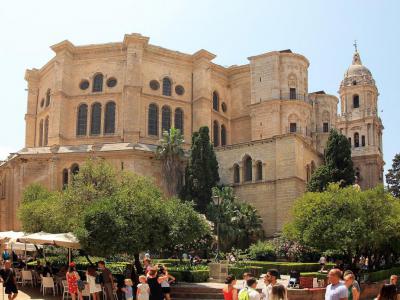
6) Catedral de Málaga (Malaga Cathedral) (must see)
Malaga Cathedral has the nickname, "La Manquita" or "the One-armed Lady." The "arms" of the Cathedral are its towers. The north tower of the cathedral is 276 feet high. The south tower is unfinished. A plaque at the stunted south tower explains why. The funds earmarked for the tower were given to the American revolutionaries instead.
This windfall for the Americans occurred through the good offices of Luis de Unzaga, who was governor of what is now Louisiana, with connections to King Carlos III of Spain. So, the cathedral has been short-armed since at least 1776. Groundbreaking for the cathedral took place in 1528. It was considered finished in 1782.
The cathedral is designed by Diego de Siloe in the Renaissance tradition, inside and out. De Siloe learned the Italian Renaissance styles in Naples in 1517. He combined these elements with Spanish Gothic and Arab architectural motifs. The cathedral has a nave and two aisles. The stalls of the choir are the work of Pedro de Mena.
The facade of the cathedral differs from the rest of the building in that it is in Baroque style. It is in two levels. There are three arches on the lower level with portals flanked by marble columns. Medallions above the doors represent the patron saints of Malaga, Cyriacus and Paula and the Annunciation of the Virgin.
Why You Should Visit:
Richly decorated and architecturally interesting. Very interesting chapels all around inside and the views from the bell tower over the city and beyond should definitely not be missed if you are fit.
This windfall for the Americans occurred through the good offices of Luis de Unzaga, who was governor of what is now Louisiana, with connections to King Carlos III of Spain. So, the cathedral has been short-armed since at least 1776. Groundbreaking for the cathedral took place in 1528. It was considered finished in 1782.
The cathedral is designed by Diego de Siloe in the Renaissance tradition, inside and out. De Siloe learned the Italian Renaissance styles in Naples in 1517. He combined these elements with Spanish Gothic and Arab architectural motifs. The cathedral has a nave and two aisles. The stalls of the choir are the work of Pedro de Mena.
The facade of the cathedral differs from the rest of the building in that it is in Baroque style. It is in two levels. There are three arches on the lower level with portals flanked by marble columns. Medallions above the doors represent the patron saints of Malaga, Cyriacus and Paula and the Annunciation of the Virgin.
Why You Should Visit:
Richly decorated and architecturally interesting. Very interesting chapels all around inside and the views from the bell tower over the city and beyond should definitely not be missed if you are fit.
