Custom Walk in Tokyo, Japan by nicanast_59434 created on 2025-12-10
Guide Location: Japan » Tokyo
Guide Type: Custom Walk
# of Sights: 9
Tour Duration: 8 Hour(s)
Travel Distance: 22.1 Km or 13.7 Miles
Share Key: TS69G
Guide Type: Custom Walk
# of Sights: 9
Tour Duration: 8 Hour(s)
Travel Distance: 22.1 Km or 13.7 Miles
Share Key: TS69G
How It Works
Please retrieve this walk in the GPSmyCity app. Once done, the app will guide you from one tour stop to the next as if you had a personal tour guide. If you created the walk on this website or come to the page via a link, please follow the instructions below to retrieve the walk in the app.
Retrieve This Walk in App
Step 1. Download the app "GPSmyCity: Walks in 1K+ Cities" on Apple App Store or Google Play Store.



Step 2. In the GPSmyCity app, download(or launch) the guide "Tokyo Map and Walking Tours".
Step 3. Tap the menu button located at upper right corner of the "Walks" screen and select "Retrieve custom walk". Enter the share key: TS69G
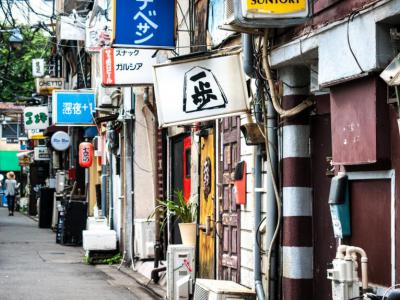
1) Shinjuku Golden Gai (must see)
Shinjuku Golden Gai is a compact district in Tokyo, renowned for its unique architecture and vibrant nightlife scene. This area consists of six interconnected narrow alleys, linked by even narrower passages that can barely accommodate a single person. Remarkably, more than 200 small bars, clubs, and eateries are crammed into this confined space.
Before 1958, Shinjuku Golden Gai had a reputation for prostitution, but it transitioned into a hub for drinking establishments after the practice was outlawed. In the 1980s, Tokyo witnessed a series of arson incidents orchestrated by organized crime groups to facilitate land acquisition by developers. However, Shinjuku Golden Gai managed to survive due to its residents taking turns to protect the area during nighttime.
The alleys within this district are considered private roads, and taking photographs or recording videos for any purpose on the streets is strictly prohibited without the permission of the area's business promotion association.
What distinguishes the bars in Shinjuku Golden Gai is the diverse and artistic clientele they attract. This locale is renowned as a gathering spot for creative individuals such as musicians, artists, directors, writers, academics, and actors. Many of these bars initially admit only regular patrons, who are typically introduced by an existing customer. Nevertheless, some establishments actively seek to welcome non-regulars, with some even going the extra mile to cater to overseas tourists by displaying signs and price lists in English.
Each of the bars often has a distinct theme, whether it's centered around jazz, R&B, karaoke, punk rock, or flamenco. The walls of these establishments are often adorned with a mishmash of movie, film, and concert posters. Others cater to customers with specific interests, such as board games, exploitation films, or horse racing. Most of these bars don't open until around 9 or 10 pm, contributing to a tranquil ambiance during the daytime and early evening hours.
Before 1958, Shinjuku Golden Gai had a reputation for prostitution, but it transitioned into a hub for drinking establishments after the practice was outlawed. In the 1980s, Tokyo witnessed a series of arson incidents orchestrated by organized crime groups to facilitate land acquisition by developers. However, Shinjuku Golden Gai managed to survive due to its residents taking turns to protect the area during nighttime.
The alleys within this district are considered private roads, and taking photographs or recording videos for any purpose on the streets is strictly prohibited without the permission of the area's business promotion association.
What distinguishes the bars in Shinjuku Golden Gai is the diverse and artistic clientele they attract. This locale is renowned as a gathering spot for creative individuals such as musicians, artists, directors, writers, academics, and actors. Many of these bars initially admit only regular patrons, who are typically introduced by an existing customer. Nevertheless, some establishments actively seek to welcome non-regulars, with some even going the extra mile to cater to overseas tourists by displaying signs and price lists in English.
Each of the bars often has a distinct theme, whether it's centered around jazz, R&B, karaoke, punk rock, or flamenco. The walls of these establishments are often adorned with a mishmash of movie, film, and concert posters. Others cater to customers with specific interests, such as board games, exploitation films, or horse racing. Most of these bars don't open until around 9 or 10 pm, contributing to a tranquil ambiance during the daytime and early evening hours.
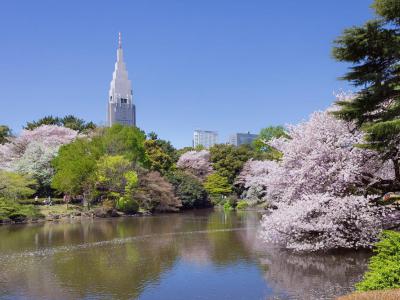
2) Shinjuku Gyoen National Garden (must see)
Shinjuku Gyoen National Garden is a must-see site in Tokyo. This large, public garden has an area of about 144 acres (58.3 hectares) with three distinct landscapes: English countryside, French formal and traditional Japanese.
The garden offers more than 20,000 trees. More than 1,500 of these are cherry trees, which makes the garden a popular spot for tourists in March and April when the trees are in full bloom.
Flowers are planted to bloom throughout the year. Any time one finds time to visit Shinjuku Gyoen National Garden they will see vibrant petals on display. These range from the winter-blooming camelias to the summer rose beds in the formal gardens.
Shinjuku Gyoen National Garden was once home to the Naito family. The land was given to the family by the shogun in 1772. It later became an experimental agricultural center before being made an imperial garden. Air raids destroyed much of the area during World War II, but it was rebuilt and turned into a public park in 1949.
Along with the flora of gardens, Shinjuku Gyoen National Garden includes two restaurants, an information center and coffee and tea houses. There is also a children's area for those under the age of 13. It should be noted that children cannot use this play area during cherry blossom season.
The garden is open Tuesday through Sunday except on national holidays and from December 29 through January 3. Opening times vary depending on the season, but the garden is usually open 9 AM through no later than 4 PM.
Tips:
As is true with many places in Tokyo, permission must be granted for photography. Those tourists hoping to take many photographs must apply for permission and follow all appropriate guidelines.
The garden offers more than 20,000 trees. More than 1,500 of these are cherry trees, which makes the garden a popular spot for tourists in March and April when the trees are in full bloom.
Flowers are planted to bloom throughout the year. Any time one finds time to visit Shinjuku Gyoen National Garden they will see vibrant petals on display. These range from the winter-blooming camelias to the summer rose beds in the formal gardens.
Shinjuku Gyoen National Garden was once home to the Naito family. The land was given to the family by the shogun in 1772. It later became an experimental agricultural center before being made an imperial garden. Air raids destroyed much of the area during World War II, but it was rebuilt and turned into a public park in 1949.
Along with the flora of gardens, Shinjuku Gyoen National Garden includes two restaurants, an information center and coffee and tea houses. There is also a children's area for those under the age of 13. It should be noted that children cannot use this play area during cherry blossom season.
The garden is open Tuesday through Sunday except on national holidays and from December 29 through January 3. Opening times vary depending on the season, but the garden is usually open 9 AM through no later than 4 PM.
Tips:
As is true with many places in Tokyo, permission must be granted for photography. Those tourists hoping to take many photographs must apply for permission and follow all appropriate guidelines.
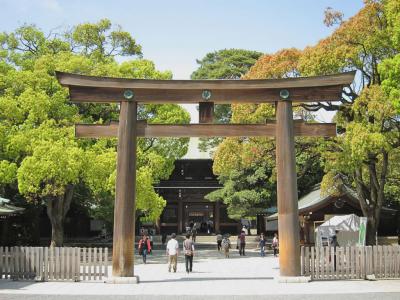
3) Meiji Jingu Shrine (must see)
Tucked away in a lush forest of towering evergreens, Meiji Shrine is a full-blown sanctuary in the heart of Tokyo. Built to honor Emperor Meiji and Empress Shoken, this shrine celebrates their legacy in modernizing Japan, proving that emperors can leave behind more than just portraits and history books.
It all began with an iris garden-a favorite retreat of the royal couple-until the government decided it was prime real estate for something grander. The construction kicked off in 1915, showcasing Nagare-zukuri architecture with Japanese cypress and copper accents. By 1926, the shrine was fully complete.
Then came World War II, and the original structure was reduced to rubble. But thanks to public fundraising, Meiji Shrine made a comeback in 1958, proving that Tokyo never lets a good thing stay down for long.
Now, here’s where it gets really interesting-the surrounding forest is a 700,000-square-meter wonderland with 120,000 trees from 365 species, all donated from across Japan. And this woodland escape in the heart of the city isn't just for meditation and tree-hugging. New Year's first prayers? Absolutely. Shinto rituals? Plenty of those. Making wishes on wooden plaques? Of course.
The shrine's inner precinct (Naien) houses the buildings and a museum filled with royal memorabilia-because what’s a shrine without a little royal nostalgia? The outer precinct (Gaien) is where things get even more dynamic, featuring an art gallery of imperial life murals, sports venues (including the National Stadium), and the Meiji Memorial Hall, which once saw political action but now hosts the most elegant Shinto weddings you’ll ever see.
And if all that fresh air makes you peckish, no worries! There’s a charming café, a souvenir shop (with surprisingly reasonable prices!), and, for sake enthusiasts, a glorious display of stacked sake barrels-because nothing complements Japan’s sacred site quite as tastefully as a towering tribute to the country's favorite rice-based beverage.
Just don’t be surprised if you end up staying longer than planned-it’s that kind of place. And hey, if you do end up making a wish here, aim high-after all, Emperor Meiji helped modernize a whole nation. So, dream big.
Tip:
If you can, drop by on a Sunday-that’s when the Shinto weddings happen-traditional, colorful, and utterly mesmerizing. Plus, the entrance is free from sunrise to sunset.
It all began with an iris garden-a favorite retreat of the royal couple-until the government decided it was prime real estate for something grander. The construction kicked off in 1915, showcasing Nagare-zukuri architecture with Japanese cypress and copper accents. By 1926, the shrine was fully complete.
Then came World War II, and the original structure was reduced to rubble. But thanks to public fundraising, Meiji Shrine made a comeback in 1958, proving that Tokyo never lets a good thing stay down for long.
Now, here’s where it gets really interesting-the surrounding forest is a 700,000-square-meter wonderland with 120,000 trees from 365 species, all donated from across Japan. And this woodland escape in the heart of the city isn't just for meditation and tree-hugging. New Year's first prayers? Absolutely. Shinto rituals? Plenty of those. Making wishes on wooden plaques? Of course.
The shrine's inner precinct (Naien) houses the buildings and a museum filled with royal memorabilia-because what’s a shrine without a little royal nostalgia? The outer precinct (Gaien) is where things get even more dynamic, featuring an art gallery of imperial life murals, sports venues (including the National Stadium), and the Meiji Memorial Hall, which once saw political action but now hosts the most elegant Shinto weddings you’ll ever see.
And if all that fresh air makes you peckish, no worries! There’s a charming café, a souvenir shop (with surprisingly reasonable prices!), and, for sake enthusiasts, a glorious display of stacked sake barrels-because nothing complements Japan’s sacred site quite as tastefully as a towering tribute to the country's favorite rice-based beverage.
Just don’t be surprised if you end up staying longer than planned-it’s that kind of place. And hey, if you do end up making a wish here, aim high-after all, Emperor Meiji helped modernize a whole nation. So, dream big.
Tip:
If you can, drop by on a Sunday-that’s when the Shinto weddings happen-traditional, colorful, and utterly mesmerizing. Plus, the entrance is free from sunrise to sunset.
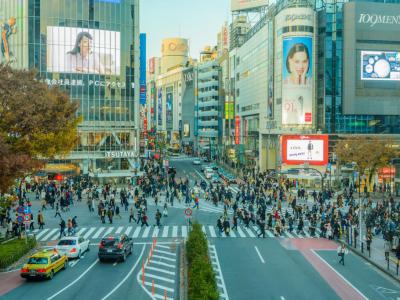
4) Shibuya Crossing (must see)
Shibuya Crossing-perhaps the world’s most beautifully chaotic intersection and a masterclass in organized mayhem. If Tokyo had a pulse, this would be it.
Smack in front of Shibuya Station’s Hachiko Exit, this legendary scramble crossing brings traffic to a full stop so pedestrians-up to 2,500 at a time-can flood the intersection from all angles. It’s less of a crosswalk and more of a synchronized urban ballet, where the lead dancers are salarymen, fashionistas, and tourists all trying to film the perfect slow-mo shot.
Speaking of Hachiko, his statue stands nearby, serving as a popular meeting spot. This means, if you’ve made plans to rendezvous in Shibuya, you’re probably standing there right now, trying to locate your friend in a sea of selfie sticks.
Above the crossing, three giant TV screens and a neon explosion of billboards scream for attention, making this Japan’s answer to Times Square (of New York City) or Piccadilly Circus (of London)-just with a little extra flair. Oh, and see that Starbucks with the perfect aerial view? It’s one of the busiest in the world, which means securing a window seat is basically a competitive sport.
But Shibuya Crossing isn’t just a Tokyo landmark-it’s a Hollywood favorite. It’s made cameos in "Lost in Translation," "Tokyo Drift," "Resident Evil"-and even gets its own starring role in the video game "The World Ends With You." If you’ve ever seen a film set in Tokyo, chances are, this intersection had its moment of fame.
Come to think of it, Shibuya Crossing is neither a pedestrian crossing as such but a phenomenon. A symbol of Tokyo’s non-stop energy, its cinematic charm, and its ability to turn a simple walk across the street into an unforgettable experience.
So go ahead, step into the scramble-just don’t forget to look up and take it all in. And if you manage to make it across without stopping for a selfie… well, congratulations, you might be the only one.
Smack in front of Shibuya Station’s Hachiko Exit, this legendary scramble crossing brings traffic to a full stop so pedestrians-up to 2,500 at a time-can flood the intersection from all angles. It’s less of a crosswalk and more of a synchronized urban ballet, where the lead dancers are salarymen, fashionistas, and tourists all trying to film the perfect slow-mo shot.
Speaking of Hachiko, his statue stands nearby, serving as a popular meeting spot. This means, if you’ve made plans to rendezvous in Shibuya, you’re probably standing there right now, trying to locate your friend in a sea of selfie sticks.
Above the crossing, three giant TV screens and a neon explosion of billboards scream for attention, making this Japan’s answer to Times Square (of New York City) or Piccadilly Circus (of London)-just with a little extra flair. Oh, and see that Starbucks with the perfect aerial view? It’s one of the busiest in the world, which means securing a window seat is basically a competitive sport.
But Shibuya Crossing isn’t just a Tokyo landmark-it’s a Hollywood favorite. It’s made cameos in "Lost in Translation," "Tokyo Drift," "Resident Evil"-and even gets its own starring role in the video game "The World Ends With You." If you’ve ever seen a film set in Tokyo, chances are, this intersection had its moment of fame.
Come to think of it, Shibuya Crossing is neither a pedestrian crossing as such but a phenomenon. A symbol of Tokyo’s non-stop energy, its cinematic charm, and its ability to turn a simple walk across the street into an unforgettable experience.
So go ahead, step into the scramble-just don’t forget to look up and take it all in. And if you manage to make it across without stopping for a selfie… well, congratulations, you might be the only one.
5) Tokyo Tower (must see)
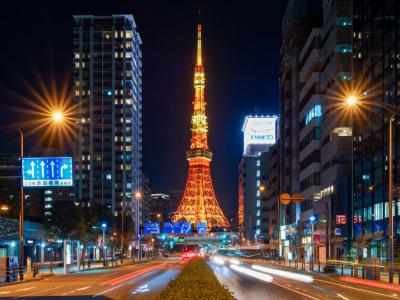
The Tokyo Tower stands as a towering steel structure, reminiscent of the iconic Eiffel Tower in Paris. It serves the dual purpose of functioning as a television and radio antenna while also serving as one of Tokyo's most frequented tourist attractions.
This architectural marvel was conceived and overseen by Hisakichi Maeda, the founder of the Nippon Denpato Company. Its construction, carried out by the Takenaka Corporation, spanned the years 1957 to 1958. Standing at a towering height of 332.5 meters, the Tokyo Tower surpasses the Eiffel Tower in terms of height. Notably, it is also lighter than its French counterpart, thanks to the utilization of modern technology and advanced materials in its construction. Its distinctive coloration of white and orange adheres to aeronautic safety regulations.
The primary function of the Tokyo Tower revolves around its role as a supporting structure for radio and television antennas. Initially designed primarily for television broadcasting, it expanded its capabilities in 1961 with the installation of radio antennas. Today, it serves as a hub for both analog and digital television, radio broadcasts, and digital radio transmissions.
In addition to its functional aspects, the Tokyo Tower draws countless tourists. High-speed elevators transport visitors to the main observatory, which spans two stories. From there, another ascent takes them to the final observation deck, aptly named the Special Observatory. Many choose to visit the tower at night to witness its captivating illumination, achieved through the use of 176 floodlights situated at various levels. Depending on the season, the tower is adorned with orange lights in winter and white incandescent lights in the summer months.
Why You Should Visit:
One of the must-go places in Tokyo. Much to do inside, beyond just the views you get. There's a mall, theme parks, a light show, a hall of mirrors at the top, and plenty of foodie restaurants nearby.
Tip:
Try to find out when sundown is go to the top 30 minutes prior to get the day and night views.
This architectural marvel was conceived and overseen by Hisakichi Maeda, the founder of the Nippon Denpato Company. Its construction, carried out by the Takenaka Corporation, spanned the years 1957 to 1958. Standing at a towering height of 332.5 meters, the Tokyo Tower surpasses the Eiffel Tower in terms of height. Notably, it is also lighter than its French counterpart, thanks to the utilization of modern technology and advanced materials in its construction. Its distinctive coloration of white and orange adheres to aeronautic safety regulations.
The primary function of the Tokyo Tower revolves around its role as a supporting structure for radio and television antennas. Initially designed primarily for television broadcasting, it expanded its capabilities in 1961 with the installation of radio antennas. Today, it serves as a hub for both analog and digital television, radio broadcasts, and digital radio transmissions.
In addition to its functional aspects, the Tokyo Tower draws countless tourists. High-speed elevators transport visitors to the main observatory, which spans two stories. From there, another ascent takes them to the final observation deck, aptly named the Special Observatory. Many choose to visit the tower at night to witness its captivating illumination, achieved through the use of 176 floodlights situated at various levels. Depending on the season, the tower is adorned with orange lights in winter and white incandescent lights in the summer months.
Why You Should Visit:
One of the must-go places in Tokyo. Much to do inside, beyond just the views you get. There's a mall, theme parks, a light show, a hall of mirrors at the top, and plenty of foodie restaurants nearby.
Tip:
Try to find out when sundown is go to the top 30 minutes prior to get the day and night views.
6) Tokyo Imperial Palace (must see)
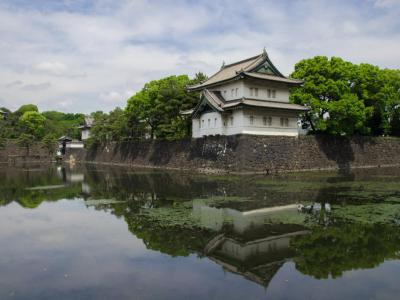
The Tokyo Imperial Palace, also known as Kyūden, serves as the official residence for the Emperor and Empress of Japan. Situated in the heart of the city, it's encircled by imposing walls and a substantial moat.
This grand palace is situated on the grounds of the former Edo Castle, which once served as the residence of the Tokugawa Shogunate, the rulers of Tokyo during the Edo era. Following the shoguns' defeat in 1868, the imperial residence was relocated from Kyoto to Tokyo, and a new palace was constructed in 1888. However, during World War II, the palace suffered complete destruction due to air attacks. It was subsequently rebuilt, adhering to the original design, in 1968. Access to the palace is via a double bridge, and only remnants of the former Edo castle, such as moats, defensive walls, gatehouses, and turrets, remain today.
While the Kokyo Palace and its inner gardens are typically not open to the public, there are two exceptions each year. On January 2nd, people are allowed to greet the Emperor and Empress as they celebrate the New Year. Additionally, on December 23rd, the Emperor's birthday, the public can also pay their respects. During these special occasions, members of the imperial family often appear on the palace balcony. For those interested in exploring the inner garden and the Kokyo, it is possible to reserve a tour online through the imperial household agency.
Why You Should Visit:
Large, beautiful, quiet and green place worth a leisurely stroll, with an excellent view of Tokyo's high-rise skyline to boot.
The free tours are recommended for people who are more serious or interested in history and/or photography.
Tip:
Tours are conducted at 10am and 1:30pm each day for around 1h 15min duration.
Note that the tours are generally not conducted on Sundays & Mondays.
Be prepared to have a long, very long, walk through the area and avoid sunny afternoons.
This grand palace is situated on the grounds of the former Edo Castle, which once served as the residence of the Tokugawa Shogunate, the rulers of Tokyo during the Edo era. Following the shoguns' defeat in 1868, the imperial residence was relocated from Kyoto to Tokyo, and a new palace was constructed in 1888. However, during World War II, the palace suffered complete destruction due to air attacks. It was subsequently rebuilt, adhering to the original design, in 1968. Access to the palace is via a double bridge, and only remnants of the former Edo castle, such as moats, defensive walls, gatehouses, and turrets, remain today.
While the Kokyo Palace and its inner gardens are typically not open to the public, there are two exceptions each year. On January 2nd, people are allowed to greet the Emperor and Empress as they celebrate the New Year. Additionally, on December 23rd, the Emperor's birthday, the public can also pay their respects. During these special occasions, members of the imperial family often appear on the palace balcony. For those interested in exploring the inner garden and the Kokyo, it is possible to reserve a tour online through the imperial household agency.
Why You Should Visit:
Large, beautiful, quiet and green place worth a leisurely stroll, with an excellent view of Tokyo's high-rise skyline to boot.
The free tours are recommended for people who are more serious or interested in history and/or photography.
Tip:
Tours are conducted at 10am and 1:30pm each day for around 1h 15min duration.
Note that the tours are generally not conducted on Sundays & Mondays.
Be prepared to have a long, very long, walk through the area and avoid sunny afternoons.
7) East Gardens of the Imperial Palace (must see)
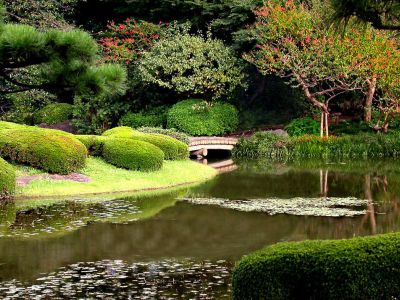
The East Gardens of the Tokyo Imperial Palace represent a serene oasis amidst the vibrant urban landscape. Accessible to the public via three historic gates - Ōte-mon, Hirakawa-mon, and Kitahanebashi-mon - these gardens were meticulously designed during the Meiji era when the Emperor took control of the city from the Tokugawa Shogunate. Opening its gates to public visitors in 1968, this expansive green space spans almost 52 acres and offers a diverse range of attractions, including a traditional Japanese garden, a tea ceremony room, a guard house, a concert hall, and a small forest.
In the spring season, the gardens burst into life with the enchanting sight of blooming Sakura (cherry blossom) trees, featuring nearly 30 distinct cherry tree species. Additionally, the gardens boast an array of noteworthy flora, including bamboo, peonies, a charming grove of plum trees, and graceful willow trees. In total, the gardens house more than one thousand species of native Japanese plants. A significant feature of the landscape is the vast green lawn known as Oshibahu, once a venue for imperial ceremonies. Within the garden's boundaries, you'll find two guardhouses that once dutifully protected the gates and the remnants of a stone tower known as the Tenshu Dai.
The East Gardens are open to the public every day, except for Mondays and Fridays. Visitors can conveniently access a garden map at the guardhouse near the Ōte-mon Gate to help navigate this captivating green sanctuary.
Why You Should Visit:
Nice spot for a picnic with large grassy areas.
If you're into a little exercise, it's a great place for that too.
Plenty of cultural significance otherwise, with some remnants dating back to 1600s!
Entry is free and easy. Some free guided tours are offered but you must come early.
Tip:
Try to avoid the hottest hours of a hot day, as it can get very hot in the more open area.
For the boat rides you should go to the Chiyoda, the opposite part of the castle.
In the spring season, the gardens burst into life with the enchanting sight of blooming Sakura (cherry blossom) trees, featuring nearly 30 distinct cherry tree species. Additionally, the gardens boast an array of noteworthy flora, including bamboo, peonies, a charming grove of plum trees, and graceful willow trees. In total, the gardens house more than one thousand species of native Japanese plants. A significant feature of the landscape is the vast green lawn known as Oshibahu, once a venue for imperial ceremonies. Within the garden's boundaries, you'll find two guardhouses that once dutifully protected the gates and the remnants of a stone tower known as the Tenshu Dai.
The East Gardens are open to the public every day, except for Mondays and Fridays. Visitors can conveniently access a garden map at the guardhouse near the Ōte-mon Gate to help navigate this captivating green sanctuary.
Why You Should Visit:
Nice spot for a picnic with large grassy areas.
If you're into a little exercise, it's a great place for that too.
Plenty of cultural significance otherwise, with some remnants dating back to 1600s!
Entry is free and easy. Some free guided tours are offered but you must come early.
Tip:
Try to avoid the hottest hours of a hot day, as it can get very hot in the more open area.
For the boat rides you should go to the Chiyoda, the opposite part of the castle.
8) Senso-ji Temple (must see)
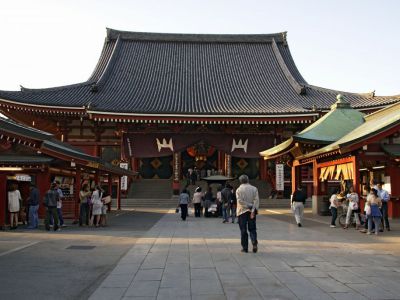
If Tokyo were a movie, Senso-ji Temple would be one of the stars-and not the flashy, one-hit-wonder type. We’re talking legendary status. Oldest temple in the city, most visited by tourists, and absolutely dripping in myth, history, and incense.
Legend has it that way back in the 7th century, two brothers were out fishing in the Sumida River when-plot twist-they pulled up a golden statue of Kannon, the Goddess of Mercy. They tried tossing her back, but she kept popping up like a divine boomerang. A local village headman got wind of this, had a spiritual epiphany, and next thing you know-bam!-temple time. That was 645 AD. Which means this place has been around longer than Tokyo itself.
Fast forward to the Edo period, and the powerful Tokugawa Shoguns swooped in with some serious upgrades and spiritual endorsements. World War II took its toll, but like any good epic, Senso-ji rose again-rebuilt by believers and still standing strong.
And yes, that original golden statue is still here. But no peeking-it's forever hidden from public view, like the temple’s best-kept secret.
Each year, over 30 million people make the pilgrimage here, not just for the views but for the vibes. Festivals are a big deal-especially Sanja Matsuri in May, when the energy is off the charts, and the Asakusa Samba Carnival in August, when Tokyo briefly turns into Rio.
Otherwise, Tokyo guests visit here for the soul of the city wrapped in centuries of history, spiritual charm, and photo ops galore.
Tip:
Wander the side streets for secret snacks and fewer crowds. And if you’re up for a little magic, come back at sundown-when the crowds fade, the lanterns glow, and the temple shows off its most photogenic side.
Legend has it that way back in the 7th century, two brothers were out fishing in the Sumida River when-plot twist-they pulled up a golden statue of Kannon, the Goddess of Mercy. They tried tossing her back, but she kept popping up like a divine boomerang. A local village headman got wind of this, had a spiritual epiphany, and next thing you know-bam!-temple time. That was 645 AD. Which means this place has been around longer than Tokyo itself.
Fast forward to the Edo period, and the powerful Tokugawa Shoguns swooped in with some serious upgrades and spiritual endorsements. World War II took its toll, but like any good epic, Senso-ji rose again-rebuilt by believers and still standing strong.
And yes, that original golden statue is still here. But no peeking-it's forever hidden from public view, like the temple’s best-kept secret.
Each year, over 30 million people make the pilgrimage here, not just for the views but for the vibes. Festivals are a big deal-especially Sanja Matsuri in May, when the energy is off the charts, and the Asakusa Samba Carnival in August, when Tokyo briefly turns into Rio.
Otherwise, Tokyo guests visit here for the soul of the city wrapped in centuries of history, spiritual charm, and photo ops galore.
Tip:
Wander the side streets for secret snacks and fewer crowds. And if you’re up for a little magic, come back at sundown-when the crowds fade, the lanterns glow, and the temple shows off its most photogenic side.
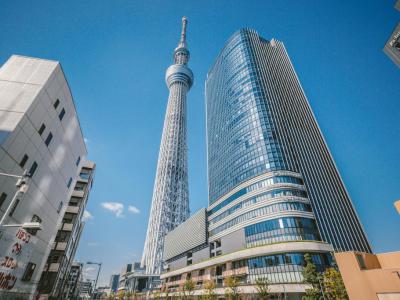
9) Tokyo Skytree (must see)
Tokyo Skytree is a multi-purpose tower located in Sumida, Tokyo, serving as a broadcasting hub, restaurant, and observation point. It gained the distinction of being the tallest structure in Japan in 2010 and attained its maximum height of 634.0 meters (2,080 feet) in March 2011. This achievement made it not only the tallest tower globally but also the second tallest man-made structure worldwide, only surpassed by the Burj Khalifa (standing at 829.8 meters/2,722 feet) at the time.
The tower's design at its base resembles a tripod, while from an altitude of around 350 meters (1,150 feet) and upwards, it adopts a cylindrical structure, allowing visitors to enjoy panoramic vistas of the river and the city. There are two observation decks, one at 350 meters (1,150 feet) with a capacity for up to 2000 visitors, and another at 450 meters (1,480 feet) accommodating around 900 people. The uppermost observation deck offers a unique feature-a spiral skywalk encased in glass, enabling visitors to ascend the last 5 meters to the highest point on the platform. Additionally, a section of glass flooring on this level provides a direct view downwards onto the streets below, offering a thrilling experience for visitors.
Why You Should Visit:
Gives you the true indication on how HUGE the city is!
Windows are clean and good for photo opportunities.
Tip:
There is an extra-price fast pass ticket for international travelers (with a passport), with no waiting time. Try to avoid weekends and holidays if you buy general admission tickets.
Make sure to go down to the 340th floor before going up to the 450th to walk and take photos on the glass bottom floor.
You can also plan a meal nearby, as many restaurants in the area have English menus and are able to speak English.
The tower's design at its base resembles a tripod, while from an altitude of around 350 meters (1,150 feet) and upwards, it adopts a cylindrical structure, allowing visitors to enjoy panoramic vistas of the river and the city. There are two observation decks, one at 350 meters (1,150 feet) with a capacity for up to 2000 visitors, and another at 450 meters (1,480 feet) accommodating around 900 people. The uppermost observation deck offers a unique feature-a spiral skywalk encased in glass, enabling visitors to ascend the last 5 meters to the highest point on the platform. Additionally, a section of glass flooring on this level provides a direct view downwards onto the streets below, offering a thrilling experience for visitors.
Why You Should Visit:
Gives you the true indication on how HUGE the city is!
Windows are clean and good for photo opportunities.
Tip:
There is an extra-price fast pass ticket for international travelers (with a passport), with no waiting time. Try to avoid weekends and holidays if you buy general admission tickets.
Make sure to go down to the 340th floor before going up to the 450th to walk and take photos on the glass bottom floor.
You can also plan a meal nearby, as many restaurants in the area have English menus and are able to speak English.
