Custom Walk in Boston, Massachusetts by malecki789666 created on 2026-01-01
Guide Location: USA » Boston
Guide Type: Custom Walk
# of Sights: 7
Tour Duration: 2 Hour(s)
Travel Distance: 5.2 Km or 3.2 Miles
Share Key: 4DAXL
Guide Type: Custom Walk
# of Sights: 7
Tour Duration: 2 Hour(s)
Travel Distance: 5.2 Km or 3.2 Miles
Share Key: 4DAXL
How It Works
Please retrieve this walk in the GPSmyCity app. Once done, the app will guide you from one tour stop to the next as if you had a personal tour guide. If you created the walk on this website or come to the page via a link, please follow the instructions below to retrieve the walk in the app.
Retrieve This Walk in App
Step 1. Download the app "GPSmyCity: Walks in 1K+ Cities" on Apple App Store or Google Play Store.



Step 2. In the GPSmyCity app, download(or launch) the guide "Boston Map and Walking Tours".
Step 3. Tap the menu button located at upper right corner of the "Walks" screen and select "Retrieve custom walk". Enter the share key: 4DAXL
1) Boston Common (must see)
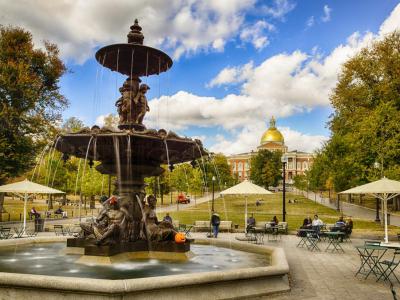
Boston Common, the city's primary open space, spans fifty acres of greenery, effectively serving as a buffer between the historic and bustling Downtown area and its upscale neighbors, Beacon Hill and Back Bay. While it may not have the meticulous landscaping of the nearby Public Garden, it still offers an abundance of benches and open lawns for relaxing breaks, and it frequently transforms into a venue for concerts, events, and public gatherings.
Before John Winthrop and his fellow Puritan settlers designated Boston Common for public use, it served as pastureland for the Reverend William Braxton. Blaxton was a priest of the Church of England. In 1623, as chaplain to the Ferdinando Gorges expedition, he sailed on the ship Katherine to the settlement of Weymouth, Massachusetts. The expedition failed, and everyone returned to England in 1625. But Blaxton stayed and became the first European to settle in Boston.
Puritans from Charlestown joined Blaxton in 1630 and awarded him fifty acres. He cannily sold it back to them in 1634, and this land became known as Boston Common, the oldest city park in the United States. Soon after, it took on darker associations, functioning as a site for hangings, including those of alleged pirates, witches, and various religious dissenters. An unfortunate commoner by the name of Rachell Whall met her end here for the theft of a bonnet valued at 75¢.
In 1789, newly elected President George Washington made a memorable appearance on the Common. Over the years, renowned figures like Martin Luther King, Jr., Pope John Paul II, and Mikhail Gorbachev have delivered speeches on its grounds, while Judy Garland enthralled more than 100,000 fans with her performance here in 1967. The history of this place also extends far into the past, with prehistoric Native American sites dating back up to 8,500 years found within its boundaries.
Around the park, there are several noteworthy sites to explore, including Brewer Fountain Plaza, the Boston Common Visitor Information Center, the Soldiers and Sailors Monument, the Frog Pond, the Central Burying Ground, and the recently restored Robert Gould Shaw 54th Regiment Memorial.
Before John Winthrop and his fellow Puritan settlers designated Boston Common for public use, it served as pastureland for the Reverend William Braxton. Blaxton was a priest of the Church of England. In 1623, as chaplain to the Ferdinando Gorges expedition, he sailed on the ship Katherine to the settlement of Weymouth, Massachusetts. The expedition failed, and everyone returned to England in 1625. But Blaxton stayed and became the first European to settle in Boston.
Puritans from Charlestown joined Blaxton in 1630 and awarded him fifty acres. He cannily sold it back to them in 1634, and this land became known as Boston Common, the oldest city park in the United States. Soon after, it took on darker associations, functioning as a site for hangings, including those of alleged pirates, witches, and various religious dissenters. An unfortunate commoner by the name of Rachell Whall met her end here for the theft of a bonnet valued at 75¢.
In 1789, newly elected President George Washington made a memorable appearance on the Common. Over the years, renowned figures like Martin Luther King, Jr., Pope John Paul II, and Mikhail Gorbachev have delivered speeches on its grounds, while Judy Garland enthralled more than 100,000 fans with her performance here in 1967. The history of this place also extends far into the past, with prehistoric Native American sites dating back up to 8,500 years found within its boundaries.
Around the park, there are several noteworthy sites to explore, including Brewer Fountain Plaza, the Boston Common Visitor Information Center, the Soldiers and Sailors Monument, the Frog Pond, the Central Burying Ground, and the recently restored Robert Gould Shaw 54th Regiment Memorial.
2) Old State House (must see)
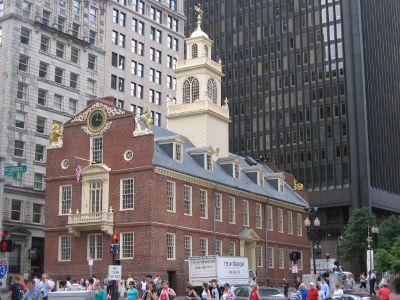
As the oldest surviving public building in Boston, this colonial-era landmark has one of the most easily recognizable facades in the city. Its gable is adorned with a brightly gilded lion and silver unicorn, symbols representing British imperial power. From 1713 until the Revolutionary period, this structure served as the seat of colonial government. After the British evacuated Boston in 1776, it continued to function as the center of the independent Commonwealth until its replacement on Beacon Hill was constructed.
An impassioned speech delivered by James Otis in the Council Chamber on the second floor ignited the pursuit of independence from Britain. Otis, initially a Crown appointee who later aligned with the colonial cause, vehemently opposed the Writs of Assistance, which granted the British the authority to inspect private property without restriction. Legend has it that, on certain nights, one can still hear echoes of his anti-British rhetoric, accompanied by the enthusiastic cheers of the crowd he galvanized.
The balcony overlooking State Street is as renowned as Otis's speech, as it was from here on July 18, 1776, that the Declaration of Independence was first publicly read in Boston, just after its arrival from Philadelphia. That very night, the lion and unicorn figures symbolizing British rule, which were mounted above the balcony, were torn down and burned in front of the Bunch of Grapes tavern; the current ones on display are replicas. In a gesture of goodwill, Queen Elizabeth II, the first British monarch to visit Boston since the Revolution, delivered a speech from the balcony during the American bicentennial celebrations in 1976.
Today, the site hosts a small yet comprehensive museum. The ground-level permanent exhibit, titled "Colony to Commonwealth", features a series of well-curated displays that chronicle Boston's pivotal role in inciting the Revolutionary War. Among the exhibits are remnants from Boston's infamous tea party, the royal arms plaque that once adorned Province House (the official residence of colonial governors), the flag used by the Sons of Liberty to announce their gatherings, a stylish jacket owned by (Founding Father) John Hancock, and Paul Revere's stirring engraving of the Boston Massacre, one of the most evocative images of the Revolutionary era. Additionally, every half-hour, a colonial "guest speaker" in character provides insights into early Boston life and answers questions for the audience.
An impassioned speech delivered by James Otis in the Council Chamber on the second floor ignited the pursuit of independence from Britain. Otis, initially a Crown appointee who later aligned with the colonial cause, vehemently opposed the Writs of Assistance, which granted the British the authority to inspect private property without restriction. Legend has it that, on certain nights, one can still hear echoes of his anti-British rhetoric, accompanied by the enthusiastic cheers of the crowd he galvanized.
The balcony overlooking State Street is as renowned as Otis's speech, as it was from here on July 18, 1776, that the Declaration of Independence was first publicly read in Boston, just after its arrival from Philadelphia. That very night, the lion and unicorn figures symbolizing British rule, which were mounted above the balcony, were torn down and burned in front of the Bunch of Grapes tavern; the current ones on display are replicas. In a gesture of goodwill, Queen Elizabeth II, the first British monarch to visit Boston since the Revolution, delivered a speech from the balcony during the American bicentennial celebrations in 1976.
Today, the site hosts a small yet comprehensive museum. The ground-level permanent exhibit, titled "Colony to Commonwealth", features a series of well-curated displays that chronicle Boston's pivotal role in inciting the Revolutionary War. Among the exhibits are remnants from Boston's infamous tea party, the royal arms plaque that once adorned Province House (the official residence of colonial governors), the flag used by the Sons of Liberty to announce their gatherings, a stylish jacket owned by (Founding Father) John Hancock, and Paul Revere's stirring engraving of the Boston Massacre, one of the most evocative images of the Revolutionary era. Additionally, every half-hour, a colonial "guest speaker" in character provides insights into early Boston life and answers questions for the audience.
3) Faneuil Hall Marketplace (must see)
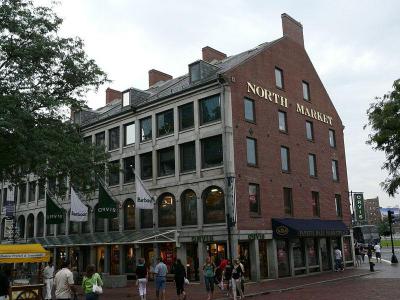
Faneuil Hall Marketplace, situated in a pedestrian zone east of Government Center, is a vibrant public gathering spot that appeals to both tourists and, to a lesser extent, locals. It's an excellent place to enjoy a meal, soak in a bit of history, and take advantage of free Wi-Fi access. Originally constructed during colonial times as a marketplace to accommodate the city's burgeoning mercantile industry, it saw a decline in the 19th century and, like the surrounding area, remained relatively inactive until the 1960s. At that point, it was successfully revitalized as a restaurant and shopping complex.
The much-talked-about Faneuil Hall itself might not appear particularly imposing from the outside. It's a modest four-story brick building crowned with a golden grasshopper weathervane-certainly not the grand auditorium that one might envision as the birthplace of Revolutionary War meetings, earning it the moniker "Cradle of Liberty". In its earlier days, the first floor housed an open-air market, while the second floor served as a space for political gatherings. This is where fiery revolutionaries like Samuel Adams and James Otis rallied popular support for independence by protesting British tax policies.
Today, the first floor houses an array of tourist-centric shops and an info-desk, but the second is more impressive, with the auditorium preserved to reflect the alterations made by Charles Bulfinch in 1805. Its centerpiece is a flamboyant (albeit somewhat exaggerated) canvas depicting "The Great Debate", during which Daniel Webster argued for the concept of the United States as one nation against South Carolina Senator Robert Hayne. While the debate indeed took place, the painting includes several 19th-century figures like Nathaniel Hawthorne and Alexis de Tocqueville, who were not actually present-the artist added them to boost the painting's appeal.
A more grounded story relates to how Boston sailors secured free passage back home from Britain during the War of 1812: captive Boston sailors who escaped to the American consulate were asked what adorned Faneuil Hall as a weathervane. Those who correctly identified it as a grasshopper were considered true Bostonians and given a free journey back, while those who couldn't were eyed with suspicion.
On the top floor, the Ancient & Honorable Artillery Co of Massachusetts, established in 1638, curates a peculiar collection of antique firearms, political memorabilia, and curious artifacts.
The much-talked-about Faneuil Hall itself might not appear particularly imposing from the outside. It's a modest four-story brick building crowned with a golden grasshopper weathervane-certainly not the grand auditorium that one might envision as the birthplace of Revolutionary War meetings, earning it the moniker "Cradle of Liberty". In its earlier days, the first floor housed an open-air market, while the second floor served as a space for political gatherings. This is where fiery revolutionaries like Samuel Adams and James Otis rallied popular support for independence by protesting British tax policies.
Today, the first floor houses an array of tourist-centric shops and an info-desk, but the second is more impressive, with the auditorium preserved to reflect the alterations made by Charles Bulfinch in 1805. Its centerpiece is a flamboyant (albeit somewhat exaggerated) canvas depicting "The Great Debate", during which Daniel Webster argued for the concept of the United States as one nation against South Carolina Senator Robert Hayne. While the debate indeed took place, the painting includes several 19th-century figures like Nathaniel Hawthorne and Alexis de Tocqueville, who were not actually present-the artist added them to boost the painting's appeal.
A more grounded story relates to how Boston sailors secured free passage back home from Britain during the War of 1812: captive Boston sailors who escaped to the American consulate were asked what adorned Faneuil Hall as a weathervane. Those who correctly identified it as a grasshopper were considered true Bostonians and given a free journey back, while those who couldn't were eyed with suspicion.
On the top floor, the Ancient & Honorable Artillery Co of Massachusetts, established in 1638, curates a peculiar collection of antique firearms, political memorabilia, and curious artifacts.
4) Paul Revere House (must see)
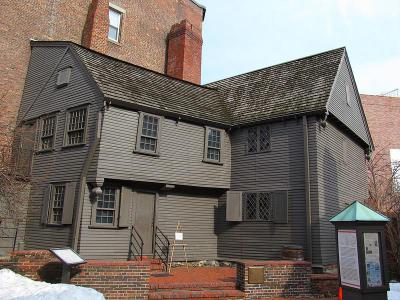
A small triangular enclave adorned with cobblestones and gaslights, North Square stands out as one of Boston's most historically significant and aesthetically appealing corners. Here, eateries take a back seat to the Paul Revere House, which holds the distinction of being downtown Boston's oldest residential address, located at 19 North Square. Paul Revere, a lifelong North Ender, called this place home from 1770 to 1800, with the exception of much of 1775 when he was in hiding from the British in Watertown.
Originally built around 1680, the small Tudor-style structure, constructed with post-and-beam framing, underwent various uses over the years, including stints as a grocery store, tenement, and cigar factory. In 1908, it was painstakingly restored to its 17th-century appearance (remarkably, 90% of the framework is original). The house stands on the site where the grander residence of Puritan leader Increase Mather (father of Cotton Mather) once stood before it was destroyed in the Great Fire of 1676.
While the building's significance lies more in its historical longevity than its architectural grandeur, its third-floor Elizabethan-style overhang and leaded windowpanes provide a nice contrast to the surrounding red-brick buildings. Upstairs, you can explore examples of Revere's handcrafted silverware, worth a look for their craftsmanship and historical value. The museum also hosts a series of compact yet thought-provoking rotating exhibitions, shedding light on subjects such as the mythologizing of Revere's famous horseback ride.
Throughout the year, special events are organized, many of which are family-friendly. These events often feature period-costumed characters engaging in role-play, serving colonial-era treats like apple-cider cake, showcasing a silversmith practicing his craft, entertaining crowds with dulcimer music, or staging military reenactments in authentic period attire.
Originally built around 1680, the small Tudor-style structure, constructed with post-and-beam framing, underwent various uses over the years, including stints as a grocery store, tenement, and cigar factory. In 1908, it was painstakingly restored to its 17th-century appearance (remarkably, 90% of the framework is original). The house stands on the site where the grander residence of Puritan leader Increase Mather (father of Cotton Mather) once stood before it was destroyed in the Great Fire of 1676.
While the building's significance lies more in its historical longevity than its architectural grandeur, its third-floor Elizabethan-style overhang and leaded windowpanes provide a nice contrast to the surrounding red-brick buildings. Upstairs, you can explore examples of Revere's handcrafted silverware, worth a look for their craftsmanship and historical value. The museum also hosts a series of compact yet thought-provoking rotating exhibitions, shedding light on subjects such as the mythologizing of Revere's famous horseback ride.
Throughout the year, special events are organized, many of which are family-friendly. These events often feature period-costumed characters engaging in role-play, serving colonial-era treats like apple-cider cake, showcasing a silversmith practicing his craft, entertaining crowds with dulcimer music, or staging military reenactments in authentic period attire.
5) Old North Church (must see)
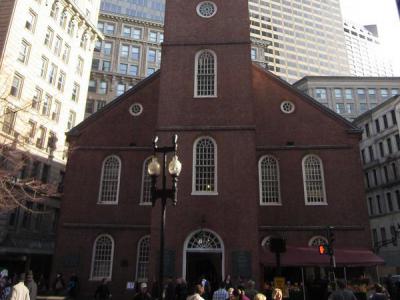
Few places in Boston possess the iconic significance of the modest yet dignified Old North Church, which stands proudly above the uniform red-brick buildings that surround it. Erected in 1723, it is Boston's oldest church building, instantly recognizable by its towering 191-foot steeple. The weather vane crowning its pinnacle is the original colonial one, although the steeple itself is a reconstruction. Both the original steeple, in 1804, and its replacement, in 1954, succumbed to hurricanes.
However, it was not the steeple but a pair of lanterns that etched the church's place in history. On the night of April 18, 1775, the church sexton, Robert Newman, is said to have hung two lanterns inside the church, signaling to the colonial militia the movement of British forces from Boston Common with the famous message, "One if by land, two if by sea". This signal was meant for the colonial militia in Charlestown, as a contingency plan in case Paul Revere's crossing of the Charles River was unsuccessful.
Revere had already received word of the impending British movement and was en route to Lexington when the lanterns were lit, enlisting Newman's help to alert Charlestown in the event his mission was compromised. As it turned out, both Revere and fellow rider William Dawes were detained by British patrols, and only Dr. Samuel Prescott, the lesser-known third rider of the night, successfully reached Concord.
Inside the church, visitors encounter a spotlessly white and well-lit interior, thanks to Palladian windows behind the pulpit. Other notable features include twelve bricks embedded in the vestibule wall from a prison cell in Boston, England, where early Pilgrims were incarcerated. Additionally, there are four 17th-century cherubim near the organ, which were plundered from a French vessel. Churchgoers can even set their watches by the clock at the rear, dating back to 1726, making it the oldest working clock in an American public building.
The eight bells inside the belfry, open to the public during summer tours, were the first to be cast for the British Empire in North America and have since tolled the death of every U.S. president.
Some of Old North Church's most charming features can be found in several gardens outside the church itself. These include the small Washington Memorial Garden, adorned with commemorative plaques honoring past church members, and the inviting 18th-Century Garden, boasting terraces adorned with lilies, roses, and intriguing umbrella-shaped flowers fittingly known as archangels.
However, it was not the steeple but a pair of lanterns that etched the church's place in history. On the night of April 18, 1775, the church sexton, Robert Newman, is said to have hung two lanterns inside the church, signaling to the colonial militia the movement of British forces from Boston Common with the famous message, "One if by land, two if by sea". This signal was meant for the colonial militia in Charlestown, as a contingency plan in case Paul Revere's crossing of the Charles River was unsuccessful.
Revere had already received word of the impending British movement and was en route to Lexington when the lanterns were lit, enlisting Newman's help to alert Charlestown in the event his mission was compromised. As it turned out, both Revere and fellow rider William Dawes were detained by British patrols, and only Dr. Samuel Prescott, the lesser-known third rider of the night, successfully reached Concord.
Inside the church, visitors encounter a spotlessly white and well-lit interior, thanks to Palladian windows behind the pulpit. Other notable features include twelve bricks embedded in the vestibule wall from a prison cell in Boston, England, where early Pilgrims were incarcerated. Additionally, there are four 17th-century cherubim near the organ, which were plundered from a French vessel. Churchgoers can even set their watches by the clock at the rear, dating back to 1726, making it the oldest working clock in an American public building.
The eight bells inside the belfry, open to the public during summer tours, were the first to be cast for the British Empire in North America and have since tolled the death of every U.S. president.
Some of Old North Church's most charming features can be found in several gardens outside the church itself. These include the small Washington Memorial Garden, adorned with commemorative plaques honoring past church members, and the inviting 18th-Century Garden, boasting terraces adorned with lilies, roses, and intriguing umbrella-shaped flowers fittingly known as archangels.
6) Boston Public Garden (must see)
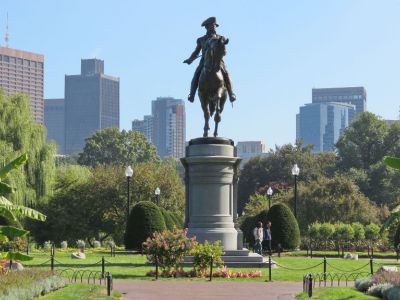
America's oldest botanical garden features exquisite formal plantings that have captured the hearts of visitors for generations. In its heart lies a 4-acre lagoon, a beloved feature since 1877, famous for its Swan Boats, guided by a captain, offering a serene and picturesque experience. A delightful addition to this landscape is the 'Make Way for Ducklings' bronze sculptures crafted by Nancy Schön, paying homage to the 1941 children's story penned by Robert McCloskey.
Now, remember, the Boston Public Garden and Boston Common are distinct entities with unique histories and purposes, with a clear-cut boundary at Charles Street. Boston Common has been a public expanse since the city's inception in 1630, while the Public Garden emerged later, occupying what was once salt marshes on the fringes of the Common and reflecting the influence of Victorian-era park designs.
Near the Swan Boat terminal, you'll stumble upon what might be the world's tiniest suspension bridge, thoughtfully designed in 1867 to span the pond's narrowest point. The garden's main walkways feature replanted flower beds each spring, with the vibrand display of tulips stealing the show in early May. Additionally, you can explore a diverse collection of native and European tree species.
Why You Should Visit:
Despite a period of decline during the urban renewal fervor of the 1970s, this garden stands today as a cherished oasis, often considered the more polished and formal counterpart to the neighboring Boston Common. An integral part of the city's Emerald Necklace, it offers a lush retreat throughout the year. With plantings nurtured by 14 city greenhouses, the garden showcases an array of tulips, roses, and flowering shrubs that can be enjoyed while leisurely cruising the tranquil lagoon.
Now, remember, the Boston Public Garden and Boston Common are distinct entities with unique histories and purposes, with a clear-cut boundary at Charles Street. Boston Common has been a public expanse since the city's inception in 1630, while the Public Garden emerged later, occupying what was once salt marshes on the fringes of the Common and reflecting the influence of Victorian-era park designs.
Near the Swan Boat terminal, you'll stumble upon what might be the world's tiniest suspension bridge, thoughtfully designed in 1867 to span the pond's narrowest point. The garden's main walkways feature replanted flower beds each spring, with the vibrand display of tulips stealing the show in early May. Additionally, you can explore a diverse collection of native and European tree species.
Why You Should Visit:
Despite a period of decline during the urban renewal fervor of the 1970s, this garden stands today as a cherished oasis, often considered the more polished and formal counterpart to the neighboring Boston Common. An integral part of the city's Emerald Necklace, it offers a lush retreat throughout the year. With plantings nurtured by 14 city greenhouses, the garden showcases an array of tulips, roses, and flowering shrubs that can be enjoyed while leisurely cruising the tranquil lagoon.
7) Newbury Street (must see)
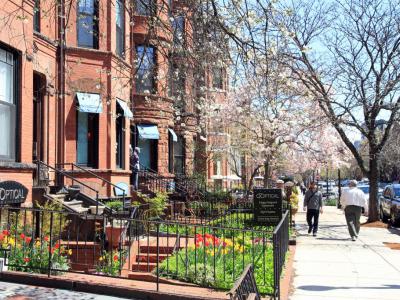
Traditionally for Boston, Newbury Street has embodied a fusion of fashion and trends, similar to New York's 5th Avenue, when it comes to high-end and designer stores. One defining characteristic of this street is its constant evolution, driven by changes in rents and prevailing trends, particularly over the past few decades. Due to Newbury's reputation as a shopping haven, numerous out-of-state chains have established a presence here, alongside a plethora of charming specialty shops, ultra-modern art galleries, salons, and dazzling jewelers (just take note that the closer you get to Arlington Street, the more upscale the stores become).
The landscape of restaurants, bars and cafes is also ever-changing and eclectic, with many offering patio seating and stylish bay windows, making this the perfect sunny-weather spot to see and be seen while indulging in coffee or exotic delicacies. Some notable highlights include the rustic Italian eatery Piattini; the intimate La Voile, celebrated for its authentic French cuisine; and the relaxed Pavement Coffeehouse, serving premium coffee, espresso drinks, tea, and baked goods.
Sidewalks are wide enough to accommodate foot traffic, and the street itself is lined with beautiful architectural details and lush foliage.
Why You Should Visit:
Boston's answer to Los Angeles' Rodeo Drive, Newbury Street is a haven for shoppers. Here, you'll find a diverse range of stores, catering to various budgets and tastes. From luxurious brands like Valentino and Max Mara to more budget-friendly options like H&M and ZARA, as well as charming specialty shops like The Fish & Bone, Newbury Comics, and MUJI, there's something for everyone.
The landscape of restaurants, bars and cafes is also ever-changing and eclectic, with many offering patio seating and stylish bay windows, making this the perfect sunny-weather spot to see and be seen while indulging in coffee or exotic delicacies. Some notable highlights include the rustic Italian eatery Piattini; the intimate La Voile, celebrated for its authentic French cuisine; and the relaxed Pavement Coffeehouse, serving premium coffee, espresso drinks, tea, and baked goods.
Sidewalks are wide enough to accommodate foot traffic, and the street itself is lined with beautiful architectural details and lush foliage.
Why You Should Visit:
Boston's answer to Los Angeles' Rodeo Drive, Newbury Street is a haven for shoppers. Here, you'll find a diverse range of stores, catering to various budgets and tastes. From luxurious brands like Valentino and Max Mara to more budget-friendly options like H&M and ZARA, as well as charming specialty shops like The Fish & Bone, Newbury Comics, and MUJI, there's something for everyone.
