Custom Walk in Mexico City, Mexico by jwahlstrom_967b34 created on 2026-01-05
Guide Location: Mexico » Mexico City
Guide Type: Custom Walk
# of Sights: 7
Tour Duration: 8 Hour(s)
Travel Distance: 20.8 Km or 12.9 Miles
Share Key: RFNSN
Guide Type: Custom Walk
# of Sights: 7
Tour Duration: 8 Hour(s)
Travel Distance: 20.8 Km or 12.9 Miles
Share Key: RFNSN
How It Works
Please retrieve this walk in the GPSmyCity app. Once done, the app will guide you from one tour stop to the next as if you had a personal tour guide. If you created the walk on this website or come to the page via a link, please follow the instructions below to retrieve the walk in the app.
Retrieve This Walk in App
Step 1. Download the app "GPSmyCity: Walks in 1K+ Cities" on Apple App Store or Google Play Store.



Step 2. In the GPSmyCity app, download(or launch) the guide "Mexico City Map and Walking Tours".
Step 3. Tap the menu button located at upper right corner of the "Walks" screen and select "Retrieve custom walk". Enter the share key: RFNSN
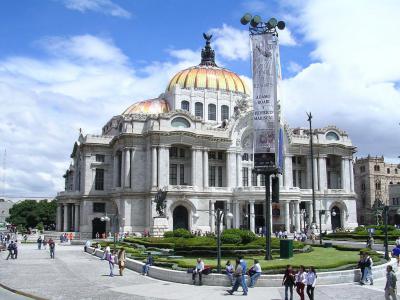
1) Palacio de Bellas Artes (Palace of Fine Arts) (must see)
The majestic Palace of Fine Arts (Palacio de Bellas Artes) is a major cultural spot in Mexico City, a regular host of notable events (shows, concerts, and art exhibitions).
Construction on the palace began in 1904, directed by Italian architect Adamo Boari, but was halted in 1913 because of the complications arisen from the soft soil and the erupted Mexican Revolution. Twenty years later, the local architect Federico Mariscal took over the project and had it finished by 1934.
The palace shows a mixture of architectural styles; its exterior is primarily Art Nouveau and Neoclassical, while the interior is dominated by Art Deco.
The main facade, overlooking Avenida Juárez, is clad in white Carrara marble from Italy. Inside the portal, there are sculptural images of Harmony, Pain, Rage, Happiness, Peace, and Love. Another portion of the facade contains cherubs and sculptures representing Music and Inspiration. On the plaza in front of the building, there are four Pegasus sculptures (originally placed in the Zocalo, they were brought here eventually).
The interior is divided into three sections: the main hall; the theater; and the offices of the National Institute of Fine Arts. The second floor has smaller exhibition halls, and the third floor is occupied by the Museum of Architecture.
The building is best known for its murals by Diego Rivera, David Alfaro Siqueiros, and other prominent Mexican artists. On the north side of the third floor, you can see Siqueiros's three-part "New Democracy" (La Nueva Democracia) fresco, while at the west end of the same floor is Diego Rivera's controversial "Man, Controller of the Universe" (El Hombre Controlador Del Universo), more commonly known as "Man at the Crossroads". This mural was originally commissioned for New York's Rockefeller Center in 1933. The Rockefellers canceled the project halfway through unhappy that Rivera had included in the piece the image of Lenin and a Soviet May Day parade. The incomplete work was painted over, following which Rivera recreated it here.
The on-site theater is also famous as the place of the debut of Maria Callas in the opera Norma in 1950, among other things. The crystal roof over the stage, depicting Muses with Apollo and other mythological creatures, is yet another attraction – was brought from Hungary.
Still, the most impacting aspect of the theater is the stage "curtain" which is a stained glass foldable panel made up of nearly one million pieces of iridescent colored glass, created by Tiffany's in New York. This stage curtain is the only one of its type; it stretches up some 200 feet and weighs 24 tons. The design was inspired by the work of the Mexican artist Dr. Atl (Gerardo Murillo Cornado).
Tip:
If you want to see the Tiffany "glass curtain", you can join a free tour every Friday at 1:30 pm.
If you want a great picture, go up the Latin-American Tower across the street and find your way to the observation deck.
If you want free admission, come on Sunday, but be prepared to queue at the box office inside.
Construction on the palace began in 1904, directed by Italian architect Adamo Boari, but was halted in 1913 because of the complications arisen from the soft soil and the erupted Mexican Revolution. Twenty years later, the local architect Federico Mariscal took over the project and had it finished by 1934.
The palace shows a mixture of architectural styles; its exterior is primarily Art Nouveau and Neoclassical, while the interior is dominated by Art Deco.
The main facade, overlooking Avenida Juárez, is clad in white Carrara marble from Italy. Inside the portal, there are sculptural images of Harmony, Pain, Rage, Happiness, Peace, and Love. Another portion of the facade contains cherubs and sculptures representing Music and Inspiration. On the plaza in front of the building, there are four Pegasus sculptures (originally placed in the Zocalo, they were brought here eventually).
The interior is divided into three sections: the main hall; the theater; and the offices of the National Institute of Fine Arts. The second floor has smaller exhibition halls, and the third floor is occupied by the Museum of Architecture.
The building is best known for its murals by Diego Rivera, David Alfaro Siqueiros, and other prominent Mexican artists. On the north side of the third floor, you can see Siqueiros's three-part "New Democracy" (La Nueva Democracia) fresco, while at the west end of the same floor is Diego Rivera's controversial "Man, Controller of the Universe" (El Hombre Controlador Del Universo), more commonly known as "Man at the Crossroads". This mural was originally commissioned for New York's Rockefeller Center in 1933. The Rockefellers canceled the project halfway through unhappy that Rivera had included in the piece the image of Lenin and a Soviet May Day parade. The incomplete work was painted over, following which Rivera recreated it here.
The on-site theater is also famous as the place of the debut of Maria Callas in the opera Norma in 1950, among other things. The crystal roof over the stage, depicting Muses with Apollo and other mythological creatures, is yet another attraction – was brought from Hungary.
Still, the most impacting aspect of the theater is the stage "curtain" which is a stained glass foldable panel made up of nearly one million pieces of iridescent colored glass, created by Tiffany's in New York. This stage curtain is the only one of its type; it stretches up some 200 feet and weighs 24 tons. The design was inspired by the work of the Mexican artist Dr. Atl (Gerardo Murillo Cornado).
Tip:
If you want to see the Tiffany "glass curtain", you can join a free tour every Friday at 1:30 pm.
If you want a great picture, go up the Latin-American Tower across the street and find your way to the observation deck.
If you want free admission, come on Sunday, but be prepared to queue at the box office inside.
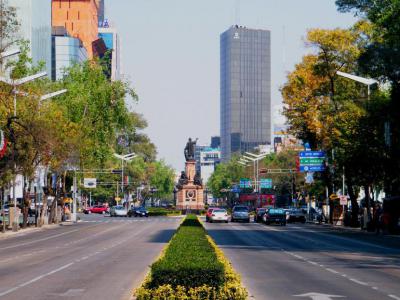
2) Paseo de la Reforma (must see)
Inspired by the grandeur of the Champs-Élysées in Paris, Paseo de la Reforma (Promenade of the Reform) serves as the principal thoroughfare in Mexico City, passing through the Historic district, as well as hosting Embassies and upscale residential buildings. Originally known as the Paseo de la Emperatriz or the road of the Empress, this splendid avenue was envisioned by Emperor Maximilian I of Mexico. Its purpose was to connect his residence at the Chapultepec Castle to the National Palace, which stands adjacent to the Zocalo. However, during President Benito Juarez's reformist era, the avenue underwent a transformation, becoming the Paseo de la Reforma we know today. The avenue's layout, crafted in 1860 by Ferdinand Von Rosenzweig, stands as a testament to its timeless elegance.
Stretching 15 kilometers in length and boasting a width of 60 meters, Paseo de la Reforma encompasses 6 to 8 traffic lanes, along with a prominent green strip running through its center, distinguished by a unique design. At the intersections, one can find grand roundabouts adorned with striking monuments. These monuments feature busts of revered figures who have played instrumental roles in shaping the history of Mexico.
In the present day, Paseo de la Reforma has evolved into a bustling hub, home to prominent office buildings, museums, impressive monuments, luxurious hotels, and vibrant cinemas. Moreover, it proudly hosts the embassies of notable nations such as the United States, the European Union, and the Mexican Stock Exchange.
With its rich historical legacy and modern-day significance, Paseo de la Reforma stands as a testament to the harmonious blend of Mexico's past and present, attracting visitors and locals alike to partake in its grandeur and cultural significance.
Tip:
On Sundays, the avenue closes down to cars so that multitudes of people can ride bikes, walk, jog, rollerblade or stroll down the street from the park all the way up to the historic center.
You can pay for bike rental or get one for free (first come, first served) if you bring your ID/passport and arrive early.
Stretching 15 kilometers in length and boasting a width of 60 meters, Paseo de la Reforma encompasses 6 to 8 traffic lanes, along with a prominent green strip running through its center, distinguished by a unique design. At the intersections, one can find grand roundabouts adorned with striking monuments. These monuments feature busts of revered figures who have played instrumental roles in shaping the history of Mexico.
In the present day, Paseo de la Reforma has evolved into a bustling hub, home to prominent office buildings, museums, impressive monuments, luxurious hotels, and vibrant cinemas. Moreover, it proudly hosts the embassies of notable nations such as the United States, the European Union, and the Mexican Stock Exchange.
With its rich historical legacy and modern-day significance, Paseo de la Reforma stands as a testament to the harmonious blend of Mexico's past and present, attracting visitors and locals alike to partake in its grandeur and cultural significance.
Tip:
On Sundays, the avenue closes down to cars so that multitudes of people can ride bikes, walk, jog, rollerblade or stroll down the street from the park all the way up to the historic center.
You can pay for bike rental or get one for free (first come, first served) if you bring your ID/passport and arrive early.
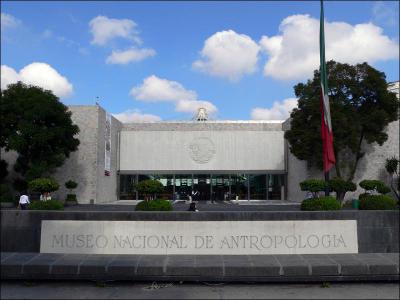
3) National Museum of Anthropology (must see)
Situated between Paseo de la Reforma (Promenade of the Reform) and Calle Mahatma Gandhi (Mahatma Gandhi Street), within the enchanting Chapultepec Park stands the National Museum of Anthropology. This esteemed institution is devoted to safeguarding the invaluable archaeological and anthropological legacy of pre-Columbian Mexico while also fostering an appreciation for contemporary Mexican ethnography.
The museum building itself boasts a striking modernist design, featuring an array of halls encircling a central courtyard adorned with a serene pond. Dominating the courtyard is a grand concrete umbrella, elegantly upheld by a solitary pillar, with an artificial cascade gracefully descending around it. Each hall is encompassed by beautifully landscaped gardens, some even showcasing outdoor exhibits that add to the allure of the surroundings.
Within the museum's collection lie numerous artifacts of immense significance, such as the renowned Aztec Stone of the Sun, an exquisite 16th-century Aztec Statue of Xochipilli, and the ancient 8th-century tomb of Mayan ruler Pacal. Among the treasures, you'll also discover a fascinating monkey cup crafted from black obsidian and imposing stone heads hailing from the Olmec civilization. The institution further captivates visitors with astonishing reproductions of Mayan murals within a meticulously reconstructed temple.
But the museum's role extends beyond the exploration of pre-Columbian anthropology; it goes the extra mile to illuminate the lives of modern-day ethnic groups in Mexico. As visitors delve into the rich tapestry of the past, they are also enlightened about the contemporary existence and lifestyles of various ethnic communities throughout the country.
In essence, the National Museum of Anthropology not only preserves history but also serves as an enlightening bridge connecting the heritage of ancient Mexico to the vibrant diversity of present-day Mexican culture.
Why You Should Visit:
On par with the best museums of this type in the world. Your camera will smoke from all the pictures!
Excellent layout/curatorship and they have a delicious restaurant with economically priced dishes, as well as excellent crafted silver jewels at an affordable price.
Tip:
Arrive promptly at opening time to avoid larger crowds later in the day.
Exhibit labels in English are available for major items. Load Google translate on your phone/tablet and use the image translator feature to translate the exhibit descriptions.
The museum building itself boasts a striking modernist design, featuring an array of halls encircling a central courtyard adorned with a serene pond. Dominating the courtyard is a grand concrete umbrella, elegantly upheld by a solitary pillar, with an artificial cascade gracefully descending around it. Each hall is encompassed by beautifully landscaped gardens, some even showcasing outdoor exhibits that add to the allure of the surroundings.
Within the museum's collection lie numerous artifacts of immense significance, such as the renowned Aztec Stone of the Sun, an exquisite 16th-century Aztec Statue of Xochipilli, and the ancient 8th-century tomb of Mayan ruler Pacal. Among the treasures, you'll also discover a fascinating monkey cup crafted from black obsidian and imposing stone heads hailing from the Olmec civilization. The institution further captivates visitors with astonishing reproductions of Mayan murals within a meticulously reconstructed temple.
But the museum's role extends beyond the exploration of pre-Columbian anthropology; it goes the extra mile to illuminate the lives of modern-day ethnic groups in Mexico. As visitors delve into the rich tapestry of the past, they are also enlightened about the contemporary existence and lifestyles of various ethnic communities throughout the country.
In essence, the National Museum of Anthropology not only preserves history but also serves as an enlightening bridge connecting the heritage of ancient Mexico to the vibrant diversity of present-day Mexican culture.
Why You Should Visit:
On par with the best museums of this type in the world. Your camera will smoke from all the pictures!
Excellent layout/curatorship and they have a delicious restaurant with economically priced dishes, as well as excellent crafted silver jewels at an affordable price.
Tip:
Arrive promptly at opening time to avoid larger crowds later in the day.
Exhibit labels in English are available for major items. Load Google translate on your phone/tablet and use the image translator feature to translate the exhibit descriptions.
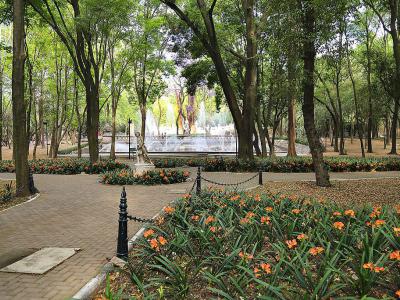
4) Bosque de Chapultepec (must see)
Chapultepec, also called Chapultepec Forest (Bosque de Chapultepec), is one of the largest urban parks in the Western Hemisphere, covering over 686 hectares (1,695 acres). It's an ecological sanctuary in Greater Mexico City, known as the city's primary "lungs," with historical significance dating back to the Pre-Columbian era. The park houses Chapultepec Hill and Chapultepec Castle, which was the official residence of Mexican heads of state until 1940 when it was moved to Los Pinos within the park.
Chapultepec Park is one of the world's largest urban parks, along with Central Park in New York City, Bois de Boulogne in Paris, and the Imperial Gardens in Tokyo. Its name comes from the Nahuatl language, meaning "at the grasshopper hill." Originally a sacred forest outside Tenochtitlan, it is now surrounded by the city and divided into three sections. The park features museums, amusement parks, pathways, sculptures, lakes, and fountains. Paseo de la Reforma cuts through a part of its northern side.
Chapultepec Park is an essential part of the city's ecological health. It replenishes oxygen, recharges aquifers, and helps mitigate the "heat-island" effect. The park is a sanctuary for migratory birds and supports various native species. It is also home to endangered species and has a diverse range of flora, including Montezuma cypress trees.
Chapultepec Park holds immense cultural, historical, and recreational value. It features archaeological treasures dating back to the Toltecs, including ruins from pre-Columbian to colonial times. Among them are the remarkable Baths of Moctezuma, an intricate system built by the Aztecs. The park and Chapultepec Castle atop the hill are recognized as a Mexican heritage site by the Instituto Nacional de Antropología e Historia. They were also proposed for consideration as a World Heritage Site in 2001.
With an estimated 15 million annual visitors and over 250,000 daily visits, Chapultepec Park is a beloved destination. Sundays are particularly popular, as museums offer free entry, allowing visitors to spend the entire day exploring various sections, enjoying picnics, or having barbecues.
Chapultepec Park is one of the world's largest urban parks, along with Central Park in New York City, Bois de Boulogne in Paris, and the Imperial Gardens in Tokyo. Its name comes from the Nahuatl language, meaning "at the grasshopper hill." Originally a sacred forest outside Tenochtitlan, it is now surrounded by the city and divided into three sections. The park features museums, amusement parks, pathways, sculptures, lakes, and fountains. Paseo de la Reforma cuts through a part of its northern side.
Chapultepec Park is an essential part of the city's ecological health. It replenishes oxygen, recharges aquifers, and helps mitigate the "heat-island" effect. The park is a sanctuary for migratory birds and supports various native species. It is also home to endangered species and has a diverse range of flora, including Montezuma cypress trees.
Chapultepec Park holds immense cultural, historical, and recreational value. It features archaeological treasures dating back to the Toltecs, including ruins from pre-Columbian to colonial times. Among them are the remarkable Baths of Moctezuma, an intricate system built by the Aztecs. The park and Chapultepec Castle atop the hill are recognized as a Mexican heritage site by the Instituto Nacional de Antropología e Historia. They were also proposed for consideration as a World Heritage Site in 2001.
With an estimated 15 million annual visitors and over 250,000 daily visits, Chapultepec Park is a beloved destination. Sundays are particularly popular, as museums offer free entry, allowing visitors to spend the entire day exploring various sections, enjoying picnics, or having barbecues.

5) Polanco (must see)
Polanco, situated in the Miguel Hidalgo borough of Mexico City, is a well-to-do neighborhood renowned for its luxurious shopping on Presidente Masaryk Avenue, which holds the distinction of being the most expensive street in Mexico. Additionally, the area is celebrated for housing several prominent cultural establishments.
Initially consisting of grand single-family residences, Polanco experienced a transformation in land use during the latter half of the 20th century. Following the 1985 Mexico City earthquake, the neighborhood's residential properties gave way to commercial spaces and towering buildings. Today, Polanco is predominantly recognized as a thriving shopping district.
Often referred to as the "Beverly Hills of Mexico," Polanco boasts an exceptionally high concentration of luxury boutiques, top-tier restaurants, affluent individuals, upscale hotels, and numerous diplomatic missions and embassies. It stands as one of Latin America's most costly real estate markets.
To the north of Polanco lies a newer development dubbed "Nuevo Polanco." This bustling business district houses prominent companies like BBVA, WeWork, and Telecel, alongside important cultural landmarks like the Museo Soumaya and the Colección Jumex. It's important to note that Nuevo Polanco officially falls within the colonias of Granada and Ampliación Granada, making it a distinct entity from the original Polanco neighborhood. Despite this, the two areas are sometimes collectively referred to together.
Initially consisting of grand single-family residences, Polanco experienced a transformation in land use during the latter half of the 20th century. Following the 1985 Mexico City earthquake, the neighborhood's residential properties gave way to commercial spaces and towering buildings. Today, Polanco is predominantly recognized as a thriving shopping district.
Often referred to as the "Beverly Hills of Mexico," Polanco boasts an exceptionally high concentration of luxury boutiques, top-tier restaurants, affluent individuals, upscale hotels, and numerous diplomatic missions and embassies. It stands as one of Latin America's most costly real estate markets.
To the north of Polanco lies a newer development dubbed "Nuevo Polanco." This bustling business district houses prominent companies like BBVA, WeWork, and Telecel, alongside important cultural landmarks like the Museo Soumaya and the Colección Jumex. It's important to note that Nuevo Polanco officially falls within the colonias of Granada and Ampliación Granada, making it a distinct entity from the original Polanco neighborhood. Despite this, the two areas are sometimes collectively referred to together.
6) Museo Soumaya (must see)
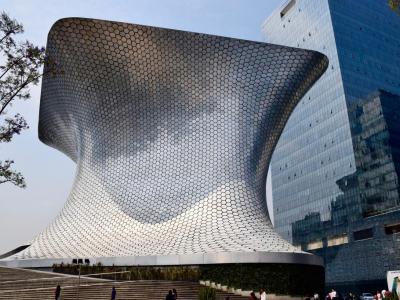
Situated in the Nuevo Polanco area of Mexico City, the Museo Soumaya stands as a remarkable private institution. Offering free admission, this museum is proudly owned by the Carlos Slim Foundation and houses an extensive and diverse collection of art, religious relics, historical documents, and coins, belonging to Carlos Slim and his late wife, Soumaya, who serves as the museum's namesake. With a focus on European artists spanning the 15th to the 20th century, it boasts masterpieces from renowned creators.
Founded in 1994, the museum took a major stride in 2011 with the inauguration of its new location, an architectural marvel that came at a staggering cost of over $70 million. Designed by the skilled Mexican architect Fernando Romero, who happens to be married to one of Carlos Slim's daughters, the new building is an awe-inspiring sight, resembling a glistening silver cloud, reminiscent of a Rodin sculpture. The collaborative efforts of engineering maestros Ove Arup and Frank Gehry ensured its grandeur and magnificence.
Why You Should Visit:
With no ticket cost, this has got to one of be the best-valued museums ever!
While the top floor of Rodin sculptures makes the highlight, each floor is absolutely packed with paintings, sculptures, letters and artifacts.
The outside of the building itself is a piece of art that mandates as many pictures as the art inside.
Impressively, the interior architecture is just as striking and mirrors the circular feel of the exterior.
Tip:
Make sure that you go all the way to the top and try not to use the elevator to really appreciate the building.
Founded in 1994, the museum took a major stride in 2011 with the inauguration of its new location, an architectural marvel that came at a staggering cost of over $70 million. Designed by the skilled Mexican architect Fernando Romero, who happens to be married to one of Carlos Slim's daughters, the new building is an awe-inspiring sight, resembling a glistening silver cloud, reminiscent of a Rodin sculpture. The collaborative efforts of engineering maestros Ove Arup and Frank Gehry ensured its grandeur and magnificence.
Why You Should Visit:
With no ticket cost, this has got to one of be the best-valued museums ever!
While the top floor of Rodin sculptures makes the highlight, each floor is absolutely packed with paintings, sculptures, letters and artifacts.
The outside of the building itself is a piece of art that mandates as many pictures as the art inside.
Impressively, the interior architecture is just as striking and mirrors the circular feel of the exterior.
Tip:
Make sure that you go all the way to the top and try not to use the elevator to really appreciate the building.
7) Palacio Nacional (National Palace) (must see)
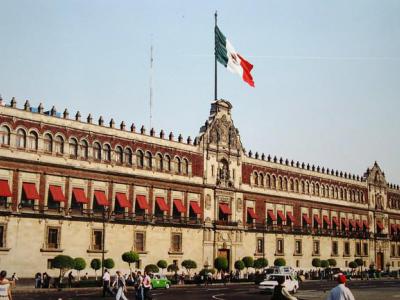
Stretching for over 200 meters (660 feet) across the entire east side of the Zócalo is the National Palace (Palacio Nacional), the official residence of the President of Mexico. Renowned for its grand red facade, made of volcanic rock called tezontle, this place has been the seat of a ruling class since the pre-Hispanic era. Much of the construction material for the current building was taken from the original palace of the 16th-century Aztec Emperor, Moctezuma II, which stood on this site and whose richness surprised the Spanish upon their arrival.
During the Conquest, the old palace wasn't completely destroyed. In the 1520s, Hernán Cortés built on its ruins a massive fortress which later became the official home for Spanish viceroys governing the colonies. The Spanish crown bought the property from the Cortés family in 1562 and thence called it the Palace of the Viceroy (Palacio del Virrey).
After the Mexican War of Independence in the 1820s, the building was renamed the "National Palace" and underwent structural changes. For a brief period, it was occupied by the country's two self-proclaimed emperors, Agustin de Iturbide and Maximilian I, and later became home to the first president of Mexico, Guadalupe Victoria.
The original church bell from the town of Dolores Hidalgo in Guanajuato state (once used to call for a rebellion against Spain in 1810) is now hung over the palace's main balcony. Each year, on Independence Day, September 15th, the president of Mexico rings the Dolores Bell in commemoration of that event.
The Palace has fourteen courtyards, of which only a few, like the Grand Courtyard, are open to the public. Here, the main stairwell and the walls (on the second floor) are adorned with murals by Diego Rivera, depicting the history of Mexico from 1521 to 1930, jointly titled "The Epic of the Mexican People".
Painted between 1929 and 1935, the work is presented in the form of a triptych, with the right-hand murals featuring pre-Hispanic Mexico centered around the life of the Aztec god Quetzalcóatl. The most extensive panel, in the middle, called the Conquest, showcases the sufferings endured by the indigenous people. The one on the left-hand side is dedicated to the early and mid-20th century, depicting a Marxist kind of utopia and featuring, among other persons, Diego's wife, Frida Kahlo.
Tip:
Since this is a government building, in order to get in you need to produce either a valid driver's license or passport. Bags, bottled water, hats, and sunglasses are not allowed.
During the Conquest, the old palace wasn't completely destroyed. In the 1520s, Hernán Cortés built on its ruins a massive fortress which later became the official home for Spanish viceroys governing the colonies. The Spanish crown bought the property from the Cortés family in 1562 and thence called it the Palace of the Viceroy (Palacio del Virrey).
After the Mexican War of Independence in the 1820s, the building was renamed the "National Palace" and underwent structural changes. For a brief period, it was occupied by the country's two self-proclaimed emperors, Agustin de Iturbide and Maximilian I, and later became home to the first president of Mexico, Guadalupe Victoria.
The original church bell from the town of Dolores Hidalgo in Guanajuato state (once used to call for a rebellion against Spain in 1810) is now hung over the palace's main balcony. Each year, on Independence Day, September 15th, the president of Mexico rings the Dolores Bell in commemoration of that event.
The Palace has fourteen courtyards, of which only a few, like the Grand Courtyard, are open to the public. Here, the main stairwell and the walls (on the second floor) are adorned with murals by Diego Rivera, depicting the history of Mexico from 1521 to 1930, jointly titled "The Epic of the Mexican People".
Painted between 1929 and 1935, the work is presented in the form of a triptych, with the right-hand murals featuring pre-Hispanic Mexico centered around the life of the Aztec god Quetzalcóatl. The most extensive panel, in the middle, called the Conquest, showcases the sufferings endured by the indigenous people. The one on the left-hand side is dedicated to the early and mid-20th century, depicting a Marxist kind of utopia and featuring, among other persons, Diego's wife, Frida Kahlo.
Tip:
Since this is a government building, in order to get in you need to produce either a valid driver's license or passport. Bags, bottled water, hats, and sunglasses are not allowed.
