Custom Walk in Bern, Switzerland by balasevde_2fca99 created on 2026-01-18
Guide Location: Switzerland » Bern
Guide Type: Custom Walk
# of Sights: 5
Tour Duration: 1 Hour(s)
Travel Distance: 2.6 Km or 1.6 Miles
Share Key: 7RYCE
Guide Type: Custom Walk
# of Sights: 5
Tour Duration: 1 Hour(s)
Travel Distance: 2.6 Km or 1.6 Miles
Share Key: 7RYCE
How It Works
Please retrieve this walk in the GPSmyCity app. Once done, the app will guide you from one tour stop to the next as if you had a personal tour guide. If you created the walk on this website or come to the page via a link, please follow the instructions below to retrieve the walk in the app.
Retrieve This Walk in App
Step 1. Download the app "GPSmyCity: Walks in 1K+ Cities" on Apple App Store or Google Play Store.



Step 2. In the GPSmyCity app, download(or launch) the guide "Bern Map and Walking Tours".
Step 3. Tap the menu button located at upper right corner of the "Walks" screen and select "Retrieve custom walk". Enter the share key: 7RYCE
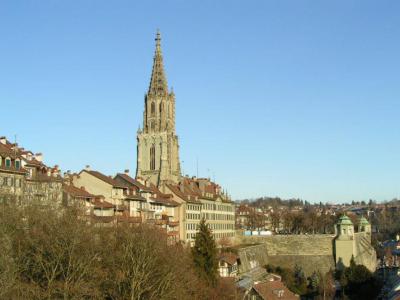
1) Berner Münster (The Cathedral of Bern) (must see)
The Cathedral of Bern (Berner Münster) stands prominently in the Old City of Bern as a symbol of the city-state's burgeoning power. This Swiss Reformed cathedral, constructed in the Gothic style, began its development in 1421. However, its iconic tower, reaching 100.6 meters (330 feet), was not completed until 1893, making it the tallest cathedral in Switzerland. Due to its architectural and cultural significance, it has been designated as a Cultural Property of National Significance.
Designed to impress both citizens and foreign visitors, the cathedral's interior boasts a central nave that exemplifies the Gothic style, featuring an elegant and intricate design with grand stained glass windows and various altars in its side chapels. The Gothic architecture also enabled a higher central nave and expansive windows, contributing to an airy and well-lit ambiance.
The cathedral's most striking feature is its main portal, which portrays the Last Judgement in an impressive display of 47 large statues and 170 smaller figures. This depiction, which survived the Protestant Reformation's iconoclasm, is regarded as one of the finest in Europe, illustrating the division of the righteous and the wicked with remarkable artistry.
Tip:
If you are so inclined on a beautiful day, climb the steeple. There is an access charge but if the weather is nice, you get a very nice view of Bern and the Alps. Be cautious of your time as you can be right next to the ten-ton bell (the largest in the whole of Switzerland) when it rings at 6 pm. While it is possible to stand near the bells when they are rung, it is necessary to cover your ears to prevent hearing damage.
Designed to impress both citizens and foreign visitors, the cathedral's interior boasts a central nave that exemplifies the Gothic style, featuring an elegant and intricate design with grand stained glass windows and various altars in its side chapels. The Gothic architecture also enabled a higher central nave and expansive windows, contributing to an airy and well-lit ambiance.
The cathedral's most striking feature is its main portal, which portrays the Last Judgement in an impressive display of 47 large statues and 170 smaller figures. This depiction, which survived the Protestant Reformation's iconoclasm, is regarded as one of the finest in Europe, illustrating the division of the righteous and the wicked with remarkable artistry.
Tip:
If you are so inclined on a beautiful day, climb the steeple. There is an access charge but if the weather is nice, you get a very nice view of Bern and the Alps. Be cautious of your time as you can be right next to the ten-ton bell (the largest in the whole of Switzerland) when it rings at 6 pm. While it is possible to stand near the bells when they are rung, it is necessary to cover your ears to prevent hearing damage.
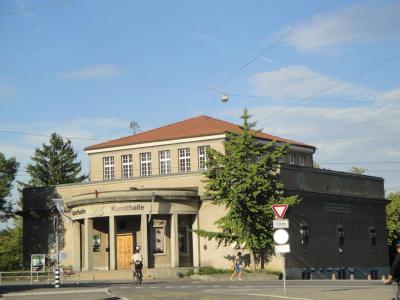
2) Kunsthalle (Art Gallery)
The Bern Art Gallery (Kunsthalle Bern), located on Helvetiaplatz in Bern, is renowned for showcasing contemporary art. Founded in 1918, the institution is dedicated to presenting a diverse array of artworks by emerging and established artists, both locally and globally. Over more than a century, the gallery has solidified its reputation as a significant venue for contemporary art exhibitions. Its historical significance and innovative approach have made it an essential study resource for twentieth-century exhibition history.
This internationally acclaimed gallery gained prominence through solo exhibitions by notable artists like On Kawara, Paul Klee, Christo, Alberto Giacometti, Jasper Johns, and Sol LeWitt, among others. Harald Szeemann’s groundbreaking 1969 group exhibition, "Live In Your Head: When Attitudes Become Form," remains a seminal moment in curatorial history, influencing subsequent generations of curators and artists alike. The impact of this exhibition has been revisited in recent years through various shows, including those at Fondazione Prada and the Art Gallery itself.
In 1968, on the institution's 50th anniversary, it became the first building ever to be entirely wrapped by Christo and Jeanne-Claude, highlighting the Art Gallery’s pioneering spirit.
The Bern Art Gallery collaborates regularly with local institutions, such as the Bern University of the Arts (HKB) and the Institute of Art History at the University of Bern, to engage in the discourse surrounding contemporary art and its societal implications. It remains a vibrant space for the production, presentation, and mediation of contemporary art, forging new paths and engaging future generations through its innovative programs.
This internationally acclaimed gallery gained prominence through solo exhibitions by notable artists like On Kawara, Paul Klee, Christo, Alberto Giacometti, Jasper Johns, and Sol LeWitt, among others. Harald Szeemann’s groundbreaking 1969 group exhibition, "Live In Your Head: When Attitudes Become Form," remains a seminal moment in curatorial history, influencing subsequent generations of curators and artists alike. The impact of this exhibition has been revisited in recent years through various shows, including those at Fondazione Prada and the Art Gallery itself.
In 1968, on the institution's 50th anniversary, it became the first building ever to be entirely wrapped by Christo and Jeanne-Claude, highlighting the Art Gallery’s pioneering spirit.
The Bern Art Gallery collaborates regularly with local institutions, such as the Bern University of the Arts (HKB) and the Institute of Art History at the University of Bern, to engage in the discourse surrounding contemporary art and its societal implications. It remains a vibrant space for the production, presentation, and mediation of contemporary art, forging new paths and engaging future generations through its innovative programs.

3) Barengraben (and BarenPark)
The Bear Pit (Bärengraben), alongside its more recent addition, the BärenPark, is a significant tourist attraction in Bern. Situated at the eastern edge of the old city, near the Nydeggbrücke bridge and the River Aar, these facilities offer a unique glimpse into the symbol of Bern-the bear, which also adorns the city and canton's coat of arms.
The history of bears in Bern dates back to 1191 when Duke Berthold V of Zähringen supposedly named the city after the first animal encountered during a hunt-a bear. This legend underscores the bear's enduring significance to Bern. The tradition of keeping bears in the city was documented starting in 1513 when bears were brought back as spoils of war.
Originally housed in various locations throughout the city, the first official bear pit was established in what is now known as Bear Place (Bärenplatz) in 1857. In response to evolving views on animal welfare and legal changes, the Bear Pit was thoroughly renovated between 1994 and 1996. However, continuing concerns about the conditions led to the opening of the BärenPark in 2009. This newer, more expansive, and naturalistic habitat is located on the sloping banks of the River Aar, adjacent to the old pit.
Both the Bear Pit and BärenPark are managed as part of Bern's Dählhölzli Zoo. The Bear Pit itself is a Swiss heritage site of national significance, reflecting its historical and cultural importance. The facilities are interconnected by a tunnel that allows bears to move freely between the old pit and the new park. Additionally, the original smaller pit has been repurposed to support facility operations and public engagement.
In 2015, the installation of the Schräglift Bärenpark, an inclined lift, further enhanced accessibility, making it easier for visitors to explore the steeply sloped BärenPark. This development signifies Bern's ongoing commitment to improving both the welfare of its bear population and the visitor experience.
The history of bears in Bern dates back to 1191 when Duke Berthold V of Zähringen supposedly named the city after the first animal encountered during a hunt-a bear. This legend underscores the bear's enduring significance to Bern. The tradition of keeping bears in the city was documented starting in 1513 when bears were brought back as spoils of war.
Originally housed in various locations throughout the city, the first official bear pit was established in what is now known as Bear Place (Bärenplatz) in 1857. In response to evolving views on animal welfare and legal changes, the Bear Pit was thoroughly renovated between 1994 and 1996. However, continuing concerns about the conditions led to the opening of the BärenPark in 2009. This newer, more expansive, and naturalistic habitat is located on the sloping banks of the River Aar, adjacent to the old pit.
Both the Bear Pit and BärenPark are managed as part of Bern's Dählhölzli Zoo. The Bear Pit itself is a Swiss heritage site of national significance, reflecting its historical and cultural importance. The facilities are interconnected by a tunnel that allows bears to move freely between the old pit and the new park. Additionally, the original smaller pit has been repurposed to support facility operations and public engagement.
In 2015, the installation of the Schräglift Bärenpark, an inclined lift, further enhanced accessibility, making it easier for visitors to explore the steeply sloped BärenPark. This development signifies Bern's ongoing commitment to improving both the welfare of its bear population and the visitor experience.
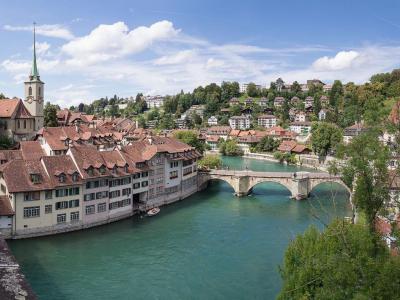
4) Untertorbrucke (Lower Gate Bridge)
The Lower Gate Bridge (Untertorbrücke) is an integral piece of Bern, Switzerland's architectural and historical heritage. This historic stone arch bridge, which spans the Aare River, was initially constructed in 1256, making it the oldest of Bern's Aare bridges. For centuries, it served as the sole bridge connecting the Old City to the eastern bank of the river, reflecting its vital role in the city’s early development.
The bridge's origins trace back to the urgent need for a river crossing after Bern's founding in 1191. Conflict soon arose with Count Hartmann of Kyburg, leading to a mediated peace allowing for the bridge’s completion. Initially built from oak wood and possibly partially covered, it featured fortifications including a fortified tower and a central guard house. The bridge endured significant historical events, including surviving an attack during King Rudolph of Habsburg's second siege of Bern in 1288.
In 1460, after being severely damaged by a flood, a decision was made to reconstruct the bridge in stone. The work was entrusted to a master from Zurich, leading to significant improvements including new fortifications and a chapel consecrated by 1467. However, construction faced delays due to financial strains and conflicts, finally completing in the late 15th century.
Throughout the following centuries, the bridge’s fortifications were enhanced, including the addition of crenelated stone walls and covered battlements. By the 18th century, however, these medieval fortifications lost their military relevance and became traffic hindrances, leading to major renovations in 1757. The original military features were removed, and new decorative elements, including a baroque triumphal arch, were added.
Subsequent modifications in the 19th century further altered its appearance; iron railings replaced sandstone parapets, and significant structures such as the eastern gate and drawbridge were dismantled to ease local congestion.
Today, the Lower Gate Bridge stands primarily as a vestige of its medieval core, stripped of its extensive fortifications and baroque embellishments. It now serves as a quiet testament to Bern’s long history, encapsulating centuries of architectural and urban evolution. No longer an active bridge, it remains a symbolic link to the city’s past, continuing to offer a glimpse into the historical narrative of Bern.
The bridge's origins trace back to the urgent need for a river crossing after Bern's founding in 1191. Conflict soon arose with Count Hartmann of Kyburg, leading to a mediated peace allowing for the bridge’s completion. Initially built from oak wood and possibly partially covered, it featured fortifications including a fortified tower and a central guard house. The bridge endured significant historical events, including surviving an attack during King Rudolph of Habsburg's second siege of Bern in 1288.
In 1460, after being severely damaged by a flood, a decision was made to reconstruct the bridge in stone. The work was entrusted to a master from Zurich, leading to significant improvements including new fortifications and a chapel consecrated by 1467. However, construction faced delays due to financial strains and conflicts, finally completing in the late 15th century.
Throughout the following centuries, the bridge’s fortifications were enhanced, including the addition of crenelated stone walls and covered battlements. By the 18th century, however, these medieval fortifications lost their military relevance and became traffic hindrances, leading to major renovations in 1757. The original military features were removed, and new decorative elements, including a baroque triumphal arch, were added.
Subsequent modifications in the 19th century further altered its appearance; iron railings replaced sandstone parapets, and significant structures such as the eastern gate and drawbridge were dismantled to ease local congestion.
Today, the Lower Gate Bridge stands primarily as a vestige of its medieval core, stripped of its extensive fortifications and baroque embellishments. It now serves as a quiet testament to Bern’s long history, encapsulating centuries of architectural and urban evolution. No longer an active bridge, it remains a symbolic link to the city’s past, continuing to offer a glimpse into the historical narrative of Bern.
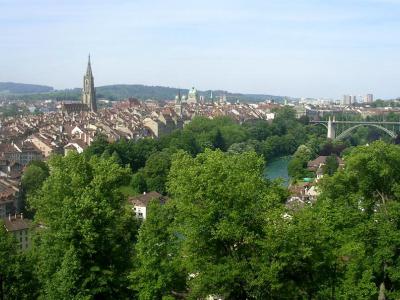
5) Rosengarten (Rose Garden) (must see)
Any lover of the great outdoors should not miss Rosengarten, Bern's beautiful Rose Garden. It is worth a trip to the Swiss city just to see the more than 400 varities of roses and irises that populate the park.
In additional to roses, there are over 20 varieties of rhododendrons. There is also a water lily pond, Japanese cherry trees and 12 linden trees.
In addition to the flora, the park has space for lounging, walking or simply enjoying the city. Visitors can sit on park benches, read at the pavilion and attached library, explore the playground or even build a sandcastle. Rosengarten offers excellent views of Bern, which makes it the perfect spot for photographers.
Tourists can also stop to eat at the Rosengarten restaurant or have a picnic lunch within the garden itself while spying the banks of the Aare or admiring one of the park's statues. A recent tribute to Albert Einstein is one such statue that is often appreciated by visitors.
This park was turned into a recreational public space in 1913. Prior to that, it served as a cemetery from 1765 to 1877.
Why You Should Visit:
To get some of the best views of Bern
To give children a safe and open place to run and play
Tips:
Visitors can Rosengarten any time of the year. While the roses bloom in the summer months, changing fall leaves and spring cherry blossoms are beautiful sights. Even the winter offers views that cannot be replicated anywhere else in Bern.
In additional to roses, there are over 20 varieties of rhododendrons. There is also a water lily pond, Japanese cherry trees and 12 linden trees.
In addition to the flora, the park has space for lounging, walking or simply enjoying the city. Visitors can sit on park benches, read at the pavilion and attached library, explore the playground or even build a sandcastle. Rosengarten offers excellent views of Bern, which makes it the perfect spot for photographers.
Tourists can also stop to eat at the Rosengarten restaurant or have a picnic lunch within the garden itself while spying the banks of the Aare or admiring one of the park's statues. A recent tribute to Albert Einstein is one such statue that is often appreciated by visitors.
This park was turned into a recreational public space in 1913. Prior to that, it served as a cemetery from 1765 to 1877.
Why You Should Visit:
To get some of the best views of Bern
To give children a safe and open place to run and play
Tips:
Visitors can Rosengarten any time of the year. While the roses bloom in the summer months, changing fall leaves and spring cherry blossoms are beautiful sights. Even the winter offers views that cannot be replicated anywhere else in Bern.
