Custom Walk in Paris, France by alex-scutt_5c82b8 created on 2026-01-21
Guide Location: France » Paris
Guide Type: Custom Walk
# of Sights: 11
Tour Duration: 4 Hour(s)
Travel Distance: 9 Km or 5.6 Miles
Share Key: JFBV9
Guide Type: Custom Walk
# of Sights: 11
Tour Duration: 4 Hour(s)
Travel Distance: 9 Km or 5.6 Miles
Share Key: JFBV9
How It Works
Please retrieve this walk in the GPSmyCity app. Once done, the app will guide you from one tour stop to the next as if you had a personal tour guide. If you created the walk on this website or come to the page via a link, please follow the instructions below to retrieve the walk in the app.
Retrieve This Walk in App
Step 1. Download the app "GPSmyCity: Walks in 1K+ Cities" on Apple App Store or Google Play Store.



Step 2. In the GPSmyCity app, download(or launch) the guide "Paris Map and Walking Tours".
Step 3. Tap the menu button located at upper right corner of the "Walks" screen and select "Retrieve custom walk". Enter the share key: JFBV9
1) Place du Trocadero (Trocadero Square)
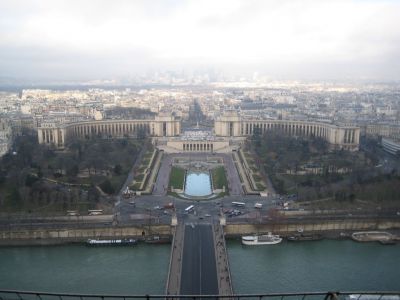
Known for its stunning views of the Eiffel Tower and its diverse range of attractions, this square offers a memorable experience with its architectural beauty, cultural landmarks, and recreational opportunities.
The centerpiece of Place du Trocadéro is the Trocadéro Gardens, a meticulously landscaped park adorned with fountains, statues, and lush greenery. It serves as a popular gathering spot for locals and tourists alike, providing a serene atmosphere to relax, have a picnic, or simply enjoy the picturesque surroundings.
Another highlight is the Trocadéro Palace (a.k.a. the Palais de Chaillot), which houses the Musée de l'Homme (Museum of Mankind) and the Cité de l'Architecture et du Patrimoine (Museum of Architecture and Heritage), offering fascinating exhibits that delve into human anthropology and the evolution of architecture for an enriching educational experience.
As one of the best vantage points in the city, the square is strategically located across the Seine River from the iconic Eiffel Tower, allowing visitors to capture stunning photographs and admire the tower's intricate ironwork from a unique perspective. Whether during the day when it sparkles in the sunlight or at night when it is illuminated, the view from Place du Trocadéro never fails to captivate.
For those seeking entertainment, the area surrounding the square boasts a vibrant atmosphere with an array of restaurants, cafes, and shops. Visitors can indulge in a delicious meal while taking in the view, sip on a coffee at a sidewalk café, or explore the boutiques and galleries in the vicinity.
Additionally, Place du Trocadéro serves as a venue for various events and festivals throughout the year. From live music performances to cultural celebrations, there is often something happening in the square that adds to its lively and dynamic character.
Why You Should Visit:
Whether you're interested in history, art, photography, or simply enjoying the ambiance of a vibrant square, Place du Trocadéro is sure to be a memorable part of any trip to Paris.
The centerpiece of Place du Trocadéro is the Trocadéro Gardens, a meticulously landscaped park adorned with fountains, statues, and lush greenery. It serves as a popular gathering spot for locals and tourists alike, providing a serene atmosphere to relax, have a picnic, or simply enjoy the picturesque surroundings.
Another highlight is the Trocadéro Palace (a.k.a. the Palais de Chaillot), which houses the Musée de l'Homme (Museum of Mankind) and the Cité de l'Architecture et du Patrimoine (Museum of Architecture and Heritage), offering fascinating exhibits that delve into human anthropology and the evolution of architecture for an enriching educational experience.
As one of the best vantage points in the city, the square is strategically located across the Seine River from the iconic Eiffel Tower, allowing visitors to capture stunning photographs and admire the tower's intricate ironwork from a unique perspective. Whether during the day when it sparkles in the sunlight or at night when it is illuminated, the view from Place du Trocadéro never fails to captivate.
For those seeking entertainment, the area surrounding the square boasts a vibrant atmosphere with an array of restaurants, cafes, and shops. Visitors can indulge in a delicious meal while taking in the view, sip on a coffee at a sidewalk café, or explore the boutiques and galleries in the vicinity.
Additionally, Place du Trocadéro serves as a venue for various events and festivals throughout the year. From live music performances to cultural celebrations, there is often something happening in the square that adds to its lively and dynamic character.
Why You Should Visit:
Whether you're interested in history, art, photography, or simply enjoying the ambiance of a vibrant square, Place du Trocadéro is sure to be a memorable part of any trip to Paris.
2) Palais de Chaillot (Chaillot Palace)
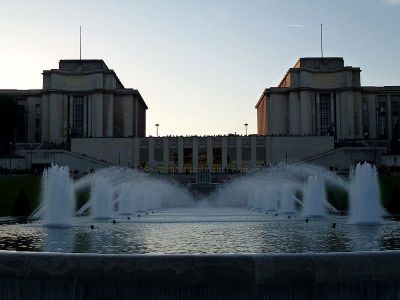
Built in 1937 for the International Exposition of Arts and Technology in Modern Life, which was held to celebrate the achievements of the modern era, this grand complex located in the Trocadéro area of Paris was designed by architects Louis-Hippolyte Boileau, Jacques Carlu, and Léon Azéma, having replaced the original Palais du Trocadéro, previously erected for the 1878 World's Fair.
The Palais de Chaillot is famous for its grand architecture and stunning views of the Eiffel Tower and the Seine River. The complex consists of two large wings connected by a central section, which houses the esplanade and the Jardins du Trocadéro. The main façade is adorned with sculptures, reliefs, and fountains, all of which celebrate the arts, science, and industry.
The palace houses several museums and institutions, including the Musée de l'Homme, dedicated to the study of anthropology, the Musée National de la Marine, showcasing France's naval history, and the popular performing arts venue, Théâtre National de Chaillot, that hosts a range of shows, including theater, dance, and music.
Throughout its history, the Palais de Chaillot has been the site of several important events, including the signing of the Universal Declaration of Human Rights in 1948, the G7 summit in 1982, and the 21st Conference of Parties (COP21) in 2015. Today, it remains an important cultural and historical Parisian landmark, attracting visitors who come to admire its grand architecture, enjoy its cultural offerings, and take in its breathtaking views.
Tip:
Exercise caution and remain vigilant of your belongings while in this popular location.
The Palais de Chaillot is famous for its grand architecture and stunning views of the Eiffel Tower and the Seine River. The complex consists of two large wings connected by a central section, which houses the esplanade and the Jardins du Trocadéro. The main façade is adorned with sculptures, reliefs, and fountains, all of which celebrate the arts, science, and industry.
The palace houses several museums and institutions, including the Musée de l'Homme, dedicated to the study of anthropology, the Musée National de la Marine, showcasing France's naval history, and the popular performing arts venue, Théâtre National de Chaillot, that hosts a range of shows, including theater, dance, and music.
Throughout its history, the Palais de Chaillot has been the site of several important events, including the signing of the Universal Declaration of Human Rights in 1948, the G7 summit in 1982, and the 21st Conference of Parties (COP21) in 2015. Today, it remains an important cultural and historical Parisian landmark, attracting visitors who come to admire its grand architecture, enjoy its cultural offerings, and take in its breathtaking views.
Tip:
Exercise caution and remain vigilant of your belongings while in this popular location.
3) Tour Eiffel (Eiffel Tower) (must see)
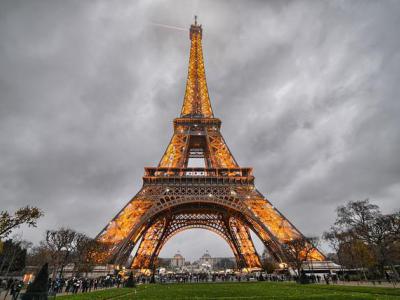
Equally grand from whatever angle you look at it, whether just walking past or watching it from a distance, day or night, the Eiffel Tower lives up to its iconic status easily. The wrought-iron lattice structure on the Field of Mars in Paris was designed by engineer Gustave Eiffel and built between 1887 and 1889. Known locally as the "Iron Lady," it was the centerpiece of the 1889 World's Fair, celebrating the centennial of the French Revolution.
Illuminated by gas lamps at night, the tower was a major attraction from the very beginning, although not to everyone's taste. Before its construction even started, a group of prominent French artists and intellectuals, including writer Guy de Maupassant, condemned the tower as a "monstrous" and "useless" structure that would overshadow Paris' landmarks. By 1918, however, it had become an iconic symbol of Paris – and France – and since then has been one of the most recognizable landmarks in the world.
Standing at 330 meters (or 1,083 feet), the Eiffel Tower is the tallest structure in Paris. It has three levels for visitors, with restaurants on the first and second. The top level, at 276 meters (or 906 feet), offers the highest public observation deck in the European Union. Visitors can ascend via stairs or lift, with 600 steps required to reach the second level. The third level, typically accessed by lift, features a private apartment once used by Gustave Eiffel, where he hosted honorable guests like Thomas Edison.
In recognition of their contribution to the construction, the tower is engraved with the names of 72 French scientists, engineers, and mathematicians.
Unlike other high risers, the Eiffel Tower is there for visitors only. In Paris, where tall buildings are still in short supply, the bird's eye view from the top of the tower is truly unique and indeed breathtaking. In 2022, the tower welcomed nearly six million visitors, becoming the most visited paid monument globally.
The Eiffel Tower is painted in three shades: darker at the bottom, getting progressively lighter towards the top to complement the Parisian sky. Originally reddish brown, it changed the color to bronze, known as "Eiffel Tower Brown," in 1968. In what is expected to be a temporary change, the Eiffel Tower was painted gold in commemoration of the 2024 Summer Olympics in Paris.
Tip:
Remember to bring along some warm clothes, because it can get much colder up there, especially when it's windy.
During the day, if it's hot, bring an umbrella, too, to get some shade, and lots of water.
Illuminated by gas lamps at night, the tower was a major attraction from the very beginning, although not to everyone's taste. Before its construction even started, a group of prominent French artists and intellectuals, including writer Guy de Maupassant, condemned the tower as a "monstrous" and "useless" structure that would overshadow Paris' landmarks. By 1918, however, it had become an iconic symbol of Paris – and France – and since then has been one of the most recognizable landmarks in the world.
Standing at 330 meters (or 1,083 feet), the Eiffel Tower is the tallest structure in Paris. It has three levels for visitors, with restaurants on the first and second. The top level, at 276 meters (or 906 feet), offers the highest public observation deck in the European Union. Visitors can ascend via stairs or lift, with 600 steps required to reach the second level. The third level, typically accessed by lift, features a private apartment once used by Gustave Eiffel, where he hosted honorable guests like Thomas Edison.
In recognition of their contribution to the construction, the tower is engraved with the names of 72 French scientists, engineers, and mathematicians.
Unlike other high risers, the Eiffel Tower is there for visitors only. In Paris, where tall buildings are still in short supply, the bird's eye view from the top of the tower is truly unique and indeed breathtaking. In 2022, the tower welcomed nearly six million visitors, becoming the most visited paid monument globally.
The Eiffel Tower is painted in three shades: darker at the bottom, getting progressively lighter towards the top to complement the Parisian sky. Originally reddish brown, it changed the color to bronze, known as "Eiffel Tower Brown," in 1968. In what is expected to be a temporary change, the Eiffel Tower was painted gold in commemoration of the 2024 Summer Olympics in Paris.
Tip:
Remember to bring along some warm clothes, because it can get much colder up there, especially when it's windy.
During the day, if it's hot, bring an umbrella, too, to get some shade, and lots of water.
4) Champ de Mars (Field of Mars)
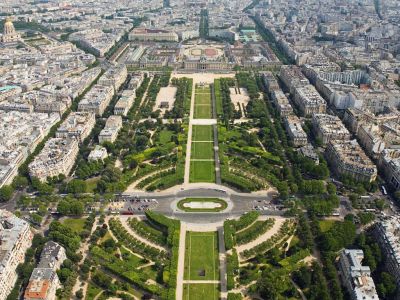
In sunny weather, there is nothing better in Paris than stretching out somewhere on a grassy lawn. A public park between the Eiffel Tower and the Military School, the Field of Mars, is one of the largest parks in Paris and generously offers such an opportunity to those lucky with lots of time under their belt.
This popular outdoor space derives its name from the ancient Mars Field in Rome, once the drilling ground for the Roman armies, dedicated to the Roman god of war. Similarly, the area in Paris was also used originally for military drills. At some point, before its transformation in the 16th century, this flat, open terrain was used for market gardening, though it was not highly fertile.
In 1765, the construction of the Military School began shaping the Field of Mars into its present form. The park was developed with an esplanade, a noble facade, a large ditch, elm avenues, and an enclosing grille fence. Additionally, the Isle of Swans, a small islet near the Eiffel Tower, was attached to the shore for aesthetic symmetry.
The Field of Mars has historical significance, hosting the first hydrogen-filled balloon flight in 1783, as well as several major events during the French Revolution, including the 1790 Federation Day celebration, now known as Bastille Day. However, it was also the site of the 1791 Field of Mars massacre and the execution of the first mayor of Paris, who was guillotined there in 1793. In 1815, during Napoleon’s Hundred Days, the field hosted the so-called “Field of May” public assembly to rally support for Napoleon’s liberal reform.
The park also hosted Universal Exhibitions in 1867, 1878, 1889, 1900, and 1937. For the 2024 Summer Olympics and Paralympics, it housed the Eiffel Tower Stadium and the Grand Ephemeral Palace, a temporary exhibition hall, hosting beach volleyball, blind football, and portions of the opening ceremony. Today, it continues to be a significant green space with sports facilities like basketball and football fields.
A favorite spot for many, the Field of Mars can get rather busy on sunny days. Those coming with kids will find several playgrounds available at their disposal.
Tip:
Consider bringing a mat or cover for lying about.
This popular outdoor space derives its name from the ancient Mars Field in Rome, once the drilling ground for the Roman armies, dedicated to the Roman god of war. Similarly, the area in Paris was also used originally for military drills. At some point, before its transformation in the 16th century, this flat, open terrain was used for market gardening, though it was not highly fertile.
In 1765, the construction of the Military School began shaping the Field of Mars into its present form. The park was developed with an esplanade, a noble facade, a large ditch, elm avenues, and an enclosing grille fence. Additionally, the Isle of Swans, a small islet near the Eiffel Tower, was attached to the shore for aesthetic symmetry.
The Field of Mars has historical significance, hosting the first hydrogen-filled balloon flight in 1783, as well as several major events during the French Revolution, including the 1790 Federation Day celebration, now known as Bastille Day. However, it was also the site of the 1791 Field of Mars massacre and the execution of the first mayor of Paris, who was guillotined there in 1793. In 1815, during Napoleon’s Hundred Days, the field hosted the so-called “Field of May” public assembly to rally support for Napoleon’s liberal reform.
The park also hosted Universal Exhibitions in 1867, 1878, 1889, 1900, and 1937. For the 2024 Summer Olympics and Paralympics, it housed the Eiffel Tower Stadium and the Grand Ephemeral Palace, a temporary exhibition hall, hosting beach volleyball, blind football, and portions of the opening ceremony. Today, it continues to be a significant green space with sports facilities like basketball and football fields.
A favorite spot for many, the Field of Mars can get rather busy on sunny days. Those coming with kids will find several playgrounds available at their disposal.
Tip:
Consider bringing a mat or cover for lying about.
5) Hotel des Invalides (House of The Invalids)
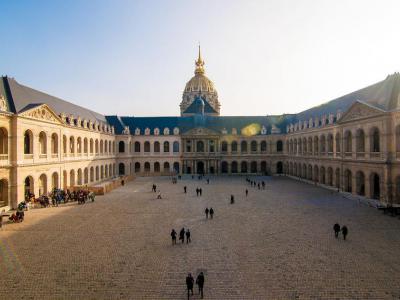
The House of the Invalids, or simply "The Invalides," is a monumental complex that showcases France's military history through its museums and monuments. Initially founded by Louis XIV in 1670, this historic site was intended to serve as a hospital and retirement home for war veterans. Originally, the complex had 15 courtyards, with the largest reserved for military parades. The hospital was capable of housing up to 4,000 veterans at a time. During the French Revolution, the complex played a crucial role. On 14 July 1789, before attacking the Bastille fortress, a mob broke into The Invalides and seized 32,000 rifles, which proved decisive in starting the fight.
Today, the site encompasses several museums, including the Army Museum, the Museum of Military Models, and the Museum of Contemporary History, alongside the Cathedral of Saint Louis of The Invalides, the national cathedral of the French military. The Army Museum recounts French military history from the Middle Ages to WWII, featuring medieval armor, Renaissance weapons, Napoleonic artifacts, and visual records of wars through photography and film, highlighting key historical moments and the evolution of military technology.
The architectural centerpiece of The Invalides is the Dome, an architectural marvel, which stands as Paris's tallest church at 107 meters. The temple follows a Greek cross layout and features a facade with two superimposed orders, capped by a grand dome topped with a lantern. This structure not only adds to the visual splendor of the site with its Baroque influence and celestial paintings by French painter Charles de La Fosse but also serves a functional purpose. It houses two churches: the veterans' chapel and the upper chapel which was used occasionally by the royal family.
Significant for its burials, the Dome's Royal Chapel is also known as a military necropolis. Notably, it includes the tomb of Napoleon Bonaparte, which has become a major landmark. Napoleon's remains were returned from Saint Helena in 1840 and placed within a meticulously crafted sarcophagus set in a prominent crypt surrounded by a circular gallery. The sheer size of the Dome, and that of the sarcophagus beneath it, vividly demonstrate the importance of Napoleon to the French people. This site encapsulates French military heritage, with various military figures also interred here.
In recent history, The Invalides expanded its role during the Paris 2024 Summer Olympics, hosting events like archery and road cycling on the Esplanade of The Invalides.
Tip:
If you come late, toward the closing hours, you may have a bit more space to walk around and explore this place on your own.
The available on-site Angelina patisserie offers visitors a fairly good selection of teas and cakes, ideal for a quick snack and a nice break whenever you might need it.
Today, the site encompasses several museums, including the Army Museum, the Museum of Military Models, and the Museum of Contemporary History, alongside the Cathedral of Saint Louis of The Invalides, the national cathedral of the French military. The Army Museum recounts French military history from the Middle Ages to WWII, featuring medieval armor, Renaissance weapons, Napoleonic artifacts, and visual records of wars through photography and film, highlighting key historical moments and the evolution of military technology.
The architectural centerpiece of The Invalides is the Dome, an architectural marvel, which stands as Paris's tallest church at 107 meters. The temple follows a Greek cross layout and features a facade with two superimposed orders, capped by a grand dome topped with a lantern. This structure not only adds to the visual splendor of the site with its Baroque influence and celestial paintings by French painter Charles de La Fosse but also serves a functional purpose. It houses two churches: the veterans' chapel and the upper chapel which was used occasionally by the royal family.
Significant for its burials, the Dome's Royal Chapel is also known as a military necropolis. Notably, it includes the tomb of Napoleon Bonaparte, which has become a major landmark. Napoleon's remains were returned from Saint Helena in 1840 and placed within a meticulously crafted sarcophagus set in a prominent crypt surrounded by a circular gallery. The sheer size of the Dome, and that of the sarcophagus beneath it, vividly demonstrate the importance of Napoleon to the French people. This site encapsulates French military heritage, with various military figures also interred here.
In recent history, The Invalides expanded its role during the Paris 2024 Summer Olympics, hosting events like archery and road cycling on the Esplanade of The Invalides.
Tip:
If you come late, toward the closing hours, you may have a bit more space to walk around and explore this place on your own.
The available on-site Angelina patisserie offers visitors a fairly good selection of teas and cakes, ideal for a quick snack and a nice break whenever you might need it.
6) Moulin Rouge (The Red Mill) (must see)
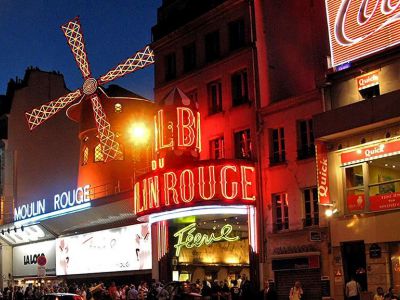
Moulin Rouge in Montmartre opened in 1889, the same year as the Eiffel Tower was built. Aimed primarily at wealthy patrons, it was designed as a lavish garden café-concert where diverse social groups could mingle. Since its opening, the venue offered world-class entertainment, becoming a meeting place for Parisians and visitors from all walks of life. The elegant cabaret attracted the uber-rich, socialites, middle class, artists, and foreign visitors who rubbed shoulders and enjoyed themselves.
Over the years, Moulin Rouge has hosted numerous celebrities and royal guests. In 1890, the Prince of Wales, the future King Edward VII, visited here to witness the new and riveting Can-can dance. A year later, artist Toulouse-Lautrec created his first poster for Moulin Rouge. Sadly, in 1915, the place burned down and had to be rebuilt in 1921. Another intensive renovation, in 1951, produced its current decor.
In 1979, Ginger Rogers graced the cabaret's stage for its 90th anniversary, while Queen Elizabeth II attended a private show in 1981. Other members of the British royal family who have visited Moulin Rouge include Prince Charles (now King Charles III) and Princess Diana, Prince Edward, and Princess Anne. World-known celebrities such as Liza Minnelli, Dean Martin, and Frank Sinatra also took part in special events here. Its centenary celebration featured a star-studded gala with Lauren Bacall, Ella Fitzgerald, and Jerry Lewis.
Over the years, Moulin Rouge has been featured in countless books, plays, and films. The 2001 movie "Moulin Rouge!", directed by Baz Luhrmann, re-popularized this vibrant and one-of-a-kind venue.
Today, visitors can book a table, savor dinner and champagne, and experience firsthand the magic of what has been the center of Parisian nightlife for over 130 years.
Tip:
Visit at sunset for photos of Moulin Rouge's iconic windmill and neon signs lit up against the backdrop of a darkening sky.
Over the years, Moulin Rouge has hosted numerous celebrities and royal guests. In 1890, the Prince of Wales, the future King Edward VII, visited here to witness the new and riveting Can-can dance. A year later, artist Toulouse-Lautrec created his first poster for Moulin Rouge. Sadly, in 1915, the place burned down and had to be rebuilt in 1921. Another intensive renovation, in 1951, produced its current decor.
In 1979, Ginger Rogers graced the cabaret's stage for its 90th anniversary, while Queen Elizabeth II attended a private show in 1981. Other members of the British royal family who have visited Moulin Rouge include Prince Charles (now King Charles III) and Princess Diana, Prince Edward, and Princess Anne. World-known celebrities such as Liza Minnelli, Dean Martin, and Frank Sinatra also took part in special events here. Its centenary celebration featured a star-studded gala with Lauren Bacall, Ella Fitzgerald, and Jerry Lewis.
Over the years, Moulin Rouge has been featured in countless books, plays, and films. The 2001 movie "Moulin Rouge!", directed by Baz Luhrmann, re-popularized this vibrant and one-of-a-kind venue.
Today, visitors can book a table, savor dinner and champagne, and experience firsthand the magic of what has been the center of Parisian nightlife for over 130 years.
Tip:
Visit at sunset for photos of Moulin Rouge's iconic windmill and neon signs lit up against the backdrop of a darkening sky.
7) Rue Lepic (Lepic Street) and Van Gogh's Apartment
Renowned for its significance in the artistic and historical canvas of Montmartre, Lepic Street is named after General Louis Lepic, who shone at the Battle of Eylau during the Napoleonic wars in the early 1800s.
This street emerged from the transformation of several paths leading from Barriere Blanche to Montmartre's summit. Originally, this area comprised dirt roads until an 1809 incident involving Napoleon I, who, frustrated by the poor condition of the path leading to the Saint-Pierre Church, commanded the construction of a more accessible road. This eventually became Lepic Street. Over the years, it has undergone several name changes-from "New Road" to "Emperor Street," and then to "Royal Street" before settling on its current name in 1864.
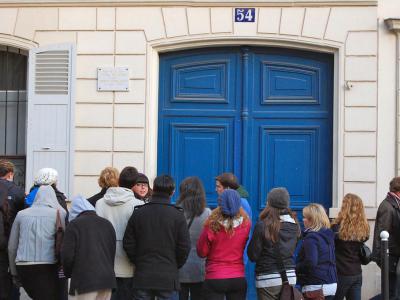
Lepic Street has witnessed significant historical events, including barricades during the Paris Commune and a bombing during the First World War, on September 2, 1914. It also harbors a deep connection with the art world. Notably, Vincent van Gogh and his brother Theo lived here, at No. 54, between 1886 and 1888. Vincent found much of his inspiration in the lively Montmartre street scenes visible from their apartment, despite his later move to the south of France for a quieter environment. Another point of interest associated with van Gogh is No. 96, painted by him.
Today, Lepic Street is vibrant with cafes and restaurants, including the Café des 2 Moulins, famously featured in the film "Amélie." Additionally, this street gained contemporary attention when it featured in the road cycling events of the 2024 Summer Olympics, drawing large crowds and highlighting its ongoing cultural relevance.
This street emerged from the transformation of several paths leading from Barriere Blanche to Montmartre's summit. Originally, this area comprised dirt roads until an 1809 incident involving Napoleon I, who, frustrated by the poor condition of the path leading to the Saint-Pierre Church, commanded the construction of a more accessible road. This eventually became Lepic Street. Over the years, it has undergone several name changes-from "New Road" to "Emperor Street," and then to "Royal Street" before settling on its current name in 1864.
Lepic Street has witnessed significant historical events, including barricades during the Paris Commune and a bombing during the First World War, on September 2, 1914. It also harbors a deep connection with the art world. Notably, Vincent van Gogh and his brother Theo lived here, at No. 54, between 1886 and 1888. Vincent found much of his inspiration in the lively Montmartre street scenes visible from their apartment, despite his later move to the south of France for a quieter environment. Another point of interest associated with van Gogh is No. 96, painted by him.
Today, Lepic Street is vibrant with cafes and restaurants, including the Café des 2 Moulins, famously featured in the film "Amélie." Additionally, this street gained contemporary attention when it featured in the road cycling events of the 2024 Summer Olympics, drawing large crowds and highlighting its ongoing cultural relevance.
8) Moulin de la Galette (Galette Windmill)
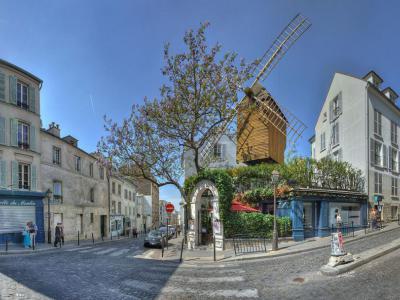
A legendary spot in Montmartre, the historic Galette Windmill is known for more than its original milling purposes. First built in 1622, the place evolved to include a famous tavern, eventually becoming a prominent leisure spot to which it owes its current fame.
Beneath the surface of the festive atmosphere, the site bears marks of historical strife. The Debray family, who acquired the windmill in 1809, expanded its operations from flour production to pressing harvest and grinding materials for manufacturing. During the siege of Paris by Russian Cossacks at the end of the Napoleonic Wars, in 1814, and then during the Franco-Prussian War, in 1870, four Debray men lost their lives defending the property and were nailed to the wings of the windmill.
The surviving Debray son transformed the mill into a tavern, capitalizing on the popularity of its galette, a type of brown bread they produced. Adding alcohol to its menu, the windmill became a cabaret and attracted Parisians with its simple country pleasures - a glass of wine, fresh bread made from the mill's flour, and panoramic views of Paris and the Seine down below. The idea was an instant success and the introduction of a dance hall in 1833, dedicated to the Greek muse Terpsichore, further solidified its status as a social and cultural hub.
Artists like Renoir, van Gogh, and Picasso immortalized the vibrant atmosphere of the place in their paintings. The most famous of them is Renoir's depiction called "Dance at the Galette Windmill."
Despite destruction threats and changes over time, including shifts from an open-air café to a music hall, television studio, and restaurant, the property was preserved and declared a monument in 1958.
The Radet windmill marks the entrance to The Galette Windmill bistro, preserving its legacy as a historical and cultural landmark. In fair weather, the place is still a great spot to savor locally made wine and enjoy live music in the garden, much like the Parisians did centuries ago in Renoir's famous painting.
Beneath the surface of the festive atmosphere, the site bears marks of historical strife. The Debray family, who acquired the windmill in 1809, expanded its operations from flour production to pressing harvest and grinding materials for manufacturing. During the siege of Paris by Russian Cossacks at the end of the Napoleonic Wars, in 1814, and then during the Franco-Prussian War, in 1870, four Debray men lost their lives defending the property and were nailed to the wings of the windmill.
The surviving Debray son transformed the mill into a tavern, capitalizing on the popularity of its galette, a type of brown bread they produced. Adding alcohol to its menu, the windmill became a cabaret and attracted Parisians with its simple country pleasures - a glass of wine, fresh bread made from the mill's flour, and panoramic views of Paris and the Seine down below. The idea was an instant success and the introduction of a dance hall in 1833, dedicated to the Greek muse Terpsichore, further solidified its status as a social and cultural hub.
Artists like Renoir, van Gogh, and Picasso immortalized the vibrant atmosphere of the place in their paintings. The most famous of them is Renoir's depiction called "Dance at the Galette Windmill."
Despite destruction threats and changes over time, including shifts from an open-air café to a music hall, television studio, and restaurant, the property was preserved and declared a monument in 1958.
The Radet windmill marks the entrance to The Galette Windmill bistro, preserving its legacy as a historical and cultural landmark. In fair weather, the place is still a great spot to savor locally made wine and enjoy live music in the garden, much like the Parisians did centuries ago in Renoir's famous painting.
9) Dali Paris (Espace Dali)
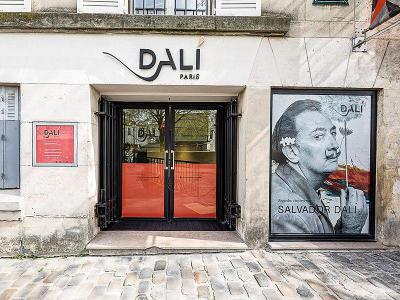
Dalí Paris, previously known as Espace Dalí, is a museum near Tertre Square in the Montmartre district, dedicated entirely to the works of Salvador Dalí, one of the 20th century's most celebrated surrealist artists. Opened in 1991, the museum boasts the largest collection of Dalí's sculptures and engravings in France, with nearly 300 original pieces on display.
The museum's collection includes a significant array of Dalí's three-dimensional work, reflecting his journey from Impressionism through Cubism to his ultimate fame in surrealism. These sculptures embody the transformation of his iconic surrealistic paintings into tangible forms, such as the well-known “Space Elephant” and “Alice in Wonderland.” The display also extends to include some of his lesser-known works on paper like “Moses and Monotheism” and “Memories of Surrealism,” offering a comprehensive insight into his diverse artistic endeavors.
Curated by Italian gallerist and collector Beniamino Levi, the museum – part of the extensive Dalí Universe collection – not only showcases his works but also immerses visitors in the Catalan master’s imaginative world. The atmosphere is enriched with background music and includes creative workshops for children, making it a family-friendly venue that encourages younger generations to engage with Dalí's art.
Adjacent to the main exhibition space are two art galleries: Galerie Dalí and Galerie Montmartre. The former presents a selection of Dalí’s sculptures, engravings, and lithographs, while Galerie Montmartre features works by various contemporary artists, further enhancing the museum’s artistic environment.
The museum also offers unique glimpses into Dalí's multifaceted creativity through displays of his clothing designs and a rare film shown in one of the corridors, providing a broader context of his contributions to both art and fashion.
Each year, Dalí Paris also introduces a new temporary exhibition, continually refreshing its appeal to visitors and Dalí aficionados eager to delve deeper into the surreal and inventive world of Salvador Dalí.
Tip:
There is a lovely gift shop on the premises and even the opportunity to buy some of the original artwork if you feel like spending serious money.
The museum's collection includes a significant array of Dalí's three-dimensional work, reflecting his journey from Impressionism through Cubism to his ultimate fame in surrealism. These sculptures embody the transformation of his iconic surrealistic paintings into tangible forms, such as the well-known “Space Elephant” and “Alice in Wonderland.” The display also extends to include some of his lesser-known works on paper like “Moses and Monotheism” and “Memories of Surrealism,” offering a comprehensive insight into his diverse artistic endeavors.
Curated by Italian gallerist and collector Beniamino Levi, the museum – part of the extensive Dalí Universe collection – not only showcases his works but also immerses visitors in the Catalan master’s imaginative world. The atmosphere is enriched with background music and includes creative workshops for children, making it a family-friendly venue that encourages younger generations to engage with Dalí's art.
Adjacent to the main exhibition space are two art galleries: Galerie Dalí and Galerie Montmartre. The former presents a selection of Dalí’s sculptures, engravings, and lithographs, while Galerie Montmartre features works by various contemporary artists, further enhancing the museum’s artistic environment.
The museum also offers unique glimpses into Dalí's multifaceted creativity through displays of his clothing designs and a rare film shown in one of the corridors, providing a broader context of his contributions to both art and fashion.
Each year, Dalí Paris also introduces a new temporary exhibition, continually refreshing its appeal to visitors and Dalí aficionados eager to delve deeper into the surreal and inventive world of Salvador Dalí.
Tip:
There is a lovely gift shop on the premises and even the opportunity to buy some of the original artwork if you feel like spending serious money.
10) Le Mur des Je t'aime (Wall of Love)
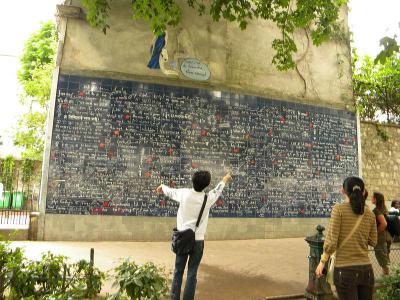
In the enchanting district of Montmartre, the “I Love You” Wall is a unique monument to romance, far removed from the traditional grandeur of historical attractions. Spanning 40 square meters, this mural is intricately composed of 612 glazed lava tiles that showcase the phrase "I love you" in more than 250 languages, celebrating both common and obscure dialects such as Navajo, Inuit, Bambara, and Esperanto.
This creation is the brainchild of Frédéric Baron, who initiated the project by collecting these tender words from his brother, neighbors, friends, and even strangers, amassing a global lexicon of affection. His vision took form when he teamed up with Claire Kito, a calligraphist and mural artist skilled in Chinese calligraphy, in 1997. Together, they scoured the Paris region to find the perfect site for their project, eventually deciding on the Jehan Rictus garden square at Abbesses Square.
Daniel Boulogne, a specialist in painted walls and art construction, joined the team in 1998. He played a crucial role in realizing the physical installation of the mural, which was completed and inaugurated in the autumn of 2000. The design incorporates red fragments scattered across the tiles, symbolizing pieces of a broken heart that, when viewed together, form a complete heart-a powerful metaphor chosen by Baron to transform the conventional image of walls as dividers into a unifying expression of love.
Today, the Wall of Love is not only a tourist attraction but also a popular backdrop for romantic milestones such as marriage proposals and wedding photographs. The serene setting is enhanced by the lush greenery of the surrounding park and occasional live music performances, creating an ideal atmosphere for visitors to experience and reflect on the profound simplicity and universality of love. The wall thus serves as a poignant reminder that even the simplest expressions of human emotion can bridge diverse cultures and languages, turning a mere space into a sanctuary of heartfelt connections.
Tip:
Don't forget to keep an eye out for the red splashes on the wall, symbolizing parts of a broken heart. Who knows, maybe you can take on the challenge of piecing them back together to form a full heart.
This creation is the brainchild of Frédéric Baron, who initiated the project by collecting these tender words from his brother, neighbors, friends, and even strangers, amassing a global lexicon of affection. His vision took form when he teamed up with Claire Kito, a calligraphist and mural artist skilled in Chinese calligraphy, in 1997. Together, they scoured the Paris region to find the perfect site for their project, eventually deciding on the Jehan Rictus garden square at Abbesses Square.
Daniel Boulogne, a specialist in painted walls and art construction, joined the team in 1998. He played a crucial role in realizing the physical installation of the mural, which was completed and inaugurated in the autumn of 2000. The design incorporates red fragments scattered across the tiles, symbolizing pieces of a broken heart that, when viewed together, form a complete heart-a powerful metaphor chosen by Baron to transform the conventional image of walls as dividers into a unifying expression of love.
Today, the Wall of Love is not only a tourist attraction but also a popular backdrop for romantic milestones such as marriage proposals and wedding photographs. The serene setting is enhanced by the lush greenery of the surrounding park and occasional live music performances, creating an ideal atmosphere for visitors to experience and reflect on the profound simplicity and universality of love. The wall thus serves as a poignant reminder that even the simplest expressions of human emotion can bridge diverse cultures and languages, turning a mere space into a sanctuary of heartfelt connections.
Tip:
Don't forget to keep an eye out for the red splashes on the wall, symbolizing parts of a broken heart. Who knows, maybe you can take on the challenge of piecing them back together to form a full heart.
11) Basilique du Sacre-Coeur (Basilica of the Sacred Heart of Jesus) (must see)
The Basilica of the Sacred Heart of Montmartre is a Catholic church and a national historic monument since 2022. The imposing structure sits atop the Montmartre summit – the highest point in Paris (some 200 meters above the Seine). It offers a breathtaking panorama of the city from its dome, which makes it the second most-visited tourist site in the capital after the Eiffel Tower.
The idea to build the basilica came in the aftermath of the Franco-Prussian War of 1870-1871 (resulting in a humiliating defeat for France), followed by the brief and bloody Paris Commune period. Many in France, particularly conservative Catholics, viewed these events as moral failures of the nation. They believed it was a divine punishment for what they saw as the growing secularization and moral decay of French society in the decades following the French Revolution.
The new church was thus to symbolize national repentance. Its location at the highest point in Paris, however, made it a subject of controversy among left-wing politicians, as it overlooks the area where the Paris Commune erupted and was seen by some as a monument to conservative reactionism.
The construction spanned from 1875 to 1914 under the supervision of various architects. The basilica's consecration was delayed until the end of World War I, in 1919.
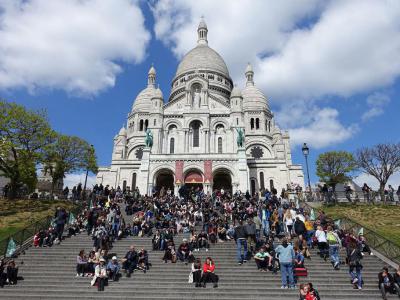
The building showcases a blend of Neo-Byzantine and Romanesque styles with a central rotunda, a nave, and transepts. The main dome rises 83 meters, flanked by four smaller cupolas and a bell tower that houses France’s largest bell, the Savoyarde. The rectangular base beneath the high dome is supported by massive columns as if bridging the celestial and terrestrial realms. The design incorporates a Greek cross layout centralizing the altar, surrounded by a Latin-influenced choir and ambulatory.
Artistic elements within the basilica include the grand 475-square-meter mosaic of The Triumph of the Sacred Heart of Jesus and various chapels adorned by specific professional groups, enhancing the spiritual ambiance with their thematic decorations. The crypt, unlike typical underground crypts, features stained glass windows that allow light to filter in, enriching the spiritual atmosphere. Also noteworthy is the basilica’s historic organ, recognized as a national landmark.
As a pilgrimage site, the basilica requires visitors to observe modest dress and silence out of respect for its sacredness and historical significance.
Tip:
You will need a level of fitness to climb the stairs from the base of Montmartre to the Sacred Heart Basilica. Alternatively, you can hop on the free mini-train which starts from opposite the Windmill Theater and stops behind the basilica.
The idea to build the basilica came in the aftermath of the Franco-Prussian War of 1870-1871 (resulting in a humiliating defeat for France), followed by the brief and bloody Paris Commune period. Many in France, particularly conservative Catholics, viewed these events as moral failures of the nation. They believed it was a divine punishment for what they saw as the growing secularization and moral decay of French society in the decades following the French Revolution.
The new church was thus to symbolize national repentance. Its location at the highest point in Paris, however, made it a subject of controversy among left-wing politicians, as it overlooks the area where the Paris Commune erupted and was seen by some as a monument to conservative reactionism.
The construction spanned from 1875 to 1914 under the supervision of various architects. The basilica's consecration was delayed until the end of World War I, in 1919.
The building showcases a blend of Neo-Byzantine and Romanesque styles with a central rotunda, a nave, and transepts. The main dome rises 83 meters, flanked by four smaller cupolas and a bell tower that houses France’s largest bell, the Savoyarde. The rectangular base beneath the high dome is supported by massive columns as if bridging the celestial and terrestrial realms. The design incorporates a Greek cross layout centralizing the altar, surrounded by a Latin-influenced choir and ambulatory.
Artistic elements within the basilica include the grand 475-square-meter mosaic of The Triumph of the Sacred Heart of Jesus and various chapels adorned by specific professional groups, enhancing the spiritual ambiance with their thematic decorations. The crypt, unlike typical underground crypts, features stained glass windows that allow light to filter in, enriching the spiritual atmosphere. Also noteworthy is the basilica’s historic organ, recognized as a national landmark.
As a pilgrimage site, the basilica requires visitors to observe modest dress and silence out of respect for its sacredness and historical significance.
Tip:
You will need a level of fitness to climb the stairs from the base of Montmartre to the Sacred Heart Basilica. Alternatively, you can hop on the free mini-train which starts from opposite the Windmill Theater and stops behind the basilica.
