Custom Walk in Bridgetown, Barbados by chipcarnathan_a4f4f7 created on 2026-02-01
Guide Location: Barbados » Bridgetown
Guide Type: Custom Walk
# of Sights: 6
Tour Duration: 2 Hour(s)
Travel Distance: 3.1 Km or 1.9 Miles
Share Key: 9VF8L
Guide Type: Custom Walk
# of Sights: 6
Tour Duration: 2 Hour(s)
Travel Distance: 3.1 Km or 1.9 Miles
Share Key: 9VF8L
How It Works
Please retrieve this walk in the GPSmyCity app. Once done, the app will guide you from one tour stop to the next as if you had a personal tour guide. If you created the walk on this website or come to the page via a link, please follow the instructions below to retrieve the walk in the app.
Retrieve This Walk in App
Step 1. Download the app "GPSmyCity: Walks in 1K+ Cities" on Apple App Store or Google Play Store.



Step 2. In the GPSmyCity app, download(or launch) the guide "Bridgetown Map and Walking Tours".
Step 3. Tap the menu button located at upper right corner of the "Walks" screen and select "Retrieve custom walk". Enter the share key: 9VF8L

1) Mount Gay Rum Refinery & Gift Shop
Barbados and rum go hand in hand, and no place embodies this legacy better than Mount Gay, the world’s oldest commercial rum distillery. Established in 1703, this historic refinery has been perfecting the art of distillation for over three centuries, using coral-filtered water, Barbadian molasses, and a blend of copper pot and column stills to craft its renowned spirits.
Located on the northern edge of Bridgetown, the Mount Gay Visitor Centre offers an immersive experience of the island’s rum-making traditions. The tour begins with a short film on the distillery’s rich history before leading visitors through the aging facility, where barrels of rum rest patiently in American whiskey, bourbon, and cognac casks. Along the way, expert guides break down the intricate process of distilling, aging, and blending Mount Gay’s signature rums.
Of course, no visit would be complete without a tasting. Sip on Mount Gay’s finest selections-including the classic Eclipse, the award-winning XO, and their terroir-driven Single Estate Series-while learning about the flavors that have made Barbadian rum legendary.
Before you leave, be sure to stop by the on-site gift shop, where you can purchase bottles of Mount Gay rum alongside a selection of branded merchandise and island-inspired souvenirs. Whether you're a connoisseur or a casual enthusiast, a visit to Mount Gay is a must for anyone looking to experience the spirit of Barbados-literally.
Located on the northern edge of Bridgetown, the Mount Gay Visitor Centre offers an immersive experience of the island’s rum-making traditions. The tour begins with a short film on the distillery’s rich history before leading visitors through the aging facility, where barrels of rum rest patiently in American whiskey, bourbon, and cognac casks. Along the way, expert guides break down the intricate process of distilling, aging, and blending Mount Gay’s signature rums.
Of course, no visit would be complete without a tasting. Sip on Mount Gay’s finest selections-including the classic Eclipse, the award-winning XO, and their terroir-driven Single Estate Series-while learning about the flavors that have made Barbadian rum legendary.
Before you leave, be sure to stop by the on-site gift shop, where you can purchase bottles of Mount Gay rum alongside a selection of branded merchandise and island-inspired souvenirs. Whether you're a connoisseur or a casual enthusiast, a visit to Mount Gay is a must for anyone looking to experience the spirit of Barbados-literally.
2) Nidhe Israel Synagogue (must see)
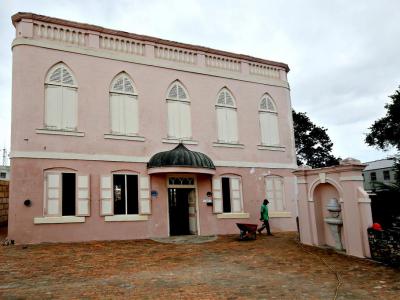
The Nidhe Israel Synagogue is the only synagogue on the island and one of the oldest in the western hemisphere. It was built in 1654. Jews left Dutch Brazil to avoid persecution from the Portuguese and settled on the island. They were skilled in the sugar industry and introduced the sugar crop to Barbados, teaching their skills to the local land owners.
The Barbados Jewish community grew over the years as other settlements dissolved. One group came from Cayenne, French Guana, in 1664, and another from Suriname in 1674. They gathered in two communities on the island, the largest being in Bridgetown, where 54 out of 404 households were Jewish.
The building has gone through many phases. Like other buildings on the island, hurricanes have damaged it over the centuries. It was destroyed by one in 1831 and rebuilt afterward. Unfortunately, it fell into disrepair until it was sold in 1929.
The building was modified, with the upper gallery being converted to a full second level. Over the years, the building changed hands several times until 1983, when the government seized it. The plan was to bulldoze the site and build a new courthouse, but petitioning from the local Jewish community resulted in it being handed over to the Barbados National Trust.
A full renovation began in 1986, and the building returned to being a synagogue. Archaeologists discovered a mikveh on the site of the former rabbi's house in 2008. A mikveh is a ritual bath, and it was constructed over a still-running freshwater spring.
The Nidhe Israel Museum opened in 2008 to tell the story of the Jewish communities on the island and their histories.
The Barbados Jewish community grew over the years as other settlements dissolved. One group came from Cayenne, French Guana, in 1664, and another from Suriname in 1674. They gathered in two communities on the island, the largest being in Bridgetown, where 54 out of 404 households were Jewish.
The building has gone through many phases. Like other buildings on the island, hurricanes have damaged it over the centuries. It was destroyed by one in 1831 and rebuilt afterward. Unfortunately, it fell into disrepair until it was sold in 1929.
The building was modified, with the upper gallery being converted to a full second level. Over the years, the building changed hands several times until 1983, when the government seized it. The plan was to bulldoze the site and build a new courthouse, but petitioning from the local Jewish community resulted in it being handed over to the Barbados National Trust.
A full renovation began in 1986, and the building returned to being a synagogue. Archaeologists discovered a mikveh on the site of the former rabbi's house in 2008. A mikveh is a ritual bath, and it was constructed over a still-running freshwater spring.
The Nidhe Israel Museum opened in 2008 to tell the story of the Jewish communities on the island and their histories.
3) Independence Arch and Chamberlain Bridge
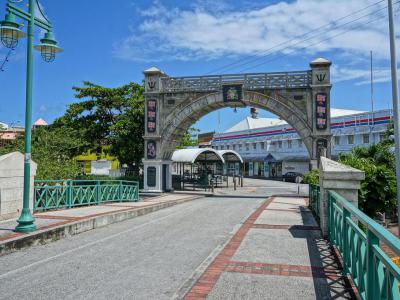
The Independence Arch stands proudly at the southern end of the Chamberlain Bridge in Bridgetown, serving as a lasting tribute to the nation's journey to self-governance. Erected in 1987 to commemorate Barbados' 21st anniversary of independence, the arch celebrates the island’s rich heritage and culture.
Adorned with key national symbols, the arch's pillars feature the flying fish and the pelican-two emblems of Barbadian identity-alongside the Pride of Barbados flower. The arch is crowned with the Coat of Arms of Barbados, which bears the national motto, “Pride and Industry”. At its base, visitors can find the National Pledge, a poignant reminder of the island’s values. Each November 30th, for Independence Day, the arch lights up in Barbados' national colors, blue and gold. Nearby, Independence Square offers a peaceful retreat from the city's hustle.
The Chamberlain Bridge, located in the heart of Bridgetown, has long been an essential crossing over the Careenage (Constitution River) at Carlisle Bay. Originally built as a swing bridge in 1872, it was named after Joseph Chamberlain (1836–1914), the British Colonial Secretary who helped secure funding for its reconstruction following the Great Hurricane of 1898. Over a century later, in 2005–2006, the outdated steel structure was dismantled and replaced with a modern lifting bridge featuring a single-leaf bascule design. Constructed from fiber-reinforced plastic (FRP), the new bridge is lighter, non-corrosive, and built to last.
Together, the Independence Arch and Chamberlain Bridge stand as enduring symbols of Barbados' history, resilience, and national pride, seamlessly blending tradition with modern engineering in the heart of the island’s capital.
Adorned with key national symbols, the arch's pillars feature the flying fish and the pelican-two emblems of Barbadian identity-alongside the Pride of Barbados flower. The arch is crowned with the Coat of Arms of Barbados, which bears the national motto, “Pride and Industry”. At its base, visitors can find the National Pledge, a poignant reminder of the island’s values. Each November 30th, for Independence Day, the arch lights up in Barbados' national colors, blue and gold. Nearby, Independence Square offers a peaceful retreat from the city's hustle.
The Chamberlain Bridge, located in the heart of Bridgetown, has long been an essential crossing over the Careenage (Constitution River) at Carlisle Bay. Originally built as a swing bridge in 1872, it was named after Joseph Chamberlain (1836–1914), the British Colonial Secretary who helped secure funding for its reconstruction following the Great Hurricane of 1898. Over a century later, in 2005–2006, the outdated steel structure was dismantled and replaced with a modern lifting bridge featuring a single-leaf bascule design. Constructed from fiber-reinforced plastic (FRP), the new bridge is lighter, non-corrosive, and built to last.
Together, the Independence Arch and Chamberlain Bridge stand as enduring symbols of Barbados' history, resilience, and national pride, seamlessly blending tradition with modern engineering in the heart of the island’s capital.
4) National Heroes Square
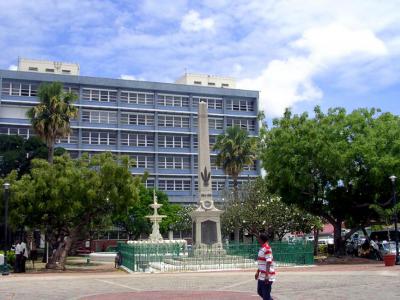
Located between Upper Broad Street, The Wharf Road, and the Careenage, National Heroes Square is one of the centerpieces of Bridgetown. Before 1998, the square was called Trafalgar Square.
The square is dedicated to the Order of National Heroes, and National Heroes Day is celebrated on April 28. On the first commemoration of the day, Trafalgar Square was renamed for the Order. Only 11 people have made the list of National Heroes and have been given the title "The Right Excellent." Of the people on the list, only Sir Garfield Sobers, a former cricketer, and Rhianna, a singer and businesswoman, are alive today.
However, the most prominent statues in the square have been around longer than the Order. The first one to catch your eye is undoubtedly that of Lord Nelson, the famous British Royal Navy Admiral. The statue has stood here since 1813 as a memorial to the Royal Navy's victory in the Battle of Trafalgar.
This statue was dedicated 27 years before the statue of Nelson that stands over Trafalgar Square in London. Nelson's statue here has served as the geographic center for the island since it was erected. Distances have always been measured from the statue.
Other large monuments in the square include the Cenotaph War Memorial and Fountain Gardens. A large fountain commemorates the piping of water into town in 1865.
With its location at the center of town, the square is a great place to spot other attractions. You can see the Barbados Parliament Buildings, the Department of Inland Revenue, and the Chamberlain Bridge.
The square is dedicated to the Order of National Heroes, and National Heroes Day is celebrated on April 28. On the first commemoration of the day, Trafalgar Square was renamed for the Order. Only 11 people have made the list of National Heroes and have been given the title "The Right Excellent." Of the people on the list, only Sir Garfield Sobers, a former cricketer, and Rhianna, a singer and businesswoman, are alive today.
However, the most prominent statues in the square have been around longer than the Order. The first one to catch your eye is undoubtedly that of Lord Nelson, the famous British Royal Navy Admiral. The statue has stood here since 1813 as a memorial to the Royal Navy's victory in the Battle of Trafalgar.
This statue was dedicated 27 years before the statue of Nelson that stands over Trafalgar Square in London. Nelson's statue here has served as the geographic center for the island since it was erected. Distances have always been measured from the statue.
Other large monuments in the square include the Cenotaph War Memorial and Fountain Gardens. A large fountain commemorates the piping of water into town in 1865.
With its location at the center of town, the square is a great place to spot other attractions. You can see the Barbados Parliament Buildings, the Department of Inland Revenue, and the Chamberlain Bridge.
5) Parliament Buildings (must see)
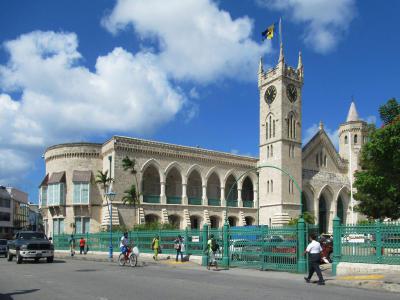
The Parliament Building sits just north of the Careenage on Broad and Rickett Streets. The building was built between 1870 and 1874, but the island's Parliament was established in 1639. That makes it the third oldest Parliament in the Commonwealth. The building is a protected building and part of the UNESCO World Heritage Site of Historic Bridgetown.
The oldest part of the neo-Gothic Victorian-style building is the East Wing, completed in 1873. This is where the chambers of the Senate and House of Assembly are located, which still meet weekly. Over the years, many other offices have been here, too, including the post office, central bank, and public library.
Inside the House of Assembly chambers, you can see stained glass windows showing British sovereigns from the time of James I up to Queen Victoria. In the Senate, the windows show the armorial bearings of past Presidents of the Council and Speakers of the House of Assembly.
The West Wing currently houses the National Heroes Gallery and the Museum of Parliament. In the past, it has housed offices for government officials like the Colonial Secretary and Treasurer, Provost Marshal, and Comptroller of Customs.
The clocktowers and bells above the West Wing were originally located on the East Wing but were moved in 1886. Poor soil at the previous location caused the tower to begin to sink within ten years of being built. The tower is built from coral limestone and is a prominent landmark throughout town.
The oldest part of the neo-Gothic Victorian-style building is the East Wing, completed in 1873. This is where the chambers of the Senate and House of Assembly are located, which still meet weekly. Over the years, many other offices have been here, too, including the post office, central bank, and public library.
Inside the House of Assembly chambers, you can see stained glass windows showing British sovereigns from the time of James I up to Queen Victoria. In the Senate, the windows show the armorial bearings of past Presidents of the Council and Speakers of the House of Assembly.
The West Wing currently houses the National Heroes Gallery and the Museum of Parliament. In the past, it has housed offices for government officials like the Colonial Secretary and Treasurer, Provost Marshal, and Comptroller of Customs.
The clocktowers and bells above the West Wing were originally located on the East Wing but were moved in 1886. Poor soil at the previous location caused the tower to begin to sink within ten years of being built. The tower is built from coral limestone and is a prominent landmark throughout town.
6) St. Michael's Cathedral (must see)
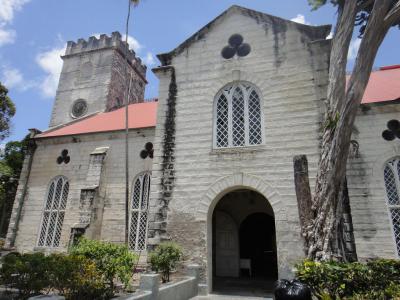
Two blocks east of National Heroes Square, this Anglican church has stood since 1789. It replaced an earlier wooden church built in 1665 that was destroyed by a hurricane in 1780. That first church was located at the site of present-day Saint Mary's Church.
The cathedral is made of coral limestone and features beautiful stained glass windows. In 1938, the Chapel of the Blessed Sacrament was added. The marble baptismal font is from the 17th century. The impressive structure can seat about 1,600 people and has one of the largest pipe organs in the Caribbean.
The church was originally the Saint Michael's Parish Church but was elevated to cathedral status in 1825 when Bishop Coleridge became head of the new Diocese of Barbados and the Leeward Islands.
Some of the most striking stained glass pieces can be seen in the Chapel. The central circular window features the image of Saint Michael. The larger windows to the left and right commemorate the parents of James Challenor Lynch. The windows were made in the late 1800s in London.
In the graveyard, you can see some of Barbados' famous public figures' graves. Sir Grantley Adams, the first chief minister and the only Prime Minister of the West Indies Federation, rests here. His son Tom Adams, the island's second prime minister, is also here.
The cathedral is made of coral limestone and features beautiful stained glass windows. In 1938, the Chapel of the Blessed Sacrament was added. The marble baptismal font is from the 17th century. The impressive structure can seat about 1,600 people and has one of the largest pipe organs in the Caribbean.
The church was originally the Saint Michael's Parish Church but was elevated to cathedral status in 1825 when Bishop Coleridge became head of the new Diocese of Barbados and the Leeward Islands.
Some of the most striking stained glass pieces can be seen in the Chapel. The central circular window features the image of Saint Michael. The larger windows to the left and right commemorate the parents of James Challenor Lynch. The windows were made in the late 1800s in London.
In the graveyard, you can see some of Barbados' famous public figures' graves. Sir Grantley Adams, the first chief minister and the only Prime Minister of the West Indies Federation, rests here. His son Tom Adams, the island's second prime minister, is also here.
