Custom Walk in Taipei, Taiwan by sam_sohal_666e2d created on 2026-02-02
Guide Location: Taiwan » Taipei
Guide Type: Custom Walk
# of Sights: 8
Tour Duration: 8 Hour(s)
Travel Distance: 20.8 Km or 12.9 Miles
Share Key: ZZVY2
Guide Type: Custom Walk
# of Sights: 8
Tour Duration: 8 Hour(s)
Travel Distance: 20.8 Km or 12.9 Miles
Share Key: ZZVY2
How It Works
Please retrieve this walk in the GPSmyCity app. Once done, the app will guide you from one tour stop to the next as if you had a personal tour guide. If you created the walk on this website or come to the page via a link, please follow the instructions below to retrieve the walk in the app.
Retrieve This Walk in App
Step 1. Download the app "GPSmyCity: Walks in 1K+ Cities" on Apple App Store or Google Play Store.



Step 2. In the GPSmyCity app, download(or launch) the guide "Taipei Map and Walking Tours".
Step 3. Tap the menu button located at upper right corner of the "Walks" screen and select "Retrieve custom walk". Enter the share key: ZZVY2
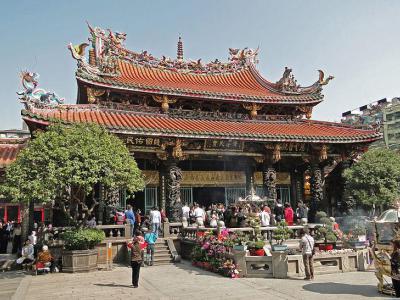
1) Longshan Temple (must see)
The Longshan Temple was originally constructed in 1738 and was a place for Chinese settlers to worship. Part of the original construction included Buddhist elements, as well as altars and halls dedicated to the Chinese deities Guan Yu and Mazu. This temple has seen rebuilding and renovations because of earthquakes and fires over the years.
The last rebuilding of the temple took place after World War II. Today, one of the most noteworthy attractions is the outer courtyard, which has unique elements that include Taoist symbols, along with Buddhist and Confucian symbols. The temple and courtyard boast an impressive display of color.
Carvings found throughout the temple and on the exterior are intricate, with a lot of detail. Dragons are famous figures found throughout the temple, and the temple's name translates to "dragon mountain". Buddha figures in gold are also quite popular.
Decorations are popular in the temple, especially during certain holidays. For example, during the Lunar New Year, you are likely to see a lot of lanterns. Flowers are usually in abundance throughout this building.
One of the altars that attract a lot of attention is the altar to Yue Lao, a god revered as being a matchmaker. Single Taipei residents often come to this altar to pray for their true love to go to them and remain with them forever. There are pieces of string that worshipers can take to tie around their true love's wrist when they find them.
Why You Should Visit:
The Longshan Temple is one of the oldest and most important temples in Taiwan.
Tip:
The temple can be quite full with tour groups during certain days so try to avoid peak hours. There are local food stalls around the temple and plenty of shops selling Buddhist merch in the nearby underground mall.
The last rebuilding of the temple took place after World War II. Today, one of the most noteworthy attractions is the outer courtyard, which has unique elements that include Taoist symbols, along with Buddhist and Confucian symbols. The temple and courtyard boast an impressive display of color.
Carvings found throughout the temple and on the exterior are intricate, with a lot of detail. Dragons are famous figures found throughout the temple, and the temple's name translates to "dragon mountain". Buddha figures in gold are also quite popular.
Decorations are popular in the temple, especially during certain holidays. For example, during the Lunar New Year, you are likely to see a lot of lanterns. Flowers are usually in abundance throughout this building.
One of the altars that attract a lot of attention is the altar to Yue Lao, a god revered as being a matchmaker. Single Taipei residents often come to this altar to pray for their true love to go to them and remain with them forever. There are pieces of string that worshipers can take to tie around their true love's wrist when they find them.
Why You Should Visit:
The Longshan Temple is one of the oldest and most important temples in Taiwan.
Tip:
The temple can be quite full with tour groups during certain days so try to avoid peak hours. There are local food stalls around the temple and plenty of shops selling Buddhist merch in the nearby underground mall.
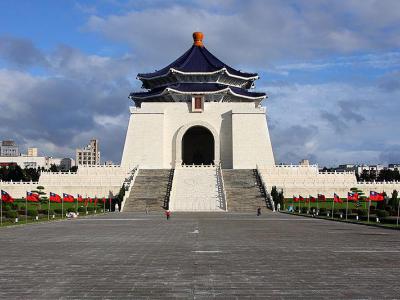
2) Chiang Kai-shek Memorial Hall (must see)
The Chiang Kai-shek Memorial Hall is a well-known national monument and tourist attraction situated in remembrance of Generalissimo Chiang Kai-shek, the former President of the Republic of China. It is located on the eastern side of Taipei's Liberty Square and is flanked by the National Theater and National Concert Hall to the north and south, respectively.
This memorial hall is characterized by its white color and four-sided structure, featuring a blue octagonal roof, which symbolically represents the number eight. In Asian culture, the number eight is traditionally associated with abundance and good fortune. To reach the main entrance, there are two sets of white stairs, each comprising 89 steps, symbolizing Chiang's age at the time of his passing.
Inside the memorial, the ground level accommodates a library and a museum dedicated to documenting Chiang Kai-shek's life and career. Additionally, there are exhibits that delve into Taiwan's history and development. The upper level houses the main hall, where a prominent statue of Chiang Kai-shek is situated. Periodically, a guard mounting ceremony takes place within this hall.
Why You Should Visit:
The architecture is incredibly unique and views of the square are excellent from top of the Hall's stairs.
The Hall is also flanked by the National Theater & Concert Hall, which are good places to stop for lunch, tea, or gift shopping.
Tip:
The Military Honor Guard changes every hour, on the hour, from 9am to 5pm. Get there 10-15 mins early – it often draws a big crowd. Afterward, you may browse the garden downstairs or museum with its multiple exhibits.
Key tip for best viewing of the changing of the guard ceremony: If facing the statue, stand on the very right side closest to the elevator entrance. There you will see – and be able to take photos of – the new guards coming out, the entire ceremony unobstructed, and then the old guards exiting.
This memorial hall is characterized by its white color and four-sided structure, featuring a blue octagonal roof, which symbolically represents the number eight. In Asian culture, the number eight is traditionally associated with abundance and good fortune. To reach the main entrance, there are two sets of white stairs, each comprising 89 steps, symbolizing Chiang's age at the time of his passing.
Inside the memorial, the ground level accommodates a library and a museum dedicated to documenting Chiang Kai-shek's life and career. Additionally, there are exhibits that delve into Taiwan's history and development. The upper level houses the main hall, where a prominent statue of Chiang Kai-shek is situated. Periodically, a guard mounting ceremony takes place within this hall.
Why You Should Visit:
The architecture is incredibly unique and views of the square are excellent from top of the Hall's stairs.
The Hall is also flanked by the National Theater & Concert Hall, which are good places to stop for lunch, tea, or gift shopping.
Tip:
The Military Honor Guard changes every hour, on the hour, from 9am to 5pm. Get there 10-15 mins early – it often draws a big crowd. Afterward, you may browse the garden downstairs or museum with its multiple exhibits.
Key tip for best viewing of the changing of the guard ceremony: If facing the statue, stand on the very right side closest to the elevator entrance. There you will see – and be able to take photos of – the new guards coming out, the entire ceremony unobstructed, and then the old guards exiting.
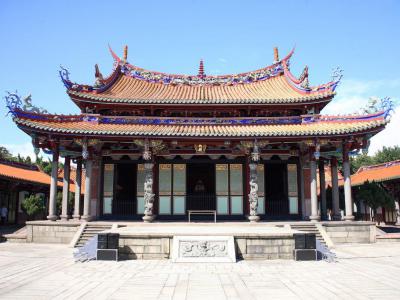
3) Taipei Confucius Temple (must see)
The Taipei Confucius Temple, located in Datong District, is a place of reverence for Confucianism. It was constructed in 1879 during the Qing Dynasty, shortly after the establishment of Taipeh Prefecture in 1875. Interestingly, the temple faced a period of turmoil during the Japanese occupation, as it was torn down. However, in 1930, a man named Wang Yi-Shun undertook the task of rebuilding it.
The newly reconstructed temple was in use for just a few years when World War II erupted. During this time, the Japanese authorities prohibited traditional Chinese ceremonies within the temple, replacing them with Japanese Shinto rituals and music. This situation persisted until 1945 when Taiwan transitioned from Japanese rule to the Republic of China.
Following this transfer of authority, the temple had a temporary role hosting the Examination Yuan until 1951 when it was relocated to Muzha District. In more recent times, visitors to the temple were required to adhere to social distancing measures, and the number of visitors was regulated to ensure safety.
Every year on September 28, a ceremony featuring traditional music and stylized dancing is conducted at the temple in honor of Confucius. Additionally, it serves as a place where students, accompanied by their parents, come to seek blessings before taking their college entrance exams.
The newly reconstructed temple was in use for just a few years when World War II erupted. During this time, the Japanese authorities prohibited traditional Chinese ceremonies within the temple, replacing them with Japanese Shinto rituals and music. This situation persisted until 1945 when Taiwan transitioned from Japanese rule to the Republic of China.
Following this transfer of authority, the temple had a temporary role hosting the Examination Yuan until 1951 when it was relocated to Muzha District. In more recent times, visitors to the temple were required to adhere to social distancing measures, and the number of visitors was regulated to ensure safety.
Every year on September 28, a ceremony featuring traditional music and stylized dancing is conducted at the temple in honor of Confucius. Additionally, it serves as a place where students, accompanied by their parents, come to seek blessings before taking their college entrance exams.
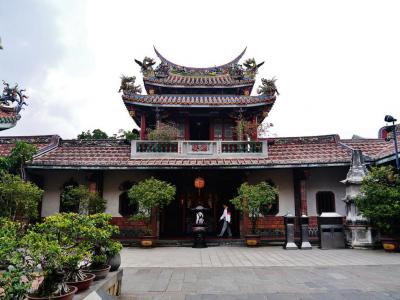
4) Dalongdong Baoan Temple (must see)
Dalongdong Baoan Temple, also known as Taipei Baoan Temple, is a traditional religious shrine located in the Datong District of Taipei. This temple has deep roots in Taiwanese folk religion and has a rich history dating back to the early 19th century.
The temple's origins trace back to immigrants from Tong'an, Xiamen, Fujian, who settled in Taipei in the early 1800s. They constructed the temple with the intention of safeguarding the well-being of their fellow Tong'an residents, hence the name "Po-an," which translates to "protect those of Tong'an." Adjacent to Baoan Temple, you can find the Taipei Confucius Temple.
Construction of the temple began in 1804, replacing a wooden shrine that had existed since 1742 in Toaliongtong. Throughout the 20th century, especially during the Japanese colonial period, the temple underwent several renovations and expansions, ultimately shaping the temple complex we see today.
In recognition of its historical and cultural significance, the Taiwanese government designated Baoan Temple as a level two historic monument in 1985. After years of neglect and deterioration, extensive repairs and renovations took place in 1995, restoring the temple to its former glory.
In 2003, the temple received international recognition when it was honored with an induction into the UNESCO Asia-Pacific Heritage Awards for Culture Heritage Conservation, acknowledging its role in preserving cultural heritage.
The temple's origins trace back to immigrants from Tong'an, Xiamen, Fujian, who settled in Taipei in the early 1800s. They constructed the temple with the intention of safeguarding the well-being of their fellow Tong'an residents, hence the name "Po-an," which translates to "protect those of Tong'an." Adjacent to Baoan Temple, you can find the Taipei Confucius Temple.
Construction of the temple began in 1804, replacing a wooden shrine that had existed since 1742 in Toaliongtong. Throughout the 20th century, especially during the Japanese colonial period, the temple underwent several renovations and expansions, ultimately shaping the temple complex we see today.
In recognition of its historical and cultural significance, the Taiwanese government designated Baoan Temple as a level two historic monument in 1985. After years of neglect and deterioration, extensive repairs and renovations took place in 1995, restoring the temple to its former glory.
In 2003, the temple received international recognition when it was honored with an induction into the UNESCO Asia-Pacific Heritage Awards for Culture Heritage Conservation, acknowledging its role in preserving cultural heritage.
5) Martyrs' Shrine (must see)
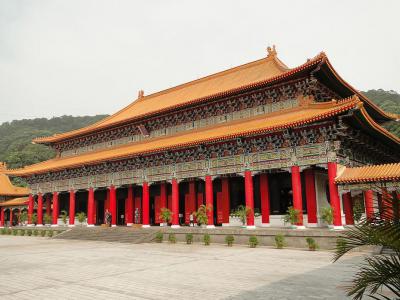
The National Revolutionary Martyrs' Shrine in Taipei is a memorial dedicated to those who lost their lives in various conflicts, including the Xinhai Revolution, Northern Expedition, Second Sino-Japanese War, Chinese Civil War, and the First and Second Taiwan Strait Crises. This shrine, constructed in 1969 on Chingshan Mountain overlooking the Keelung River in Taipei's Zhongshan District, draws architectural inspiration from Beijing's Forbidden City, specifically the Hall of Supreme Harmony.
Within this structure, the spirits of approximately 390,000 individuals who perished in these conflicts are honored with spirit tablets. Similar to the ceremonial traditions observed at the Sun Yat-sen Memorial Hall and Chiang Kai-shek Memorial Hall, the shrine hosts a changing of the honor guard, featuring representatives from various branches of the Republic of China Military.
Tip:
Be sure to check out the main hall and stick around for the changing of the guard ceremony which occurs on the hour between 9am-4pm. If you go on your own, you should wait until you can have the guards for your own, and then you can snap a picture with them.
Within this structure, the spirits of approximately 390,000 individuals who perished in these conflicts are honored with spirit tablets. Similar to the ceremonial traditions observed at the Sun Yat-sen Memorial Hall and Chiang Kai-shek Memorial Hall, the shrine hosts a changing of the honor guard, featuring representatives from various branches of the Republic of China Military.
Tip:
Be sure to check out the main hall and stick around for the changing of the guard ceremony which occurs on the hour between 9am-4pm. If you go on your own, you should wait until you can have the guards for your own, and then you can snap a picture with them.
6) Xingtian Temple (must see)
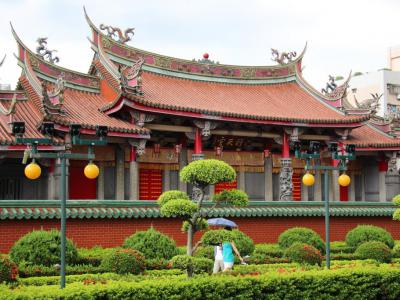
The Xingtian Temple is a new building dating back to 1967. This temple is dedicated to Guan Yu, who is considered a patron god of business people, and was a second-century general who was deified. Some of the most popular sights in and around the temple include figures of dragons.
This temple's design is simple yet has a dignified feel very fitting for its place in worship. The main hall has a censer with a unique dragon-centered design. Most of the worshipers at this temple gather in the courtyard to pray, either kneeling or bowing their heads.
There are free candles available for visitors to take if they wish. Although this temple is not as old as some in Taipei, it is an excellent place to gain an appreciation for the local religious life.
This temple's design is simple yet has a dignified feel very fitting for its place in worship. The main hall has a censer with a unique dragon-centered design. Most of the worshipers at this temple gather in the courtyard to pray, either kneeling or bowing their heads.
There are free candles available for visitors to take if they wish. Although this temple is not as old as some in Taipei, it is an excellent place to gain an appreciation for the local religious life.
7) Sun Yat-sen Memorial Hall (must see)
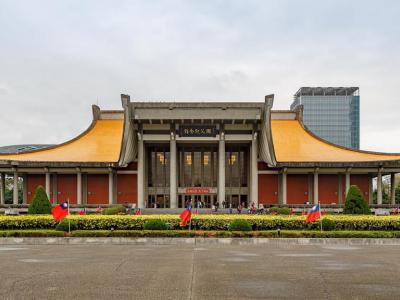
Sun Yat-sen Memorial Hall is a memorial to Sun Yat-sen, the provisional first president of the Republic of China. The hall contains information about his life with a particular focus on Xinhai Revolution.
The Sun Yat-sen Memorial Hall serves as an education and cultural center. It has a performance hall, an exhibition center, a theatre and a library. In addition, visitors can see a large statue of Sun Yat-sen at the entrance.
One of the most popular tourist events at the Sun Yat-sen Memorial Hall is the changing of the guards. This event takes place every hour from 9 AM through 5 PM.
The memorial hall is open daily from 9 AM to 6 PM. It is located within Zhongshan Park, which also has a series of gardens, ponds and walking paths. The park itself is open 24 hours a day.
Tip:
Watch the changing of the honor guards from the upstairs balcony, instead of the front of them, for a much better view.
The Sun Yat-sen Memorial Hall serves as an education and cultural center. It has a performance hall, an exhibition center, a theatre and a library. In addition, visitors can see a large statue of Sun Yat-sen at the entrance.
One of the most popular tourist events at the Sun Yat-sen Memorial Hall is the changing of the guards. This event takes place every hour from 9 AM through 5 PM.
The memorial hall is open daily from 9 AM to 6 PM. It is located within Zhongshan Park, which also has a series of gardens, ponds and walking paths. The park itself is open 24 hours a day.
Tip:
Watch the changing of the honor guards from the upstairs balcony, instead of the front of them, for a much better view.
8) Elephant Mountain (must see)
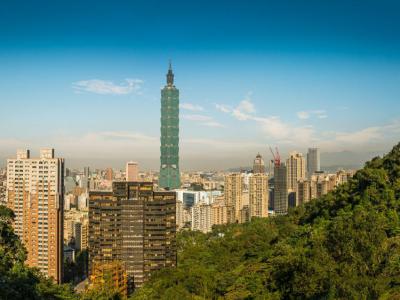
Elephant Mountain is arguably the best place to see a full view of the city of Taipei. A hike to the top of Elephant Mountain takes about 30 minutes for those who are able.
The Xiangshan Hiking Trail takes visitors to a spectacular view, but it may be a bit difficult for those who are not used to climbing a large number of stairs. This is particularly true when the heat and humidity of Taiwan accompanies the steep climb.
Tourists should not be intimidated by the climb. There are plenty of places to stop and rest along the way, including places to sit, rest and recuperate. Visitors should bring a bottle of water that they can enjoy during these rests.
Those who don't want to climb to the top can stop at a viewing platform about halfway up the climb. The trail is open 24-hours per day, every day of the week. Many visitors go during the day, and then return at night when they can enjoy the city lights from a distance.
The Xiangshan Hiking Trail takes visitors to a spectacular view, but it may be a bit difficult for those who are not used to climbing a large number of stairs. This is particularly true when the heat and humidity of Taiwan accompanies the steep climb.
Tourists should not be intimidated by the climb. There are plenty of places to stop and rest along the way, including places to sit, rest and recuperate. Visitors should bring a bottle of water that they can enjoy during these rests.
Those who don't want to climb to the top can stop at a viewing platform about halfway up the climb. The trail is open 24-hours per day, every day of the week. Many visitors go during the day, and then return at night when they can enjoy the city lights from a distance.
