Custom Walk in Glasgow, Scotland by n_pendevska_6f8aa7 created on 2026-02-04
Guide Location: Scotland » Glasgow
Guide Type: Custom Walk
# of Sights: 14
Tour Duration: 5 Hour(s)
Travel Distance: 10.5 Km or 6.5 Miles
Share Key:
Guide Type: Custom Walk
# of Sights: 14
Tour Duration: 5 Hour(s)
Travel Distance: 10.5 Km or 6.5 Miles
Share Key:
How It Works
Please retrieve this walk in the GPSmyCity app. Once done, the app will guide you from one tour stop to the next as if you had a personal tour guide. If you created the walk on this website or come to the page via a link, please follow the instructions below to retrieve the walk in the app.
Retrieve This Walk in App
Step 1. Download the app "GPSmyCity: Walks in 1K+ Cities" on Apple App Store or Google Play Store.



Step 2. In the GPSmyCity app, download(or launch) the guide "Glasgow Map and Walking Tours".
Step 3. Tap the menu button located at upper right corner of the "Walks" screen and select "Retrieve custom walk". Enter the share key:
1) Argyle Street
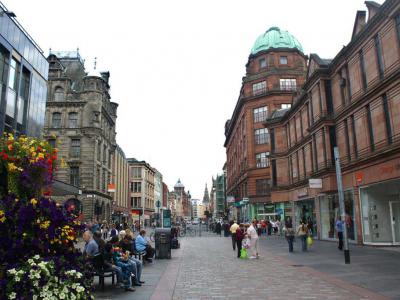
Argyle Street is one of Glasgow’s liveliest and most historic thoroughfares, stretching from the city centre’s George Square all the way westward through the heart of the city and into the trendy Finnieston district. As one of the longest streets in Scotland, it has been a hub of trade, shopping, and social life for centuries. Today, it remains a bustling artery where grand Victorian architecture meets modern retail, entertainment, and a vibrant dining scene, making it an essential stop for anyone exploring the city.
The street’s central section, running through the “Style Mile,” is one of Glasgow’s premier shopping destinations. Here you’ll find a mix of high-street brands, independent boutiques, and the striking Saint Enoch Centre, a glass-roofed shopping mall that combines historic façades with contemporary design. Street performers often add a lively soundtrack, while the colourful shopfronts and bustling crowds reflect Glasgow’s dynamic spirit.
As you move west, Argyle Street leads into the hip Finnieston area, a former industrial quarter now known for its creative energy. Once home to shipyards and warehouses, it has transformed into a hub of artisan cafés, craft beer bars, and acclaimed restaurants, making it one of the city’s most fashionable districts. In the evenings, the atmosphere comes alive with music venues, cocktail lounges, and a buzzing nightlife scene.
Argyle Street also offers a glimpse into Glasgow’s architectural evolution. From the grand façade of the Saint Enoch Hotel to the red sandstone tenements and modern cultural spaces like the SSE Hydro just off its western stretch, the street embodies the city’s ability to blend tradition with innovation.
The street’s central section, running through the “Style Mile,” is one of Glasgow’s premier shopping destinations. Here you’ll find a mix of high-street brands, independent boutiques, and the striking Saint Enoch Centre, a glass-roofed shopping mall that combines historic façades with contemporary design. Street performers often add a lively soundtrack, while the colourful shopfronts and bustling crowds reflect Glasgow’s dynamic spirit.
As you move west, Argyle Street leads into the hip Finnieston area, a former industrial quarter now known for its creative energy. Once home to shipyards and warehouses, it has transformed into a hub of artisan cafés, craft beer bars, and acclaimed restaurants, making it one of the city’s most fashionable districts. In the evenings, the atmosphere comes alive with music venues, cocktail lounges, and a buzzing nightlife scene.
Argyle Street also offers a glimpse into Glasgow’s architectural evolution. From the grand façade of the Saint Enoch Hotel to the red sandstone tenements and modern cultural spaces like the SSE Hydro just off its western stretch, the street embodies the city’s ability to blend tradition with innovation.
2) Tron Theater
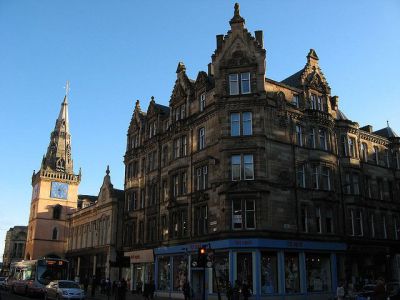
In the heart of Glasgow’s Merchant City, the Tron Theatre stands as both a cultural landmark and a cherished gathering place for lovers of the performing arts. Housed in a former 16th-century church, its iconic clock tower rises above the bustling streets, a reminder of the city’s long and layered history. Originally built as the Tron Kirk, the building has served many roles-from a place of worship to a marketplace-before being transformed into the vibrant theatre that welcomes visitors today. This blend of historic architecture and contemporary creativity makes the Tron one of Glasgow’s most distinctive venues.
Since its establishment as a theatre in 1981, the Tron has become a cornerstone of Scotland’s performing arts scene. It has built a reputation for bold programming, championing innovative new writing while also reinterpreting classic works for modern audiences. Many Scottish playwrights and performers have found their voice here, and the theatre continues to nurture emerging talent through workshops, residencies, and collaborations with local and international artists.
The building itself is part of the experience. Its Gothic Revival tower and stone façade contrast beautifully with the intimate, modern performance spaces inside. Audiences often remark on the atmosphere-stepping into the Tron feels like entering both a historic monument and a contemporary cultural hub. The main auditorium provides an immersive setting for plays and performances, while smaller studio spaces offer a platform for experimental theatre and community projects.
A visit to the Tron Theatre gives travellers a taste of Glasgow’s creative energy. Attend a groundbreaking new play, enjoy a lively music performance, or simply pause to admire the building’s character-you’ll be drawn into a space where the city’s past and present meet on stage.”
Since its establishment as a theatre in 1981, the Tron has become a cornerstone of Scotland’s performing arts scene. It has built a reputation for bold programming, championing innovative new writing while also reinterpreting classic works for modern audiences. Many Scottish playwrights and performers have found their voice here, and the theatre continues to nurture emerging talent through workshops, residencies, and collaborations with local and international artists.
The building itself is part of the experience. Its Gothic Revival tower and stone façade contrast beautifully with the intimate, modern performance spaces inside. Audiences often remark on the atmosphere-stepping into the Tron feels like entering both a historic monument and a contemporary cultural hub. The main auditorium provides an immersive setting for plays and performances, while smaller studio spaces offer a platform for experimental theatre and community projects.
A visit to the Tron Theatre gives travellers a taste of Glasgow’s creative energy. Attend a groundbreaking new play, enjoy a lively music performance, or simply pause to admire the building’s character-you’ll be drawn into a space where the city’s past and present meet on stage.”
3) Old Fruitmarket
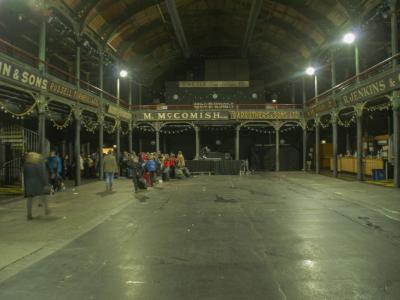
In Glasgow’s vibrant Merchant City district, the Old Fruitmarket stands as a testament to the city’s ability to reinvent itself while honoring its past. Once a bustling Victorian market hall where traders hawked fresh produce under a canopy of wrought iron arches, it has been carefully preserved and reimagined as one of the city’s most distinctive cultural venues. The building first opened in 1876 as a fruit and vegetable market, supplying Glasgow’s rapidly growing population. Today, its historic ironwork balconies, lofty vaulted roof, and vintage signage remain intact, offering visitors a tangible link to the city’s mercantile heritage.
Now part of the larger City Halls complex, the Old Fruitmarket has been transformed into a renowned performance space. Its versatile design allows it to host everything from classical concerts and jazz gigs to folk festivals, theatre, and cutting-edge club nights. The juxtaposition of ornate Victorian architecture with state-of-the-art acoustics makes it a favorite for performers and audiences alike, from the elegance of a chamber orchestra to the energy of electronic beats at Celtic Connections, Glasgow’s world-famous winter music festival.
Beyond its role as a concert hall, the Old Fruitmarket embodies the city’s spirit of adaptability. Instead of tearing down the market when it fell into disuse, Glasgow chose to preserve its fabric and give it a new life. The result is a venue that feels both historic and contemporary, a place where the city’s commercial past meets its cultural present. For visitors, attending an event here is more than entertainment-it’s a chance to experience Glasgow’s unique way of weaving history into everyday life.
Now part of the larger City Halls complex, the Old Fruitmarket has been transformed into a renowned performance space. Its versatile design allows it to host everything from classical concerts and jazz gigs to folk festivals, theatre, and cutting-edge club nights. The juxtaposition of ornate Victorian architecture with state-of-the-art acoustics makes it a favorite for performers and audiences alike, from the elegance of a chamber orchestra to the energy of electronic beats at Celtic Connections, Glasgow’s world-famous winter music festival.
Beyond its role as a concert hall, the Old Fruitmarket embodies the city’s spirit of adaptability. Instead of tearing down the market when it fell into disuse, Glasgow chose to preserve its fabric and give it a new life. The result is a venue that feels both historic and contemporary, a place where the city’s commercial past meets its cultural present. For visitors, attending an event here is more than entertainment-it’s a chance to experience Glasgow’s unique way of weaving history into everyday life.
4) Saint Mungo's Cathedral (must see)
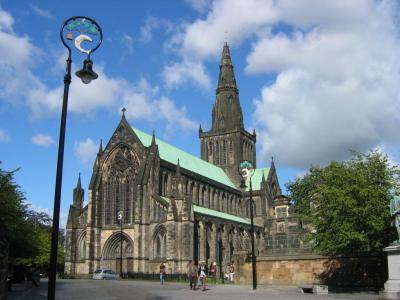
Rising proudly over the city with its striking spire and darkened stone, Saint Mungo’s Cathedral-also known as Glasgow Cathedral or the High Kirk of Glasgow-is one of Scotland’s most remarkable medieval landmarks. Dedicated to the city’s patron saint, Saint Mungo (also called Saint Kentigern), it stands on the very spot where the saint is believed to have built his church in the 6th century. The present structure, begun in the 12th century, is the only mainland Scottish cathedral to have survived the Protestant Reformation intact, making it a rare and atmospheric link to the nation’s medieval past.
Step inside and you’ll find a vast interior filled with soaring stone arches, stained-glass windows that cast jewel-like colors across the nave, and centuries-old carvings that reward close attention. The cathedral’s crowning treasure is the Lower Church, a beautifully preserved medieval crypt that houses the shrine of Saint Mungo himself. This hushed, vaulted space is one of the most evocative sites in Glasgow, where pilgrims and visitors alike pause in quiet reflection.
The upper choir and nave showcase the craftsmanship of medieval masons, with intricately carved stone screens and elaborate vaulted ceilings. Many visitors are struck by the contrast between the building’s austere Gothic exterior and the light filtering through its stained glass, much of which was created in the 19th and 20th centuries, yet harmonizes seamlessly with the ancient fabric.
Surrounded by the atmospheric Glasgow Necropolis and the remains of the medieval hospital of the Bishop’s Castle, Saint Mungo’s Cathedral is more than a church-it is a living monument to Glasgow’s deep historical roots. Drawn by architecture, history, or the desire for quiet contemplation, a visit here reveals a glimpse of the city’s soul and its enduring faith.
Step inside and you’ll find a vast interior filled with soaring stone arches, stained-glass windows that cast jewel-like colors across the nave, and centuries-old carvings that reward close attention. The cathedral’s crowning treasure is the Lower Church, a beautifully preserved medieval crypt that houses the shrine of Saint Mungo himself. This hushed, vaulted space is one of the most evocative sites in Glasgow, where pilgrims and visitors alike pause in quiet reflection.
The upper choir and nave showcase the craftsmanship of medieval masons, with intricately carved stone screens and elaborate vaulted ceilings. Many visitors are struck by the contrast between the building’s austere Gothic exterior and the light filtering through its stained glass, much of which was created in the 19th and 20th centuries, yet harmonizes seamlessly with the ancient fabric.
Surrounded by the atmospheric Glasgow Necropolis and the remains of the medieval hospital of the Bishop’s Castle, Saint Mungo’s Cathedral is more than a church-it is a living monument to Glasgow’s deep historical roots. Drawn by architecture, history, or the desire for quiet contemplation, a visit here reveals a glimpse of the city’s soul and its enduring faith.
5) Buchanan Street (must see)
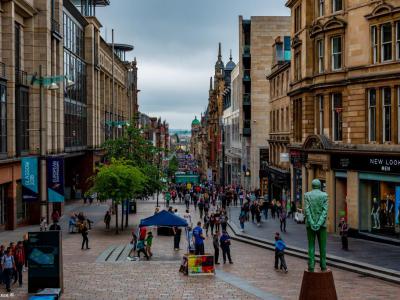
Buchanan Street is the beating heart of Glasgow’s shopping and cultural scene, a broad pedestrian thoroughfare that has been drawing locals and visitors alike since the late 18th century. Named after the wealthy tobacco merchant Andrew Buchanan, the street has transformed from a residential area for the city’s elite into one of Britain’s busiest retail destinations. Stretching from Saint Enoch Square in the south to Sauchiehall Street in the north, it forms the centrepiece of what Glaswegians fondly call the “Style Mile,” a lively hub of shops, cafés, and entertainment venues.
As you stroll along its polished paving stones, your eyes are drawn upward to the dramatic architecture that defines the street. Victorian and Edwardian buildings dominate the landscape, their ornate façades and grand stonework a reminder of the city’s mercantile prosperity. Among the highlights is the 19th-century Argyll Arcade, one of Europe’s oldest covered shopping arcades, where glittering jewellers’ windows line a glass-roofed passageway. The Buchanan Galleries shopping centre, on the street’s northern end, contrasts with sleek modern lines, reflecting Glasgow’s blend of history and contemporary energy.
Beyond shopping, Buchanan Street is a stage for the city’s street culture. Buskers, musicians, and performers add an ever-changing soundtrack, from soulful singers to lively bagpipers. The street is also dotted with inviting cafés and restaurants, offering everything from quick bites to leisurely meals-perfect for resting your feet between explorations. Seasonal decorations, from festive winter lights to summer events, ensure that each visit feels different.
For visitors, Buchanan Street is more than a commercial boulevard-it’s an experience of Glasgow itself. Browsing the latest fashions, stopping to catch a performance, or simply taking in the energy of city life, this iconic promenade offers a striking glimpse into the city’s mix of tradition and modernity. It’s an essential stop for anyone wishing to feel the pulse of Scotland’s largest city.
As you stroll along its polished paving stones, your eyes are drawn upward to the dramatic architecture that defines the street. Victorian and Edwardian buildings dominate the landscape, their ornate façades and grand stonework a reminder of the city’s mercantile prosperity. Among the highlights is the 19th-century Argyll Arcade, one of Europe’s oldest covered shopping arcades, where glittering jewellers’ windows line a glass-roofed passageway. The Buchanan Galleries shopping centre, on the street’s northern end, contrasts with sleek modern lines, reflecting Glasgow’s blend of history and contemporary energy.
Beyond shopping, Buchanan Street is a stage for the city’s street culture. Buskers, musicians, and performers add an ever-changing soundtrack, from soulful singers to lively bagpipers. The street is also dotted with inviting cafés and restaurants, offering everything from quick bites to leisurely meals-perfect for resting your feet between explorations. Seasonal decorations, from festive winter lights to summer events, ensure that each visit feels different.
For visitors, Buchanan Street is more than a commercial boulevard-it’s an experience of Glasgow itself. Browsing the latest fashions, stopping to catch a performance, or simply taking in the energy of city life, this iconic promenade offers a striking glimpse into the city’s mix of tradition and modernity. It’s an essential stop for anyone wishing to feel the pulse of Scotland’s largest city.
6) Sauchiehall Street
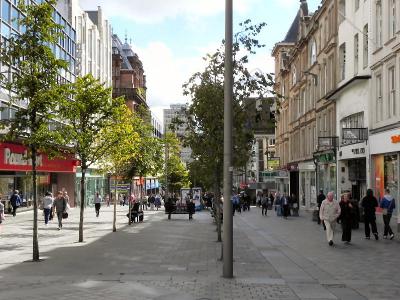
Sauchiehall Street is renowned for its extensive shopping and business facilities. As a crucial part of Glasgow's main shopping hub, it aligns with Buchanan Street and Argyle Street to form a bustling center that houses a vast array of high street and chain stores. Stretching over 2.5 kilometers, Sauchiehall Street extends beyond the city center, eventually converging with Argyle Street in the vibrant West End, near the notable Kelvingrove Museum.
This street is characteristically parallel to Argyle Street within the city center, and they gradually merge as they progress westward, passing the M8 motorway at Charing Cross. The eastern end of Sauchiehall Street is marked by significant landmarks such as the Glasgow Royal Concert Hall and the Buchanan Galleries, which represent one of the UK's major city center redevelopment projects.
Transitioning towards the western end of its city center segment, particularly around Charing Cross, Sauchiehall Street transforms into a lively hub of nightlife. It's dotted with a variety of restaurants, bars, and clubs, particularly catering to a student demographic, making it a highly frequented spot for evening entertainment in Glasgow.
The street is not just about commerce and nightlife; it also boasts a rich tapestry of cultural and historical landmarks. Noteworthy among these are the former Beresford Hotel, the esteemed Glasgow School of Art, the Glasgow Film Theatre, CCA Glasgow, and the McLellan Galleries.
Additionally, it is home to the Royal Highland Fusiliers Museum and the Glasgow Dental Hospital and School, adding educational and historical dimensions to its diverse character. Sauchiehall Street, with its multifaceted appeal, is a microcosm of Glasgow's urban vibrancy, blending shopping, culture, history, and nightlife into one dynamic and iconic street.
This street is characteristically parallel to Argyle Street within the city center, and they gradually merge as they progress westward, passing the M8 motorway at Charing Cross. The eastern end of Sauchiehall Street is marked by significant landmarks such as the Glasgow Royal Concert Hall and the Buchanan Galleries, which represent one of the UK's major city center redevelopment projects.
Transitioning towards the western end of its city center segment, particularly around Charing Cross, Sauchiehall Street transforms into a lively hub of nightlife. It's dotted with a variety of restaurants, bars, and clubs, particularly catering to a student demographic, making it a highly frequented spot for evening entertainment in Glasgow.
The street is not just about commerce and nightlife; it also boasts a rich tapestry of cultural and historical landmarks. Noteworthy among these are the former Beresford Hotel, the esteemed Glasgow School of Art, the Glasgow Film Theatre, CCA Glasgow, and the McLellan Galleries.
Additionally, it is home to the Royal Highland Fusiliers Museum and the Glasgow Dental Hospital and School, adding educational and historical dimensions to its diverse character. Sauchiehall Street, with its multifaceted appeal, is a microcosm of Glasgow's urban vibrancy, blending shopping, culture, history, and nightlife into one dynamic and iconic street.
7) University of Glasgow (must see)
The United Kingdom is home to several prestigious and ancient universities that enjoy global renown. Among these institutions, the University of Glasgow holds a significant position as the fourth oldest in English-speaking countries.
Its establishment can be traced back to 1451 when it received formal recognition through a Papal Bull issued during the papacy of Pope Nicholas V. Subsequently, King James II granted permission to Bishop William Turnbill to integrate the university with the city's cathedral. However, during the Reformation period, both the Mace and the Bull were transported to France. While the Mace eventually found its way back, the fate of the Bull remains uncertain, possibly lost or stolen.
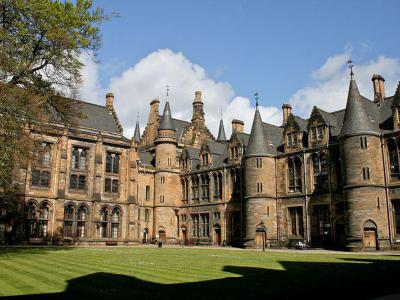
In 1870, Sir George Scott oversaw the construction of the university's main campus on Gilmorehill, adopting a Gothic architectural style and featuring a twin-quadrangle design with an open undercroft. A spire was later added to the bell tower in 1887. The university's various departments are dispersed across different buildings within the city and across the country.
During the 18th century, the University of Glasgow played a central role in the Scottish Enlightenment movement, while in the 19th century, it broadened its admissions, welcoming students beyond the privileged upper classes. Children of merchants enrolled to pursue studies in fields such as law, medicine, education, engineering, science, and theology.
Within the campus, visitors can explore the impressive Hunterian Museum & Gallery, as well as the Mackintosh House, offering enriching cultural experiences.
Its establishment can be traced back to 1451 when it received formal recognition through a Papal Bull issued during the papacy of Pope Nicholas V. Subsequently, King James II granted permission to Bishop William Turnbill to integrate the university with the city's cathedral. However, during the Reformation period, both the Mace and the Bull were transported to France. While the Mace eventually found its way back, the fate of the Bull remains uncertain, possibly lost or stolen.
In 1870, Sir George Scott oversaw the construction of the university's main campus on Gilmorehill, adopting a Gothic architectural style and featuring a twin-quadrangle design with an open undercroft. A spire was later added to the bell tower in 1887. The university's various departments are dispersed across different buildings within the city and across the country.
During the 18th century, the University of Glasgow played a central role in the Scottish Enlightenment movement, while in the 19th century, it broadened its admissions, welcoming students beyond the privileged upper classes. Children of merchants enrolled to pursue studies in fields such as law, medicine, education, engineering, science, and theology.
Within the campus, visitors can explore the impressive Hunterian Museum & Gallery, as well as the Mackintosh House, offering enriching cultural experiences.
8) Ashton Lane
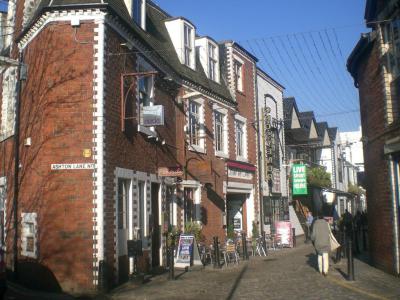
Tucked away just off Byres Road in Glasgow’s lively West End, Ashton Lane is a cobbled backstreet that feels like it belongs to another era. By day, the lane’s string of ivy-covered brick buildings and fairy-light-strewn facades make it a picturesque escape from the bustle of the city. By night, it transforms into one of Glasgow’s most atmospheric gathering spots, drawing students, locals, and visitors alike with its warm glow and convivial spirit. Though it may be small in size, Ashton Lane has earned a big reputation as one of the city’s most distinctive and charming destinations.
The street’s character is rooted in its past. Once a run of mews buildings and stables behind grand Victorian townhouses, Ashton Lane began to flourish in the 1970s when artists and entrepreneurs started opening cafés and bars in the disused spaces. Over time, it grew into a hub for alternative culture, offering an inviting contrast to the more polished main streets of the West End. The cobblestones that remain underfoot are a reminder of its older, humbler origins.
Today, Ashton Lane is best known for its eclectic mix of venues. The much-loved Ubiquitous Chip has been serving Scottish cuisine here since the early 1970s, becoming something of a local institution. Independent bars and pubs spill out onto the lane, filling the air with music and conversation, while the Grosvenor Cinema-one of the oldest cinemas in Scotland-adds a touch of nostalgia and entertainment.
A visit to Ashton Lane is less about ticking off a landmark and more about soaking in the atmosphere of Glasgow’s West End. With its glowing fairy lights overhead, laughter spilling from traditional pubs, and the scent of hearty Scottish dishes drifting from open doorways, the lane captures the city’s sociable, creative energy. It is an ideal spot to linger, toast the night, and experience the unique rhythm of Glasgow life.
The street’s character is rooted in its past. Once a run of mews buildings and stables behind grand Victorian townhouses, Ashton Lane began to flourish in the 1970s when artists and entrepreneurs started opening cafés and bars in the disused spaces. Over time, it grew into a hub for alternative culture, offering an inviting contrast to the more polished main streets of the West End. The cobblestones that remain underfoot are a reminder of its older, humbler origins.
Today, Ashton Lane is best known for its eclectic mix of venues. The much-loved Ubiquitous Chip has been serving Scottish cuisine here since the early 1970s, becoming something of a local institution. Independent bars and pubs spill out onto the lane, filling the air with music and conversation, while the Grosvenor Cinema-one of the oldest cinemas in Scotland-adds a touch of nostalgia and entertainment.
A visit to Ashton Lane is less about ticking off a landmark and more about soaking in the atmosphere of Glasgow’s West End. With its glowing fairy lights overhead, laughter spilling from traditional pubs, and the scent of hearty Scottish dishes drifting from open doorways, the lane captures the city’s sociable, creative energy. It is an ideal spot to linger, toast the night, and experience the unique rhythm of Glasgow life.
9) Byres Road (must see)
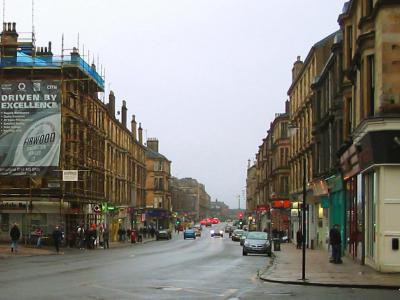
Byres Road, located in the Hillhead area of Glasgow, serves as a vital thoroughfare in the city's West End. This street encompasses a diverse blend of commercial enterprises, shopping outlets, and high-end residential properties, primarily characterized by traditional sandstone tenements. These buildings typically feature retail spaces on their ground floors and three stories of residential apartments above. Notably, its proximity to the University of Glasgow has resulted in a significant student population in the surrounding West End of Glasgow.
Prominent Glasgow artist Alasdair Gray has embellished several establishments along Byres Road with his murals, including the Ubiquitous Chip, the Oxfam Bookshop, and the Oran Mor bars.
Stretching from the Botanic Gardens, adjacent to Great Western Road in the north, to Partick Cross at Dumbarton Road in the south, the road initially traversed a relatively rural region known as the Byres of Partick, also referred to as Bishop's Byres. One of the area's oldest pubs is Curler's, dating back to the 17th century. Legend has it that King Charles II granted this establishment a seven-day license, and it was originally situated beside a pond used for the sport of curling.
The neighboring lanes and byways have thrived thanks to the commerce generated by Byres Road, now hosting a diverse range of small businesses, from tapas bars to second-hand record stores. Among these, Ashton Lane stands out as the most renowned, featuring bars, restaurants, and even a cinema.
Prominent Glasgow artist Alasdair Gray has embellished several establishments along Byres Road with his murals, including the Ubiquitous Chip, the Oxfam Bookshop, and the Oran Mor bars.
Stretching from the Botanic Gardens, adjacent to Great Western Road in the north, to Partick Cross at Dumbarton Road in the south, the road initially traversed a relatively rural region known as the Byres of Partick, also referred to as Bishop's Byres. One of the area's oldest pubs is Curler's, dating back to the 17th century. Legend has it that King Charles II granted this establishment a seven-day license, and it was originally situated beside a pond used for the sport of curling.
The neighboring lanes and byways have thrived thanks to the commerce generated by Byres Road, now hosting a diverse range of small businesses, from tapas bars to second-hand record stores. Among these, Ashton Lane stands out as the most renowned, featuring bars, restaurants, and even a cinema.
10) Kelvingrove Art Gallery & Museum (must see)
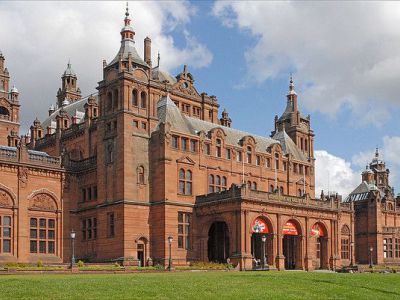
The Kelvingrove Art Gallery & Museum is one of Glasgow’s most beloved landmarks and a highlight for any visitor to Scotland’s largest city. Opened in 1901 and housed in a grand red sandstone building overlooking the River Kelvin, the museum combines architectural splendor with a vast collection that spans centuries of art, history, and natural science. Its distinctive Spanish Baroque style, complete with dramatic spires and ornate detailing, makes the building itself as captivating as the treasures within. Surrounded by the green expanse of Kelvingrove Park, it offers a serene setting that contrasts beautifully with the lively urban energy of the West End.
Inside, the museum’s galleries hold more than 8,000 objects, arranged in a way that is both accessible and engaging. Art enthusiasts can admire works by European masters such as Rembrandt, Van Gogh, and Salvador Dalí-whose haunting Christ of Saint John of the Cross is one of the highlights. The collection also celebrates Scottish talent, featuring pieces by Charles Rennie Mackintosh and the Glasgow Boys, whose innovations helped define the city’s artistic identity at the turn of the 20th century.
The museum goes beyond art to explore natural history and world cultures. Visitors can stand beneath a soaring Spitfire plane suspended from the ceiling, marvel at a life-sized dinosaur skeleton, or come face-to-face with Sir Roger the Elephant, a much-loved exhibit that has delighted generations. Interactive displays ensure that families with children are as engaged as art connoisseurs, making it a museum for everyone.
With free admission, a beautiful riverside setting, and a diverse collection that blends fine art, design, and history, the Kelvingrove Art Gallery & Museum is both an educational and inspiring stop on any Glasgow itinerary.
Inside, the museum’s galleries hold more than 8,000 objects, arranged in a way that is both accessible and engaging. Art enthusiasts can admire works by European masters such as Rembrandt, Van Gogh, and Salvador Dalí-whose haunting Christ of Saint John of the Cross is one of the highlights. The collection also celebrates Scottish talent, featuring pieces by Charles Rennie Mackintosh and the Glasgow Boys, whose innovations helped define the city’s artistic identity at the turn of the 20th century.
The museum goes beyond art to explore natural history and world cultures. Visitors can stand beneath a soaring Spitfire plane suspended from the ceiling, marvel at a life-sized dinosaur skeleton, or come face-to-face with Sir Roger the Elephant, a much-loved exhibit that has delighted generations. Interactive displays ensure that families with children are as engaged as art connoisseurs, making it a museum for everyone.
With free admission, a beautiful riverside setting, and a diverse collection that blends fine art, design, and history, the Kelvingrove Art Gallery & Museum is both an educational and inspiring stop on any Glasgow itinerary.
11) Royal Crescent
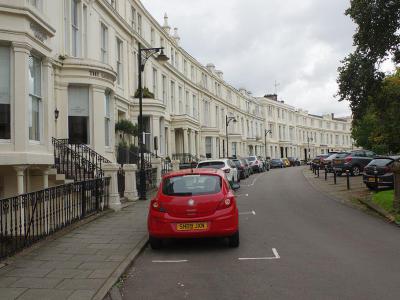
The Royal Crescent is a notable street in Glasgow, characterized by its distinctive architecture and historical significance. Situated in the West End of the city, this area is renowned for its elegant Georgian-style crescent of terraced houses. The Royal Crescent, like its more famous counterpart in Bath, England, is planned in a sweeping crescent shape, which provides a visually striking streetscape.
Designed by the renowned architect Alexander Taylor and built between 1839 and 1849, the Royal Crescent in Glasgow reflects the city's prosperity during the Industrial Revolution. It was a period when Glasgow was expanding rapidly, and there was a demand for high-quality housing for the wealthy and upper-middle-class citizens. The architecture of the Royal Crescent is a testament to the Georgian style, characterized by symmetry, and proportion, and often decorated with classical details.
The area is important not only for its architecture but also for its cultural and historical value. It's located close to Kelvingrove Park and the University of Glasgow, making it a part of one of Glasgow's most vibrant and historically rich areas. The West End of Glasgow, including the Royal Crescent, is known for its bohemian atmosphere, with a plethora of cafes, boutiques, and cultural venues.
Today, the Royal Crescent remains a residential area but also attracts tourists and architecture enthusiasts. The buildings, mostly now subdivided into flats, retain much of their original charm and elegance, making the crescent a fine example of Georgian architecture in Scotland. The preservation of this area is crucial for maintaining the architectural heritage and history of Glasgow.
Designed by the renowned architect Alexander Taylor and built between 1839 and 1849, the Royal Crescent in Glasgow reflects the city's prosperity during the Industrial Revolution. It was a period when Glasgow was expanding rapidly, and there was a demand for high-quality housing for the wealthy and upper-middle-class citizens. The architecture of the Royal Crescent is a testament to the Georgian style, characterized by symmetry, and proportion, and often decorated with classical details.
The area is important not only for its architecture but also for its cultural and historical value. It's located close to Kelvingrove Park and the University of Glasgow, making it a part of one of Glasgow's most vibrant and historically rich areas. The West End of Glasgow, including the Royal Crescent, is known for its bohemian atmosphere, with a plethora of cafes, boutiques, and cultural venues.
Today, the Royal Crescent remains a residential area but also attracts tourists and architecture enthusiasts. The buildings, mostly now subdivided into flats, retain much of their original charm and elegance, making the crescent a fine example of Georgian architecture in Scotland. The preservation of this area is crucial for maintaining the architectural heritage and history of Glasgow.
12) Glasgow West End
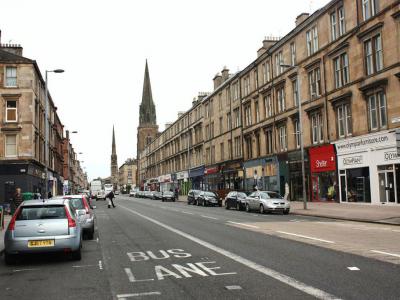
Glasgow's West End has experienced growth in phases, initially centered around Blythswood Square and Garnethill, then expanding towards Woodlands Hill and Great Western Road. This district boasts elegant townhouses and tenements, along with various establishments such as cafes, tea rooms, bars, boutiques, upscale hotels, clubs, and restaurants. It is situated near Kelvingrove Park, the University of Glasgow, Glasgow Botanic Gardens, and the Scottish Exhibition and Conference Centre. Notably, the area's primary streets, including Argyle Street (Finnieston), Great Western Road, and Byres Road, are focal points of activity.
A prominent landmark in the area is the spire of Sir George Gilbert Scott's Glasgow University main building, the second largest Gothic Revival building in Great Britain. This university, the fourth oldest in the English-speaking world, contributes to the West End's cultural vibrancy by hosting a significant portion of the city's student population.
The West End is also home to cultural institutions like the Kelvingrove Art Gallery and Museum, Hunterian Museum and Art Gallery, Kelvin Hall museums and research facilities, stores, and community sports venues. Adjacent to Kelvin Hall was the Museum of Transport, which relocated in 2010 to a new site at Glasgow Harbour, designed by Zaha Hadid. Additionally, the West End Festival, one of Glasgow's major events, takes place annually in June.
Notably, Glasgow is home to the SECC, the largest exhibition and conference center in Great Britain. In September 2013, a significant expansion of SECC facilities, the 13,000-seat Hydro arena, designed by Foster and Partners, was officially opened at the former Queen's Dock.
A prominent landmark in the area is the spire of Sir George Gilbert Scott's Glasgow University main building, the second largest Gothic Revival building in Great Britain. This university, the fourth oldest in the English-speaking world, contributes to the West End's cultural vibrancy by hosting a significant portion of the city's student population.
The West End is also home to cultural institutions like the Kelvingrove Art Gallery and Museum, Hunterian Museum and Art Gallery, Kelvin Hall museums and research facilities, stores, and community sports venues. Adjacent to Kelvin Hall was the Museum of Transport, which relocated in 2010 to a new site at Glasgow Harbour, designed by Zaha Hadid. Additionally, the West End Festival, one of Glasgow's major events, takes place annually in June.
Notably, Glasgow is home to the SECC, the largest exhibition and conference center in Great Britain. In September 2013, a significant expansion of SECC facilities, the 13,000-seat Hydro arena, designed by Foster and Partners, was officially opened at the former Queen's Dock.
13) Princes Square
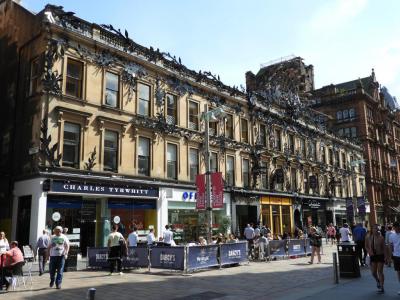
Princes Square is a striking blend of historic architecture and modern design, making it one of the city’s most stylish shopping and leisure destinations. Originally built in 1841 as a merchants’ warehouse, the building was transformed in the 1980s into a luxury shopping centre. Its developers preserved the elegant sandstone exterior while adding a dramatic five-story interior atrium crowned with a glass roof, which floods the space with natural light.
Inside, visitors will find a curated selection of boutiques, designer stores, and specialty shops that go beyond ordinary retail. International fashion labels stand alongside independent outlets, offering everything from clothing and accessories to gifts and homeware. Art and design are central to the experience too, with unique decorative features and installations enhancing the atmosphere.
Beyond shopping, Princes Square is also known for its diverse dining options. Restaurants, cafés, and bars are spread across the floors, ranging from casual bites to elegant dining experiences. The central courtyard often serves as a social hub, inviting visitors to linger over coffee or enjoy a lively evening atmosphere. This mix of retail, food, and art makes Princes Square more than just a shopping centre-it’s a cultural meeting place that reflects Glasgow’s vibrant urban character.
For tourists, Princes Square is as much about the experience as the purchases. The combination of historic architecture, modern design, and stylish ambiance makes it a destination in itself.
Inside, visitors will find a curated selection of boutiques, designer stores, and specialty shops that go beyond ordinary retail. International fashion labels stand alongside independent outlets, offering everything from clothing and accessories to gifts and homeware. Art and design are central to the experience too, with unique decorative features and installations enhancing the atmosphere.
Beyond shopping, Princes Square is also known for its diverse dining options. Restaurants, cafés, and bars are spread across the floors, ranging from casual bites to elegant dining experiences. The central courtyard often serves as a social hub, inviting visitors to linger over coffee or enjoy a lively evening atmosphere. This mix of retail, food, and art makes Princes Square more than just a shopping centre-it’s a cultural meeting place that reflects Glasgow’s vibrant urban character.
For tourists, Princes Square is as much about the experience as the purchases. The combination of historic architecture, modern design, and stylish ambiance makes it a destination in itself.
14) Argyll Arcade (must see)
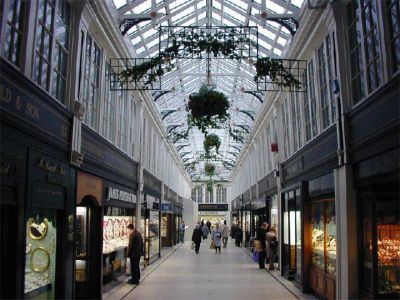
Tucked between Buchanan Street and Argyle Street, the Argyll Arcade is one of Glasgow’s most elegant historic shopping arcades and a must-see for anyone exploring the city centre. Opened in 1827, it holds the distinction of being Scotland’s oldest covered shopping street and one of the very first purpose-built arcades in Europe. With its ornate ironwork and a spectacular glass roof that floods the walkway with natural light, the arcade feels like a slice of Parisian grandeur transplanted into the heart of Glasgow.
The building itself was designed by architect John Baird in a French Renaissance style, a choice that has stood the test of time. Visitors will immediately notice the grand entrance on Argyle Street, with its decorative stonework and cast-iron detailing. The continuous glass canopy overhead creates a bright, airy atmosphere that makes wandering through the passageway a pleasure in any season. The arcade’s architecture is as much a draw as the shops themselves, and it has been a listed building since 1970.
What truly sets the Argyll Arcade apart is its reputation as a centre of fine jewellery. Often referred to as Scotland’s “jewellery quarter under glass,” it is home to more than 30 jewellers and diamond merchants, many of them family-run businesses that have been part of the arcade for generations.
A stroll through the arcade offers more than just shopping; it’s a chance to step back into 19th-century Glasgow while enjoying a thoroughly modern retail experience. The combination of history, architecture, and luxury makes the Argyll Arcade a memorable stop on any visit to the city, perfect for anyone wanting to see how tradition and contemporary style coexist in Glasgow’s vibrant heart.
The building itself was designed by architect John Baird in a French Renaissance style, a choice that has stood the test of time. Visitors will immediately notice the grand entrance on Argyle Street, with its decorative stonework and cast-iron detailing. The continuous glass canopy overhead creates a bright, airy atmosphere that makes wandering through the passageway a pleasure in any season. The arcade’s architecture is as much a draw as the shops themselves, and it has been a listed building since 1970.
What truly sets the Argyll Arcade apart is its reputation as a centre of fine jewellery. Often referred to as Scotland’s “jewellery quarter under glass,” it is home to more than 30 jewellers and diamond merchants, many of them family-run businesses that have been part of the arcade for generations.
A stroll through the arcade offers more than just shopping; it’s a chance to step back into 19th-century Glasgow while enjoying a thoroughly modern retail experience. The combination of history, architecture, and luxury makes the Argyll Arcade a memorable stop on any visit to the city, perfect for anyone wanting to see how tradition and contemporary style coexist in Glasgow’s vibrant heart.
