Custom Walk in Rio de Janeiro, Brazil by sm_filins_9f9939 created on 2026-02-05
Guide Location: Brazil » Rio de Janeiro
Guide Type: Custom Walk
# of Sights: 15
Tour Duration: 4 Hour(s)
Travel Distance: 7.1 Km or 4.4 Miles
Share Key: KPG3P
Guide Type: Custom Walk
# of Sights: 15
Tour Duration: 4 Hour(s)
Travel Distance: 7.1 Km or 4.4 Miles
Share Key: KPG3P
How It Works
Please retrieve this walk in the GPSmyCity app. Once done, the app will guide you from one tour stop to the next as if you had a personal tour guide. If you created the walk on this website or come to the page via a link, please follow the instructions below to retrieve the walk in the app.
Retrieve This Walk in App
Step 1. Download the app "GPSmyCity: Walks in 1K+ Cities" on Apple App Store or Google Play Store.



Step 2. In the GPSmyCity app, download(or launch) the guide "Rio de Janeiro Map and Walking Tours".
Step 3. Tap the menu button located at upper right corner of the "Walks" screen and select "Retrieve custom walk". Enter the share key: KPG3P
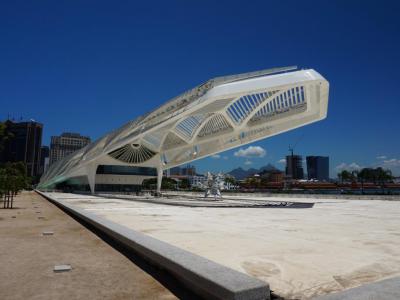
1) Museum of Tomorrow (must see)
The Museum of Tomorrow, situated in Rio de Janeiro, is a science museum known for its unique architecture, designed by the Spanish neofuturistic architect Santiago Calatrava. The museum officially opened its doors on December 17, 2015, with President Dilma Rousseff in attendance.
The Museum of Tomorrow is located on Mauá Pier, within a spacious green area spanning approximately 30,000 square meters. The surroundings feature gardens, water features, a bike path, and leisure spaces. The museum building itself covers an area of 15,000 square meters and incorporates sustainable design principles inspired by nature. Santiago Calatrava's architectural vision integrates local natural resources, such as water from Guanabara Bay, which is used for the museum's interior air conditioning and then recycled in water features. Calatrava drew inspiration from the bromeliads at the Rio de Janeiro Botanical Garden when conceiving the museum's design.
The Museum of Tomorrow's architectural concept harmoniously blends with the landscape of the port area and Guanabara Bay. Notably, the building's roof boasts large steel structures that move like wings and serve as a foundation for solar energy collection panels. This sustainable approach aligns with the museum's pursuit of LEED (Leadership in Energy and Environmental Design) certification from the Green Building Council.
Inside, the museum's main exhibition invites visitors to explore five key thematic areas: Cosmos, Earth, Anthropocene, Tomorrow, and Us. This journey is facilitated through various experiments and interactive experiences. The museum ingeniously combines science with innovative design to emphasize the importance of sustainable urban development and an ecologically-conscious world.
The Museum of Tomorrow is located on Mauá Pier, within a spacious green area spanning approximately 30,000 square meters. The surroundings feature gardens, water features, a bike path, and leisure spaces. The museum building itself covers an area of 15,000 square meters and incorporates sustainable design principles inspired by nature. Santiago Calatrava's architectural vision integrates local natural resources, such as water from Guanabara Bay, which is used for the museum's interior air conditioning and then recycled in water features. Calatrava drew inspiration from the bromeliads at the Rio de Janeiro Botanical Garden when conceiving the museum's design.
The Museum of Tomorrow's architectural concept harmoniously blends with the landscape of the port area and Guanabara Bay. Notably, the building's roof boasts large steel structures that move like wings and serve as a foundation for solar energy collection panels. This sustainable approach aligns with the museum's pursuit of LEED (Leadership in Energy and Environmental Design) certification from the Green Building Council.
Inside, the museum's main exhibition invites visitors to explore five key thematic areas: Cosmos, Earth, Anthropocene, Tomorrow, and Us. This journey is facilitated through various experiments and interactive experiences. The museum ingeniously combines science with innovative design to emphasize the importance of sustainable urban development and an ecologically-conscious world.
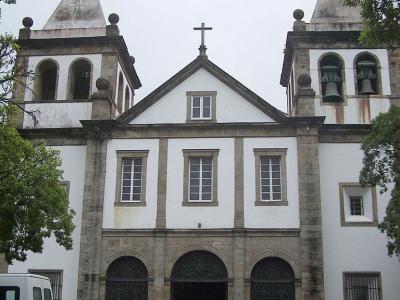
2) Sao Bento Church and Monastery (must see)
Mosteiro de São Bento (Monastery of Saint Benedict) is officially called the Abbey of Our Lady of Monserrat. This Benedictine abbey's history began in 1590 when the land was donated to the monks. Work began in 1633 and was completed in 1671. An annex was completed in 1755.
The abbey's design is a gorgeous example of Mannerist-style Portuguese colonial architecture. The facade features an edifice with three entrance archways and a triangular gable. Two towers with pyramidal spires surround the entryway. After passing through the archway, visitors will be welcome to a tiled porch with 19th-century iron gates.
The interior is embellished with elaborate gold leaf. Friar Ricardo do Pilar created beautiful hand-painted tiles depicting Benedictine saints between 1676 and 1684. These are on display in the main chapel. In the sacristy, visitors will admire a 1690 masterpiece by painter Friar Ricardo.
Friar Domingos da Conceição created statues of Saint Benedict, Saint Scholastica, and Our Lady of Mount Serrat. Artist Inácio Ferreira Pinto re-did the main chapel from 1787-1794. Master Valentim created the main chapel's stunning chandeliers in the 1780s. The Chapel of the Holy Sacrament was embellished by Inácio Ferreira Pinto from 1795-1800.
Visitors will find seven interior chapels: Chapel of Our Lady of the Immaculate Conception, Chapel of Saint Gertrude, Chapel of Our Lady of Pilar, Chapel of Saint Lawrence, Chapel of Saint Braz, Chapel of Saint Caetano, and Chapel of Saint Amaro.
Why You Should Visit:
The São Bento Church and Monastery has a simple exterior but an absolutely divine gilded baroque interior. Visitors will relish the hundreds of years of Brazillian history and stunning architectural details.
Tips:
Take part in a traditional Sunday 10:00 am mass--complete with Gregorian chanting and organ music.
The abbey's design is a gorgeous example of Mannerist-style Portuguese colonial architecture. The facade features an edifice with three entrance archways and a triangular gable. Two towers with pyramidal spires surround the entryway. After passing through the archway, visitors will be welcome to a tiled porch with 19th-century iron gates.
The interior is embellished with elaborate gold leaf. Friar Ricardo do Pilar created beautiful hand-painted tiles depicting Benedictine saints between 1676 and 1684. These are on display in the main chapel. In the sacristy, visitors will admire a 1690 masterpiece by painter Friar Ricardo.
Friar Domingos da Conceição created statues of Saint Benedict, Saint Scholastica, and Our Lady of Mount Serrat. Artist Inácio Ferreira Pinto re-did the main chapel from 1787-1794. Master Valentim created the main chapel's stunning chandeliers in the 1780s. The Chapel of the Holy Sacrament was embellished by Inácio Ferreira Pinto from 1795-1800.
Visitors will find seven interior chapels: Chapel of Our Lady of the Immaculate Conception, Chapel of Saint Gertrude, Chapel of Our Lady of Pilar, Chapel of Saint Lawrence, Chapel of Saint Braz, Chapel of Saint Caetano, and Chapel of Saint Amaro.
Why You Should Visit:
The São Bento Church and Monastery has a simple exterior but an absolutely divine gilded baroque interior. Visitors will relish the hundreds of years of Brazillian history and stunning architectural details.
Tips:
Take part in a traditional Sunday 10:00 am mass--complete with Gregorian chanting and organ music.
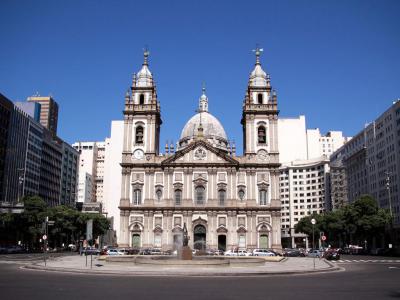
3) Candelária Church (must see)
The Candelária Church is an important historical Roman Catholic church in the city of Rio de Janeiro. Built and decorated during a long period, from 1775 to the late 19th century, the church combines a Baroque façade with Neoclassical and Neo-Renaissance interior elements.
The quasi-legendary history about the establishment of the church is that in the beginning of the 17th century a ship called Candelária almost sank during a storm on the sea. Upon arriving in Rio de Janeiro, a Portuguese couple sponsored the building of a small chapel, fulfilling the oath they made during the storm. This small chapel, dedicated to Our Lady of Candelária, was built around 1609.
Other elements of interest include: the main altar by Brazilian architect Archimedes Memória; the various German stained-glass windows; the bronze doors (c. 1901) of the main entrance, by Portuguese sculptor António Teixeira Lopes; and the two monumental bronze pulpits in the Art-Nouveau style, by Portuguese sculptor Rodolfo Pinto do Couto (1931).
Tip:
Closed in the afternoon so the best time to visit would be in the morning or early noon.
Due to the great acoustics, attending a concert/ organ recital here comes highly recommended.
The quasi-legendary history about the establishment of the church is that in the beginning of the 17th century a ship called Candelária almost sank during a storm on the sea. Upon arriving in Rio de Janeiro, a Portuguese couple sponsored the building of a small chapel, fulfilling the oath they made during the storm. This small chapel, dedicated to Our Lady of Candelária, was built around 1609.
Other elements of interest include: the main altar by Brazilian architect Archimedes Memória; the various German stained-glass windows; the bronze doors (c. 1901) of the main entrance, by Portuguese sculptor António Teixeira Lopes; and the two monumental bronze pulpits in the Art-Nouveau style, by Portuguese sculptor Rodolfo Pinto do Couto (1931).
Tip:
Closed in the afternoon so the best time to visit would be in the morning or early noon.
Due to the great acoustics, attending a concert/ organ recital here comes highly recommended.
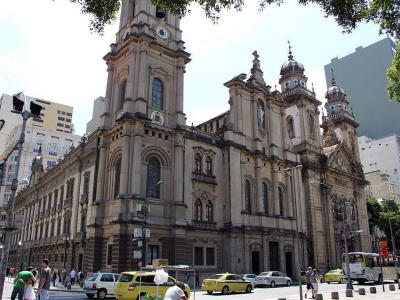
4) Old Cathedral of Rio de Janeiro
Located in the Praça XV square, in downtown Rio, the Old Cathedral of Rio de Janeiro dedicated to Our Lady of Mount Carmel is an old Carmelite church which served as the city's cathedral (Sé) from around 1808 until 1976. During the 19th century, it was also used successively as the Royal and Imperial Chapel by the Portuguese royal family and the Brazilian imperial family, respectively. It is one of the most important historical buildings in the city.
Apart from being of exceptional historical value for the city and the country, this former cathedral has one of the most harmonious interior decorations among the churches in Rio. The walls, chapels and ceiling are covered with ornate Rococo (late Baroque) woodwork showing lightness and unity in style. The decoration was executed after 1785, mainly by one of Rio's best Rococo wood carvers of the period, Inácio Ferreira Pinto, who was also responsible for the main altarpiece. The upper walls of the one-aisled nave have a series of balconies and oval paintings of the Apostles by painter José Leandro de Carvalho. Later reforms did not substantially alter the inner decoration, but the façades were almost completely remodeled in the early 20th century.
Why You Should Visit:
Whilst this church might seem a bit simple from the outside, entry into it reveals a beautifully restored interior.
Decoration includes fine painted ceilings and ornate gilt work balanced by areas of plain white wall.
The overall effect is quite beautifully elegant.
Tip:
There are a number of other things to see in the complex, including an archaeological dig.
Not all of them are open all the time; the most important is the Third Order church immediately adjacent to the Old Cathedral.
Apart from being of exceptional historical value for the city and the country, this former cathedral has one of the most harmonious interior decorations among the churches in Rio. The walls, chapels and ceiling are covered with ornate Rococo (late Baroque) woodwork showing lightness and unity in style. The decoration was executed after 1785, mainly by one of Rio's best Rococo wood carvers of the period, Inácio Ferreira Pinto, who was also responsible for the main altarpiece. The upper walls of the one-aisled nave have a series of balconies and oval paintings of the Apostles by painter José Leandro de Carvalho. Later reforms did not substantially alter the inner decoration, but the façades were almost completely remodeled in the early 20th century.
Why You Should Visit:
Whilst this church might seem a bit simple from the outside, entry into it reveals a beautifully restored interior.
Decoration includes fine painted ceilings and ornate gilt work balanced by areas of plain white wall.
The overall effect is quite beautifully elegant.
Tip:
There are a number of other things to see in the complex, including an archaeological dig.
Not all of them are open all the time; the most important is the Third Order church immediately adjacent to the Old Cathedral.
5) Paco Imperial (Imperial Palace)
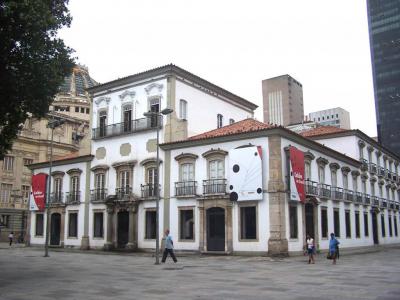
The Paco Imperial was previously known as the Royal Palace of Rio de Janeiro and the Palace of the Viceroys. It was built in 1743 as the Governor's House. The Paco Imperial is built in the baroque style with an impressive portal made from Portuguese marble. The palace also has several inner courtyards.
In 1763, the Portuguese colonial government transferred from Salvador to Rio de Janeiro, and the building became the Viceroy's Palace. In 1808, the Prince Regent (later King John VI) arrived in Brazil to escape Napoleon. At that time, the building became the Royal Palace. King John VI, Pedro I, and Pedro II were all crowned at the Paco Imperial.
In 1822, Brazil gained independence from Portugal and became the Empire of Brazil. The building was named the Imperial Palace. In 1888, Imperial Princess Isabel signed the Lei Auera, or Golden Law here. This law abolished slavery in Brazil. When Brazil became a republic in 1889, the building was used as Rio de Janeiro's central mail office. Today, it is a cultural center with art exhibits. The Paulo Santos library is also housed here.
Tip:
From the small courtyard, where there is a fairly good "bistro", take the stairwell to where there are some models showing what the local area looked like over time as well as a large, very modern exhibition area displaying modern art.
In 1763, the Portuguese colonial government transferred from Salvador to Rio de Janeiro, and the building became the Viceroy's Palace. In 1808, the Prince Regent (later King John VI) arrived in Brazil to escape Napoleon. At that time, the building became the Royal Palace. King John VI, Pedro I, and Pedro II were all crowned at the Paco Imperial.
In 1822, Brazil gained independence from Portugal and became the Empire of Brazil. The building was named the Imperial Palace. In 1888, Imperial Princess Isabel signed the Lei Auera, or Golden Law here. This law abolished slavery in Brazil. When Brazil became a republic in 1889, the building was used as Rio de Janeiro's central mail office. Today, it is a cultural center with art exhibits. The Paulo Santos library is also housed here.
Tip:
From the small courtyard, where there is a fairly good "bistro", take the stairwell to where there are some models showing what the local area looked like over time as well as a large, very modern exhibition area displaying modern art.
6) Confeitaria Colombo (Colombo Confectionery) (must see)
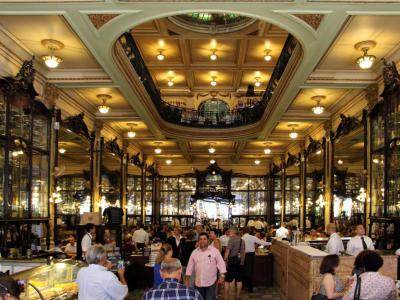
Confeitaria Colombo has been named one of the most beautiful cafes in the world. It was founded in 1894, and its architecture was inspired by European cafes. The design represents the belle epoque, or beautiful age before World War I.
In the early 20th century, the interior was renovated to emulate the trendy Art Nouveau style. Artisan Antonio Borsoi painstakingly handcrafted the wooden furniture used in the interior. An upper floor and tearoom were added in 1922. The ceiling features a gorgeous stained glass skylight from France. The towering mirrors were imported from Belgium and feature jacaranda frames. The Portuguese tiles are gorgeous.
The Confeitaria Colombo has long been a meeting place for important discussions. Heads of state and royalty such as Queen Elizabeth II of England, King Albert I of Belgium, and Brazillian Presidents Getulio Vargas and Juscelino Kubitschek have visited the Confeitaria Colombo.
It also served as a gathering place for Brazilian artists, musicians, and writers. Composer, conductor, and musicians Villa-Lobos, Chiquinha Gonzaga, and writers Lima Barreto and José do Patrocínio would often meet here.
The cafe remains committed to its elegant history and serves fabulous coffee and tea. Breakfast, brunch, lunch, and desserts are also offered.
Why You Should Visit:
Feast your eyes on the stunning interior while enjoying a memorable beverage. There's no better place to sit down for a cup of coffee or tea while enjoying some people watching. This cafe sees the whos-who of Rio's social scene, from the city's working people to the rich and powerful.
Tips:
Try the brigadeiro for dessert. This delicious Brazillian sweet is made with condensed milk and chocolate and is sure to delight!
In the early 20th century, the interior was renovated to emulate the trendy Art Nouveau style. Artisan Antonio Borsoi painstakingly handcrafted the wooden furniture used in the interior. An upper floor and tearoom were added in 1922. The ceiling features a gorgeous stained glass skylight from France. The towering mirrors were imported from Belgium and feature jacaranda frames. The Portuguese tiles are gorgeous.
The Confeitaria Colombo has long been a meeting place for important discussions. Heads of state and royalty such as Queen Elizabeth II of England, King Albert I of Belgium, and Brazillian Presidents Getulio Vargas and Juscelino Kubitschek have visited the Confeitaria Colombo.
It also served as a gathering place for Brazilian artists, musicians, and writers. Composer, conductor, and musicians Villa-Lobos, Chiquinha Gonzaga, and writers Lima Barreto and José do Patrocínio would often meet here.
The cafe remains committed to its elegant history and serves fabulous coffee and tea. Breakfast, brunch, lunch, and desserts are also offered.
Why You Should Visit:
Feast your eyes on the stunning interior while enjoying a memorable beverage. There's no better place to sit down for a cup of coffee or tea while enjoying some people watching. This cafe sees the whos-who of Rio's social scene, from the city's working people to the rich and powerful.
Tips:
Try the brigadeiro for dessert. This delicious Brazillian sweet is made with condensed milk and chocolate and is sure to delight!
7) Royal Portuguese Cabinet of Reading
The Royal Portuguese Cabinet of Reading is revered as one of the most beautiful libraries in the world. It has the most expansive collection of Portuguese literature outside Portugal.
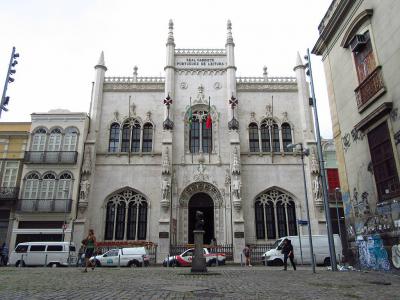
The building was finished in 1887 in the Neo-Manueline style. This design is reminiscent of the Gothic-Renaissance style popular during the reign of King Manuel (from 1495-1521). During this time, the Portuguese were beginning to discover the New World.
Emperor Pedro II laid the cornerstone in 1880, and Imperial Princess Isabel inaugurated the building in 1887. The Jerónimos Monastery inspired the facade in Lisbon. It was made from local stone in Lisbon and then transferred by ship to Rio de Janeiro. Four statues decorate the exterior. They represent Prince Henry the Navigator, Vasco da Gama, Luís de Camões, and Pedro Álvares Cabral.
The interior is spectacular, with the book collection towering three stories tall around the reading area. The reading room features a stained-glass skylight with a cast iron frame, allowing natural light to illuminate the library. An elegant chandelier hangs from the Reading Room's ceiling. A statue of Pedro Álvares Cabral, credited as the European discoverer of Brazil, stands in the reading room.
The building was finished in 1887 in the Neo-Manueline style. This design is reminiscent of the Gothic-Renaissance style popular during the reign of King Manuel (from 1495-1521). During this time, the Portuguese were beginning to discover the New World.
Emperor Pedro II laid the cornerstone in 1880, and Imperial Princess Isabel inaugurated the building in 1887. The Jerónimos Monastery inspired the facade in Lisbon. It was made from local stone in Lisbon and then transferred by ship to Rio de Janeiro. Four statues decorate the exterior. They represent Prince Henry the Navigator, Vasco da Gama, Luís de Camões, and Pedro Álvares Cabral.
The interior is spectacular, with the book collection towering three stories tall around the reading area. The reading room features a stained-glass skylight with a cast iron frame, allowing natural light to illuminate the library. An elegant chandelier hangs from the Reading Room's ceiling. A statue of Pedro Álvares Cabral, credited as the European discoverer of Brazil, stands in the reading room.
8) São Francisco da Penitência Church
The Church of the Third Order of São Francisco da Penitência is a colonial church located next to the Convent of Santo Antônio , on the hill of the same name, in the center of the city of Rio de Janeiro. For its exuberant Baroque decoration, it is considered one of the most important in the city and the country.
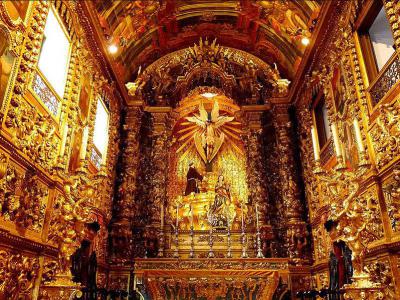
This Baroque style church was built back in 1726. Besides its great spiritual heritage, it has marvelous ornaments and decorations, such as the jacaranda wood carved altar or the roof panel depicting Saint Francis receiving the stigmata. With advance booking, you can take a guided tour of the underground passages under the church which were in use up until 1850.
Along with the church of São Francisco da Penitência it is the main showcase of total Baroque art in Rio de Janeiro. Currently the church functions as a Museum of Sacred Art. Don't hesitate to check out the museum for a small fee; the gold room is a spectacle to behold!
Why You Should Visit:
Overwhelming and beautiful, this church wows visitors with its elaborate architecture, magnificent statues, dazzling relics and impressive paintings.
What is more, the church exudes a rather serene feel, making it a perfect stop for anyone who needs a quick break.
This Baroque style church was built back in 1726. Besides its great spiritual heritage, it has marvelous ornaments and decorations, such as the jacaranda wood carved altar or the roof panel depicting Saint Francis receiving the stigmata. With advance booking, you can take a guided tour of the underground passages under the church which were in use up until 1850.
Along with the church of São Francisco da Penitência it is the main showcase of total Baroque art in Rio de Janeiro. Currently the church functions as a Museum of Sacred Art. Don't hesitate to check out the museum for a small fee; the gold room is a spectacle to behold!
Why You Should Visit:
Overwhelming and beautiful, this church wows visitors with its elaborate architecture, magnificent statues, dazzling relics and impressive paintings.
What is more, the church exudes a rather serene feel, making it a perfect stop for anyone who needs a quick break.
9) Catedral Metropolitana de São Sebastião
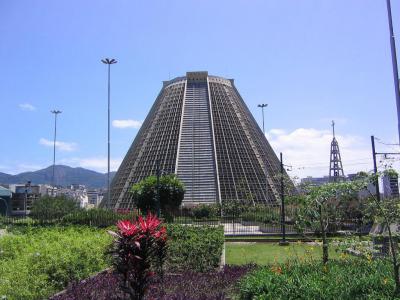
The Metropolitan Cathedral of Saint Sebastian, also known as the Metropolitan Cathedral of Rio de Janeiro, serves as the headquarters for the Roman Catholic Archdiocese of São Sebastião do Rio de Janeiro. It is where the Metropolitan Archbishops of Rio de Janeiro carry out their religious duties, and it is dedicated to Saint Sebastian, the patron saint of the city.
Designed by Edgar de Oliveira da Fonseca, the cathedral boasts a modern architectural style inspired by Mayan pyramids. The current cathedral was constructed between 1964 and 1979, replacing a series of churches that had previously served as cathedrals since 1676. The most recent and notable of these was the Church of Our Lady of Mount Carmel of the Ancient See, now referred to as the Old Cathedral, which was built in the 18th century and declared Rio's cathedral in the early 19th century.
The New Cathedral, as it is sometimes called, is situated in the city center. It has a distinctive conical shape with an internal diameter of 96 meters (315 feet), an external diameter of 106 meters, and an overall height of 75 meters (246 feet). The interior of the cathedral covers 8,000 square meters and provides seating for 5,000 people, with the ability to accommodate up to 20,000 individuals when standing. The cathedral's four rectangular stained glass windows reach an impressive height of 64 meters (210 feet), extending from the floor to the ceiling.
The interior design of the cathedral was created by Father Paulo Lachen Maier, while the sculptures were crafted by Humberto Cozzo. Additionally, the Chapel of the Blessed Sacrament features two candelabras created by Niccola Zanotto.
Why You Should Visit:
Majestic on the inside, free of charge, and with very minimal crowds. The massive coloured glass windows are as tall as the church itself and are beautiful beyond belief.
Tip:
Try to go during the middle of the day since the church relies on natural illumination and going earlier / later can leave it dark inside.
As the location is so close to Cinelândia and all of its attractions, you can do both on the same day.
Designed by Edgar de Oliveira da Fonseca, the cathedral boasts a modern architectural style inspired by Mayan pyramids. The current cathedral was constructed between 1964 and 1979, replacing a series of churches that had previously served as cathedrals since 1676. The most recent and notable of these was the Church of Our Lady of Mount Carmel of the Ancient See, now referred to as the Old Cathedral, which was built in the 18th century and declared Rio's cathedral in the early 19th century.
The New Cathedral, as it is sometimes called, is situated in the city center. It has a distinctive conical shape with an internal diameter of 96 meters (315 feet), an external diameter of 106 meters, and an overall height of 75 meters (246 feet). The interior of the cathedral covers 8,000 square meters and provides seating for 5,000 people, with the ability to accommodate up to 20,000 individuals when standing. The cathedral's four rectangular stained glass windows reach an impressive height of 64 meters (210 feet), extending from the floor to the ceiling.
The interior design of the cathedral was created by Father Paulo Lachen Maier, while the sculptures were crafted by Humberto Cozzo. Additionally, the Chapel of the Blessed Sacrament features two candelabras created by Niccola Zanotto.
Why You Should Visit:
Majestic on the inside, free of charge, and with very minimal crowds. The massive coloured glass windows are as tall as the church itself and are beautiful beyond belief.
Tip:
Try to go during the middle of the day since the church relies on natural illumination and going earlier / later can leave it dark inside.
As the location is so close to Cinelândia and all of its attractions, you can do both on the same day.
10) Escadaria Selarón (Selarón Steps) (must see)
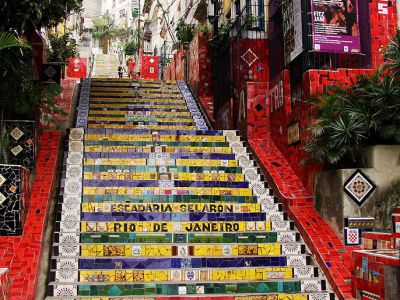
Escadaria Selarón, renowned worldwide, comprises a remarkable set of stairs that stretch between Joaquim Silva Street and Pinto Martins Street, spanning both the Lapa and Santa Teresa neighborhoods of Rio de Janeiro. These steps are the creative masterpiece of Jorge Selarón, an artist originally from Chile, who referred to it as "my tribute to the Brazilian people." His endeavor began in 1990 with the intention of rejuvenating the deteriorated steps in front of his home. Initially, it was a secondary project compared to his primary passion, painting, but it quickly evolved into an all-consuming obsession. Selarón himself regarded this work as "never complete" and asserted that "This eccentric and one-of-a-kind dream will only conclude on the day of my demise."
Initially, Selarón sourced tiles for this project from various construction sites and heaps of discarded materials on the streets of Rio. However, in subsequent years, a significant portion of the tiles was contributed by visitors from across the globe. In total, there are 215 steps spanning a length of 125 meters, adorned with over 2,000 tiles representing more than 60 different countries. Among these 2,000+ tiles, roughly 300 were meticulously hand-painted by Selarón himself, featuring an image of a pregnant African woman. Selarón remained reticent about this imagery, merely commenting that it pertained to a "personal issue from my past."
Why You Should Visit:
Not only are the 215 steps a dedication to the Brazilian people but to all who bought tiles from other countries and cities. Find yours!
The story of Selarón's 20-year project just adds to the fun of exploring the plethora of beautiful and/or interesting tiles.
Tip:
If you want your photo taken sitting on steps, you might have to wait a while. Try to arrive early or, at the least, go a few flights up where very few are waiting.
The neighborhood looks a bit unsafe so if you go make sure you don't show off your belongings too much (after dark it's a no-go area!).
Initially, Selarón sourced tiles for this project from various construction sites and heaps of discarded materials on the streets of Rio. However, in subsequent years, a significant portion of the tiles was contributed by visitors from across the globe. In total, there are 215 steps spanning a length of 125 meters, adorned with over 2,000 tiles representing more than 60 different countries. Among these 2,000+ tiles, roughly 300 were meticulously hand-painted by Selarón himself, featuring an image of a pregnant African woman. Selarón remained reticent about this imagery, merely commenting that it pertained to a "personal issue from my past."
Why You Should Visit:
Not only are the 215 steps a dedication to the Brazilian people but to all who bought tiles from other countries and cities. Find yours!
The story of Selarón's 20-year project just adds to the fun of exploring the plethora of beautiful and/or interesting tiles.
Tip:
If you want your photo taken sitting on steps, you might have to wait a while. Try to arrive early or, at the least, go a few flights up where very few are waiting.
The neighborhood looks a bit unsafe so if you go make sure you don't show off your belongings too much (after dark it's a no-go area!).
11) Palácio Pedro Ernesto / Câmara Municipal
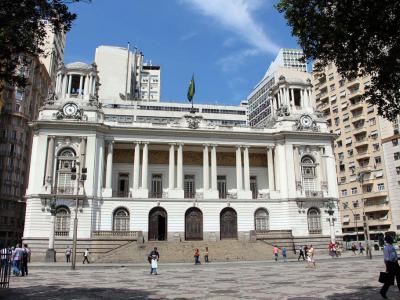
The Palácio Pedro Ernesto was completed in 1923 in the newly organized Cinelandia Square. This fabulous and imposing building was constructed in the French Beaux-Arts style. The Brazillian Parliament first occupied the building. Today, it is used by the City Council, and it is also known as Câmara Municipal do Rio de Janeiro.
The stunning Palácio Pedro Ernesto is one of the most photographed buildings in Rio de Janeiro. However, its beauty came at a cost. Historian Brasil Gérson called the Palácio Pedro Ernesto a golden cage due to its extremely high expense. The design and building cost twice as much as the nearby Municipal Theater of Rio de Janeiro.
Stairs lead to the first level, which features three entry arches. The second level features ten grand columns. Two symmetrical towers stand on either side of the facade.
Visitors are welcome to view the gorgeous interior; guided tours are available. The interior features a grand staircase with ornate floral handrails. Fabulous sculptures and paintings decorate the luxurious lounges, and marble floors add to the building's elegance.
Don't miss seeing the Palácio Pedro Ernesto illuminated at night.
The stunning Palácio Pedro Ernesto is one of the most photographed buildings in Rio de Janeiro. However, its beauty came at a cost. Historian Brasil Gérson called the Palácio Pedro Ernesto a golden cage due to its extremely high expense. The design and building cost twice as much as the nearby Municipal Theater of Rio de Janeiro.
Stairs lead to the first level, which features three entry arches. The second level features ten grand columns. Two symmetrical towers stand on either side of the facade.
Visitors are welcome to view the gorgeous interior; guided tours are available. The interior features a grand staircase with ornate floral handrails. Fabulous sculptures and paintings decorate the luxurious lounges, and marble floors add to the building's elegance.
Don't miss seeing the Palácio Pedro Ernesto illuminated at night.
12) Theatro Municipal (Municipal Theatre) (must see)
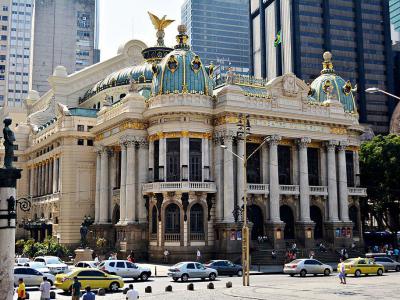
The Theatro Municipal of Rio de Janeiro was inaugurated in 1909. Located in Cinelandia Square, this beautiful building serves as an opera house and theatre. It is one of the most important theatres in Brazil. Today, most of the productions focus on classical music and ballet performances.
The architectural design was inspired by the Palais Garnier, which was built to house the Paris Opera in France. Brazillian painters and sculptors decorated the Theatro Municipal with fabulous appointments. The exterior has inscriptions bearing the names of classic Brazillian and European artists. A gilded bird watches over the theatre from atop an embellished dome.
The interior is equally spectacular. You'll find priceless artworks, paintings, and sculptures. Eliseu Visconti exquisitely painted the foyer ceiling, nave ceiling, and the frieze on the proscenium.
Tip:
Guided multilingual tours lasting 45 mins are offered Tue-Fri (12pm/2:30pm/4pm) and on Sat (11am/12pm/1pm/4pm). Call ahead to confirm availability of an English-speaking guide. If you want to take the guided tour, try to get there at 10am sharp. Even if you want the 1pm tour, tickets get sold out pretty fast, since the place only supports up to 50 people.
The architectural design was inspired by the Palais Garnier, which was built to house the Paris Opera in France. Brazillian painters and sculptors decorated the Theatro Municipal with fabulous appointments. The exterior has inscriptions bearing the names of classic Brazillian and European artists. A gilded bird watches over the theatre from atop an embellished dome.
The interior is equally spectacular. You'll find priceless artworks, paintings, and sculptures. Eliseu Visconti exquisitely painted the foyer ceiling, nave ceiling, and the frieze on the proscenium.
Tip:
Guided multilingual tours lasting 45 mins are offered Tue-Fri (12pm/2:30pm/4pm) and on Sat (11am/12pm/1pm/4pm). Call ahead to confirm availability of an English-speaking guide. If you want to take the guided tour, try to get there at 10am sharp. Even if you want the 1pm tour, tickets get sold out pretty fast, since the place only supports up to 50 people.
13) Biblioteca Nacional (National Library)
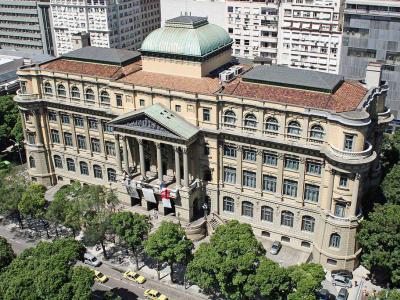
The Biblioteca Nacional is the largest library in Latin America. With over 900 million titles, it is also the seventh most extensive library collection in the world. This impressive collection began after an earthquake in 1755 damaged the Royal Library of Portugal in Lisbon. The Portuguese then decided to move parts of its collection to Brazil. The collection was stored in several different buildings until the current library was completed in 1910.
The neoclassical and art nouveau-style building is absolutely gorgeous. Visitors are welcome to view the library's collection and admire its stunning architecture. You can climb the impressive staircases and be inspired by the colors in the stained glass. The skylights add a delightful light to the stunning location.
Visitors will love the artistry evident in every interior vista. Walls feature elegant ornamentation, artwork, and sculptures. Art exhibitions are often held in various heritage rooms.
Visitors can wander on their own or take a guided tour. Tours are free and are available in both English and Spanish. Guides speak to the history and heritage of the museum and its collection, making the tour a great cultural experience.
The neoclassical and art nouveau-style building is absolutely gorgeous. Visitors are welcome to view the library's collection and admire its stunning architecture. You can climb the impressive staircases and be inspired by the colors in the stained glass. The skylights add a delightful light to the stunning location.
Visitors will love the artistry evident in every interior vista. Walls feature elegant ornamentation, artwork, and sculptures. Art exhibitions are often held in various heritage rooms.
Visitors can wander on their own or take a guided tour. Tours are free and are available in both English and Spanish. Guides speak to the history and heritage of the museum and its collection, making the tour a great cultural experience.
14) National Fine Arts Museum
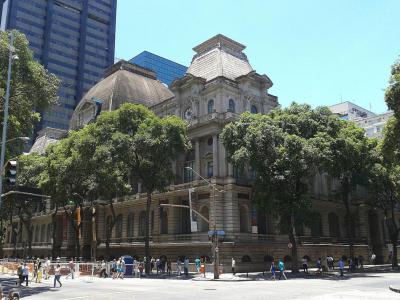
Open since 1937, the Museu Nacional de Belas Artes (MNBA) boasts a collection of works by Brazilian and international artists dating back as far as the 1700s. Its exhibitions include sculptures, engravings, paintings and illustrations as well as decorative artworks such as furniture, medals, folk handicrafts and even some pieces of African Art. You can easily spend a day here.
The style of the building, designed by Spanish architect Adolfo Morales de los Ríos, is clearly inspired by the Louvre Museum in Paris. But during the construction the project was modified, possibly by Rodolfo Bernardelli and, later, by Archimedes Memoria. As a result, the building presents an eclectic design, with facades modeled after different styles.
The main façade toward Avenida Rio Branco is inspired by French Renaissance, the side façades are plainer and make reference to Italian Renaissance. They are adorned with Parisian mosaics with figures of architects, painters and art theorists, such as Vasari, Vitruvius and da Vinci. The interior decoration is based in the use of noble materials, such as marble, mosaics, stucco, crystal, French ceramic and statuary. The building was listed as a national heritage work on 24 May 1973.
Why You Should Visit:
To see the wealth of Rio when it was the capital of Brasil for centuries, getting a sense of the country's art history in a very relaxed manner.
Besides, admission to this old and well-preserved building is very inexpensive and seniors (even foreign) can get in for free.
If there is one building or one activity in Rio de Janeiro that proves the city isn't just beaches and cocktails, it's this.
The style of the building, designed by Spanish architect Adolfo Morales de los Ríos, is clearly inspired by the Louvre Museum in Paris. But during the construction the project was modified, possibly by Rodolfo Bernardelli and, later, by Archimedes Memoria. As a result, the building presents an eclectic design, with facades modeled after different styles.
The main façade toward Avenida Rio Branco is inspired by French Renaissance, the side façades are plainer and make reference to Italian Renaissance. They are adorned with Parisian mosaics with figures of architects, painters and art theorists, such as Vasari, Vitruvius and da Vinci. The interior decoration is based in the use of noble materials, such as marble, mosaics, stucco, crystal, French ceramic and statuary. The building was listed as a national heritage work on 24 May 1973.
Why You Should Visit:
To see the wealth of Rio when it was the capital of Brasil for centuries, getting a sense of the country's art history in a very relaxed manner.
Besides, admission to this old and well-preserved building is very inexpensive and seniors (even foreign) can get in for free.
If there is one building or one activity in Rio de Janeiro that proves the city isn't just beaches and cocktails, it's this.
15) National History Museum
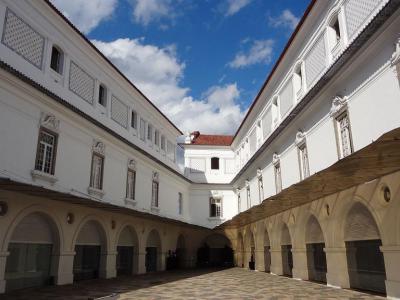
The National Historical Museum of Brazil houses an extensive collection of more than 287,000 items, including the largest collection of Latin American coins and currency. The museum's building complex has a rich history, with its origins dating back to 1603 when it was constructed as the Saint James of Mercy Fort. Earlier structures on the site can be traced back to 1567, having been commissioned by King Sebastian I of Portugal.
The National Historical Museum was officially established in August 1922 and commenced its operations in October as part of the Centennial Exhibition. Initially, it occupied two dedicated rooms within the Casa do Trem, which served as an Ammunition Depot. Today, the museum complex spans an area of 20,000 square meters and showcases its vast collection through more than 25 permanent and temporary exhibits. The museum's library alone boasts an impressive collection of over 57,000 titles, some dating back to the 15th century, in addition to 50,000 documents and photographs.
Over its 75-year history, the museum has amassed a significant collection under the auspices of the Ministry of Culture, evolving into a crucial cultural center. It gradually expanded its presence to encompass the entire architectural complex of Calaboose Point, where the Santiago Fort once stood.
The museum's initial collection was enriched by contributions from private collectors, including Bahian senator Miguel Calmon de Pin e Almeida, the Guinle family, and museologist Sophia Jobin. Another noteworthy acquisition came in the early years of the museum when President Getúlio Vargas purchased a collection of ivory religious sculptures from businessman and collector Souza Lima through a special arrangement facilitated by the Caixa Econômica Federal in 1940.
Why You Should Visit:
To get a very comprehensive overview of the country's rich culture from colonial to modern times. Spacious, well-lit building with clean restrooms and interesting exhibits in every room.
There is also a small but adequate gift shop, plus a very above-average cafe that completes the experience with a good/affordable set menu plus drinks in a lovely setting.
Tip:
Combine your visit with the Colombo Bakery, Paço Imperial, Cinelândia and other central locations.
An audio guide is offered next to the ticket desk but entirely not necessary if you can read English.
The National Historical Museum was officially established in August 1922 and commenced its operations in October as part of the Centennial Exhibition. Initially, it occupied two dedicated rooms within the Casa do Trem, which served as an Ammunition Depot. Today, the museum complex spans an area of 20,000 square meters and showcases its vast collection through more than 25 permanent and temporary exhibits. The museum's library alone boasts an impressive collection of over 57,000 titles, some dating back to the 15th century, in addition to 50,000 documents and photographs.
Over its 75-year history, the museum has amassed a significant collection under the auspices of the Ministry of Culture, evolving into a crucial cultural center. It gradually expanded its presence to encompass the entire architectural complex of Calaboose Point, where the Santiago Fort once stood.
The museum's initial collection was enriched by contributions from private collectors, including Bahian senator Miguel Calmon de Pin e Almeida, the Guinle family, and museologist Sophia Jobin. Another noteworthy acquisition came in the early years of the museum when President Getúlio Vargas purchased a collection of ivory religious sculptures from businessman and collector Souza Lima through a special arrangement facilitated by the Caixa Econômica Federal in 1940.
Why You Should Visit:
To get a very comprehensive overview of the country's rich culture from colonial to modern times. Spacious, well-lit building with clean restrooms and interesting exhibits in every room.
There is also a small but adequate gift shop, plus a very above-average cafe that completes the experience with a good/affordable set menu plus drinks in a lovely setting.
Tip:
Combine your visit with the Colombo Bakery, Paço Imperial, Cinelândia and other central locations.
An audio guide is offered next to the ticket desk but entirely not necessary if you can read English.
