Custom Walk in Jerusalem, Israel by bonniesalmon5968 created on 2026-02-06
Guide Location: Israel » Jerusalem
Guide Type: Custom Walk
# of Sights: 10
Tour Duration: 5 Hour(s)
Travel Distance: 11 Km or 6.8 Miles
Share Key: W2B5H
Guide Type: Custom Walk
# of Sights: 10
Tour Duration: 5 Hour(s)
Travel Distance: 11 Km or 6.8 Miles
Share Key: W2B5H
How It Works
Please retrieve this walk in the GPSmyCity app. Once done, the app will guide you from one tour stop to the next as if you had a personal tour guide. If you created the walk on this website or come to the page via a link, please follow the instructions below to retrieve the walk in the app.
Retrieve This Walk in App
Step 1. Download the app "GPSmyCity: Walks in 1K+ Cities" on Apple App Store or Google Play Store.



Step 2. In the GPSmyCity app, download(or launch) the guide "Jerusalem Map and Walking Tours".
Step 3. Tap the menu button located at upper right corner of the "Walks" screen and select "Retrieve custom walk". Enter the share key: W2B5H
1) Jaffa Gate
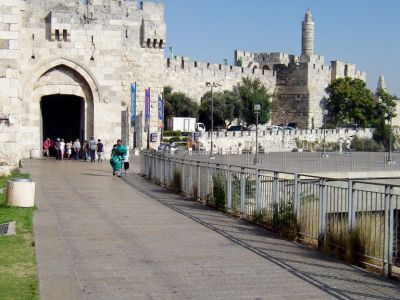
Known in English as Jaffa Gate, this is Jerusalem's Old City’s busiest entrance—and it knows it. Indeed, this is where traffic, tour groups, taxis, and determined pedestrians funnel in from Mamilla and modern West Jerusalem.
From the outside, it looks broad and welcoming, but once you step inside, the passage quickly narrows and bends sharply. That awkward L-shaped turn is no accident. Built in 1538 under Sultan Suleyman the Magnificent, the gate was engineered to slow down attackers and break their momentum. A stone inscription above the outer arch still records its precise construction date, just in case anyone doubts the planning.
Unlike most Old City gates, cars are allowed through here, thanks to an unusual episode in 1898. When Kaiser Wilhelm II arrived for a ceremonial visit, the Ottomans worried about an old belief that conquerors were expected to enter Jerusalem through this gate. Their solution was diplomatic engineering—a temporary breach cut into the wall beside the gate, so the Kaiser could ride in without triggering uncomfortable symbolism.
Fast-forward to 1917, and General Edmund Allenby made a point of doing the opposite. When British forces entered Jerusalem, Allenby dismounted and walked through the gate on foot, deliberately rejecting spectacle in favor of restraint.
The gate’s multiple names tell their own story. Sha’ar Yafo in Hebrew and Jaffa Gate in English recall the road leading to the Mediterranean port of Jaffa, long the arrival point for pilgrims and travelers. In Arabic, Bab al-Khalil points south instead, toward Hebron, known as Al-Khalil. One gate, three names, several directions—and a long memory of who entered, how, and why.
From the outside, it looks broad and welcoming, but once you step inside, the passage quickly narrows and bends sharply. That awkward L-shaped turn is no accident. Built in 1538 under Sultan Suleyman the Magnificent, the gate was engineered to slow down attackers and break their momentum. A stone inscription above the outer arch still records its precise construction date, just in case anyone doubts the planning.
Unlike most Old City gates, cars are allowed through here, thanks to an unusual episode in 1898. When Kaiser Wilhelm II arrived for a ceremonial visit, the Ottomans worried about an old belief that conquerors were expected to enter Jerusalem through this gate. Their solution was diplomatic engineering—a temporary breach cut into the wall beside the gate, so the Kaiser could ride in without triggering uncomfortable symbolism.
Fast-forward to 1917, and General Edmund Allenby made a point of doing the opposite. When British forces entered Jerusalem, Allenby dismounted and walked through the gate on foot, deliberately rejecting spectacle in favor of restraint.
The gate’s multiple names tell their own story. Sha’ar Yafo in Hebrew and Jaffa Gate in English recall the road leading to the Mediterranean port of Jaffa, long the arrival point for pilgrims and travelers. In Arabic, Bab al-Khalil points south instead, toward Hebron, known as Al-Khalil. One gate, three names, several directions—and a long memory of who entered, how, and why.
2) The Citadel (Tower of David) (must see)
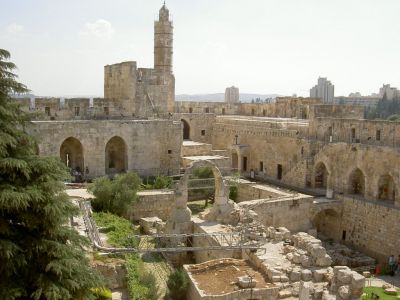
Just inside Jaffa Gate rises the Citadel, better known today as the Tower of David—a place where Jerusalem’s history is stacked quite literally in stone. Careful excavation has peeled the site back layer by layer, so as you move through it, you’re also moving through time. The experience easily stretches over a couple of hours, especially if you follow the story indoors, where archaeology and narrative are woven together into a clear, chronological portrait of the city.
The Citadel occupies the western hill of the Old City, a strategic high point fortified repeatedly since the 2nd century BC. Early defenses were expanded dramatically by Herod the Great, who reinforced the Hasmonean walls with three massive towers. Only one of them—the Phasael Tower—still stands, but it does plenty of heavy lifting. Later, during the Byzantine period, a historical mix-up led locals to believe this was King David’s palace, giving the complex its enduring name.
Power changed hands, and so did the Citadel. Muslim rulers, Crusaders, and later the Mamluks reshaped it until its basic form was fixed in 1310 under Sultan Al-Nasir Muhammad. In the 16th century, Suleiman the Magnificent added a grand eastern gateway and an open square, while the minaret—built in the 17th century—rose to become one of Jerusalem’s most recognizable silhouettes.
Climb the Phasael Tower in the Citadel’s northeast corner, and the reward is perspective, in every sense. Below you lie the excavations; beyond them, the Old City; further still, the hills stretching south and west. Along the way, plaques help decode what you’re seeing—Hasmonean walls, Roman cisterns, and Umayyad fortifications that once held firm against Crusader forces in 1099.
And when night falls, stick around. A 45-minute sound-and-light show transforms the Citadel into a moving timeline of Jerusalem’s past—dramatic, immersive, and very popular. Book ahead, or risk watching history unfold from the outside.
The Citadel occupies the western hill of the Old City, a strategic high point fortified repeatedly since the 2nd century BC. Early defenses were expanded dramatically by Herod the Great, who reinforced the Hasmonean walls with three massive towers. Only one of them—the Phasael Tower—still stands, but it does plenty of heavy lifting. Later, during the Byzantine period, a historical mix-up led locals to believe this was King David’s palace, giving the complex its enduring name.
Power changed hands, and so did the Citadel. Muslim rulers, Crusaders, and later the Mamluks reshaped it until its basic form was fixed in 1310 under Sultan Al-Nasir Muhammad. In the 16th century, Suleiman the Magnificent added a grand eastern gateway and an open square, while the minaret—built in the 17th century—rose to become one of Jerusalem’s most recognizable silhouettes.
Climb the Phasael Tower in the Citadel’s northeast corner, and the reward is perspective, in every sense. Below you lie the excavations; beyond them, the Old City; further still, the hills stretching south and west. Along the way, plaques help decode what you’re seeing—Hasmonean walls, Roman cisterns, and Umayyad fortifications that once held firm against Crusader forces in 1099.
And when night falls, stick around. A 45-minute sound-and-light show transforms the Citadel into a moving timeline of Jerusalem’s past—dramatic, immersive, and very popular. Book ahead, or risk watching history unfold from the outside.
3) Mamilla Mall
The area between Independence Park and the Jaffa Gate, along Mamilla Avenue, has undergone significant transformation over the years. Initially a poor Jewish neighborhood during Mandate Palestine, it experienced attacks by Arab mobs in 1947 following the UN's partition plan for Palestine. Between 1948 and 1967, it lay abandoned as a derelict no-man's-land; however, it has since been revitalized as the Mamilla development, now home to some of the most luxurious residences in Jerusalem.
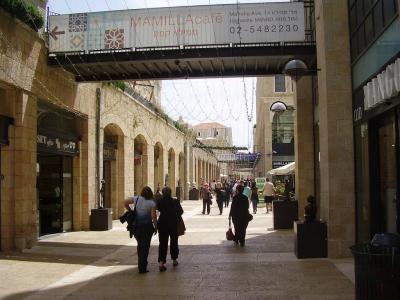
Central to this revitalization is the Mamilla Mall, a pedestrianized open-air shopping destination with high-end fashion outlets, gift stores, and cafés. The mall also features a variety of restaurants offering diverse culinary options, making it an ideal spot to dine, people-watch, and enjoy the atmosphere.
For those seeking a more refined dining experience away from the crowded hummus restaurants in the Old City, the sleek Rooftop brasserie on Mamilla Avenue provides a nice retreat. Offering kosher meals designed for discerning palates, guests can savor their dishes while enjoying picturesque views of the Jaffa Gate area. Reservations are recommended to secure a table at this establishment.
Central to this revitalization is the Mamilla Mall, a pedestrianized open-air shopping destination with high-end fashion outlets, gift stores, and cafés. The mall also features a variety of restaurants offering diverse culinary options, making it an ideal spot to dine, people-watch, and enjoy the atmosphere.
For those seeking a more refined dining experience away from the crowded hummus restaurants in the Old City, the sleek Rooftop brasserie on Mamilla Avenue provides a nice retreat. Offering kosher meals designed for discerning palates, guests can savor their dishes while enjoying picturesque views of the Jaffa Gate area. Reservations are recommended to secure a table at this establishment.
4) Zion Square (Tolerance Square)
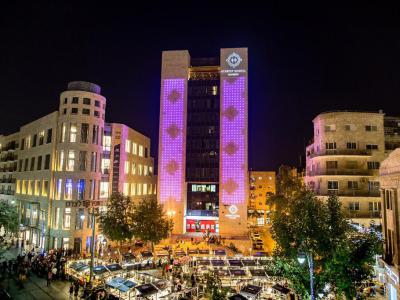
The heartbeat of shopping in the City Center revolves around Zion Square, nestled between King George Street and Yafo Street and serving as the base for both Ben Yehuda Street and Yoel Moshe Salomon pedestrian malls. While these bustling shopping areas typically close down for Shabbat and Jewish holidays, a handful of restaurants keep their doors open. The array of shops in the vicinity caters to various needs, offering souvenirs, Judaica, embroidered kippot, T-shirts, camera gear, electronics, housewares, and local fashion brands.
Venturing from the pedestrianized Yoel Salomon, just off Zion Square, to nearby Rivlin Street, you'll encounter Nahalat Shiv'a. Once the heart of Jerusalem's bar scene, this area is also one of West Jerusalem's oldest neighborhoods, established in 1869. Its charming small houses, built around patios with water storage cisterns, set the architectural tone for subsequent homes in the area. These cisterns proved invaluable during the 1948 siege when West Jerusalem's water supply was cut off by Arab forces. Thanks to the foresight of Haganah commander David Shaltiel, who ordered the cisterns filled before the British withdrawal, the neighborhood managed to withstand the siege, albeit with stringent water rationing.
Despite City Hall's attempts to replace these quaint houses with skyscrapers, local residents fiercely resisted. Their perseverance paid off in 1988 when the council opted to restore and preserve the neighborhood's historic charm. Today, Nahalat Shiv'a teems with lively bars, inviting restaurants, and eclectic artisanal shops.
Tip:
For book lovers, a must-visit is The Book Gallery, located at 6 Schatz Street on the corner of 26 King George Street. Israel's largest secondhand bookstore, it spans two floors with a dedicated section for rare and antique books, plus a spacious basement awaiting exploration.
Venturing from the pedestrianized Yoel Salomon, just off Zion Square, to nearby Rivlin Street, you'll encounter Nahalat Shiv'a. Once the heart of Jerusalem's bar scene, this area is also one of West Jerusalem's oldest neighborhoods, established in 1869. Its charming small houses, built around patios with water storage cisterns, set the architectural tone for subsequent homes in the area. These cisterns proved invaluable during the 1948 siege when West Jerusalem's water supply was cut off by Arab forces. Thanks to the foresight of Haganah commander David Shaltiel, who ordered the cisterns filled before the British withdrawal, the neighborhood managed to withstand the siege, albeit with stringent water rationing.
Despite City Hall's attempts to replace these quaint houses with skyscrapers, local residents fiercely resisted. Their perseverance paid off in 1988 when the council opted to restore and preserve the neighborhood's historic charm. Today, Nahalat Shiv'a teems with lively bars, inviting restaurants, and eclectic artisanal shops.
Tip:
For book lovers, a must-visit is The Book Gallery, located at 6 Schatz Street on the corner of 26 King George Street. Israel's largest secondhand bookstore, it spans two floors with a dedicated section for rare and antique books, plus a spacious basement awaiting exploration.
5) Ben Yehuda Street (Midrachov)
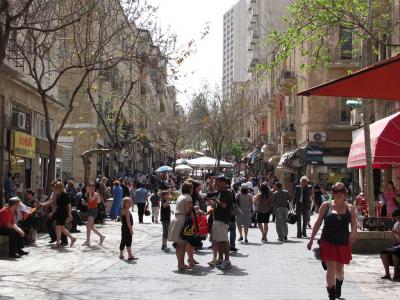
Dubbed the Midrachov, a contraction of two Hebrew words meaning "Sidewalk Street", this lively stretch is less of a thoroughfare and more of a pedestrian paradise. Linking Jaffa and King George streets in the heart of Jerusalem, it forms a triangle in the city center. Named after the linguist Eliezer Ben-Yehuda, credited with breathing new life into Hebrew, this street has been a hub of activity since the 1920s, enduring its share of challenges, including terrorist attacks.
But fear not, fellow wanderers, for safety measures have transformed the Midrachov into a haven for strolling and savoring. Dive into its treasure trove of souvenirs, tantalize your taste buds with delectable delights, and take a breather while soaking in the vibrant scene. Sidewalk cafés beckon, while local musicians serenade passersby with tunes both old and new.
Sure, it might not be the grandest street in Jerusalem, nor the most picturesque, but it's undeniably vibrant. And with its cobblestone char, it's a must-see hotspot that doesn't call it a night until the wee hours.
But fear not, fellow wanderers, for safety measures have transformed the Midrachov into a haven for strolling and savoring. Dive into its treasure trove of souvenirs, tantalize your taste buds with delectable delights, and take a breather while soaking in the vibrant scene. Sidewalk cafés beckon, while local musicians serenade passersby with tunes both old and new.
Sure, it might not be the grandest street in Jerusalem, nor the most picturesque, but it's undeniably vibrant. And with its cobblestone char, it's a must-see hotspot that doesn't call it a night until the wee hours.
6) Mahaneh Yehuda Market (must see)
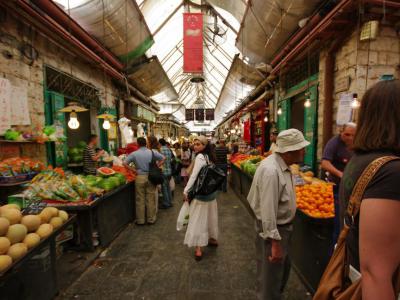
Mahane Yehuda Market, often referred to as "The Shuk" by locals, is a busy open market and the largest of its kind in Jerusalem. Whether you're a market enthusiast or just looking to soak up the atmosphere, it’s a must-visit destination. With over 250 vendors offering an array of fresh produce, baked goods, meats, cheeses, spices, wines, clothing, shoes, housewares, textiles, and Judaica, there's something here for everyone.
Recently redesigned, the market now features a roof that covers its open areas, providing both shelter and ambiance. Surrounding the market, you'll find juice bars, cafes, and coffee houses, as well as stalls offering authentic falafel and shawarma-a perfect opportunity to indulge in local cuisine.
Tips:
The market is especially lively on Thursdays and Fridays as locals prepare for Shabbat. For bargain hunters, sunset is the best time to visit as vendors often reduce prices on perishable items to clear their stock before the day ends. Additionally, consider visiting on a Saturday morning when the stalls are closed, allowing you to admire the stunning murals painted on the security gates-a hidden gem rarely seen by most visitors.
Recently redesigned, the market now features a roof that covers its open areas, providing both shelter and ambiance. Surrounding the market, you'll find juice bars, cafes, and coffee houses, as well as stalls offering authentic falafel and shawarma-a perfect opportunity to indulge in local cuisine.
Tips:
The market is especially lively on Thursdays and Fridays as locals prepare for Shabbat. For bargain hunters, sunset is the best time to visit as vendors often reduce prices on perishable items to clear their stock before the day ends. Additionally, consider visiting on a Saturday morning when the stalls are closed, allowing you to admire the stunning murals painted on the security gates-a hidden gem rarely seen by most visitors.

7) Israel Museum (must see)
The Israel Museum stands out as the crown jewel among Jerusalem's unofficial museum district, earning accolades from locals and visitors alike as a must-see destination in the city. Established in 1965, it underwent a major renovation in 2010, expanding its exhibition space, structures, and exhibits across its 20-acre campus. As the country's largest cultural institution, it now boasts a world-class collection of art and archaeology, making it one of the premier museums in the world. Artifact spans from prehistory to modern times, with a particular focus on biblical and Holy Land archaeology.
A highlight here is the Shrine of the Book, a striking building that houses the Dead Sea Scrolls. These ancient manuscripts, dating back to the Second Temple period, are among the most significant archaeological discoveries of the 20th century. Additionally, visitors can explore the outdoor model of the Second Temple, covering nearly one acre and providing insight into ancient Jerusalem's architectural landscape.
Exploring the Israel Museum can easily take several hours, with opportunities to dine at the on-site restaurant and perhaps even rub shoulders with local celebrities. To make the most of your visit, consider focusing on specific collections or exhibits. For example, start with the Dead Sea Scrolls first and utilize audio guides, remembering to bring an ID card for access.
A highlight here is the Shrine of the Book, a striking building that houses the Dead Sea Scrolls. These ancient manuscripts, dating back to the Second Temple period, are among the most significant archaeological discoveries of the 20th century. Additionally, visitors can explore the outdoor model of the Second Temple, covering nearly one acre and providing insight into ancient Jerusalem's architectural landscape.
Exploring the Israel Museum can easily take several hours, with opportunities to dine at the on-site restaurant and perhaps even rub shoulders with local celebrities. To make the most of your visit, consider focusing on specific collections or exhibits. For example, start with the Dead Sea Scrolls first and utilize audio guides, remembering to bring an ID card for access.
8) King David's Tomb
King David's Tomb holds significant cultural and religious importance for the Jewish community. Particularly during the period between 1948 and 1967 when access to the Old City and the Western Wall was restricted due to Jordanian control, it became an alternative site for Jewish pilgrimage. While some believe it to be the actual burial place of King David, this tradition only dates back to the 10th century AD, shortly after the Crusades. The building itself dates from the Crusader era and is partially open to the public for visitation.
Upon entering, take note of the exquisite tile work in the first antechamber, which was patched to match repairs made to the Dome of the Rock during the 1500s. The second antechamber houses a mihrab with equally impressive tile work dating from the 1400s when the area was under Muslim control. Today, the building serves as a synagogue, with separate entrances for men and women.
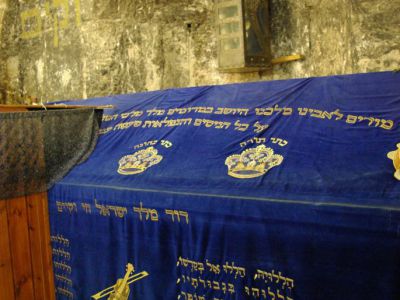
Next to the velvet-draped cenotaph and directly beneath the Cenacle is the empty room where Jesus supposedly washed his disciples’ feet after the last supper. Additionally, the building's rooftop features an observation point offering excellent views and a minaret, added by the Turks during the 16th century after the expulsion of Christians from Mount Zion.
Tips:
Modest attire is recommended regardless of gender (kippahs are provided for men).
Though pictures are often allowed, it's important to be respectful of those involved in prayer.
Upon entering, take note of the exquisite tile work in the first antechamber, which was patched to match repairs made to the Dome of the Rock during the 1500s. The second antechamber houses a mihrab with equally impressive tile work dating from the 1400s when the area was under Muslim control. Today, the building serves as a synagogue, with separate entrances for men and women.
Next to the velvet-draped cenotaph and directly beneath the Cenacle is the empty room where Jesus supposedly washed his disciples’ feet after the last supper. Additionally, the building's rooftop features an observation point offering excellent views and a minaret, added by the Turks during the 16th century after the expulsion of Christians from Mount Zion.
Tips:
Modest attire is recommended regardless of gender (kippahs are provided for men).
Though pictures are often allowed, it's important to be respectful of those involved in prayer.
9) Hezekiah's Tunnel (must see)
Exploring Hezekiah's Tunnel is an unforgettable experience, offering both historical insight and a refreshing escape from the heat. This ancient engineering marvel, discovered in 1838 by American biblical scholar Edward Robinson, provides a unique journey through a tiny underwater river.
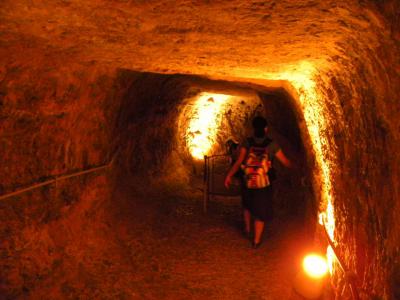
Beginning at Gihon Spring, a major source of water for ancient Jerusalem for 1,000 years, the 2,700-year-old tunnel stretches 580 yards (530 meters) to the Pool of Siloam, the source for drawing water during biblical times. Built by King Hezekiah in preparation for the Assyrian siege in the 8th century BC, the tunnel was painstakingly chipped away by hand by two groups of workers who met in the middle to secure the city's water supply from impending invaders.
With proper preparation, exploring Hezekiah's Tunnel promises to be an unforgettable and enlightening experience.
Tip:
For almost the entirety of the tunnel, there is no light whatsoever. Even if there isn't a constant stream of water running underfoot, using something like your cell phone's flashlight setting for light won't be adequate. It is highly recommended that you use a strong headlamp, but a flashlight would work as well. It doesn't hurt to have a friend walk in front of or behind you as well, just in case your light dies and you're stuck walking in the dark.
You are advised to bring only a backpack, purse, or small bag that can be either hitched up high on your back or tucked under your arm well above the water level. Bulky packages would probably be very annoying to carry through the tunnel given its narrowness. Also, wear comfortable shoes that can get wet!
Beginning at Gihon Spring, a major source of water for ancient Jerusalem for 1,000 years, the 2,700-year-old tunnel stretches 580 yards (530 meters) to the Pool of Siloam, the source for drawing water during biblical times. Built by King Hezekiah in preparation for the Assyrian siege in the 8th century BC, the tunnel was painstakingly chipped away by hand by two groups of workers who met in the middle to secure the city's water supply from impending invaders.
With proper preparation, exploring Hezekiah's Tunnel promises to be an unforgettable and enlightening experience.
Tip:
For almost the entirety of the tunnel, there is no light whatsoever. Even if there isn't a constant stream of water running underfoot, using something like your cell phone's flashlight setting for light won't be adequate. It is highly recommended that you use a strong headlamp, but a flashlight would work as well. It doesn't hurt to have a friend walk in front of or behind you as well, just in case your light dies and you're stuck walking in the dark.
You are advised to bring only a backpack, purse, or small bag that can be either hitched up high on your back or tucked under your arm well above the water level. Bulky packages would probably be very annoying to carry through the tunnel given its narrowness. Also, wear comfortable shoes that can get wet!
10) Cardo Maximus
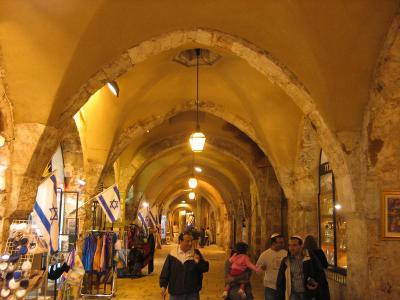
One of the Jewish Quarter's most evocative sites is the Cardo Maximus, the broad, column-lined main street of Hadrian's ancient city, Aelia Capitolina. This particular segment is actually a Byzantine addition to the original Roman Cardo, which stretched from the Damascus Gate (now in the Muslim Quarter) down through what is now the Souq Khan al-Zeit. Once the city's main artery and later the bustling market of the Crusaders, the Cardo now lies between two modern roads, Habad Street and Jewish Quarter Road, at a lower level.
Strolling along the Byzantine pavement flanked by elegant colonnades, one can easily envision the activity of its ancient past. The vaulted northern end of the excavated section now houses upscale gift shops, art galleries, along with remnants of the Hasmonean city wall and structures from the First Temple period. Additionally, you'll find charming pizza parlors and cafes perfect for a quick bite, though it's wise to exercise caution in the evenings, as locals may not appreciate tourists wandering the neighborhood streets and alleys.
Tip:
Be sure to visit Chaya, a store renowned for its exquisite collection of Judaica, jewelry, and gifts, offering reasonable prices and exceptional customer service.
Strolling along the Byzantine pavement flanked by elegant colonnades, one can easily envision the activity of its ancient past. The vaulted northern end of the excavated section now houses upscale gift shops, art galleries, along with remnants of the Hasmonean city wall and structures from the First Temple period. Additionally, you'll find charming pizza parlors and cafes perfect for a quick bite, though it's wise to exercise caution in the evenings, as locals may not appreciate tourists wandering the neighborhood streets and alleys.
Tip:
Be sure to visit Chaya, a store renowned for its exquisite collection of Judaica, jewelry, and gifts, offering reasonable prices and exceptional customer service.
