Custom Walk in Reykjavik, Iceland by korr_df7273 created on 2026-02-11
Guide Location: Iceland » Reykjavik
Guide Type: Custom Walk
# of Sights: 11
Tour Duration: 7 Hour(s)
Travel Distance: 18.6 Km or 11.6 Miles
Share Key: S7FAU
Guide Type: Custom Walk
# of Sights: 11
Tour Duration: 7 Hour(s)
Travel Distance: 18.6 Km or 11.6 Miles
Share Key: S7FAU
How It Works
Please retrieve this walk in the GPSmyCity app. Once done, the app will guide you from one tour stop to the next as if you had a personal tour guide. If you created the walk on this website or come to the page via a link, please follow the instructions below to retrieve the walk in the app.
Retrieve This Walk in App
Step 1. Download the app "GPSmyCity: Walks in 1K+ Cities" on Apple App Store or Google Play Store.



Step 2. In the GPSmyCity app, download(or launch) the guide "Reykjavik Map and Walking Tours".
Step 3. Tap the menu button located at upper right corner of the "Walks" screen and select "Retrieve custom walk". Enter the share key: S7FAU
1) Hallgrímskirkja (Church of Hallgrímur) (must see)
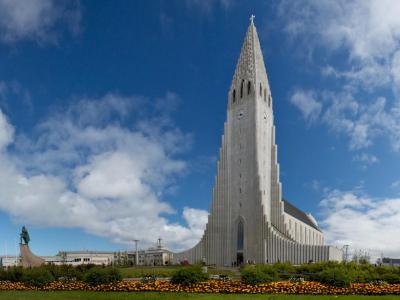
Standing at 74 meters (244 feet) tall, the striking Church of Hallgrímur is Iceland's tallest church. Architect Guojon Samuelsson began drawing the church in 1937. Construction began in 1945 and was completed in 1986.
Iceland's unique geography inspired the design of the church. Volcanic action created lava flows which cooled into grey, hexagonal columns. The dramatic, cool, jagged columns inspired the design of the Church of Hallgrímur.
The church was named after 17th-century clergyman and poet Hallgrimur Petursson. Hallgrimur Petursson was best known for his work Hymns of the Passion.
This iconic building is visible from many parts of Reykjavík. The Church of Hallgrímur is a Lutheran, or Church of Iceland establishment. Its impressive height was in part to compete with Landakot's Church, the Catholic Cathedral.
During the summer, visitors can enjoy concerts which run four days a week. Don't miss the incredible pipe organ that stands 15 meters (49 feet) tall. The pipe organ has electronic action; the pipes are remote from the pedal console. The organ has 5,275 pipes and has been featured in several recording albums.
Outside the entrance, visitors will find a statue of Leif Eriksson, a famed explorer. The United States gave the statue to Iceland in the 1930s to commemorate the 1,000th anniversary of the Icelandic Parliament. The Icelandic Parliament was first convened in the year 930 AD.
The large clock on the tower is often wrong, as strong Icelandic wind gusts often blow the hands about.
Why You Should Visit:
The Church of Hallgrímur is a dramatic church that wonderfully emulates Iceland's landscape. You will see the church's tower from all over the city and find the church even more impressive up close. The interior is surprisingly austere with clean lines.
Tips:
Admission is free, but a small fee provides access to a lift to the top of the building, where visitors can enjoy panoramic views of Reykjavik and the surrounding mountains.
Iceland's unique geography inspired the design of the church. Volcanic action created lava flows which cooled into grey, hexagonal columns. The dramatic, cool, jagged columns inspired the design of the Church of Hallgrímur.
The church was named after 17th-century clergyman and poet Hallgrimur Petursson. Hallgrimur Petursson was best known for his work Hymns of the Passion.
This iconic building is visible from many parts of Reykjavík. The Church of Hallgrímur is a Lutheran, or Church of Iceland establishment. Its impressive height was in part to compete with Landakot's Church, the Catholic Cathedral.
During the summer, visitors can enjoy concerts which run four days a week. Don't miss the incredible pipe organ that stands 15 meters (49 feet) tall. The pipe organ has electronic action; the pipes are remote from the pedal console. The organ has 5,275 pipes and has been featured in several recording albums.
Outside the entrance, visitors will find a statue of Leif Eriksson, a famed explorer. The United States gave the statue to Iceland in the 1930s to commemorate the 1,000th anniversary of the Icelandic Parliament. The Icelandic Parliament was first convened in the year 930 AD.
The large clock on the tower is often wrong, as strong Icelandic wind gusts often blow the hands about.
Why You Should Visit:
The Church of Hallgrímur is a dramatic church that wonderfully emulates Iceland's landscape. You will see the church's tower from all over the city and find the church even more impressive up close. The interior is surprisingly austere with clean lines.
Tips:
Admission is free, but a small fee provides access to a lift to the top of the building, where visitors can enjoy panoramic views of Reykjavik and the surrounding mountains.
2) Árbær Open Air Museum (must see)
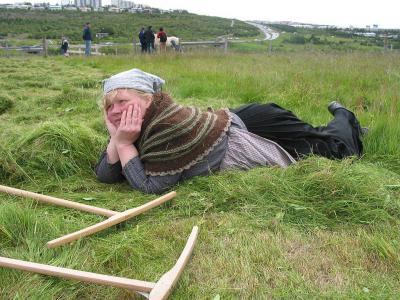
Árbær was a functioning farmstead until well into the 20th century, and in 1957, the museum was established in this location. Nowadays, Árbær has transformed into an open-air museum featuring over 20 buildings that together create a representation of a town square, a village, and a farm. Most of these structures were transported from the central area of Reykjavik.
The Árbær Open Air Museum aims to provide visitors with an insight into the architectural styles and ways of life of the past in Reykjavík. During the summer season, guests can also observe domestic animals on the premises. The museum hosts a variety of exhibitions and events that focus on different historical periods in Reykjavik's history. These events include craft demonstrations, displays of vintage cars, Christmas exhibitions, and much more. There is truly something to interest every visitor at Árbær Open Air Museum.
During the winter season, the gift shop and other amenities are typically closed, but the museum office and library often remain accessible to visitors. Those who arrive early for the 1 pm guided tour may even be welcomed to wait in the library.
Though the museum is situated a bit outside the city center, it benefits from a reliable bus service operating approximately every half hour, with a bus stop conveniently located right by the main entrance.
Why You Should Visit:
Thoroughly absorbing and giving an insight into how hard life was in Iceland some 150 years ago.
In addition, the 'Iceland Through the Ages' house and the 'Women Through the Ages' exhibitions are superb.
Tip:
Pick a good weather day to visit! If the weather is bad it takes its toll on the overall experience because you have to run from house to house.
While the museum can be reached by city bus, you have to make sure you have the right amount in change.
The Árbær Open Air Museum aims to provide visitors with an insight into the architectural styles and ways of life of the past in Reykjavík. During the summer season, guests can also observe domestic animals on the premises. The museum hosts a variety of exhibitions and events that focus on different historical periods in Reykjavik's history. These events include craft demonstrations, displays of vintage cars, Christmas exhibitions, and much more. There is truly something to interest every visitor at Árbær Open Air Museum.
During the winter season, the gift shop and other amenities are typically closed, but the museum office and library often remain accessible to visitors. Those who arrive early for the 1 pm guided tour may even be welcomed to wait in the library.
Though the museum is situated a bit outside the city center, it benefits from a reliable bus service operating approximately every half hour, with a bus stop conveniently located right by the main entrance.
Why You Should Visit:
Thoroughly absorbing and giving an insight into how hard life was in Iceland some 150 years ago.
In addition, the 'Iceland Through the Ages' house and the 'Women Through the Ages' exhibitions are superb.
Tip:
Pick a good weather day to visit! If the weather is bad it takes its toll on the overall experience because you have to run from house to house.
While the museum can be reached by city bus, you have to make sure you have the right amount in change.
3) Laugavegur Street (must see)
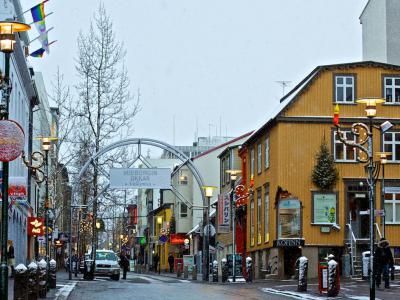
Laugavegur Street is Reykjavik's main shopping street. Visitors will find restaurants, bars, cafes, and boutique shops.
Laugavegur is one of the oldest streets in Reykjavík. The name can be translated as the Water Road. Here, women would bring their laundry to be washed in hot pools.
Laugavegur is just over a mile or two kilometers long. The shopping stretch starts at the city's busy bus center, Hlemmur, and continues to Bankastraeti.
There are two museums on Laugavegur. First, the Phallological Museum is the world's only museum dedicated to the male genitals, with specimens from the animal kingdom. The second museum is a small punk museum.
Most of the shops feature Icelandic designs and brands. Visitors will find high-end products, as well as shops with souvenirs such as books, fridge magnets, and stuffed animals.
Visitors can also find a variety of vintage shops and second-hand goods along Laugavegur.
Foodies will be delighted with the variety of options. Try traditional Icelandic menus or international cuisines. Visitors can also find vegan restaurants.
Several bars feature live music. Movie fans will love the Lebowski Bar, with food and "wheel of fortune" rounds.
Laugavegur is a diverse street with something for everyone.
Laugavegur is one of the oldest streets in Reykjavík. The name can be translated as the Water Road. Here, women would bring their laundry to be washed in hot pools.
Laugavegur is just over a mile or two kilometers long. The shopping stretch starts at the city's busy bus center, Hlemmur, and continues to Bankastraeti.
There are two museums on Laugavegur. First, the Phallological Museum is the world's only museum dedicated to the male genitals, with specimens from the animal kingdom. The second museum is a small punk museum.
Most of the shops feature Icelandic designs and brands. Visitors will find high-end products, as well as shops with souvenirs such as books, fridge magnets, and stuffed animals.
Visitors can also find a variety of vintage shops and second-hand goods along Laugavegur.
Foodies will be delighted with the variety of options. Try traditional Icelandic menus or international cuisines. Visitors can also find vegan restaurants.
Several bars feature live music. Movie fans will love the Lebowski Bar, with food and "wheel of fortune" rounds.
Laugavegur is a diverse street with something for everyone.
4) Sólfar (Sun Voyager) (must see)
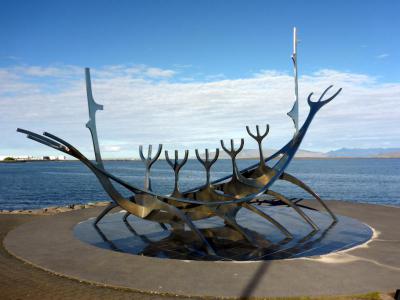
Sun Voyager is a sculpture crafted by the artist Jón Gunnar Árnason (1931-1989) and is situated alongside the Sæbraut road in Reykjavík. This artistic creation is often characterized as a representation of either a dreamboat or an homage to the sun. Jón Gunnar Árnason's intention behind this sculpture was to convey a sense of promise associated with uncharted territories, a dream symbolizing hope, progress, and freedom.
In 1986, the west district association of Reykjavík decided to sponsor a competition to commission a new outdoor sculpture in commemoration of the 200th anniversary of the city. Jón Gunnar's Sun Voyager emerged as the winning design in the competition, leading to the creation of a scaled-up aluminum model, which was later presented to the city for enlargement. The full-sized Sun Voyager was officially unveiled on Sæbraut, coinciding with the birthday of Reykjavík on August 18, 1990.
The sculpture is crafted from high-quality stainless steel and is positioned upon a circle formed by granite slabs, encircled by a material known as "town-hall concrete." Its construction meticulously followed Jón Gunnar Árnason's detailed full-scale drawing of the Sun Voyager and was supervised by the artist Kristinn E. Hrafnsson, who served as Jón Gunnar's assistant.
Why You Should Visit:
Great subject for photographs as it provides a nice vantage point to look out into the waters and think of very deep things.
In 1986, the west district association of Reykjavík decided to sponsor a competition to commission a new outdoor sculpture in commemoration of the 200th anniversary of the city. Jón Gunnar's Sun Voyager emerged as the winning design in the competition, leading to the creation of a scaled-up aluminum model, which was later presented to the city for enlargement. The full-sized Sun Voyager was officially unveiled on Sæbraut, coinciding with the birthday of Reykjavík on August 18, 1990.
The sculpture is crafted from high-quality stainless steel and is positioned upon a circle formed by granite slabs, encircled by a material known as "town-hall concrete." Its construction meticulously followed Jón Gunnar Árnason's detailed full-scale drawing of the Sun Voyager and was supervised by the artist Kristinn E. Hrafnsson, who served as Jón Gunnar's assistant.
Why You Should Visit:
Great subject for photographs as it provides a nice vantage point to look out into the waters and think of very deep things.
5) Harpa Concert Hall and Conference Centre (must see)
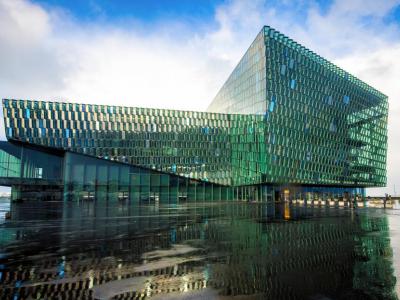
Harpa Concert Hall and Conference Centre is a modern complex completed in 2011. It is the first purpose-built concert hall in Reykjavik. Harpa is home to the Iceland Symphony Orchestra and the Icelandic Opera's offices.
The modern building features different colored geometric-shaped glass panels over a steel framework.
The 1970 The Musician sculpture is located in the water next to Harpa. Icelandic sculptor Olof Palsdottir created the sculpture which shows a cellist playing. The statue used to be located at the previous home of the Iceland Symphony Orchestra, but it moved with the Orchestra to its new home.
The concert hall also hosts performances by the Icelandic Opera and the Reykjavik Big Band.
The building won the European Union's Mies van der Rohe Award for contemporary architecture in 2013. In addition, Harpa won the MICE Report Award for the best conference center in Northern Europe.
Harpa has appeared in the series Black Mirror and in an episode of the Netflix series Sense8. It hosts several regular shows such as How to Become Icelandic in 60 Minutes, Pearls of Icelandic Songs, Reykjavik Classics,and Bowie: The Session.
Harpa features modern architecture and is stunning at night.
The modern building features different colored geometric-shaped glass panels over a steel framework.
The 1970 The Musician sculpture is located in the water next to Harpa. Icelandic sculptor Olof Palsdottir created the sculpture which shows a cellist playing. The statue used to be located at the previous home of the Iceland Symphony Orchestra, but it moved with the Orchestra to its new home.
The concert hall also hosts performances by the Icelandic Opera and the Reykjavik Big Band.
The building won the European Union's Mies van der Rohe Award for contemporary architecture in 2013. In addition, Harpa won the MICE Report Award for the best conference center in Northern Europe.
Harpa has appeared in the series Black Mirror and in an episode of the Netflix series Sense8. It hosts several regular shows such as How to Become Icelandic in 60 Minutes, Pearls of Icelandic Songs, Reykjavik Classics,and Bowie: The Session.
Harpa features modern architecture and is stunning at night.
6) Reykjavik Old Harbor
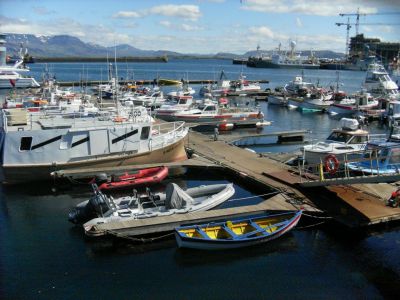
The Old Harbor was built between 1913 and 1917 and was originally used for fisheries and trade. Reykjavik was made the capital city in part due to the economic importance of the Old Harbor. This natural harbor was the main draw to original Viking explorer Ingolfur Arnarson, who settled in this area. The harbor is still a vital contributor to the economy; however, today's economy is more driven by tourism.
Today, many tours leave from the harbor. Visitors can go on whale-watching tours and often see dolphins, Minke Whales, and Humpback Whales. Some lucky visitors will also see Blue, Fin, and Beaked Whales as well as Orcas.
Puffin-watching tours also leave from the harbor. Visitors who want to see the majestic Northern Lights blanketing a winter sky can brave the cold and go on a once-in-a-lifetime Northern Lights cruise.
Landside, the Old Harbor has been transformed from a working harborside to a trendy hotspot. Many of the colorful old fishing houses have been renovated into fabulous cafes, bars, and restaurants.
Baejarins Beztu hot dog stand opened in 1937 to serve fast food to fishermen. It's one of Iceland's oldest family-run businesses and has a unique claim to fame. Former U.S. President Bill Clinton had a hot dog here in 2004 and called it "the world's best hot dog." Matur & Drykkur is a fine-dining restaurant that serves traditional Icelandic fare and is mentioned in the Michelin guide.
Art galleries, museums, and cinemas are other attractions in this scenic location. Volcano House plays documentaries about Iceland's volcanoes. Gallery i8 is known as Iceland's best modern art gallery.
Reykjavik Old Harbor is the perfect place for attractive photos, with a backdrop of traditional fishing boats and Mount Esja.
Today, many tours leave from the harbor. Visitors can go on whale-watching tours and often see dolphins, Minke Whales, and Humpback Whales. Some lucky visitors will also see Blue, Fin, and Beaked Whales as well as Orcas.
Puffin-watching tours also leave from the harbor. Visitors who want to see the majestic Northern Lights blanketing a winter sky can brave the cold and go on a once-in-a-lifetime Northern Lights cruise.
Landside, the Old Harbor has been transformed from a working harborside to a trendy hotspot. Many of the colorful old fishing houses have been renovated into fabulous cafes, bars, and restaurants.
Baejarins Beztu hot dog stand opened in 1937 to serve fast food to fishermen. It's one of Iceland's oldest family-run businesses and has a unique claim to fame. Former U.S. President Bill Clinton had a hot dog here in 2004 and called it "the world's best hot dog." Matur & Drykkur is a fine-dining restaurant that serves traditional Icelandic fare and is mentioned in the Michelin guide.
Art galleries, museums, and cinemas are other attractions in this scenic location. Volcano House plays documentaries about Iceland's volcanoes. Gallery i8 is known as Iceland's best modern art gallery.
Reykjavik Old Harbor is the perfect place for attractive photos, with a backdrop of traditional fishing boats and Mount Esja.
7) Reykjavik Maritime Museum of Vikin
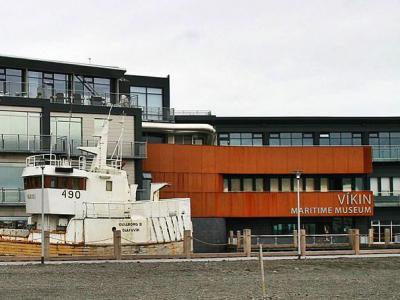
The Reykjavik Maritime Museum, originally known as Víkin Maritime Museum, is situated near the old harbor in Reykjavík and is managed by the Reykjavik City authorities. The museum is part of the Reykjavik City Museum network, which comprises five distinct locations. It showcases exhibits that trace Iceland's maritime history from the early days of settlement up to the late 20th century. A highlight of the museum is the inclusion of the Coast Guard and rescue ship Othinn. The museum primarily concentrates on Iceland's fishing history and occasionally hosts temporary exhibitions that are sea-related.
The museum's building was constructed in 1947 on a reclaimed area known as Grandi and initially served as a fish freezing facility. In 1959, the Reykjavik Municipal Fishing Company purchased the facility, turning it into a major redfish fillet processing center. By 1985, the freezing operations were relocated, leaving the building vacant for about two decades. After extensive renovations, in 2002, the Reykjavík City Council designated it as a maritime museum.
The museum opened its doors in 2005, initially utilizing only the second floor. In 2009, it underwent expansion, adding new exhibition space in a former storage area and introducing a café. Currently, the museum comprises seven exhibition halls, featuring everything from photographic collections to full displays of century-old boats. This includes the former Coast Guard vessel Othinn, which the museum acquired in February 2008. Docked adjacent to the museum, the ship is now a part of the exhibit and can be explored by visitors through guided tours.
The museum's building was constructed in 1947 on a reclaimed area known as Grandi and initially served as a fish freezing facility. In 1959, the Reykjavik Municipal Fishing Company purchased the facility, turning it into a major redfish fillet processing center. By 1985, the freezing operations were relocated, leaving the building vacant for about two decades. After extensive renovations, in 2002, the Reykjavík City Council designated it as a maritime museum.
The museum opened its doors in 2005, initially utilizing only the second floor. In 2009, it underwent expansion, adding new exhibition space in a former storage area and introducing a café. Currently, the museum comprises seven exhibition halls, featuring everything from photographic collections to full displays of century-old boats. This includes the former Coast Guard vessel Othinn, which the museum acquired in February 2008. Docked adjacent to the museum, the ship is now a part of the exhibit and can be explored by visitors through guided tours.
8) Kolaportið
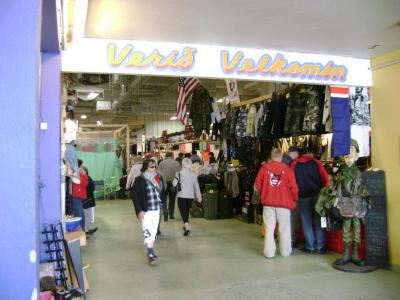
Are you looking for something specific? Perhaps an old-fashioned lamp, a modern vegetable knife, or maybe curious about tasting dried fish and fermented shark? How about acquiring a pack of unique Icelandic sweets or selecting a stylish outfit for your weekend plans? Kolaportið, Iceland's sole flea market, is your go-to destination for these and more. This indoor marketplace operates on weekends from 11:00 am to 5:00 pm and sometimes on public holidays. Situated in a vintage industrial edifice near Reykjavik's harbour, it lies between the renowned Bæjarins Beztu hot dog stand and the Old Harbour.
Kolaportið offers a distinctive vibe, attracting a diverse crowd every weekend. Visitors can browse for books, antiques, and clothing, or explore the food court for groceries. It's a place where used items find grateful new owners at fair prices, and where you can sift through various goods to uncover unexpected finds. It's akin to a treasure hunt. Cash transactions are predominant, so it's advisable to have cash on hand, although there's an ATM near one of the entrances, and a cafeteria for when hunger strikes.
Remember, one person's discard may be your new treasure. So, make it a point to start early on weekends at Kolaportið. Here, you can fill your bags with second-hand clothing, artifacts, Icelandic specialties, music, toys, and much more. The market is welcoming, genuine, and humble, ensuring that visitors leave with something special in hand.
Kolaportið offers a distinctive vibe, attracting a diverse crowd every weekend. Visitors can browse for books, antiques, and clothing, or explore the food court for groceries. It's a place where used items find grateful new owners at fair prices, and where you can sift through various goods to uncover unexpected finds. It's akin to a treasure hunt. Cash transactions are predominant, so it's advisable to have cash on hand, although there's an ATM near one of the entrances, and a cafeteria for when hunger strikes.
Remember, one person's discard may be your new treasure. So, make it a point to start early on weekends at Kolaportið. Here, you can fill your bags with second-hand clothing, artifacts, Icelandic specialties, music, toys, and much more. The market is welcoming, genuine, and humble, ensuring that visitors leave with something special in hand.
9) Icelandic Punk Museum
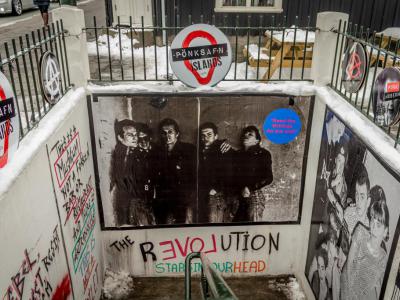
The Icelandic Punk Museum in Reykjavik is a unique attraction that tells the story of Iceland's punk scene from its origins in the late 1970s to the early '90s. Located in a former public toilet that was once known as "ground zero" to locals, the museum opened in November 2016 to celebrate and showcase the country's punk culture.
The exhibits are packed into the former toilets and washbasins, with an impressive collection of photos, posters, handbills, instruments, and stage equipment. Visitors can also enjoy streaming videos of classic club shows, covering both visiting bands and homegrown talent like Sigur Ros. For an even more immersive experience, visitors can listen to Icelandic punk records through pull-down headphones or try on some jackets and strike a pose with the guitars and drum set.
The museum has some notable moments in its history, including the opening event attended by Sex Pistols frontman Johnny Rotten himself. Photos of this event are on display, adding to the museum's unique atmosphere.
Located below Bankastræti, not far from the harbor docks, the Icelandic Punk Museum is a must-visit attraction for anyone interested in Iceland's punk culture. The collection is packed with memorabilia, giving visitors an insight into the country's music scene and its significance.
The exhibits are packed into the former toilets and washbasins, with an impressive collection of photos, posters, handbills, instruments, and stage equipment. Visitors can also enjoy streaming videos of classic club shows, covering both visiting bands and homegrown talent like Sigur Ros. For an even more immersive experience, visitors can listen to Icelandic punk records through pull-down headphones or try on some jackets and strike a pose with the guitars and drum set.
The museum has some notable moments in its history, including the opening event attended by Sex Pistols frontman Johnny Rotten himself. Photos of this event are on display, adding to the museum's unique atmosphere.
Located below Bankastræti, not far from the harbor docks, the Icelandic Punk Museum is a must-visit attraction for anyone interested in Iceland's punk culture. The collection is packed with memorabilia, giving visitors an insight into the country's music scene and its significance.

10) Prikid
Prikid opened in 1951 and is one of Iceland's longest-running coffee houses and restaurants. The classic interior gives the restaurant a timeless feel. The brightly-colored exterior is warm and inviting.
In the morning, stop by for a coffee or a filling breakfast. In the afternoon, you might find local families grabbing a bite to eat. Prikid is a go-to place for satisfying bar food.
In the evenings and on weekends, the bar is lively and offers cheap beers, a nice relief in an expensive city. Prikid also offers two-for-one beers during happy hour.
The menu includes burgers and coffee but also has several vegan options. The five-dollar milkshake is a fan favorite, but inflation has made this item much more expensive than five dollars!
On the weekends, you'll find Prikid is the place to be. Live music performances, stand-up comedians, and DJs provide entertainment.
In the morning, stop by for a coffee or a filling breakfast. In the afternoon, you might find local families grabbing a bite to eat. Prikid is a go-to place for satisfying bar food.
In the evenings and on weekends, the bar is lively and offers cheap beers, a nice relief in an expensive city. Prikid also offers two-for-one beers during happy hour.
The menu includes burgers and coffee but also has several vegan options. The five-dollar milkshake is a fan favorite, but inflation has made this item much more expensive than five dollars!
On the weekends, you'll find Prikid is the place to be. Live music performances, stand-up comedians, and DJs provide entertainment.
11) The Handknitting Association of Iceland
For a long time, sheep have been vital to Icelanders, providing the wool necessary for knitting warm clothes to withstand their harsh winters. Knitting, initially essential for survival, remains a popular hobby and is greatly valued.
Iceland's traditional hand-knitted sweaters, called "lopapeysa," continue to be in demand. These sweaters have transitioned from practical attire to trendy fashion, worn both casually and at social events.
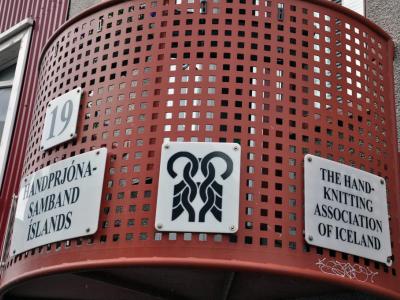
The economic downturn a few years ago led to a renewed interest in Iceland's traditional materials and skills, particularly in hand-knitted items. In 1977, some Icelandic women, who supplemented their income through knitting, collaborated to create an organization for better marketing of their work, leading to the formation of the Handknitting Association. Shortly after its inception, the Association opened a store to sell its members' woolen products.
Their main store, located on Skólavörðustígur in the old part of the city, offers an extensive collection of traditional hand-knitted Icelandic sweaters. This includes unique designs and various woolen items from top Icelandic producers. With numerous knitters contributing, this store is a key destination for Icelandic wool, patterns, and supplies.
Since its beginning, the Association's principle has been to sell directly from the makers, ensuring high-quality standards. Each handcrafted item undergoes quality checks before sale, guaranteeing customers top-notch, uniquely Icelandic products.
Iceland's traditional hand-knitted sweaters, called "lopapeysa," continue to be in demand. These sweaters have transitioned from practical attire to trendy fashion, worn both casually and at social events.
The economic downturn a few years ago led to a renewed interest in Iceland's traditional materials and skills, particularly in hand-knitted items. In 1977, some Icelandic women, who supplemented their income through knitting, collaborated to create an organization for better marketing of their work, leading to the formation of the Handknitting Association. Shortly after its inception, the Association opened a store to sell its members' woolen products.
Their main store, located on Skólavörðustígur in the old part of the city, offers an extensive collection of traditional hand-knitted Icelandic sweaters. This includes unique designs and various woolen items from top Icelandic producers. With numerous knitters contributing, this store is a key destination for Icelandic wool, patterns, and supplies.
Since its beginning, the Association's principle has been to sell directly from the makers, ensuring high-quality standards. Each handcrafted item undergoes quality checks before sale, guaranteeing customers top-notch, uniquely Icelandic products.
