Custom Walk in Cadiz, Spain by pescales_3b7a7f created on 2026-02-12
Guide Location: Spain » Cadiz
Guide Type: Custom Walk
# of Sights: 9
Tour Duration: 2 Hour(s)
Travel Distance: 4.8 Km or 3 Miles
Share Key: ZVZ6H
Guide Type: Custom Walk
# of Sights: 9
Tour Duration: 2 Hour(s)
Travel Distance: 4.8 Km or 3 Miles
Share Key: ZVZ6H
How It Works
Please retrieve this walk in the GPSmyCity app. Once done, the app will guide you from one tour stop to the next as if you had a personal tour guide. If you created the walk on this website or come to the page via a link, please follow the instructions below to retrieve the walk in the app.
Retrieve This Walk in App
Step 1. Download the app "GPSmyCity: Walks in 1K+ Cities" on Apple App Store or Google Play Store.



Step 2. In the GPSmyCity app, download(or launch) the guide "Cadiz Map and Walking Tours".
Step 3. Tap the menu button located at upper right corner of the "Walks" screen and select "Retrieve custom walk". Enter the share key: ZVZ6H
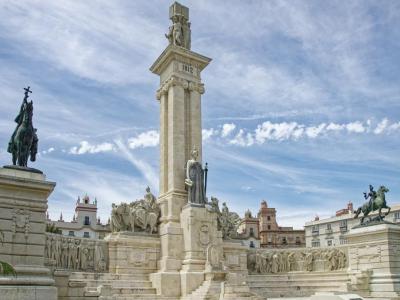
1) Plaza de España (Square of Spain)
Square of Spain is Cádiz’s mix of sunshine, history, and political drama-basically an outdoor living room with better architecture. Its centerpiece is a gleaming white monument to the Spanish Constitution of 1812, one of Europe’s first written constitutions and a big deal for Cádiz, which hosted its signing. The design is no slouch, representing two bronze horsemen symbolizing war and peace, plus a heroic Hercules, the city’s mythic mascot, keeping watch over it all.
But the monument isn’t the only show here. The Customs Palace, with its imposing neoclassical façade and heavy columns, still struts its stuff as the provincial government’s headquarters. Then there’s the House of the Five Towers-literally five connected houses, each topped with its own little watchtower. Built in the late 1700s, it’s a textbook example of Cádiz architecture on the cusp of change, shifting from elaborate Baroque to the cleaner lines of Neoclassicism.
On the north side, the San Carlos neighborhood frames the square with elegant 18th-century homes, their façades reflecting the city’s golden age of trade and power. All of it sits around leafy parkland, where benches invite you to imagine what life looked like here two centuries ago.
The best part about the square is you don’t need a history degree to enjoy it-just a good pair of sunglasses and maybe an ice cream in hand.
But the monument isn’t the only show here. The Customs Palace, with its imposing neoclassical façade and heavy columns, still struts its stuff as the provincial government’s headquarters. Then there’s the House of the Five Towers-literally five connected houses, each topped with its own little watchtower. Built in the late 1700s, it’s a textbook example of Cádiz architecture on the cusp of change, shifting from elaborate Baroque to the cleaner lines of Neoclassicism.
On the north side, the San Carlos neighborhood frames the square with elegant 18th-century homes, their façades reflecting the city’s golden age of trade and power. All of it sits around leafy parkland, where benches invite you to imagine what life looked like here two centuries ago.
The best part about the square is you don’t need a history degree to enjoy it-just a good pair of sunglasses and maybe an ice cream in hand.

2) Paseo de Canalejas (Canalejas Walk)
The Canalejas Walk (Paseo de Canalejas), together with the Turtle Square (Plaza de las Tortugas), form a green area in Cadiz that has undergone various changes throughout its history. Originally, the area was occupied by the defensive Royal Wall and the parallel Isaac Peral Street, which were demolished in 1906 to provide better access to the port and promote economic expansion.
The Isaac Peral Walk (Paseo de Isaac Peral) was opened on the site of the demolished wall and street, and it featured open gardens along the dock where people could watch the port work and walk near the boats. The Walk has undergone several renovations over the years, including the controversial construction of an underground car park that temporarily displaced the gardens.
Today, the Canalejas Walk has an area of 8,510 m2 of green space and is covered by three pergolas with climbing plants, including bougainvillea, ivy, bignonia, and jasmine. It houses the Tourist Information Office of the city, which is shaped like a polyhedron with glass walls. The monument dedicated to Blas de Lezo, a famous Spanish Navy strategist, is also located here.
Adjacent to the Canalejas Walk is Turtle Square (Plaza de las Tortugas), a small garden with the Fountain of the Turtles and bitter orange trees around the outer edge. The garden also features a monument to the Virgin of the Rosary, erected in memory of the devastating tsunami of 1755.
Despite the changes the Canalejas Walk has undergone over the years, it remains a popular green space in Cadiz, providing a place for locals and tourists to enjoy the city's maritime history and natural beauty.
The Isaac Peral Walk (Paseo de Isaac Peral) was opened on the site of the demolished wall and street, and it featured open gardens along the dock where people could watch the port work and walk near the boats. The Walk has undergone several renovations over the years, including the controversial construction of an underground car park that temporarily displaced the gardens.
Today, the Canalejas Walk has an area of 8,510 m2 of green space and is covered by three pergolas with climbing plants, including bougainvillea, ivy, bignonia, and jasmine. It houses the Tourist Information Office of the city, which is shaped like a polyhedron with glass walls. The monument dedicated to Blas de Lezo, a famous Spanish Navy strategist, is also located here.
Adjacent to the Canalejas Walk is Turtle Square (Plaza de las Tortugas), a small garden with the Fountain of the Turtles and bitter orange trees around the outer edge. The garden also features a monument to the Virgin of the Rosary, erected in memory of the devastating tsunami of 1755.
Despite the changes the Canalejas Walk has undergone over the years, it remains a popular green space in Cadiz, providing a place for locals and tourists to enjoy the city's maritime history and natural beauty.
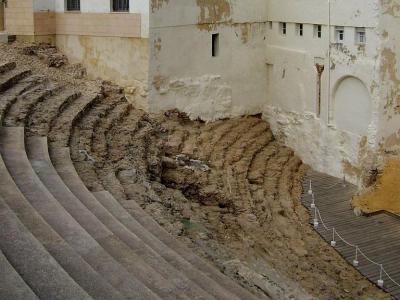
3) Teatro Romano (Roman Theatre)
The Roman Theatre of Cádiz-also known as the Balbi Theatre-is proof that even in ancient times, Cádiz knew how to put on a show. Unearthed in 1980 after centuries of playing hide-and-seek beneath the medieval city, this 1st-century BC structure was built around 70 BC, back when the Roman Empire was still figuring out how to get the better of the Greeks.
The brains (and probably the ego) behind it? Lucius Cornelius Balbus the Elder, a Cádiz-born Roman politician, friend of Julius Caesar. Along with his nephew, Balbus the Younger, he had big dreams of expanding Gades-today’s Cádiz-into a gleaming Neapolis, or “New City.” So far, we’ve found their theatre and signs of an amphitheater, suggesting these guys were building more than just infrastructure-they were building a vibe.
By the end of the 3rd century AD, though, the curtain had dropped. The theatre was abandoned, and over time it was scavenged for stone, turned into a stable, a storehouse, and even a medieval apartment complex. Eventually, the ruins became the foundation for a Moorish fort aptly called the Castle of the Theatre-because sometimes history just layers itself like a lasagna.
Even partially excavated, this site is considered one of the oldest and possibly the largest Roman theatres in Spain. It features a classic horseshoe-shaped auditorium with parabolic tiered seating and a vaulted distribution gallery hidden beneath. The outer wall, made from finely cut ashlar stone, it's as imposing as ever.
The modern Theatre Visitors' Center is your backstage pass to the past. Inside, you’ll find detailed models and exhibits covering three acts: the Theatre of Neapolis, the Castle of the Theatre, and the original Theatre of Balbus. Spoiler: there’s no popcorn, but the ruins do all the storytelling you need.
The brains (and probably the ego) behind it? Lucius Cornelius Balbus the Elder, a Cádiz-born Roman politician, friend of Julius Caesar. Along with his nephew, Balbus the Younger, he had big dreams of expanding Gades-today’s Cádiz-into a gleaming Neapolis, or “New City.” So far, we’ve found their theatre and signs of an amphitheater, suggesting these guys were building more than just infrastructure-they were building a vibe.
By the end of the 3rd century AD, though, the curtain had dropped. The theatre was abandoned, and over time it was scavenged for stone, turned into a stable, a storehouse, and even a medieval apartment complex. Eventually, the ruins became the foundation for a Moorish fort aptly called the Castle of the Theatre-because sometimes history just layers itself like a lasagna.
Even partially excavated, this site is considered one of the oldest and possibly the largest Roman theatres in Spain. It features a classic horseshoe-shaped auditorium with parabolic tiered seating and a vaulted distribution gallery hidden beneath. The outer wall, made from finely cut ashlar stone, it's as imposing as ever.
The modern Theatre Visitors' Center is your backstage pass to the past. Inside, you’ll find detailed models and exhibits covering three acts: the Theatre of Neapolis, the Castle of the Theatre, and the original Theatre of Balbus. Spoiler: there’s no popcorn, but the ruins do all the storytelling you need.
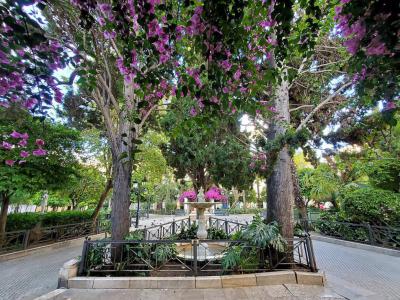
4) Plaza de la Candelaria (Candelaria Square)
Candelaria Square is one of Cádiz’s oldest gathering spots-and it isn’t shy about showing its age in style. Its trapezoid shape already sets it apart, but what really charms visitors are the layers of greenery. On the outside edge, tall elms once ruled the scene, though these days they’re slowly giving way to hackberry trees. Step closer in, and a neat row of bitter orange trees perfumes the air each spring, filling the square with the unmistakable scent of orange blossoms.
The center is dotted with eye-catching tree specimens that create a leafy contrast against the 19th-century houses ringing the square. Most of these buildings lean into Romantic-era elegance, though a few show off their quirks. House No. 15, known as the Oviedo Asylum, shows off Elizabethan style, with columns and stone supports decorated with carved eagles. House No. 6, built in 1906, goes modern for its time, blending iron and glass with confidence.
Anchoring the square is its most distinct feature: a bronze statue of Emilio Castelar, the eloquent politician, journalist, historian-and last president of Spain’s short-lived First Republic. Sculpted in 1906, Castelar still holds the floor from the center of the plaza, a reminder of Cádiz’s political and cultural ties.
Once part of the Monastery of La Candelaria, the site transformed after the monastery’s demolition into the spacious square we see today. Locals have been strolling here for generations, and visitors quickly catch on to its charms.
The center is dotted with eye-catching tree specimens that create a leafy contrast against the 19th-century houses ringing the square. Most of these buildings lean into Romantic-era elegance, though a few show off their quirks. House No. 15, known as the Oviedo Asylum, shows off Elizabethan style, with columns and stone supports decorated with carved eagles. House No. 6, built in 1906, goes modern for its time, blending iron and glass with confidence.
Anchoring the square is its most distinct feature: a bronze statue of Emilio Castelar, the eloquent politician, journalist, historian-and last president of Spain’s short-lived First Republic. Sculpted in 1906, Castelar still holds the floor from the center of the plaza, a reminder of Cádiz’s political and cultural ties.
Once part of the Monastery of La Candelaria, the site transformed after the monastery’s demolition into the spacious square we see today. Locals have been strolling here for generations, and visitors quickly catch on to its charms.
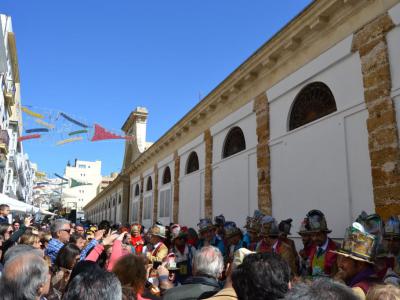
5) Mercado Central (Central Market) (must see)
Once just a humble farmers' market, the Central Market of Cádiz decided to upgrade in the late 1890s. Enter Torcuato Benjumeda, the city’s go-to architect (he also did the Town Hall and the Church of Saint Joseph, no big deal), who designed the new market like a Roman forum with snacks: an open quadrangle lined with sturdy Doric columns, giving grocery shopping a touch of classical solemnity.
Part of the market was built right over the old Convent of the Shoeless-so while you're picking out seafood, you're also standing on a bit of sacred ground. That central space is now the main pavilion, flanked by two additional columned wings added to keep up with the city’s growing appetite for produce.
A major facelift in the early 2000s brought the market into the modern era without losing its historic charm. Today, there are over 170 stalls hawking everything from fresh seafood to baked goods, vegetables, meat, and just enough quirky side stands to keep you guessing-yes, you can pick up pickles, paper bags, and fishing gear, all in one go.
The central pavilion is a seafood lover’s dream, with counters piled high with octopus, tuna, shrimp, and whatever else the Atlantic decided to deliver that morning. Step into the left wing, and you’ll find the Gastronomic Corner, a foodie haven where locals and tourists alike graze on Cádiz’s greatest hits. The right wing leans carnivorous, featuring butchers and the occasional oddball veggie stand.
List of highlights from the tasting lineup that are worth trying out are: El Comado does wine and meats like it’s hosting your birthday party. La Tapería de Luna serves up soups and tapas that feel like home. Gadisushi delivers Japanese precision with Andalusian flair. Gadesbeer keeps things hoppy. La Sartén takes eggs and tortillas seriously. And Queso 360? Cheese from every corner of the planet.
The Central Market is a culinary microcosm of Cádiz, dressed in columns and ready to feed you.
Part of the market was built right over the old Convent of the Shoeless-so while you're picking out seafood, you're also standing on a bit of sacred ground. That central space is now the main pavilion, flanked by two additional columned wings added to keep up with the city’s growing appetite for produce.
A major facelift in the early 2000s brought the market into the modern era without losing its historic charm. Today, there are over 170 stalls hawking everything from fresh seafood to baked goods, vegetables, meat, and just enough quirky side stands to keep you guessing-yes, you can pick up pickles, paper bags, and fishing gear, all in one go.
The central pavilion is a seafood lover’s dream, with counters piled high with octopus, tuna, shrimp, and whatever else the Atlantic decided to deliver that morning. Step into the left wing, and you’ll find the Gastronomic Corner, a foodie haven where locals and tourists alike graze on Cádiz’s greatest hits. The right wing leans carnivorous, featuring butchers and the occasional oddball veggie stand.
List of highlights from the tasting lineup that are worth trying out are: El Comado does wine and meats like it’s hosting your birthday party. La Tapería de Luna serves up soups and tapas that feel like home. Gadisushi delivers Japanese precision with Andalusian flair. Gadesbeer keeps things hoppy. La Sartén takes eggs and tortillas seriously. And Queso 360? Cheese from every corner of the planet.
The Central Market is a culinary microcosm of Cádiz, dressed in columns and ready to feed you.
6) Playa de La Caleta (La Caleta Beach) (must see)
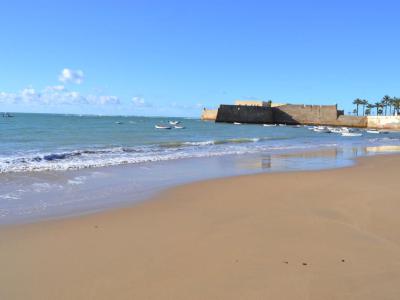
There are over 66 beaches dotting the island, but let’s be honest-La Caleta steals the spotlight. Nestled between the Castle of Santa Catalina and the Castle of San Sebastian, this little slice of paradise doesn’t just rest on its laurels-it proudly waves its blue flag every year, flaunting sparkling clean waters and pristine facilities.
It’s popular, to say the least, so don’t expect a secluded getaway-but hey, when you’ve got sunsets that can stop traffic and views that practically scream “Instagram,” who’s complaining?
The two castles that flank the beach are certainly impressive-no surprise there. But if you’re after true eye candy, head to the Spa of Our Lady of La Palma and Real. Built in the early 20th century, it was once a neglected relic, but it’s been resurrected and is now home to the Subaquatic Archaeology Centre of the Andalusian Historical Institute. Because, apparently, even spas need a little depth.
Historically speaking, La Caleta was once the link between the two islands of ancient Cadiz. Phoenician boats landed here, and let’s just say they didn’t just drop off some fish-this beach is practically built on history. From ancient shipwrecks to buried treasures, this is the birthplace of Cádiz.
It’s not just history buffs who are drawn to La Caleta-the beach has also served as a movie star. You’ve seen it in 007’s James Bond: Die Another Day. The scene with Halle Berry in a bikini and Pierce Brosnan sipping a mojito at La Habana? Spoiler alert-it was shot right here in La Caleta, Cádiz. So if you’re looking for a place that’s part historical treasure and part silver-screen legend, grab your sunscreen and head to La Caleta-where the past, present, and movie magic collide.
It’s popular, to say the least, so don’t expect a secluded getaway-but hey, when you’ve got sunsets that can stop traffic and views that practically scream “Instagram,” who’s complaining?
The two castles that flank the beach are certainly impressive-no surprise there. But if you’re after true eye candy, head to the Spa of Our Lady of La Palma and Real. Built in the early 20th century, it was once a neglected relic, but it’s been resurrected and is now home to the Subaquatic Archaeology Centre of the Andalusian Historical Institute. Because, apparently, even spas need a little depth.
Historically speaking, La Caleta was once the link between the two islands of ancient Cadiz. Phoenician boats landed here, and let’s just say they didn’t just drop off some fish-this beach is practically built on history. From ancient shipwrecks to buried treasures, this is the birthplace of Cádiz.
It’s not just history buffs who are drawn to La Caleta-the beach has also served as a movie star. You’ve seen it in 007’s James Bond: Die Another Day. The scene with Halle Berry in a bikini and Pierce Brosnan sipping a mojito at La Habana? Spoiler alert-it was shot right here in La Caleta, Cádiz. So if you’re looking for a place that’s part historical treasure and part silver-screen legend, grab your sunscreen and head to La Caleta-where the past, present, and movie magic collide.
7) Castillo de Santa Catalina (Castle of Santa Catalina)
In 1596, Cádiz found itself on the wrong end of a very bad visit from the Anglo-Dutch party crashers led by the Duke of Essex and Admiral Howard. These weren’t your average tourists-they looted the city, torched the Spanish fleet, and left Cádiz smoldering in ruins. The damage was so severe that Spain, quite literally, went broke the next year. Oops.
One witty chronicler summed it up best: Spain had “all heads of command and none were feet that would follow.” In short: too many bosses, not enough hustle. King Philip, less than amused, launched not one but two more armadas in a fit of salty vengeance. Both failed. Cádiz was still in pieces. But out of the ashes came something solid: hope. And hope, as it turns out, looked a lot like a fortress.
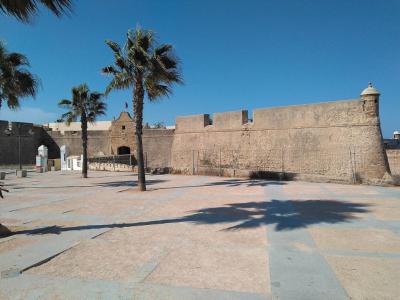
Construction of the Castle of Santa Catalina began in 1598, part therapy, part defense strategy. The original design came from Cristóbal de Rojas. Sadly, Rojas didn’t live to see it finished; that job went to Ignacio de Sala, who wrapped it up in 1621, just in time for Philip III to pat himself on the back.
Perched dramatically at the tip of La Caleta Beach, the fortress was a prototype for colonial forts in Cuba, Mexico, and Puerto Rico. With pavilions, cisterns, barracks, sentry boxes, a dry moat, and a state of the art drawbridge, it checks all the classic fortress boxes. The views from the battlements don't disappoint either so you might forget they once housed military prisoners.
These days, Santa Catalina has swapped cannons for culture. It now hosts exhibitions, concerts, and the Alcances Documentary Film Festival-now that's a transformation worth discovering.
One witty chronicler summed it up best: Spain had “all heads of command and none were feet that would follow.” In short: too many bosses, not enough hustle. King Philip, less than amused, launched not one but two more armadas in a fit of salty vengeance. Both failed. Cádiz was still in pieces. But out of the ashes came something solid: hope. And hope, as it turns out, looked a lot like a fortress.
Construction of the Castle of Santa Catalina began in 1598, part therapy, part defense strategy. The original design came from Cristóbal de Rojas. Sadly, Rojas didn’t live to see it finished; that job went to Ignacio de Sala, who wrapped it up in 1621, just in time for Philip III to pat himself on the back.
Perched dramatically at the tip of La Caleta Beach, the fortress was a prototype for colonial forts in Cuba, Mexico, and Puerto Rico. With pavilions, cisterns, barracks, sentry boxes, a dry moat, and a state of the art drawbridge, it checks all the classic fortress boxes. The views from the battlements don't disappoint either so you might forget they once housed military prisoners.
These days, Santa Catalina has swapped cannons for culture. It now hosts exhibitions, concerts, and the Alcances Documentary Film Festival-now that's a transformation worth discovering.
8) Parque Genoves (Genoves Park) (must see)
Genovés Park is the Old City's answer to “How green can you get?”-a leafy, 30,000-square-meter escape hatch from Cádiz’s cobbled ocean. Born in 1892 and holding the title of “biggest urban oasis” until Celestino Mutis Park snatched the crown in 2012, it still reigns supreme in charm and botanical bragging rights.
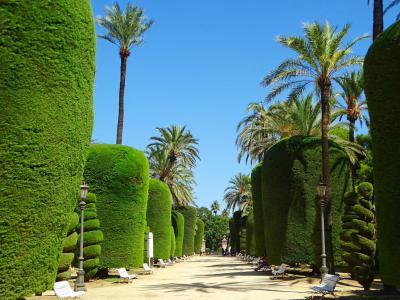
Back in the day, this patch of land was charmingly known as the “Walk of Parsley”-a windswept military no-man’s-land wedged between the barracks of Composanto and La Bomba. Not exactly picnic material. That all changed when someone had the bright idea to swap soldiers for shrubbery. Today, visitors enter through Rocío Jurado Square and stroll down an avenue flanked by manicured flowerbeds.
And what flowerbeds! Nestled between date palms and cypress trees, oyster stone fountains gurgle away, surrounded by over 150 species of exotic flora. There’s a Canary Islands dragon tree looking mildly suspicious, a New Zealand Christmas tree flexing its floral muscles, and a Monkey Puzzle Tree that seems just as confused as everyone else.
Kids love the whimsical waterfall, grotto, and the delightfully odd “Children Under the Umbrella” sculpture. Bronze tributes also abound: from local legend Manuel de Falla to Trafalgar’s epic sea squabble, this park doesn’t skimp on cultural seasoning.
With wrought-iron gates, Victorian-style lampposts, and a kiosk straight out of a Dickens novel, Genovés Park is part garden, part time machine. Don’t miss the open-air José María Pemán Summer Theatre, where Cádiz’s drama queens (and kings) take to the stage under the stars.
Back in the day, this patch of land was charmingly known as the “Walk of Parsley”-a windswept military no-man’s-land wedged between the barracks of Composanto and La Bomba. Not exactly picnic material. That all changed when someone had the bright idea to swap soldiers for shrubbery. Today, visitors enter through Rocío Jurado Square and stroll down an avenue flanked by manicured flowerbeds.
And what flowerbeds! Nestled between date palms and cypress trees, oyster stone fountains gurgle away, surrounded by over 150 species of exotic flora. There’s a Canary Islands dragon tree looking mildly suspicious, a New Zealand Christmas tree flexing its floral muscles, and a Monkey Puzzle Tree that seems just as confused as everyone else.
Kids love the whimsical waterfall, grotto, and the delightfully odd “Children Under the Umbrella” sculpture. Bronze tributes also abound: from local legend Manuel de Falla to Trafalgar’s epic sea squabble, this park doesn’t skimp on cultural seasoning.
With wrought-iron gates, Victorian-style lampposts, and a kiosk straight out of a Dickens novel, Genovés Park is part garden, part time machine. Don’t miss the open-air José María Pemán Summer Theatre, where Cádiz’s drama queens (and kings) take to the stage under the stars.
9) Clara Campoamor Promenade
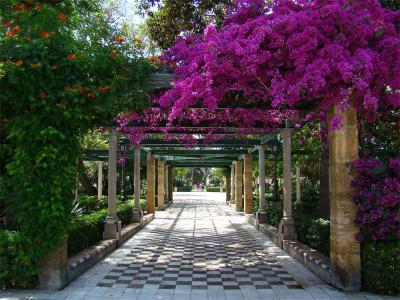
Stretching along the seafront and city wall in the historic center, the Clara Campoamor Promenade, formerly known as Apodaca Promenade, forms one of the city’s most elegant walkways. This landscaped footpath, redesigned in the regionalist style by architect Juan Talavera y Heredia between 1926 and 1927, blends ornamental gardens, geometric cobblestone patterns, and historic architecture into a harmonious public space.
The promenade is flanked by significant landmarks such as the Baluarte de la Candelaria and the walls of San Carlos, both part of the city's 18th-century coastal defenses.
Marked by romantic landscaping and early 20th-century design elements, the promenade is adorned with Seville-style glazed ceramics, wrought iron benches, and intricately designed lampposts. Interspersed with stone columns, shady trees, and curated flowerbeds, the promenade offers a serene retreat, especially appealing during the heat of summer.
A particularly poignant section is the Glorieta Carlos Edmundo de Ory, which features a sculpture and dedication to the Cádiz-born poet. Throughout the walkway, visitors encounter busts commemorating major historical figures from Spain and across Latin America-such as José Martí, José Rizal and Juan Pablo Duarte.
Beyond its architectural charm, the Alameda functions as a cultural garden, recognized in 2004 as part of the Gardens of Cultural Interest in the General Catalogue of Andalusian Historical Heritage.
The promenade is flanked by significant landmarks such as the Baluarte de la Candelaria and the walls of San Carlos, both part of the city's 18th-century coastal defenses.
Marked by romantic landscaping and early 20th-century design elements, the promenade is adorned with Seville-style glazed ceramics, wrought iron benches, and intricately designed lampposts. Interspersed with stone columns, shady trees, and curated flowerbeds, the promenade offers a serene retreat, especially appealing during the heat of summer.
A particularly poignant section is the Glorieta Carlos Edmundo de Ory, which features a sculpture and dedication to the Cádiz-born poet. Throughout the walkway, visitors encounter busts commemorating major historical figures from Spain and across Latin America-such as José Martí, José Rizal and Juan Pablo Duarte.
Beyond its architectural charm, the Alameda functions as a cultural garden, recognized in 2004 as part of the Gardens of Cultural Interest in the General Catalogue of Andalusian Historical Heritage.
