Custom Walk in Barcelona, Spain by plee0211_854b9a created on 2026-02-18
Guide Location: Spain » Barcelona
Guide Type: Custom Walk
# of Sights: 9
Tour Duration: 3 Hour(s)
Travel Distance: 6 Km or 3.7 Miles
Share Key: X234W
Guide Type: Custom Walk
# of Sights: 9
Tour Duration: 3 Hour(s)
Travel Distance: 6 Km or 3.7 Miles
Share Key: X234W
How It Works
Please retrieve this walk in the GPSmyCity app. Once done, the app will guide you from one tour stop to the next as if you had a personal tour guide. If you created the walk on this website or come to the page via a link, please follow the instructions below to retrieve the walk in the app.
Retrieve This Walk in App
Step 1. Download the app "GPSmyCity: Walks in 1K+ Cities" on Apple App Store or Google Play Store.



Step 2. In the GPSmyCity app, download(or launch) the guide "Barcelona Map and Walking Tours".
Step 3. Tap the menu button located at upper right corner of the "Walks" screen and select "Retrieve custom walk". Enter the share key: X234W
1) La Sagrada Familia (Basilica of the Holy Family) (must see)
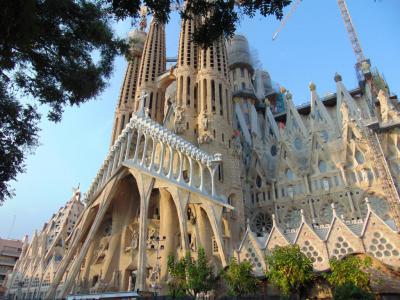
The Basilica and Expiatory Temple of the Holy Family, commonly known as La Sagrada Família, is an iconic, unfinished church in Barcelona designed by Catalan Modernist architect Antoni Gaudí. Construction began in 1882 with architect Francisco de Paula del Villar, who envisioned a Gothic revival-style church. Upon taking over the project in 1883, Gaudí transformed the design into a unique blend of Gothic and Art Nouveau styles. Despite spending an impressive 43 years of his life designing this monument, by the time of Gaudí's death in 1926, only 15-25% of the basilica had been completed.
Relied on private donations, the construction has faced multiple interruptions like the Spanish Civil War in the 1930s. Modern technology has sped up the progress, however, and the church is now set to be finished by 2026, with further decorative work expected until 2034.
The Sagrada Família features eighteen planned spires symbolizing the Twelve Apostles, four Evangelists, the Virgin Mary, and Jesus Christ. Thirteen spires have been completed so far. The basilica’s three façades-the Nativity, Passion, and Glory-each represent different phases of Christ’s life and showcase a blend of naturalistic and minimalist styles.
The interior, designed as a Latin cross with five aisles, showcases Gaudí’s mastery of geometry and organic forms. The central nave vaults reach 45 meters, while the apse vault extends to 75 meters. The columns, which change shape as they rise, contribute to the basilica’s distinct look. Gaudí's use of hyperboloid structures and ruled surfaces enhances both the stability and aesthetic appeal of the building.
As of 2017, visitors can book tickets online to access various parts of the basilica, including the Nave, Crypt, and museum, as well as the Passion and Nativity steeples. A visit to the steeples includes a challenging descent through a narrow spiral staircase of over 300 steps. Also of note is the museum below, offering a wealth of information, including audiovisual presentations about the Sagrada Família project's history, plans, and Gaudí himself. You may also want to visit the small school built by Antoni Gaudí for the children of the construction workers right on the site.
Once completed, the Sagrada Família is to become the tallest church in the world and a lasting testament to Gaudí’s vision of blending architecture, nature, and spirituality.
Tip:
Please note that children under 6 are not permitted to ascend the towers; some adults may find the spiral staircase challenging too. If you decide to climb, ask the staff for directions to the "backside elevator", as it is usually less crowded.
Relied on private donations, the construction has faced multiple interruptions like the Spanish Civil War in the 1930s. Modern technology has sped up the progress, however, and the church is now set to be finished by 2026, with further decorative work expected until 2034.
The Sagrada Família features eighteen planned spires symbolizing the Twelve Apostles, four Evangelists, the Virgin Mary, and Jesus Christ. Thirteen spires have been completed so far. The basilica’s three façades-the Nativity, Passion, and Glory-each represent different phases of Christ’s life and showcase a blend of naturalistic and minimalist styles.
The interior, designed as a Latin cross with five aisles, showcases Gaudí’s mastery of geometry and organic forms. The central nave vaults reach 45 meters, while the apse vault extends to 75 meters. The columns, which change shape as they rise, contribute to the basilica’s distinct look. Gaudí's use of hyperboloid structures and ruled surfaces enhances both the stability and aesthetic appeal of the building.
As of 2017, visitors can book tickets online to access various parts of the basilica, including the Nave, Crypt, and museum, as well as the Passion and Nativity steeples. A visit to the steeples includes a challenging descent through a narrow spiral staircase of over 300 steps. Also of note is the museum below, offering a wealth of information, including audiovisual presentations about the Sagrada Família project's history, plans, and Gaudí himself. You may also want to visit the small school built by Antoni Gaudí for the children of the construction workers right on the site.
Once completed, the Sagrada Família is to become the tallest church in the world and a lasting testament to Gaudí’s vision of blending architecture, nature, and spirituality.
Tip:
Please note that children under 6 are not permitted to ascend the towers; some adults may find the spiral staircase challenging too. If you decide to climb, ask the staff for directions to the "backside elevator", as it is usually less crowded.
2) Casa Mila (Mila House) (must see)
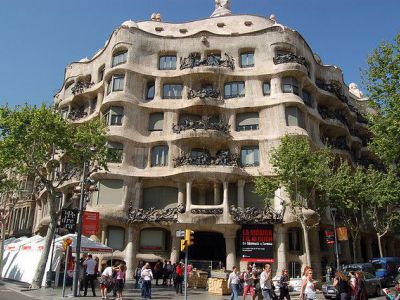
Milà House, commonly known as La Pedrera ("The Stone Quarry"), is a modernist masterpiece designed by Antoni Gaudí and located on Gràcia Boulevard in Barcelona. Constructed between 1906 and 1912 for Roser Segimón and her husband Pere Milà, its nickname derives from its stony, fortress-like appearance. Gaudí, however, viewed the structure as a living body, with columns as bones and stone as flesh.
The building’s wavy stone façade and wrought iron balconies were highly controversial at the time for their unconventional design. Gaudí introduced several innovative features, such as a self-supporting façade, free-plan floors, and an underground garage. The structure, inspired by natural forms, incorporates curved surfaces and catenary arches in the attic, while its layout around courtyards ensures natural light reaches all nine stories. The distinctive roof terrace, with sculptural chimneys and skylights, offers panoramic views of the city and is known as "the garden of warriors."
Following initial criticism and conflicts with Roser Segimón over the aesthetic details, Milà House has undergone significant changes throughout its history. Originally intended as a private residence, it was later sold, converted into apartments, and eventually fell into disrepair. It was restored in the 1980s, regaining its original colors and features, and was declared a UNESCO World Heritage Site in 1984.
Today, Milà House serves as a cultural center, featuring an exhibition on Gaudí’s life and work, showcasing models, drawings, and photographs of his architectural creations. The fourth floor showcases a recreation of an early 20th-century apartment, giving insight into the lifestyle of affluent families of that period.
Milà House is a testament to Gaudí’s architectural innovation and his challenge to conventional design norms. Over the years, it has inspired many modern buildings worldwide, including the Guggenheim Museum in New York City and Disney Concert Hall in Los Angeles. Today, it stands as one of Barcelona’s most iconic landmarks, attracting visitors from around the world to experience Gaudí’s visionary creativity firsthand.
Tip:
To avoid waiting in line, try and book your ticket online in advance and, if possible, visit around sunset when the lights are on, allowing you to experience the surreal audiovisual show. During the summer months, jazz and flamenco concerts are often held here, which is quite a treat as well.
The building’s wavy stone façade and wrought iron balconies were highly controversial at the time for their unconventional design. Gaudí introduced several innovative features, such as a self-supporting façade, free-plan floors, and an underground garage. The structure, inspired by natural forms, incorporates curved surfaces and catenary arches in the attic, while its layout around courtyards ensures natural light reaches all nine stories. The distinctive roof terrace, with sculptural chimneys and skylights, offers panoramic views of the city and is known as "the garden of warriors."
Following initial criticism and conflicts with Roser Segimón over the aesthetic details, Milà House has undergone significant changes throughout its history. Originally intended as a private residence, it was later sold, converted into apartments, and eventually fell into disrepair. It was restored in the 1980s, regaining its original colors and features, and was declared a UNESCO World Heritage Site in 1984.
Today, Milà House serves as a cultural center, featuring an exhibition on Gaudí’s life and work, showcasing models, drawings, and photographs of his architectural creations. The fourth floor showcases a recreation of an early 20th-century apartment, giving insight into the lifestyle of affluent families of that period.
Milà House is a testament to Gaudí’s architectural innovation and his challenge to conventional design norms. Over the years, it has inspired many modern buildings worldwide, including the Guggenheim Museum in New York City and Disney Concert Hall in Los Angeles. Today, it stands as one of Barcelona’s most iconic landmarks, attracting visitors from around the world to experience Gaudí’s visionary creativity firsthand.
Tip:
To avoid waiting in line, try and book your ticket online in advance and, if possible, visit around sunset when the lights are on, allowing you to experience the surreal audiovisual show. During the summer months, jazz and flamenco concerts are often held here, which is quite a treat as well.
3) Passeig de Gracia (Gracia Avenue) (must see)
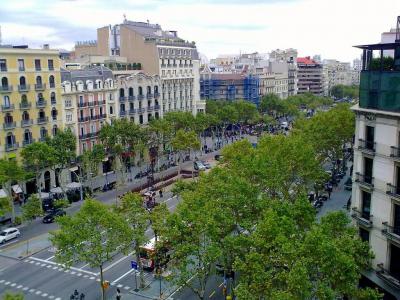
Gràcia Boulevard, located in the heart of Barcelona’s Eixample district, is one of the city’s most significant shopping and business areas. Formerly known as "Jesus Road", it was initially a rural lane connecting Barcelona to the then-separate town of Gràcia. The avenue’s development began in 1821 but was delayed by epidemics and eventually resumed in 1827. The 42-meter-wide boulevard soon became a favorite spot for the aristocracy to showcase their horse-riding skills and luxurious carriages.
By the early 1900s, Gràcia Boulevard had transformed into the city’s most fashionable street. The architect Pere Falqués i Urpí designed its renowned wrought-iron benches and street lamps in 1906, largely adding to its unique charm.
During the Spanish Civil War, the Basque government was based here, and the Catalan poet Salvador Espriu lived in Casa Fuster (at Number 132). Today, Gràcia Boulevard is the most expensive street in Barcelona and Spain, comparable to the Champs-Élysées in Paris or 5th Avenue in New York City. The avenue is lined with upscale stores, though more affordable dining options can be found in its side streets.
More notably, the avenue is home to remarkable Modernist architecture by famous architects such as Antoni Gaudí, Josep Puig i Cadafalch, and Lluís Domènech i Montaner, concentrated along the main street and some of the adjacent streets as well. Major highlights include Gaudí's “La Pedrera” building and the so-called “Block of Discord,” a cluster of Modernist masterpieces. With most mansions here belonging to Barcelona's wealthiest citizens of the late 19th and early 20th centuries, there's no shortage of richly and tastefully decorated facades to behold. Buildings, balconies, stained-glass windows, and carved doors are all within sight.
Day or night, Gràcia Avenue offers a fantastic opportunity for architecture buffs to crane their necks. In addition to these, the Gaudí-designed pavement tiles depicting abstract sea creatures make it a top destination for strollers, offering a visual feast of Barcelona’s rich urban heritage.
Tip:
This boulevard is particularly magical in summer when the locals compete between themselves decorating the streets as part of the Gràcia Festival, which, together with the live music played everywhere, makes it a really fun place to be.
By the early 1900s, Gràcia Boulevard had transformed into the city’s most fashionable street. The architect Pere Falqués i Urpí designed its renowned wrought-iron benches and street lamps in 1906, largely adding to its unique charm.
During the Spanish Civil War, the Basque government was based here, and the Catalan poet Salvador Espriu lived in Casa Fuster (at Number 132). Today, Gràcia Boulevard is the most expensive street in Barcelona and Spain, comparable to the Champs-Élysées in Paris or 5th Avenue in New York City. The avenue is lined with upscale stores, though more affordable dining options can be found in its side streets.
More notably, the avenue is home to remarkable Modernist architecture by famous architects such as Antoni Gaudí, Josep Puig i Cadafalch, and Lluís Domènech i Montaner, concentrated along the main street and some of the adjacent streets as well. Major highlights include Gaudí's “La Pedrera” building and the so-called “Block of Discord,” a cluster of Modernist masterpieces. With most mansions here belonging to Barcelona's wealthiest citizens of the late 19th and early 20th centuries, there's no shortage of richly and tastefully decorated facades to behold. Buildings, balconies, stained-glass windows, and carved doors are all within sight.
Day or night, Gràcia Avenue offers a fantastic opportunity for architecture buffs to crane their necks. In addition to these, the Gaudí-designed pavement tiles depicting abstract sea creatures make it a top destination for strollers, offering a visual feast of Barcelona’s rich urban heritage.
Tip:
This boulevard is particularly magical in summer when the locals compete between themselves decorating the streets as part of the Gràcia Festival, which, together with the live music played everywhere, makes it a really fun place to be.
4) Palau de la Musica Catalana (Palace of Catalan Music) (must see)
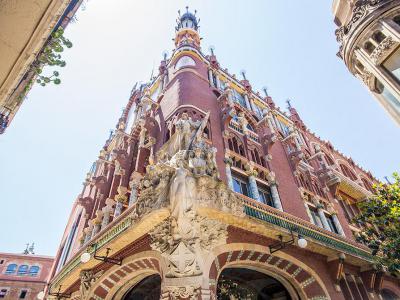
The Palace of Catalan Music in Barcelona, designed by Lluís Domènech i Montaner, is a hallmark of Catalan Art Nouveau architecture. Built between 1905 and 1908 for the Orfeó Català choral society, it was inaugurated in 1908 and awarded the Barcelona City Council’s 1909 prize for best building. The Palace represents a unique blend of curves, floral motifs, and advanced materials like steel framing.
The exterior features a fusion of Spanish and Arabic architectural elements, including exposed red brick, iron, mosaics, and stained glass. Two colonnades with colorful tiles and busts of composers, such as Bach, Beethoven, and Wagner, adorn the façade. Inside, the concert hall-Europe’s only auditorium illuminated entirely by natural light during daytime-seats around 2,200 people. Among other elements, it features a large stained-glass skylight by Antoni Rigalt and sculptures by artists like Eusebi Arnau and Lluís Bru, portraying themes of choral and classical music.
The Palace's main attraction is on the first floor, where modernist artistry is showcased through a spectacular stained glass ceiling and intricately decorated surfaces. The highlights include three-dimensional muses emerging from the walls and a stunning proscenium featuring Valkyries in motion. Despite its visual beauty, the hall’s glass walls present acoustic challenges, as noted by certain critics. Nevertheless, the Palace remains a symbol of Catalan modernism and a must-visit landmark in Barcelona.
Major renovations between 1982 and 1989 restored it to its original grandeur while adding modern amenities like dressing rooms, a library, and an archive in an adjoining six-story building. Further restoration in 2006–2008 included reinstalling the lantern and other ornamental features.
To fully appreciate the craftsmanship, guided tours are recommended and often require advance booking. For a more casual experience, visitors can enjoy coffee or tapas at the foyer bar, while admiring the detailed interior. Presently a UNESCO World Heritage Site since 1997, the Palace hosts over half a million visitors each year, drawn by its architectural splendor and vibrant cultural programs ranging from classical music to jazz, with top-notch lighting making each show a memorable experience.
Tip:
Don't forget to bring opera glasses or binoculars to fully appreciate the details, and be sure to check out the café on the ground floor for a pleasant treat.
Daily Tours:
10 am–3:30 pm (advance booking recommended)
The exterior features a fusion of Spanish and Arabic architectural elements, including exposed red brick, iron, mosaics, and stained glass. Two colonnades with colorful tiles and busts of composers, such as Bach, Beethoven, and Wagner, adorn the façade. Inside, the concert hall-Europe’s only auditorium illuminated entirely by natural light during daytime-seats around 2,200 people. Among other elements, it features a large stained-glass skylight by Antoni Rigalt and sculptures by artists like Eusebi Arnau and Lluís Bru, portraying themes of choral and classical music.
The Palace's main attraction is on the first floor, where modernist artistry is showcased through a spectacular stained glass ceiling and intricately decorated surfaces. The highlights include three-dimensional muses emerging from the walls and a stunning proscenium featuring Valkyries in motion. Despite its visual beauty, the hall’s glass walls present acoustic challenges, as noted by certain critics. Nevertheless, the Palace remains a symbol of Catalan modernism and a must-visit landmark in Barcelona.
Major renovations between 1982 and 1989 restored it to its original grandeur while adding modern amenities like dressing rooms, a library, and an archive in an adjoining six-story building. Further restoration in 2006–2008 included reinstalling the lantern and other ornamental features.
To fully appreciate the craftsmanship, guided tours are recommended and often require advance booking. For a more casual experience, visitors can enjoy coffee or tapas at the foyer bar, while admiring the detailed interior. Presently a UNESCO World Heritage Site since 1997, the Palace hosts over half a million visitors each year, drawn by its architectural splendor and vibrant cultural programs ranging from classical music to jazz, with top-notch lighting making each show a memorable experience.
Tip:
Don't forget to bring opera glasses or binoculars to fully appreciate the details, and be sure to check out the café on the ground floor for a pleasant treat.
Daily Tours:
10 am–3:30 pm (advance booking recommended)
5) Mercat de Santa Caterina (St. Catherine's Market)
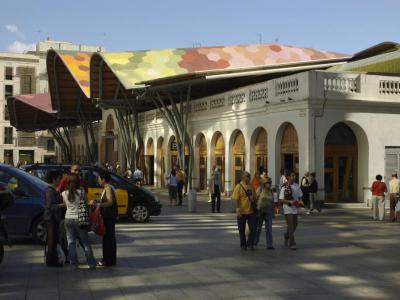
An easy walking distance from the Barcelona Cathedral, Saint Catherine's Market underwent a remarkable transformation in 2005, emerging as a stylish market with a touch of designer elegance. Its inviting facade, complemented by a colorful roof, sets the stage for a clean and relaxing shopping experience.
Within and around the market, you'll find an abundance of eateries that prepare delectable dishes using the freshest ingredients available. A must-visit spot is Bar Joan's, where you can savor some of the finest tapas around while enjoying a couple of drinks. What's more, the prices are surprisingly affordable, as this place is a local favorite.
If you're in the mood for a well-balanced plate of vegetables, head towards the back of the market to La Torna. Here, you can indulge in their marvelous cod (bacallá) dish, prepared with spinach, pine nuts, raisins, and topped with allioli. The magic happens right before your eyes as everything is grilled to perfection.
Another essential stop is Cuines de Santa Caterina, an impressively elegant yet relaxed modern space that offers the best of "fusion food". From breakfast meals to traditional tapas, vegetarian options to a variety of sushi and Asian-inspired dishes, as well as Mediterranean favorites, this place has it all.
Of course, if you prefer to prepare your own meal, the market offers a wide selection of products to choose from – from fresh vegetables, seafood and meats to olives and olive oil, spices and more. The prices here are generally more affordable compared to La Boqueria Market, and the vendors are friendly and accommodating, even if you decide not to make a purchase.
Within and around the market, you'll find an abundance of eateries that prepare delectable dishes using the freshest ingredients available. A must-visit spot is Bar Joan's, where you can savor some of the finest tapas around while enjoying a couple of drinks. What's more, the prices are surprisingly affordable, as this place is a local favorite.
If you're in the mood for a well-balanced plate of vegetables, head towards the back of the market to La Torna. Here, you can indulge in their marvelous cod (bacallá) dish, prepared with spinach, pine nuts, raisins, and topped with allioli. The magic happens right before your eyes as everything is grilled to perfection.
Another essential stop is Cuines de Santa Caterina, an impressively elegant yet relaxed modern space that offers the best of "fusion food". From breakfast meals to traditional tapas, vegetarian options to a variety of sushi and Asian-inspired dishes, as well as Mediterranean favorites, this place has it all.
Of course, if you prefer to prepare your own meal, the market offers a wide selection of products to choose from – from fresh vegetables, seafood and meats to olives and olive oil, spices and more. The prices here are generally more affordable compared to La Boqueria Market, and the vendors are friendly and accommodating, even if you decide not to make a purchase.
6) Basilica de Santa Maria del Mar (Basilica of St. Mary of the Sea) (must see)
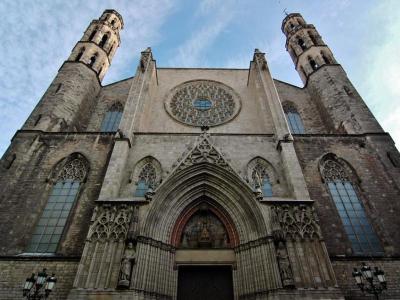
The Basilica of Saint Mary of the Sea is an outstanding example of early Catalan Gothic architecture, known for its uninterrupted lines and grace. Situated at the former water's edge, the edifice was constructed by skilled stonemasons who meticulously selected, fitted, and carved each stone sourced from the Montjuïc quarry, which had also supplied the sandstone for the 4th-century Roman walls. The number eight, symbolizing the Virgin Mary in medieval numerology, permeates every aspect of the basilica's design: the 16 octagonal pillars have a diameter of 2 meters and extend into rib vaulting arches at a height of 16 meters; the painted keystones at the apex of the arches are 32 meters above the floor; and the central nave is twice as wide as the lateral naves, measuring 8 meters each.
Despite enduring the destructive fires set by anarchists in 1936 during the rebellion, when numerous churches in Barcelona were targeted, Saint Mary of the Sea withstood the onslaught. Adorned with ornate side chapels and choir stalls at the time, the basilica burned for eleven days, nearly collapsing. It was later restored by a group of architects trained in the Bauhaus style following the Civil War, transforming it into an architectural marvel.
Why You Should Visit:
Remarkably grand and impeccably preserved; offers a lift to the roof, a small "art gallery", an intriguing crypt, beautiful stone carvings, a choir gallery, and the most astoundingly peaceful courtyard with a large pond. In addition, the surrounding area is dotted with charming local cafes offering outdoor seating, making it a delightful place to explore and wander.
Tips:
You have the option to participate in a guided tour that takes you up to the roof, providing a fascinating experience along with breathtaking views of Barcelona. Additionally, guided tours are available to explore areas that are usually restricted to the public, including the crypt. It's important to note that proper attire is required to enter these areas, as the guards at the entrance may refuse entry if the dress code is not followed.
Despite enduring the destructive fires set by anarchists in 1936 during the rebellion, when numerous churches in Barcelona were targeted, Saint Mary of the Sea withstood the onslaught. Adorned with ornate side chapels and choir stalls at the time, the basilica burned for eleven days, nearly collapsing. It was later restored by a group of architects trained in the Bauhaus style following the Civil War, transforming it into an architectural marvel.
Why You Should Visit:
Remarkably grand and impeccably preserved; offers a lift to the roof, a small "art gallery", an intriguing crypt, beautiful stone carvings, a choir gallery, and the most astoundingly peaceful courtyard with a large pond. In addition, the surrounding area is dotted with charming local cafes offering outdoor seating, making it a delightful place to explore and wander.
Tips:
You have the option to participate in a guided tour that takes you up to the roof, providing a fascinating experience along with breathtaking views of Barcelona. Additionally, guided tours are available to explore areas that are usually restricted to the public, including the crypt. It's important to note that proper attire is required to enter these areas, as the guards at the entrance may refuse entry if the dress code is not followed.
7) La Rambla (must see)
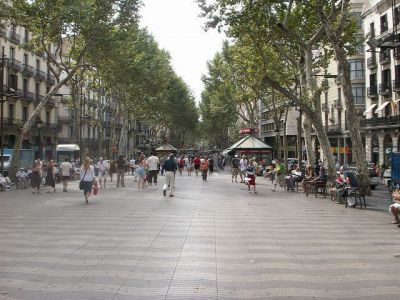
Pulsating with energy, particularly during the peak tourist season, La Rambla is the most famous street in Barcelona and one of Europe’s most lively urban promenades. Stretching 1.2 kilometers from Catalonia Square to the Christopher Columbus Monument at the Old Port, it cuts through the Gothic Quarter and El Raval neighborhoods. Legendary Spanish poet Federico García Lorca famously described this bustling thoroughfare, teeming with colorful shops, charming pavement cafes, souvenir kiosks, and an eclectic mix of visitors, as “the only street in the world which I wish would never end.”
La Rambla is composed of several smaller sections, known collectively as “Les Rambles.” These include Canaletes Rambla, known for its fountain; Rambla of Studies, the site of a former Jesuit university; Rambla of Saint Joseph, home to a flower market; Rambla of the Capuchins, featuring the Liceu opera house; and Rambla of Santa Mònica, named after a local convent.
Originally a sewage-filled stream, La Rambla’s name comes from the Arabic word for "sand," dating back to the times when it functioned as a rainwater drain. By the late 14th century, the city expanded its walls to include La Rambla, which later transformed into a lively promenade.
Over time, La Rambla became a hub for festivals and commerce. Trees were planted along its path in 1703, with plane trees, in particular, added in 1859. Notable local landmarks include the Liceu Grand Theatre, Barcelona's renowned opera house, and the Palace of the Viceroy, a Baroque mansion now hosting exhibitions and events. The street also features a Joan Miró pavement mosaic and connects to the famous La Boqueria market, offering a plethora of local delicacies, as well as the Royal Square popular for its nightlife.
Prices at La Rambla are a bit steeper than elsewhere in the city, but then again, excitement comes at a price, and La Rambla sure gives tonnes of it.
Tip:
As you stroll along, remain vigilant against the occasional presence of pickpockets-keeping your eyes open is always a good idea.
For excellent food at more affordable prices and the opportunity to savor your meal in a relaxed setting, venture to the Santa Caterina market, just a 10-minute walk away from La Boqueria.
La Rambla is composed of several smaller sections, known collectively as “Les Rambles.” These include Canaletes Rambla, known for its fountain; Rambla of Studies, the site of a former Jesuit university; Rambla of Saint Joseph, home to a flower market; Rambla of the Capuchins, featuring the Liceu opera house; and Rambla of Santa Mònica, named after a local convent.
Originally a sewage-filled stream, La Rambla’s name comes from the Arabic word for "sand," dating back to the times when it functioned as a rainwater drain. By the late 14th century, the city expanded its walls to include La Rambla, which later transformed into a lively promenade.
Over time, La Rambla became a hub for festivals and commerce. Trees were planted along its path in 1703, with plane trees, in particular, added in 1859. Notable local landmarks include the Liceu Grand Theatre, Barcelona's renowned opera house, and the Palace of the Viceroy, a Baroque mansion now hosting exhibitions and events. The street also features a Joan Miró pavement mosaic and connects to the famous La Boqueria market, offering a plethora of local delicacies, as well as the Royal Square popular for its nightlife.
Prices at La Rambla are a bit steeper than elsewhere in the city, but then again, excitement comes at a price, and La Rambla sure gives tonnes of it.
Tip:
As you stroll along, remain vigilant against the occasional presence of pickpockets-keeping your eyes open is always a good idea.
For excellent food at more affordable prices and the opportunity to savor your meal in a relaxed setting, venture to the Santa Caterina market, just a 10-minute walk away from La Boqueria.
8) Palau Guell (Guell Palace) (must see)
Nestled in a discreet corner off the bustling La Rambla, the Güell Palace is an inaugural masterpiece of the architect Antoni Gaudí in Barcelona, which swiftly propelled him to international acclaim.
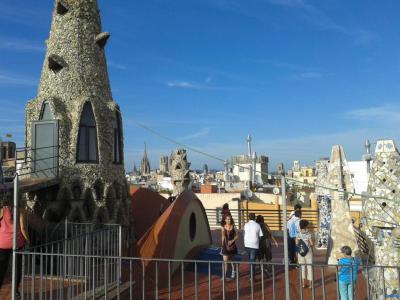
Now part of the UNESCO World Heritage Site called the "Works of Antoni Gaudí", this mansion was built between 1886 and 1888 for the industrial tycoon and Gaudí's lifelong patron, Eusebi Güell. The building showcases Gaudí's innovative use of iron supports as decorative elements, featuring twisted columns, arches, and intricate ceilings, topped with a whimsical array of tiled chimneys on the roof terrace.
Designed for high-society gatherings, the home’s central room has a tall ceiling, soaring three floors high, with a cupola. At night, to produce the appearance of a starlit sky, lanterns were hung from the outside through the small holes near the top. Arriving in horse-drawn carriages, guests entered the property through grand oval gates adorned with ironwork resembling seaweed. Horses were taken to a livery stable in the basement, while guests ascended to the receiving room. The walls and ceilings of this room contain discreet observation holes, allowing the owner to view guests from above before making an entrance.
With no budget constraints, Gaudí utilized the finest materials and craftsmanship to create a space that blends function and artistry seamlessly. This residence served as a preview of Gaudí’s future architectural innovations and his flair for combining structural elements with imaginative design.
Being slightly tucked away from the renowned La Rambla promenade, this lesser-known gem attracts fewer tourists, while offering a delightful opportunity to admire Gaudí's work in the charming old quarter of the city.
Tip:
The building's highlight is the rooftop terrace and its colorful chimneys adorned with mosaic and broken tiles. Note: on a rainy day, the rooftop may be closed, so it's advisable to check in advance the weather forecast to ensure a pleasant visit.
Now part of the UNESCO World Heritage Site called the "Works of Antoni Gaudí", this mansion was built between 1886 and 1888 for the industrial tycoon and Gaudí's lifelong patron, Eusebi Güell. The building showcases Gaudí's innovative use of iron supports as decorative elements, featuring twisted columns, arches, and intricate ceilings, topped with a whimsical array of tiled chimneys on the roof terrace.
Designed for high-society gatherings, the home’s central room has a tall ceiling, soaring three floors high, with a cupola. At night, to produce the appearance of a starlit sky, lanterns were hung from the outside through the small holes near the top. Arriving in horse-drawn carriages, guests entered the property through grand oval gates adorned with ironwork resembling seaweed. Horses were taken to a livery stable in the basement, while guests ascended to the receiving room. The walls and ceilings of this room contain discreet observation holes, allowing the owner to view guests from above before making an entrance.
With no budget constraints, Gaudí utilized the finest materials and craftsmanship to create a space that blends function and artistry seamlessly. This residence served as a preview of Gaudí’s future architectural innovations and his flair for combining structural elements with imaginative design.
Being slightly tucked away from the renowned La Rambla promenade, this lesser-known gem attracts fewer tourists, while offering a delightful opportunity to admire Gaudí's work in the charming old quarter of the city.
Tip:
The building's highlight is the rooftop terrace and its colorful chimneys adorned with mosaic and broken tiles. Note: on a rainy day, the rooftop may be closed, so it's advisable to check in advance the weather forecast to ensure a pleasant visit.
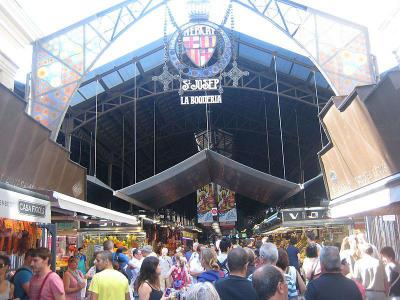
9) Mercat de la Boqueria (La Boqueria Market) (must see)
Situated to the north of La Rambla and a few blocks south of Catalonia Square, the Market of Saint Joseph de La Boqueria is extremely busy no matter what time of day or season you come. Colloquially referred to simply as La Boqueria, this large public market is one of Barcelona's foremost tourist landmarks with a broad choice of goods on offer.
Initially, the area was an unofficial extension of the New Square market. The name "Boqueria" possibly originates from the Catalan word "boc" for goat, indicating a place for selling goat meat. Indeed, the first mention of La Boqueria, as the meat market near the old city gate, dates back to 1217. By 1470, it was renamed “pig market” and afterward remained known as a straw market, up until 1794.
In 1826, the market gained an official status, and in 1835, plans were made for a formal structure on La Rambla. Construction began in 1840 and the market officially opened the same year. After several modifications, the building was inaugurated in 1853. A new fish market was added in 1911, and the current metal roof was installed in 1914, giving the market its present look.
Despite the constant flow of visitors, the experienced vendors efficiently handle the crowds, and the market's spacious layout helps ensure an enjoyable shopping experience. La Boqueria offers a fantastic opportunity to explore traditional Catalan cuisine. Here, you can take yourself on a tapas tour, sample exquisite jamón with cheese, purchase the world's freshest saffron (sold in various-sized small boxes), and enjoy local seafood (except for Sundays and Mondays when no fish is sold), plus discover many other culinary delights.
Also, don't miss the chance to try the freshly cooked fish at Kiosko Universal (a sit-down counter and bar-like place) or indulge in the wide variety of olives and delicious fresh fruits. Venture deep into the market to find the best stalls and taste a little bit of everything – you won't be disappointed.
Tip:
Keep in mind that the area is known for pickpocketing incidents, so whether you're alone or with friends, it is recommended to be vigilant and keep a close eye on your belongings.
Initially, the area was an unofficial extension of the New Square market. The name "Boqueria" possibly originates from the Catalan word "boc" for goat, indicating a place for selling goat meat. Indeed, the first mention of La Boqueria, as the meat market near the old city gate, dates back to 1217. By 1470, it was renamed “pig market” and afterward remained known as a straw market, up until 1794.
In 1826, the market gained an official status, and in 1835, plans were made for a formal structure on La Rambla. Construction began in 1840 and the market officially opened the same year. After several modifications, the building was inaugurated in 1853. A new fish market was added in 1911, and the current metal roof was installed in 1914, giving the market its present look.
Despite the constant flow of visitors, the experienced vendors efficiently handle the crowds, and the market's spacious layout helps ensure an enjoyable shopping experience. La Boqueria offers a fantastic opportunity to explore traditional Catalan cuisine. Here, you can take yourself on a tapas tour, sample exquisite jamón with cheese, purchase the world's freshest saffron (sold in various-sized small boxes), and enjoy local seafood (except for Sundays and Mondays when no fish is sold), plus discover many other culinary delights.
Also, don't miss the chance to try the freshly cooked fish at Kiosko Universal (a sit-down counter and bar-like place) or indulge in the wide variety of olives and delicious fresh fruits. Venture deep into the market to find the best stalls and taste a little bit of everything – you won't be disappointed.
Tip:
Keep in mind that the area is known for pickpocketing incidents, so whether you're alone or with friends, it is recommended to be vigilant and keep a close eye on your belongings.
