Custom Walk in Rome, Italy by rparo1127_5c4ba4 created on 2026-02-20
Guide Location: Italy » Rome
Guide Type: Custom Walk
# of Sights: 13
Tour Duration: 3 Hour(s)
Travel Distance: 4.3 Km or 2.7 Miles
Share Key: CCCCJ
Guide Type: Custom Walk
# of Sights: 13
Tour Duration: 3 Hour(s)
Travel Distance: 4.3 Km or 2.7 Miles
Share Key: CCCCJ
How It Works
Please retrieve this walk in the GPSmyCity app. Once done, the app will guide you from one tour stop to the next as if you had a personal tour guide. If you created the walk on this website or come to the page via a link, please follow the instructions below to retrieve the walk in the app.
Retrieve This Walk in App
Step 1. Download the app "GPSmyCity: Walks in 1K+ Cities" on Apple App Store or Google Play Store.



Step 2. In the GPSmyCity app, download(or launch) the guide "Rome Map and Walking Tours".
Step 3. Tap the menu button located at upper right corner of the "Walks" screen and select "Retrieve custom walk". Enter the share key: CCCCJ

1) Basilica di Santa Maria in Trastevere (Basilica of Our Lady in Trastevere)
Situated in the historic Trastevere district, Piazza Santa Maria in Trastevere derives its name from the nearby church, which underwent a splendid restoration of its facade mosaics in 2018. This church, considered Rome's first official Christian place of worship, was established by Pope Callixtus I in the 3rd century, during a time when Christianity remained a minority belief. Its location is said to be where an oil fountain miraculously emerged on the day of Christ's birth.
Today, the church predominantly reflects a 12th-century structure renowned for its magnificent mosaics. Particularly noteworthy is the apse mosaic depicting the Coronation of the Virgin, alongside the six mosaics by Pietro Cavallini below, which portray the life of the Virgin with remarkable realism. The nave showcases twenty-two granite columns sourced from the remnants of ancient Roman buildings. Despite some additions in the 18th-century Baroque style, Santa Maria has preserved its medieval charm.
Beneath the grand altar on the right, an inscription reading "FONS OLEI" designates the spot where the oil is believed to have gushed forth.
Why You Should Visit:
One of the oldest (if not the oldest) churches in Rome; extremely ornate and well worth a visit when visiting Trastevere.
During the evening, the church's facade sparkles with the illuminated brilliance of its mosaics.
Tip:
Similar to other churches, it is customary to have your shoulders and knees covered, regardless of the outside temperature.
A good idea would be to plan on spending a little extra time in the area to grab lunch, dinner or gelato.
Today, the church predominantly reflects a 12th-century structure renowned for its magnificent mosaics. Particularly noteworthy is the apse mosaic depicting the Coronation of the Virgin, alongside the six mosaics by Pietro Cavallini below, which portray the life of the Virgin with remarkable realism. The nave showcases twenty-two granite columns sourced from the remnants of ancient Roman buildings. Despite some additions in the 18th-century Baroque style, Santa Maria has preserved its medieval charm.
Beneath the grand altar on the right, an inscription reading "FONS OLEI" designates the spot where the oil is believed to have gushed forth.
Why You Should Visit:
One of the oldest (if not the oldest) churches in Rome; extremely ornate and well worth a visit when visiting Trastevere.
During the evening, the church's facade sparkles with the illuminated brilliance of its mosaics.
Tip:
Similar to other churches, it is customary to have your shoulders and knees covered, regardless of the outside temperature.
A good idea would be to plan on spending a little extra time in the area to grab lunch, dinner or gelato.
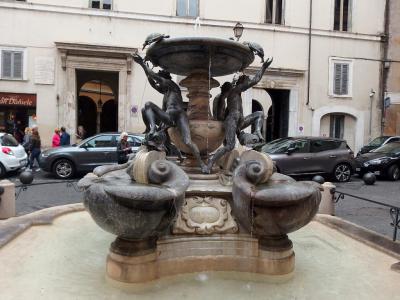
2) Piazza Mattei & Fontana delle Tartarughe (Mattei Square & Fountain of Turtles)
Nestled between Via Portico d'Ottavia and Via delle Botteghe Oscure, Piazza Mattei is a hidden gem that holds both historical significance and cinematic allure, due to its role as a set in the 1990s film "The Talented Mr. Ripley". However, the square is more widely recognized as the backdrop of the Turtle Fountain, also known as Fontana delle Tartarughe, a masterpiece of the late 16th century that owes much of its charm to the four bronze youths delicately cradling dolphins that release water into a marble basin. The addition of turtles, seamlessly integrated into the composition by an unknown sculptor, possibly Bernini, adds a touch of whimsy and intrigue. It is astonishing to think that these turtles were incorporated into the fountain almost a century after its initial creation.
Piazza Mattei has a rich history rooted in its association with Teatro Marcello and the former Roman Jewish ghetto. Originally intended to be positioned near the theater to serve as a water source, the fountain was ultimately relocated closer to the Mattei family house, as a token of gratitude for their financial support. This shift placed the fountain outside the confines of the ghetto, making it inaccessible during the night when the gates were locked.
Legend has it that the fountain's construction was the result of an audacious bet made by Mattei Sr., a notorious gambler, during a dinner gathering. Unbeknownst to his unwitting opponent, all the necessary components for the fountain had been meticulously prepared beforehand, including hidden pipes laid beneath the cobblestones. Thus, when the meal concluded, Mattei triumphantly unveiled the fully assembled fountain by opening the windows, leaving his astonished guest in awe.
One of the loveliest spots in Rome, where the Medieval meets the Renaissance, Piazza Mattei is definitely worth checking out if only to unwind while listening to church bells and the trickling Fontana delle Tartarughe.
Piazza Mattei has a rich history rooted in its association with Teatro Marcello and the former Roman Jewish ghetto. Originally intended to be positioned near the theater to serve as a water source, the fountain was ultimately relocated closer to the Mattei family house, as a token of gratitude for their financial support. This shift placed the fountain outside the confines of the ghetto, making it inaccessible during the night when the gates were locked.
Legend has it that the fountain's construction was the result of an audacious bet made by Mattei Sr., a notorious gambler, during a dinner gathering. Unbeknownst to his unwitting opponent, all the necessary components for the fountain had been meticulously prepared beforehand, including hidden pipes laid beneath the cobblestones. Thus, when the meal concluded, Mattei triumphantly unveiled the fully assembled fountain by opening the windows, leaving his astonished guest in awe.
One of the loveliest spots in Rome, where the Medieval meets the Renaissance, Piazza Mattei is definitely worth checking out if only to unwind while listening to church bells and the trickling Fontana delle Tartarughe.
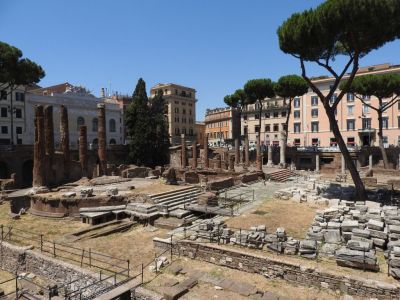
3) Largo di Torre Argentina (Silver Tower Square)
Largo di Torre Argentina (literally “Silver Tower Square”) is a striking archaeological site in the heart of Rome’s ancient Field of Mars. This large open space contains the remains of four Roman Republican temples, dating from the 4th to 2nd centuries BC, as well as part of Pompey’s Theatre complex. Historically, the square was also a hub for the argentarii-Rome’s money men and bankers-who conducted their business here. The name itself comes from a Renaissance-era tower built in the 16th century and linked to Strasbourg, once called Argentoratum in Latin.
Perhaps the most famous event tied to Silver Tower Square is the assassination of Julius Caesar. In 44 BC, the Roman Senate was temporarily meeting in the Senate House of Pompey, a hall attached to Pompey’s grand theater complex, because restoration work was being done on the regular Senate House in the Forum. It was here, on the March 15, that Caesar was surrounded by a group of senators-many of them former allies-who feared he had grown too powerful and sought to restore the Republic by ending his rule.
Led by Brutus, Cassius, and other conspirators, they stabbed him twenty-three times. Ancient sources describe Caesar initially trying to resist, but when he saw Brutus among the attackers, he is said to have drawn his toga over his head in despair. The very spot where this dramatic and world-changing event occurred is now marked within the ruins of the square, offering visitors a rare chance to stand at the place where the course of Roman history was forever altered.
The four temples of the square, labeled A through D by archaeologists, provide insight into the religious life of the Republic. Though only fragments remain, including columns, altars, and stairways, they allow a glimpse of the grandeur that once filled the Field of Mars. These sanctuaries were central to Rome’s civic and spiritual life, and today they remain a rare cluster of Republican architecture visible in the modern cityscape.
Adding to its unique appeal, Silver Tower Square is also home to Rome’s most beloved cat sanctuary. Since the 1990s, volunteers have cared for hundreds of stray and abandoned cats who now roam freely among the ancient stones. Tourists often find themselves just as enchanted by the sight of cats lounging on marble blocks as they are by the history of Caesar’s assassination. This unusual coexistence of archaeology and animal rescue makes Largo di Torre Argentina one of the most memorable stops in Rome.
Perhaps the most famous event tied to Silver Tower Square is the assassination of Julius Caesar. In 44 BC, the Roman Senate was temporarily meeting in the Senate House of Pompey, a hall attached to Pompey’s grand theater complex, because restoration work was being done on the regular Senate House in the Forum. It was here, on the March 15, that Caesar was surrounded by a group of senators-many of them former allies-who feared he had grown too powerful and sought to restore the Republic by ending his rule.
Led by Brutus, Cassius, and other conspirators, they stabbed him twenty-three times. Ancient sources describe Caesar initially trying to resist, but when he saw Brutus among the attackers, he is said to have drawn his toga over his head in despair. The very spot where this dramatic and world-changing event occurred is now marked within the ruins of the square, offering visitors a rare chance to stand at the place where the course of Roman history was forever altered.
The four temples of the square, labeled A through D by archaeologists, provide insight into the religious life of the Republic. Though only fragments remain, including columns, altars, and stairways, they allow a glimpse of the grandeur that once filled the Field of Mars. These sanctuaries were central to Rome’s civic and spiritual life, and today they remain a rare cluster of Republican architecture visible in the modern cityscape.
Adding to its unique appeal, Silver Tower Square is also home to Rome’s most beloved cat sanctuary. Since the 1990s, volunteers have cared for hundreds of stray and abandoned cats who now roam freely among the ancient stones. Tourists often find themselves just as enchanted by the sight of cats lounging on marble blocks as they are by the history of Caesar’s assassination. This unusual coexistence of archaeology and animal rescue makes Largo di Torre Argentina one of the most memorable stops in Rome.
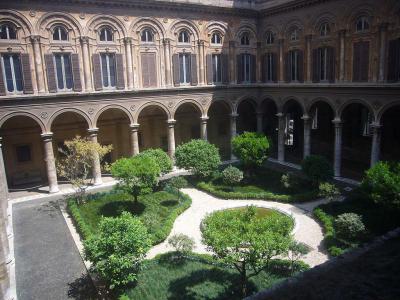
4) Galleria Doria Pamphilj (Doria Pamphilj Gallery) (must see)
The Doria Pamphilj Gallery is a prestigious private art collection housed in the historic Doria Pamphilj Palace. While the Vatican Museums hold global fame and are highly popular, this impressive palace offers one of the most captivating and rewarding artistic experiences in Rome.
Still owned by the princely Doria Pamphilj family, the palace was constructed in 1505 by a Catholic cardinal. It later came under the ownership of another cardinal, whose niece, in turn, married Camillo Pamphilj, nephew of Pope Innocent X.
The collection was significantly enriched by the Pope, who bequeathed artistic treasures to his nephew. Its highlights include Diego Velázquez's Portrait of Innocent X which captures the Pope’s controversial character with striking realism. This celebrated painting is housed in a dedicated room with a bust of the Pope created by Italian sculptor and architect Gian Lorenzo Bernini.
The collection, amassed over centuries by the Doria, Pamphilj, Landi, and Aldobrandini families, features masterpieces from the Renaissance and Baroque periods, with a focus on the 16th and 17th centuries. The palace's stately rooms feature vaulted ceilings and exquisite decorations, showcasing a vast array of Medieval and Byzantine art. One wing houses the Aldobrandini Gallery, which displays an eclectic mix of paintings and garden statues.
The palace itself has evolved over time. In the 17th century, Camillo Pamphilj and his wife Olimpia Borghese expanded it substantially, despite local opposition. Its renovations continued under the supervision of Camillo’s descendants, including Anna Pamphilj and her husband. In the 18th century, frescoes by renowned Italian artists adorned the staterooms.
In the 20th century, Princess Orietta Pogson Doria Pamphilj and her English husband, Commander Frank Pogson, restored the gallery and opened it to the public. Today, her adopted children, Jonathan and Gesine Doria Pamphilj, oversee its care. The collection, one of the largest private art troves in Rome, remains a testament to the family’s legacy.
The Doria Pamphilj Palace offers a serene visit with its Gallery of Mirrors, featuring French-imported mirrors and Hercules-themed frescoes tied to the Pamphilj lineage. The Primitives Room displays wooden-panel paintings. Visitors can enjoy a free audio guide, numbered exhibits, a relaxing cafeteria, and a bookshop, avoiding Rome's typical tourist crowds.
Tip:
For personal (non-commercial) use, you can acquire a 'Photo Pass' from the bookshop, allowing you to capture memories of your visit.
Still owned by the princely Doria Pamphilj family, the palace was constructed in 1505 by a Catholic cardinal. It later came under the ownership of another cardinal, whose niece, in turn, married Camillo Pamphilj, nephew of Pope Innocent X.
The collection was significantly enriched by the Pope, who bequeathed artistic treasures to his nephew. Its highlights include Diego Velázquez's Portrait of Innocent X which captures the Pope’s controversial character with striking realism. This celebrated painting is housed in a dedicated room with a bust of the Pope created by Italian sculptor and architect Gian Lorenzo Bernini.
The collection, amassed over centuries by the Doria, Pamphilj, Landi, and Aldobrandini families, features masterpieces from the Renaissance and Baroque periods, with a focus on the 16th and 17th centuries. The palace's stately rooms feature vaulted ceilings and exquisite decorations, showcasing a vast array of Medieval and Byzantine art. One wing houses the Aldobrandini Gallery, which displays an eclectic mix of paintings and garden statues.
The palace itself has evolved over time. In the 17th century, Camillo Pamphilj and his wife Olimpia Borghese expanded it substantially, despite local opposition. Its renovations continued under the supervision of Camillo’s descendants, including Anna Pamphilj and her husband. In the 18th century, frescoes by renowned Italian artists adorned the staterooms.
In the 20th century, Princess Orietta Pogson Doria Pamphilj and her English husband, Commander Frank Pogson, restored the gallery and opened it to the public. Today, her adopted children, Jonathan and Gesine Doria Pamphilj, oversee its care. The collection, one of the largest private art troves in Rome, remains a testament to the family’s legacy.
The Doria Pamphilj Palace offers a serene visit with its Gallery of Mirrors, featuring French-imported mirrors and Hercules-themed frescoes tied to the Pamphilj lineage. The Primitives Room displays wooden-panel paintings. Visitors can enjoy a free audio guide, numbered exhibits, a relaxing cafeteria, and a bookshop, avoiding Rome's typical tourist crowds.
Tip:
For personal (non-commercial) use, you can acquire a 'Photo Pass' from the bookshop, allowing you to capture memories of your visit.
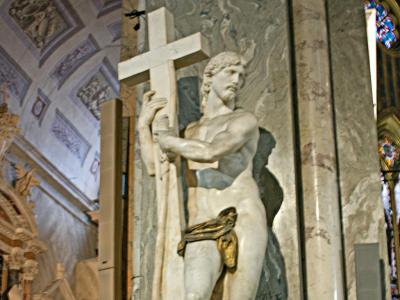
5) Basilica di Santa Maria sopra Minerva (Basilica of Saint Mary above Minerva) (must see)
Tucked away just behind the Pantheon in Minerva Square, Santa Maria above Minerva is a Dominican church and a hidden gem of both religious and architectural importance. This is the only surviving example of original Gothic religious architecture in Rome, as most medieval churches were modified with Baroque designs.
Despite its somewhat unassuming facade, the Santa Maria above Minerva – formerly the Dominican order's headquarters – also boasts an intriguing history and some truly magnificent artistic treasures. Chief among them are Michelangelo’s Christ the Redeemer sculpture and the Carafa Chapel's frescoes.
The former is found to the left of the main altar. The sculpture's first version, begun in 1515, was abandoned due to a flaw in the marble. The one we see today, completed in 1521, received acclaim for its artistry, particularly its lifelike knees. Originally, Michelangelo depicted Christ unclothed to symbolize his triumph over sin, however, a bronze loincloth was added in 1546.
The Carafa Chapel, commissioned by Cardinal Oliviero Carafa in honor of Saint Thomas Aquinas, was inaugurated in 1493. Lavishly adorned with frescoes by Florentine painter Filippino Lippi, it shows the scenes of Saint Thomas's life, including him debating with heretics, as well as some allegorical ones like him presenting Cardinal Carafa to the Virgin Mary. These frescoes are widely recognized as the best Renaissance painting in Rome outside the Sistine Chapel.
Looking up, you can't fail to notice the stunning deep blue painted ceiling and the round stained glass windows, rightfully regarded as the finest in the city.
The basilica also holds the remains of the Saint Catherine of Siena and early Renaissance painter Fra Angelico.
In 1628, the Convent of Minerva became the seat of the Congregation of the Holy Office, where the Roman Inquisition held trials, including that of Galileo Galilei. In 1633, Galileo was tried for heresy for supporting the theory that the Earth revolves around the Sun. Facing interrogation under threat of torture, he was found "vehemently suspect of heresy" and forced to recant. Galileo was sentenced to house arrest for life, and his works were banned. His trial marked a defining moment in the conflict between science and religion. Legend claims that, after his abjuration, Galileo allegedly muttered the rebellious phrase: "and yet it moves..."
Despite its somewhat unassuming facade, the Santa Maria above Minerva – formerly the Dominican order's headquarters – also boasts an intriguing history and some truly magnificent artistic treasures. Chief among them are Michelangelo’s Christ the Redeemer sculpture and the Carafa Chapel's frescoes.
The former is found to the left of the main altar. The sculpture's first version, begun in 1515, was abandoned due to a flaw in the marble. The one we see today, completed in 1521, received acclaim for its artistry, particularly its lifelike knees. Originally, Michelangelo depicted Christ unclothed to symbolize his triumph over sin, however, a bronze loincloth was added in 1546.
The Carafa Chapel, commissioned by Cardinal Oliviero Carafa in honor of Saint Thomas Aquinas, was inaugurated in 1493. Lavishly adorned with frescoes by Florentine painter Filippino Lippi, it shows the scenes of Saint Thomas's life, including him debating with heretics, as well as some allegorical ones like him presenting Cardinal Carafa to the Virgin Mary. These frescoes are widely recognized as the best Renaissance painting in Rome outside the Sistine Chapel.
Looking up, you can't fail to notice the stunning deep blue painted ceiling and the round stained glass windows, rightfully regarded as the finest in the city.
The basilica also holds the remains of the Saint Catherine of Siena and early Renaissance painter Fra Angelico.
In 1628, the Convent of Minerva became the seat of the Congregation of the Holy Office, where the Roman Inquisition held trials, including that of Galileo Galilei. In 1633, Galileo was tried for heresy for supporting the theory that the Earth revolves around the Sun. Facing interrogation under threat of torture, he was found "vehemently suspect of heresy" and forced to recant. Galileo was sentenced to house arrest for life, and his works were banned. His trial marked a defining moment in the conflict between science and religion. Legend claims that, after his abjuration, Galileo allegedly muttered the rebellious phrase: "and yet it moves..."
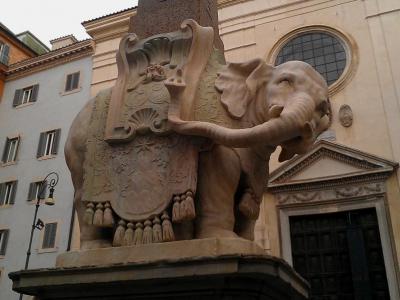
6) Piazza della Minerva & Obelisco della Minerva (Minerva Square & Elephant and Obelisk Statue)
During the 1600s, elephants were regarded by the Catholic Church as symbols of strength, intelligence, and sexual morality due to their monogamous nature and brief mating periods occurring once every two years. In 1667, Gian Lorenzo Bernini designed the elephant that carries the Obelisk of Santa Maria sopra Minerva for Pope Alexander VII. Obelisks were associated with wisdom, leading Alexander to have an inscription added to the base that reads, "A robust intelligence is required to support solid wisdom."
The red granite obelisk, unearthed in 1665 during excavations near the neighboring church of Santa Maria sopra Minerva, is believed to have been brought to Rome in the 1st century AD for the temple dedicated to the Egyptian goddess Isis, which once stood in this location. Originally erected by Pharaoh Apries of the Twenty-sixth Dynasty of Egypt around 580 BC in his capital city of Sais, the obelisk stands at a height of 5.47 meters and is the smallest among the 13 ancient obelisks currently found in Rome. It is considered to be part of a pair, with the other obelisk located in the city of Urbino.
In more recent times, Salvador Dali's painting "The Elephants" portrays two elephants with elongated legs facing each other while carrying fragmented obelisks, making visual references to the statue of the elephant in Rome.
The red granite obelisk, unearthed in 1665 during excavations near the neighboring church of Santa Maria sopra Minerva, is believed to have been brought to Rome in the 1st century AD for the temple dedicated to the Egyptian goddess Isis, which once stood in this location. Originally erected by Pharaoh Apries of the Twenty-sixth Dynasty of Egypt around 580 BC in his capital city of Sais, the obelisk stands at a height of 5.47 meters and is the smallest among the 13 ancient obelisks currently found in Rome. It is considered to be part of a pair, with the other obelisk located in the city of Urbino.
In more recent times, Salvador Dali's painting "The Elephants" portrays two elephants with elongated legs facing each other while carrying fragmented obelisks, making visual references to the statue of the elephant in Rome.
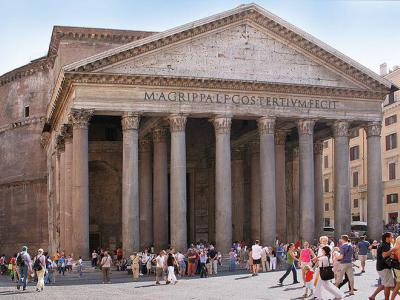
7) Pantheon (must see)
The Pantheon is one of Rome’s most iconic landmarks, renowned for its architectural brilliance. Originally a Roman temple, its name comes from the Ancient Greek "pan theos," which means dedication to all gods. Built on the site of a temple commissioned by consul Marcus Agrippa during Augustus’ reign, the current structure was completed under Emperor Hadrian around 126 AD. It was transformed into a Catholic Church of Saint Mary and the Martyrs in 609 AD, ensuring its preservation through centuries.
The Pantheon’s unique design combines a classical portico supported by Corinthian granite columns with a domed cylindrical structure (called a rotunda). The unsupported concrete dome, still the largest of its kind in the world, features a central oculus that provides natural light, ventilation, and symbolic celestial connections. The rotunda's harmonious dimensions-43 meters in both height and diameter-epitomize Roman engineering excellence, while its original massive bronze doors, each weighing over 20 tons, and intricate drainage system (allowing to effectively divert rainwater) highlight the ingenuity of its creators.
Throughout its history, the Pantheon has been a vibrant part of Roman life. It served as a burial site during the Renaissance, housing notable figures like painter Raphael and Italian kings Victor Emmanuel II and Umberto I. Its materials, such as bronze, have been repurposed for other projects like Bernini’s baldachin above the high altar of Saint Peter's Basilica. However, its core structure remains remarkably intact. Today, the church still host religious ceremonies, including masses, weddings, and Pentecost celebrations.
The Pantheon’s influence extends far beyond Rome. Its dome inspired architectural marvels like the Florence Cathedral and Rotunda of the U.S. Capital in Washington D.C., while its combination of classical and modern elements shaped countless government and academic buildings worldwide.
With over six million annual visitors, the Pantheon remains a symbol of Roman ingenuity and artistic achievement. Tourists can enjoy free entry to this historic site or soak in its splendor from Rotonda Square, savoring gelato while marveling at its timeless beauty.
Tip:
Incredible at night (from the outside), it is especially so if you enjoy musicians with talent and engagement... but beware of pickpockets.
The Pantheon’s unique design combines a classical portico supported by Corinthian granite columns with a domed cylindrical structure (called a rotunda). The unsupported concrete dome, still the largest of its kind in the world, features a central oculus that provides natural light, ventilation, and symbolic celestial connections. The rotunda's harmonious dimensions-43 meters in both height and diameter-epitomize Roman engineering excellence, while its original massive bronze doors, each weighing over 20 tons, and intricate drainage system (allowing to effectively divert rainwater) highlight the ingenuity of its creators.
Throughout its history, the Pantheon has been a vibrant part of Roman life. It served as a burial site during the Renaissance, housing notable figures like painter Raphael and Italian kings Victor Emmanuel II and Umberto I. Its materials, such as bronze, have been repurposed for other projects like Bernini’s baldachin above the high altar of Saint Peter's Basilica. However, its core structure remains remarkably intact. Today, the church still host religious ceremonies, including masses, weddings, and Pentecost celebrations.
The Pantheon’s influence extends far beyond Rome. Its dome inspired architectural marvels like the Florence Cathedral and Rotunda of the U.S. Capital in Washington D.C., while its combination of classical and modern elements shaped countless government and academic buildings worldwide.
With over six million annual visitors, the Pantheon remains a symbol of Roman ingenuity and artistic achievement. Tourists can enjoy free entry to this historic site or soak in its splendor from Rotonda Square, savoring gelato while marveling at its timeless beauty.
Tip:
Incredible at night (from the outside), it is especially so if you enjoy musicians with talent and engagement... but beware of pickpockets.
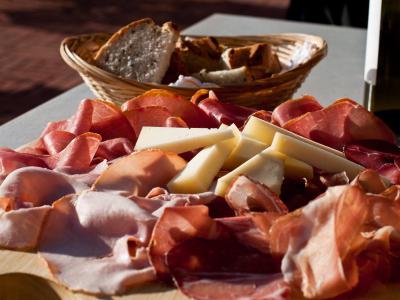
8) Antica Norcineria Viola
This historic shop, established since 1890, is an absolute must-visit for meat lovers exploring Rome. It is a haven for all things related to cured meats, particularly pork. Here, you will find an extensive selection of prosciutto, salami, and guanciale in various shapes and sizes, sourced from different regions of Italy, including the northern part. The service is highly personalized, and the staff speaks enough English to assist you.
The products offered are of exceptional quality, and it is common for the shop to provide a tasting plate, allowing visitors to sample as many varieties as they desire before making their purchase. It is highly recommended to venture beyond the standard salami and try some new items. For instance, you can experience the exquisite dark sausages made with pork liver, which are a true masterpiece of Roman cuisine and are best enjoyed spread on bread without any cooking. Another delicacy to savor is the soft "ciauscolo" salami, also meant to be spread without cooking, or the delectable "coppa", a cold cut made with a blend of seasoned pork meats and savory jelly.
You have the option to buy these exceptional products in bulk or request custom slicing according to your preference. The shop also offers vacuum sealing for easy transportation, or if you prefer, you can simply purchase fresh bread from a nearby store and create your own mouthwatering sandwiches.
The products offered are of exceptional quality, and it is common for the shop to provide a tasting plate, allowing visitors to sample as many varieties as they desire before making their purchase. It is highly recommended to venture beyond the standard salami and try some new items. For instance, you can experience the exquisite dark sausages made with pork liver, which are a true masterpiece of Roman cuisine and are best enjoyed spread on bread without any cooking. Another delicacy to savor is the soft "ciauscolo" salami, also meant to be spread without cooking, or the delectable "coppa", a cold cut made with a blend of seasoned pork meats and savory jelly.
You have the option to buy these exceptional products in bulk or request custom slicing according to your preference. The shop also offers vacuum sealing for easy transportation, or if you prefer, you can simply purchase fresh bread from a nearby store and create your own mouthwatering sandwiches.
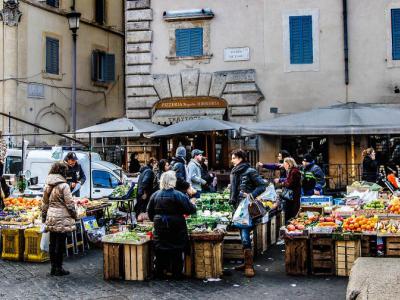
9) Campo de' Fiori Market
In the morning and noon hours, head to one of the most beautiful and colorful open-air markets in Rome – the main attraction of the Campo de' Fiori area. This market is primarily for fresh fruit and vegetables, but you will also find other goodies such as olive oil, balsamic vinegar, honey, vegetable pâté (pesto, artichoke, etc.), liquors, spices, cheeses, flowers, souvenirs, and flea-market-type things. Some vendors sell small products you can take home, and also give free samples, so this can be a pleasant way to try local specialties. With so much fresh fruit, some will happily make most of it into a juice for you – try the pomegranate for some intense goodness!
There also are many great restaurants and cafés laying around, with a view on the market, so you can try some handmade pizza or some carbonara if you're peckish. In the late afternoon and evening, the square turns into terraces for the restaurants and cafés, gradually becoming a nightlife hotspot with lots of street artists and performers who entertain the crowds.
Tip:
Please follow European tradition and don't touch the produce unless vendors tell you to "pick". They're happy to give advice and share recipes but, as anywhere in Rome, don't really bargain much (unless you're buying more than one of somethings at a time).
There also are many great restaurants and cafés laying around, with a view on the market, so you can try some handmade pizza or some carbonara if you're peckish. In the late afternoon and evening, the square turns into terraces for the restaurants and cafés, gradually becoming a nightlife hotspot with lots of street artists and performers who entertain the crowds.
Tip:
Please follow European tradition and don't touch the produce unless vendors tell you to "pick". They're happy to give advice and share recipes but, as anywhere in Rome, don't really bargain much (unless you're buying more than one of somethings at a time).
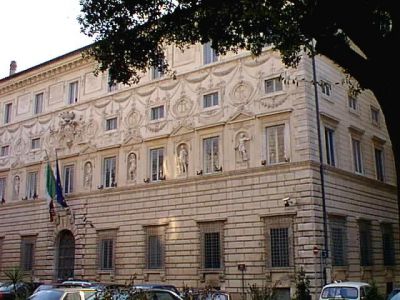
10) Galleria Spada nel Palazzo Spada (Spada Gallery in Spada Palace)
In the midst of a neighborhood dominated by grand and imposing palaces, Palazzo Spada on Piazza Capo di Ferro stands out with its captivating charm. Its ornate courtyard, adorned with intricate ornaments, creates a striking contrast to the austere surroundings. As you cast your gaze upwards, you'll be mesmerized by the stuccoes and statues that grace the upper stories of the palace. While it houses an impressive collection of Old Master paintings, it is most renowned for its trompe-l'oeil garden gallery, a delightful testament to the architectural whimsy that captivated wealthy Romans in the 17th century.
Even if you choose not to venture inside the gallery, be sure to step into the courtyard. Through the glass window of the library, you'll catch a glimpse of the adjacent courtyard's colonnaded corridor. Prepare to be astounded as your eyes deceive you-a seemingly endless 26-foot-long gallery quadruples in depth before your eyes. This remarkable optical illusion, a triumph of perspective, stretches out into the distance, culminating in a grand statue. However, as you approach, the truth is revealed-the corridor narrows progressively, and the columns diminish in size, leading to a humble 2-foot-tall statue. This captivating spectacle, long attributed to Borromini but now credited to the Augustinian priest Giovanni Maria da Bitonto, exemplifies the Baroque period's penchant for optical tricks and stands as one of its most celebrated creations.
Venturing upstairs, you'll encounter a resplendent picture gallery reminiscent of noble estates, where paintings are displayed as they would have been in the past, stacked nearly to the ceiling. Among the outstanding works, you'll find Brueghel's "Landscape with Windmills", Titian's evocative "Musician", and Andrea del Sarto's masterful "Visitation". Take a moment to peruse the fact-sheets accompanying each room, offering insightful descriptions of the objects on display.
Even if you choose not to venture inside the gallery, be sure to step into the courtyard. Through the glass window of the library, you'll catch a glimpse of the adjacent courtyard's colonnaded corridor. Prepare to be astounded as your eyes deceive you-a seemingly endless 26-foot-long gallery quadruples in depth before your eyes. This remarkable optical illusion, a triumph of perspective, stretches out into the distance, culminating in a grand statue. However, as you approach, the truth is revealed-the corridor narrows progressively, and the columns diminish in size, leading to a humble 2-foot-tall statue. This captivating spectacle, long attributed to Borromini but now credited to the Augustinian priest Giovanni Maria da Bitonto, exemplifies the Baroque period's penchant for optical tricks and stands as one of its most celebrated creations.
Venturing upstairs, you'll encounter a resplendent picture gallery reminiscent of noble estates, where paintings are displayed as they would have been in the past, stacked nearly to the ceiling. Among the outstanding works, you'll find Brueghel's "Landscape with Windmills", Titian's evocative "Musician", and Andrea del Sarto's masterful "Visitation". Take a moment to peruse the fact-sheets accompanying each room, offering insightful descriptions of the objects on display.

11) Ponte Sisto (Sisto Bridge)
Ponte Sisto, located in Rome's historic center, is a picturesque bridge that spans the Tiber River. The construction of the current bridge took place between 1473 and 1479, commissioned by Pope Sixtus IV, who the bridge is named after. The architect Baccio Pontelli was responsible for the design, utilizing the foundations of the previous Roman bridge, known as Pons Aurelius or Pons Antoninus, which had been destroyed during the early Middle Ages.
Today, Ponte Sisto is solely dedicated to pedestrian traffic, creating a serene and enjoyable crossing experience. One of the distinctive architectural features of the bridge is the "oculus" or eye that lightens the masonry of its central spandrel. This addition was strategically erected to alleviate the pressure exerted by the river during times of flooding, ensuring the bridge's stability and longevity.
On the left side of the bridge's entrance, you can find replicas of two marble slabs that originally adorned the bridge. These slabs, unfortunately removed in the 1990s due to ongoing vandalism, displayed an elegant Latin inscription composed by Renaissance humanist Bartolomeo Platina. The inscription honored Pope Sixtus IV and commemorated the construction of the bridge.
Ponte Sisto serves as a vital link between the lively Campo de' Fiori area and Piazza Trilussa in Trastevere. It offers a picturesque setting for leisurely strolls, scenic views of the Tiber River, and a charming ambiance that attracts both locals and tourists. The bridge has become an iconic landmark in Rome, serving as a gathering place for people to enjoy an evening aperitivo or simply soak in the beauty of the Eternal City.
Today, Ponte Sisto is solely dedicated to pedestrian traffic, creating a serene and enjoyable crossing experience. One of the distinctive architectural features of the bridge is the "oculus" or eye that lightens the masonry of its central spandrel. This addition was strategically erected to alleviate the pressure exerted by the river during times of flooding, ensuring the bridge's stability and longevity.
On the left side of the bridge's entrance, you can find replicas of two marble slabs that originally adorned the bridge. These slabs, unfortunately removed in the 1990s due to ongoing vandalism, displayed an elegant Latin inscription composed by Renaissance humanist Bartolomeo Platina. The inscription honored Pope Sixtus IV and commemorated the construction of the bridge.
Ponte Sisto serves as a vital link between the lively Campo de' Fiori area and Piazza Trilussa in Trastevere. It offers a picturesque setting for leisurely strolls, scenic views of the Tiber River, and a charming ambiance that attracts both locals and tourists. The bridge has become an iconic landmark in Rome, serving as a gathering place for people to enjoy an evening aperitivo or simply soak in the beauty of the Eternal City.
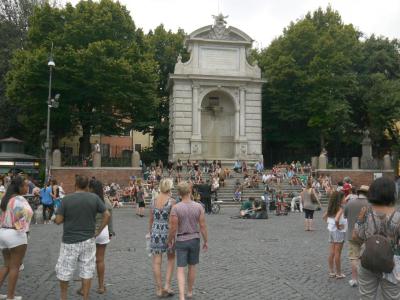
12) Piazza Trilussa (Trilussa Square)
Piazza Trilussa in Rome is a vibrant square located in the heart of the Trastevere district, known for its lively atmosphere and popular among both young Romans and tourists. Situated in front of the Ponte Sisto this charming square is dedicated to Carlo Alberto Salustri, the renowned Roman satirical poet better known as Trilussa.
At the center of Piazza Trilussa stands the beautiful fountain of Acqua Paola, designed by architects Van Santen, known as Vasanzio, and Giovanni Fontana. This fountain was commissioned by Pope Paul V Borghese in 1613 to provide water to the districts of Trastevere, Borgo, Regola, and Ponte. The fountain features a monumental arch with a central niche flanked by two Ionic columns. An elevated attic displays the Borghese family coat of arms, featuring an eagle and a dragon, along with a celebratory inscription dedicated to the pontiff for bringing water to the left bank of the Tiber.
In 1870, due to the construction of the Tiber's embankments following a devastating flood, the fountain was dismantled. Unfortunately, almost half of the pieces broke or were scattered among different municipal warehouses. In 1898, when the fountain was reconstructed in Piazza Trilussa, architect Vescovali was only able to use what remained of it. Nevertheless, the result was remarkable.
In addition to the fountain, the square is adorned with a monument celebrating the great Roman poet Trilussa. Born in Rome in 1871 and passing away in 1950, Trilussa gained fame for his ironic poems that satirized corrupt politicians, fanaticism, and the intrigues of the powerful. The bronze statue of the poet, depicting him reciting his poems, was created by sculptor Lorenzo Ferri and inaugurated on December 21, 1954.
At the center of Piazza Trilussa stands the beautiful fountain of Acqua Paola, designed by architects Van Santen, known as Vasanzio, and Giovanni Fontana. This fountain was commissioned by Pope Paul V Borghese in 1613 to provide water to the districts of Trastevere, Borgo, Regola, and Ponte. The fountain features a monumental arch with a central niche flanked by two Ionic columns. An elevated attic displays the Borghese family coat of arms, featuring an eagle and a dragon, along with a celebratory inscription dedicated to the pontiff for bringing water to the left bank of the Tiber.
In 1870, due to the construction of the Tiber's embankments following a devastating flood, the fountain was dismantled. Unfortunately, almost half of the pieces broke or were scattered among different municipal warehouses. In 1898, when the fountain was reconstructed in Piazza Trilussa, architect Vescovali was only able to use what remained of it. Nevertheless, the result was remarkable.
In addition to the fountain, the square is adorned with a monument celebrating the great Roman poet Trilussa. Born in Rome in 1871 and passing away in 1950, Trilussa gained fame for his ironic poems that satirized corrupt politicians, fanaticism, and the intrigues of the powerful. The bronze statue of the poet, depicting him reciting his poems, was created by sculptor Lorenzo Ferri and inaugurated on December 21, 1954.
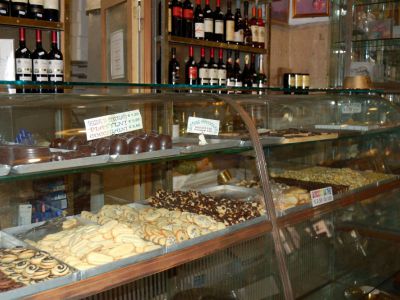
13) Pasticceria Valzani (Valzani Pastry Shop)
When it comes to desserts, Roman sweets may not enjoy the same level of fame as their Parisian counterparts, but they possess a unique charm all their own. One delectable delight to try is the amaretti or brutti ma buoni cookies, which may not win any beauty contests but are incredibly delicious. However, if you're looking for the perfect treat to bring back home, you must visit a traditional chocolate shop and indulge in some handmade chocolates.
Pasticceria Valzani in Trastevere is a true gem, transporting you back in time with its unchanged atmosphere since its opening in the 1920s. Overflowing with calorie-laden delights, Valzani is renowned for its sublime chocolates; yet, it's hard to resist the allure of traditional treats like mostaccioli and pangiallo. The beautifully packaged goodies make wonderful gifts, and the mouthwatering displays during Easter and Christmas are particularly enticing.
Treat yourself to the nostalgic ambiance and heavenly delights of Pasticceria Valzani for a truly indulgent experience.
Operation Hours
Tue-Sun: 10am-7:30pm
Pasticceria Valzani in Trastevere is a true gem, transporting you back in time with its unchanged atmosphere since its opening in the 1920s. Overflowing with calorie-laden delights, Valzani is renowned for its sublime chocolates; yet, it's hard to resist the allure of traditional treats like mostaccioli and pangiallo. The beautifully packaged goodies make wonderful gifts, and the mouthwatering displays during Easter and Christmas are particularly enticing.
Treat yourself to the nostalgic ambiance and heavenly delights of Pasticceria Valzani for a truly indulgent experience.
Operation Hours
Tue-Sun: 10am-7:30pm
