Custom Walk in Cartagena, Spain by mandy_miller_uk_22c69f created on 2026-02-21
Guide Location: Spain » Cartagena
Guide Type: Custom Walk
# of Sights: 5
Tour Duration: 1 Hour(s)
Travel Distance: 1.7 Km or 1.1 Miles
Share Key: DJ6ZB
Guide Type: Custom Walk
# of Sights: 5
Tour Duration: 1 Hour(s)
Travel Distance: 1.7 Km or 1.1 Miles
Share Key: DJ6ZB
How It Works
Please retrieve this walk in the GPSmyCity app. Once done, the app will guide you from one tour stop to the next as if you had a personal tour guide. If you created the walk on this website or come to the page via a link, please follow the instructions below to retrieve the walk in the app.
Retrieve This Walk in App
Step 1. Download the app "GPSmyCity: Walks in 1K+ Cities" on Apple App Store or Google Play Store.



Step 2. In the GPSmyCity app, download(or launch) the guide "Cartagena Map and Walking Tours".
Step 3. Tap the menu button located at upper right corner of the "Walks" screen and select "Retrieve custom walk". Enter the share key: DJ6ZB

1) National Museum of Subaquatic Archaeology (must see)
The National Museum of Subaquatic Archaeology is a unique institution dedicated to the fascinating world of underwater archaeology. The museum boasts an extensive collection of artifacts recovered from shipwrecks, spanning from the Phoenician period to the 19th century. This treasure trove of submerged history provides invaluable insights into the maritime past of the region.
One of the museum's most remarkable acquisitions was made on December 2, 2012, when it received a significant cargo of gold and silver coins. These precious treasures were retrieved from the wreck of the frigate Nuestra Señora de las Mercedes. The 14.5 tons of coins were carefully deposited in the museum to undergo cataloging, in-depth study, and, ultimately, permanent display. This extraordinary collection not only serves as a testament to the rich maritime heritage of Cartagena but also offers visitors a captivating journey through centuries of nautical history.
The National Museum of Subaquatic Archaeology provides a window into the world beneath the waves, where history is waiting to be discovered and shared. It stands as a testament to the enduring human connection with the sea and the invaluable knowledge that can be gleaned from exploring the depths of our past.
One of the museum's most remarkable acquisitions was made on December 2, 2012, when it received a significant cargo of gold and silver coins. These precious treasures were retrieved from the wreck of the frigate Nuestra Señora de las Mercedes. The 14.5 tons of coins were carefully deposited in the museum to undergo cataloging, in-depth study, and, ultimately, permanent display. This extraordinary collection not only serves as a testament to the rich maritime heritage of Cartagena but also offers visitors a captivating journey through centuries of nautical history.
The National Museum of Subaquatic Archaeology provides a window into the world beneath the waves, where history is waiting to be discovered and shared. It stands as a testament to the enduring human connection with the sea and the invaluable knowledge that can be gleaned from exploring the depths of our past.

2) Museo Del Teatro Romano (Roman Theater Museum of Cartagena)
The Roman Theater Museum of Cartagena, designed by architect Rafael Moneo, opened its doors on July 11, 2008. This exceptional institution is dedicated to the excavation, restoration, and preservation of the Roman theater of Cartagena, unveiling an archaeological treasure that remained hidden for centuries. The discovery of this theater in 1988 sheds new light on the historical importance of Cartagena in ancient Hispania during the Roman Empire.
The Roman theater remained concealed for so long due to the constant human activity in the area. Over time, various structures were built on top of its ruins, including part of the Cartagena Cathedral. This ongoing development obscured the theater's existence and led to its absence in historical records.
Architect Rafael Moneo's project aimed not only to restore the Roman theater but also to seamlessly integrate it into the city's urban fabric. It encompassed the theater's maintenance, conservation, and educational exhibition, accompanied by the construction of an adjoining museum and research center.
While the Roman Theater Museum offers a comprehensive glimpse into this historical gem, it's essential to note that many artifacts from the theater's era are housed in the Municipal Archaeological Museum of Cartagena. The Roman Theater Museum's collection serves as a prelude to the main attraction, preparing visitors for their exploration of the Roman theater itself.
To access the museum, visitors enter the Riquelme Palace, situated in one of Cartagena's most iconic areas, close to the Cartagena Town Hall Palace. The museum spans two interconnected buildings, linked by an underground tunnel beneath the street. The Riquelme Palace houses the entrance hall, assembly room, cafeteria, museum shop, a temporary exhibition space, and a corridor detailing the theater's history. The second building hosts the museum's permanent collections and provides access to the awe-inspiring Roman theater.
The Roman theater remained concealed for so long due to the constant human activity in the area. Over time, various structures were built on top of its ruins, including part of the Cartagena Cathedral. This ongoing development obscured the theater's existence and led to its absence in historical records.
Architect Rafael Moneo's project aimed not only to restore the Roman theater but also to seamlessly integrate it into the city's urban fabric. It encompassed the theater's maintenance, conservation, and educational exhibition, accompanied by the construction of an adjoining museum and research center.
While the Roman Theater Museum offers a comprehensive glimpse into this historical gem, it's essential to note that many artifacts from the theater's era are housed in the Municipal Archaeological Museum of Cartagena. The Roman Theater Museum's collection serves as a prelude to the main attraction, preparing visitors for their exploration of the Roman theater itself.
To access the museum, visitors enter the Riquelme Palace, situated in one of Cartagena's most iconic areas, close to the Cartagena Town Hall Palace. The museum spans two interconnected buildings, linked by an underground tunnel beneath the street. The Riquelme Palace houses the entrance hall, assembly room, cafeteria, museum shop, a temporary exhibition space, and a corridor detailing the theater's history. The second building hosts the museum's permanent collections and provides access to the awe-inspiring Roman theater.

3) Calle Mayor (Main Street) (must see)
Main Street is a charming pedestrian-only avenue that offers a captivating experience of the city's vibrant essence. Whether you're an architecture enthusiast, a shopping aficionado, or someone who loves sipping coffee while observing the world pass by, this street has something for everyone.
Main Street stands as the primary retail district in Cartagena, boasting an array of shopping opportunities. As you wander down this picturesque street, you'll come across department stores, fashionable boutiques, and jewelry shops, making it a shopaholic's paradise. The blue marble tiles that pave the street are reserved for pedestrians, encouraging leisurely exploration.
The allure of Main Street extends beyond shopping. It is home to a plethora of restaurants, cafes, and bars, many of which offer outdoor terraces where you can sit and savor local cuisine while basking in the city's lively atmosphere. The architectural backdrop enhances the overall experience, with elegant Modernista-style buildings framing the street.
While Main Street is undoubtedly the heart of the action, don't forget to venture into the narrow side streets that branch off from it. These charming alleys often hide hidden gems, from quaint shops to cozy cafes, each with its unique character waiting to be discovered. So, whether you're seeking retail therapy, delectable dining, or simply a leisurely stroll, Calle Mayor is the perfect place to immerse yourself in the authentic spirit of Cartagena.
Main Street stands as the primary retail district in Cartagena, boasting an array of shopping opportunities. As you wander down this picturesque street, you'll come across department stores, fashionable boutiques, and jewelry shops, making it a shopaholic's paradise. The blue marble tiles that pave the street are reserved for pedestrians, encouraging leisurely exploration.
The allure of Main Street extends beyond shopping. It is home to a plethora of restaurants, cafes, and bars, many of which offer outdoor terraces where you can sit and savor local cuisine while basking in the city's lively atmosphere. The architectural backdrop enhances the overall experience, with elegant Modernista-style buildings framing the street.
While Main Street is undoubtedly the heart of the action, don't forget to venture into the narrow side streets that branch off from it. These charming alleys often hide hidden gems, from quaint shops to cozy cafes, each with its unique character waiting to be discovered. So, whether you're seeking retail therapy, delectable dining, or simply a leisurely stroll, Calle Mayor is the perfect place to immerse yourself in the authentic spirit of Cartagena.

4) Roman Theatre (must see)
The Roman Theater in Cartagena is a remarkable archaeological site that carries a rich history dating back to the first century BCE. It was constructed between 5 and 1 BCE, dedicated to Gaius and Lucius Caesar, the grandsons of Emperor Augustus, who intended them to be his successors.
Throughout the centuries, the theater witnessed various transformations. In the 3rd century, a market was erected above it, cleverly reusing its materials and maintaining a semi-circular layout reminiscent of the theater's orchestra. However, the market likely fell into disuse after a fire caused by the Vandals in 425 CE. Later, during the 6th century, the Byzantines established a market district on the site.
In the 13th century, the Old Cathedral of the city was constructed atop the upper cavea, further obscuring the theater's existence. It wasn't until 1988 that the first remains of the theater were rediscovered during the construction of the Centro regional de artesanía. The subsequent archaeological excavations and restoration work, completed in 2003, unveiled this ancient treasure. In 2008, a museum designed by Rafael Moneo was inaugurated, providing visitors with valuable insights into the theater's historical significance.
The Roman Theater was ingeniously carved into the rocks, particularly in its central section, where it presides over a series of vaulted galleries. This magnificent structure could accommodate around 6,000 spectators and was divided horizontally into three parts: ima, media, and summa cavea. Radial sectors were created by a network of staircases, with five in the upper section, seven in the medium and upper tiers.
Two side passages (aditus) served as entry points for the audience, revealing inscriptions dedicated to the theater's benefactors. The orchestra boasted a semicircular design and featured three rows of wooden seats for dignitaries (proedria). The stage, known as the proscenium, extended for an impressive length of 43.60 meters. The scaenae frons, the stage backdrop, was adorned with three semicircular exedras and adorned with two orders of columns. These columns boasted bases and capitals made from Luni's marble, while the shafts were crafted from pink travertine of Mula.
The stage edifice reached a towering height of 14.60 meters and featured notable elements, including three round altars dedicated to the Capitoline Triad and Apollo's associated divinities, such as the Graces, Muses, and Horae. Statues of Apollo playing the lyre and Rhea Silvia were also found nearby.
Situated behind the stage building was a portico, the porticus post scaenam, featuring a double porticoed gallery encircling a central garden. This well-preserved site allows visitors to step back in time and experience the grandeur of Roman theater and culture.
Throughout the centuries, the theater witnessed various transformations. In the 3rd century, a market was erected above it, cleverly reusing its materials and maintaining a semi-circular layout reminiscent of the theater's orchestra. However, the market likely fell into disuse after a fire caused by the Vandals in 425 CE. Later, during the 6th century, the Byzantines established a market district on the site.
In the 13th century, the Old Cathedral of the city was constructed atop the upper cavea, further obscuring the theater's existence. It wasn't until 1988 that the first remains of the theater were rediscovered during the construction of the Centro regional de artesanía. The subsequent archaeological excavations and restoration work, completed in 2003, unveiled this ancient treasure. In 2008, a museum designed by Rafael Moneo was inaugurated, providing visitors with valuable insights into the theater's historical significance.
The Roman Theater was ingeniously carved into the rocks, particularly in its central section, where it presides over a series of vaulted galleries. This magnificent structure could accommodate around 6,000 spectators and was divided horizontally into three parts: ima, media, and summa cavea. Radial sectors were created by a network of staircases, with five in the upper section, seven in the medium and upper tiers.
Two side passages (aditus) served as entry points for the audience, revealing inscriptions dedicated to the theater's benefactors. The orchestra boasted a semicircular design and featured three rows of wooden seats for dignitaries (proedria). The stage, known as the proscenium, extended for an impressive length of 43.60 meters. The scaenae frons, the stage backdrop, was adorned with three semicircular exedras and adorned with two orders of columns. These columns boasted bases and capitals made from Luni's marble, while the shafts were crafted from pink travertine of Mula.
The stage edifice reached a towering height of 14.60 meters and featured notable elements, including three round altars dedicated to the Capitoline Triad and Apollo's associated divinities, such as the Graces, Muses, and Horae. Statues of Apollo playing the lyre and Rhea Silvia were also found nearby.
Situated behind the stage building was a portico, the porticus post scaenam, featuring a double porticoed gallery encircling a central garden. This well-preserved site allows visitors to step back in time and experience the grandeur of Roman theater and culture.
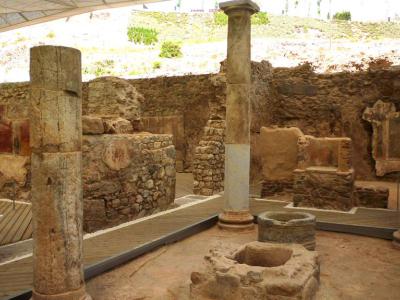
5) Museo Foro Romano Molinete (Roman Forum Molinete Museum) (must see)
The Roman Forum Molinete Museum serves as the gateway to one of the largest urban archaeological parks in Spain. The museum's various halls house a carefully curated collection of artifacts that allow visitors to delve into the rich history of Cerro del Molinete, stretching from the present day all the way back to the ancient Carthago Nova.
During your visit to the museum, you'll have the opportunity to explore significant remnants from the glorious Roman era. These include:
The Curia (Local Senate): This area features a beautifully decorated marble pavement. It was a place where local leaders would gather for political discussions and decision-making.
The Colonial Forum: This was the heart of the city, symbolizing the hierarchy between the divine and the human at various levels. It was a central gathering place for the people of Carthago Nova.
The Sanctuary of Isis: This site was dedicated to the worship of Egyptian gods and was used for mystery cult ceremonies. It offers insights into the religious practices of the time.
Old Roads with Cart Tracks: You can see remnants of the ancient roadways and cart tracks that once crisscrossed the city, providing a glimpse into the transportation infrastructure of the Roman period.
The Port's Thermal Baths: The thermal baths were an essential part of Roman life, and you can explore their remains here. Additionally, the magnificent entrance portico with its original flooring is a sight to behold.
The Atrium Building: This building boasts high walls and pictorial decorations that provide a vivid portrayal of the grand banquets that were a part of Roman culture.
Visiting the Roman Forum Molinete Museum is not just an educational experience but also a journey back in time to the days of Carthago Nova's Roman splendor. It offers a unique opportunity to immerse yourself in the history, culture, and architecture of this ancient city.
During your visit to the museum, you'll have the opportunity to explore significant remnants from the glorious Roman era. These include:
The Curia (Local Senate): This area features a beautifully decorated marble pavement. It was a place where local leaders would gather for political discussions and decision-making.
The Colonial Forum: This was the heart of the city, symbolizing the hierarchy between the divine and the human at various levels. It was a central gathering place for the people of Carthago Nova.
The Sanctuary of Isis: This site was dedicated to the worship of Egyptian gods and was used for mystery cult ceremonies. It offers insights into the religious practices of the time.
Old Roads with Cart Tracks: You can see remnants of the ancient roadways and cart tracks that once crisscrossed the city, providing a glimpse into the transportation infrastructure of the Roman period.
The Port's Thermal Baths: The thermal baths were an essential part of Roman life, and you can explore their remains here. Additionally, the magnificent entrance portico with its original flooring is a sight to behold.
The Atrium Building: This building boasts high walls and pictorial decorations that provide a vivid portrayal of the grand banquets that were a part of Roman culture.
Visiting the Roman Forum Molinete Museum is not just an educational experience but also a journey back in time to the days of Carthago Nova's Roman splendor. It offers a unique opportunity to immerse yourself in the history, culture, and architecture of this ancient city.
