Custom Walk in Berlin, Germany by g00390187_37555a created on 2026-02-24
Guide Location: Germany » Berlin
Guide Type: Custom Walk
# of Sights: 7
Tour Duration: 5 Hour(s)
Travel Distance: 12.7 Km or 7.9 Miles
Share Key: W84PS
Guide Type: Custom Walk
# of Sights: 7
Tour Duration: 5 Hour(s)
Travel Distance: 12.7 Km or 7.9 Miles
Share Key: W84PS
How It Works
Please retrieve this walk in the GPSmyCity app. Once done, the app will guide you from one tour stop to the next as if you had a personal tour guide. If you created the walk on this website or come to the page via a link, please follow the instructions below to retrieve the walk in the app.
Retrieve This Walk in App
Step 1. Download the app "GPSmyCity: Walks in 1K+ Cities" on Apple App Store or Google Play Store.



Step 2. In the GPSmyCity app, download(or launch) the guide "Berlin Map and Walking Tours".
Step 3. Tap the menu button located at upper right corner of the "Walks" screen and select "Retrieve custom walk". Enter the share key: W84PS
1) Brandenburger Tor (Brandenburg Gate) (must see)
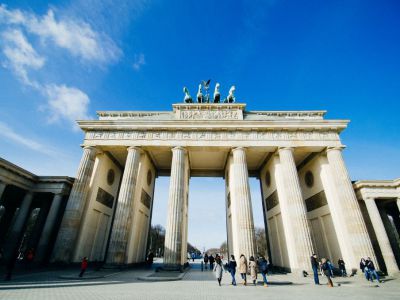
The Brandenburg Gate is the last standing part of the western side of the Customs Wall that surrounded Berlin in the 18th century. It marks a monumental entry to Unter den Linden, the famed boulevard lined with lime trees that once led to the palace of the Prussian monarchs.
This neoclassical landmark was built between 1788 and 1791 during the reign of King Frederick William II of Prussia. Inspired by Roman triumphal arches and the classical Greek gateway to the Acropolis of Athens, the gate has twelve fluted Doric columns flanked by two pavilions originally occupied by guards, as well as five passageways, and reliefs depicting the Labors of Hercules. Its crowning glory is the bronze Quadriga sculpture – the goddess of victory atop a four-horsed chariot, originally regarded as a symbol of peace.
Throughout its history, the gate has played a crucial role in Germany's political narrative. In 1806, during the French occupation, Napoleon ordered its dismantling and transportation to Paris. However, upon its return in 1814, after Napolean's defeat, the gate was declared a symbol of victory, and the goddess was adorned with the Prussian eagle and iron cross, symbolizing triumph. The structure has stood witness to many pivotal events in Berlin's history, from military parades to the rise of the Third Reich and Hitler's ascent to power, upon which it was used as a Nazi propaganda symbol.
The Brandenburg Gate also holds memories of the Fall of Berlin and the Russian flag's raising in May 1945. After World War II, it stood damaged but intact and became part of the Soviet occupation zone. During the Cold War era, the gate – blocked by the Berlin Wall from 1961 until the fall of the Berlin Wall in 1989 – remained in no-man's land between East and West Germany. Back then, it served as a defining symbol of Berlin's and Germany’s division and their eventual reunification.
Today, the Brandenburg Gate is a venue for commemorations and public events. Apart from being a photo-op, its historical importance is just as good a reason to visit.
Tip:
Consider visiting at night when the gate is beautifully illuminated and less crowded, allowing for contemplation of its storied past and symbolic value.
This neoclassical landmark was built between 1788 and 1791 during the reign of King Frederick William II of Prussia. Inspired by Roman triumphal arches and the classical Greek gateway to the Acropolis of Athens, the gate has twelve fluted Doric columns flanked by two pavilions originally occupied by guards, as well as five passageways, and reliefs depicting the Labors of Hercules. Its crowning glory is the bronze Quadriga sculpture – the goddess of victory atop a four-horsed chariot, originally regarded as a symbol of peace.
Throughout its history, the gate has played a crucial role in Germany's political narrative. In 1806, during the French occupation, Napoleon ordered its dismantling and transportation to Paris. However, upon its return in 1814, after Napolean's defeat, the gate was declared a symbol of victory, and the goddess was adorned with the Prussian eagle and iron cross, symbolizing triumph. The structure has stood witness to many pivotal events in Berlin's history, from military parades to the rise of the Third Reich and Hitler's ascent to power, upon which it was used as a Nazi propaganda symbol.
The Brandenburg Gate also holds memories of the Fall of Berlin and the Russian flag's raising in May 1945. After World War II, it stood damaged but intact and became part of the Soviet occupation zone. During the Cold War era, the gate – blocked by the Berlin Wall from 1961 until the fall of the Berlin Wall in 1989 – remained in no-man's land between East and West Germany. Back then, it served as a defining symbol of Berlin's and Germany’s division and their eventual reunification.
Today, the Brandenburg Gate is a venue for commemorations and public events. Apart from being a photo-op, its historical importance is just as good a reason to visit.
Tip:
Consider visiting at night when the gate is beautifully illuminated and less crowded, allowing for contemplation of its storied past and symbolic value.
2) Holocaust Denkmal (Holocaust Memorial) (must see)
Officially named The Memorial to the Murdered Jews of Europe, this solemn expanse of concrete, situated near Berlin’s Brandenburg Gate, stands as a stark and enduring tribute to the millions of Jewish lives extinguished under the Nazi regime between the years 1933 and 1945.
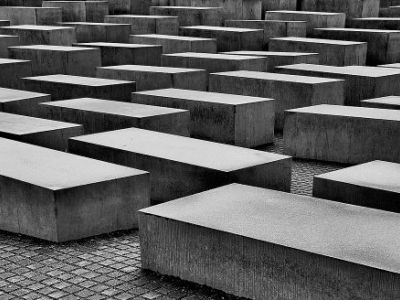
Unveiled in 2005, the memorial was conceived by American architect Peter Eisenman. It spans nearly 19,000 square meters and consists of more than 2,700 concrete stelae-each of varying height and dimension-arranged in a strict grid across a subtly sloping field. The result is a landscape that is simultaneously orderly and disorienting.
Though the design is intentionally abstract and, according to its creator, devoid of explicit symbolism, its resemblance to a graveyard is unmistakable. Some interpret the sea of grey pillars as evoking unmarked graves or the cold efficiency of a bureaucratic system that facilitated mass murder. Others see in its rigid structure a metaphor for a state that lost its humanity behind walls of administration and ideology.
As one moves deeper into the memorial, the concrete blocks grow taller, eclipsing the cityscape and swallowing sound. The sensation is deliberate. It conveys isolation, loss of identity, and the disorienting fear that accompanied the systematic persecution of Jews under the Third Reich. The path dips downward, suggesting the slow descent into darkness that defined those years.
The unfinished quality of some surfaces serves as a quiet reminder: remembrance is not complete, and history’s wounds do not fully heal. The fragmentation of space may reflect the fragmented memories of survivors-and of those lost, whose stories were never told.
This memorial does not offer resolution or unity. It does not attempt to console. Instead, it confronts. It calls forth reflection-on individual memory, on collective guilt, and on the enduring responsibility to remember, in a world where forgetting is all too easy...
Unveiled in 2005, the memorial was conceived by American architect Peter Eisenman. It spans nearly 19,000 square meters and consists of more than 2,700 concrete stelae-each of varying height and dimension-arranged in a strict grid across a subtly sloping field. The result is a landscape that is simultaneously orderly and disorienting.
Though the design is intentionally abstract and, according to its creator, devoid of explicit symbolism, its resemblance to a graveyard is unmistakable. Some interpret the sea of grey pillars as evoking unmarked graves or the cold efficiency of a bureaucratic system that facilitated mass murder. Others see in its rigid structure a metaphor for a state that lost its humanity behind walls of administration and ideology.
As one moves deeper into the memorial, the concrete blocks grow taller, eclipsing the cityscape and swallowing sound. The sensation is deliberate. It conveys isolation, loss of identity, and the disorienting fear that accompanied the systematic persecution of Jews under the Third Reich. The path dips downward, suggesting the slow descent into darkness that defined those years.
The unfinished quality of some surfaces serves as a quiet reminder: remembrance is not complete, and history’s wounds do not fully heal. The fragmentation of space may reflect the fragmented memories of survivors-and of those lost, whose stories were never told.
This memorial does not offer resolution or unity. It does not attempt to console. Instead, it confronts. It calls forth reflection-on individual memory, on collective guilt, and on the enduring responsibility to remember, in a world where forgetting is all too easy...
3) Fuhrerbunker (Hitler's Bunker)
Beneath the once-imposing gardens of the New Reich Chancellery in Berlin lay a grim vestige of the Third Reich: Hitler's Bunker. This heavily fortified underground labyrinth of concrete chambers became the final command center of Adolf Hitler and the collapsing Nazi regime during the waning months of the Second World War.
On the 16th of January, 1945, Hitler withdrew into this subterranean stronghold. Within its confines, he marked his 56th birthday on April 20 and, in a final gesture of defiance or despair, wed Eva Braun on the night of April 29. Less than twenty-four hours later, on April 30, the couple ended their lives-Hitler with a pistol, Braun by cyanide.
According to accounts from those present, their corpses were swiftly carried out into the garden of the Chancellery, doused with approximately 200 liters of petrol, and set alight. Loyal followers stood watch as their remains were consumed by flame, offering Nazi salutes as the regime’s symbol was reduced to ash.
Outside, the Red Army had breached the city. The Soviet banner soon flew over the Reichstag. Inside the bunker, panic reigned. Of the roughly 800 individuals sheltering within, many attempted escape through the shattered rail tunnels of northern Berlin. Only around one hundred of them would evade death or capture.
In the aftermath of war, Soviet forces razed both the old and new Chancellery buildings. Yet this bunker, buried deep and defiant, resisted complete destruction. It remained largely intact until the late 1980s, when Berlin’s urban redevelopment exposed-and ultimately dismantled-much of the remaining structure.
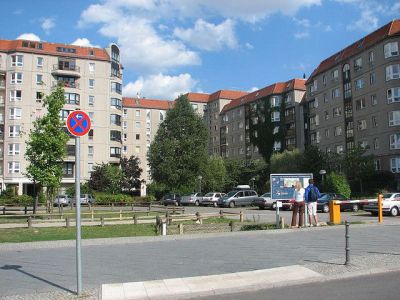
For decades, the site was unmarked, quietly covered over by modern life. Not until 2006 did a modest plaque appear, offering visitors a schematic and somber description of what had once been. Today, the bunker's emergency exit-once a passage to the Chancellery gardens-rests beneath an ordinary parking lot, its history hidden in plain sight.
On the 16th of January, 1945, Hitler withdrew into this subterranean stronghold. Within its confines, he marked his 56th birthday on April 20 and, in a final gesture of defiance or despair, wed Eva Braun on the night of April 29. Less than twenty-four hours later, on April 30, the couple ended their lives-Hitler with a pistol, Braun by cyanide.
According to accounts from those present, their corpses were swiftly carried out into the garden of the Chancellery, doused with approximately 200 liters of petrol, and set alight. Loyal followers stood watch as their remains were consumed by flame, offering Nazi salutes as the regime’s symbol was reduced to ash.
Outside, the Red Army had breached the city. The Soviet banner soon flew over the Reichstag. Inside the bunker, panic reigned. Of the roughly 800 individuals sheltering within, many attempted escape through the shattered rail tunnels of northern Berlin. Only around one hundred of them would evade death or capture.
In the aftermath of war, Soviet forces razed both the old and new Chancellery buildings. Yet this bunker, buried deep and defiant, resisted complete destruction. It remained largely intact until the late 1980s, when Berlin’s urban redevelopment exposed-and ultimately dismantled-much of the remaining structure.
For decades, the site was unmarked, quietly covered over by modern life. Not until 2006 did a modest plaque appear, offering visitors a schematic and somber description of what had once been. Today, the bunker's emergency exit-once a passage to the Chancellery gardens-rests beneath an ordinary parking lot, its history hidden in plain sight.
4) Jewish Museum Berlin
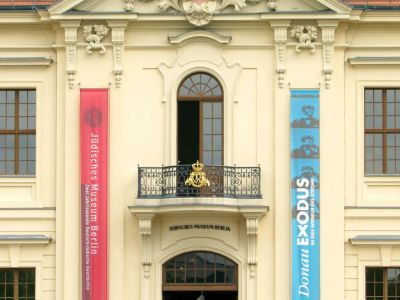
Crafted by the Polish-Jewish architect Daniel Libeskind, based in the United States, the Jewish Museum complex stands as a captivating and imaginative exemplar of late 20th-century architectural design. The site encompasses a library and well-tended gardens, with the Libeskind Building serving as the focal point. This remarkable edifice, both in its form and interior arrangement, is an integral component of a philosophical endeavor to portray the history and heritage of Germany's Jewish community, as well as the profound impact of the Holocaust. The building features elongated galleries with sloping floors and sharp, zigzagging turns, deliberately designed to evoke feelings of loss and displacement. Interspersed within these spaces are "voids" symbolizing the void left by the destruction of Jewish life and culture.
Access to the primary museum, the Libeskind Building, is facilitated through an underground tunnel. The exhibition unfolds across fourteen sections, guiding visitors through the historical tapestry of German Jewish history and culture, from its early origins to the contemporary era.
Tip:
Be sure not to overlook 'Schalekhet' (Fallen Leaves), a thought-provoking multi-sensory art installation.
It's worth noting that this museum is included in the 3-day Museum Pass.
Access to the primary museum, the Libeskind Building, is facilitated through an underground tunnel. The exhibition unfolds across fourteen sections, guiding visitors through the historical tapestry of German Jewish history and culture, from its early origins to the contemporary era.
Tip:
Be sure not to overlook 'Schalekhet' (Fallen Leaves), a thought-provoking multi-sensory art installation.
It's worth noting that this museum is included in the 3-day Museum Pass.
5) DDR Museum
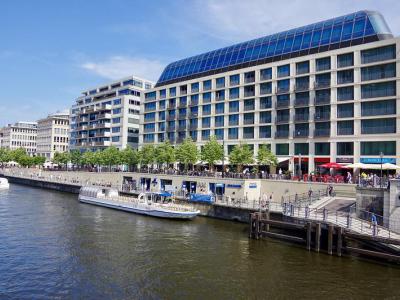
If you’ve ever wondered what life was really like behind the Iron Curtain-minus the Cold War clichés and spy movie melodrama-then the DDR Museum in Berlin is your time machine.
Situated directly across from the Berlin Cathedral, this museum has been in place since 2006. It was the brainchild of ethnologist Peter Kenzelmann, who noticed a lack of exhibits focusing on daily life in the German Democratic Republic (aka East Germany). So he created one.
Under the sharp eye of director historian Dr. Stephan Wolle, this place was designed to skip the propaganda and get real-serving up a mix of hard facts and personal stories, all without turning into a dusty old lecture hall.
Inside, everything’s grouped into categories like “Public Life,” “Life in a Tower Block,” and “State and Ideology,” which basically means: yes, you’ll learn stuff, but you won’t fall asleep doing it. The permanent exhibition is split into 16 themes, such as housing, work, fashion, education, and surveillance. Of particular interest is a full-on WBS 70 (typical East German tower block) apartment replica. It’s got the orange-brown wallpaper, the clunky TV, and that unmistakable scent of... socialist pragmatism.
You can also hop into a Trabant without waiting ten years for a government-issued permit. Well, it's a driving simulator, but who cares-because nothing says "road trip" like a plastic car that tops out at 60 mph.
And this isn’t some average look-but-don’t-touch museum. Nope, it’s fully interactive. That means you get to press the buttons, open the drawers, play dress-up with digital mirrors, and even sit through a simulated Stasi interrogation-just for kicks.
The DDR Museum is open every day from 9 AM to 9 PM, so whether you’re an early bird or a night owl, you’ve got time to drop by. Tickets? At the door or online-your choice.
So why go? Because history here isn’t under glass-it’s under your fingertips. And if your curiosity for Cold War kitsch isn’t quite satisfied, swing by the Stasimuseum for more spy vibes, then hit the AMPELMANN store nearby, where East Germany’s most cheerful legacy-those charming crosswalk figures-lives on as tote bags, keychains, and questionable fashion choices.
Situated directly across from the Berlin Cathedral, this museum has been in place since 2006. It was the brainchild of ethnologist Peter Kenzelmann, who noticed a lack of exhibits focusing on daily life in the German Democratic Republic (aka East Germany). So he created one.
Under the sharp eye of director historian Dr. Stephan Wolle, this place was designed to skip the propaganda and get real-serving up a mix of hard facts and personal stories, all without turning into a dusty old lecture hall.
Inside, everything’s grouped into categories like “Public Life,” “Life in a Tower Block,” and “State and Ideology,” which basically means: yes, you’ll learn stuff, but you won’t fall asleep doing it. The permanent exhibition is split into 16 themes, such as housing, work, fashion, education, and surveillance. Of particular interest is a full-on WBS 70 (typical East German tower block) apartment replica. It’s got the orange-brown wallpaper, the clunky TV, and that unmistakable scent of... socialist pragmatism.
You can also hop into a Trabant without waiting ten years for a government-issued permit. Well, it's a driving simulator, but who cares-because nothing says "road trip" like a plastic car that tops out at 60 mph.
And this isn’t some average look-but-don’t-touch museum. Nope, it’s fully interactive. That means you get to press the buttons, open the drawers, play dress-up with digital mirrors, and even sit through a simulated Stasi interrogation-just for kicks.
The DDR Museum is open every day from 9 AM to 9 PM, so whether you’re an early bird or a night owl, you’ve got time to drop by. Tickets? At the door or online-your choice.
So why go? Because history here isn’t under glass-it’s under your fingertips. And if your curiosity for Cold War kitsch isn’t quite satisfied, swing by the Stasimuseum for more spy vibes, then hit the AMPELMANN store nearby, where East Germany’s most cheerful legacy-those charming crosswalk figures-lives on as tote bags, keychains, and questionable fashion choices.
6) Gedenkstatte Berliner Mauer (Berlin Wall Memorial) (must see)
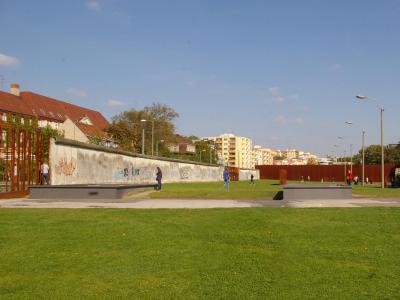
Located a bit away from the tourist hubbub, allowing you to avoid the crowds at Checkpoint Charlie, the Berlin Wall Memorial offers a more scholarly perspective on Germany's division. More precisely, it focuses on a section of the former border strip, with an outdoor exhibition tracing the history of Bernauer Strasse and the Wall. This outdoor exhibit extends for 1.4 kilometers, reaching up to the Mauerpark, and includes remnants of border obstacles that preserve the appearance of the Wall as it stood in the past.
Across from the memorial, the museum expanded in 2014 and now houses a permanent exhibition titled "1961–1989: the Berlin Wall", which delves into the lives of those who tried to escape the dictatorship (notably, some of the most successful escape tunnels were dug nearby) and the resistance efforts, often deadly, organized by those living in the vicinity. Additionally, there is a separate exhibition within the adjacent Nordbahnhof station, detailing the division of the U-Bahn and S-Bahn lines (open during station hours). On weekdays at noon, the chapel hosts prayer services in memory of the Berlin Wall's victims.
Across from the memorial, the museum expanded in 2014 and now houses a permanent exhibition titled "1961–1989: the Berlin Wall", which delves into the lives of those who tried to escape the dictatorship (notably, some of the most successful escape tunnels were dug nearby) and the resistance efforts, often deadly, organized by those living in the vicinity. Additionally, there is a separate exhibition within the adjacent Nordbahnhof station, detailing the division of the U-Bahn and S-Bahn lines (open during station hours). On weekdays at noon, the chapel hosts prayer services in memory of the Berlin Wall's victims.
7) Kaiser Wilhelm Memorial Church
This church-monument stands proudly as one of Berlin's most iconic landmarks, often surrounded by a bustling mix of street vendors, entertainers, and the occasional panhandler. The grand Neo-Romanesque church, a masterpiece crafted by architect Franz Schwechten, received its consecration in the year 1895. However, its fate took a tragic turn during World War II when Allied bombs nearly obliterated it in 1943.
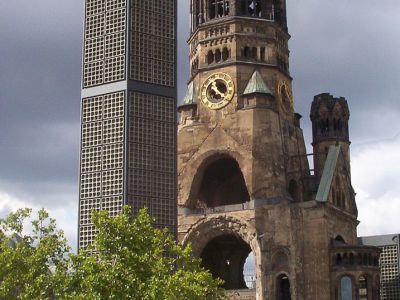
After the war, the remnants of the church were carefully cleared away, leaving behind only the colossal front tower, beneath which lies the poignant Memorial Hall ("Gedenkhalle"). This solemn space serves as a testament to the church's storied history, housing fragments of its original ceiling mosaics, precious marble reliefs, and sacred liturgical items.
In 1961, architect Egon Eiermann introduced an innovative blue glass octagonal church and a freestanding bell tower, breathing new life into the site.
Tip:
Inside the main entrance of the old church resides a surprisingly unpretentious crucifix. Crafted from nails discovered amidst the ashes of Coventry Cathedral in England, a structure ravaged during German bombing raids in 1940, it stands as a symbol of reconciliation and remembrance.
After the war, the remnants of the church were carefully cleared away, leaving behind only the colossal front tower, beneath which lies the poignant Memorial Hall ("Gedenkhalle"). This solemn space serves as a testament to the church's storied history, housing fragments of its original ceiling mosaics, precious marble reliefs, and sacred liturgical items.
In 1961, architect Egon Eiermann introduced an innovative blue glass octagonal church and a freestanding bell tower, breathing new life into the site.
Tip:
Inside the main entrance of the old church resides a surprisingly unpretentious crucifix. Crafted from nails discovered amidst the ashes of Coventry Cathedral in England, a structure ravaged during German bombing raids in 1940, it stands as a symbol of reconciliation and remembrance.
