Custom Walk in Salt Lake City, Utah by pmccloskey_8cdde9 created on 2026-03-01
Guide Location: USA » Salt Lake City
Guide Type: Custom Walk
# of Sights: 8
Tour Duration: 7 Hour(s)
Travel Distance: 19.3 Km or 12 Miles
Share Key: 6AMZU
Guide Type: Custom Walk
# of Sights: 8
Tour Duration: 7 Hour(s)
Travel Distance: 19.3 Km or 12 Miles
Share Key: 6AMZU
How It Works
Please retrieve this walk in the GPSmyCity app. Once done, the app will guide you from one tour stop to the next as if you had a personal tour guide. If you created the walk on this website or come to the page via a link, please follow the instructions below to retrieve the walk in the app.
Retrieve This Walk in App
Step 1. Download the app "GPSmyCity: Walks in 1K+ Cities" on Apple App Store or Google Play Store.



Step 2. In the GPSmyCity app, download(or launch) the guide "Salt Lake City Map and Walking Tours".
Step 3. Tap the menu button located at upper right corner of the "Walks" screen and select "Retrieve custom walk". Enter the share key: 6AMZU
1) City Creek Center (must see)
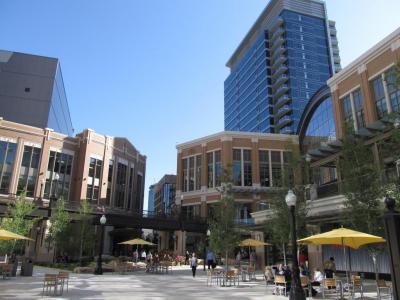
City Creek Center (CCC) in Salt Lake City stands as an impressive, award-winning shopping complex right across from Temple Square, marrying outdoor charm with upscale retail. Opened in 2012, this mixed-use development sprawls over 23 acres and blends a unique shopping experience with residential and office spaces. Known for its aesthetic appeal, the center includes a stunning retractable glass roof, creating a versatile open-air environment suitable for all seasons.
At the heart of CCC is an exquisitely landscaped creek that mirrors the original City Creek, winding its way through the main walkway with waterfalls, boulders, and fountains crafted to reflect the nearby Wasatch Range. WET Design, the creators of Salt Lake City’s Olympic cauldron, also contributed dazzling water features throughout the complex, including a splash pad and interactive fountain with lights, music, and even fire.
CCC is unique among U.S. malls for its Sunday closure, a nod to its partial ownership by the Church of Jesus Christ of Latter-day Saints. Two historic facades, from the ZCMI Cast Iron Front and the Amussen Jewelry Building, add architectural depth to the modern layout. Pedestrians can explore lush walkways, plazas, and pocket parks across multiple levels, all connected by green spaces that foster urban integration. Additionally, the center reconnects streets once lost to development, providing an urban oasis and a welcoming environment for locals and visitors alike.
Key retail anchors like Nordstrom and Macy’s, as well as exclusive high-end brands such as Tiffany & Company, Porsche Design, and Swarovski, make CCC a unique shopping destination in Utah. A Harmons grocery store serves practical needs, while the food court, located between the KeyBank Tower and World Trade Center, provides diverse dining options, from local favorites to mainstream eateries. Adding to the experience is the stunning sky bridge, linking the center across Main Street with panoramic views and TRAX light rail access directly below.
With its thoughtfully designed spaces, City Creek Center is more than a mall; it’s a destination for those seeking luxury, convenience, and a taste of Salt Lake City’s evolving urban landscape.
At the heart of CCC is an exquisitely landscaped creek that mirrors the original City Creek, winding its way through the main walkway with waterfalls, boulders, and fountains crafted to reflect the nearby Wasatch Range. WET Design, the creators of Salt Lake City’s Olympic cauldron, also contributed dazzling water features throughout the complex, including a splash pad and interactive fountain with lights, music, and even fire.
CCC is unique among U.S. malls for its Sunday closure, a nod to its partial ownership by the Church of Jesus Christ of Latter-day Saints. Two historic facades, from the ZCMI Cast Iron Front and the Amussen Jewelry Building, add architectural depth to the modern layout. Pedestrians can explore lush walkways, plazas, and pocket parks across multiple levels, all connected by green spaces that foster urban integration. Additionally, the center reconnects streets once lost to development, providing an urban oasis and a welcoming environment for locals and visitors alike.
Key retail anchors like Nordstrom and Macy’s, as well as exclusive high-end brands such as Tiffany & Company, Porsche Design, and Swarovski, make CCC a unique shopping destination in Utah. A Harmons grocery store serves practical needs, while the food court, located between the KeyBank Tower and World Trade Center, provides diverse dining options, from local favorites to mainstream eateries. Adding to the experience is the stunning sky bridge, linking the center across Main Street with panoramic views and TRAX light rail access directly below.
With its thoughtfully designed spaces, City Creek Center is more than a mall; it’s a destination for those seeking luxury, convenience, and a taste of Salt Lake City’s evolving urban landscape.
2) Natural History Museum of Utah (must see)
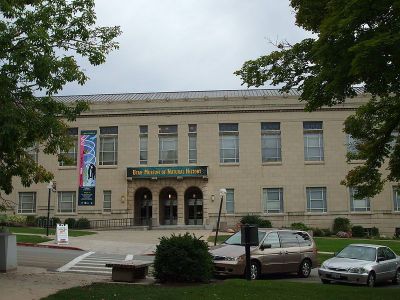
The Natural History Museum of Utah in Salt Lake City stands as a premier institution dedicated to showcasing the natural history of Utah and the broader Intermountain West. Established in 1963 as the Utah Museum of Natural History, the museum is part of the University of Utah and houses over 1.65 million objects across various disciplines, ranging from paleontology to botany and mineralogy. Initially located in the George Thomas Library, the museum moved to the Rio Tinto Center in the University of Utah’s Research Park in 2011, gaining a striking 163,000-square-foot building designed by Ennead Architects and GSBS with exhibits by Ralph Appelbaum Associates.
The museum has a rich history tied to notable scientific projects. In the 1960s and 1970s, paleontologists James Henry Madsen Jr. and William Lee Stokes led the "University of Utah Cooperative Dinosaur Project," excavating thousands of fossils, especially Allosaurus remains, from the Cleveland-Lloyd Dinosaur Quarry. This effort resulted in the museum’s extraordinary dinosaur collection, which includes the world’s largest display of Allosaurus skeletons.
The museum’s extensive collections are invaluable for research, supporting studies in geology, biology, cultural history, and the diversity of living systems within Utah. With a mission to illuminate the natural world and humanity’s place within it, the Natural History Museum of Utah offers educational and research opportunities to visitors and scholars from around the globe.
The museum has a rich history tied to notable scientific projects. In the 1960s and 1970s, paleontologists James Henry Madsen Jr. and William Lee Stokes led the "University of Utah Cooperative Dinosaur Project," excavating thousands of fossils, especially Allosaurus remains, from the Cleveland-Lloyd Dinosaur Quarry. This effort resulted in the museum’s extraordinary dinosaur collection, which includes the world’s largest display of Allosaurus skeletons.
The museum’s extensive collections are invaluable for research, supporting studies in geology, biology, cultural history, and the diversity of living systems within Utah. With a mission to illuminate the natural world and humanity’s place within it, the Natural History Museum of Utah offers educational and research opportunities to visitors and scholars from around the globe.
3) Cathedral of the Madeleine (must see)
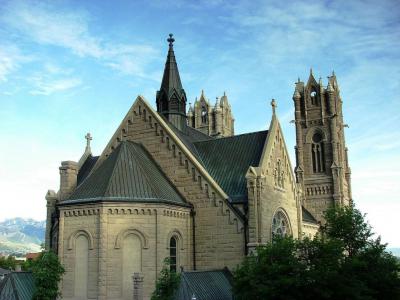
The Cathedral of the Madeleine, located in the heart of Salt Lake City, is a testament to Catholic presence in a city known as the headquarters of the Mormon faith. This impressive structure, completed in 1909 with land gifted by the Mormons and significant construction support from Mormon volunteers, serves as the mother church of the Diocese of Salt Lake City. The only cathedral in the United States dedicated to Saint Mary Magdalene, its Neo-Romanesque sandstone exterior and cross-shaped layout honor its historical roots, while its Spanish Gothic-inspired interior, adorned with colorful ceiling murals, icons, and stained glass, adds a vibrant and sacred aesthetic.
The cathedral's contemporary Stations of the Cross include images influenced by the American Southwest alongside traditional iconography, showcasing a blend of religious and cultural significance. Inside, visitors will find a separate Blessed Sacrament Chapel, a baptismal font, and the resting place of Bishop Lawrence Scanlan, the diocese’s founding bishop who dedicated the cathedral. A relic of Saint Mary Magdalene, once housed here, was recently stolen in July 2024, marking a rare and unfortunate event for this cathedral, which was one of only two in the world with a first-class relic of the saint.
Renowned for its musical heritage, the Cathedral of the Madeleine hosts the only co-educational Catholic Choir School in the U.S., with choristers performing regularly and embarking on tours both nationally and internationally. Established in 1996, the Madeleine Choir School has become an integral part of the cathedral’s spiritual and cultural life, drawing audiences from far and wide. Visitors can explore this remarkable place, though those wishing to walk freely through the cathedral should avoid visiting during services. With its rich history, unique architectural details, and active role in the arts, the Cathedral of the Madeleine is both a spiritual landmark and a cultural treasure in Salt Lake City.
The cathedral's contemporary Stations of the Cross include images influenced by the American Southwest alongside traditional iconography, showcasing a blend of religious and cultural significance. Inside, visitors will find a separate Blessed Sacrament Chapel, a baptismal font, and the resting place of Bishop Lawrence Scanlan, the diocese’s founding bishop who dedicated the cathedral. A relic of Saint Mary Magdalene, once housed here, was recently stolen in July 2024, marking a rare and unfortunate event for this cathedral, which was one of only two in the world with a first-class relic of the saint.
Renowned for its musical heritage, the Cathedral of the Madeleine hosts the only co-educational Catholic Choir School in the U.S., with choristers performing regularly and embarking on tours both nationally and internationally. Established in 1996, the Madeleine Choir School has become an integral part of the cathedral’s spiritual and cultural life, drawing audiences from far and wide. Visitors can explore this remarkable place, though those wishing to walk freely through the cathedral should avoid visiting during services. With its rich history, unique architectural details, and active role in the arts, the Cathedral of the Madeleine is both a spiritual landmark and a cultural treasure in Salt Lake City.
4) Joseph Smith Memorial Building (must see)
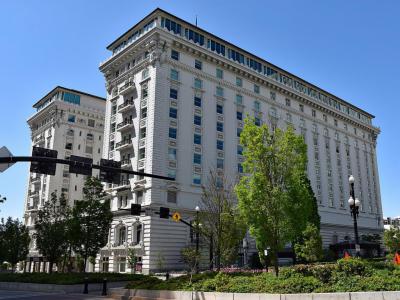
Formerly known as the Hotel Utah, the Joseph Smith Memorial Building is meant to impress and, in all candor, is very impressive indeed. Constructed between 1909-11, it was the "Grand Dame" of hotels in the Intermountain West for most of the 20th century, with the LDS Church as its chief stockholder. Topped by a huge cupola shaped as a beehive (Utah's state symbol), this lavish example of Second Renaissance Revival architecture stands out both for the elegant exterior design, as well as for the noble, high-class, epicurean interior décor and amenities.
John F. Kennedy, Jimmy Stewart, Katharine Hepburn, Henry Fonda, Liberace, Warren Burger, John Glenn and Ella Fitzgerald all slept and dined here in their sojourn. Today, the building is a public venue and lounge, as well as an "active museum" of sorts. Make it a point to go to the top floor, where you will be treated to sublime, uninterrupted views of the Temple Square and the expansive downtown Salt Lake City core. When properly planning your itinerary, you may additionally elect to dine at the top-floor Garden Restaurant, which is guaranteed to render the experience truly unique and special.
John F. Kennedy, Jimmy Stewart, Katharine Hepburn, Henry Fonda, Liberace, Warren Burger, John Glenn and Ella Fitzgerald all slept and dined here in their sojourn. Today, the building is a public venue and lounge, as well as an "active museum" of sorts. Make it a point to go to the top floor, where you will be treated to sublime, uninterrupted views of the Temple Square and the expansive downtown Salt Lake City core. When properly planning your itinerary, you may additionally elect to dine at the top-floor Garden Restaurant, which is guaranteed to render the experience truly unique and special.

5) State Capitol (must see)
Utah's spectacular State Capitol building is a bit of an uphill hike from the heart of downtown Salt Lake City, but well worth the effort. Take in the breathtaking mountain views from the front steps, then head inside to see the state's history unspool through the glorious artwork adorning the walls and ceiling of the cavernous atrium. Traditional architecture built with a variety of stone and other materials, as well as a very open interior, makes this building quite an experience to visit.
Utah history is dramatized in large murals and canvasses, while the dome ceiling is painted with seagulls – the official state bird since 1955. Exhibits from all 29 counties are displayed on the ground floor, but the 2nd floor – and especially the Gold Room where visiting celebrities are hosted – should not be missed. Decorated with native bird's eye marble, the room boasts exquisite chandeliers, chairs and a table adorned with gold leaf from Utah mines.
Once the (free) tour is over, you can ponder your thoughts in the quaint outdoor courtyard area or the really neat park on the east side – just walk along one of the trails to get down the hill. Immediately across the street, the visitor center has lots of free brochures, maps, and travel guides for all of Utah, as well lots of awesome and affordable gifts and collectibles.
Utah history is dramatized in large murals and canvasses, while the dome ceiling is painted with seagulls – the official state bird since 1955. Exhibits from all 29 counties are displayed on the ground floor, but the 2nd floor – and especially the Gold Room where visiting celebrities are hosted – should not be missed. Decorated with native bird's eye marble, the room boasts exquisite chandeliers, chairs and a table adorned with gold leaf from Utah mines.
Once the (free) tour is over, you can ponder your thoughts in the quaint outdoor courtyard area or the really neat park on the east side – just walk along one of the trails to get down the hill. Immediately across the street, the visitor center has lots of free brochures, maps, and travel guides for all of Utah, as well lots of awesome and affordable gifts and collectibles.
6) Salt Lake Temple (must see)
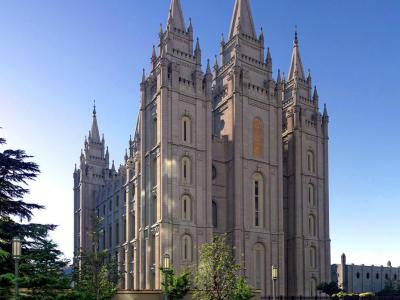
The centerpiece of Temple Square, this beautiful neo-gothic edifice took 40 years to build at the direction of then Church President, Brigham Young, and has withstood the test of time since being dedicated in 1893. The granite-like quartz monzonite was quarried in Little Cottonwood Canyon, 22 miles south of the site, and was then laboriously hauled by oxen, stone by stone, until the railroad became operational in 1869. Oriented towards Jerusalem and incorporating a host of symbolic designs and decorations, many of which are visible on the exterior, it remains the largest LDS temple by floor area (253,015 square feet / 23,505.9 square meters). Its massive presence is a marvel, considering there was no electricity, no computers, nor any other artificial means used during construction. The stone masonry is so precise, there is not even mortar between the stones! And then to think the pioneers built this huge edifice in the middle of a desert guided by faith is just awesome.
As with all LDS temples, only qualifying members of the LDS faith can enter the building (used primarily for marriages, baptisms for the dead, religious ritual instruction, and meetings of the First Presidency and of the Quorum of the Twelve Apostles), but visitors can walk around the exterior and enter other historic structures nearby. During the winter months the beauties of the world-famous flower beds are replaced by nativity displays and millions of Christmas lights strung through all the trees on Temple Square, making it a hugely popular destination for visitors and locals alike.
***PIONEERS TRAIL***
As noted by the scholars, "Brigham Young was almost sole author of one of the most important chapters in the history of the American West." When the first group of pioneers, led by Young, entered Immigration Canyon overlooking the Salt Lake Valley on July 24, 1847, Young (who had been ill and was bedded in a covered wagon) rose long enough to gaze out over the valley and famously declared "This is the right place. Drive on." Those with him clearly understood that he was talking about his vision of where the Latter-Day Saints were to settle. It should be noted that Church leaders and members alike felt that settling in Utah (near the Rockies) would fulfill Isaiah 2:2 - "And it shall come to pass in the last days, that the mountain of the LORD'S house [temple] shall be established in the top of the mountains, and shall be exalted above the hills; and all nations shall flow unto it."
Perhaps among Young's greatest visible accomplishments was his initiation of the construction of the world famous Salt Lake Temple and Tabernacle on Temple Square, and the incredible construction of a system of miles and miles of irrigation canals that fulfilled the prophecy in Isaiah 35:1 "The wilderness and the solitary place shall be glad for them; and the desert shall rejoice, and blossom as the rose."
Tip:
One of the best (and free!) views of the edifice (and of Temple Square) is from the atrium and inside of The Roof restaurant, located on the top floor of the Joseph Smith Memorial Building, a short walk and elevator ride directly to the east.
As with all LDS temples, only qualifying members of the LDS faith can enter the building (used primarily for marriages, baptisms for the dead, religious ritual instruction, and meetings of the First Presidency and of the Quorum of the Twelve Apostles), but visitors can walk around the exterior and enter other historic structures nearby. During the winter months the beauties of the world-famous flower beds are replaced by nativity displays and millions of Christmas lights strung through all the trees on Temple Square, making it a hugely popular destination for visitors and locals alike.
***PIONEERS TRAIL***
As noted by the scholars, "Brigham Young was almost sole author of one of the most important chapters in the history of the American West." When the first group of pioneers, led by Young, entered Immigration Canyon overlooking the Salt Lake Valley on July 24, 1847, Young (who had been ill and was bedded in a covered wagon) rose long enough to gaze out over the valley and famously declared "This is the right place. Drive on." Those with him clearly understood that he was talking about his vision of where the Latter-Day Saints were to settle. It should be noted that Church leaders and members alike felt that settling in Utah (near the Rockies) would fulfill Isaiah 2:2 - "And it shall come to pass in the last days, that the mountain of the LORD'S house [temple] shall be established in the top of the mountains, and shall be exalted above the hills; and all nations shall flow unto it."
Perhaps among Young's greatest visible accomplishments was his initiation of the construction of the world famous Salt Lake Temple and Tabernacle on Temple Square, and the incredible construction of a system of miles and miles of irrigation canals that fulfilled the prophecy in Isaiah 35:1 "The wilderness and the solitary place shall be glad for them; and the desert shall rejoice, and blossom as the rose."
Tip:
One of the best (and free!) views of the edifice (and of Temple Square) is from the atrium and inside of The Roof restaurant, located on the top floor of the Joseph Smith Memorial Building, a short walk and elevator ride directly to the east.
7) Salt Lake Tabernacle (must see)
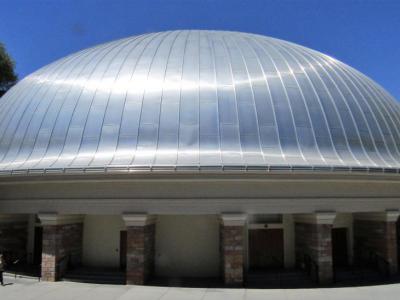
A great marvel of sound and acoustics, this domed building is the home of the famed Tabernacle Choir, and was the previous home of the Utah Symphony Orchestra until the construction of Abravanel Hall. Inside, the beautiful pipe organ – one of the largest in the world – is something to see, but catching a Sunday morning choir performance (or a rehearsal at the least – Thursdays at 7:30pm) counts as one of those experiences of a life time. Both the tour and the choir concerts/rehearsals are free to the public, by the way!
At a time before electronics and audio amplifiers, the Tabernacle was constructed with remarkable acoustic qualities so the entire congregation could hear sermons given here. The roof was built in a three-dimensional ellipse – a concept that came from none other than church president Brigham Young, who reportedly said that the design was inspired by "the best sounding board in the world ... the roof of my mouth." It is common for LDS missionary tour guides to demonstrate the acoustics by dropping a pin on the pulpit or tearing a newspaper there, which can be heard throughout the building.
Built without nails, the structure itself was an architectural wonder in its day, prompting a writer for Scientific American to comment on "the mechanical difficulties of attending the construction of so ponderous a roof." Apparently, the supporting beams were made by a shipbuilder, who used his knowledge to hold together the dome by means of horsehair and leather alone. In 1882, while on a lecture tour of America, Oscar Wilde noted that the building had the appearance of a soup-kettle; he added that it was the most purely dreadful building he ever saw. Some visitors around the beginning of the 20th century criticized it as "a prodigious tortoise that has lost its way" or "the Church of the Holy Turtle," but Frank Lloyd Wright dubbed the Tabernacle "one of the architectural masterpieces of the country and perhaps the world."
At a time before electronics and audio amplifiers, the Tabernacle was constructed with remarkable acoustic qualities so the entire congregation could hear sermons given here. The roof was built in a three-dimensional ellipse – a concept that came from none other than church president Brigham Young, who reportedly said that the design was inspired by "the best sounding board in the world ... the roof of my mouth." It is common for LDS missionary tour guides to demonstrate the acoustics by dropping a pin on the pulpit or tearing a newspaper there, which can be heard throughout the building.
Built without nails, the structure itself was an architectural wonder in its day, prompting a writer for Scientific American to comment on "the mechanical difficulties of attending the construction of so ponderous a roof." Apparently, the supporting beams were made by a shipbuilder, who used his knowledge to hold together the dome by means of horsehair and leather alone. In 1882, while on a lecture tour of America, Oscar Wilde noted that the building had the appearance of a soup-kettle; he added that it was the most purely dreadful building he ever saw. Some visitors around the beginning of the 20th century criticized it as "a prodigious tortoise that has lost its way" or "the Church of the Holy Turtle," but Frank Lloyd Wright dubbed the Tabernacle "one of the architectural masterpieces of the country and perhaps the world."
8) Clark Planetarium (must see)
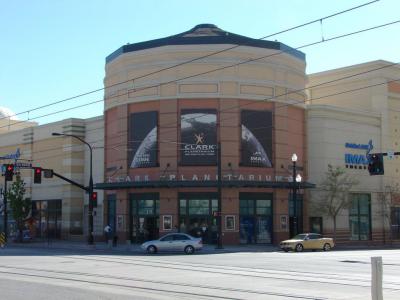
Clark Planetarium, located in the heart of Salt Lake City’s vibrant downtown at The Gateway, is a hub for exploring the wonders of space and science. Opened in April 2003 as a successor to the historic Hansen Planetarium, this modern facility combines high-tech presentations with interactive educational exhibits, thanks to the support of the Clark Foundation and Salt Lake County.
The planetarium boasts a 55-foot aluminum dome, engineered by Astro-tec, that serves as the setting for mesmerizing shows powered by Evans & Sutherland's advanced Digistar system. This system projects a seamless, immersive 3D video experience without the need for special glasses, boasting ultra-high-definition at 4096 x 4096 resolution and 60 frames per second. With a powerful 13,000-watt sound system and 5.1 surround sound, audiences are enveloped in an audiovisual experience that truly brings the cosmos to life. The 190-seat dome theater, renovated in 2018 with upgraded seating, features interactive controls at each seat, enhancing the experience.
Additionally, the Northrop Grumman IMAX Theatre at Clark Planetarium specializes in science and nature documentaries, showcasing both 2D and 3D films on a massive screen. The IMAX theater received a significant upgrade in 2010, with digital projectors, a new screen, and an enhanced sound system, making every film a cinematic journey.
Beyond the theaters, Clark Planetarium offers a vast 10,000-square-foot exhibit space, featuring free displays that engage visitors in hands-on learning. Highlights include “Science on a Sphere,” a dynamic globe from NOAA, and "Newton's Daydream," a striking audio-kinetic sculpture by George Rhoads. Exhibits also showcase a Foucault pendulum, a collection of meteorites, a moon rock from NASA’s Apollo 15 mission, and real-time NASA footage. Other popular displays include a rocketry showcase by ATK Launch Systems, a Solar Energy exhibit, and an interactive “Weight on Other Worlds” experience.
Clark Planetarium’s educational outreach is extensive, engaging over 75,000 students each year. The planetarium provides field trips, traveling programs, and “star parties” where visitors can view celestial objects directly. From astronomy basics to complex scientific concepts like Newton’s laws of motion and solar system dynamics, Clark Planetarium’s programs offer something for every science enthusiast.
The planetarium boasts a 55-foot aluminum dome, engineered by Astro-tec, that serves as the setting for mesmerizing shows powered by Evans & Sutherland's advanced Digistar system. This system projects a seamless, immersive 3D video experience without the need for special glasses, boasting ultra-high-definition at 4096 x 4096 resolution and 60 frames per second. With a powerful 13,000-watt sound system and 5.1 surround sound, audiences are enveloped in an audiovisual experience that truly brings the cosmos to life. The 190-seat dome theater, renovated in 2018 with upgraded seating, features interactive controls at each seat, enhancing the experience.
Additionally, the Northrop Grumman IMAX Theatre at Clark Planetarium specializes in science and nature documentaries, showcasing both 2D and 3D films on a massive screen. The IMAX theater received a significant upgrade in 2010, with digital projectors, a new screen, and an enhanced sound system, making every film a cinematic journey.
Beyond the theaters, Clark Planetarium offers a vast 10,000-square-foot exhibit space, featuring free displays that engage visitors in hands-on learning. Highlights include “Science on a Sphere,” a dynamic globe from NOAA, and "Newton's Daydream," a striking audio-kinetic sculpture by George Rhoads. Exhibits also showcase a Foucault pendulum, a collection of meteorites, a moon rock from NASA’s Apollo 15 mission, and real-time NASA footage. Other popular displays include a rocketry showcase by ATK Launch Systems, a Solar Energy exhibit, and an interactive “Weight on Other Worlds” experience.
Clark Planetarium’s educational outreach is extensive, engaging over 75,000 students each year. The planetarium provides field trips, traveling programs, and “star parties” where visitors can view celestial objects directly. From astronomy basics to complex scientific concepts like Newton’s laws of motion and solar system dynamics, Clark Planetarium’s programs offer something for every science enthusiast.
