Custom Walk in New Orleans, Louisiana by lesandpattijo_5f969 created on 2026-03-01
Guide Location: USA » New Orleans
Guide Type: Custom Walk
# of Sights: 5
Tour Duration: 4 Hour(s)
Travel Distance: 10.4 Km or 6.5 Miles
Share Key: T53KD
Guide Type: Custom Walk
# of Sights: 5
Tour Duration: 4 Hour(s)
Travel Distance: 10.4 Km or 6.5 Miles
Share Key: T53KD
How It Works
Please retrieve this walk in the GPSmyCity app. Once done, the app will guide you from one tour stop to the next as if you had a personal tour guide. If you created the walk on this website or come to the page via a link, please follow the instructions below to retrieve the walk in the app.
Retrieve This Walk in App
Step 1. Download the app "GPSmyCity: Walks in 1K+ Cities" on Apple App Store or Google Play Store.



Step 2. In the GPSmyCity app, download(or launch) the guide "New Orleans Map and Walking Tours".
Step 3. Tap the menu button located at upper right corner of the "Walks" screen and select "Retrieve custom walk". Enter the share key: T53KD
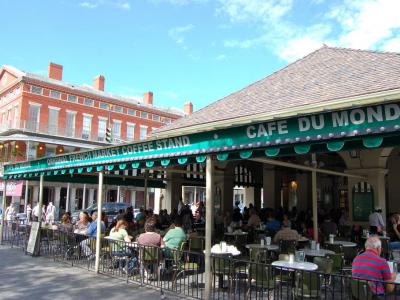
1) Cafe du Monde (must see)
Open around the clock, the open-air Café du Monde (French for "Café of the World" or "the People's Café") holds a special place in the heart of New Orleans. Established in the 1860s, it has gained fame for its uniquely flavored café au lait (coffee with added hot milk) paired with the warm, sugar-dusted beignets. It’s the perfect spot to unwind at a table while enjoying the melodies of street musicians.
Coffee was introduced by the French settlers who began inhabiting the Gulf Coast and the Mississippi River region around 1700. During the American Civil War, due to a coffee shortage, New Orleans Creoles devised a blend of coffee and chicory, imparting a chocolate-like flavor to the café au lait. This version has since become a signature offering at Café du Monde and other New Orleans eateries.
In the 18th century, French settlers from Nova Scotia brought various traditions to Louisiana, including the beloved beignet. Unlike most doughnuts, these are square pieces of dough without a central hole, served with toppings like fruit, jam, maple syrup, or even savory fillings. At Café du Monde, the fried delights are served warm, generously dusted with powdered sugar and come in orders of three.
The café draws a diverse crowd, including late-night revelers, socialites, students, locals, tourists, and people from all corners of the globe, resulting in a lively atmosphere filled with a multitude of accents.
Tips:
Keep in mind that the café operates on a cash-only basis. If you find it too crowded, consider going around to the take-out window in the back and enjoying your treats along the picturesque Mississippi riverfront.
Coffee was introduced by the French settlers who began inhabiting the Gulf Coast and the Mississippi River region around 1700. During the American Civil War, due to a coffee shortage, New Orleans Creoles devised a blend of coffee and chicory, imparting a chocolate-like flavor to the café au lait. This version has since become a signature offering at Café du Monde and other New Orleans eateries.
In the 18th century, French settlers from Nova Scotia brought various traditions to Louisiana, including the beloved beignet. Unlike most doughnuts, these are square pieces of dough without a central hole, served with toppings like fruit, jam, maple syrup, or even savory fillings. At Café du Monde, the fried delights are served warm, generously dusted with powdered sugar and come in orders of three.
The café draws a diverse crowd, including late-night revelers, socialites, students, locals, tourists, and people from all corners of the globe, resulting in a lively atmosphere filled with a multitude of accents.
Tips:
Keep in mind that the café operates on a cash-only basis. If you find it too crowded, consider going around to the take-out window in the back and enjoying your treats along the picturesque Mississippi riverfront.
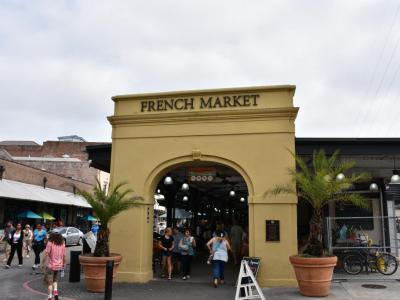
2) French Market (must see)
Spanning six blocks along the Mississippi River, the French Market dates back to 1791, making it the oldest public market in the United States. This open-air emporium has evolved from a Native American trading post into a lively multi-purpose venue encompassing food stalls, flea markets, and artisanal boutiques.
The French Market draws visitors with its blend of aromas from Creole eateries, the sounds of street musicians, and the sight of an eclectic mix of local artwork, crafts, and souvenirs. With a history that reflects the city's French and Spanish colonial past and its diverse cultural influences, this place has played a pivotal role in New Orleans' commercial and social life for over two centuries.
Today, it continues to be a place where the local community and tourists alike come to sample New Orleans' unique culinary delights, find a unique gift, and soak in an atmosphere that's as lively as it is historic. From chicory coffee and beignets to fresh produce and seafood, the French Market is a gastronomic paradise reflecting the city's culinary fusion.
The French Market draws visitors with its blend of aromas from Creole eateries, the sounds of street musicians, and the sight of an eclectic mix of local artwork, crafts, and souvenirs. With a history that reflects the city's French and Spanish colonial past and its diverse cultural influences, this place has played a pivotal role in New Orleans' commercial and social life for over two centuries.
Today, it continues to be a place where the local community and tourists alike come to sample New Orleans' unique culinary delights, find a unique gift, and soak in an atmosphere that's as lively as it is historic. From chicory coffee and beignets to fresh produce and seafood, the French Market is a gastronomic paradise reflecting the city's culinary fusion.
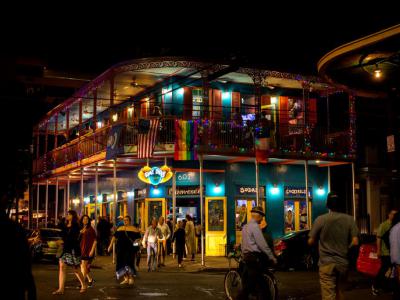
3) Frenchmen Street (must see)
The Frenchmen Street entertainment district began to take shape during the 1980s, establishing itself as a destination where locals could indulge in authentic New Orleans music and cuisine, setting it apart from other urban areas in the United States.
Strolling along Frenchmen Street today, one can't help but be captivated by the unique architecture that defines New Orleans and distinguishes it from other American cities. The street showcases a plethora of Creole cottages, a classic architectural style in New Orleans dating back to the period between 1790 and 1850, as well as Creole townhouses.
The oldest and most renowned section of Frenchmen Street is nestled in the Faubourg Marigny neighborhood, just a short walk downriver from the French Quarter. This three-block stretch is home to some of the city's most beloved live-music venues, including Cafe Negril, Blue Nile, Snug Harbor, the Spotted Cat, and The Maison. In addition to these musical hotspots, the area boasts a vibrant array of restaurants, bars, coffee shops, record and book stores, and various local businesses.
Frenchmen Street gained national recognition in 2010 following the New Orleans Saints' Super Bowl victory when it hosted one of the city's largest and most memorable celebrations in history, cementing its status as a quintessential New Orleans destination.
Strolling along Frenchmen Street today, one can't help but be captivated by the unique architecture that defines New Orleans and distinguishes it from other American cities. The street showcases a plethora of Creole cottages, a classic architectural style in New Orleans dating back to the period between 1790 and 1850, as well as Creole townhouses.
The oldest and most renowned section of Frenchmen Street is nestled in the Faubourg Marigny neighborhood, just a short walk downriver from the French Quarter. This three-block stretch is home to some of the city's most beloved live-music venues, including Cafe Negril, Blue Nile, Snug Harbor, the Spotted Cat, and The Maison. In addition to these musical hotspots, the area boasts a vibrant array of restaurants, bars, coffee shops, record and book stores, and various local businesses.
Frenchmen Street gained national recognition in 2010 following the New Orleans Saints' Super Bowl victory when it hosted one of the city's largest and most memorable celebrations in history, cementing its status as a quintessential New Orleans destination.
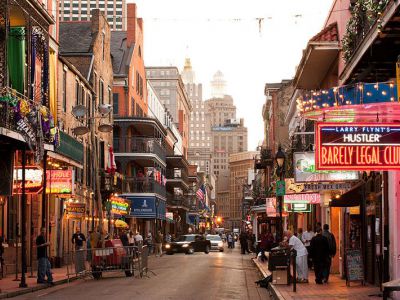
4) Bourbon Street (must see)
If you're feeling adventurous, set aside your reservations and take a leisurely stroll down the infamous Bourbon Street, known for its vibrant mix of bars, restaurants, music clubs, adult stores, and novelty shops, earning its reputation as the playground of the South. In the aftermath of Hurricane Katrina, the bars of Bourbon Street were among the first businesses in the city to reopen, and they played a crucial role in revitalizing the area. Today, the spirit of unbridled revelry thrives here, with raucous crowds and a lively jazz scene.
However, this street is not just about partying; it also boasts historic sights and iconic venues. Here you will find some of the city's most luxurious spots, including the timeless Royal Sonesta Hotel and the Galatoire's fine-dining institution, where you can savor the best of French Creole cuisine in a festive yet elegant atmosphere (note that jackets are required).
Among the iconic bars on Bourbon Street, Lafitte's Blacksmith Shop on the corner of Saint Philip Street stands out, as does the Old Absinthe House – the birthplace of the famous Absinthe House Frappe. You'll also find the Lafitte in Exile, the oldest gay bar in the United States, where famed American playwrights Tennessee Williams and Truman Capote were regular patrons. For those with a penchant for jazz, head to Fritzel's European Jazz Pub, an almost 200-year-old building that hosts live jazz performances every night of the week.
Why You Should Visit:
During the day, the street offers a pleasant experience with its art shops and food options; however, when night falls, it transforms into a wild and vibrant place. Be prepared for sensory overload, with the bright lights, loud music, and various scents permeating the air. This street has a knack for surprising even the most unflappable visitors.
Tip:
Don't miss the famous hand grenade drink! Also, be mindful not to take pictures of street performers if you don't intend to tip them.
However, this street is not just about partying; it also boasts historic sights and iconic venues. Here you will find some of the city's most luxurious spots, including the timeless Royal Sonesta Hotel and the Galatoire's fine-dining institution, where you can savor the best of French Creole cuisine in a festive yet elegant atmosphere (note that jackets are required).
Among the iconic bars on Bourbon Street, Lafitte's Blacksmith Shop on the corner of Saint Philip Street stands out, as does the Old Absinthe House – the birthplace of the famous Absinthe House Frappe. You'll also find the Lafitte in Exile, the oldest gay bar in the United States, where famed American playwrights Tennessee Williams and Truman Capote were regular patrons. For those with a penchant for jazz, head to Fritzel's European Jazz Pub, an almost 200-year-old building that hosts live jazz performances every night of the week.
Why You Should Visit:
During the day, the street offers a pleasant experience with its art shops and food options; however, when night falls, it transforms into a wild and vibrant place. Be prepared for sensory overload, with the bright lights, loud music, and various scents permeating the air. This street has a knack for surprising even the most unflappable visitors.
Tip:
Don't miss the famous hand grenade drink! Also, be mindful not to take pictures of street performers if you don't intend to tip them.
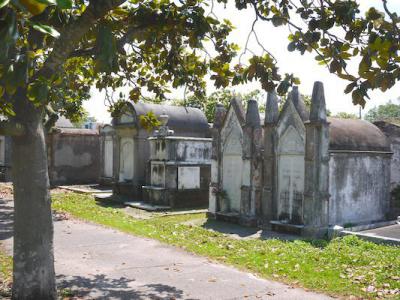
5) Lafayette Cemetery No. 1 (must see)
New Orleans' cemeteries are undeniably unique and should be on your must-see list before bidding adieu to the city. Located conveniently in the Garden District, a charming neighborhood perfect for leisurely strolls, Lafayette No. 1 Cemetery offers a hauntingly beautiful spectacle that encapsulates the essence of NOLA. It's freely accessible to the public and aligns perfectly with the imagery associated with New Orleans, even serving as the backdrop for scenes in Anne Rice's "Interview with the Vampire."
Established in 1833, this cemetery witnessed a wave of immigrants, including Italians, Germans, Irish, and Northern Americans, who flocked to New Orleans. Many individuals with ties to the Civil War rest here, marked by plaques and headstones detailing the location of their demise. Additionally, the cemetery bears witness to the devastating yellow fever epidemic of 1852, which predominantly affected newcomers and children, resulting in the burial of around 2,000 yellow fever victims.
Don't forget your camera as you meander through the rows of raised crypts. You can choose to explore independently during open hours or opt for a guided tour in the morning. In either case, Lafayette No. 1 Cemetery is a remarkable historical site that's well worth your visit!
Tip:
Exercise caution while walking, as the pathways may be in poor condition. Being mindful of your step is crucial to avoid ankle sprains.
Established in 1833, this cemetery witnessed a wave of immigrants, including Italians, Germans, Irish, and Northern Americans, who flocked to New Orleans. Many individuals with ties to the Civil War rest here, marked by plaques and headstones detailing the location of their demise. Additionally, the cemetery bears witness to the devastating yellow fever epidemic of 1852, which predominantly affected newcomers and children, resulting in the burial of around 2,000 yellow fever victims.
Don't forget your camera as you meander through the rows of raised crypts. You can choose to explore independently during open hours or opt for a guided tour in the morning. In either case, Lafayette No. 1 Cemetery is a remarkable historical site that's well worth your visit!
Tip:
Exercise caution while walking, as the pathways may be in poor condition. Being mindful of your step is crucial to avoid ankle sprains.
