Custom Walk in Inverness, Scotland by barry_wolfe_ebb38 created on 2026-03-03
Guide Location: Scotland » Inverness
Guide Type: Custom Walk
# of Sights: 10
Tour Duration: 2 Hour(s)
Travel Distance: 3.2 Km or 2 Miles
Share Key: 3QZMS
Guide Type: Custom Walk
# of Sights: 10
Tour Duration: 2 Hour(s)
Travel Distance: 3.2 Km or 2 Miles
Share Key: 3QZMS
How It Works
Please retrieve this walk in the GPSmyCity app. Once done, the app will guide you from one tour stop to the next as if you had a personal tour guide. If you created the walk on this website or come to the page via a link, please follow the instructions below to retrieve the walk in the app.
Retrieve This Walk in App
Step 1. Download the app "GPSmyCity: Walks in 1K+ Cities" on Apple App Store or Google Play Store.



Step 2. In the GPSmyCity app, download(or launch) the guide "Inverness Map and Walking Tours".
Step 3. Tap the menu button located at upper right corner of the "Walks" screen and select "Retrieve custom walk". Enter the share key: 3QZMS
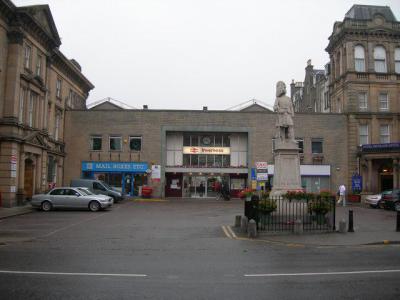
1) Inverness Railway Station
Inverness Railway Station serves as a major transport hub for the city of Inverness and the surrounding Highland region. It is the terminus for several key rail lines, including the Highland Main Line, the Aberdeen–Inverness Line (incorporating the historic Inverness and Nairn Railway), the Kyle of Lochalsh Line, and the Far North Line. The station plays a pivotal role in connecting the Highlands to the rest of Scotland and beyond.
Opened on 5 November 1855, Inverness Railway Station was designed by architect Joseph Mitchell as the western terminus of the Inverness and Nairn Railway. Initially, the station featured a single covered platform measuring 200 feet (61 meters), with three lines for arrivals, departures, and spare carriages. Over the years, the station underwent several expansions and modernizations.
Inverness Railway Station combines modern amenities with historical charm, offering seven platforms equipped with LED screens, a departures board, and step-free access for convenience. The bustling concourse features a ticket office, machines, a bar, a café, a barber shop, toilets, a waiting room, and a lost property office. Travelers are further supported with vending machines, payphones, cash machines, and help points. With three car parks and easy access throughout, the station serves as a seamless gateway to the Highlands.
The station's frontage, forecourt, and concourse underwent a redesign by Mott MacDonald, with completion initially planned for 2018. However, delays arose due to lease disputes with the nearby Royal Highland Hotel. The modernized concourse and facilities reflect efforts to balance functionality with respect for the station's heritage.
Inverness Railway Station continues to be a vital gateway to Scotland's Highlands, blending historical significance with contemporary services to meet the needs of travelers.
Opened on 5 November 1855, Inverness Railway Station was designed by architect Joseph Mitchell as the western terminus of the Inverness and Nairn Railway. Initially, the station featured a single covered platform measuring 200 feet (61 meters), with three lines for arrivals, departures, and spare carriages. Over the years, the station underwent several expansions and modernizations.
Inverness Railway Station combines modern amenities with historical charm, offering seven platforms equipped with LED screens, a departures board, and step-free access for convenience. The bustling concourse features a ticket office, machines, a bar, a café, a barber shop, toilets, a waiting room, and a lost property office. Travelers are further supported with vending machines, payphones, cash machines, and help points. With three car parks and easy access throughout, the station serves as a seamless gateway to the Highlands.
The station's frontage, forecourt, and concourse underwent a redesign by Mott MacDonald, with completion initially planned for 2018. However, delays arose due to lease disputes with the nearby Royal Highland Hotel. The modernized concourse and facilities reflect efforts to balance functionality with respect for the station's heritage.
Inverness Railway Station continues to be a vital gateway to Scotland's Highlands, blending historical significance with contemporary services to meet the needs of travelers.
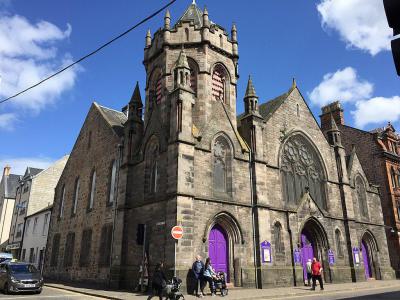
2) Inverness East Church
Inverness East Church, a Category B listed building, is a landmark steeped in rich history and architectural evolution. Originally opened in 1798 as a chapel of ease for the Church of Scotland, the building underwent significant transformations over the centuries. Rebuilt in 1852–1853 and enhanced with a distinctive street frontage in 1897–1898 by the architectural firm Ross & Macbeth, the structure became a symbol of resilience and community adaptability.
The church's journey reflects pivotal moments in Scottish ecclesiastical history. During the disruption of 1843, it left the Church of Scotland, becoming Inverness East Free Church. In 1900, it joined the United Presbyterian Church of Scotland to form the United Free Church of Scotland, only to return to the Church of Scotland in 1929 alongside many other United Free churches. Throughout these transitions, the church served a parish that included the city center of Inverness and the surrounding areas of Longman, Drakies, and Raigmore.
In addition to its role as a place of worship, Inverness East Church made a tangible impact through its outreach initiatives. Notably, "The Shack," a former rent office on the Raigmore estate, became a vital hub for community support. It provided a drop-in space for those in need and served as the base for various congregation-led activities, underscoring the church's commitment to social welfare.
In 2022, the Inverness Presbytery announced plans to merge the parish with Inshes Church and close East Church. After 225 years of service, the final worship service was held on March 5, 2023. Dr. A. T. B. McGowan, the church's last minister, retired in 2019, marking the end of an era.
The building's story took an exciting turn in 2024 when it was purchased by Cultarlann Inbhir Nis, a charity dedicated to promoting Gaelic culture. Plans are underway to transform the historic site into a vibrant Gaelic cultural center, ensuring that the legacy of Inverness East Church continues in a new and meaningful way.
The church's journey reflects pivotal moments in Scottish ecclesiastical history. During the disruption of 1843, it left the Church of Scotland, becoming Inverness East Free Church. In 1900, it joined the United Presbyterian Church of Scotland to form the United Free Church of Scotland, only to return to the Church of Scotland in 1929 alongside many other United Free churches. Throughout these transitions, the church served a parish that included the city center of Inverness and the surrounding areas of Longman, Drakies, and Raigmore.
In addition to its role as a place of worship, Inverness East Church made a tangible impact through its outreach initiatives. Notably, "The Shack," a former rent office on the Raigmore estate, became a vital hub for community support. It provided a drop-in space for those in need and served as the base for various congregation-led activities, underscoring the church's commitment to social welfare.
In 2022, the Inverness Presbytery announced plans to merge the parish with Inshes Church and close East Church. After 225 years of service, the final worship service was held on March 5, 2023. Dr. A. T. B. McGowan, the church's last minister, retired in 2019, marking the end of an era.
The building's story took an exciting turn in 2024 when it was purchased by Cultarlann Inbhir Nis, a charity dedicated to promoting Gaelic culture. Plans are underway to transform the historic site into a vibrant Gaelic cultural center, ensuring that the legacy of Inverness East Church continues in a new and meaningful way.
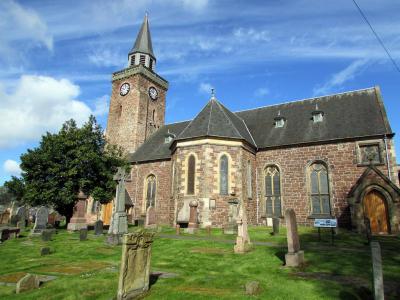
3) Old High Church
The Old High Church, located in Inverness, is a historic parish church of the Church of Scotland, situated along the picturesque banks of the River Ness. Part of Old High Saint Stephen's Parish, the church holds the distinction of being the oldest congregation in Inverness, with roots tracing back to Celtic times. Tradition links its founding to Saint Columba, the Irish monk credited with bringing Christianity to the region.
While the current church building dates primarily to the 18th century, its site has been a place of worship for centuries, making it the historic town church of Inverness. Among its notable features is a Father Willis organ, restored in 2010, which adds to its architectural and cultural significance. The Old High Church is a Category A listed building, underscoring its importance in Scotland's heritage.
The Old High congregation united with that of Saint Stephen’s Church in October 2003 to form Old High Saint Stephen’s Parish. In a rare arrangement, both buildings were retained for worship. However, regular services at the Old High Church ceased in January 2022, with Sunday worship now held exclusively at Saint Stephen’s Church at 10:30 AM.
Saint Stephen’s, established as a 'daughter church' of the Old High in 1897, is a Gothic-style building constructed from Morayshire freestone, designed by architect W.L. Carruthers. It holds a Category B listing, reflecting its architectural merit.
The Old High Church is a significant part of Inverness’s ecclesiastical and cultural history. Its parish area encompasses the city center, parts of the Crown area, and southern suburbs like Drummond and Lochardil.
While the current church building dates primarily to the 18th century, its site has been a place of worship for centuries, making it the historic town church of Inverness. Among its notable features is a Father Willis organ, restored in 2010, which adds to its architectural and cultural significance. The Old High Church is a Category A listed building, underscoring its importance in Scotland's heritage.
The Old High congregation united with that of Saint Stephen’s Church in October 2003 to form Old High Saint Stephen’s Parish. In a rare arrangement, both buildings were retained for worship. However, regular services at the Old High Church ceased in January 2022, with Sunday worship now held exclusively at Saint Stephen’s Church at 10:30 AM.
Saint Stephen’s, established as a 'daughter church' of the Old High in 1897, is a Gothic-style building constructed from Morayshire freestone, designed by architect W.L. Carruthers. It holds a Category B listing, reflecting its architectural merit.
The Old High Church is a significant part of Inverness’s ecclesiastical and cultural history. Its parish area encompasses the city center, parts of the Crown area, and southern suburbs like Drummond and Lochardil.
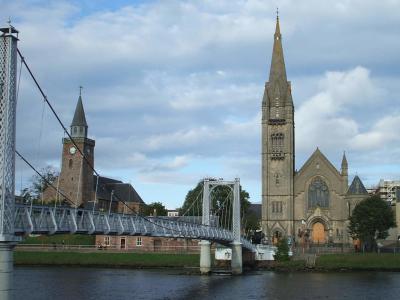
4) Free North Church
The Free North Church is a historic, Protestant church in Inverness. It rests on Bank Street at the northeast bank of the River Ness. The Free North Church is located near a number of other tourist destinations in the city. Some of these include the Grieg Street Bridge, Inverness Castle and the Egypt War Memorial.
The Gothic-style church was completed in 1893 from a design by architect Alexander Ross. The grand-size of the church allows for a congregation of up to 1,300. The church offers a tower, stair-tower, gable and porch. Its octagonal spire, which reaches 170 feet, is the tallest in the city.
Visitors can explore the grounds of the Free North Church, including the historic cemetery. Those wanting to join the church during worship are welcome to be part of the congregation during the 11 AM or 5:30 PM services on Sundays.
The Gothic-style church was completed in 1893 from a design by architect Alexander Ross. The grand-size of the church allows for a congregation of up to 1,300. The church offers a tower, stair-tower, gable and porch. Its octagonal spire, which reaches 170 feet, is the tallest in the city.
Visitors can explore the grounds of the Free North Church, including the historic cemetery. Those wanting to join the church during worship are welcome to be part of the congregation during the 11 AM or 5:30 PM services on Sundays.
5) Inverness Methodist Church
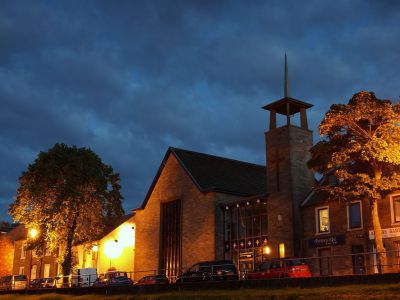
Situated on Huntly Street, Inverness Methodist Church is one of the city’s most notable sacred landmarks. The church’s history is deeply rooted in the Methodist tradition, with congregations meeting in Inverness since 1761. It commemorates a key moment in its past with a stained-glass window honoring John Wesley’s first visit to Inverness in 1764. The congregation remains part of the global Methodist family under the British Methodist Conference, serving as the most northerly Methodist Circuit on the UK mainland.
The present building, completed in 1965, was designed by architect Kenneth Finlayson of John R Chisholm & Company. It replaced an earlier structure lost to fire. The church features a distinctive bell tower and elegant wooden pews with ash stringing, providing a striking contrast. It seats up to 420 people, including a balcony. Six stained-glass windows adorn the building, reflecting its spiritual and historical legacy.
In 2003, the church underwent renovations, including the addition of a new entrance and floodlighting to enhance its welcoming atmosphere. Inside, an organ by Rushworth & Dreaper, dating to 1965, continues to enrich worship services.
Inverness Methodist Church is unique as the only Methodist church in the Scottish Highlands. It has long been recognized as a friendly and inclusive place, maintaining a tradition of warmth and support that has been central to its identity for over 250 years.
The present building, completed in 1965, was designed by architect Kenneth Finlayson of John R Chisholm & Company. It replaced an earlier structure lost to fire. The church features a distinctive bell tower and elegant wooden pews with ash stringing, providing a striking contrast. It seats up to 420 people, including a balcony. Six stained-glass windows adorn the building, reflecting its spiritual and historical legacy.
In 2003, the church underwent renovations, including the addition of a new entrance and floodlighting to enhance its welcoming atmosphere. Inside, an organ by Rushworth & Dreaper, dating to 1965, continues to enrich worship services.
Inverness Methodist Church is unique as the only Methodist church in the Scottish Highlands. It has long been recognized as a friendly and inclusive place, maintaining a tradition of warmth and support that has been central to its identity for over 250 years.
6) St. Mary's Roman Catholic Church
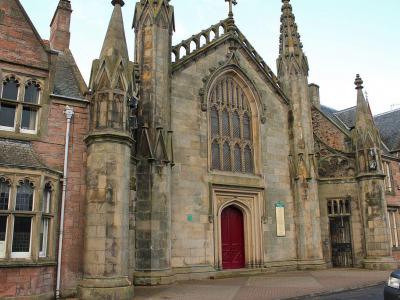
Saint Mary’s Roman Catholic Church is a historic and spiritual gem in Inverness. Located on the west bank of the River Ness, just a stone’s throw from the city center, this remarkable church is celebrated as the first Catholic place of worship built in Inverness after the Reformation, opening its doors on April 2, 1837. Designed in the Gothic Revival style by William Robertson, the church has undergone several enhancements over the centuries, each adding to its architectural and cultural significance.
The church is renowned for its exquisite altar and breathtaking stained glass windows, which have been enhanced over time. Notably, a significant reordering of the sanctuary was completed in 2014 to align with liturgical changes following the Second Vatican Council. This included the installation of a new altar, a reliquary, and intricate tiled flooring. A millennium-stained glass window, an icon of the Presentation of the Child, and a statue commemorating the 400th anniversary of Saint John Ogilvie’s martyrdom in 2015 further enrich its interior, creating an inspiring and serene atmosphere.
In its early years, the church served a modest Catholic community that had been worshiping in Margaret Street since the mission separated from Eskdale in 1827. By 1846, approximately 400 Catholics called Inverness home. Thanks to the generosity of benefactors such as Miss Jessie McDonell, the presbytery was added in 1888, and in 1894, a solemn re-opening marked the remodeling of the sanctuary, complete with a new altar by Peter Paul Pugin and Stations of the Cross.
Saint Mary’s continues to play a vital role in the spiritual life of Inverness, hosting daily Mass and serving as the Polish-language Chaplaincy for the city. Its doors are open to visitors seeking a quiet moment of reflection or those eager to explore its historical and artistic legacy.
The church is renowned for its exquisite altar and breathtaking stained glass windows, which have been enhanced over time. Notably, a significant reordering of the sanctuary was completed in 2014 to align with liturgical changes following the Second Vatican Council. This included the installation of a new altar, a reliquary, and intricate tiled flooring. A millennium-stained glass window, an icon of the Presentation of the Child, and a statue commemorating the 400th anniversary of Saint John Ogilvie’s martyrdom in 2015 further enrich its interior, creating an inspiring and serene atmosphere.
In its early years, the church served a modest Catholic community that had been worshiping in Margaret Street since the mission separated from Eskdale in 1827. By 1846, approximately 400 Catholics called Inverness home. Thanks to the generosity of benefactors such as Miss Jessie McDonell, the presbytery was added in 1888, and in 1894, a solemn re-opening marked the remodeling of the sanctuary, complete with a new altar by Peter Paul Pugin and Stations of the Cross.
Saint Mary’s continues to play a vital role in the spiritual life of Inverness, hosting daily Mass and serving as the Polish-language Chaplaincy for the city. Its doors are open to visitors seeking a quiet moment of reflection or those eager to explore its historical and artistic legacy.
7) Inverness Cathedral (must see)
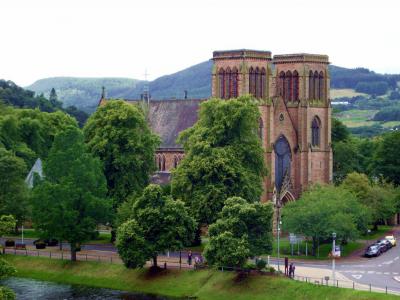
Inverness Cathedral is a Scottish Episcopal Church on the banks of the River Ness. The cathedral, also known as the Cathedral Church of Saint Andrew, is the seat of of the Bishop of Moray, Ross and Caithness. It was the first new Protestant cathedral built in Britain after the Reformation.
Inverness Cathedral was built in 1869 from a design by architect Alexander Ross. The cathedral is made from red tarradale stone and peterhead granite. The cathedral is noted for having the most northerly change-ringing church bells in the world.
The cathedral welcomes visitors throughout the year. The church doors are open from 10 AM to 4 PM daily. Likewise, the cathedral's gift shop and cafe are open every day except Christmas. A cathedral supervisor is on-hand to help with any questions.
Along with church services, Inverness Cathedral regularly hosts live music events, morning coffee and special events. Tourists are welcome to attend church services and any of the special events as they please.
Inverness Cathedral was built in 1869 from a design by architect Alexander Ross. The cathedral is made from red tarradale stone and peterhead granite. The cathedral is noted for having the most northerly change-ringing church bells in the world.
The cathedral welcomes visitors throughout the year. The church doors are open from 10 AM to 4 PM daily. Likewise, the cathedral's gift shop and cafe are open every day except Christmas. A cathedral supervisor is on-hand to help with any questions.
Along with church services, Inverness Cathedral regularly hosts live music events, morning coffee and special events. Tourists are welcome to attend church services and any of the special events as they please.
8) Ness Bank Church
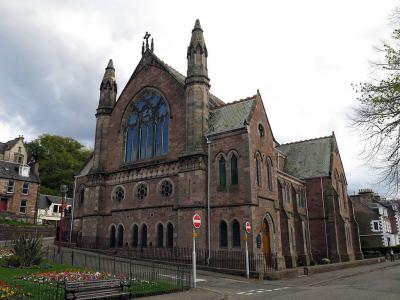
Located in the heart of Inverness, Ness Bank Church is a historic and architecturally striking building that has stood as a beacon of faith and culture for over 200 years. Originally built as a Gaelic chapel in 1798, it was established to serve the spiritual needs of Highlanders who had migrated to the city during a time of rapid urbanization. Over the years, it has grown and evolved, becoming a cherished part of the Church of Scotland and a significant landmark in Inverness.
The current building, designed by renowned architect Alexander Ross, was completed in 1901. Reflecting the grandeur of late Victorian Gothic Revival architecture, it replaced the original chapel, which had become too small for its congregation. The design features pointed arch windows, intricate stone carvings, and an elegant spire that towers above the cityscape. These elements, combined with its prime location on the banks of the River Ness, make Ness Bank Church a captivating sight for both locals and visitors.
The interior of the church is equally awe-inspiring. Sunlight filters through stunning stained-glass windows depicting biblical scenes, casting a serene, multicolored glow across the sanctuary. The wooden pews, symmetrically arranged, face a magnificent pulpit, creating a tranquil and reverent atmosphere. Adding to its splendor is the organ loft, home to one of Scotland’s finest pipe organs, which enriches worship services and concerts alike with its powerful acoustics.
Today, Ness Bank Church remains an active place of worship, welcoming everyone regardless of their faith or beliefs. Beyond its religious significance, the church serves as a vibrant community hub, hosting concerts, lectures, exhibitions, and other gatherings. Its central location enhances its accessibility, keeping it at the cultural and social heart of Inverness.
The current building, designed by renowned architect Alexander Ross, was completed in 1901. Reflecting the grandeur of late Victorian Gothic Revival architecture, it replaced the original chapel, which had become too small for its congregation. The design features pointed arch windows, intricate stone carvings, and an elegant spire that towers above the cityscape. These elements, combined with its prime location on the banks of the River Ness, make Ness Bank Church a captivating sight for both locals and visitors.
The interior of the church is equally awe-inspiring. Sunlight filters through stunning stained-glass windows depicting biblical scenes, casting a serene, multicolored glow across the sanctuary. The wooden pews, symmetrically arranged, face a magnificent pulpit, creating a tranquil and reverent atmosphere. Adding to its splendor is the organ loft, home to one of Scotland’s finest pipe organs, which enriches worship services and concerts alike with its powerful acoustics.
Today, Ness Bank Church remains an active place of worship, welcoming everyone regardless of their faith or beliefs. Beyond its religious significance, the church serves as a vibrant community hub, hosting concerts, lectures, exhibitions, and other gatherings. Its central location enhances its accessibility, keeping it at the cultural and social heart of Inverness.
9) Inverness Castle (must see)
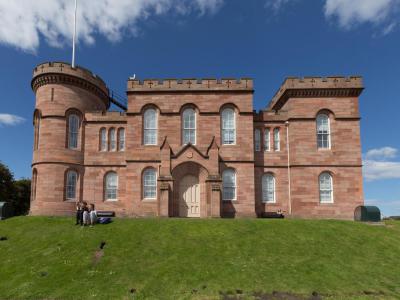
Perched on a cliff overlooking the River Ness, Inverness Castle has stood as a sentinel of Scottish history since 1057, though its current red sandstone structure dates to 1836. A Category A listed building, the castle has witnessed centuries of rebellion, royal intrigue, and architectural transformation.
The site's first castle is believed to have been constructed by Malcolm III of Scotland and later fortified by Shaw Macduff, the first chief of Clan Mackintosh, under Malcolm IV in 1163. The original fortress endured dramatic events, including partial destruction by Robert the Bruce in 1307 and the fiery retaliation by Lord Alexander, 3rd Lord of the Isles, in 1428 after being imprisoned there by James I.
The modern castle, a striking example of early castellated architecture, was designed by William Burn and completed in 1836. Featuring a symmetrical main façade and castellated towers, its southern block once housed the County Buildings and Sheriff Court. The northern block, added in 1848 by Thomas Brown II, served as a prison and courthouse. Surrounding bastioned walls were designed by Joseph Mitchell, completing the fortress-like aesthetic.
Over the centuries, the castle became a repository of military history, displaying captured field guns from battles such as the Battle of Loos and the Crimean War. Today, only the gun from Loos remains, preserved at the Clan Cameron Museum.
Inverness Castle transitioned from a seat of county governance to a judicial hub before the relocation of court functions in 2020. Closed for extensive renovations in 2021, the castle is slated to reopen in 2025, promising a renewed space for public engagement with its storied past.
The site's first castle is believed to have been constructed by Malcolm III of Scotland and later fortified by Shaw Macduff, the first chief of Clan Mackintosh, under Malcolm IV in 1163. The original fortress endured dramatic events, including partial destruction by Robert the Bruce in 1307 and the fiery retaliation by Lord Alexander, 3rd Lord of the Isles, in 1428 after being imprisoned there by James I.
The modern castle, a striking example of early castellated architecture, was designed by William Burn and completed in 1836. Featuring a symmetrical main façade and castellated towers, its southern block once housed the County Buildings and Sheriff Court. The northern block, added in 1848 by Thomas Brown II, served as a prison and courthouse. Surrounding bastioned walls were designed by Joseph Mitchell, completing the fortress-like aesthetic.
Over the centuries, the castle became a repository of military history, displaying captured field guns from battles such as the Battle of Loos and the Crimean War. Today, only the gun from Loos remains, preserved at the Clan Cameron Museum.
Inverness Castle transitioned from a seat of county governance to a judicial hub before the relocation of court functions in 2020. Closed for extensive renovations in 2021, the castle is slated to reopen in 2025, promising a renewed space for public engagement with its storied past.
10) Inverness Museum and Art Gallery (must see)
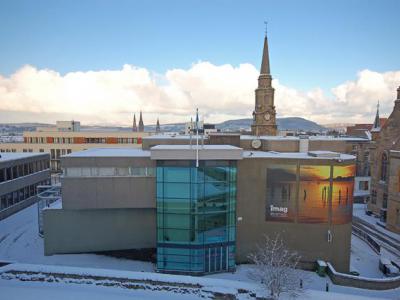
The Inverness Museum and Art Gallery is a contemporary gallery that features art, archaeology and natural history exhibits. The museum has been in continuous operation since 1881.
The first museum opened in 1881. It contained artwork that was created by Alexander Nasmyth, John Quinton Pringle and Tom Scott. It also featured a group of portraits that belonged to Prince Frederick Duleep Singh. These were primarily Stuart portraits, including one of Prince Charles Edward Stuart painted by Pompeo Batoni.
The current building was developed in 1963 to allow for more room for exhibits, learning and a museum cafe. The museum has samples of Scottish geology, Pictish stones, Jacobite memorabilia, Inverness silver and Highland weapons. The museum also has a vast photo archive and art gallery.
The museum is open throughout the year. Winter hours, from November to March, it is open from noon to 4 PM on Tuesday through Thursday and 11 AM to 4 PM on Friday and Saturday. The museum is open the remainder of the year from 10 AM to 12 PM on Tuesday through Saturday. Admission to the Inverness Museum and Art Gallery is free.
The first museum opened in 1881. It contained artwork that was created by Alexander Nasmyth, John Quinton Pringle and Tom Scott. It also featured a group of portraits that belonged to Prince Frederick Duleep Singh. These were primarily Stuart portraits, including one of Prince Charles Edward Stuart painted by Pompeo Batoni.
The current building was developed in 1963 to allow for more room for exhibits, learning and a museum cafe. The museum has samples of Scottish geology, Pictish stones, Jacobite memorabilia, Inverness silver and Highland weapons. The museum also has a vast photo archive and art gallery.
The museum is open throughout the year. Winter hours, from November to March, it is open from noon to 4 PM on Tuesday through Thursday and 11 AM to 4 PM on Friday and Saturday. The museum is open the remainder of the year from 10 AM to 12 PM on Tuesday through Saturday. Admission to the Inverness Museum and Art Gallery is free.
