Custom Walk in Portland, Oregon by rnitkin_665b94 created on 2026-03-04
Guide Location: USA » Portland
Guide Type: Custom Walk
# of Sights: 10
Tour Duration: 8 Hour(s)
Travel Distance: 22.3 Km or 13.9 Miles
Share Key: E7PH5
Guide Type: Custom Walk
# of Sights: 10
Tour Duration: 8 Hour(s)
Travel Distance: 22.3 Km or 13.9 Miles
Share Key: E7PH5
How It Works
Please retrieve this walk in the GPSmyCity app. Once done, the app will guide you from one tour stop to the next as if you had a personal tour guide. If you created the walk on this website or come to the page via a link, please follow the instructions below to retrieve the walk in the app.
Retrieve This Walk in App
Step 1. Download the app "GPSmyCity: Walks in 1K+ Cities" on Apple App Store or Google Play Store.



Step 2. In the GPSmyCity app, download(or launch) the guide "Portland Map and Walking Tours".
Step 3. Tap the menu button located at upper right corner of the "Walks" screen and select "Retrieve custom walk". Enter the share key: E7PH5
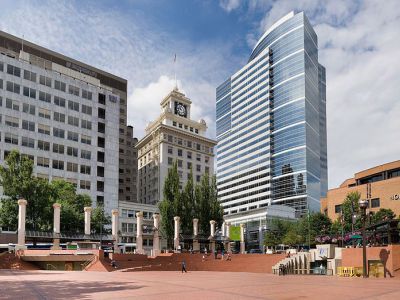
1) Pioneer Courthouse Square
Pioneer Courthouse Square is Portland's central hub – a pleasant, sunny spot made perfect for sampling the city's essence. The equivalent of a New Mexican/Californian plaza, it hosts food carts, public art pieces (e.g., Seward Johnson's 'Allow Me', also known as 'The Umbrella Man'), a Monday farmers' market, cultural festivals, a visitor center with a clean public bathroom... you name it! The water feature in the form of a cascading waterfall does make this a picture-perfect place.
Part of the square's immediate success in the 1980s was due to its timing, affirming as it did the "new age of the pedestrian" heralded by the transit mall. Designs were submitted from around the world, and models of the best submissions were put on display. The winning scheme was a simple brick-paved plaza with a waterfall, an arc of steps overlooking a central arena, and a whimsical colonnade separating it from the streets. The public was further drawn into the venture by funding construction through buying individual bricks; thus, from the first concept, ordinary people took possession of the square as their own. It is a place where everyone is welcome, a place to see and be seen, or just to chill out amid the hubbub of the working day. Danish architect Jan Gehl who, for more than fifty years, has focused on improving the quality of urban life by helping people to "re-conquer the city", has acclaimed it as one of the world's best public squares.
Part of the square's immediate success in the 1980s was due to its timing, affirming as it did the "new age of the pedestrian" heralded by the transit mall. Designs were submitted from around the world, and models of the best submissions were put on display. The winning scheme was a simple brick-paved plaza with a waterfall, an arc of steps overlooking a central arena, and a whimsical colonnade separating it from the streets. The public was further drawn into the venture by funding construction through buying individual bricks; thus, from the first concept, ordinary people took possession of the square as their own. It is a place where everyone is welcome, a place to see and be seen, or just to chill out amid the hubbub of the working day. Danish architect Jan Gehl who, for more than fifty years, has focused on improving the quality of urban life by helping people to "re-conquer the city", has acclaimed it as one of the world's best public squares.
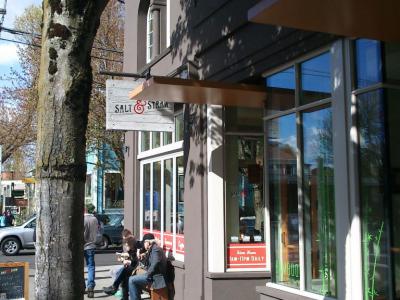
2) Salt & Straw Ice Cream
Salt & Straw is an ice cream company based in Portland, Oregon. The company was launched in 2011 by cousins Kim Malek and Tyler Malek. Salt & Straw began as a food cart on Alberta Street, Portland, Oregon and three months later the company opened its first brick-and-mortar location. Since opening in 2011, Salt & Straw has opened three other locations in Portland and offers a home delivery service throughout the US. In order to ship ice cream nationwide delivery, the company packs its ice cream in dry ice and kraft paper. Salt & Straw has locations in Portland, Los Angeles, San Francisco, San Diego, and Seattle. Salt & Straw is partially owned by film star and wrestler Dwayne "The Rock" Johnson.
Since opening, Salt & Straw has gained national media attention for its exotic ice cream flavors, some of which are seasonal. Standout flavors, such as Bone Marrow with Bourbon Smoked Cherries and Arbequina Olive Oil, have served as some of the main reasons Salt and Straw has been included on lists of America's best ice cream. Flavors offered at the ice cream shop vary depending on the seasons and ingredient availability, as all main ingredients are locally sourced.
Since opening, Salt & Straw has gained national media attention for its exotic ice cream flavors, some of which are seasonal. Standout flavors, such as Bone Marrow with Bourbon Smoked Cherries and Arbequina Olive Oil, have served as some of the main reasons Salt and Straw has been included on lists of America's best ice cream. Flavors offered at the ice cream shop vary depending on the seasons and ingredient availability, as all main ingredients are locally sourced.
Sight description based on Wikipedia.
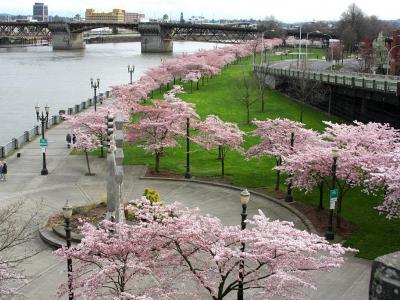
3) Tom McCall Waterfront Park
The walking trail in Waterfront Park along the Willamette River has been popular since the park was opened in 1978, replacing Harbor Way and former industrial sites. A major milestone in the freeway removal movement, it is now primarily used by those taking a stroll, jogging, biking, or riding scooters. Beautiful in every season and in all types of weather, it becomes an absolute must with spring arriving to witness pastel-pink cherry trees bursting into bloom. In October 2012, the American Planning Association voted it as one of America's ten greatest public spaces.
Broad, grassy, and well-kept, the 30-acre park affords fine ground-level views of Downtown Portland's bridges and skyline, with benches everywhere to take advantage. It is also the site for various events and annual celebrations, among them the Rose Festival, classical/blues concerts, Cinco de Mayo, Gay Pride, and the Oregon Brewers Festival. The arching water jets at the Salmon Street Fountain change pattern every few hours, and are a favorite summer cooling-off spot (bring spare clothes!). The fountain's three cycles are called "misters", "bollards", and "wedding cake".
Broad, grassy, and well-kept, the 30-acre park affords fine ground-level views of Downtown Portland's bridges and skyline, with benches everywhere to take advantage. It is also the site for various events and annual celebrations, among them the Rose Festival, classical/blues concerts, Cinco de Mayo, Gay Pride, and the Oregon Brewers Festival. The arching water jets at the Salmon Street Fountain change pattern every few hours, and are a favorite summer cooling-off spot (bring spare clothes!). The fountain's three cycles are called "misters", "bollards", and "wedding cake".

4) International Rose Test Garden (must see)
The International Rose Test Garden is a rose garden in Washington Park in Portland. There are over 7,000 rose plants of approximately 550 varieties. The roses bloom from April through October with the peak coming in June. New rose cultivars are continually sent to the garden from many parts of the world and are tested for color, fragrance, disease resistance and other attributes.
The Shakespeare Garden originally contained botanicals mentioned in the works of William Shakespeare. This was later modified to include fewer sun-loving plants due to the copious shade provided by the surrounding trees. The rose varieties are named after characters in his plays. It is popular for special occasions, particularly small weddings. The Gold Medal Garden is a formal garden with award winning roses, walkways, a central fountain, and a gazebo. During good weather the amphitheater in the garden is popular for picnicking.
The Shakespeare Garden originally contained botanicals mentioned in the works of William Shakespeare. This was later modified to include fewer sun-loving plants due to the copious shade provided by the surrounding trees. The rose varieties are named after characters in his plays. It is popular for special occasions, particularly small weddings. The Gold Medal Garden is a formal garden with award winning roses, walkways, a central fountain, and a gazebo. During good weather the amphitheater in the garden is popular for picnicking.
Sight description based on Wikipedia.
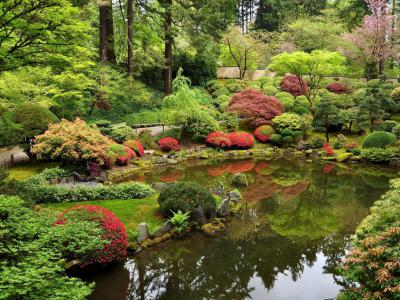
5) Portland Japanese Garden (must see)
The Portland Japanese Garden is a traditional Japanese garden, located within Washington Park in the west hills of Portland. The garden was designed by Professor Takuma Tono, one of the most important Japanese landscape architects of his time, and opened to the public in 1967. As a Japanese garden, the desired effect is to realize a sense of peace, harmony, and tranquility and to experience the feeling of being a part of nature. In a deep sense, a Japanese garden is a living reflection of the history and traditional culture of Japan.
The garden has five major sub-gardens, each a different degree of formality: the Strolling Pond Garden is the largest; the Natural Garden has multiple ponds, waterfalls, and streams; the Sand and Stone Garden contains weathered stones rising from rippled sand; the Flat Garden is typical of urban garden design, but here it contrasts with the park's folds and contours; the Tea Garden has two areas, each devoted to enhancing the tea ceremony.
The garden has five major sub-gardens, each a different degree of formality: the Strolling Pond Garden is the largest; the Natural Garden has multiple ponds, waterfalls, and streams; the Sand and Stone Garden contains weathered stones rising from rippled sand; the Flat Garden is typical of urban garden design, but here it contrasts with the park's folds and contours; the Tea Garden has two areas, each devoted to enhancing the tea ceremony.
Sight description based on Wikipedia.
6) Hoyt Arboretum
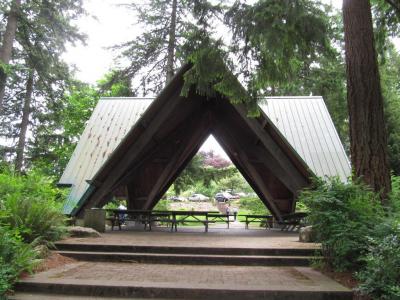
Located atop a ridge in the west hills of the city, this 187-acre (0.76 km2) reserve is much more than a woodsy park – it's a living museum of plants, with just under ten thousand shrubs and trees representing over 1,100 species from around the world, including dozens of species that are endangered in the wild. Most of these have labels identifying common and scientific names as well as region of origin; moreover, the trees – many of which are very large and clearly planted many years ago – are organized and grouped according to genus.
There are always seasonal highlights, from the magnificent magnolias in the spring to fiery-colored maples in the fall and witch hazels in mid-winter. Of special note are the giant Dawn Redwoods – rare deciduous conifers dating from the Jurassic period and thought to be extinct until specimens were discovered in a remote Chinese valley in the 1940s. These amazing trees bear soft, short needles and have a distinctive look in that the branches seem to push out from folds in the trunk.
Twelve miles (19 km) of hiking trails wind through the arboretum, including the Wildwood Trail that continues into Forest Park. If possible, plan your visit to coincide with a volunteer-led guided tour ($3/person donation suggested); check the Arboretum's events calendar for exact days/times. Although key trees and plants are labeled and free maps to well-marked walks ranging from ½ mile to 1.25 miles in length can be picked up at the Visitor Center or downloaded from the Arboretum’s website, the guided tour adds immeasurably to the experience.
There are always seasonal highlights, from the magnificent magnolias in the spring to fiery-colored maples in the fall and witch hazels in mid-winter. Of special note are the giant Dawn Redwoods – rare deciduous conifers dating from the Jurassic period and thought to be extinct until specimens were discovered in a remote Chinese valley in the 1940s. These amazing trees bear soft, short needles and have a distinctive look in that the branches seem to push out from folds in the trunk.
Twelve miles (19 km) of hiking trails wind through the arboretum, including the Wildwood Trail that continues into Forest Park. If possible, plan your visit to coincide with a volunteer-led guided tour ($3/person donation suggested); check the Arboretum's events calendar for exact days/times. Although key trees and plants are labeled and free maps to well-marked walks ranging from ½ mile to 1.25 miles in length can be picked up at the Visitor Center or downloaded from the Arboretum’s website, the guided tour adds immeasurably to the experience.
7) Washington Park (must see)
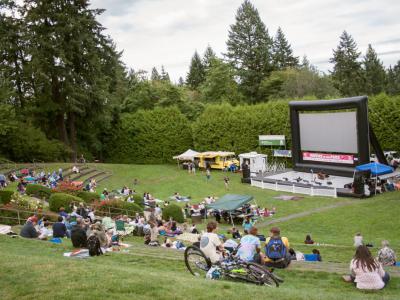
Washington Park is a public urban park in Portland in the U.S. state of Oregon. It includes a zoo, forestry museum, arboretum, children's museum, rose garden, Japanese garden, amphitheatre, memorials, archery range, tennis courts, soccer field, picnic areas, playgrounds, public art and many acres of wild forest with miles of trails.
Washington Park covers more than 410 acres (166 hectares) on mostly steep, wooded hillsides which range in elevation from 200 feet (61 m) at 24th & West Burnside Street to 870 feet (265 m) at SW Fairview Blvd. It comprises 159.7 acres (64.63 hectares) of city park land that has been officially designated as "Washington Park" by the City of Portland, as well as the adjacent 64-acre (26 ha) Oregon Zoo and the 189-acre (76 ha) Hoyt Arboretum, which together make up the area described as "Washington Park" on signs and maps.
Washington Park covers more than 410 acres (166 hectares) on mostly steep, wooded hillsides which range in elevation from 200 feet (61 m) at 24th & West Burnside Street to 870 feet (265 m) at SW Fairview Blvd. It comprises 159.7 acres (64.63 hectares) of city park land that has been officially designated as "Washington Park" by the City of Portland, as well as the adjacent 64-acre (26 ha) Oregon Zoo and the 189-acre (76 ha) Hoyt Arboretum, which together make up the area described as "Washington Park" on signs and maps.
Sight description based on Wikipedia.
8) Pearl District (must see)
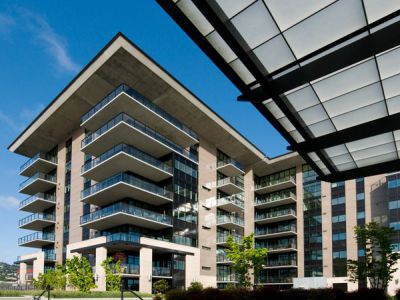
The Pearl District is an area of Portland, formerly occupied by warehouses, light industry and railroad classification yards and now noted for its art galleries, upscale businesses and residences. It now mostly consists of high-rise condominiums and warehouse-to-loft conversions.
The area is home to several Portland icons, including Powell's City of Books. Art galleries and institutions (many who stage monthly receptions), boutiques, and restaurants abound, and there are also a number of small clubs and bars.
The district includes most of the historic North Park Blocks (1869), as well as two public plazas: Jamison Square is built around a fountain which simulates a tidal pool that is periodically filled by artificial waterfalls and then drained into grating and Tanner Springs Park, which is a re-created natural area featuring wetlands, a walking trail, and creek.
The area is home to several Portland icons, including Powell's City of Books. Art galleries and institutions (many who stage monthly receptions), boutiques, and restaurants abound, and there are also a number of small clubs and bars.
The district includes most of the historic North Park Blocks (1869), as well as two public plazas: Jamison Square is built around a fountain which simulates a tidal pool that is periodically filled by artificial waterfalls and then drained into grating and Tanner Springs Park, which is a re-created natural area featuring wetlands, a walking trail, and creek.
Sight description based on Wikipedia.
9) Powell's City of Books (must see)
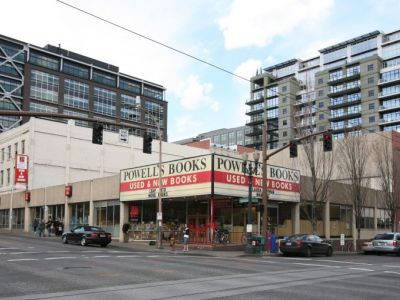
Powell's Books is a chain of bookstores in Portland, and its surrounding metropolitan area. Powell's headquarters, dubbed Powell's City of Books, claims to be the largest independent new and used bookstore in the world. Powell's City of Books is located in the Pearl District on the edge of downtown and occupies a full city block. It contains over 68,000 square feet (6,300 m2) of retail floor space. The inventory for its retail and online sales is over four million new, used, rare, and out-of-print books. Powell's buys around 3,000 used books a day.
Sight description based on Wikipedia.
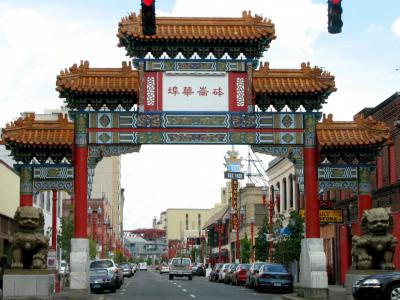
10) Old Town Chinatown Gateway
Serving as the official entrance to Portland's Old Town Chinatown neighborhood, this 38-ft (12 m) tall "paifang" made of bronze, marble, granite, wood, tile, and steel features eye-catching depictions of 78 dragons and 58 mythical characters. As tradition requires, one bronze lion is male and the other is female (representing yin and yang), while the Chinese letters on the front and back read "Portland Chinatown" and "Four Seas, One Family", respectively.
The gate was proposed by the Chinese Consolidated Benevolent Association in 1984, who've designated Taiwanese architects and artists to complete its design before having it shipped to Portland and presented to the City of Portland as "gesture of goodwill from the Chinese community". The gate cost $256,000 and was the largest of its kind in the United States until one in Washington, D.C. was completed several months later.
Tip:
Among other main attractions in Old Town Chinatown are the Lan Su Chinese Garden, the Portland Saturday Market; the Shanghai tunnels, where people used to be kidnapped, smuggled, and sold as slaves; the Skidmore Fountain and the very famous Voodoo Doughnut. If you are in the mood for dancing, here you will find some of the city's best night clubs also.
The gate was proposed by the Chinese Consolidated Benevolent Association in 1984, who've designated Taiwanese architects and artists to complete its design before having it shipped to Portland and presented to the City of Portland as "gesture of goodwill from the Chinese community". The gate cost $256,000 and was the largest of its kind in the United States until one in Washington, D.C. was completed several months later.
Tip:
Among other main attractions in Old Town Chinatown are the Lan Su Chinese Garden, the Portland Saturday Market; the Shanghai tunnels, where people used to be kidnapped, smuggled, and sold as slaves; the Skidmore Fountain and the very famous Voodoo Doughnut. If you are in the mood for dancing, here you will find some of the city's best night clubs also.
