Custom Walk in Prague, Czech Republic by gayle_blayney457 created on 2026-03-04
Guide Location: Czech Republic » Prague
Guide Type: Custom Walk
# of Sights: 8
Tour Duration: 3 Hour(s)
Travel Distance: 7.3 Km or 4.5 Miles
Share Key: ZZSHX
Guide Type: Custom Walk
# of Sights: 8
Tour Duration: 3 Hour(s)
Travel Distance: 7.3 Km or 4.5 Miles
Share Key: ZZSHX
How It Works
Please retrieve this walk in the GPSmyCity app. Once done, the app will guide you from one tour stop to the next as if you had a personal tour guide. If you created the walk on this website or come to the page via a link, please follow the instructions below to retrieve the walk in the app.
Retrieve This Walk in App
Step 1. Download the app "GPSmyCity: Walks in 1K+ Cities" on Apple App Store or Google Play Store.



Step 2. In the GPSmyCity app, download(or launch) the guide "Prague Map and Walking Tours".
Step 3. Tap the menu button located at upper right corner of the "Walks" screen and select "Retrieve custom walk". Enter the share key: ZZSHX
1) Astronomical Clock (must see)
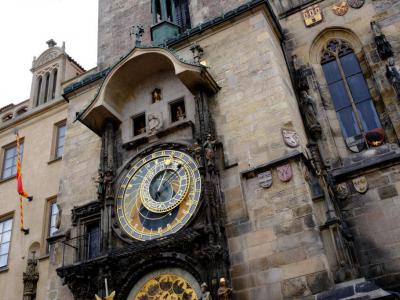
The Astronomical Clock on Prague’s Old Town Square has been drawing curious eyes since the 15th century. Every hour from 9 a.m. to 9 p.m., a theatrical blend of medieval engineering and storytelling never fails to draw a crowd. The clock’s beauty is matched by its complexity, with layers of astronomical and calendar dials showcasing the scientific prowess of its creators.
The main dial presents a symbolic view of Earth and Sky, split between day and night. Surrounding that is a ring showing old Bohemian time, while the astronomical display charts the sun and planets as they orbit the Earth-back when the universe revolved around us, of course. Another circle traces the paths of the sun and moon through the zodiac. A final ring on the edge shows the day, date, and the name of the saint commemorated-a matter of significance in medieval times.
But it’s the show on the hour that captures the most attention. From tiny trapdoors above the clock face, a parade of carved apostles appears, led by Christ, moving steadily past two small windows. Overhead, four figures symbolize medieval threats-Death with an hourglass, Greed clutching gold, Vanity admiring his reflection, and a Turk shaking his head. Below, statues representing Philosophy, Religion, Astronomy, and History observe the scene. As the show concludes, a golden rooster flaps and crows, and the clock strikes the hour to polite applause before the spectators disperse.
Local legend adds an eerie layer: the master clockmaker, Hanus, was blinded to ensure he’d never replicate his work elsewhere. In revenge, he damaged the clock, and no one could repair it for a hundred years. Another tale suggests that if the clock ever stops for too long, the fate of Prague may hang in the balance.
Tip: For a bird’s-eye view, take the elevator-or brave the stairs-to the top of the tower. The view is worth every step.
The main dial presents a symbolic view of Earth and Sky, split between day and night. Surrounding that is a ring showing old Bohemian time, while the astronomical display charts the sun and planets as they orbit the Earth-back when the universe revolved around us, of course. Another circle traces the paths of the sun and moon through the zodiac. A final ring on the edge shows the day, date, and the name of the saint commemorated-a matter of significance in medieval times.
But it’s the show on the hour that captures the most attention. From tiny trapdoors above the clock face, a parade of carved apostles appears, led by Christ, moving steadily past two small windows. Overhead, four figures symbolize medieval threats-Death with an hourglass, Greed clutching gold, Vanity admiring his reflection, and a Turk shaking his head. Below, statues representing Philosophy, Religion, Astronomy, and History observe the scene. As the show concludes, a golden rooster flaps and crows, and the clock strikes the hour to polite applause before the spectators disperse.
Local legend adds an eerie layer: the master clockmaker, Hanus, was blinded to ensure he’d never replicate his work elsewhere. In revenge, he damaged the clock, and no one could repair it for a hundred years. Another tale suggests that if the clock ever stops for too long, the fate of Prague may hang in the balance.
Tip: For a bird’s-eye view, take the elevator-or brave the stairs-to the top of the tower. The view is worth every step.
2) Crystal Dana Bohemia
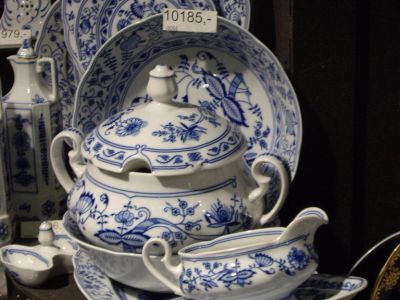
In comparison to other Czech handicrafts, porcelain is a relatively recent addition. Thun, the pioneering and most renowned Czech porcelain manufacturer, was founded in the town of Klášterec in 1794. The company's headquarters now reside in the village of Nová Role near Karlovy Vary, where abundant deposits of white clay and other raw materials attracted numerous porcelain artisans, earning Karlovy Vary the moniker "the capital of porcelain."
While Thun enjoys well-deserved acclaim, Prague's shops offer a plethora of other high-quality brands. Your selection depends on personal taste, budget, and purpose-are you seeking collectibles or durable kitchenware for everyday use? At Dana Bohemia, you'll discover a diverse range, including the iconic pink line of Thun products, along with an extensive array from Leander and Concordia, renowned for its Bernadotte relief set.
Why You Should Visit:
Premier destination for an extensive range of glassware, porcelain, crystal, and chandeliers, all crafted in the Czech Republic. Additionally, you'll find high-quality enameled glass, figurines, gilded crystal, and decorative items.
While Thun enjoys well-deserved acclaim, Prague's shops offer a plethora of other high-quality brands. Your selection depends on personal taste, budget, and purpose-are you seeking collectibles or durable kitchenware for everyday use? At Dana Bohemia, you'll discover a diverse range, including the iconic pink line of Thun products, along with an extensive array from Leander and Concordia, renowned for its Bernadotte relief set.
Why You Should Visit:
Premier destination for an extensive range of glassware, porcelain, crystal, and chandeliers, all crafted in the Czech Republic. Additionally, you'll find high-quality enameled glass, figurines, gilded crystal, and decorative items.
3) Franz Kafka's Rotating Head (must see)
Despite writing in German and experiencing minimal publication during his lifetime, Franz Kafka embodies the essence of Prague. Many of his unsettling novels appear to anticipate the Communist era, and his profound influence extends to other artists in the city.
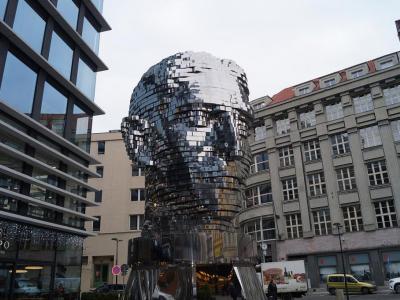
Keep an eye out for the colossal Kafka head located outside the Quadrio shopping center, crafted by David Černý. This kinetic sculpture, standing at 11 meters tall and composed of 42 rotating panels, rotates for 15 minutes at the top of each hour. Each layer operates independently, rendering it one of the most futuristic art installations across Europe.
Tip:
Arrive 10 minutes early to secure a prime spot for photography or filming!
Keep an eye out for the colossal Kafka head located outside the Quadrio shopping center, crafted by David Černý. This kinetic sculpture, standing at 11 meters tall and composed of 42 rotating panels, rotates for 15 minutes at the top of each hour. Each layer operates independently, rendering it one of the most futuristic art installations across Europe.
Tip:
Arrive 10 minutes early to secure a prime spot for photography or filming!
4) Wenceslas Square
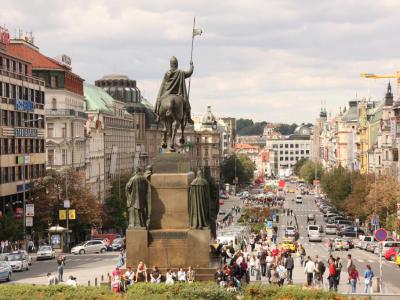
A prominent symbol of Czech identity, Wenceslas Square stretches like a lengthy rectangle, traversing from the northwest edge of the New Town to the neo-Renaissance-style National Museum at its southeastern tip.
Originating in the 14th century alongside the establishment of the New Town by Charles IV, the square initially served as a horse market. In the 19th century national revival, it received its current name along with a very fine statue of Saint Wenceslas (“The Good King”) atop his steed, encircled by figures of Saint Agnes of Bohemia, Saint Prokop, Saint Adalbert of Prague, and Saint Ludmila.
Due to its historical significance and central location, Wenceslas Square has been a gathering point for various events throughout history, from Nazi demonstrations to national celebrations and pivotal moments like the Velvet Revolution of 1989.
Today, the square is as busy a spot is ever, attracting locals and tourists alike to visit landmarks such as the National Museum and Prague State Opera, as well as a plethora of offices, hotels, shops, clubs, and eateries flanking its sides.
Tip:
For the quintessential photo of Wenceslas Square, position yourself with Saint Wenceslas' statue behind you. Keep an eye out for the Marks & Spencer shop sign, too, as it marks the balcony where Václav Havel addressed the crowds during the Velvet Revolution in 1989.
Originating in the 14th century alongside the establishment of the New Town by Charles IV, the square initially served as a horse market. In the 19th century national revival, it received its current name along with a very fine statue of Saint Wenceslas (“The Good King”) atop his steed, encircled by figures of Saint Agnes of Bohemia, Saint Prokop, Saint Adalbert of Prague, and Saint Ludmila.
Due to its historical significance and central location, Wenceslas Square has been a gathering point for various events throughout history, from Nazi demonstrations to national celebrations and pivotal moments like the Velvet Revolution of 1989.
Today, the square is as busy a spot is ever, attracting locals and tourists alike to visit landmarks such as the National Museum and Prague State Opera, as well as a plethora of offices, hotels, shops, clubs, and eateries flanking its sides.
Tip:
For the quintessential photo of Wenceslas Square, position yourself with Saint Wenceslas' statue behind you. Keep an eye out for the Marks & Spencer shop sign, too, as it marks the balcony where Václav Havel addressed the crowds during the Velvet Revolution in 1989.
5) Namesti Miru (flea market)
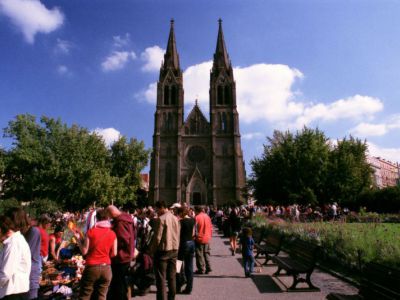
The Namesti Miru flea market offers a monthly delight for enthusiasts of antique treasures, original handcrafts, and vintage finds. Held on the last Saturday of each month from March through October, it runs from 9 AM to 4 PM. Thanks to its affordable stall reservation fees, the market features a diverse array of vendors, including seasoned professionals and newcomers alike. Several stalls are dedicated to artisans who craft their own jewelry, clothing, and artwork, ensuring a vibrant mix of offerings that appeal to all tastes.
This flea market is considered the first of its kind in the Czech Republic, breaking away from the typical swap meets and car boot sales commonly seen in the country. The trend of setting up stalls in market squares has rapidly gained popularity nationwide, with Prague serving as the epicenter of flea market culture. Situated in the heart of the Vinohrady district, in the square in front of Saint Ludmila Church, the market enjoys a charming ambiance, with a friendly and welcoming atmosphere enveloping the area.
Visitors can browse through a wide range of items, from antique paintings and jewelry to vintage books, household items, war memorabilia, bags, clothing, records, toys, and more. Haggling is encouraged, allowing shoppers to snag fantastic deals on unique pieces. Food stalls are scattered throughout, while nearby cafes offer a convenient respite for shoppers in need of a break.
This flea market is considered the first of its kind in the Czech Republic, breaking away from the typical swap meets and car boot sales commonly seen in the country. The trend of setting up stalls in market squares has rapidly gained popularity nationwide, with Prague serving as the epicenter of flea market culture. Situated in the heart of the Vinohrady district, in the square in front of Saint Ludmila Church, the market enjoys a charming ambiance, with a friendly and welcoming atmosphere enveloping the area.
Visitors can browse through a wide range of items, from antique paintings and jewelry to vintage books, household items, war memorabilia, bags, clothing, records, toys, and more. Haggling is encouraged, allowing shoppers to snag fantastic deals on unique pieces. Food stalls are scattered throughout, while nearby cafes offer a convenient respite for shoppers in need of a break.
6) Dancing House (must see)
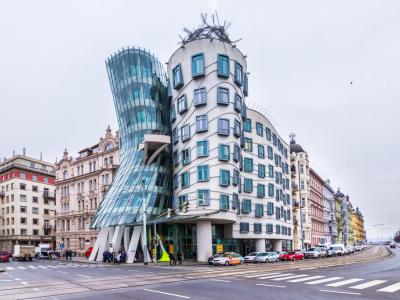
One of Prague's most renowned modern landmarks, the Dancing House is the nickname given to the Nationale-Nederlanden building in downtown. Designed collaboratively by Canadian-American architect Frank Gehry (known for his work on the Guggenheim Bilbao) and his Croatian-Czech partner Vlado Milunić, the building occupies a vacant riverfront plot that was once the site of a structure destroyed during the Bombing of Prague in 1945. Completed in 1996, its unconventional design sparked controversy upon unveiling.
Supported by Czech President Václav Havel, who had resided nearby for many years, the building was envisioned as a hub of cultural activity. Originally dubbed "Fred and Ginger" after the iconic dance duo Fred Astaire and Ginger Rogers, due to its resemblance to a pair of dancers, the structure stands in stark contrast to Prague's predominant Baroque, Gothic, and Art Nouveau architecture. Yet, the intertwined glass and stone towers flanking the Vltava River symbolize the city's delicate balance between its rich historical heritage and its evolving modern identity.
Playfully nicknamed the "Drunk House" by locals, it now houses a hotel and a top-floor restaurant offering panoramic views of the city. Even if you don’t plan to stay or dine there, admiring the building itself, whether from the near or far side of the river, is well worth it.
Tip:
Take the elevator to the Glass Bar on the top floor and enjoy any beverage to gain access to the 360-degree viewing platform.
Supported by Czech President Václav Havel, who had resided nearby for many years, the building was envisioned as a hub of cultural activity. Originally dubbed "Fred and Ginger" after the iconic dance duo Fred Astaire and Ginger Rogers, due to its resemblance to a pair of dancers, the structure stands in stark contrast to Prague's predominant Baroque, Gothic, and Art Nouveau architecture. Yet, the intertwined glass and stone towers flanking the Vltava River symbolize the city's delicate balance between its rich historical heritage and its evolving modern identity.
Playfully nicknamed the "Drunk House" by locals, it now houses a hotel and a top-floor restaurant offering panoramic views of the city. Even if you don’t plan to stay or dine there, admiring the building itself, whether from the near or far side of the river, is well worth it.
Tip:
Take the elevator to the Glass Bar on the top floor and enjoy any beverage to gain access to the 360-degree viewing platform.
7) Bridge Street (Mostecka)
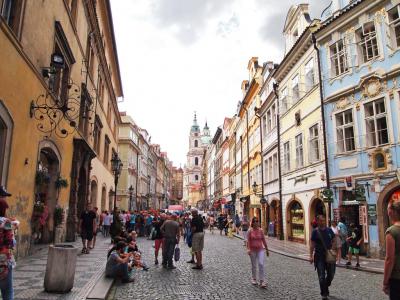
Passing through the arch beneath the Lesser Town Bridge Towers, you’ll find yourself on Bridge Street-a narrow cobblestone lane that has connected Charles Bridge to the Lesser Town Square for over 750 years. Framed by a mix of Renaissance, Baroque, and Rococo facades dating between the 14th and 18th centuries, the street feels like a vivid time capsule. Some of the buildings still carry their original decorative touches: a chained bear at No. 4, a striking bronze door at No. 17, three goats at No. 18, and even a bust of cellist Zelenka. With all its character and charm, it’s no surprise this was once part of the royal coronation route.
Just beyond the towers, on the right side of the street, look for a house marked by three painted ostriches. Once home to Jan Fux, a feather merchant with a flair for fashion, the Renaissance-style building served as both residence and storefront. In 1606, Fux commissioned the bold ostrich design to advertise his trade in luxurious plumes-ostrich feathers were all the rage for hats, uniforms, horse trappings, fans, and finery of every sort.
As you continue your stroll, pause to admire the Gothic tower hidden in the courtyard of “At the Three Golden Bells,” the intricate ironwork and sculptural details on the “At the Black Eagle” house, and the candy-colored, pink-and-yellow Rococo facade of the Kounic Palace.
Toward street’s lower end, you’ll find a mix of boutique shops, inviting restaurants and bars catering to the stream of passersby. When it’s time for a break, stop in at ROESEL café-a warm, family-run spot inside a historic building. Enjoy their daily specials, try a slice of homemade cake with craft beer, and take a moment to explore the mini-exhibition and the charming courtyard.
Just beyond the towers, on the right side of the street, look for a house marked by three painted ostriches. Once home to Jan Fux, a feather merchant with a flair for fashion, the Renaissance-style building served as both residence and storefront. In 1606, Fux commissioned the bold ostrich design to advertise his trade in luxurious plumes-ostrich feathers were all the rage for hats, uniforms, horse trappings, fans, and finery of every sort.
As you continue your stroll, pause to admire the Gothic tower hidden in the courtyard of “At the Three Golden Bells,” the intricate ironwork and sculptural details on the “At the Black Eagle” house, and the candy-colored, pink-and-yellow Rococo facade of the Kounic Palace.
Toward street’s lower end, you’ll find a mix of boutique shops, inviting restaurants and bars catering to the stream of passersby. When it’s time for a break, stop in at ROESEL café-a warm, family-run spot inside a historic building. Enjoy their daily specials, try a slice of homemade cake with craft beer, and take a moment to explore the mini-exhibition and the charming courtyard.
8) Rocking Horse Toy Shop
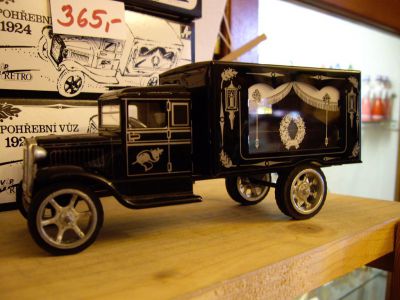
Transport yourself to an era of yesteryears, where wooden toys held a special place in the hearts of children and model cars were treasured possessions. Every aspect of this charming store is designed to evoke joy, from the warm and welcoming greeting of the owner to the delightful array of wind-up music boxes and whimsical animal figurines on the shelves.
Take a closer look at the intricately crafted wooden rocking horses and fantastical three-headed dragons; many of these enchanting creations are lovingly handmade by skilled Czech artisans and offered at reasonable prices. Additionally, the shop offers kits equipped with colored pencils and pastels, perfect for nurturing the creativity of budding young artists.
Tips:
While the store operates exclusively in the afternoons, it conveniently pairs well with a visit to the nearby Loreta.
Don't hesitate to ask if you can indulge in a playful exploration of the toys before making your purchase – it's sure to be met with an accommodating response!
Take a closer look at the intricately crafted wooden rocking horses and fantastical three-headed dragons; many of these enchanting creations are lovingly handmade by skilled Czech artisans and offered at reasonable prices. Additionally, the shop offers kits equipped with colored pencils and pastels, perfect for nurturing the creativity of budding young artists.
Tips:
While the store operates exclusively in the afternoons, it conveniently pairs well with a visit to the nearby Loreta.
Don't hesitate to ask if you can indulge in a playful exploration of the toys before making your purchase – it's sure to be met with an accommodating response!
