Custom Walk in Belgrade, Serbia by fredandmona_b72852 created on 2026-03-05
Guide Location: Serbia » Belgrade
Guide Type: Custom Walk
# of Sights: 8
Tour Duration: 8 Hour(s)
Travel Distance: 22.1 Km or 13.7 Miles
Share Key: YZV3J
Guide Type: Custom Walk
# of Sights: 8
Tour Duration: 8 Hour(s)
Travel Distance: 22.1 Km or 13.7 Miles
Share Key: YZV3J
How It Works
Please retrieve this walk in the GPSmyCity app. Once done, the app will guide you from one tour stop to the next as if you had a personal tour guide. If you created the walk on this website or come to the page via a link, please follow the instructions below to retrieve the walk in the app.
Retrieve This Walk in App
Step 1. Download the app "GPSmyCity: Walks in 1K+ Cities" on Apple App Store or Google Play Store.



Step 2. In the GPSmyCity app, download(or launch) the guide "Belgrade Map and Walking Tours".
Step 3. Tap the menu button located at upper right corner of the "Walks" screen and select "Retrieve custom walk". Enter the share key: YZV3J
1) Belgrade Fortress (must see)
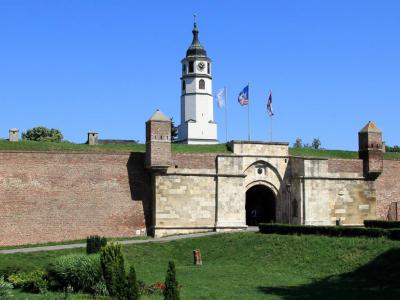
The Belgrade Fortress is the most visited tourist attraction in Belgrade with over 2 million unique visitors annually. It is the oldest section of the city. The fortress includes the old citadel and Kalemegdan Park. It is located at the top of the Sumadija geological bar, overlooking the Great War Island.
The first fort was built after 100 AD. The remains of this fort are still visible. The fortress was rebuilt by Emperor Justinian I in 535 AD. It was destroyed and rebuilt many times over the years by various warring nations.
The fortress was given to Serbia in the 11th century by Bela I, king of Hungary. It was returned to Hungary in 1427. About 100 years later, it was taken over by the Turks and owned by the Ottoman Empire until 1867. During that time, the fortress was rebuilt and modernized.
In the 1860s, the four outer city gates and walls were demolished and the Serbians regained control of the fortress. It was further damaged during World War I and World War II. In 1965, the fortress became a protected area due to its great cultural significance. Belgrade Fortress was declared a Monument of Culture of Exceptional Importance in 1979.
Some of the areas of interest in the Belgrade Fortress include the Ruzica Church, Despot Stefan Tower, the statue of "The Victor," the Roman Well, Damad Ali Pasha's turbe and the Gunpowder Magazine, among many others. The fortress is also home to the Museum of Natural History, the Military Museum and the Institute for the Protection of Cultural Monuments.
Admission to the fortress is free.
The first fort was built after 100 AD. The remains of this fort are still visible. The fortress was rebuilt by Emperor Justinian I in 535 AD. It was destroyed and rebuilt many times over the years by various warring nations.
The fortress was given to Serbia in the 11th century by Bela I, king of Hungary. It was returned to Hungary in 1427. About 100 years later, it was taken over by the Turks and owned by the Ottoman Empire until 1867. During that time, the fortress was rebuilt and modernized.
In the 1860s, the four outer city gates and walls were demolished and the Serbians regained control of the fortress. It was further damaged during World War I and World War II. In 1965, the fortress became a protected area due to its great cultural significance. Belgrade Fortress was declared a Monument of Culture of Exceptional Importance in 1979.
Some of the areas of interest in the Belgrade Fortress include the Ruzica Church, Despot Stefan Tower, the statue of "The Victor," the Roman Well, Damad Ali Pasha's turbe and the Gunpowder Magazine, among many others. The fortress is also home to the Museum of Natural History, the Military Museum and the Institute for the Protection of Cultural Monuments.
Admission to the fortress is free.
2) Roman Well
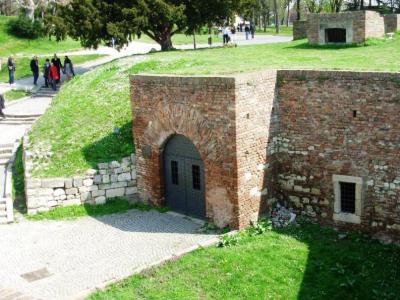
The Roman Well was created to provide water for the city in 1717. Because Belgrade was often under siege, the Austrians, who occupied the fortress at that time, sought a way to reach water without going outside of the walls to the Danube river or the Sava river.
The creation of the Roman Well began with a wooden mechanism designed by Balthasar Neumann. A hole some 177-feet deep was dug with the belief that water from the Sava river would be found. When it was not, the well was transformed into a manually operated cistern.
It was originally called the Great Well but was renamed to Roman Well in the early 19th century when the city was under Serbian rule. This was because it was widely believed that all old structures in the area were Roman.
The well was made of wood, which caused it to rot and eventually deteriorate. The spiral staircase built into the well is still in place but due to safety concerns no one may use the steps or enter the well.
The Roman Well is located near the Pobednik and King's Gate.
The creation of the Roman Well began with a wooden mechanism designed by Balthasar Neumann. A hole some 177-feet deep was dug with the belief that water from the Sava river would be found. When it was not, the well was transformed into a manually operated cistern.
It was originally called the Great Well but was renamed to Roman Well in the early 19th century when the city was under Serbian rule. This was because it was widely believed that all old structures in the area were Roman.
The well was made of wood, which caused it to rot and eventually deteriorate. The spiral staircase built into the well is still in place but due to safety concerns no one may use the steps or enter the well.
The Roman Well is located near the Pobednik and King's Gate.
3) City Hall
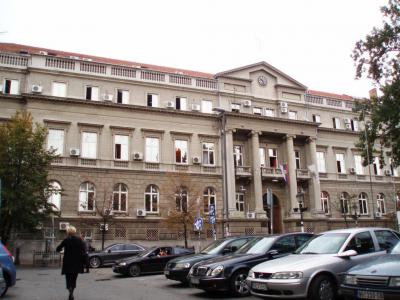
Zemun Opština, commonly referred to as the City Hall, is a historic and architectural gem located in Belgrade. Constructed in 1886, this distinguished building was originally designed to function as an administrative hub. The architectural design of City Hall is rooted in the Neo-Classic style, which is evident in its imposing and robust appearance. The structure is comprised of three stories, each reflecting the grandeur and meticulous craftsmanship of the late 19th century.
During the tumultuous period of World War II, the City Hall suffered extensive damage. In the aftermath, a comprehensive restoration project was undertaken, which not only repaired the wartime damages but also included the addition of a new wing. This restoration phase also introduced several new architectural features, further enhancing the building's historical significance and its functional capabilities.
Today, City Hall stands as a prominent landmark in Belgrade, proudly overlooking the bustling Zemun street market. It is more than just an administrative building; it is a symbol of the area's rich history and resilience. The restored City Hall continues to serve its community, embodying both historical legacy and modern functionality and remains a testament to the enduring spirit of Zemun.
During the tumultuous period of World War II, the City Hall suffered extensive damage. In the aftermath, a comprehensive restoration project was undertaken, which not only repaired the wartime damages but also included the addition of a new wing. This restoration phase also introduced several new architectural features, further enhancing the building's historical significance and its functional capabilities.
Today, City Hall stands as a prominent landmark in Belgrade, proudly overlooking the bustling Zemun street market. It is more than just an administrative building; it is a symbol of the area's rich history and resilience. The restored City Hall continues to serve its community, embodying both historical legacy and modern functionality and remains a testament to the enduring spirit of Zemun.

4) Museum of Yugoslavia
The Museum of Yugoslavia, located in Belgrade, Serbia, is a prominent public history museum dedicated to chronicling the periods of the Kingdom of Yugoslavia and Socialist Yugoslavia, as well as the life of Josip Broz Tito. Established in 1996 by the Government of the Federal Republic of Yugoslavia, the museum was initially named the Museum of the History of Yugoslavia.
In 2016, the museum was renamed the Museum of Yugoslavia. It is the most visited museum in Serbia, attracting 120,000 visitors annually. The museum complex spans three buildings-25 May Museum, House of Flowers, and Old Museum-covering a total area of 5,253 square meters within a 3.2-hectare park. One of the notable features of the museum is Tito's grave, which is located in the House of Flowers.
The Museum of Yugoslavia aims to provide a modern interpretation of Yugoslav heritage and history, encouraging visitors to engage actively with the past to better understand the present. Its mission includes fostering open dialogue, exchanging knowledge, and exploring the social and cultural phenomena of the 20th century. The museum's programs and activities are designed to promote social memory and a culture of remembrance related to the development of the Yugoslav idea, from the creation of the Yugoslav state as a kingdom to its breakup in the early 1990s.
The foundation of the museum in 1996 followed the dissolution of the Memorial Center “Josip Broz Tito” and the Museum of the Revolution of Yugoslav Nations and Ethnic Minorities. This transition occurred in the context of the wars and the breakup of Yugoslavia in the 1990s, during which the previous institutions were seen as burdensome remnants of the past. However, the collections, histories, and documentation from these institutions became the basis for the new museum, transforming it from a mere storage place for "old and unnecessary things" into a dynamic center for exploring and acknowledging Yugoslav heritage.
In 2016, the museum was renamed the Museum of Yugoslavia. It is the most visited museum in Serbia, attracting 120,000 visitors annually. The museum complex spans three buildings-25 May Museum, House of Flowers, and Old Museum-covering a total area of 5,253 square meters within a 3.2-hectare park. One of the notable features of the museum is Tito's grave, which is located in the House of Flowers.
The Museum of Yugoslavia aims to provide a modern interpretation of Yugoslav heritage and history, encouraging visitors to engage actively with the past to better understand the present. Its mission includes fostering open dialogue, exchanging knowledge, and exploring the social and cultural phenomena of the 20th century. The museum's programs and activities are designed to promote social memory and a culture of remembrance related to the development of the Yugoslav idea, from the creation of the Yugoslav state as a kingdom to its breakup in the early 1990s.
The foundation of the museum in 1996 followed the dissolution of the Memorial Center “Josip Broz Tito” and the Museum of the Revolution of Yugoslav Nations and Ethnic Minorities. This transition occurred in the context of the wars and the breakup of Yugoslavia in the 1990s, during which the previous institutions were seen as burdensome remnants of the past. However, the collections, histories, and documentation from these institutions became the basis for the new museum, transforming it from a mere storage place for "old and unnecessary things" into a dynamic center for exploring and acknowledging Yugoslav heritage.
5) Cathedral of Saint Sava (must see)
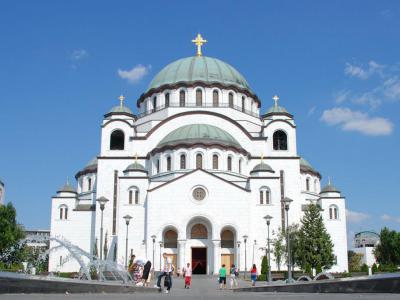
Modeled after the Hagia Sophia in Istanbul, the Temple of Saint Sava is Belgrade's most imposing landmark. It is dedicated to Saint Sava, the founder of the Serbian Orthodox Church and a national hero.
The church was planned to be the bishop's seat and the main cathedral for the Serbian Orthodox religion. You can trace the initial plans for building a church back to 1894. But the first stones of the church weren't laid until 1935, and construction was paused during the war years and communist rule.
The tide turned for the church in 1985 when a liturgy was held, attended by over 100,000 people. This proved that the church still had significant power with the population, and the communist leaders had to back down and allow the church construction to go on.
During construction, the greatest achievement was undoubtedly the lifting of the church's enormous concrete dome in 1989. The dome is 39.5 meters (130 feet) in diameter, weighs 4,000 tons, and is clad in copper. It was lifted into place using hydraulic machines, a process that took 20 days. The construction technology that made it possible was created specifically for the task.
The church sits on the Vračar plateau, the site where Ottomans burnt Saint Sava's remains in 1594. Sava lived in the 13th century and was known as the Enlightener. Besides being the first Archbishop of the Serbian Orthodox Church, he is remembered as the founder of Serbian law, a diplomat, and one of the most important people in the country's history.
Saint Sava's is one of the largest Eastern Orthodox churches and one of the largest churches in the world. When the Hagia Sophia was again converted to a mosque in 2020, church leaders hoped that Saint Sava's would replace it as a "New Hagia Sophia."
One of the most notable interior features of the church is the use of light, thanks to the enormous dome and four apses. In addition, the interior is clad with 130,000 square feet of golden mosaics. The impressive installation was funded thanks to gifts from the Russian Federation and the Republic of Serbia.
The church was planned to be the bishop's seat and the main cathedral for the Serbian Orthodox religion. You can trace the initial plans for building a church back to 1894. But the first stones of the church weren't laid until 1935, and construction was paused during the war years and communist rule.
The tide turned for the church in 1985 when a liturgy was held, attended by over 100,000 people. This proved that the church still had significant power with the population, and the communist leaders had to back down and allow the church construction to go on.
During construction, the greatest achievement was undoubtedly the lifting of the church's enormous concrete dome in 1989. The dome is 39.5 meters (130 feet) in diameter, weighs 4,000 tons, and is clad in copper. It was lifted into place using hydraulic machines, a process that took 20 days. The construction technology that made it possible was created specifically for the task.
The church sits on the Vračar plateau, the site where Ottomans burnt Saint Sava's remains in 1594. Sava lived in the 13th century and was known as the Enlightener. Besides being the first Archbishop of the Serbian Orthodox Church, he is remembered as the founder of Serbian law, a diplomat, and one of the most important people in the country's history.
Saint Sava's is one of the largest Eastern Orthodox churches and one of the largest churches in the world. When the Hagia Sophia was again converted to a mosque in 2020, church leaders hoped that Saint Sava's would replace it as a "New Hagia Sophia."
One of the most notable interior features of the church is the use of light, thanks to the enormous dome and four apses. In addition, the interior is clad with 130,000 square feet of golden mosaics. The impressive installation was funded thanks to gifts from the Russian Federation and the Republic of Serbia.
6) Republic Square
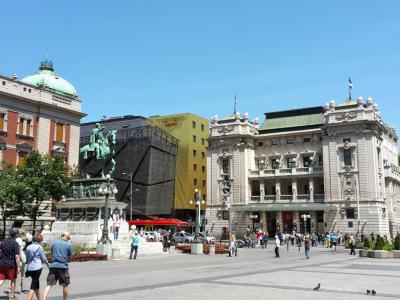
One of the main town squares in Belgrade, Republic Square is home to some of the city's most notable attractions. Both the National Theatre and the National Museum are here. It borders the Old Town neighborhood and connects to the center of town by traffic and pedestrian streets. It's one of the busiest places in the city and has over 20 bus or trolley lines running through it.
A statue of Prince Michael (Prince Mihailo Obernovic III) stands in the square. Italian sculptor Enrico Pazzi made the statue in 1882. The monument is in honor of the Prince's expulsion of the Turks from Serbia and the seven cities he liberated. The Prince's hand points towards Constantinople, supposedly symbolically telling the Turks to leave.
When the memorial to Prince Michael was built in 1882, excavations revealed brick tombs of Roman and Celtic origins. The square has been part of daily life in the area since Roman times. Back then, the town was named Singidunum.
The name of the square is still a matter of debate in Belgrade. Originally the square was named Theatre Square, but a movement has been afoot to rename it Freedom Square. It was here in 1991 that pro-democracy demonstrations were held supporting the ousting of Slobodan Milosevic.
A statue of Prince Michael (Prince Mihailo Obernovic III) stands in the square. Italian sculptor Enrico Pazzi made the statue in 1882. The monument is in honor of the Prince's expulsion of the Turks from Serbia and the seven cities he liberated. The Prince's hand points towards Constantinople, supposedly symbolically telling the Turks to leave.
When the memorial to Prince Michael was built in 1882, excavations revealed brick tombs of Roman and Celtic origins. The square has been part of daily life in the area since Roman times. Back then, the town was named Singidunum.
The name of the square is still a matter of debate in Belgrade. Originally the square was named Theatre Square, but a movement has been afoot to rename it Freedom Square. It was here in 1991 that pro-democracy demonstrations were held supporting the ousting of Slobodan Milosevic.
7) National Museum
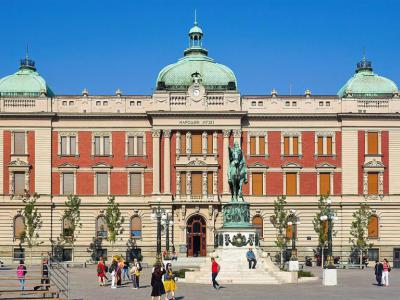
Located on Republic Square next to the National Theatre is the National Museum. It is the largest and oldest museum in Serbia, established in 1844. The present building had its grand opening in 1952 and was completely rebuilt and reopened in 2018.
The collection includes more than 400,000 objects. The collection comprises 34 sets, including archeological, numismatic, artistic, and historical objects. Masterpieces from all over the world are included in the collection.
In many of the permanent exhibits, there is a focus on telling the story of the development of this part of Europe. Artifacts narrate the timeline from the Paleolithic period to modern times.
The art collection includes works from French, Dutch, Russian, German, Flemish, Italian, Japanese, and Chinese masters, along with many others. The collection includes pieces by Picasso, Monet, Renoir, Rouault, Degas, and Cezanne, just to name a few.
The National Museum is a must-see for art buffs and history enthusiasts. Even though the collection is extensive, most guests find that one or two hours is sufficient to enjoy the well-organized collections. Descriptions are conveniently available in English. Entrance is free on Sundays, and the museum is closed every Monday.
The collection includes more than 400,000 objects. The collection comprises 34 sets, including archeological, numismatic, artistic, and historical objects. Masterpieces from all over the world are included in the collection.
In many of the permanent exhibits, there is a focus on telling the story of the development of this part of Europe. Artifacts narrate the timeline from the Paleolithic period to modern times.
The art collection includes works from French, Dutch, Russian, German, Flemish, Italian, Japanese, and Chinese masters, along with many others. The collection includes pieces by Picasso, Monet, Renoir, Rouault, Degas, and Cezanne, just to name a few.
The National Museum is a must-see for art buffs and history enthusiasts. Even though the collection is extensive, most guests find that one or two hours is sufficient to enjoy the well-organized collections. Descriptions are conveniently available in English. Entrance is free on Sundays, and the museum is closed every Monday.
8) Church of Alexander of Neva
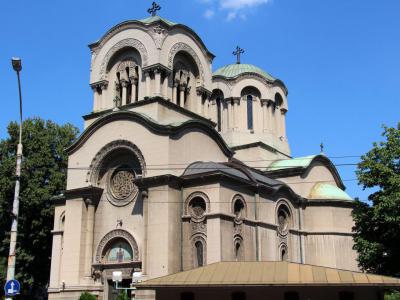
The Church of Saint Alexander Nevsky is a prominent Serbian Orthodox church located in the Dorćol area of the Old Town (Stari Grad) municipality in Belgrade. The church is dedicated to Saint Alexander Nevsky, a revered Russian national saint, and is part of the Archeparchy of Belgrade and Karlovci of the Serbian Orthodox Church.
The Church of Saint Alexander Nevsky's site has a long history from the Austrian occupation of northern Serbia (1717-1739). Capucine monks, authorized by Emperor Charles VI on August 23, 1718, converted a mosque into a church dedicated to the Virgin Mary, likely the Bajram-beg mosque. Despite their small number, they conducted missionary work and cared for the sick in hospitals, converting over 1,000 imperial soldiers to Catholicism by 1725.
The first church on this site was constructed in 1877 in the Morava architectural style, a distinctive style associated with Serbian medieval architecture. Initially, this church was a modest wooden structure filled with bricks. However, it was demolished in 1891 due to urban development, despite opposition from the Serbian Orthodox Church.
Plans for a larger church emerged in 1912, with architect Jelisaveta Načić, the first woman to graduate from the architectural department of the Technical Faculty in Belgrade, being selected to design it. The foundation stone was consecrated by Metropolitan Dimitrije on May 12, 1912, in the presence of the heir to the throne, Alexander Karađorđević. The construction was interrupted by World War I and resumed afterward, with the church being completed in 1928 or 1929. The final structure was built in the Serbian-Byzantine style, which combines elements of Byzantine and Serbian medieval architecture.
The Church of Saint Alexander Nevsky was designated a cultural monument in 1983 by the Serbian Institute for Protection of Monuments, underscoring its historical and architectural importance. Today, it remains a significant religious and cultural landmark in Belgrade, reflecting the city's rich history and the enduring legacy of its architectural heritage.
The Church of Saint Alexander Nevsky's site has a long history from the Austrian occupation of northern Serbia (1717-1739). Capucine monks, authorized by Emperor Charles VI on August 23, 1718, converted a mosque into a church dedicated to the Virgin Mary, likely the Bajram-beg mosque. Despite their small number, they conducted missionary work and cared for the sick in hospitals, converting over 1,000 imperial soldiers to Catholicism by 1725.
The first church on this site was constructed in 1877 in the Morava architectural style, a distinctive style associated with Serbian medieval architecture. Initially, this church was a modest wooden structure filled with bricks. However, it was demolished in 1891 due to urban development, despite opposition from the Serbian Orthodox Church.
Plans for a larger church emerged in 1912, with architect Jelisaveta Načić, the first woman to graduate from the architectural department of the Technical Faculty in Belgrade, being selected to design it. The foundation stone was consecrated by Metropolitan Dimitrije on May 12, 1912, in the presence of the heir to the throne, Alexander Karađorđević. The construction was interrupted by World War I and resumed afterward, with the church being completed in 1928 or 1929. The final structure was built in the Serbian-Byzantine style, which combines elements of Byzantine and Serbian medieval architecture.
The Church of Saint Alexander Nevsky was designated a cultural monument in 1983 by the Serbian Institute for Protection of Monuments, underscoring its historical and architectural importance. Today, it remains a significant religious and cultural landmark in Belgrade, reflecting the city's rich history and the enduring legacy of its architectural heritage.
