Custom Walk in Rome, Italy by clreimanis_8c9b48 created on 2026-03-05
Guide Location: Italy » Rome
Guide Type: Custom Walk
# of Sights: 5
Tour Duration: 3 Hour(s)
Travel Distance: 9 Km or 5.6 Miles
Share Key: Z7UAK
Guide Type: Custom Walk
# of Sights: 5
Tour Duration: 3 Hour(s)
Travel Distance: 9 Km or 5.6 Miles
Share Key: Z7UAK
How It Works
Please retrieve this walk in the GPSmyCity app. Once done, the app will guide you from one tour stop to the next as if you had a personal tour guide. If you created the walk on this website or come to the page via a link, please follow the instructions below to retrieve the walk in the app.
Retrieve This Walk in App
Step 1. Download the app "GPSmyCity: Walks in 1K+ Cities" on Apple App Store or Google Play Store.



Step 2. In the GPSmyCity app, download(or launch) the guide "Rome Map and Walking Tours".
Step 3. Tap the menu button located at upper right corner of the "Walks" screen and select "Retrieve custom walk". Enter the share key: Z7UAK
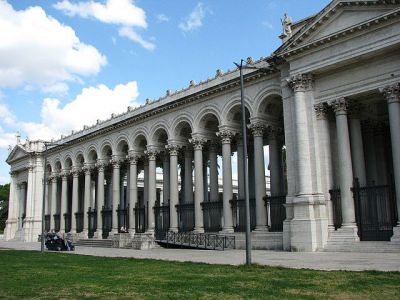
1) Basilica Papale di San Paolo fuori le mura (Basilica of Saint Paul Outside the Walls)
Situated on the site where Saint Paul's tomb is believed to be, this is one of the five patriarchal basilicas in Rome. Unfortunately, it suffered a devastating fire in 1823 and was subsequently reconstructed in the 19th century, faithfully replicating its original design. The grandeur is evident in the medallions of the popes that adorn the nave and transepts, starting with Saint Peter positioned to the right of the apse and culminating with Benedict XVI at the top of the south aisle.
The triumphal arch above the nave features restored 5th-century mosaics on one side, while the other side features mosaics by Pietro Cavallini, originally located on the facade. Elsewhere, the cloister of Saint Paul, untouched by the fire, showcases a remarkable display of architectural beauty. Completed around 1214, it is adorned with vibrant, inlaid columns that support the arcade. This cloister is home to what is arguably Rome's most magnificent example of Cosmati craftsmanship. Its columns, embellished with intricate mosaics, spiral gracefully and enclose a tranquil rose garden.
Beyond the cloister lies the pinacoteca, a gallery exhibiting ecclesiastical art, vestments, and related artifacts. Additionally, an exhibition gallery connected to the cloister displays fragments of recently unearthed statuary an early medieval monastic complex. Accessible via the glass staircase near the shop, the excavations themselves were opened to the public in 2018, providing a glimpse into the historical depths of Saint Paul's Outside the Walls.
Tips: Admission to the church is free, but there is an additional fee for adults who wish to explore the beautifully adorned columns in the backyard. Make sure not to overlook the original walls constructed by Constantine and the underground museum showcasing recent archaeological findings.
The triumphal arch above the nave features restored 5th-century mosaics on one side, while the other side features mosaics by Pietro Cavallini, originally located on the facade. Elsewhere, the cloister of Saint Paul, untouched by the fire, showcases a remarkable display of architectural beauty. Completed around 1214, it is adorned with vibrant, inlaid columns that support the arcade. This cloister is home to what is arguably Rome's most magnificent example of Cosmati craftsmanship. Its columns, embellished with intricate mosaics, spiral gracefully and enclose a tranquil rose garden.
Beyond the cloister lies the pinacoteca, a gallery exhibiting ecclesiastical art, vestments, and related artifacts. Additionally, an exhibition gallery connected to the cloister displays fragments of recently unearthed statuary an early medieval monastic complex. Accessible via the glass staircase near the shop, the excavations themselves were opened to the public in 2018, providing a glimpse into the historical depths of Saint Paul's Outside the Walls.
Tips: Admission to the church is free, but there is an additional fee for adults who wish to explore the beautifully adorned columns in the backyard. Make sure not to overlook the original walls constructed by Constantine and the underground museum showcasing recent archaeological findings.

2) Basilica di Santa Maria in Trastevere (Basilica of Our Lady in Trastevere)
Situated in the historic Trastevere district, Piazza Santa Maria in Trastevere derives its name from the nearby church, which underwent a splendid restoration of its facade mosaics in 2018. This church, considered Rome's first official Christian place of worship, was established by Pope Callixtus I in the 3rd century, during a time when Christianity remained a minority belief. Its location is said to be where an oil fountain miraculously emerged on the day of Christ's birth.
Today, the church predominantly reflects a 12th-century structure renowned for its magnificent mosaics. Particularly noteworthy is the apse mosaic depicting the Coronation of the Virgin, alongside the six mosaics by Pietro Cavallini below, which portray the life of the Virgin with remarkable realism. The nave showcases twenty-two granite columns sourced from the remnants of ancient Roman buildings. Despite some additions in the 18th-century Baroque style, Santa Maria has preserved its medieval charm.
Beneath the grand altar on the right, an inscription reading "FONS OLEI" designates the spot where the oil is believed to have gushed forth.
Why You Should Visit:
One of the oldest (if not the oldest) churches in Rome; extremely ornate and well worth a visit when visiting Trastevere.
During the evening, the church's facade sparkles with the illuminated brilliance of its mosaics.
Tip:
Similar to other churches, it is customary to have your shoulders and knees covered, regardless of the outside temperature.
A good idea would be to plan on spending a little extra time in the area to grab lunch, dinner or gelato.
Today, the church predominantly reflects a 12th-century structure renowned for its magnificent mosaics. Particularly noteworthy is the apse mosaic depicting the Coronation of the Virgin, alongside the six mosaics by Pietro Cavallini below, which portray the life of the Virgin with remarkable realism. The nave showcases twenty-two granite columns sourced from the remnants of ancient Roman buildings. Despite some additions in the 18th-century Baroque style, Santa Maria has preserved its medieval charm.
Beneath the grand altar on the right, an inscription reading "FONS OLEI" designates the spot where the oil is believed to have gushed forth.
Why You Should Visit:
One of the oldest (if not the oldest) churches in Rome; extremely ornate and well worth a visit when visiting Trastevere.
During the evening, the church's facade sparkles with the illuminated brilliance of its mosaics.
Tip:
Similar to other churches, it is customary to have your shoulders and knees covered, regardless of the outside temperature.
A good idea would be to plan on spending a little extra time in the area to grab lunch, dinner or gelato.
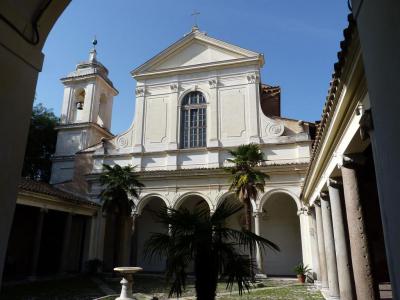
3) Basilica di San Clemente al Laterano (Basilica of Saint Clement) (must see)
San Clemente is a most impressive archaeological site in Rome, renowned for its unique triple-decker structure. At its pinnacle sits the present-day basilica, erected in the 12th century. Below it lies a 4th-century church, built upon the remnants of a 2nd-century pagan temple dedicated to the god Mithras and ancient Roman apartments dating back to the 1st century. In 1857, Friar Joseph Mullooly initiated excavations beneath the basilica, unveiling these fascinating layers of history. Today, visitors can descend through time and explore all three levels, immersing themselves in the rich heritage preserved within.
The upper church, located at street level, exudes charm and splendor. Its apse features a radiant 12th-century mosaic depicting Jesus on the cross, transforming into a vibrant tree. Delicate green acanthus leaves dance across the mosaic, adorned with intricate scenes of daily life. The 4th-century marble choir screens showcase early Christian symbols, including doves, vines, and fish. Within the left nave, the Castiglioni chapel reveals frescoes created around 1400 by the Florentine artist Masolino da Panicale, renowned for his contributions to realism and perspective in Renaissance painting. Notable frescoes within the chapel depict the Crucifixion, scenes from the lives of Saints Catherine, Ambrose, and Christopher, and the Annunciation above the entrance.
Descending the stairs to the right of the sacristy and bookshop, visitors are transported to the 4th-century church, which remained in use until 1084 when it suffered irreparable damage during a siege led by Norman prince Robert Guiscard. Despite the passage of time, vibrant 11th-century frescoes depicting stories from the life of Saint Clement have endured. Of particular interest is the final fresco on the left, once part of the central nave. It showcases a captivating quote, including the unexpected phrase "Go on, you sons of harlots, pull!"-a rare and intriguing inclusion in a religious painting and an early example of written vernacular Italian.
Descending further down a set of stairs unveils the Mithraeum, a sacred shrine dedicated to the god Mithras. The cult of Mithras originated in Persia and gained popularity in Rome during the 2nd and 3rd centuries AD. These underground chambers served as a place of worship, mirroring the belief that Mithras was born in a cave. Stone couches, visible within the Mithraeum, served as seats for initiates who would gather to share meals. It is worth noting that many pagan shrines in Rome were dismantled by Christians, who often repurposed the sites by constructing churches atop them.
Why You Should Visit:
A very interesting glimpse into the ancient past – below street level!
Tip:
Bring a small flashlight for a closer inspection of the frescoes and wall paintings.
The upper church, located at street level, exudes charm and splendor. Its apse features a radiant 12th-century mosaic depicting Jesus on the cross, transforming into a vibrant tree. Delicate green acanthus leaves dance across the mosaic, adorned with intricate scenes of daily life. The 4th-century marble choir screens showcase early Christian symbols, including doves, vines, and fish. Within the left nave, the Castiglioni chapel reveals frescoes created around 1400 by the Florentine artist Masolino da Panicale, renowned for his contributions to realism and perspective in Renaissance painting. Notable frescoes within the chapel depict the Crucifixion, scenes from the lives of Saints Catherine, Ambrose, and Christopher, and the Annunciation above the entrance.
Descending the stairs to the right of the sacristy and bookshop, visitors are transported to the 4th-century church, which remained in use until 1084 when it suffered irreparable damage during a siege led by Norman prince Robert Guiscard. Despite the passage of time, vibrant 11th-century frescoes depicting stories from the life of Saint Clement have endured. Of particular interest is the final fresco on the left, once part of the central nave. It showcases a captivating quote, including the unexpected phrase "Go on, you sons of harlots, pull!"-a rare and intriguing inclusion in a religious painting and an early example of written vernacular Italian.
Descending further down a set of stairs unveils the Mithraeum, a sacred shrine dedicated to the god Mithras. The cult of Mithras originated in Persia and gained popularity in Rome during the 2nd and 3rd centuries AD. These underground chambers served as a place of worship, mirroring the belief that Mithras was born in a cave. Stone couches, visible within the Mithraeum, served as seats for initiates who would gather to share meals. It is worth noting that many pagan shrines in Rome were dismantled by Christians, who often repurposed the sites by constructing churches atop them.
Why You Should Visit:
A very interesting glimpse into the ancient past – below street level!
Tip:
Bring a small flashlight for a closer inspection of the frescoes and wall paintings.
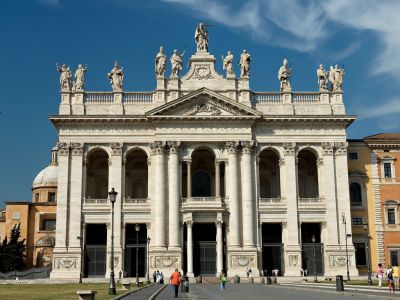
4) Arcibasilica di San Giovanni in Laterano (Archbasilica of Saint John in the Lateran)
Saint John's, not Saint Peter's, holds the distinction of being highest-ranking basilica in the world. Founded in 324, it is the oldest public church in the city of Rome, and the oldest basilica of the Western world.
Emperor Constantine commissioned the construction of this grand structure, predating the establishment of Saint Peter's, making it the primary ecclesiastical seat of the Pope. Throughout its history, the edifice has faced challenges such as vandalism, earthquakes, and fires, leading to extensive restorations in the 16th and 17th centuries. Notably, the interior was artfully designed by the renowned Baroque genius Borromini. Standing tall on the impressive facade are colossal statues representing the Twelve Apostles, Christ, John the Baptist, and the Virgin Mary.
While much of the structure has undergone restoration, fragments from earlier periods remain. Adorning the left portico is an ancient statue of Constantine, while the central portal has ancient bronze doors transferred from the Curia in the Roman Forum. Inside, the altar boasts a magnificent Gothic tabernacle, dating back to 1367, which is believed to house the revered heads of Saint Peter and Saint Paul. A captivating sight awaits in the last chapel of the left aisle, where a cloister adorned with 12th-century cosmatesque mosaics can be admired.
Just around the corner, Emperor Constantine's octagonal baptistery stands as one of Rome's oldest Christian structures. Despite multiple restorations, a 17th-century redecoration, and even a car bombing in 1993 associated with the Mafia, this baptistery has preserved its ancient form.
Tip: Don't miss the opportunity to visit the cloister behind the archbasilica. Although there is a small fee, it grants you access to a collection of authentic antiquities dating back to pre-Roman times, as well as a selection of intriguing Catholic relics.
Emperor Constantine commissioned the construction of this grand structure, predating the establishment of Saint Peter's, making it the primary ecclesiastical seat of the Pope. Throughout its history, the edifice has faced challenges such as vandalism, earthquakes, and fires, leading to extensive restorations in the 16th and 17th centuries. Notably, the interior was artfully designed by the renowned Baroque genius Borromini. Standing tall on the impressive facade are colossal statues representing the Twelve Apostles, Christ, John the Baptist, and the Virgin Mary.
While much of the structure has undergone restoration, fragments from earlier periods remain. Adorning the left portico is an ancient statue of Constantine, while the central portal has ancient bronze doors transferred from the Curia in the Roman Forum. Inside, the altar boasts a magnificent Gothic tabernacle, dating back to 1367, which is believed to house the revered heads of Saint Peter and Saint Paul. A captivating sight awaits in the last chapel of the left aisle, where a cloister adorned with 12th-century cosmatesque mosaics can be admired.
Just around the corner, Emperor Constantine's octagonal baptistery stands as one of Rome's oldest Christian structures. Despite multiple restorations, a 17th-century redecoration, and even a car bombing in 1993 associated with the Mafia, this baptistery has preserved its ancient form.
Tip: Don't miss the opportunity to visit the cloister behind the archbasilica. Although there is a small fee, it grants you access to a collection of authentic antiquities dating back to pre-Roman times, as well as a selection of intriguing Catholic relics.
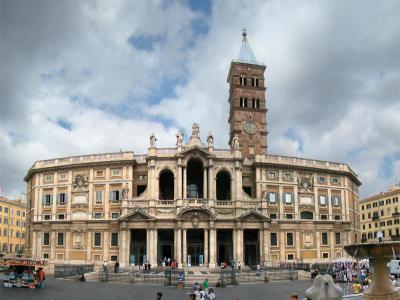
5) Basilica di Santa Maria Maggiore (Basilica of Saint Mary Major) (must see)
As the largest among the 26 churches in Rome dedicated to the Virgin Mary, the Basilica of Saint Mary Major holds a significant place in history. Originally constructed by Pope Liberius in the 4th century, the grandiose church has undergone renovations and enhancements by successive popes while still retaining its early medieval structure. The colonnaded nave, an integral part of the original 5th-century building, offers a glimpse into its ancient origins. The medieval era contributed the captivating Cosmatesque marble floor and the delightful Romanesque bell tower adorned with intricate blue ceramic roundels. During the Renaissance, a new coffered ceiling was introduced, while the Baroque period left its imprint with twin domes and grand facades at the front and rear. All in all, it’s a most successful blend of different architectural styles.
However, the true splendor of Saint Mary Major lies in its mosaics, which are among the oldest in Rome. The biblical scenes adorning the aisles date back to the 5th century, captivating visitors with their artistic depiction. The mosaics on the triumphal arch are particularly breathtaking, showcasing the skill and craftsmanship of the time. Among other medieval highlights is a magnificent 13th-century mosaic featuring an enthroned Christ in the loggia, adding to the artistic treasures within.
In 2001, Pope John Paul II inaugurated the Basilica Museum, dedicated to the church's history and the spread of Catholicism throughout the world. Here you will see ecclesiastical paintings, ritual vestments, scores from the choir and various manuscripts.
Tips: When visiting, be sure to take advantage of the small tours available to explore the church's hidden treasures. Additionally, don't miss the opportunity to visit the balcony loggia, which offers a unique perspective and allows you to admire more of the church's architecture. As evening sets in, find a serene spot by the fountain and marvel at the illuminated beauty of the building.
However, the true splendor of Saint Mary Major lies in its mosaics, which are among the oldest in Rome. The biblical scenes adorning the aisles date back to the 5th century, captivating visitors with their artistic depiction. The mosaics on the triumphal arch are particularly breathtaking, showcasing the skill and craftsmanship of the time. Among other medieval highlights is a magnificent 13th-century mosaic featuring an enthroned Christ in the loggia, adding to the artistic treasures within.
In 2001, Pope John Paul II inaugurated the Basilica Museum, dedicated to the church's history and the spread of Catholicism throughout the world. Here you will see ecclesiastical paintings, ritual vestments, scores from the choir and various manuscripts.
Tips: When visiting, be sure to take advantage of the small tours available to explore the church's hidden treasures. Additionally, don't miss the opportunity to visit the balcony loggia, which offers a unique perspective and allows you to admire more of the church's architecture. As evening sets in, find a serene spot by the fountain and marvel at the illuminated beauty of the building.
