Custom Walk in Reykjavik, Iceland by tony_collera4543 created on 2026-03-09
Guide Location: Iceland » Reykjavik
Guide Type: Custom Walk
# of Sights: 15
Tour Duration: 3 Hour(s)
Travel Distance: 5 Km or 3.1 Miles
Share Key: EZLQG
Guide Type: Custom Walk
# of Sights: 15
Tour Duration: 3 Hour(s)
Travel Distance: 5 Km or 3.1 Miles
Share Key: EZLQG
How It Works
Please retrieve this walk in the GPSmyCity app. Once done, the app will guide you from one tour stop to the next as if you had a personal tour guide. If you created the walk on this website or come to the page via a link, please follow the instructions below to retrieve the walk in the app.
Retrieve This Walk in App
Step 1. Download the app "GPSmyCity: Walks in 1K+ Cities" on Apple App Store or Google Play Store.



Step 2. In the GPSmyCity app, download(or launch) the guide "Reykjavik Map and Walking Tours".
Step 3. Tap the menu button located at upper right corner of the "Walks" screen and select "Retrieve custom walk". Enter the share key: EZLQG

1) Aurora Reykjavik (must see)
Aurora Reykjavík is a relatively recent addition to the cultural landscape of Reykjavík, created to focus entirely on one of the country’s most iconic natural phenomena: the aurora borealis. Founded and run by a team of local northern lights experts and award-winning photographers, the centre was conceived as both an educational space and a visual archive, bringing together years of field experience, photography, and research into a single, accessible exhibition. It also offers a reliable, year-round way to experience the northern lights, regardless of weather conditions.
The exhibition explains how the aurora forms—from solar activity to its interaction with Earth’s atmosphere—while also presenting the myths and beliefs different cultures have attached to the lights over centuries. Interactive displays and touchscreens allow visitors to explore how the colors change depending on altitude, while weather screens provide current aurora forecasts. Throughout the space, staff are available to help plan a northern lights outing and offer practical advice on when and where to go.
One of the main highlights is the visual component. A dedicated cinema presents a 30-minute film projected on a seven-meter-wide screen, with footage captured across Iceland over seven years by leading photographers and videographers. Visitors can watch from bean bags, wrapped in sheep fur, creating a relaxed, immersive setting. Complementing this is a 360-degree virtual reality experience that places visitors directly beneath the lights.
The centre also includes a photography section with a hands-on simulator, where visitors can test camera settings and learn how to capture the aurora effectively before heading outdoors. Located in the Grandi harbour district—an area known for its transformation from an industrial zone to a cultural hub—the museum fits naturally into Reykjavík’s evolving streetscape, with most visits lasting around an hour.
The exhibition explains how the aurora forms—from solar activity to its interaction with Earth’s atmosphere—while also presenting the myths and beliefs different cultures have attached to the lights over centuries. Interactive displays and touchscreens allow visitors to explore how the colors change depending on altitude, while weather screens provide current aurora forecasts. Throughout the space, staff are available to help plan a northern lights outing and offer practical advice on when and where to go.
One of the main highlights is the visual component. A dedicated cinema presents a 30-minute film projected on a seven-meter-wide screen, with footage captured across Iceland over seven years by leading photographers and videographers. Visitors can watch from bean bags, wrapped in sheep fur, creating a relaxed, immersive setting. Complementing this is a 360-degree virtual reality experience that places visitors directly beneath the lights.
The centre also includes a photography section with a hands-on simulator, where visitors can test camera settings and learn how to capture the aurora effectively before heading outdoors. Located in the Grandi harbour district—an area known for its transformation from an industrial zone to a cultural hub—the museum fits naturally into Reykjavík’s evolving streetscape, with most visits lasting around an hour.
2) Reykjavik Old Harbor
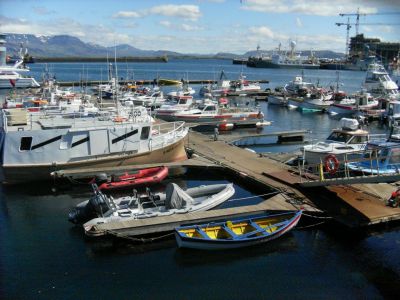
Reykjavík Old Harbor offers a clear view into the city’s maritime past and its ongoing transformation. Built between 1913 and 1917, the harbour was originally developed to support fisheries and trade, becoming a key driver of Reykjavík’s rise as Iceland’s capital. This natural harbour had already attracted early settlers, including Ingólfur Arnarson, who chose the area for its sheltered coastline. By the early 20th century, it had become central to Iceland’s fishing industry and economic growth, a role it still maintains today, although tourism now plays a leading part.
Many excursions depart from here, including whale-watching trips where visitors may spot dolphins, minke and humpback whales, and occasionally orcas or even larger species. Puffin tours are also popular, and in winter, boats head out for Northern Lights cruises.
On land, former warehouses and fishing houses have been converted into cafés, restaurants, galleries, and small museums. A key example of this revitalisation is the Grandi Mathöll, a vibrant food hall located in a former fish-processing plant that showcases the city's modern culinary diversity. Places like Bæjarins Beztu Pylsur, a hot dog stand operating since 1937, and Matur & Drykkur, known for traditional Icelandic cuisine, reflect both everyday and refined dining. The former was visited by former U.S. President Bill Clinton in 2004, who called their hot dogs “the world’s best.” The latter is a fine-dining restaurant that serves traditional Icelandic fare and is mentioned in the Michelin Guide.
Art galleries, museums, and cinemas are other attractions in this scenic location. The Reykjavík Maritime Museum, housed in a former freezing plant, provides insight into the fishing history that shaped the harbour. Gallery i8 is known as one of Iceland's leading modern art galleries.
With views across Faxaflói Bay toward Mount Esja, the harbour remains one of Reykjavík’s most photogenic and active areas.
Many excursions depart from here, including whale-watching trips where visitors may spot dolphins, minke and humpback whales, and occasionally orcas or even larger species. Puffin tours are also popular, and in winter, boats head out for Northern Lights cruises.
On land, former warehouses and fishing houses have been converted into cafés, restaurants, galleries, and small museums. A key example of this revitalisation is the Grandi Mathöll, a vibrant food hall located in a former fish-processing plant that showcases the city's modern culinary diversity. Places like Bæjarins Beztu Pylsur, a hot dog stand operating since 1937, and Matur & Drykkur, known for traditional Icelandic cuisine, reflect both everyday and refined dining. The former was visited by former U.S. President Bill Clinton in 2004, who called their hot dogs “the world’s best.” The latter is a fine-dining restaurant that serves traditional Icelandic fare and is mentioned in the Michelin Guide.
Art galleries, museums, and cinemas are other attractions in this scenic location. The Reykjavík Maritime Museum, housed in a former freezing plant, provides insight into the fishing history that shaped the harbour. Gallery i8 is known as one of Iceland's leading modern art galleries.
With views across Faxaflói Bay toward Mount Esja, the harbour remains one of Reykjavík’s most photogenic and active areas.
3) Landakotskirkja (Landakot's Church)
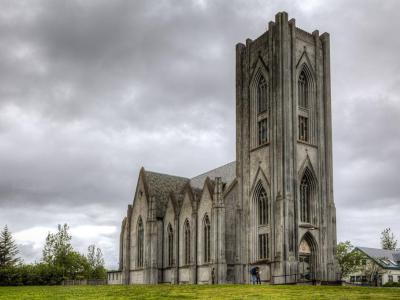
Landakot's Church (Landakotskirkja) serves as the principal cathedral for the Catholic Church in Iceland. Situated in the western part of Reykjavík, specifically on the Landakot property, this architectural marvel boasts a unique design characterized by a flat roof rather than the conventional spire. The church's creation is attributed to the talented architect Guðjón Samúelsson, renowned for his work on other iconic structures like Hallgrímskirkja and Akureyrarkirkja in Akureyri.
The history of Landakot's Church traces back to the early 19th century when the first Catholic priests arrived in Iceland after the Reformation. Two Frenchmen, Bernard Bernard and Jean-Baptiste Baudoin, purchased the Landakot farmstead in Reykjavík and established their residence there. In 1864, they erected a modest chapel on the premises. Subsequently, a small wooden church was built near Landakot on Túngata a few years later. As the number of Catholics in Iceland grew following the First World War, there emerged a pressing need for a larger church facility.
To meet this demand, Icelandic Catholics made the decision to construct a Neo-Gothic style church, entrusting the architectural work to Guðjón Samúelsson. Following several years of construction efforts, Landakot's Church was formally consecrated on July 23, 1929. It held the distinction of being the largest church in Iceland during that era. Today, Landakot's Church remains an iconic landmark in western Reykjavík. Furthermore, the only Catholic school in Iceland, Landakot's School (Landakotsskóli), is conveniently located nearby on the same property.
The history of Landakot's Church traces back to the early 19th century when the first Catholic priests arrived in Iceland after the Reformation. Two Frenchmen, Bernard Bernard and Jean-Baptiste Baudoin, purchased the Landakot farmstead in Reykjavík and established their residence there. In 1864, they erected a modest chapel on the premises. Subsequently, a small wooden church was built near Landakot on Túngata a few years later. As the number of Catholics in Iceland grew following the First World War, there emerged a pressing need for a larger church facility.
To meet this demand, Icelandic Catholics made the decision to construct a Neo-Gothic style church, entrusting the architectural work to Guðjón Samúelsson. Following several years of construction efforts, Landakot's Church was formally consecrated on July 23, 1929. It held the distinction of being the largest church in Iceland during that era. Today, Landakot's Church remains an iconic landmark in western Reykjavík. Furthermore, the only Catholic school in Iceland, Landakot's School (Landakotsskóli), is conveniently located nearby on the same property.
4) Reykjavik City Hall
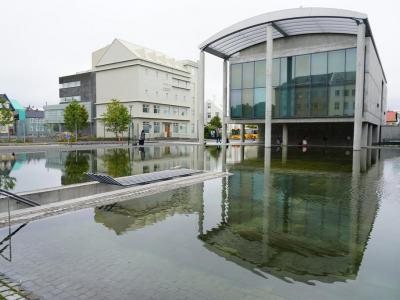
Reykjavík's City Hall, designed by architects Margrét Harðardóttir and Steve Christer, stands on Tjörnin lake's northern shore, at the heart of the city. This building uniquely blends nature and urban elements, reflecting its dual purpose. The City Council Building, located on the north side, is solid and structured, mirroring the Kvos district's architectural style. In contrast, the south-facing Office Building, where administrative work happens, has a more fluid and open design, with workspaces and meeting rooms overlooking the lake. A notable feature outside is a moss-covered wall, reminiscent of Iceland's natural mossy rock formations.
The concept of a city hall in Reykjavík dates back to the city's early days. After years of planning and an open competition in 1986, the winning design by Harðardóttir and Christer, both London Architectural Association School graduates, was chosen from 38 entries. The construction began in 1988 and the hall was inaugurated in 1992.
A key attraction inside is a large 3D map of Iceland, located in the main hall. This detailed map, crafted from 1 millimeter thick cardboard cut to represent Iceland's topography and mounted on a wooden and aluminum frame, spans 76.4 square meters. The map, built by the city's carpenters and painted by Sigurður Pálsson, is designed at a 1:50,000 scale but with an exaggerated elevation scale of 1:25,000 for better visual impact. This map, along with the building's design, symbolizes the fusion of Reykjavík's urban fabric and natural environment.
The concept of a city hall in Reykjavík dates back to the city's early days. After years of planning and an open competition in 1986, the winning design by Harðardóttir and Christer, both London Architectural Association School graduates, was chosen from 38 entries. The construction began in 1988 and the hall was inaugurated in 1992.
A key attraction inside is a large 3D map of Iceland, located in the main hall. This detailed map, crafted from 1 millimeter thick cardboard cut to represent Iceland's topography and mounted on a wooden and aluminum frame, spans 76.4 square meters. The map, built by the city's carpenters and painted by Sigurður Pálsson, is designed at a 1:50,000 scale but with an exaggerated elevation scale of 1:25,000 for better visual impact. This map, along with the building's design, symbolizes the fusion of Reykjavík's urban fabric and natural environment.
5) Hólavallagarður Cemetery Reykjavik
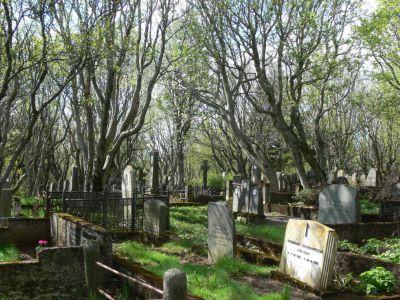
Reykjavik is home to several burial grounds, including Hólavallagarður Cemetery, one of the city's oldest, situated centrally. Its name translates to "garden on a hill." This cemetery features moss-covered paths and gravestones, often lit by sunlight filtering through trees. On cloudy, rainy days in autumn, the atmosphere here turns gray, mysterious, and somewhat foreboding.
Also known as the Old Churchyard, Hólavallagarður began its service in 1838, taking over from an earlier Viking-era burial site. Located just a short distance from the central pond of Reykjavik, this cemetery sits atop a small hill. It's noteworthy for the artistic gravestones crafted by some of Iceland's renowned sculptors, like Einar Jónsson.
For over 150 years, Hólavallagarður served as a key burial site in Iceland. Prominent figures like Jón Sigurðsson, a leader in Icelandic independence, painter Jóhannes Sveinsson Kjarval, and Ingibjorg Bjarnason, the first female parliamentarian, are interred here. The cemetery also includes graves of the 1918 Spanish flu victims and a monument dedicated to French sailors.
Despite reaching full capacity in the early 1930s, families who secured plots beforehand can still conduct burials here. What sets Hólavallagarður apart is its lush greenery, a rarity in Iceland's sparse tree landscape, with willows, spruces, poplars, birches, and rowan trees surrounding the graves.
An Icelandic belief holds that the first person buried in a cemetery guards it and protects subsequent interments. For Hólavallagarður, this guardian is Guðrún Oddsdóttir, who passed away in 1838, the year the cemetery was established.
Also known as the Old Churchyard, Hólavallagarður began its service in 1838, taking over from an earlier Viking-era burial site. Located just a short distance from the central pond of Reykjavik, this cemetery sits atop a small hill. It's noteworthy for the artistic gravestones crafted by some of Iceland's renowned sculptors, like Einar Jónsson.
For over 150 years, Hólavallagarður served as a key burial site in Iceland. Prominent figures like Jón Sigurðsson, a leader in Icelandic independence, painter Jóhannes Sveinsson Kjarval, and Ingibjorg Bjarnason, the first female parliamentarian, are interred here. The cemetery also includes graves of the 1918 Spanish flu victims and a monument dedicated to French sailors.
Despite reaching full capacity in the early 1930s, families who secured plots beforehand can still conduct burials here. What sets Hólavallagarður apart is its lush greenery, a rarity in Iceland's sparse tree landscape, with willows, spruces, poplars, birches, and rowan trees surrounding the graves.
An Icelandic belief holds that the first person buried in a cemetery guards it and protects subsequent interments. For Hólavallagarður, this guardian is Guðrún Oddsdóttir, who passed away in 1838, the year the cemetery was established.
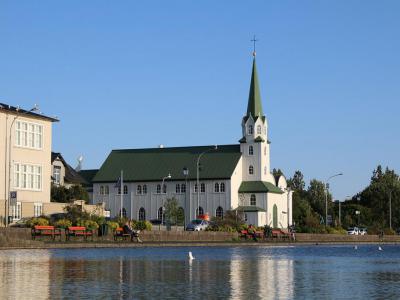
6) Fríkirkjan (Free Church)
The Free Church in Reykjavik (Fríkirkjan í Reykjavík) is a separate Lutheran church from Iceland's main church, the Church of Iceland. It's located right in the heart of Iceland's capital city, next to the Tjörnin lake.
This church started in Reykjavik back in the fall of 1899. Initially, around 600 people joined, and this number quickly increased. The Free Church took inspiration from similar churches in Norway and ones set up by Icelanders who moved to North America. They wanted a church that felt more connected to everyday people. Also, Reykjavik was rapidly growing with new neighborhoods and more residents, but the Reykjavik Cathedral couldn't keep up with the needs of the expanding community, especially as more craftsmen and tradespeople settled in.
Not long after this new church group got started, they picked a spot for their church near the lake's eastern side. The church was officially opened on February 22, 1903. Just two years later, they had to make it bigger, following a design by an architect named Rögnvaldur Ólafsson. Then, in 1924, they expanded it again. They added a chancel made of concrete on the east side and made some other changes to the building. All of this was overseen by a master builder, Guðmundur H. Þorláksson.
This church started in Reykjavik back in the fall of 1899. Initially, around 600 people joined, and this number quickly increased. The Free Church took inspiration from similar churches in Norway and ones set up by Icelanders who moved to North America. They wanted a church that felt more connected to everyday people. Also, Reykjavik was rapidly growing with new neighborhoods and more residents, but the Reykjavik Cathedral couldn't keep up with the needs of the expanding community, especially as more craftsmen and tradespeople settled in.
Not long after this new church group got started, they picked a spot for their church near the lake's eastern side. The church was officially opened on February 22, 1903. Just two years later, they had to make it bigger, following a design by an architect named Rögnvaldur Ólafsson. Then, in 1924, they expanded it again. They added a chancel made of concrete on the east side and made some other changes to the building. All of this was overseen by a master builder, Guðmundur H. Þorláksson.
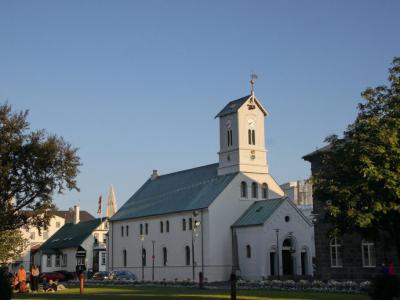
7) Dómkirkjan (Reykjavík Cathedral)
Standing beside Austurvöllur Square, Reykjavík Cathedral is one of the city’s most historically significant religious buildings and a central part of Iceland’s civic life. The site has been dedicated to churches since the 13th century, while the present neoclassical structure was designed by Andreas Kirkerup in the late 18th century. Construction began in 1788, and the cathedral was consecrated in 1796, becoming the first building completed with the idea that Reykjavík would develop into the nation’s capital.
Today, it serves as the seat of the Bishop of Iceland, the Evangelical Lutheran Church of Iceland, and the parish church for the city centre. Since 1845, each parliamentary session traditionally begins with a mass here, before members proceed together to the parliament house. The central altar area where this occurs is located at the front of the nave, serving as the spiritual heart of the building; to find it, walk straight down the center aisle toward the east end of the church to see the focal point of the chancel—the altarpiece—where the Althingi gathers.
Architecturally, the cathedral remains modest in scale. Its white façade, clean lines, and restrained neoclassical design blend naturally into the square rather than dominating it. Inside, the atmosphere is calm and intimate, with simple wooden elements and soft light. Directly in front of the altar stands the masterpiece by Thorvaldsen; once you find yourself at the front of the nave, look for the delicate carvings on this white marble baptismal font, which was a gift from the world-renowned Danish-Icelandic sculptor.
Additionally, the monumental Schuke pipe organ represents a peak of the cathedral's musical life; to find this highlight, turn around immediately after entering the main doors and look upward toward the rear gallery to see the instrument. It features 31 voices and three manuals and it was built in 1985 by the Karl Schuke factory.
National traditions remain closely tied to the building: Christmas mass is broadcast across the country, and new presidents are inaugurated here. Set among cafés and government buildings, it reflects the close relationship between religion, history, and public life in Reykjavík.
Today, it serves as the seat of the Bishop of Iceland, the Evangelical Lutheran Church of Iceland, and the parish church for the city centre. Since 1845, each parliamentary session traditionally begins with a mass here, before members proceed together to the parliament house. The central altar area where this occurs is located at the front of the nave, serving as the spiritual heart of the building; to find it, walk straight down the center aisle toward the east end of the church to see the focal point of the chancel—the altarpiece—where the Althingi gathers.
Architecturally, the cathedral remains modest in scale. Its white façade, clean lines, and restrained neoclassical design blend naturally into the square rather than dominating it. Inside, the atmosphere is calm and intimate, with simple wooden elements and soft light. Directly in front of the altar stands the masterpiece by Thorvaldsen; once you find yourself at the front of the nave, look for the delicate carvings on this white marble baptismal font, which was a gift from the world-renowned Danish-Icelandic sculptor.
Additionally, the monumental Schuke pipe organ represents a peak of the cathedral's musical life; to find this highlight, turn around immediately after entering the main doors and look upward toward the rear gallery to see the instrument. It features 31 voices and three manuals and it was built in 1985 by the Karl Schuke factory.
National traditions remain closely tied to the building: Christmas mass is broadcast across the country, and new presidents are inaugurated here. Set among cafés and government buildings, it reflects the close relationship between religion, history, and public life in Reykjavík.
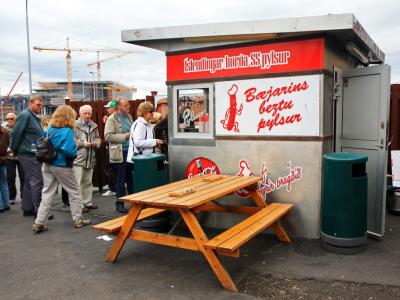
8) Bæjarins beztu (The Town's Best Hot Dogs)
"The Town's Best Hot Dogs" (Bæjarins Beztu Pylsur) is a small chain of hot dog stands in Reykjavík. This chain has been in continuous operation since 1937 when it was originally established on Austurstræti street, right at the heart of the city. It was founded by the grandfather of the current owner, Guðrún Kristmundsdóttir. In the 1960s, the stand relocated a couple of streets north to Tryggvagata, right across from the Harpa Concert Hall, where the main flagship stand still operates today.
In August 2004, the stand gained widespread attention when it was visited by the former President of the United States, Bill Clinton, during his trip to Iceland for a UNICEF conference. This high-profile visit significantly boosted the stand's popularity, leading to its inclusion in various tourist guidebooks about Iceland. Just two years later, in August 2006, the renowned British newspaper, The Guardian, declared Bæjarins Beztu as the best hot dog stand in Europe.
Today, this chain is a favorite among both tourists and local residents alike. There are three more locations within the city, collectively selling over a thousand hot dogs on a bustling day.
The hot dogs offered by Bæjarins Beztu are primarily lamb-based but also contain pork and beef. They are served in a bun and come with a variety of condiment options, including ketchup, sweet mustard, remoulade, crispy fried onions, and raw onions. Customers who wish to have all the available toppings often use the Icelandic phrase "eina með öllu," which translates to "one with everything" in English.
In August 2004, the stand gained widespread attention when it was visited by the former President of the United States, Bill Clinton, during his trip to Iceland for a UNICEF conference. This high-profile visit significantly boosted the stand's popularity, leading to its inclusion in various tourist guidebooks about Iceland. Just two years later, in August 2006, the renowned British newspaper, The Guardian, declared Bæjarins Beztu as the best hot dog stand in Europe.
Today, this chain is a favorite among both tourists and local residents alike. There are three more locations within the city, collectively selling over a thousand hot dogs on a bustling day.
The hot dogs offered by Bæjarins Beztu are primarily lamb-based but also contain pork and beef. They are served in a bun and come with a variety of condiment options, including ketchup, sweet mustard, remoulade, crispy fried onions, and raw onions. Customers who wish to have all the available toppings often use the Icelandic phrase "eina með öllu," which translates to "one with everything" in English.
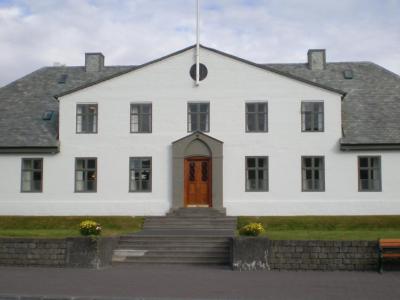
9) Stjórnarráðshúsið (Prime Minister 's Office)
The Government House, located in Reykjavík, is an impressive structure that currently serves as the headquarters of the Prime Minister's Office. Interestingly, this building has a historical origin dating back to the mid-18th century when it was initially constructed as Iceland's very first prison facility.
In 1733, Henrik Ocksen, a district commissioner, wrote to Joachim Henriksen Lafrenz, another commissioner, discussing the need for a penitentiary in Iceland. This was prompted by the case of Katrín Ingjaldsdóttir, who had her death sentence commuted to life imprisonment by the king. Iceland often had to send life-term prisoners to Denmark due to the lack of suitable facilities.
It wasn't until March 20, 1759, that the King of Denmark formally approved the construction of a penitentiary in Iceland. Construction work on the building commenced in 1761, and interestingly, the convicts themselves contributed to its construction as part of their sentence. A decade later, in the winter of 1770–71, the building was completed and ready for use. A tax on real estate, including imprisonment costs, funded the penitentiary, but it faced public resistance and closed in 1816.
In 1904, the Government House became the location for the first Icelandic ministry, and later, the cabinet. In 1918, the building was officially named after this purpose. Since then, the Prime Minister's Office and the Government of Iceland have conducted their operations within this historic edifice. It's worth noting that from 1973 to 1996, the office of the President of Iceland was also housed in the Government House, and it holds the distinction of being the place where the Icelandic national flag was first raised.
In 1733, Henrik Ocksen, a district commissioner, wrote to Joachim Henriksen Lafrenz, another commissioner, discussing the need for a penitentiary in Iceland. This was prompted by the case of Katrín Ingjaldsdóttir, who had her death sentence commuted to life imprisonment by the king. Iceland often had to send life-term prisoners to Denmark due to the lack of suitable facilities.
It wasn't until March 20, 1759, that the King of Denmark formally approved the construction of a penitentiary in Iceland. Construction work on the building commenced in 1761, and interestingly, the convicts themselves contributed to its construction as part of their sentence. A decade later, in the winter of 1770–71, the building was completed and ready for use. A tax on real estate, including imprisonment costs, funded the penitentiary, but it faced public resistance and closed in 1816.
In 1904, the Government House became the location for the first Icelandic ministry, and later, the cabinet. In 1918, the building was officially named after this purpose. Since then, the Prime Minister's Office and the Government of Iceland have conducted their operations within this historic edifice. It's worth noting that from 1973 to 1996, the office of the President of Iceland was also housed in the Government House, and it holds the distinction of being the place where the Icelandic national flag was first raised.
10) Harpa Concert Hall and Conference Centre (must see)
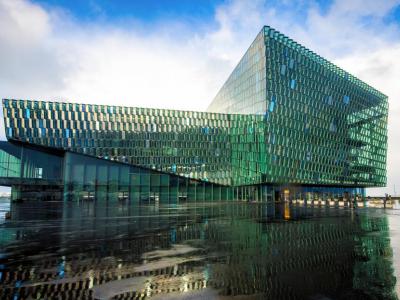
Located on the waterfront of Reykjavík, Harpa Concert Hall and Conference Centre stands as one of the city’s most distinctive modern landmarks and a symbol of Iceland’s cultural renewal in the early 21st century. The project was shaped by the 2008 financial crisis, which delayed construction, before being completed as a public initiative and officially opening in 2011.
As the first purpose-built concert hall in Reykjavík, Harpa became a central home for the Iceland Symphony Orchestra and houses the offices of the Icelandic Opera, while also hosting performances by groups such as the Reykjavík Big Band.
Beyond classical concerts and opera, Harpa hosts a wide range of events, from international conferences to themed shows such as How to Become Icelandic in 60 Minutes and Reykjavík Classics. The venue has also appeared in productions like Black Mirror and Sense8.
Architecturally, Harpa is defined by its impressive façade of geometric, honeycomb-like glass panels set over a steel framework. The central architectural highlight is the "Quasi-Brick" façade, located primarily on the south side of the building facing the sea. To find the best perspective, stand in the main atrium and look upward; you can see the twelve-sided glass modules. Inspired by Iceland’s basalt formations, the panels shift in colour and reflect changing light conditions, giving the building a dynamic appearance—especially after dark, when it becomes one of the city’s most visually impressive sights. This innovative design earned Harpa the European Union’s Mies van der Rohe Award in 2013, along with recognition as one of Northern Europe’s leading conference venues.
Inside, the building opens into a spacious atrium where light and structure interact throughout the day. The main concert hall, Eldborg, is located within the central core of the building. To find it, follow the main floor corridor from the lobby and ascend the grand staircases toward the "heart" of the structure. Eldborg is known for its warm red interior, designed to evoke a glowing volcanic crater, and its carefully engineered acoustics. Once you find yourself inside, look for the massive adjustable acoustic panels and the deep red walls that give the hall its distinctive "Fire Castle" atmosphere.
A final notable highlight is the Harbor View Walkways located on the upper levels of the sea-facing atrium. To reach this area, take the elevator or stairs to the fourth floor and walk toward the glass perimeter. From here, visitors are offered wide views over the city’s colorful rooftops and the North Atlantic.
Outside, in the water beside the building, stands The Musician, a 1970 sculpture depicting a cellist, relocated here from the orchestra’s former home. Visitors should note that as a functioning venue, certain halls may be closed for rehearsals, so checking the daily schedule at the information desk is advisable.
As the first purpose-built concert hall in Reykjavík, Harpa became a central home for the Iceland Symphony Orchestra and houses the offices of the Icelandic Opera, while also hosting performances by groups such as the Reykjavík Big Band.
Beyond classical concerts and opera, Harpa hosts a wide range of events, from international conferences to themed shows such as How to Become Icelandic in 60 Minutes and Reykjavík Classics. The venue has also appeared in productions like Black Mirror and Sense8.
Architecturally, Harpa is defined by its impressive façade of geometric, honeycomb-like glass panels set over a steel framework. The central architectural highlight is the "Quasi-Brick" façade, located primarily on the south side of the building facing the sea. To find the best perspective, stand in the main atrium and look upward; you can see the twelve-sided glass modules. Inspired by Iceland’s basalt formations, the panels shift in colour and reflect changing light conditions, giving the building a dynamic appearance—especially after dark, when it becomes one of the city’s most visually impressive sights. This innovative design earned Harpa the European Union’s Mies van der Rohe Award in 2013, along with recognition as one of Northern Europe’s leading conference venues.
Inside, the building opens into a spacious atrium where light and structure interact throughout the day. The main concert hall, Eldborg, is located within the central core of the building. To find it, follow the main floor corridor from the lobby and ascend the grand staircases toward the "heart" of the structure. Eldborg is known for its warm red interior, designed to evoke a glowing volcanic crater, and its carefully engineered acoustics. Once you find yourself inside, look for the massive adjustable acoustic panels and the deep red walls that give the hall its distinctive "Fire Castle" atmosphere.
A final notable highlight is the Harbor View Walkways located on the upper levels of the sea-facing atrium. To reach this area, take the elevator or stairs to the fourth floor and walk toward the glass perimeter. From here, visitors are offered wide views over the city’s colorful rooftops and the North Atlantic.
Outside, in the water beside the building, stands The Musician, a 1970 sculpture depicting a cellist, relocated here from the orchestra’s former home. Visitors should note that as a functioning venue, certain halls may be closed for rehearsals, so checking the daily schedule at the information desk is advisable.
11) Sólfar (Sun Voyager) (must see)
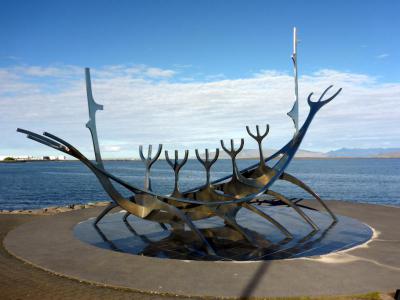
Sun Voyager is a sculpture crafted by the artist Jón Gunnar Árnason (1931-1989) and is situated alongside the Sæbraut road in Reykjavík. This artistic creation is often characterized as a representation of either a dreamboat or an homage to the sun. Jón Gunnar Árnason's intention behind this sculpture was to convey a sense of promise associated with uncharted territories, a dream symbolizing hope, progress, and freedom.
In 1986, the west district association of Reykjavík decided to sponsor a competition to commission a new outdoor sculpture in commemoration of the 200th anniversary of the city. Jón Gunnar's Sun Voyager emerged as the winning design in the competition, leading to the creation of a scaled-up aluminum model, which was later presented to the city for enlargement. The full-sized Sun Voyager was officially unveiled on Sæbraut, coinciding with the birthday of Reykjavík on August 18, 1990.
The sculpture is crafted from high-quality stainless steel and is positioned upon a circle formed by granite slabs, encircled by a material known as "town-hall concrete." Its construction meticulously followed Jón Gunnar Árnason's detailed full-scale drawing of the Sun Voyager and was supervised by the artist Kristinn E. Hrafnsson, who served as Jón Gunnar's assistant.
Why You Should Visit:
Great subject for photographs as it provides a nice vantage point to look out into the waters and think of very deep things.
In 1986, the west district association of Reykjavík decided to sponsor a competition to commission a new outdoor sculpture in commemoration of the 200th anniversary of the city. Jón Gunnar's Sun Voyager emerged as the winning design in the competition, leading to the creation of a scaled-up aluminum model, which was later presented to the city for enlargement. The full-sized Sun Voyager was officially unveiled on Sæbraut, coinciding with the birthday of Reykjavík on August 18, 1990.
The sculpture is crafted from high-quality stainless steel and is positioned upon a circle formed by granite slabs, encircled by a material known as "town-hall concrete." Its construction meticulously followed Jón Gunnar Árnason's detailed full-scale drawing of the Sun Voyager and was supervised by the artist Kristinn E. Hrafnsson, who served as Jón Gunnar's assistant.
Why You Should Visit:
Great subject for photographs as it provides a nice vantage point to look out into the waters and think of very deep things.
12) Laugavegur Street (must see)
Laugavegur is Reykjavík’s principal commercial street and one of the city’s oldest thoroughfares, stretching just over two kilometers through the heart of the capital. Its name translates to “Wash Road,” a reference to the route once used by local women carrying laundry to the geothermal pools of Laugardalur. Established in the late 19th century, the street gradually developed into a centre of trade and daily life.
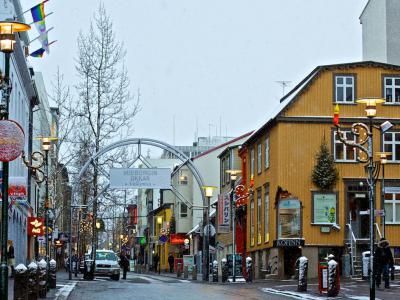
Today, Laugavegur forms the backbone of the city centre, lined with colorful, low-rise buildings and a steady flow of pedestrian activity. Visitors will find a wide range of boutique shops, many showcasing Icelandic design, fashion, and craftsmanship, alongside bookstores and souvenir shops offering everything from locally produced goods to familiar keepsakes. The street also has a noticeable mix of vintage stores and second-hand shops, adding variety to the shopping experience.
Food and drink are central to the street’s appeal. Restaurants, cafés, and bars line the route, offering both traditional Icelandic dishes and a range of international options, including vegan cuisine. As evening approaches, Laugavegur shifts into one of Reykjavík’s main nightlife areas, with venues hosting live music and late-night gatherings. Spots like Lebowski Bar add a more playful atmosphere, combining themed interiors with food, drinks, and interactive elements.
Today, Laugavegur forms the backbone of the city centre, lined with colorful, low-rise buildings and a steady flow of pedestrian activity. Visitors will find a wide range of boutique shops, many showcasing Icelandic design, fashion, and craftsmanship, alongside bookstores and souvenir shops offering everything from locally produced goods to familiar keepsakes. The street also has a noticeable mix of vintage stores and second-hand shops, adding variety to the shopping experience.
Food and drink are central to the street’s appeal. Restaurants, cafés, and bars line the route, offering both traditional Icelandic dishes and a range of international options, including vegan cuisine. As evening approaches, Laugavegur shifts into one of Reykjavík’s main nightlife areas, with venues hosting live music and late-night gatherings. Spots like Lebowski Bar add a more playful atmosphere, combining themed interiors with food, drinks, and interactive elements.
13) Hallgrímskirkja (Church of Hallgrímur) (must see)
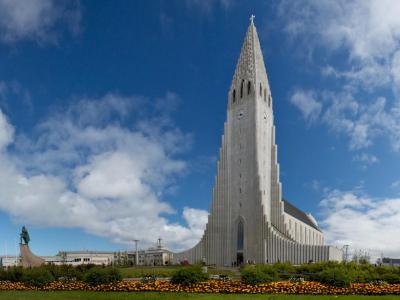
The Church of Hallgrímur is one of the country’s most recognizable landmarks and a symbol of modern Icelandic identity. Designed in 1937, the church was conceived as a reflection of Iceland’s unique geography. Volcanic activity across the island produces lava flows that cool into grey, hexagonal basalt columns, and these dramatic, jagged formations directly inspired the building’s form. Construction began in 1945 and continued for more than four decades, with the church finally consecrated in 1986.
It is named after Hallgrímur Pétursson, a 17th-century figure best known for his devotional work Hymns of the Passion. As a Lutheran place of worship belonging to the Church of Iceland, its imposing height—over 74 meters—was also intended to rival the nearby Catholic cathedral.
The architecture immediately stands out. Its stepped concrete façade resembles cooled lava or a cluster of organ pipes rising upward, giving the church a sculptural, almost geological presence visible from across the city.
Inside, the atmosphere becomes more restrained, with a bright, minimalist interior that emphasizes space and light. The main focal point is the monumental pipe organ, rising about 15 meters tall and composed of 5,275 pipes. Located directly above the main entrance inside the nave, visitors should turn around as they enter the church to see this gargantuan instrument, which weighs over 25 tons. The organ features four manuals and 72 stops; the instrument's sheer power is meant to fill the massive, minimalist hall with sound. Its electronic action system allows the pipes to be operated remotely from the console, and the instrument is frequently used for concerts, especially during summer, when performances are held several times a week.
Visitors are often drawn to the tower, where a lift leads to an observation deck with wide views over the city’s colorful rooftops, the coastline, and surrounding mountains. To reach this highlight at the uppermost level of the 74.5-meter steeple—the highest viewpoint in the city center—take the elevator located in the lobby to the 8th floor, then ascend a final short staircase to the open-air viewing platform. From here, you get a 360-degree view of the colorful corrugated iron roofs of Reykjavík, the Faxaflói Bay, and Mount Esja; on a clear day, you can even spot glaciers.
Outside the entrance stands a statue of Leif Erikson, gifted by the United States in the 1930s to mark the 1,000th anniversary of the Icelandic Parliament, first convened in 930 AD. A small local detail adds character: the large clock on the tower is often inaccurate, as strong Icelandic winds can shift its hands.
It is named after Hallgrímur Pétursson, a 17th-century figure best known for his devotional work Hymns of the Passion. As a Lutheran place of worship belonging to the Church of Iceland, its imposing height—over 74 meters—was also intended to rival the nearby Catholic cathedral.
The architecture immediately stands out. Its stepped concrete façade resembles cooled lava or a cluster of organ pipes rising upward, giving the church a sculptural, almost geological presence visible from across the city.
Inside, the atmosphere becomes more restrained, with a bright, minimalist interior that emphasizes space and light. The main focal point is the monumental pipe organ, rising about 15 meters tall and composed of 5,275 pipes. Located directly above the main entrance inside the nave, visitors should turn around as they enter the church to see this gargantuan instrument, which weighs over 25 tons. The organ features four manuals and 72 stops; the instrument's sheer power is meant to fill the massive, minimalist hall with sound. Its electronic action system allows the pipes to be operated remotely from the console, and the instrument is frequently used for concerts, especially during summer, when performances are held several times a week.
Visitors are often drawn to the tower, where a lift leads to an observation deck with wide views over the city’s colorful rooftops, the coastline, and surrounding mountains. To reach this highlight at the uppermost level of the 74.5-meter steeple—the highest viewpoint in the city center—take the elevator located in the lobby to the 8th floor, then ascend a final short staircase to the open-air viewing platform. From here, you get a 360-degree view of the colorful corrugated iron roofs of Reykjavík, the Faxaflói Bay, and Mount Esja; on a clear day, you can even spot glaciers.
Outside the entrance stands a statue of Leif Erikson, gifted by the United States in the 1930s to mark the 1,000th anniversary of the Icelandic Parliament, first convened in 930 AD. A small local detail adds character: the large clock on the tower is often inaccurate, as strong Icelandic winds can shift its hands.
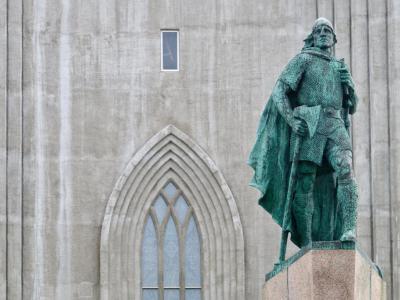
14) Statue of Leif Eiriksson
In 1930, a statue of Leif Erikson, a Norse explorer from Iceland, was placed in the city center of Reykjavík. This statue currently stands in front of Hallgrím's Church (Hallgrímskirkja) and was gifted by the United States to Iceland in honor of the 1,000-year anniversary of Alþingi, Iceland's parliament.
Leif Erikson, also known as Leiv Eiriksson or Leif Ericson (circa 970 – circa 1020), is believed to be the first European to have landed on continental North America (excluding Greenland). This happened roughly 500 years before Christopher Columbus's famous voyage. According to Icelandic sagas, Leif Erikson established a Norse settlement in Vinland, which is generally thought to refer to coastal North America. Some speculate that this settlement corresponds to the remains of a Norse settlement called L'Anse aux Meadows in Newfoundland, Canada, which was occupied around the year 1000.
Leif Erikson was the son of Erik the Red, who founded the first Norse settlement in Greenland, and Thjodhild, both of Norwegian descent. Although the exact place of Leif's birth is uncertain, it is assumed to have been in Iceland, which had recently been settled by Norsemen primarily from Norway. He grew up on the family estate of Brattahlíð in the Eastern Settlement of Greenland. Leif had two known sons: Thorgils, born to the noblewoman Thorgunna in the Hebrides, and Thorkell, who succeeded him as the leader of the Greenland settlement.
Leif Erikson, also known as Leiv Eiriksson or Leif Ericson (circa 970 – circa 1020), is believed to be the first European to have landed on continental North America (excluding Greenland). This happened roughly 500 years before Christopher Columbus's famous voyage. According to Icelandic sagas, Leif Erikson established a Norse settlement in Vinland, which is generally thought to refer to coastal North America. Some speculate that this settlement corresponds to the remains of a Norse settlement called L'Anse aux Meadows in Newfoundland, Canada, which was occupied around the year 1000.
Leif Erikson was the son of Erik the Red, who founded the first Norse settlement in Greenland, and Thjodhild, both of Norwegian descent. Although the exact place of Leif's birth is uncertain, it is assumed to have been in Iceland, which had recently been settled by Norsemen primarily from Norway. He grew up on the family estate of Brattahlíð in the Eastern Settlement of Greenland. Leif had two known sons: Thorgils, born to the noblewoman Thorgunna in the Hebrides, and Thorkell, who succeeded him as the leader of the Greenland settlement.
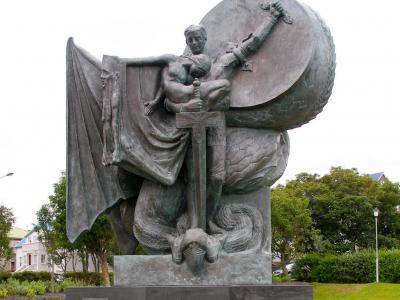
15) Einar Jónsson Museum and Sculpture Garden
The Einar Jónsson Museum holds a unique place in Iceland’s cultural history as the country’s first public art museum, completed in 1923. It is dedicated to Einar Jónsson, regarded as Iceland’s first sculptor. Born on a farm in southern Iceland in 1874, Jónsson pursued his artistic ambitions abroad, studying in Denmark and later in Rome before returning. In 1909, he reached an agreement with the Icelandic parliament: the state would provide him with a museum and home, and in return, he would donate all his works.
Inside, the museum displays around 300 sculptures, primarily created in plaster—a practical choice in Iceland, where traditional modeling clay was not readily available, and one that allowed him to refine his pieces over long periods. Jónsson rejected classical conventions, developing a personal style shaped by Nordic folklore, Christian symbolism, and figurative themes. His works often explore life, death, and transformation through expressive, symbolic forms. Visitors can also access the artist’s apartment above the museum, where he lived until his death in 1954, offering a glimpse into his daily life.
The adjacent sculpture garden presents 26 bronze works, including The Wave of Ages, The King of Atlantis, and Thor Wrestling with Age. Set on a sloping hillside, the garden invites visitors to move freely among the sculptures, where shifting light and weather continuously reshape their appearance.
Inside, the museum displays around 300 sculptures, primarily created in plaster—a practical choice in Iceland, where traditional modeling clay was not readily available, and one that allowed him to refine his pieces over long periods. Jónsson rejected classical conventions, developing a personal style shaped by Nordic folklore, Christian symbolism, and figurative themes. His works often explore life, death, and transformation through expressive, symbolic forms. Visitors can also access the artist’s apartment above the museum, where he lived until his death in 1954, offering a glimpse into his daily life.
The adjacent sculpture garden presents 26 bronze works, including The Wave of Ages, The King of Atlantis, and Thor Wrestling with Age. Set on a sloping hillside, the garden invites visitors to move freely among the sculptures, where shifting light and weather continuously reshape their appearance.
