Custom Walk in Interlaken, Switzerland by achasek_aa6ec created on 2026-03-11
Guide Location: Switzerland » Interlaken
Guide Type: Custom Walk
# of Sights: 13
Tour Duration: 4 Hour(s)
Travel Distance: 7.4 Km or 4.6 Miles
Share Key: UE7KT
Guide Type: Custom Walk
# of Sights: 13
Tour Duration: 4 Hour(s)
Travel Distance: 7.4 Km or 4.6 Miles
Share Key: UE7KT
How It Works
Please retrieve this walk in the GPSmyCity app. Once done, the app will guide you from one tour stop to the next as if you had a personal tour guide. If you created the walk on this website or come to the page via a link, please follow the instructions below to retrieve the walk in the app.
Retrieve This Walk in App
Step 1. Download the app "GPSmyCity: Walks in 1K+ Cities" on Apple App Store or Google Play Store.



Step 2. In the GPSmyCity app, download(or launch) the guide "Interlaken Map and Walking Tours".
Step 3. Tap the menu button located at upper right corner of the "Walks" screen and select "Retrieve custom walk". Enter the share key: UE7KT
1) Stadthausplatz (Townhouse Square)
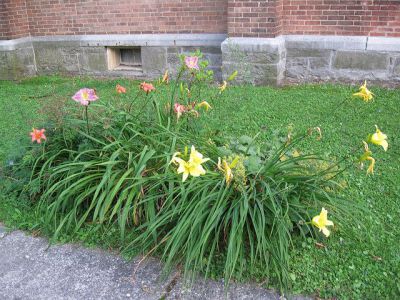
Nestled in the heart of the Unterseen Old Town, just a few steps away from the bustling Höheweg, Stadthausplatz offers a serene escape with a touch of historic charm. This picturesque square is dominated by the imposing Stadthaus building, a landmark that once housed the town's administrative offices and now serves as a cultural hub, hosting exhibitions and community events in its impressive, vaulted Stadtkeller.
Surrounded by historic houses, charming restaurants, and cozy cafés, the square invites visitors to indulge in local culinary delights while taking in the stunning views of the Alpine landscape. With its blend of traditional Swiss architecture and modern amenities, Stadthausplatz is the perfect place to unwind and explore. Whether you're savoring a meal, enjoying a coffee, or simply soaking up the atmosphere, the square’s tranquil setting is complemented by its rich historical backdrop.
For those interested in history, the nearby archaeological cellar and the Tourismuseum offer fascinating insights into the town’s past. Prefer a scenic walk? The Aare River is just a stone’s throw away, offering a peaceful stroll along its picturesque banks.
Stadthausplatz is more than just a square-it's a vibrant social hub where the old meets the new, where cultural events fill the air with life, and where both locals and tourists come together to experience the authentic essence of Interlaken.
Surrounded by historic houses, charming restaurants, and cozy cafés, the square invites visitors to indulge in local culinary delights while taking in the stunning views of the Alpine landscape. With its blend of traditional Swiss architecture and modern amenities, Stadthausplatz is the perfect place to unwind and explore. Whether you're savoring a meal, enjoying a coffee, or simply soaking up the atmosphere, the square’s tranquil setting is complemented by its rich historical backdrop.
For those interested in history, the nearby archaeological cellar and the Tourismuseum offer fascinating insights into the town’s past. Prefer a scenic walk? The Aare River is just a stone’s throw away, offering a peaceful stroll along its picturesque banks.
Stadthausplatz is more than just a square-it's a vibrant social hub where the old meets the new, where cultural events fill the air with life, and where both locals and tourists come together to experience the authentic essence of Interlaken.
2) Jungfrau Region Tourism Museum (must see)
The Jungfrau Region Tourism Museum is the only museum exclusively dedicated to the history of tourism in the Alpine region. The museum was opened in 1980 to display the hundreds of years of development in tourism of the region.
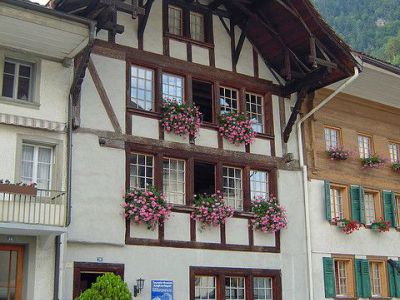
The building that now contains the Jungfrau Region Tourism Museum was previously home to the parish priest. This house was built in 1630 and served as both a home and an inn for travelers. Renovations took place in 1979 in preparation for the opening of the museum.
The museum offers three floors of exhibits that focus on eight primary areas of tourism. These areas are discovery of the Alps, steam ships and railways, the hotel industry, road traffic, winter sports, the souvenir business, constructing the mountain railways and Alpinism. The newest exhibits show how the railroad helped to boost tourism and how winter tourism became popular.
A popular exhibit in the Jungfrau Region Tourism Museum is Goethe's 2nd Trip to Switzerland. This exhibit takes patrons on the journey with him. Using personal letters and diary entries, the museum attempts to recreate some of the experiences Goethe had on his visit to the country.
Objects and artifacts within the museum are mostly photos and maps. There is also a model of the first steam engine train, the Bellevue. The museum contains a large number of winter sports equipment and memorabilia as well.
The museum is located on the northwest side of the Aare River. It is an easy walk across the pedestrian-friendly streets from central Interlaken to the museum's location in Unterseen.
Tips:
The museum is closed on Mondays and Tuesdays. During the remainder of the week, Jungfrau Region Tourism Museum is open from 2 PM to 5 PM.
The building that now contains the Jungfrau Region Tourism Museum was previously home to the parish priest. This house was built in 1630 and served as both a home and an inn for travelers. Renovations took place in 1979 in preparation for the opening of the museum.
The museum offers three floors of exhibits that focus on eight primary areas of tourism. These areas are discovery of the Alps, steam ships and railways, the hotel industry, road traffic, winter sports, the souvenir business, constructing the mountain railways and Alpinism. The newest exhibits show how the railroad helped to boost tourism and how winter tourism became popular.
A popular exhibit in the Jungfrau Region Tourism Museum is Goethe's 2nd Trip to Switzerland. This exhibit takes patrons on the journey with him. Using personal letters and diary entries, the museum attempts to recreate some of the experiences Goethe had on his visit to the country.
Objects and artifacts within the museum are mostly photos and maps. There is also a model of the first steam engine train, the Bellevue. The museum contains a large number of winter sports equipment and memorabilia as well.
The museum is located on the northwest side of the Aare River. It is an easy walk across the pedestrian-friendly streets from central Interlaken to the museum's location in Unterseen.
Tips:
The museum is closed on Mondays and Tuesdays. During the remainder of the week, Jungfrau Region Tourism Museum is open from 2 PM to 5 PM.
3) Covered Bridge
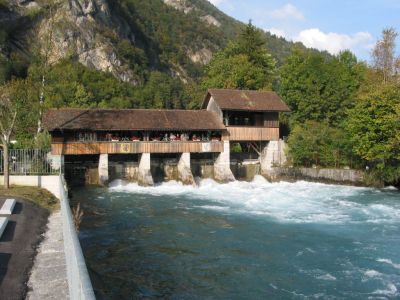
The Covered Bridge in Interlaken, also known as Wooden Bridge Unterseen (Holzbrücke Unterseen), is a charming wooden structure that spans the Aare River, linking the picturesque town of Unterseen with central Interlaken. Originally constructed in the early 1800s, this pedestrian bridge is a fine example of traditional Swiss carpentry, using local timber materials to create an aesthetically pleasing yet sturdy structure. Over the years, the bridge has undergone several restorations to maintain its integrity, each time preserving its historical character.
One of the unique features of the Covered Bridge is its gabled roof, which provides shelter for those crossing and protects the wooden planks below from the elements. The interior showcases intricate wooden trusses, a hallmark of Swiss engineering, which not only enhance its visual appeal but also reinforce the bridge’s durability. As visitors walk through, they can admire the craftsmanship up close and even observe engravings and carvings that tell stories of the local history and past renovations.
The bridge’s setting is equally captivating, offering panoramic views of the Aare River’s calm waters, the lush greenery along its banks, and the towering peaks of the Bernese Oberland in the distance. It’s a popular spot for photographers, particularly during the early morning or late afternoon when the light creates a magical interplay of shadows on the wooden beams and the river surface.
Today, the Covered Bridge serves both as a functional crossing for pedestrians and as a historical monument. It symbolizes the harmonious coexistence of nature and human creation in Interlaken. Its preservation reflects the town's commitment to maintaining its cultural heritage, ensuring that future generations can continue to enjoy this beautiful piece of Swiss history.
One of the unique features of the Covered Bridge is its gabled roof, which provides shelter for those crossing and protects the wooden planks below from the elements. The interior showcases intricate wooden trusses, a hallmark of Swiss engineering, which not only enhance its visual appeal but also reinforce the bridge’s durability. As visitors walk through, they can admire the craftsmanship up close and even observe engravings and carvings that tell stories of the local history and past renovations.
The bridge’s setting is equally captivating, offering panoramic views of the Aare River’s calm waters, the lush greenery along its banks, and the towering peaks of the Bernese Oberland in the distance. It’s a popular spot for photographers, particularly during the early morning or late afternoon when the light creates a magical interplay of shadows on the wooden beams and the river surface.
Today, the Covered Bridge serves both as a functional crossing for pedestrians and as a historical monument. It symbolizes the harmonious coexistence of nature and human creation in Interlaken. Its preservation reflects the town's commitment to maintaining its cultural heritage, ensuring that future generations can continue to enjoy this beautiful piece of Swiss history.
4) Kunsthaus (Art House)
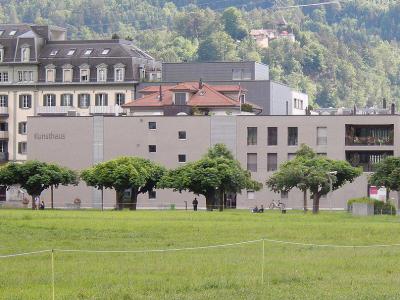
The Interlaken Art House (Kunsthaus Interlaken), nestled in the heart of the eastern Bernese Oberland, serves as a dynamic center for art and culture. This vibrant space is known for its diverse exhibition program, which showcases both Swiss and international contemporary art, as well as significant works from the 19th century. Hosting four rotating exhibitions annually, the Art House introduces visitors to an eclectic mix of artistic expressions, ranging from solo showcases by nationally acclaimed Swiss artists to group exhibitions featuring international talents.
In addition to its visual arts exhibitions, the Interlaken Art House emphasizes educational engagement. It offers a variety of workshops and guided tours for both children and adults, providing deeper insights into the featured works and themes. Artists’ talks, performances, and thematic workshops further enrich the visitor experience, making the Art House not just a viewing space, but an interactive cultural hub.
The Art House’s collection is continually evolving, with a special focus on works and artists connected to the Bernese Oberland. It also houses the collections of the “Kunstgesellschaft Interlaken” and the “China Collection Dr. Rieder,” broadening the scope of the artworks on display.
Beyond visual art, the Art House is home to a concert hall that hosts a lively program of events, including jazz concerts, cabaret performances, and master classes by international musicians, especially during the renowned Interlaken Classics Festival. During the summer, the venue frequently opens its doors for open-air concerts, creating a memorable atmosphere where art and music harmonize against the backdrop of the Swiss Alps.
The Kunsthaus Interlaken is a must-visit destination for art enthusiasts and culture lovers alike. Whether attending a thought-provoking exhibition or enjoying a live performance on a warm summer evening, visitors are sure to find something that resonates with them in this vibrant cultural venue.
In addition to its visual arts exhibitions, the Interlaken Art House emphasizes educational engagement. It offers a variety of workshops and guided tours for both children and adults, providing deeper insights into the featured works and themes. Artists’ talks, performances, and thematic workshops further enrich the visitor experience, making the Art House not just a viewing space, but an interactive cultural hub.
The Art House’s collection is continually evolving, with a special focus on works and artists connected to the Bernese Oberland. It also houses the collections of the “Kunstgesellschaft Interlaken” and the “China Collection Dr. Rieder,” broadening the scope of the artworks on display.
Beyond visual art, the Art House is home to a concert hall that hosts a lively program of events, including jazz concerts, cabaret performances, and master classes by international musicians, especially during the renowned Interlaken Classics Festival. During the summer, the venue frequently opens its doors for open-air concerts, creating a memorable atmosphere where art and music harmonize against the backdrop of the Swiss Alps.
The Kunsthaus Interlaken is a must-visit destination for art enthusiasts and culture lovers alike. Whether attending a thought-provoking exhibition or enjoying a live performance on a warm summer evening, visitors are sure to find something that resonates with them in this vibrant cultural venue.
5) Hohematte Park (must see)
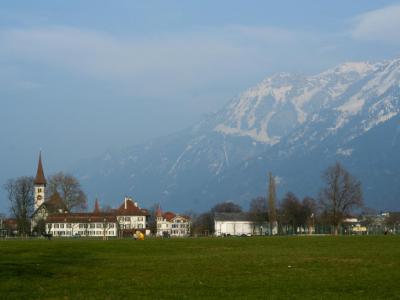
Hohematte Park is a large park in the heart of Interlaken. The land originally belonged to the Augustinian convent. It was purchased by locals in 1860 to ensure it remained an undeveloped, open space. It is a good spot for those who want ample space to play outdoor games, run through the grass, have an outdoor picnic or see spectacular views of the Alps.
The 35-acre park offers many unique features. Some of these include a state of Hindi director Yash Chopra and a working clock made entirely out of flowers. One of the most outstanding features of Hohematte Park is the abundance of paragliders. The park is landing ground for these adventure sport aficionados.
Those who visit Interlaken in the winter will find an ice skating rink in Hohematte Park. There is also a small playground for children that has swings, slides and climbing structures. In addition, park offers walkways, flower beds, park benches and fountains.
The park is open 24 hours, seven days per week.
The 35-acre park offers many unique features. Some of these include a state of Hindi director Yash Chopra and a working clock made entirely out of flowers. One of the most outstanding features of Hohematte Park is the abundance of paragliders. The park is landing ground for these adventure sport aficionados.
Those who visit Interlaken in the winter will find an ice skating rink in Hohematte Park. There is also a small playground for children that has swings, slides and climbing structures. In addition, park offers walkways, flower beds, park benches and fountains.
The park is open 24 hours, seven days per week.
6) Heimatwerk
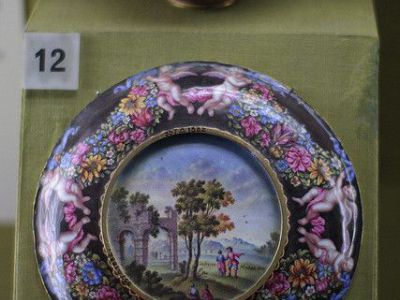
Located in the bustling Höheweg, Heimatwerk Interlaken is a charming shopping destination known for offering a delightful selection of handcrafted items exclusively made in Switzerland. The shop is a go-to place for tourists and locals alike, offering a wide array of high-quality goods that reflect the country's rich tradition of craftsmanship and innovation.
The store is packed with a variety of unique and beautifully crafted items, such as wood-carved children’s toys, elegant linens and tablecloths, cutting boards, cheese boards, ceramics, and glassware. Some of the highlights include timeless toys like the intricate block puzzles from Atelier Fischer and the colorful sound trees from KARO Holzspielwaren, which are perfect for adding a touch of Swiss nostalgia to any child’s room.
For those seeking more contemporary pieces, Heimatwerk offers modern wooden toys from brands like Kynee and Atelier Passage, alongside practical inventions such as the bag keeper from Böörds AG or sustainably produced bags from Kokoté. The store also features artistic creations like Esther Gerber’s delicate paper cutouts, Karin Steinauer’s metal figures, and Rolf Mösching’s vibrant polka dot ceramics, adding a touch of Swiss elegance to any home.
Heimatwerk Interlaken’s professional staff is dedicated to providing an excellent shopping experience, assisting customers in finding the perfect gifts and souvenirs for every occasion. Whether you're looking for a traditional dirndl or a playful milk jug from Lumière des Alpes, this shop promises to offer something special for everyone. With its thoughtfully curated selection and a commitment to showcasing local craftsmanship, Heimatwerk Interlaken is the ideal place to find a memorable piece of Switzerland to take home.
The store is packed with a variety of unique and beautifully crafted items, such as wood-carved children’s toys, elegant linens and tablecloths, cutting boards, cheese boards, ceramics, and glassware. Some of the highlights include timeless toys like the intricate block puzzles from Atelier Fischer and the colorful sound trees from KARO Holzspielwaren, which are perfect for adding a touch of Swiss nostalgia to any child’s room.
For those seeking more contemporary pieces, Heimatwerk offers modern wooden toys from brands like Kynee and Atelier Passage, alongside practical inventions such as the bag keeper from Böörds AG or sustainably produced bags from Kokoté. The store also features artistic creations like Esther Gerber’s delicate paper cutouts, Karin Steinauer’s metal figures, and Rolf Mösching’s vibrant polka dot ceramics, adding a touch of Swiss elegance to any home.
Heimatwerk Interlaken’s professional staff is dedicated to providing an excellent shopping experience, assisting customers in finding the perfect gifts and souvenirs for every occasion. Whether you're looking for a traditional dirndl or a playful milk jug from Lumière des Alpes, this shop promises to offer something special for everyone. With its thoughtfully curated selection and a commitment to showcasing local craftsmanship, Heimatwerk Interlaken is the ideal place to find a memorable piece of Switzerland to take home.
7) Schlosskirche (Castle Church) (must see)
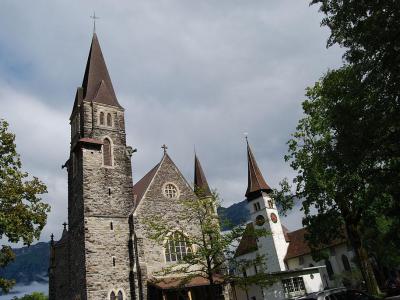
Schlosskirche, sometimes called Reformierte Schlosskirche or "the reformed church," is one of the oldest building in Interlaken. Originally an Augustinian monastery, the castle church was built in 1133. Today, Schlosskirche is used as a convent and is one of the city's most visited places.
The church was used as a monastery for many years but it wasn't always as revered as it is now. During the 16th century, the church was used as a storage for carriages, barrels and wine. The nave was even used as a granary.
It wasn't until the 19th century that Schlosskirke was used as a church again. The church was restored with the aid of architect Adolf Muhlemann and re-dedicated in 1911.
Visitors to Interlaken can tour Schlosskirche to see the beautiful stained glass windows, the private garden and the medieval clock, which tolls on the hour. Church services are held every Sunday at 10 AM.
The church was used as a monastery for many years but it wasn't always as revered as it is now. During the 16th century, the church was used as a storage for carriages, barrels and wine. The nave was even used as a granary.
It wasn't until the 19th century that Schlosskirke was used as a church again. The church was restored with the aid of architect Adolf Muhlemann and re-dedicated in 1911.
Visitors to Interlaken can tour Schlosskirche to see the beautiful stained glass windows, the private garden and the medieval clock, which tolls on the hour. Church services are held every Sunday at 10 AM.
8) Schlosskirche (Castle Church)
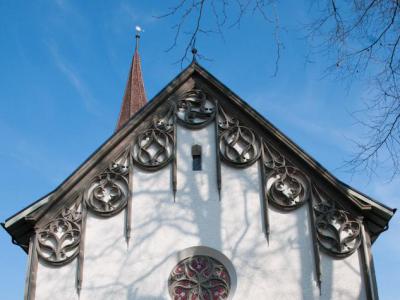
Castle Church (Schlosskirche) is a historic church in the charming town of Interlaken. It is part of the castle complex and situated in a spacious park, which adds to the beauty and serenity of the surroundings. The church has a rich and eventful history, which adds to its charm and significance.
Initially, the Castle Church was not used as a church but rather served as a warehouse. It was only in the 19th century, with the rise of tourism in the region, that the church gained public attention and was restored to its former glory.
In 1909/11, a new neo-Gothic nave was built according to the plans of the local architect Adolf Mühlemann. The old high-Gothic choir with a side tower from the 14th century was also renovated. The exterior of the church is characterized by slender pointed arched windows and a steep hipped roof, which give it a distinctive appearance.
The church's interior is equally impressive, with its five-bay hall and excellent stained glass by Paul Zehnder from 1950-63. The church also boasts a beautiful wall painting by Rudolf Münger, which adds to the overall aesthetic appeal of the space.
Today, Castle Church is a popular tourist attraction and a place of worship for locals and visitors alike. Its rich history and stunning architecture make it a must-visit destination for anyone traveling to Interlaken.
Initially, the Castle Church was not used as a church but rather served as a warehouse. It was only in the 19th century, with the rise of tourism in the region, that the church gained public attention and was restored to its former glory.
In 1909/11, a new neo-Gothic nave was built according to the plans of the local architect Adolf Mühlemann. The old high-Gothic choir with a side tower from the 14th century was also renovated. The exterior of the church is characterized by slender pointed arched windows and a steep hipped roof, which give it a distinctive appearance.
The church's interior is equally impressive, with its five-bay hall and excellent stained glass by Paul Zehnder from 1950-63. The church also boasts a beautiful wall painting by Rudolf Münger, which adds to the overall aesthetic appeal of the space.
Today, Castle Church is a popular tourist attraction and a place of worship for locals and visitors alike. Its rich history and stunning architecture make it a must-visit destination for anyone traveling to Interlaken.
9) Japanischer Garten (Japanese Garden)
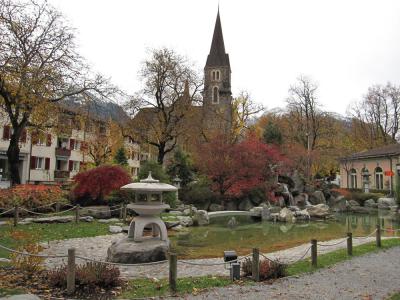
Japanese Garden goes by many names. It is sometimes called the Japanese Garden. At other times it is called the Garden of Friendship. This garden was a gift from Interlaken's twin city of Otsu, Japan.
Built in 1995, Japanese Garden was the first Japanese garden in the city. The garden includes a Shinji pond and a pavilion. It is designed to remind the people of Interlaken of the environment of Lake Biwa, near Otsu. The garden features cranes, turtles, numerous trees and a memorial plaque.
The location of Japanese Garden allows for stunning views of the Reformierte Schlosskirche. It is a unique area in the center of the city with a vision of the Alps looming over a traditional Japanese pagoda.
The garden is open 24 hours, seven days per week. It is conveniently located between Hoheweg Boulevard and Schosstrasse with many shopping and dining places located nearby. Visitors can plan a quick stop to see the unique park or choose to linger as they take in the serenity of the Garden of Friendship.
Built in 1995, Japanese Garden was the first Japanese garden in the city. The garden includes a Shinji pond and a pavilion. It is designed to remind the people of Interlaken of the environment of Lake Biwa, near Otsu. The garden features cranes, turtles, numerous trees and a memorial plaque.
The location of Japanese Garden allows for stunning views of the Reformierte Schlosskirche. It is a unique area in the center of the city with a vision of the Alps looming over a traditional Japanese pagoda.
The garden is open 24 hours, seven days per week. It is conveniently located between Hoheweg Boulevard and Schosstrasse with many shopping and dining places located nearby. Visitors can plan a quick stop to see the unique park or choose to linger as they take in the serenity of the Garden of Friendship.
10) Hoheweg Boulevard (must see)
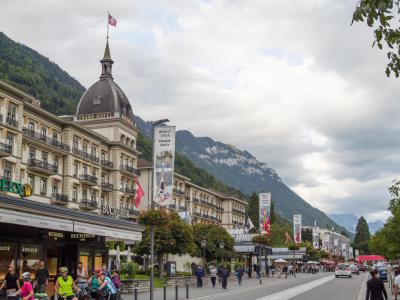
Hoheweg Boulevard is a notable street in Interlaken. It runs east to west from Lanzenan to Harderstrasse following the geographical curve of the Aare River. Visitors to Interlaken should seek out Hoheweg Boulevard for easy access to various spots in the city, plenty of shopping opportunities and dining options.
Some of the notable locations along Hoheweg Boulevard include Interlaken Centre, the Swiss Chocolate Chalet and numerous gardens. The gardens include the English Garden, the Japanese Garden and Schlosspark.
The Hohe Promenade is a smaller, quieter street that circles back to Hoheweg Boulevard. Visitors can stop to take in the serenity of the Mersmann-Brunnen fountain before they return to the busier boulevard.
Hoheweg Boulevard is a good, central point for a walking tour of the city. Visitors will find that their favorite spots, like Casino Interlaken and Hohematte park are only minutes away by foot.
Some of the notable locations along Hoheweg Boulevard include Interlaken Centre, the Swiss Chocolate Chalet and numerous gardens. The gardens include the English Garden, the Japanese Garden and Schlosspark.
The Hohe Promenade is a smaller, quieter street that circles back to Hoheweg Boulevard. Visitors can stop to take in the serenity of the Mersmann-Brunnen fountain before they return to the busier boulevard.
Hoheweg Boulevard is a good, central point for a walking tour of the city. Visitors will find that their favorite spots, like Casino Interlaken and Hohematte park are only minutes away by foot.
11) Harder Kulm
The Harder Kulm, often referred to as the "Top of Interlaken," is a stunning viewpoint located at 1,322 meters (4,337 feet) above sea level in the Bernese Oberland region of Switzerland. Overlooking the towns of Interlaken and Unterseen, this viewpoint offers visitors breathtaking panoramic views of the region’s landscapes, including the famous Lakes Brienz and Thun, and the towering peaks of the Eiger, Mönch, and Jungfrau mountains.
Perched on the western end of the Harder Ridge, which is part of the Emmental Alps, the Harder Kulm can be easily accessed via the Harderbahn, a historic funicular railway that has been operating since 1908. The eight-minute ride departs from Interlaken and ascends 735 meters through a lush forest and past a wildlife park, bringing visitors to an upper station just a five-minute walk from the main viewpoint.
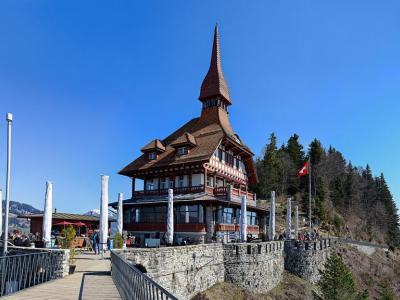
Once at the top, visitors can enjoy the unique architecture of the Bergrestaurant Harder Kulm, a castle-like structure complete with turrets and a red-tiled roof. The restaurant offers a selection of traditional Swiss cuisine, best enjoyed from the terrace with expansive views. Families will appreciate the fun playground and picnic area, where children can play while parents enjoy the scenery.
Adjacent to the restaurant is the “Two-Lakes-Bridge,” an observation platform featuring a glass floor that provides a thrilling experience as visitors peer down into the valley below. This airy viewing platform is the perfect spot to take in the sweeping views across the alluvial plains of Bödeli and up the Lütschine Valley to the towering summits of the Bernese Alps.
Although some hiking trails start at Harder Kulm, they are mainly suited for experienced hikers due to the challenging terrain and length of the routes. For those seeking a more relaxed visit, the viewpoint offers an easily accessible and unforgettable experience, providing one of the best panoramic views in the region.
Perched on the western end of the Harder Ridge, which is part of the Emmental Alps, the Harder Kulm can be easily accessed via the Harderbahn, a historic funicular railway that has been operating since 1908. The eight-minute ride departs from Interlaken and ascends 735 meters through a lush forest and past a wildlife park, bringing visitors to an upper station just a five-minute walk from the main viewpoint.
Once at the top, visitors can enjoy the unique architecture of the Bergrestaurant Harder Kulm, a castle-like structure complete with turrets and a red-tiled roof. The restaurant offers a selection of traditional Swiss cuisine, best enjoyed from the terrace with expansive views. Families will appreciate the fun playground and picnic area, where children can play while parents enjoy the scenery.
Adjacent to the restaurant is the “Two-Lakes-Bridge,” an observation platform featuring a glass floor that provides a thrilling experience as visitors peer down into the valley below. This airy viewing platform is the perfect spot to take in the sweeping views across the alluvial plains of Bödeli and up the Lütschine Valley to the towering summits of the Bernese Alps.
Although some hiking trails start at Harder Kulm, they are mainly suited for experienced hikers due to the challenging terrain and length of the routes. For those seeking a more relaxed visit, the viewpoint offers an easily accessible and unforgettable experience, providing one of the best panoramic views in the region.
12) Jungfrau Park (must see)
Jungfrau Park in Interlaken is a unique amusement park dedicated to exploring mysteries and extraterrestrial theories. Originally opened as Mystery Park in 2003 under the vision of Erich von Däniken, the park aimed to showcase his interpretations of unexplained phenomena and his theories on ancient alien influence on human history. However, the park faced financial difficulties and closed in 2006. It was rebranded and reopened as Jungfrau Park in 2009, now operating during the summer season.
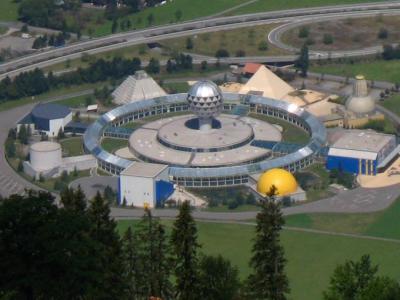
The park's seven pavilions each focus on one of von Däniken's "great mysteries of the world," blending multimedia exhibits and models to engage visitors in questions surrounding Earth's enigmatic history. The centerpiece of Jungfrau Park is the Panorama Kugel, a 41-meter high sphere providing a bird's-eye view of the park’s surroundings and housing exhibits of von Däniken's work. Here, visitors can immerse themselves in von Däniken’s interpretations, as detailed in his book Chariots of the Gods, which theorizes that ancient artifacts were influenced by extraterrestrial beings.
Beyond the mysteries, Jungfrau Park has expanded its attractions to cater to families and younger visitors. Mystery Land, an indoor and outdoor play zone, is a vibrant area designed for children, featuring climbing towers, bouncy castles, slides, paddling pools, and other engaging activities. The facility ensures fun for kids even during winter days, while parents can relax at the family restaurant. The Game & Fun zone offers a variety of interactive experiences, from a Mars shuttle ride to a submarine simulator exploring underwater cities, as well as classic games like pinball and air hockey.
Nestled between two lakes in the Bernese Oberland, with stunning views of snow-capped mountains, Jungfrau Park is more than just an amusement destination. It serves as a hub for curiosity and family-friendly entertainment, inviting visitors to delve into the unknown while enjoying a variety of fun-filled activities.
The park's seven pavilions each focus on one of von Däniken's "great mysteries of the world," blending multimedia exhibits and models to engage visitors in questions surrounding Earth's enigmatic history. The centerpiece of Jungfrau Park is the Panorama Kugel, a 41-meter high sphere providing a bird's-eye view of the park’s surroundings and housing exhibits of von Däniken's work. Here, visitors can immerse themselves in von Däniken’s interpretations, as detailed in his book Chariots of the Gods, which theorizes that ancient artifacts were influenced by extraterrestrial beings.
Beyond the mysteries, Jungfrau Park has expanded its attractions to cater to families and younger visitors. Mystery Land, an indoor and outdoor play zone, is a vibrant area designed for children, featuring climbing towers, bouncy castles, slides, paddling pools, and other engaging activities. The facility ensures fun for kids even during winter days, while parents can relax at the family restaurant. The Game & Fun zone offers a variety of interactive experiences, from a Mars shuttle ride to a submarine simulator exploring underwater cities, as well as classic games like pinball and air hockey.
Nestled between two lakes in the Bernese Oberland, with stunning views of snow-capped mountains, Jungfrau Park is more than just an amusement destination. It serves as a hub for curiosity and family-friendly entertainment, inviting visitors to delve into the unknown while enjoying a variety of fun-filled activities.
13) Unspunnen Castle (must see)
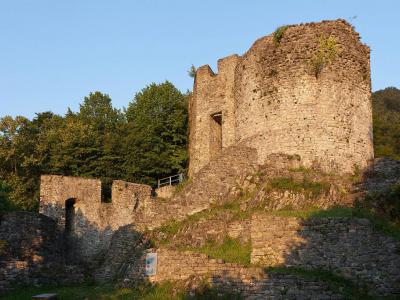
Unspunnen Castle, now a picturesque ruin, is nestled in the municipality of Wilderswil, overlooking the scenic city of Interlaken in the Bernese Highlands of Switzerland. Likely constructed in the early 12th century, the castle once stood as a key defensive structure and symbol of power in the region.
Historically, Unspunnen Castle played a crucial role in guarding the medieval Lütschinen Bridge near Interlaken, alongside its nearby counterpart, Rotenfluh Castle. Both castles were pivotal in the defense and control of the area during the 13th and 14th centuries. While the original builders and early owners of Unspunnen remain unknown, it came under the ownership of Burkart of Thun in 1224 through his marriage to the Baron of Wädenswil family. Later, due to a division of inheritance, Unspunnen Castle was split from Rotenfluh and was granted to the Baron of Eschenbach.
Unspunnen Castle’s history is marked by shifting control due to political and military conflicts. After Albert I of Germany's assassination in 1308, the Habsburgs took over the Eschenbach lands, including the castle. Bern besieged it in 1334 and gradually acquired it after the Battle of Sempach in 1386, finally securing full ownership by 1529 after buying out several noble families.
Unspunnen Castle was allowed to fall into disrepair after the Bernese authorities transferred the lands to the administration of Interlaken in 1762. Despite its decline, the castle experienced a revival of interest with the inauguration of the Unspunnenfest in 1805, a festival celebrating traditional Swiss sports and cultural competitions held in the fields below the ruins. The festival’s popularity led to periodic repairs and clean-up efforts to preserve what remained of the structure.
Today, Unspunnen Castle stands as a symbol of the region’s medieval history and cultural heritage, drawing visitors not only for its historical significance but also as the venue for the iconic Unspunnenfest, which continues to celebrate Swiss traditions against the backdrop of these evocative ruins.
Historically, Unspunnen Castle played a crucial role in guarding the medieval Lütschinen Bridge near Interlaken, alongside its nearby counterpart, Rotenfluh Castle. Both castles were pivotal in the defense and control of the area during the 13th and 14th centuries. While the original builders and early owners of Unspunnen remain unknown, it came under the ownership of Burkart of Thun in 1224 through his marriage to the Baron of Wädenswil family. Later, due to a division of inheritance, Unspunnen Castle was split from Rotenfluh and was granted to the Baron of Eschenbach.
Unspunnen Castle’s history is marked by shifting control due to political and military conflicts. After Albert I of Germany's assassination in 1308, the Habsburgs took over the Eschenbach lands, including the castle. Bern besieged it in 1334 and gradually acquired it after the Battle of Sempach in 1386, finally securing full ownership by 1529 after buying out several noble families.
Unspunnen Castle was allowed to fall into disrepair after the Bernese authorities transferred the lands to the administration of Interlaken in 1762. Despite its decline, the castle experienced a revival of interest with the inauguration of the Unspunnenfest in 1805, a festival celebrating traditional Swiss sports and cultural competitions held in the fields below the ruins. The festival’s popularity led to periodic repairs and clean-up efforts to preserve what remained of the structure.
Today, Unspunnen Castle stands as a symbol of the region’s medieval history and cultural heritage, drawing visitors not only for its historical significance but also as the venue for the iconic Unspunnenfest, which continues to celebrate Swiss traditions against the backdrop of these evocative ruins.
