Custom Walk in Hong Kong, Hong Kong by mikaylapb_6f2782 created on 2026-03-13
Guide Location: Hong Kong » Hong Kong
Guide Type: Custom Walk
# of Sights: 8
Tour Duration: 5 Hour(s)
Travel Distance: 13.6 Km or 8.5 Miles
Share Key: VUF9T
Guide Type: Custom Walk
# of Sights: 8
Tour Duration: 5 Hour(s)
Travel Distance: 13.6 Km or 8.5 Miles
Share Key: VUF9T
How It Works
Please retrieve this walk in the GPSmyCity app. Once done, the app will guide you from one tour stop to the next as if you had a personal tour guide. If you created the walk on this website or come to the page via a link, please follow the instructions below to retrieve the walk in the app.
Retrieve This Walk in App
Step 1. Download the app "GPSmyCity: Walks in 1K+ Cities" on Apple App Store or Google Play Store.



Step 2. In the GPSmyCity app, download(or launch) the guide "Hong Kong Map and Walking Tours".
Step 3. Tap the menu button located at upper right corner of the "Walks" screen and select "Retrieve custom walk". Enter the share key: VUF9T
1) Victoria Peak (The Peak) (must see)
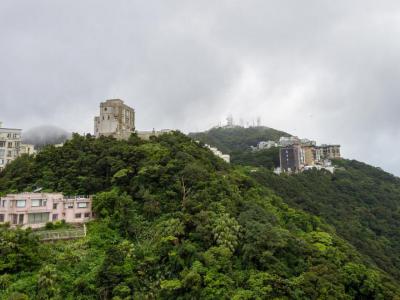
Victoria Peak, located on the western half of Hong Kong Island, stands as the highest mountain on the island, reaching an elevation of 552 meters. Its picturesque scenery resembles something out of a postcard and provides a truly breathtaking view, especially when illuminated at night. To fully experience this magnificent sight, tourists can embark on the Peak Tramway, an ascending rail system that carries passengers up the mountain. Late afternoon on a clear day is considered the optimal time to visit Victoria Peak.
The viewing deck also features coin-operated telescopes, allowing visitors to further immerse themselves in the captivating cityscape. As the number of visitors increased, two prominent leisure and shopping centers, namely the Peak Tower and the Peak Galleria, were constructed side by side. Positioned nearby is the summit, which houses a radio telecommunications facility and remains inaccessible to the general public. Nevertheless, the surrounding area, encompassing public parks and valuable residential land, is commonly referred to as "The Peak." Serving as a significant tourist attraction, it offers panoramic views of Central, Victoria Harbour, Lamma Island, and the neighboring islands.
Why You Should Visit:
Number one tourist spot in HK, and definitely worth it. If you're lucky enough to avoid cloudy/misty weather it's a breathtaking view to have Hong Kong at the palm of your hand.
Tip:
To make the experience more wholesome, try incorporating a hike or a walk – there are many different routes for all fitness levels. If you are fit, you can consider hiking up from Central or HK University (takes 1.5 hrs), then hiking the peak circular route, and finally hiking all the way down to Pok Fu Lam Reservoir. If you don't want too challenging a hike, then take public transport, walk the circular Peak route, and take the 45-minute downhill hike down Pok Fu Lam Reservoir. If you can only handle a stroll, take public transportation up and down and while you are up at The Peak, instead of just staying at the mall and lookout points, take the circular paved walk around the Peak. Plan to take the tram to come down, as the bus will likely have a long queue.
The viewing deck also features coin-operated telescopes, allowing visitors to further immerse themselves in the captivating cityscape. As the number of visitors increased, two prominent leisure and shopping centers, namely the Peak Tower and the Peak Galleria, were constructed side by side. Positioned nearby is the summit, which houses a radio telecommunications facility and remains inaccessible to the general public. Nevertheless, the surrounding area, encompassing public parks and valuable residential land, is commonly referred to as "The Peak." Serving as a significant tourist attraction, it offers panoramic views of Central, Victoria Harbour, Lamma Island, and the neighboring islands.
Why You Should Visit:
Number one tourist spot in HK, and definitely worth it. If you're lucky enough to avoid cloudy/misty weather it's a breathtaking view to have Hong Kong at the palm of your hand.
Tip:
To make the experience more wholesome, try incorporating a hike or a walk – there are many different routes for all fitness levels. If you are fit, you can consider hiking up from Central or HK University (takes 1.5 hrs), then hiking the peak circular route, and finally hiking all the way down to Pok Fu Lam Reservoir. If you don't want too challenging a hike, then take public transport, walk the circular Peak route, and take the 45-minute downhill hike down Pok Fu Lam Reservoir. If you can only handle a stroll, take public transportation up and down and while you are up at The Peak, instead of just staying at the mall and lookout points, take the circular paved walk around the Peak. Plan to take the tram to come down, as the bus will likely have a long queue.
2) Central Mid-Levels Escalators
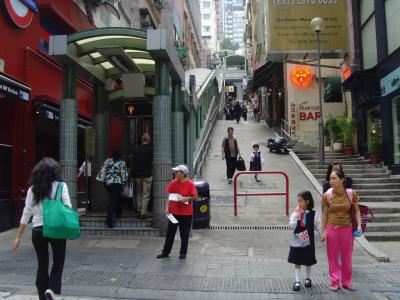
You don’t need to hike a mountain to climb Hong Kong Island - the Central–Mid-Levels Escalators will do the work for you. This system is the longest covered outdoor escalator network in the world. Stretching over eight hundred meters and rising more than one hundred and thirty-five meters from bottom to top, it was completed in 1993 to provide a smoother commute between the Western and Central Districts on Hong Kong Island.
Much of Hong Kong Island is steep and hilly, making it challenging for residents and visitors to move easily up and down the slopes. This terrain has led the city to adopt a number of unusual and innovative transport solutions, designed to make daily life more accessible for everyone. Passing through a series of narrow streets and elevated walkways, the system links Des Voeux Road in Central with Conduit Road in the Mid-Levels. It carries more than 50,000 people each day.
A fun detail is that the escalators don’t run in the same direction all day. Each morning they flow downhill to help commuters reach Central, and around 10 am they switch to an uphill climb for the rest of the day. Locals also treat the escalator route as a kind of moving walkway between cafes, bars and small shops, making it one of the easiest ways to explore the surrounding neighborhoods.
Much of Hong Kong Island is steep and hilly, making it challenging for residents and visitors to move easily up and down the slopes. This terrain has led the city to adopt a number of unusual and innovative transport solutions, designed to make daily life more accessible for everyone. Passing through a series of narrow streets and elevated walkways, the system links Des Voeux Road in Central with Conduit Road in the Mid-Levels. It carries more than 50,000 people each day.
A fun detail is that the escalators don’t run in the same direction all day. Each morning they flow downhill to help commuters reach Central, and around 10 am they switch to an uphill climb for the rest of the day. Locals also treat the escalator route as a kind of moving walkway between cafes, bars and small shops, making it one of the easiest ways to explore the surrounding neighborhoods.
3) Hong Kong Park (must see)
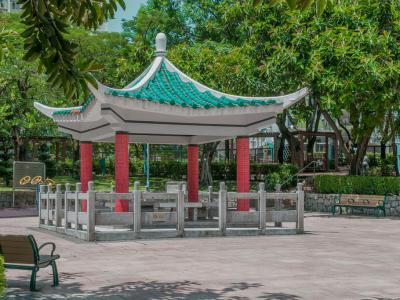
What was once a military site and later used by a school has been transformed into a place where trees, water and heritage mingle with urban surroundings. Hong Kong Park opened to the public in May 1991 on grounds that once belonged to the old Victoria Barracks, a large British military complex. It spans about eight hectares, offering a surprisingly calm green retreat.
As you stroll in, you’ll find paths winding under leafy canopies, around an artificial lake with koi and turtles, past a waterfall, streams and ponds. Historic buildings from the colonial era remain: the elegant Flagstaff House, erected in 1846, now welcomes visitors as the Flagstaff House Museum of Tea Ware, while the former barracks buildings like Cassels Block house the Hong Kong Visual Arts Center.
For a twist beyond gardens and history, the park’s standout attraction is the Edward Youde Aviary - one of the largest walk-through aviaries of its kind. Here you’ll wander along elevated wooden pathways through lush greenery, while over 500 birds - many from tropical rainforests far beyond Hong Kong - fly overhead or perch in treetops. Below them, streams and ponds complete a verdant, almost jungle-like atmosphere.
As you enter from Kennedy Road, the first feature you meet is the Children’s Playground. On your left stands the Hong Kong Visual Arts Center, and just beyond it lies the Hong Kong Park Sports Center. To the right of the playground is the Edward Youde Aviary. If you continue walking past the aviary, you’ll reach the Fighting SARS Memorial and the adjacent Tai Chi Garden. From here, head north-east toward the Lake, a quiet spot with koi, turtles and a small waterfall. Continuing uphill in the same direction brings you to the Flagstaff House Museum of Tea Ware, the most prominent historic structure in the park.
As you stroll in, you’ll find paths winding under leafy canopies, around an artificial lake with koi and turtles, past a waterfall, streams and ponds. Historic buildings from the colonial era remain: the elegant Flagstaff House, erected in 1846, now welcomes visitors as the Flagstaff House Museum of Tea Ware, while the former barracks buildings like Cassels Block house the Hong Kong Visual Arts Center.
For a twist beyond gardens and history, the park’s standout attraction is the Edward Youde Aviary - one of the largest walk-through aviaries of its kind. Here you’ll wander along elevated wooden pathways through lush greenery, while over 500 birds - many from tropical rainforests far beyond Hong Kong - fly overhead or perch in treetops. Below them, streams and ponds complete a verdant, almost jungle-like atmosphere.
As you enter from Kennedy Road, the first feature you meet is the Children’s Playground. On your left stands the Hong Kong Visual Arts Center, and just beyond it lies the Hong Kong Park Sports Center. To the right of the playground is the Edward Youde Aviary. If you continue walking past the aviary, you’ll reach the Fighting SARS Memorial and the adjacent Tai Chi Garden. From here, head north-east toward the Lake, a quiet spot with koi, turtles and a small waterfall. Continuing uphill in the same direction brings you to the Flagstaff House Museum of Tea Ware, the most prominent historic structure in the park.

4) Hong Kong Convention and Exhibition Centre
Situated in Wan Chai North on Hong Kong Island, the Hong Kong Convention and Exhibition Centre stands as a prominent venue for conventions and exhibitions. Its strategic location along Victoria Harbor allows convenient access to nearby commercial buildings and hotels through covered walkways.
Originally established in 1988 on reclaimed land off Gloucester Road, the structure boasted the world's largest glass curtain at the time. Offering panoramic views of Victoria Harbor on three sides, the curtain enhances the aesthetic appeal of the center. In the 1990s, the second phase of the complex was developed on an artificial island, featuring a distinctive rooftop resembling a bird or turtle. Initially, a sky bridge connected the two phases, but today, an expanded exhibition hall serves as the link.
The construction of this impressive complex was made possible through the collaborative efforts and financial support of New World Development, Grand Hyatt Hong Kong, Harbor View Hotel, and Harbor View Apartments, all of which occupy the upper levels of the building.
Why You Should Visit:
World-class exhibition hall, great views, good facilities, good use of space, full of natural light, well connected to MRT.
What really sets it apart from other convention centers is its unique architecture, which can be appreciated by any of the nearby towers.
Tip:
Don't underestimate the size of this place: it is over 6 levels including the basement, so make sure you have the best walking shoes possible.
Fast food is available in between trade areas; however, several hotels are easily accessible to properly dine at.
Originally established in 1988 on reclaimed land off Gloucester Road, the structure boasted the world's largest glass curtain at the time. Offering panoramic views of Victoria Harbor on three sides, the curtain enhances the aesthetic appeal of the center. In the 1990s, the second phase of the complex was developed on an artificial island, featuring a distinctive rooftop resembling a bird or turtle. Initially, a sky bridge connected the two phases, but today, an expanded exhibition hall serves as the link.
The construction of this impressive complex was made possible through the collaborative efforts and financial support of New World Development, Grand Hyatt Hong Kong, Harbor View Hotel, and Harbor View Apartments, all of which occupy the upper levels of the building.
Why You Should Visit:
World-class exhibition hall, great views, good facilities, good use of space, full of natural light, well connected to MRT.
What really sets it apart from other convention centers is its unique architecture, which can be appreciated by any of the nearby towers.
Tip:
Don't underestimate the size of this place: it is over 6 levels including the basement, so make sure you have the best walking shoes possible.
Fast food is available in between trade areas; however, several hotels are easily accessible to properly dine at.
5) Kowloon Park
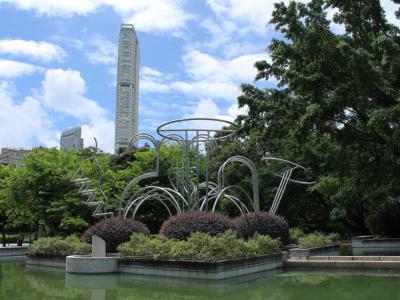
Kowloon Park, located in the heart of Tsim Sha Tsui off Nathan Road, is one of Hong Kong's largest public parks, spanning over 13 hectares. Notable attractions within the park include the magnificent Kowloon Mosque, picturesque green spaces teeming with wildlife, and both indoor and outdoor swimming pools.
Originally inaugurated in 1970 by Governor Sir David Trench, Kowloon Park underwent redevelopment in 1989. Its enchanting features encompass exquisite gardens, flourishing trees, diverse bird species, inviting playgrounds, and meandering pathways. Visitors can indulge in a plethora of recreational activities and leisurely pursuits. Outdoor enthusiasts will appreciate the Mini-Soccer Pitch, perfect for enjoying a friendly match with your children.
For nature enthusiasts, Bird Lake offers a tranquil setting to observe various avian species, free of charge. The renowned Chinese gardens, Maze gardens, and Roof gardens provide ideal spots to unwind with family or friends, basking in the pleasant ambiance and refreshing breezes. Parents can rest assured about their children's safety while they explore the park, as the Children's Playground ensures maximum security.
Kowloon Park boasts a wide array of activities and amenities, including the Mini-Soccer Pitch, Swimming Pool, Sports Center, Kung Fu Corner, Fitness Trail, Bird Lake, Maze Garden, Sculpture Walk and Sculpture Garden, Colour Garden, Chinese Garden, Roof Gardens, Viewing Cone, Conservation Corner, Piazza, Loggia, Aviary, Children's Playground, and Discovery Playground.
Originally inaugurated in 1970 by Governor Sir David Trench, Kowloon Park underwent redevelopment in 1989. Its enchanting features encompass exquisite gardens, flourishing trees, diverse bird species, inviting playgrounds, and meandering pathways. Visitors can indulge in a plethora of recreational activities and leisurely pursuits. Outdoor enthusiasts will appreciate the Mini-Soccer Pitch, perfect for enjoying a friendly match with your children.
For nature enthusiasts, Bird Lake offers a tranquil setting to observe various avian species, free of charge. The renowned Chinese gardens, Maze gardens, and Roof gardens provide ideal spots to unwind with family or friends, basking in the pleasant ambiance and refreshing breezes. Parents can rest assured about their children's safety while they explore the park, as the Children's Playground ensures maximum security.
Kowloon Park boasts a wide array of activities and amenities, including the Mini-Soccer Pitch, Swimming Pool, Sports Center, Kung Fu Corner, Fitness Trail, Bird Lake, Maze Garden, Sculpture Walk and Sculpture Garden, Colour Garden, Chinese Garden, Roof Gardens, Viewing Cone, Conservation Corner, Piazza, Loggia, Aviary, Children's Playground, and Discovery Playground.
6) Star Ferry Pier
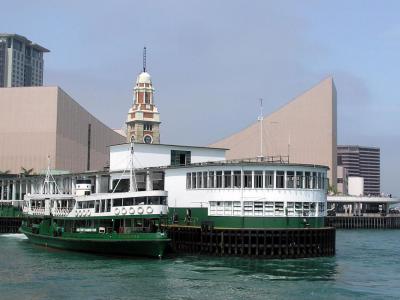
Located at the southernmost tip of Tsim Sha Tsui on the Kowloon Peninsula in Hong Kong, the pier known as Star Ferry Pier, Tsim Sha Tsui, or Tsim Sha Tsui Ferry Pier stands on reclaimed land. Operated by Star Ferry, it offers a pedestrian ferry service across Victoria Harbour to Wan Chai and Central on Hong Kong Island. The franchise held by Star Ferry identifies the location as "Kowloon Point."
Similar to its counterpart on Hong Kong Island, this pier consists of two bi-level structures, with the upper-level boarding area commanding a higher fare. These structures are supported by wooden pilings. While the Tsim Sha Tsui pier lacks a clock tower of its own, one can be found nearby.
Adjacent to the pier, at the foot of Salisbury Road, is a bus terminus serving various Kowloon and New Kowloon routes operated by Kowloon Motor Bus.
The pier enjoys proximity to several notable landmarks, including Star House, Ocean Terminal, Hong Kong Cultural Centre, and the Clock Tower of the former KCR Kowloon Station. The area between the pier and Star House, known as the Five Flag Poles, serves as a popular meeting spot. Towards the southeast lies the Kowloon Public Pier.
Within the pier premises, visitors can find a range of retail shops, such as newsstands, a store selling Star Ferry merchandise (including ferry models), an HSBC branch, and an information center operated by the Hong Kong Tourism Board.
Similar to its counterpart on Hong Kong Island, this pier consists of two bi-level structures, with the upper-level boarding area commanding a higher fare. These structures are supported by wooden pilings. While the Tsim Sha Tsui pier lacks a clock tower of its own, one can be found nearby.
Adjacent to the pier, at the foot of Salisbury Road, is a bus terminus serving various Kowloon and New Kowloon routes operated by Kowloon Motor Bus.
The pier enjoys proximity to several notable landmarks, including Star House, Ocean Terminal, Hong Kong Cultural Centre, and the Clock Tower of the former KCR Kowloon Station. The area between the pier and Star House, known as the Five Flag Poles, serves as a popular meeting spot. Towards the southeast lies the Kowloon Public Pier.
Within the pier premises, visitors can find a range of retail shops, such as newsstands, a store selling Star Ferry merchandise (including ferry models), an HSBC branch, and an information center operated by the Hong Kong Tourism Board.
7) Victoria Harbour (must see)
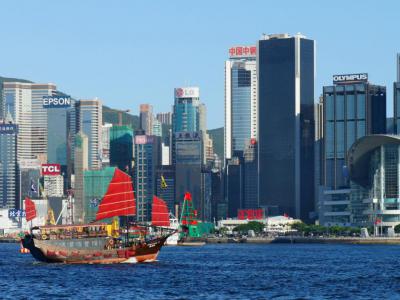
Victoria Harbour, nestled between Hong Kong Island and Kowloon in Hong Kong, is a captivating natural harbor that encompasses all the renowned landmarks and attractions that define the city. On one side, it is embraced by a striking panorama of skyscrapers and the majestic Victoria Peak, while the Tsim Sha Tsui shoreline graces the other side.
This remarkable harbor played a pivotal role in Hong Kong's history and development. Its deep and sheltered waters, strategically positioned on the South China Sea, were instrumental in establishing Hong Kong as a British colony and transforming it into a bustling trading hub.
Over time, the harbor has witnessed various reclamation endeavors on both shores, some of which have sparked controversy in recent years. Concerns have been raised about the environmental impact of these expansions, including water quality degradation and the loss of natural habitats. Nevertheless, Victoria Harbour remains a vital port welcoming thousands of international vessels annually.
Beyond its historical significance, Victoria Harbour is renowned for its awe-inspiring vistas, making it a prominent tourist attraction in Hong Kong. Nestled within the heart of the densely populated region, the harbor serves as a spectacular venue for annual fireworks displays, captivating both visitors and locals alike. Its promenades, dotted along the waterfront, are vibrant gathering spots where tourists and residents mingle, immersing themselves in the vibrant atmosphere.
Why You Should Visit:
Great place to chill, with plenty of seats to relax and watch the shipping and small boats that constantly pass by, as well as a few parks for when a retreat from the city noise is required.
You don't get bored, either, as there are plenty of places to shop, plenty of restaurants/bars that offer good views, and many other activities.
Tip:
Take a boat ride on the harbor circle line and enjoy the views on a clear day or at night.
The great thing about catching the ferry is that you have a few options as to what ferry station (port) you can travel to in Hong Kong. That way you get to see most of the harbor.
The Symphony of Lights show is at 8 pm each day. Though it might be a bit disappointing compared to what you may see posted online, it's surely not to be missed when in HK, as it's free and the skyline itself is already very special.
This remarkable harbor played a pivotal role in Hong Kong's history and development. Its deep and sheltered waters, strategically positioned on the South China Sea, were instrumental in establishing Hong Kong as a British colony and transforming it into a bustling trading hub.
Over time, the harbor has witnessed various reclamation endeavors on both shores, some of which have sparked controversy in recent years. Concerns have been raised about the environmental impact of these expansions, including water quality degradation and the loss of natural habitats. Nevertheless, Victoria Harbour remains a vital port welcoming thousands of international vessels annually.
Beyond its historical significance, Victoria Harbour is renowned for its awe-inspiring vistas, making it a prominent tourist attraction in Hong Kong. Nestled within the heart of the densely populated region, the harbor serves as a spectacular venue for annual fireworks displays, captivating both visitors and locals alike. Its promenades, dotted along the waterfront, are vibrant gathering spots where tourists and residents mingle, immersing themselves in the vibrant atmosphere.
Why You Should Visit:
Great place to chill, with plenty of seats to relax and watch the shipping and small boats that constantly pass by, as well as a few parks for when a retreat from the city noise is required.
You don't get bored, either, as there are plenty of places to shop, plenty of restaurants/bars that offer good views, and many other activities.
Tip:
Take a boat ride on the harbor circle line and enjoy the views on a clear day or at night.
The great thing about catching the ferry is that you have a few options as to what ferry station (port) you can travel to in Hong Kong. That way you get to see most of the harbor.
The Symphony of Lights show is at 8 pm each day. Though it might be a bit disappointing compared to what you may see posted online, it's surely not to be missed when in HK, as it's free and the skyline itself is already very special.
8) Avenue of Stars
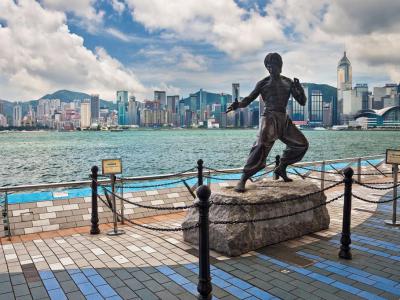
The Avenue of the Stars is Hong Kong’s tribute to the filmmakers, performers, and industry figures who have shaped its world-renowned entertainment scene, forming one of Tsim Sha Tsui’s most popular open-air attractions. The promenade features handprints, plaques, and sculptures that celebrate more than a century of local cinema. Among its most recognizable landmarks are the towering Hong Kong Film Awards statue, the bronze statue of Bruce Lee, a commemorative sculpture of the 2008 Olympic torch, and additional figures such as Anita Mui and the cartoon character McDull.
Starting at the center of the Avenue of Stars, the Bruce Lee statue stands directly facing the harbor, positioned to the right of the Starbucks entrance, with the water on the south side and the city skyline to the north. From this point, keep the harbor to your left and walk west along the waterfront. After a short stroll of just a few meters, you will reach the Anita Mui statue and the nearby seating terraces, located to the left of Starbucks. Further along the way, you'll encounter the small bronze figure of McDull.
The Bruce Lee statue itself is a 2.5-meter bronze sculpture by artist Cao Chong-en, depicting the star in a “ready to strike” pose inspired by the film Fist of Fury. It was funded by the Hong Kong Bruce Lee Club and unveiled in 2005 to mark what would have been Lee’s 65th birthday, and it has since become a pilgrimage point for fans worldwide. The two-meter bronze statue of Cantopop icon and actress Anita Mui stands on a base shaped with stylized flowing water, a nod to her song “Homecoming”, with an inscription reading “Daughter of Hong Kong” in the calligraphy of her friend Andy Lau.
The McDull statue, a small bronze of Hong Kong’s beloved cartoon pig, is set low to the ground so that children can easily pose with it; the character’s upraised finger points to the sky in a playful “wish-making” gesture. Together with the plaques honoring stars such as Jackie Chan, Bruce Lee, John Woo, Chow Yun-fat, and Jet Li, these sculptures turn the Avenue of Stars into a compact open-air museum of Hong Kong cinema.
Starting at the center of the Avenue of Stars, the Bruce Lee statue stands directly facing the harbor, positioned to the right of the Starbucks entrance, with the water on the south side and the city skyline to the north. From this point, keep the harbor to your left and walk west along the waterfront. After a short stroll of just a few meters, you will reach the Anita Mui statue and the nearby seating terraces, located to the left of Starbucks. Further along the way, you'll encounter the small bronze figure of McDull.
The Bruce Lee statue itself is a 2.5-meter bronze sculpture by artist Cao Chong-en, depicting the star in a “ready to strike” pose inspired by the film Fist of Fury. It was funded by the Hong Kong Bruce Lee Club and unveiled in 2005 to mark what would have been Lee’s 65th birthday, and it has since become a pilgrimage point for fans worldwide. The two-meter bronze statue of Cantopop icon and actress Anita Mui stands on a base shaped with stylized flowing water, a nod to her song “Homecoming”, with an inscription reading “Daughter of Hong Kong” in the calligraphy of her friend Andy Lau.
The McDull statue, a small bronze of Hong Kong’s beloved cartoon pig, is set low to the ground so that children can easily pose with it; the character’s upraised finger points to the sky in a playful “wish-making” gesture. Together with the plaques honoring stars such as Jackie Chan, Bruce Lee, John Woo, Chow Yun-fat, and Jet Li, these sculptures turn the Avenue of Stars into a compact open-air museum of Hong Kong cinema.
