Custom Walk in Chiang Mai, Thailand by supercoopinthehouse2924 created on 2026-03-16
Guide Location: Thailand » Chiang Mai
Guide Type: Custom Walk
# of Sights: 11
Tour Duration: 3 Hour(s)
Travel Distance: 6.4 Km or 4 Miles
Share Key: R9TYA
Guide Type: Custom Walk
# of Sights: 11
Tour Duration: 3 Hour(s)
Travel Distance: 6.4 Km or 4 Miles
Share Key: R9TYA
How It Works
Please retrieve this walk in the GPSmyCity app. Once done, the app will guide you from one tour stop to the next as if you had a personal tour guide. If you created the walk on this website or come to the page via a link, please follow the instructions below to retrieve the walk in the app.
Retrieve This Walk in App
Step 1. Download the app "GPSmyCity: Walks in 1K+ Cities" on Apple App Store or Google Play Store.



Step 2. In the GPSmyCity app, download(or launch) the guide "Chiang Mai Map and Walking Tours".
Step 3. Tap the menu button located at upper right corner of the "Walks" screen and select "Retrieve custom walk". Enter the share key: R9TYA
1) Three Kings Monument
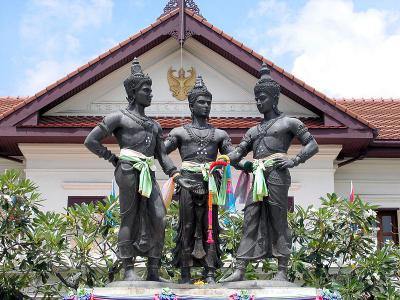
Located in the heart of Chiang Mai’s Old City, the Three Kings Monument honors the rulers who established Chiang Mai as the capital of the Lanna Kingdom in 1296. The bronze statues depict King Mengrai, founder of the city, alongside King Ramkhamhaeng of Sukhothai and King Ngam Muang of Phayao, whose alliance shaped the region’s political and cultural identity.
Many residents regard the monument as a place of respect, offering flowers and incense in gratitude to the rulers who envisioned and founded the city.
The monument stands in a central square in front of the former Provincial Hall, now the Chiang Mai City Arts & Cultural Centre. The plaza hosts cultural events and festivals, while serving as a convenient landmark for visitors exploring the Old City. It is also a popular spot for local families to stroll in the evening.
The area surrounding the Three Kings Monument is lively and welcoming, offering visitors a mix of cafés, small shops, and cultural attractions. Cozy coffee spots and tea houses provide a place to rest and enjoy local beverages, while boutique shops sell handicrafts, souvenirs, and traditional Lanna textiles.
Tip:
During the Loy Krathong Festival (usually in November), the entire area comes alive with colorful lanterns and handcrafted animal displays, creating one of the most memorable sights of the celebration.
Many residents regard the monument as a place of respect, offering flowers and incense in gratitude to the rulers who envisioned and founded the city.
The monument stands in a central square in front of the former Provincial Hall, now the Chiang Mai City Arts & Cultural Centre. The plaza hosts cultural events and festivals, while serving as a convenient landmark for visitors exploring the Old City. It is also a popular spot for local families to stroll in the evening.
The area surrounding the Three Kings Monument is lively and welcoming, offering visitors a mix of cafés, small shops, and cultural attractions. Cozy coffee spots and tea houses provide a place to rest and enjoy local beverages, while boutique shops sell handicrafts, souvenirs, and traditional Lanna textiles.
Tip:
During the Loy Krathong Festival (usually in November), the entire area comes alive with colorful lanterns and handcrafted animal displays, creating one of the most memorable sights of the celebration.
2) Wat Sadeu Muang
Wat Sadeu Muang, also known as Wat Inthakin Sadeu Muang, holds a significant place in the history of Chiang Mai. Legend has it that the city pillar called "Inthakin" was erected in 1296 by King Mangrai when he founded the city of Chiang Mai. The name "Wat Sadeu Muang" translates to "Temple of the Naval of the City," emphasizing its central and pivotal position in the old town.
The historical Inthakin pillar, which was believed to offer protection against misfortune, stood within the temple until it was moved by King Kawila in 1800 to Wat Chedi Luang. Today, the Inthakin Festival is celebrated annually around May, where the pillar is venerated, and offerings are made during the week-long festivities.
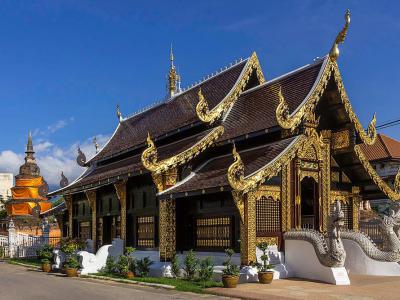
Located next to the Three King's Monument in the heart of the old town, Wat Sadeu Muang is one of the most frequently visited temples in Chiang Mai. Its viharn, a prayer hall, is a stunning example of Lanna temple architecture. The viharn's exterior is adorned with dark teak, coated in almost black lacquer, and embellished with beautiful gilt decorations, creating an exquisite visual appeal.
The temple's interior exudes a dark and atmospheric ambiance due to the use of dark teak and wooden bars in the windows, which allow limited natural light inside. The pillars and walls are richly adorned with floriated gilding, and panels display intricate carvings depicting scenes from Buddhist texts, further adding to the temple's cultural and historical significance.
The historical Inthakin pillar, which was believed to offer protection against misfortune, stood within the temple until it was moved by King Kawila in 1800 to Wat Chedi Luang. Today, the Inthakin Festival is celebrated annually around May, where the pillar is venerated, and offerings are made during the week-long festivities.
Located next to the Three King's Monument in the heart of the old town, Wat Sadeu Muang is one of the most frequently visited temples in Chiang Mai. Its viharn, a prayer hall, is a stunning example of Lanna temple architecture. The viharn's exterior is adorned with dark teak, coated in almost black lacquer, and embellished with beautiful gilt decorations, creating an exquisite visual appeal.
The temple's interior exudes a dark and atmospheric ambiance due to the use of dark teak and wooden bars in the windows, which allow limited natural light inside. The pillars and walls are richly adorned with floriated gilding, and panels display intricate carvings depicting scenes from Buddhist texts, further adding to the temple's cultural and historical significance.
3) Wat Chedi Luang (must see)
Wat Chedi Luang is one of Chiang Mai’s most historically significant temples, located at the center of the Old City. Its name refers to the massive stupa that once dominated the skyline, originally constructed in the 14th century by King Saen Muang Ma to enshrine the ashes of his father, King Ku Na. Over the following decades, later rulers enlarged the structure, and by the mid-15th century it stood at an estimated 82 meters high, making it one of the tallest structures in the Lanna Kingdom.
For a brief period, Wat Chedi Luang also housed the revered Emerald Buddha, today kept in Bangkok’s Grand Palace. After an earthquake in the 16th century caused major damage to the chedi’s upper portion, the statue was relocated to Luang Prabang, and the temple gradually fell into partial ruin.
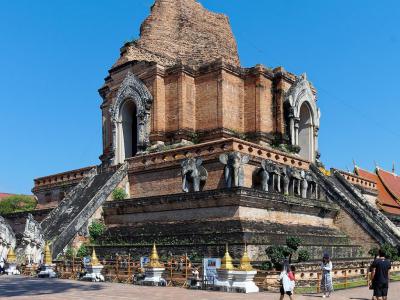
In the 1990s, restoration efforts supported by UNESCO and the Japanese government stabilized the structure. However, the reconstruction of the upper tiers in a Central Thai style, rather than traditional Lanna design, sparked debate among local historians and architects. The chedi remains intentionally truncated, preserving a sense of its dramatic history.
Visitors can still admire the weathered brick base, accessed by steep stairways guarded by stone nagas and elephants. The large main assembly hall, contains Phra Chao Attarot, a respected statue of the Buddha in a graceful standing posture. An ancient Dipterocarp tree grows nearby and is traditionally believed to protect the city. Adjacent to it is the city pillar, housed in a small shrine dedicated to guardian spirits that watch over Chiang Mai.
Wat Chedi Luang remains an active spiritual center. Visitors may witness monks performing daily rituals or join a Monk Chat session hosted on the grounds, where monastics share insights into Buddhist teachings and life in the temple community.
Tip:
If possible, go at (or stay until) nightfall to walk around this one. You can feel the peacefulness and the ambiance going after dark because these parts of the city are full of magic!
For a brief period, Wat Chedi Luang also housed the revered Emerald Buddha, today kept in Bangkok’s Grand Palace. After an earthquake in the 16th century caused major damage to the chedi’s upper portion, the statue was relocated to Luang Prabang, and the temple gradually fell into partial ruin.
In the 1990s, restoration efforts supported by UNESCO and the Japanese government stabilized the structure. However, the reconstruction of the upper tiers in a Central Thai style, rather than traditional Lanna design, sparked debate among local historians and architects. The chedi remains intentionally truncated, preserving a sense of its dramatic history.
Visitors can still admire the weathered brick base, accessed by steep stairways guarded by stone nagas and elephants. The large main assembly hall, contains Phra Chao Attarot, a respected statue of the Buddha in a graceful standing posture. An ancient Dipterocarp tree grows nearby and is traditionally believed to protect the city. Adjacent to it is the city pillar, housed in a small shrine dedicated to guardian spirits that watch over Chiang Mai.
Wat Chedi Luang remains an active spiritual center. Visitors may witness monks performing daily rituals or join a Monk Chat session hosted on the grounds, where monastics share insights into Buddhist teachings and life in the temple community.
Tip:
If possible, go at (or stay until) nightfall to walk around this one. You can feel the peacefulness and the ambiance going after dark because these parts of the city are full of magic!
4) Wat Sum Pow
When exploring the vibrant city of Chiang Mai, the numerous temples are an essential part of the cultural experience. Among them, Wat Sum Pow, also known as Wat Sam Phao, stands out as a testament to the rich history and architectural heritage of the region. This magnificent Buddhist temple dates back to the reign of the Mang Rai dynasty, showcasing the traditional Lanna style that was prevalent during that era.
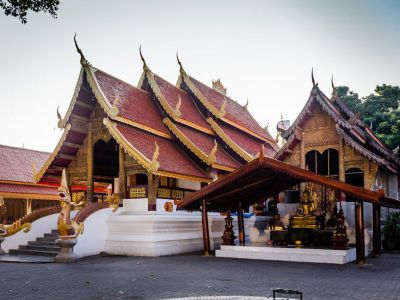
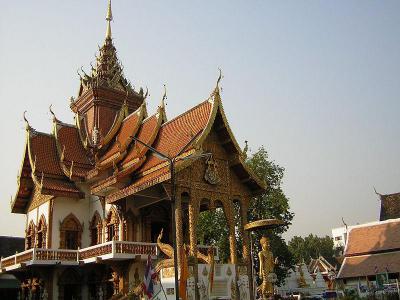
Located along the famous Rachadamnoen Road, Wat Sum Pow immediately captures visitors' attention with its striking entrance adorned by magnificent dragon sculptures. These mythical creatures serve as guardians, symbolizing protection and power, inviting visitors to step into a world of spirituality and serenity. As you enter the temple grounds, you are greeted by a majestic golden Buddha image, exuding a sense of tranquility and reverence.
The complex of Wat Sum Pow is a captivating sight, showcasing the unique blend of architectural elements and decorations used by the Lanna people, the early inhabitants of the region. The intricate design, elaborate carvings, and ornate detailing are a testament to the skilled craftsmanship of the Lanna artisans, leaving visitors in awe of the temple's beauty and historical significance.
The temple grounds feature stalls where visitors can purchase tiny souvenirs and merchandise, allowing them to take home a piece of the temple's charm and spirituality. These offerings add a touch of local flavor to the temple visit and serve as reminders of the profound cultural experience found within Wat Sum Pow.
Located along the famous Rachadamnoen Road, Wat Sum Pow immediately captures visitors' attention with its striking entrance adorned by magnificent dragon sculptures. These mythical creatures serve as guardians, symbolizing protection and power, inviting visitors to step into a world of spirituality and serenity. As you enter the temple grounds, you are greeted by a majestic golden Buddha image, exuding a sense of tranquility and reverence.
The complex of Wat Sum Pow is a captivating sight, showcasing the unique blend of architectural elements and decorations used by the Lanna people, the early inhabitants of the region. The intricate design, elaborate carvings, and ornate detailing are a testament to the skilled craftsmanship of the Lanna artisans, leaving visitors in awe of the temple's beauty and historical significance.
The temple grounds feature stalls where visitors can purchase tiny souvenirs and merchandise, allowing them to take home a piece of the temple's charm and spirituality. These offerings add a touch of local flavor to the temple visit and serve as reminders of the profound cultural experience found within Wat Sum Pow.
5) Wat Buppharam
The Wat Buppharam or Suan Dok is a small Buddhist temple and historical site in Chiang Mai. It was here that 200 years of Burmese rule ended after their defeat by Chao Kawila in 1797 and Lanna rule was restored. The temple itself was built by the Lanna King, Muang Kaew, in 1497 as a place for a revered monk from Sukhothai to spend his rain retreat but was renovated several times and none of the Lanna structures remain today.
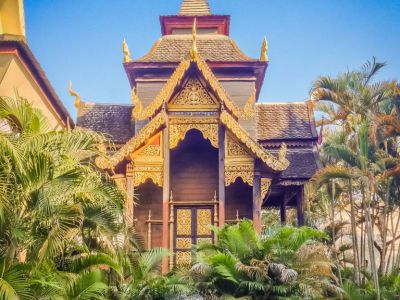
The structure of the Wat Buppharam was given a complete makeover in 1996 to celebrate the 50th anniversary of the reign of King Bhumibol Adulyadej. New doors were added to the Viharn and some of the ancient Buddhist images were replaced. A library was also built within the temple complex. Notable features of the temple are the large Ubosot or ordination hall and the Chedis with the ashes of the rulers of Chiang Mai. The temple complex also houses the Mahachulalongkorn Rajavidyalaya Buddhist University. The present Wat Buppharam has many stucco reliefs, murals and wood carvings that are fine examples of modern religious art.
Why You Should Visit:
This temple's uniqueness is derived from the fact that it’s built tall and skinny, which is very unusual for temples across Thailand.
Surrounded by gardens, an architectural gateway which leads to a 'chedi' to the right of the temple, it truly stands out from the rest.
Tip:
Climb the two flights of stairs and enter the temple to see the beautiful inside decorated in red, gold and green. You can also enjoy lunch on the grounds.
The structure of the Wat Buppharam was given a complete makeover in 1996 to celebrate the 50th anniversary of the reign of King Bhumibol Adulyadej. New doors were added to the Viharn and some of the ancient Buddhist images were replaced. A library was also built within the temple complex. Notable features of the temple are the large Ubosot or ordination hall and the Chedis with the ashes of the rulers of Chiang Mai. The temple complex also houses the Mahachulalongkorn Rajavidyalaya Buddhist University. The present Wat Buppharam has many stucco reliefs, murals and wood carvings that are fine examples of modern religious art.
Why You Should Visit:
This temple's uniqueness is derived from the fact that it’s built tall and skinny, which is very unusual for temples across Thailand.
Surrounded by gardens, an architectural gateway which leads to a 'chedi' to the right of the temple, it truly stands out from the rest.
Tip:
Climb the two flights of stairs and enter the temple to see the beautiful inside decorated in red, gold and green. You can also enjoy lunch on the grounds.
6) Wat Ou Sai Kham
The Wat Ou Sai Kham is on Chang Moi Kao Street near the Ta Pae Gate in Chiang Mai. The small temple is famous for its Jade Buddha statues and unique imagery.
The Wat Ou Sai Kham is more than 300 years old. The first temple that stood on the site was abandoned because the villagers were too poor to support a temple and monastery. It was rebuilt in 1841 AD on land donated by a lady from Chiang San in Chiang Rai province. She gave the name Ou Sai Kham or the Temple of the Golden Sands to the Wat.
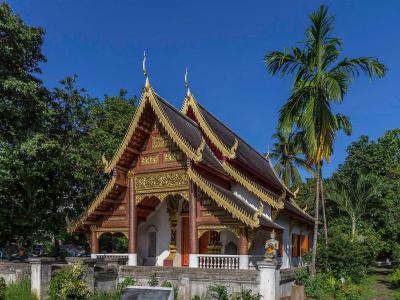
The Wat Ou Sai Kham has a 170 year old Big Buddha statue from the Lanna era. The important statue is the jade Buddha that is a 109 centimeters high and weighs 900 kilograms. The figure has a Lanna style posture of the Buddha conquering the evil Mara. It is the largest Buddha statue made of Burmese jade in Thailand. There is a Phra Sang-Krachi statue and visitors and locals are encouraged to rub the belly of the figure for luck. The temple also has a simple Chedi or Stupa and a small assembly hall or Viharn. The interiors of the Viharn are covered with beautiful religious murals.
The Wat Ou Sai Kham is more than 300 years old. The first temple that stood on the site was abandoned because the villagers were too poor to support a temple and monastery. It was rebuilt in 1841 AD on land donated by a lady from Chiang San in Chiang Rai province. She gave the name Ou Sai Kham or the Temple of the Golden Sands to the Wat.
The Wat Ou Sai Kham has a 170 year old Big Buddha statue from the Lanna era. The important statue is the jade Buddha that is a 109 centimeters high and weighs 900 kilograms. The figure has a Lanna style posture of the Buddha conquering the evil Mara. It is the largest Buddha statue made of Burmese jade in Thailand. There is a Phra Sang-Krachi statue and visitors and locals are encouraged to rub the belly of the figure for luck. The temple also has a simple Chedi or Stupa and a small assembly hall or Viharn. The interiors of the Viharn are covered with beautiful religious murals.
Image Courtesy of Михаил Евлампьев.
7) Wat Chiang Man
Chiang Mai's oldest temple, Wat Chiang Man was built in 1296 by the Lanna King Mengrai who laid the foundations of the city. It is said that King Mengrai lived at the temple while his palace was being built. A stele dated 1581 near the Ubosot records that the foundation of the city of Chaing Mai was on April 12th, 1296 at 4 pm.
The small Viharn or assembly hall in the Wat Chiang Man complex contains the crystal Buddha which once belonged to Chama Devi the queen of Haripunchai. King Mengrai burned the kingdom of Haripunchai and founded Chiang Mai. The Crystal Buddha dates back to the year 663 AD. The other statue in the Viharn is the Marble Buddha. Locals pray to the idol for rain and on April 1st a rain festival is held annually. The large Viharn has the oldest Buddhist statue in Chiang Mai. Installed in the year 1465, it depicts the Buddha holding a begging bowl. There is a 15th-century Stupa with carved elephants on its stone walls showing the influence of monks from Sri Lanka. The temple complex also has a repository of religious scriptures and a lotus pond.
Why You Should Visit:
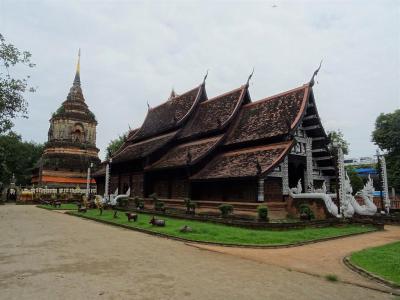
If you enjoy architecture, this will blow you away. The main temple is over the top with decorations and ornateness. Deep reds and gold accentuate everything.
The details on the outside of the buildings are breathtaking when the sun hits them. The complex is immaculately kept all of the time.
Tip:
The Tha Phae Gate along the river is on the way to Wat Chiang Man if walking from the Night Bazaar direction and is worth a quick 10 min stop off also – nice opportunity for a photo!
The small Viharn or assembly hall in the Wat Chiang Man complex contains the crystal Buddha which once belonged to Chama Devi the queen of Haripunchai. King Mengrai burned the kingdom of Haripunchai and founded Chiang Mai. The Crystal Buddha dates back to the year 663 AD. The other statue in the Viharn is the Marble Buddha. Locals pray to the idol for rain and on April 1st a rain festival is held annually. The large Viharn has the oldest Buddhist statue in Chiang Mai. Installed in the year 1465, it depicts the Buddha holding a begging bowl. There is a 15th-century Stupa with carved elephants on its stone walls showing the influence of monks from Sri Lanka. The temple complex also has a repository of religious scriptures and a lotus pond.
Why You Should Visit:
If you enjoy architecture, this will blow you away. The main temple is over the top with decorations and ornateness. Deep reds and gold accentuate everything.
The details on the outside of the buildings are breathtaking when the sun hits them. The complex is immaculately kept all of the time.
Tip:
The Tha Phae Gate along the river is on the way to Wat Chiang Man if walking from the Night Bazaar direction and is worth a quick 10 min stop off also – nice opportunity for a photo!
8) Wat Lok Moli
Wat Lok Moli stands as a prominent Buddhist temple in the northern region of Thailand's Chiang Mai. Positioned on the northern side of the ancient city, it encircles the old town, close to the Chang Phuak city gate, approximately 400 meters to the west.
While the exact founding date remains uncertain, historical records mention the temple in a charter dating back to 1367 CE. King Kuena, the sixth ruler of the Mangrai dynasty (1355-1385), extended a warm invitation to ten esteemed Buddhist monks from Burma. Their mission was to propagate the teachings of Theravada Buddhism, and they were accommodated within the temple's premises.
Over time, the temple witnessed significant additions and enhancements. In 1527, King Ket (also known as Mueangketklao or Phra Kaew Muang) took the initiative to commission the construction of a grand chedi. Subsequently, in 1545, he oversaw the construction of the viharn, an assembly hall.
Wat Lok Moli also holds historical significance, as it serves as the final resting place for the ashes of various members of the Mengrai dynasty. The royal family took the responsibility of maintaining the temple until the conclusion of their dynasty. Notably, the chedi within the temple houses the remains of Queen Wisutthithewi.
Wat Lok Moli stands out with its unique architectural style- a large chedi made of exposed brickwork, unlike the usual stuccoed chedis in Chiang Mai temples. The allure is enriched by beautiful Nāga sculptures and a captivating wooden façade. Interestingly, the temple's orientation breaks tradition, aligning on a north-south axis instead of facing east like most Buddhist temples.
While the exact founding date remains uncertain, historical records mention the temple in a charter dating back to 1367 CE. King Kuena, the sixth ruler of the Mangrai dynasty (1355-1385), extended a warm invitation to ten esteemed Buddhist monks from Burma. Their mission was to propagate the teachings of Theravada Buddhism, and they were accommodated within the temple's premises.
Over time, the temple witnessed significant additions and enhancements. In 1527, King Ket (also known as Mueangketklao or Phra Kaew Muang) took the initiative to commission the construction of a grand chedi. Subsequently, in 1545, he oversaw the construction of the viharn, an assembly hall.
Wat Lok Moli also holds historical significance, as it serves as the final resting place for the ashes of various members of the Mengrai dynasty. The royal family took the responsibility of maintaining the temple until the conclusion of their dynasty. Notably, the chedi within the temple houses the remains of Queen Wisutthithewi.
Wat Lok Moli stands out with its unique architectural style- a large chedi made of exposed brickwork, unlike the usual stuccoed chedis in Chiang Mai temples. The allure is enriched by beautiful Nāga sculptures and a captivating wooden façade. Interestingly, the temple's orientation breaks tradition, aligning on a north-south axis instead of facing east like most Buddhist temples.
9) Wat Phra Singh (must see)
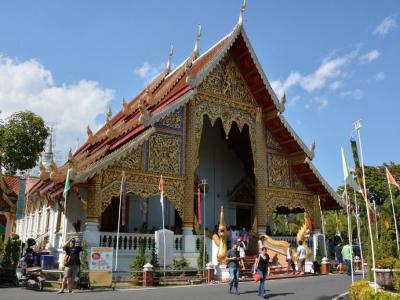
Wat Phra Singh is one of Chiang Mai’s most important temples and a major center of Buddhist devotion in Northern Thailand. Founded in the mid-14th century by King Pha Yu, it was originally built to house the ashes of his father, King Kham Fu, during the height of the Lanna Kingdom.
Its prominence grew when the Phra Buddha Sihing (commonly called Phra Singh) image arrived in 1367. The statue, considered a highly revered representation of the Buddha, gave the temple its name and continues to draw worshippers from across Thailand. During the Thai New Year, or Songkran festival, the image is paraded through the streets in a traditional procession, allowing people to pay respect by gently sprinkling water.
The temple complex showcases elegant examples of Lanna architecture. One of its most celebrated structures is the smaller Viharn Lai Kham, which houses the Phra Singh statue. The building features finely carved wooden details and interior murals illustrating Jataka tales and elements of Lanna culture. The larger Viharn Luang stands nearby with striking white pillars and a gilded Buddha image known as Phra Chao Thong Tip.
Additional structures add to the temple’s historical interest. The Ubosot, used for ordination ceremonies, displays decorative motifs inspired by Buddhist cosmology, while an ancient brick chedi dating back to 1345 offers insight into the earliest phases of the temple’s construction. A small elevated library within the grounds was designed to protect sacred manuscripts from humidity and pests.
Wat Phra Singh remains an active monastic community. Visitors may observe daily rituals or speak with monks in designated areas where they share information about Buddhist beliefs and meditation practices. Together, these features make the temple an important place for understanding both the religious and cultural traditions of Chiang Mai.
Tip:
The monks here are serious and prefer not to have pictures of the Buddha statues, believing this to be disrespectful. They also discourage the use of the Buddha as art, asking that representations be confined to shrines, whether public or private.
Its prominence grew when the Phra Buddha Sihing (commonly called Phra Singh) image arrived in 1367. The statue, considered a highly revered representation of the Buddha, gave the temple its name and continues to draw worshippers from across Thailand. During the Thai New Year, or Songkran festival, the image is paraded through the streets in a traditional procession, allowing people to pay respect by gently sprinkling water.
The temple complex showcases elegant examples of Lanna architecture. One of its most celebrated structures is the smaller Viharn Lai Kham, which houses the Phra Singh statue. The building features finely carved wooden details and interior murals illustrating Jataka tales and elements of Lanna culture. The larger Viharn Luang stands nearby with striking white pillars and a gilded Buddha image known as Phra Chao Thong Tip.
Additional structures add to the temple’s historical interest. The Ubosot, used for ordination ceremonies, displays decorative motifs inspired by Buddhist cosmology, while an ancient brick chedi dating back to 1345 offers insight into the earliest phases of the temple’s construction. A small elevated library within the grounds was designed to protect sacred manuscripts from humidity and pests.
Wat Phra Singh remains an active monastic community. Visitors may observe daily rituals or speak with monks in designated areas where they share information about Buddhist beliefs and meditation practices. Together, these features make the temple an important place for understanding both the religious and cultural traditions of Chiang Mai.
Tip:
The monks here are serious and prefer not to have pictures of the Buddha statues, believing this to be disrespectful. They also discourage the use of the Buddha as art, asking that representations be confined to shrines, whether public or private.
10) Wat Phuak Hong
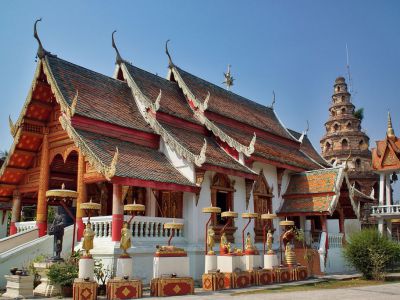
Wat Phuak Hong in Chiang Mai stands as an ancient and enigmatic temple whose origins remain shrouded in mystery. Believed to have been constructed in the 16th or 17th century, it bears the intriguing name of the 'Temple of the Flight of Swans.'
Nestled within the confines of Chiang Mai's old walled city, this small temple showcases the quintessential elements of a traditional Buddhist sanctuary, including a viharn, chedi, ubosot, and a bell tower. Yet, what sets it apart as a captivating attraction is the presence of an uncommon multi-tiered round chedi, a remarkable deviation from the typical architecture found in northern Thailand. Guarding the temple entrance are a pair of chinthe, mythical lions commonly seen in Burmese temple art.
The design of the unique chedi is thought to have been influenced either by the stepped Mon chedi at Wat Ku Kut in Lamphun or by Yunnanese architectural styles. At its base, a circular platform proudly holds numerous golden vases known as Kalasa, symbolizing the sun-an emblem usually associated with Hindu temples. Rising above are successive tiers of diminishing size, each adorned with ornate stucco decors and enshrining 52 exquisite Buddha images within niches.
Noteworthy among the temple's features is the charming viharn, while the ordination hall (ubosot) mesmerizes visitors with its stunning gold and blue flower motif backdrop.
As a welcoming gesture, the temple gates open daily during daylight hours, and there is no admission fee, allowing everyone to explore its cultural and historical treasures freely.
Nestled within the confines of Chiang Mai's old walled city, this small temple showcases the quintessential elements of a traditional Buddhist sanctuary, including a viharn, chedi, ubosot, and a bell tower. Yet, what sets it apart as a captivating attraction is the presence of an uncommon multi-tiered round chedi, a remarkable deviation from the typical architecture found in northern Thailand. Guarding the temple entrance are a pair of chinthe, mythical lions commonly seen in Burmese temple art.
The design of the unique chedi is thought to have been influenced either by the stepped Mon chedi at Wat Ku Kut in Lamphun or by Yunnanese architectural styles. At its base, a circular platform proudly holds numerous golden vases known as Kalasa, symbolizing the sun-an emblem usually associated with Hindu temples. Rising above are successive tiers of diminishing size, each adorned with ornate stucco decors and enshrining 52 exquisite Buddha images within niches.
Noteworthy among the temple's features is the charming viharn, while the ordination hall (ubosot) mesmerizes visitors with its stunning gold and blue flower motif backdrop.
As a welcoming gesture, the temple gates open daily during daylight hours, and there is no admission fee, allowing everyone to explore its cultural and historical treasures freely.
11) Wat Sri Suphan (Silver Temple) (must see)
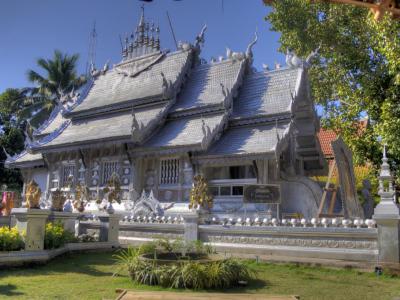
Wat Sri Suphan is known as the Silver Temple due to its ornate silver decoration. This temple was built around 1500 as a place of worship for the local silversmith village. As repairs were needed, the locals repaired the temple with silver. However, the temple wasn't completely covered in silver until 2008. The traditional Lanna architecture and design have now been completely covered in silver, nickel, and aluminum by the local silver artists.
You'll be astounded by the detailed relief plates covering the exterior. Relief plates depict rural life, cities of the world, the seven wonders of the ancient world, and zodiac animals.
While the relief plates are made with aluminum, the Buddha images are covered in silver.
The temple's interior is vibrant, with silver, mirrors, and bright colors adorning the walls and ceiling. Because this is an active ordination hall, women are not permitted inside the temple. According to Lanna tradition, the spells and amulets buried beneath the hall could cause "deterioration" to people with pure spirits, especially women.
There's an exhibition building with detailed information about the silversmith process. You can see artists working in the workshop, creating relief plates.
Monks give talks several times a day, which is an excellent way to gain further insight into the local traditions and religion. At night, the temple is illuminated with blue lights, creating another stunning scene.
You'll be astounded by the detailed relief plates covering the exterior. Relief plates depict rural life, cities of the world, the seven wonders of the ancient world, and zodiac animals.
While the relief plates are made with aluminum, the Buddha images are covered in silver.
The temple's interior is vibrant, with silver, mirrors, and bright colors adorning the walls and ceiling. Because this is an active ordination hall, women are not permitted inside the temple. According to Lanna tradition, the spells and amulets buried beneath the hall could cause "deterioration" to people with pure spirits, especially women.
There's an exhibition building with detailed information about the silversmith process. You can see artists working in the workshop, creating relief plates.
Monks give talks several times a day, which is an excellent way to gain further insight into the local traditions and religion. At night, the temple is illuminated with blue lights, creating another stunning scene.
