Custom Walk in Utrecht, Netherlands by haatje_a3776e created on 2026-03-23
Guide Location: Netherlands » Utrecht
Guide Type: Custom Walk
# of Sights: 10
Tour Duration: 2 Hour(s)
Travel Distance: 2.7 Km or 1.7 Miles
Share Key: E566Z
Guide Type: Custom Walk
# of Sights: 10
Tour Duration: 2 Hour(s)
Travel Distance: 2.7 Km or 1.7 Miles
Share Key: E566Z
How It Works
Please retrieve this walk in the GPSmyCity app. Once done, the app will guide you from one tour stop to the next as if you had a personal tour guide. If you created the walk on this website or come to the page via a link, please follow the instructions below to retrieve the walk in the app.
Retrieve This Walk in App
Step 1. Download the app "GPSmyCity: Walks in 1K+ Cities" on Apple App Store or Google Play Store.



Step 2. In the GPSmyCity app, download(or launch) the guide "Utrecht Map and Walking Tours".
Step 3. Tap the menu button located at upper right corner of the "Walks" screen and select "Retrieve custom walk". Enter the share key: E566Z

1) Postkantoor Utrecht-Neude (Main Post Office)
The former Main Post Office of Utrecht is a striking architectural landmark on Neude Square. Originally, the site housed the Cecilia Convent, built around 1400 for noble sisters of the Third Order of Saint Francis. After the Reformation, the city took possession of the convent, which remained active until 1647. It was then repurposed to accommodate the Rijksmunt, the Royal Mint, which operated here until 1911. A plaque inside the current building, designed by Maarten Pauw, commemorates this history, marking the printing of the Netherlands’ first postage stamp in 1852.
The current post office was designed in the Amsterdam School style by architect J. Crouwel Jr. and built between 1919 and 1924. The building's grand hall is notable for its high parabolic arches, creating an imposing interior. Six bluestone statues by sculptor Hendrik van den Eijnde adorn the hall, with five figures symbolizing the continents alongside their respective animals, while the sixth represents trade and prosperity. Van den Eijnde also crafted the two stone lions outside the entrance, which were added later at the request of Utrecht residents. Inside, a large clock made by De Porceleyne Fles and a stained-glass window by Richard Roland Holst depicting the Dutch Virgin in the Garden of the Provinces further enhances the building’s artistic heritage.
Renovated in the 1970s under René van Raalte, the building remained a functioning post office until October 28, 2011, when it became the last independent post office in the Netherlands to close. After years of uncertainty, the structure was repurposed into a cultural hub in 2016, now featuring the Neude Library, a cinema, an auditorium, a brasserie, a café, and exhibition spaces. On April 23, 2020, Broese Booksellers inaugurated their new shop inside the historic building, with the opening officiated by Dutch writer Ronald Giphart.
Today, the former Main Post Office stands as a prime example of early 20th-century Dutch architecture and a vibrant cultural space in Utrecht.
The current post office was designed in the Amsterdam School style by architect J. Crouwel Jr. and built between 1919 and 1924. The building's grand hall is notable for its high parabolic arches, creating an imposing interior. Six bluestone statues by sculptor Hendrik van den Eijnde adorn the hall, with five figures symbolizing the continents alongside their respective animals, while the sixth represents trade and prosperity. Van den Eijnde also crafted the two stone lions outside the entrance, which were added later at the request of Utrecht residents. Inside, a large clock made by De Porceleyne Fles and a stained-glass window by Richard Roland Holst depicting the Dutch Virgin in the Garden of the Provinces further enhances the building’s artistic heritage.
Renovated in the 1970s under René van Raalte, the building remained a functioning post office until October 28, 2011, when it became the last independent post office in the Netherlands to close. After years of uncertainty, the structure was repurposed into a cultural hub in 2016, now featuring the Neude Library, a cinema, an auditorium, a brasserie, a café, and exhibition spaces. On April 23, 2020, Broese Booksellers inaugurated their new shop inside the historic building, with the opening officiated by Dutch writer Ronald Giphart.
Today, the former Main Post Office stands as a prime example of early 20th-century Dutch architecture and a vibrant cultural space in Utrecht.
2) Utrecht Centraal (Utrecht Central Station)
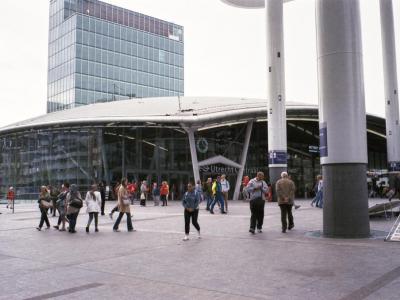
Utrecht Central Station (Station Utrecht Centraal) is the beating heart of the Dutch transit system. As the largest and busiest railway station in the Netherlands, it serves as a crucial hub integrating trains, trams, buses, and bicycles into one seamless transportation network. Its strategic central location makes it the country's most important railway junction, handling over 1,000 departures daily and accommodating more than 200,000 passengers per day.
The station's history dates back to December 18, 1843, when the Dutch Rhine Railway Company established the first railway station on Utrecht’s territory. By 1938, it became the city’s central station after the closure of Maliebaan Station and a reconfiguration of the railway lines. A fire in 1938 severely damaged the station, leading to reconstruction efforts. However, by the 1970s, the old station building was demolished to make way for Hoog Catharijne, then Europe's largest enclosed shopping mall, resulting in a station without a distinct entrance.
As passenger numbers surged, the station underwent multiple expansions in 1989 and 1995 to relieve congestion. A more ambitious transformation took place between 2011 and 2016 when a modern, spacious station hall was constructed as part of a broader redevelopment of the Utrecht station area. Designed by Benthem Crouwel Architekten, the new structure features a distinctive curved roof with three sweeping arches-one for the railway station and two for the adjacent bus and tram hubs. The station was also physically separated from Hoog Catharijne, reasserting its identity as a standalone transport landmark.
Beyond its railway operations, Utrecht Central Station boasts the world’s largest bicycle parking facility, accommodating thousands of cyclists, and serves as the country’s busiest bus station. With its modern infrastructure and efficient connectivity, it remains a vital gateway for commuters and travelers across the Netherlands.
The station's history dates back to December 18, 1843, when the Dutch Rhine Railway Company established the first railway station on Utrecht’s territory. By 1938, it became the city’s central station after the closure of Maliebaan Station and a reconfiguration of the railway lines. A fire in 1938 severely damaged the station, leading to reconstruction efforts. However, by the 1970s, the old station building was demolished to make way for Hoog Catharijne, then Europe's largest enclosed shopping mall, resulting in a station without a distinct entrance.
As passenger numbers surged, the station underwent multiple expansions in 1989 and 1995 to relieve congestion. A more ambitious transformation took place between 2011 and 2016 when a modern, spacious station hall was constructed as part of a broader redevelopment of the Utrecht station area. Designed by Benthem Crouwel Architekten, the new structure features a distinctive curved roof with three sweeping arches-one for the railway station and two for the adjacent bus and tram hubs. The station was also physically separated from Hoog Catharijne, reasserting its identity as a standalone transport landmark.
Beyond its railway operations, Utrecht Central Station boasts the world’s largest bicycle parking facility, accommodating thousands of cyclists, and serves as the country’s busiest bus station. With its modern infrastructure and efficient connectivity, it remains a vital gateway for commuters and travelers across the Netherlands.
3) Domplein (Dom Square)
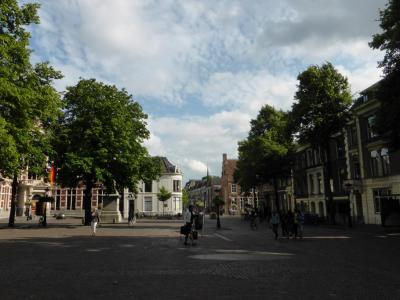
Just like many other medieval European cities, Utrecht has its fair share of city squares. But it has been said that there is only one that matters--Dom Square. Home to the impressive Dom Church, history abounds above and below this beautiful plaza.
Dom Square's history goes back to Roman times. The original settlement was a castellum at a ford near the river Rhine. This original settlement was called Trajectum, which translates to "crossing point." As a monument to that history, the city has lights in the road surface that outline the wall of the original castellum.
The best way to taste the centuries of history here is to visit the DOMunder Museum, the entrance to which is right in the center of the square. From there, you can see parts of the original castellum and foundations from the original Dom Church.
In the 11th century, this was the site of the Lofen imperial palace. Unfortunately, a massive nine-day-long fire in 1253 burned it to the ground, along with most other buildings in the square. However, parts of the palace are still visible in some of the cellars of surrounding buildings. These are being opened soon and will eventually be part of the DOMunder Museum.
The most prominent feature in the square today is the Domkerk, otherwise known as Dom Church. Opposite the church is Dom Tower, a Gothic bell tower with 465 steps that leads to a fantastic panoramic view of Utrecht. The original cathedral connected the two--the tower was meant to be part of the larger structure. But a tornado in 1674 destroyed the unfinished nave, and the two structures were never again connected.
On the south side of the square lies the University of Utrecht. Between it and the Dom Church is one of the can't-miss sights at the square, the beautiful Dom Church Gardens.
Several monuments are dispersed throughout the square, including one statue of Count Jan van Nassau. Van Nassau is shown carrying a piece of paper, his Union of Utrecht--the charter he drew in 1579 between several Dutch regions.
There is also a monument dedicated to the resistance movement during World War II. The statue was dedicated in 1949 and created by Corinne Franzén-Heslenfeld.
Dom Square's history goes back to Roman times. The original settlement was a castellum at a ford near the river Rhine. This original settlement was called Trajectum, which translates to "crossing point." As a monument to that history, the city has lights in the road surface that outline the wall of the original castellum.
The best way to taste the centuries of history here is to visit the DOMunder Museum, the entrance to which is right in the center of the square. From there, you can see parts of the original castellum and foundations from the original Dom Church.
In the 11th century, this was the site of the Lofen imperial palace. Unfortunately, a massive nine-day-long fire in 1253 burned it to the ground, along with most other buildings in the square. However, parts of the palace are still visible in some of the cellars of surrounding buildings. These are being opened soon and will eventually be part of the DOMunder Museum.
The most prominent feature in the square today is the Domkerk, otherwise known as Dom Church. Opposite the church is Dom Tower, a Gothic bell tower with 465 steps that leads to a fantastic panoramic view of Utrecht. The original cathedral connected the two--the tower was meant to be part of the larger structure. But a tornado in 1674 destroyed the unfinished nave, and the two structures were never again connected.
On the south side of the square lies the University of Utrecht. Between it and the Dom Church is one of the can't-miss sights at the square, the beautiful Dom Church Gardens.
Several monuments are dispersed throughout the square, including one statue of Count Jan van Nassau. Van Nassau is shown carrying a piece of paper, his Union of Utrecht--the charter he drew in 1579 between several Dutch regions.
There is also a monument dedicated to the resistance movement during World War II. The statue was dedicated in 1949 and created by Corinne Franzén-Heslenfeld.
4) Dom Tower (must see)
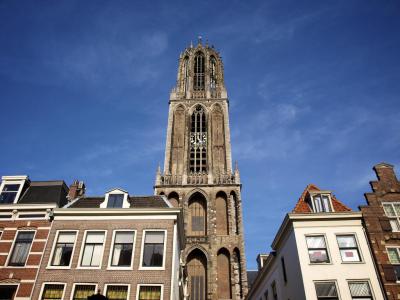
Dom Tower is located right on Dom Square, but you can't miss it. It is the tallest church tower in the Netherlands. You can join a guided tour of the tower and enjoy the incredible vistas from the top observation platform.
During the trip up the tower, you will climb 465 steps. Luckily, the tower is full of stories from its long history. During the hour-long tour, the guide will make lots of stops to discuss the various chapels and galleries along the way.
Dom Tower was built from 1321 to 1382 and designed by John of Hainaut. At the time, it was one of the largest towers in Europe. It was part of Saint Martin's Cathedral, which was never fully completed. The unfinished nave collapsed in 1674 and left Dom Tower as a freestanding building. Overall, the tower is 112.5 meters tall.
The tower has always been a multifunctional structure--it serves as a belfry and contains private chapels. Over the city's history, it has also served as a watchtower, with quarters for the tower guard inside.
The tower features a carillon, the largest bell of which weighs 8,200 kilograms (18,000 pounds) and has a diameter of 227 centimeters (89 inches). Like the tower, the carillon has been restored several times, most recently in 1972. At that time, it was expanded to include 50 bells.
The tower has just undergone another massive renovation project. During the process, a lift was added so that you could skip the workout and just enjoy the view.
Why You Should Visit:
Most people do not consider a trip to Utrecht complete without visiting Dom Tower and seeing the city from above. The tower is known as the symbol of the city.
You can see a 360-degree panoramic view of the city and its surroundings from the viewing galleries. You can see both Amsterdam and Rotterdam from the top on clear days. The upper gallery is 95 meters (311 feet) above street level.
But the tour of Dom Tower is also an extraordinary glimpse into the history of the area. The Romans founded the city on this very site, and guides share the city's lore throughout the ages.
During the trip up the tower, you will climb 465 steps. Luckily, the tower is full of stories from its long history. During the hour-long tour, the guide will make lots of stops to discuss the various chapels and galleries along the way.
Dom Tower was built from 1321 to 1382 and designed by John of Hainaut. At the time, it was one of the largest towers in Europe. It was part of Saint Martin's Cathedral, which was never fully completed. The unfinished nave collapsed in 1674 and left Dom Tower as a freestanding building. Overall, the tower is 112.5 meters tall.
The tower has always been a multifunctional structure--it serves as a belfry and contains private chapels. Over the city's history, it has also served as a watchtower, with quarters for the tower guard inside.
The tower features a carillon, the largest bell of which weighs 8,200 kilograms (18,000 pounds) and has a diameter of 227 centimeters (89 inches). Like the tower, the carillon has been restored several times, most recently in 1972. At that time, it was expanded to include 50 bells.
The tower has just undergone another massive renovation project. During the process, a lift was added so that you could skip the workout and just enjoy the view.
Why You Should Visit:
Most people do not consider a trip to Utrecht complete without visiting Dom Tower and seeing the city from above. The tower is known as the symbol of the city.
You can see a 360-degree panoramic view of the city and its surroundings from the viewing galleries. You can see both Amsterdam and Rotterdam from the top on clear days. The upper gallery is 95 meters (311 feet) above street level.
But the tour of Dom Tower is also an extraordinary glimpse into the history of the area. The Romans founded the city on this very site, and guides share the city's lore throughout the ages.
5) Academiegebouw (University Hall)
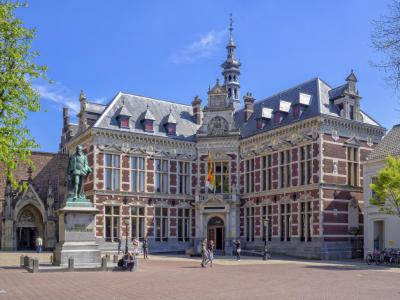
The University Hall (Academiegebouw) stands as the ceremonial heart of Utrecht University, an institution renowned for its deep academic traditions. Located near the Dom Church, this grand Neo-Renaissance structure was built to commemorate the university’s 250th anniversary in 1886. However, its construction was marred by architectural disputes and delays, only beginning in 1891 after the death of one of its architects, Cornelis Vermeijs.
The Neo-Renaissance design, chosen over a neo-Gothic style that would have mirrored the Dom Church, reflects the humanist ideals of the university, evoking classical traditions of learning. The façade features decorative medallions and a bust of Queen Wilhelmina, while the interior is adorned with ornate frescoes and tapestries, the latter donated by the Utrecht University Fund in 1936.
One of the more intriguing spaces within the building is the Masquerade Hall (formerly Room 16). Originally featuring a fresco titled The Return of Christ (1999), it was redesigned in 2002 to reflect the university’s tradition of student masquerades during lustrum celebrations, covering the original artwork behind a retaining wall.
In celebration of the university’s 375th anniversary, the Utrecht Whistleblowers Guild cast a bell named Anna Maria in honor of Anna Maria van Schurman, the first female student at Utrecht. Since 2011, this bell has hung in the turret above the entrance, marking another chapter in the long history of the Academiegebouw-a place where tradition and transformation continue to shape academic life.
The Neo-Renaissance design, chosen over a neo-Gothic style that would have mirrored the Dom Church, reflects the humanist ideals of the university, evoking classical traditions of learning. The façade features decorative medallions and a bust of Queen Wilhelmina, while the interior is adorned with ornate frescoes and tapestries, the latter donated by the Utrecht University Fund in 1936.
One of the more intriguing spaces within the building is the Masquerade Hall (formerly Room 16). Originally featuring a fresco titled The Return of Christ (1999), it was redesigned in 2002 to reflect the university’s tradition of student masquerades during lustrum celebrations, covering the original artwork behind a retaining wall.
In celebration of the university’s 375th anniversary, the Utrecht Whistleblowers Guild cast a bell named Anna Maria in honor of Anna Maria van Schurman, the first female student at Utrecht. Since 2011, this bell has hung in the turret above the entrance, marking another chapter in the long history of the Academiegebouw-a place where tradition and transformation continue to shape academic life.
6) Oudegracht (Old Canal) (must see)
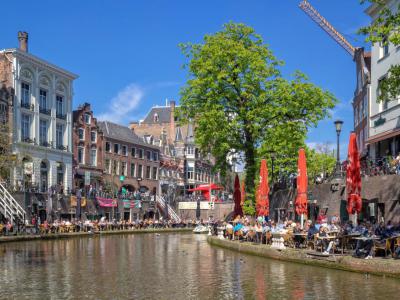
This canal is likely the most famous in the city since it runs the entire length of the town from north to south. It is two kilometers long and connects Kromme Rijn and the Vecht.
When the Romans settled in the area, they chose the spot where the Vecht split from the Rhine. Unfortunately, the Rhine had begun to silt, and a dam built in 1122 threatened to limit navigation to Utrecht drastically. So a series of canals were built to compensate for these issues.
These canals served several purposes. First, they connected the town to the Rhine and the North Sea for trade routes. They also served a defensive purpose--many were used for moats around castles. Plus, the silt dug to make the canals was piled on the sides, which braced the community from flooding.
By creating a waterworks system, water levels in the canal are kept at a constant level. This enabled many homes and buildings along the canal to build quays and storage cellars, which eventually grew into wharves. By the 15th century, the city has a two-kilometer-long harbor of wharves with storage cellars.
An impressive collection of 16 beautiful bridges cross the Oudegracht. Most of these have two arches each, but a few have only one arch.
When the Romans settled in the area, they chose the spot where the Vecht split from the Rhine. Unfortunately, the Rhine had begun to silt, and a dam built in 1122 threatened to limit navigation to Utrecht drastically. So a series of canals were built to compensate for these issues.
These canals served several purposes. First, they connected the town to the Rhine and the North Sea for trade routes. They also served a defensive purpose--many were used for moats around castles. Plus, the silt dug to make the canals was piled on the sides, which braced the community from flooding.
By creating a waterworks system, water levels in the canal are kept at a constant level. This enabled many homes and buildings along the canal to build quays and storage cellars, which eventually grew into wharves. By the 15th century, the city has a two-kilometer-long harbor of wharves with storage cellars.
An impressive collection of 16 beautiful bridges cross the Oudegracht. Most of these have two arches each, but a few have only one arch.
7) Stadhuis van Utrecht (Utrecht City Hall)
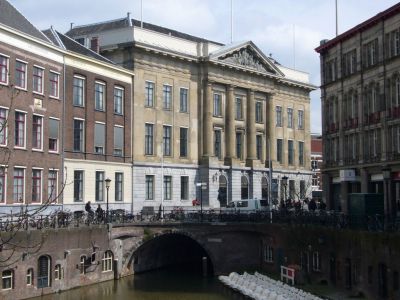
Utrecht City Hall, located on the Town Hall Bridge spanning the Oudegracht, is a complex of buildings that have undergone centuries of transformation. Its current form reflects a blend of medieval, Renaissance, neoclassical, and contemporary architectural influences.
The story of Utrecht City Hall begins in 1343 when the city's aldermen were forced to vacate their previous meeting place in the trading district of Stathe due to the expansion of the Buurkerk. They relocated to the Hasenberg building on the Oudegracht, at the site of the current town hall. In 1537, the city council moved into the twelfth-century Lichtenberg house next to Hasenberg, which still retains its original wharf cellar.
Between 1537 and 1547, under Emperor Charles V, the city council merged the Hasenberg and Lichtenberg buildings, adding a Renaissance façade to Hasenberg while Lichtenberg retained its medieval look. In 1547, the Huidenbrug and Broodbrug bridges were consolidated into the Town Hall Bridge. A bell tower with a carillon by Jacob van Eyck was added to Hasenberg in 1582. Later expansions included converting Keyserrijk into a weighhouse in 1614 and unifying structures on the Oudkerkhof with a classical side wall in 1643.
In 1826, architect Johannes van Embden replaced Hasenberg and Lichtenberg with a neoclassical building, completed in 1830 with a Bentheimer sandstone façade and four Doric columns. In 1957, Pieter d'Hont added a pediment sculpture symbolizing municipal functions. Expansions continued, including a uniform façade along the Oudegracht in 1934 and a Civil Affairs building by Johannes Izak Planjer in 1935.
In 1997, architect Enric Miralles was commissioned to renovate Utrecht City Hall, demolishing much of the Civil Affairs building and altering the neoclassical structure while preserving its outer walls and reception hall. The entrance moved to Korte Minrebroederstraat, and Queen Beatrix inaugurated the revamped hall on August 30, 2000. Today, the city hall reflects Utrecht’s evolving architectural history while remaining its administrative center.
The story of Utrecht City Hall begins in 1343 when the city's aldermen were forced to vacate their previous meeting place in the trading district of Stathe due to the expansion of the Buurkerk. They relocated to the Hasenberg building on the Oudegracht, at the site of the current town hall. In 1537, the city council moved into the twelfth-century Lichtenberg house next to Hasenberg, which still retains its original wharf cellar.
Between 1537 and 1547, under Emperor Charles V, the city council merged the Hasenberg and Lichtenberg buildings, adding a Renaissance façade to Hasenberg while Lichtenberg retained its medieval look. In 1547, the Huidenbrug and Broodbrug bridges were consolidated into the Town Hall Bridge. A bell tower with a carillon by Jacob van Eyck was added to Hasenberg in 1582. Later expansions included converting Keyserrijk into a weighhouse in 1614 and unifying structures on the Oudkerkhof with a classical side wall in 1643.
In 1826, architect Johannes van Embden replaced Hasenberg and Lichtenberg with a neoclassical building, completed in 1830 with a Bentheimer sandstone façade and four Doric columns. In 1957, Pieter d'Hont added a pediment sculpture symbolizing municipal functions. Expansions continued, including a uniform façade along the Oudegracht in 1934 and a Civil Affairs building by Johannes Izak Planjer in 1935.
In 1997, architect Enric Miralles was commissioned to renovate Utrecht City Hall, demolishing much of the Civil Affairs building and altering the neoclassical structure while preserving its outer walls and reception hall. The entrance moved to Korte Minrebroederstraat, and Queen Beatrix inaugurated the revamped hall on August 30, 2000. Today, the city hall reflects Utrecht’s evolving architectural history while remaining its administrative center.
8) Winkel van Sinkel Store
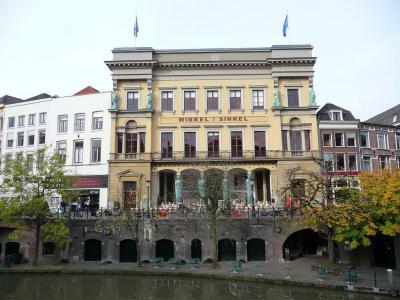
Set along the scenic Oudegracht canal in Utrecht, the Winkel van Sinkel building is an architectural and historical landmark. Originally built between 1837 and 1839, it was the brainchild of Anton Sinkel, a businessman who moved his enterprise from Amsterdam to Utrecht. The grand opening took place on May 6, 1839, marking the debut of what is often regarded as the first department store in the Netherlands.
Primarily a drapery shop, Winkel van Sinkel functioned without self-service, yet its comprehensive inventory set a precedent for future department stores. Over time, the name itself became synonymous with shops where virtually everything was for sale.
Designed by Rotterdam architect Pieter Adams, the building exhibits a striking late-Baroque style. Anton Sinkel’s vision extended to its ornate decoration, including four cast-iron caryatids that adorn the façade. These sculpted female figures, imported from England, were met with a mix of admiration and derision, earning the nickname “British whores.” Their transport to Utrecht was not without incident-one statue, along with a crane, plunged into the canal during unloading, an event still marked at the site today. How the statue was ultimately retrieved remains a mystery. Complementing the caryatids, four additional cast-iron figures representing Commerce, Prudence, Seafaring, and Hope grace the façade.
The Sinkel company sold the building in 1898, and the business itself ceased operations in 1912. Today, Winkel van Sinkel has reinvented itself as a "Cultural Culinary Department Store." The historic space now functions as a grand café-restaurant, doubling as a vibrant nightlife venue on weekends. Notably, it hosts a tango matinee every second Sunday of the month and a salsa party on the remaining Sundays. Additionally, the venue plays a key role in Utrecht’s cultural scene, frequently organizing events such as the well-known Cultural Sundays.
With its rich history and contemporary reinvention, Winkel van Sinkel remains an essential part of Utrecht’s urban and cultural landscape, seamlessly blending past grandeur with modern vibrancy.
Primarily a drapery shop, Winkel van Sinkel functioned without self-service, yet its comprehensive inventory set a precedent for future department stores. Over time, the name itself became synonymous with shops where virtually everything was for sale.
Designed by Rotterdam architect Pieter Adams, the building exhibits a striking late-Baroque style. Anton Sinkel’s vision extended to its ornate decoration, including four cast-iron caryatids that adorn the façade. These sculpted female figures, imported from England, were met with a mix of admiration and derision, earning the nickname “British whores.” Their transport to Utrecht was not without incident-one statue, along with a crane, plunged into the canal during unloading, an event still marked at the site today. How the statue was ultimately retrieved remains a mystery. Complementing the caryatids, four additional cast-iron figures representing Commerce, Prudence, Seafaring, and Hope grace the façade.
The Sinkel company sold the building in 1898, and the business itself ceased operations in 1912. Today, Winkel van Sinkel has reinvented itself as a "Cultural Culinary Department Store." The historic space now functions as a grand café-restaurant, doubling as a vibrant nightlife venue on weekends. Notably, it hosts a tango matinee every second Sunday of the month and a salsa party on the remaining Sundays. Additionally, the venue plays a key role in Utrecht’s cultural scene, frequently organizing events such as the well-known Cultural Sundays.
With its rich history and contemporary reinvention, Winkel van Sinkel remains an essential part of Utrecht’s urban and cultural landscape, seamlessly blending past grandeur with modern vibrancy.
9) Trajectum Lumen
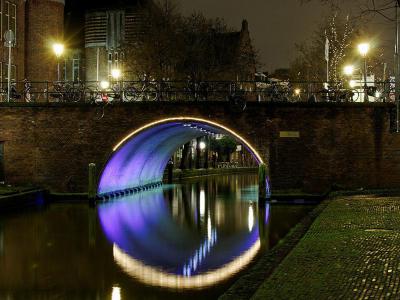
As night falls over Utrecht, the city transforms into a luminous art gallery, thanks to Trajectum Lumen-a captivating light projection project illuminating the historic heart of the city. Launched on April 7, 2010, this initiative was inaugurated by Mayor Aleid Wolfsen, initially featuring 18 light installations crafted by both Dutch and international artists, alongside students from the Utrecht School of the Arts. The project aimed to expand to 25 installations, enchanting visitors daily from sunset until midnight.
Far from just a random scattering of glowing spectacles, Trajectum Lumen unfolds as a curated walking route, guiding those who embark on this 1.5-hour exploration through a symphony of light and shadow. Bridges, streets, and historic buildings become the canvas for artistic projections that play with architectural features, creating an immersive experience that blends art, history, and urban landscape.
Many of these installations are found in hidden corners and overlooked alleyways, bringing to life the stories of Utrecht's past and present in ways that daylight simply cannot. Some works highlight the function or symbolism of specific locations, while others subtly weave in deeper messages, challenging passersby to see the city from a new, illuminated perspective.
For those eager to dive deeper into the narratives behind these light artworks, guided tours provide insightful context, revealing the artistic vision and historical significance behind each installation. Alternatively, independent explorers can follow the route at their own pace, pausing at bars, shops, or scenic spots to fully absorb Utrecht’s vibrant nighttime atmosphere.
Whether you're a visitor accidentally stumbling upon a glowing façade or an art enthusiast deliberately setting out on the Trajectum Lumen trail, one thing is certain-Utrecht after dark has never been more mesmerizing.
Far from just a random scattering of glowing spectacles, Trajectum Lumen unfolds as a curated walking route, guiding those who embark on this 1.5-hour exploration through a symphony of light and shadow. Bridges, streets, and historic buildings become the canvas for artistic projections that play with architectural features, creating an immersive experience that blends art, history, and urban landscape.
Many of these installations are found in hidden corners and overlooked alleyways, bringing to life the stories of Utrecht's past and present in ways that daylight simply cannot. Some works highlight the function or symbolism of specific locations, while others subtly weave in deeper messages, challenging passersby to see the city from a new, illuminated perspective.
For those eager to dive deeper into the narratives behind these light artworks, guided tours provide insightful context, revealing the artistic vision and historical significance behind each installation. Alternatively, independent explorers can follow the route at their own pace, pausing at bars, shops, or scenic spots to fully absorb Utrecht’s vibrant nighttime atmosphere.
Whether you're a visitor accidentally stumbling upon a glowing façade or an art enthusiast deliberately setting out on the Trajectum Lumen trail, one thing is certain-Utrecht after dark has never been more mesmerizing.
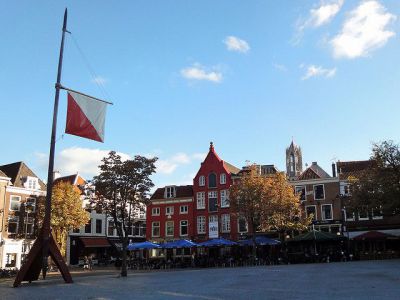
10) Neude (New Square)
Cafes, shops, and restaurants surround this city square in Utrecht. If you're looking for a place to go for a bite to eat, or maybe to pass the time at an outdoor restaurant, start your search here. There's always something happening, and the square is a popular meeting place for students from Utrecht University.
The primary building here is the towering Neude Library. The building was formerly the central post office. The square and library have many displays of sculpture and modern art.
The square hosts community events, from concerts, markets, and even random things like beach volleyball competitions. You can find a meal or drink to suit every budget, and there are several lodging options nearby as well.
The primary building here is the towering Neude Library. The building was formerly the central post office. The square and library have many displays of sculpture and modern art.
The square hosts community events, from concerts, markets, and even random things like beach volleyball competitions. You can find a meal or drink to suit every budget, and there are several lodging options nearby as well.
