Custom Walk in Mainz, Germany by frank_claeys8_aade68 created on 2026-03-23
Guide Location: Germany » Mainz
Guide Type: Custom Walk
# of Sights: 11
Tour Duration: 3 Hour(s)
Travel Distance: 4.8 Km or 3 Miles
Share Key: C37E6
Guide Type: Custom Walk
# of Sights: 11
Tour Duration: 3 Hour(s)
Travel Distance: 4.8 Km or 3 Miles
Share Key: C37E6
How It Works
Please retrieve this walk in the GPSmyCity app. Once done, the app will guide you from one tour stop to the next as if you had a personal tour guide. If you created the walk on this website or come to the page via a link, please follow the instructions below to retrieve the walk in the app.
Retrieve This Walk in App
Step 1. Download the app "GPSmyCity: Walks in 1K+ Cities" on Apple App Store or Google Play Store.



Step 2. In the GPSmyCity app, download(or launch) the guide "Mainz Map and Walking Tours".
Step 3. Tap the menu button located at upper right corner of the "Walks" screen and select "Retrieve custom walk". Enter the share key: C37E6
1) Gutenbergplatz (Gutenberg Square)
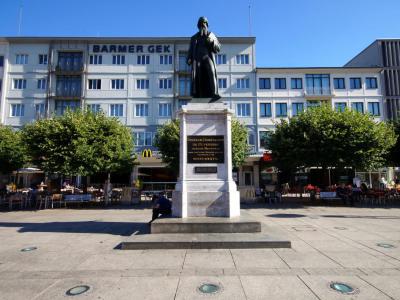
Gutenberg Square was named after Johannes Gutenberg and is Mainz's largest square.
Following occupation by Napoleon's French forces, Mainz became the capital of Mont-Tonnerre in 1801. In 1804, Napoleon ordered the construction of a new boulevard and square. The square was planned in an area that was destroyed during the Austro-Prussian siege. However, only one building was built in the new square before the project failed.
Construction on the square re-started in 1819, and building continued through the 1870s. Many buildings were damaged during World War II and have since been restored.
The Gutenberg monument was unveiled in 1837. The bronze sculpture shows Gutenberg carrying a Bible and a printing plate. There are no reliable images of Gutenberg, so he is depicted as a well-dressed, bearded man. Mainz celebrated for three days when the statue was commemorated.
Gutenberg Square is home to the Mainz State Theatre. The Neoclassical building was completed in 1833 and hosts around 500 dance, opera, and drama events each year.
The 50th parallel north that marks the 50 degrees north of the Earth's equatorial plane runs near the square and is marked with a metal track and bronze lettering.
Following occupation by Napoleon's French forces, Mainz became the capital of Mont-Tonnerre in 1801. In 1804, Napoleon ordered the construction of a new boulevard and square. The square was planned in an area that was destroyed during the Austro-Prussian siege. However, only one building was built in the new square before the project failed.
Construction on the square re-started in 1819, and building continued through the 1870s. Many buildings were damaged during World War II and have since been restored.
The Gutenberg monument was unveiled in 1837. The bronze sculpture shows Gutenberg carrying a Bible and a printing plate. There are no reliable images of Gutenberg, so he is depicted as a well-dressed, bearded man. Mainz celebrated for three days when the statue was commemorated.
Gutenberg Square is home to the Mainz State Theatre. The Neoclassical building was completed in 1833 and hosts around 500 dance, opera, and drama events each year.
The 50th parallel north that marks the 50 degrees north of the Earth's equatorial plane runs near the square and is marked with a metal track and bronze lettering.
2) Haus zum Aschaffenberg (House on the Aschaffenberg)
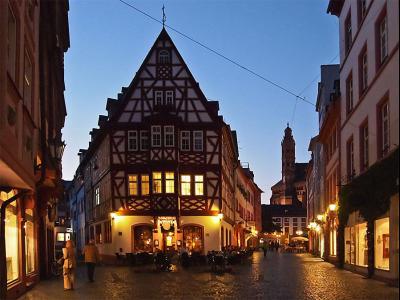
Haus zum Aschaffenberg (House on the Aschaffenberg) is a half-timbered house located in the city of Mainz, Germany. It is considered to be the oldest known timbered house in Mainz, with its origins dating back to around 1450. The gable facade of the building has retained the typical appearance of one of the late Gothic half-timbered houses that shaped the city's image during the 15th and 16th centuries. The steep gable, curved parapet struts, and intermediate uprights are all typical features of the time of origin.
The middle fret stands form a late Gothic early form of the braced figure of the "man". The pointed arcade openings on the eaves side of the building (long side) are also noteworthy. In the late 16th century, the house was divided on the eaves side. In 1708, the ground floor underwent renovation and the windows on the upper floors were enlarged.
Interestingly, the house is also associated with Johannes Gutenberg, the inventor of the printing press. It was first mentioned in a document in connection with Gutenberg in 1448. Gutenberg had borrowed 150 gold guilders from two citizens of Mainz to develop his invention, and his cousin Arnold Gelthus had acted as a guarantor for the loan. The interest received from Haus Aschaffenberg was given as collateral for the loan.
The House on the Aschaffenberg is part of an ensemble of timber, sandstone, and cobblestones, adding to its historical significance. It was only recognized as the oldest known half-timbered building in Mainz after it was uncovered in 1976, and the reconstruction of its reddish coloring according to findings. The building remains a popular tourist attraction and a significant part of Mainz's cultural heritage.
The middle fret stands form a late Gothic early form of the braced figure of the "man". The pointed arcade openings on the eaves side of the building (long side) are also noteworthy. In the late 16th century, the house was divided on the eaves side. In 1708, the ground floor underwent renovation and the windows on the upper floors were enlarged.
Interestingly, the house is also associated with Johannes Gutenberg, the inventor of the printing press. It was first mentioned in a document in connection with Gutenberg in 1448. Gutenberg had borrowed 150 gold guilders from two citizens of Mainz to develop his invention, and his cousin Arnold Gelthus had acted as a guarantor for the loan. The interest received from Haus Aschaffenberg was given as collateral for the loan.
The House on the Aschaffenberg is part of an ensemble of timber, sandstone, and cobblestones, adding to its historical significance. It was only recognized as the oldest known half-timbered building in Mainz after it was uncovered in 1976, and the reconstruction of its reddish coloring according to findings. The building remains a popular tourist attraction and a significant part of Mainz's cultural heritage.
3) Kirschgarten (Cherry Orchard) (must see)
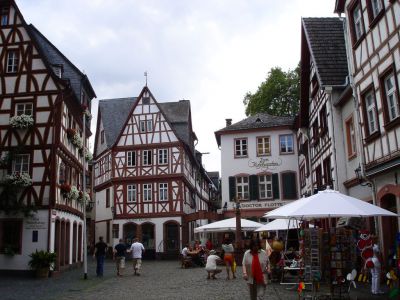
The Cherry Orchard in Mainz is one of the city’s most picturesque squares, rich with history and architectural charm. This square is lined with three-and-a-half-story half-timbered houses, some dating back to the 15th and 18th centuries. Originally part of the Nova Civitas urban expansion in the 13th and 14th centuries, the square has a long-standing presence in Mainz’s old town. The name “Kirschgarten” (Cherry Orchard) stems from the “Kirschborn” spring, which once rose near the old Rochus Hospital.
The Cherry Orchard features a unique combination of traditional Mainz architecture and cultural heritage. The square is a hub of narrow alleys, including the notable “Weihergarten,” which connects the half-timbered houses. The space once belonged to the immunity of the Mainz Cathedral Chapter, and by the 16th century, it had become a center for the book trade, housing a printing press established by Friedrich Heumann.
At the heart of the Cherry Orchard stands the Cherry Orchard Fountain, also called the Madonna Fountain, donated by the Mainz Beautification Association in 1932. Crafted from red sandstone, this fountain replaced an older iron one. The fountain is crowned with a statue of the Virgin Mary, a replica of the Harxheim Madonna, created by sculptor Jean Sauer. At the base of the fountain, a relief by Carl Moritz Hoffmann depicts the Blasius Chapel, which once stood at the entrance to the square until 1803.
Visitors can admire the well-preserved facades of the houses and search for historical inscriptions on the buildings. The Cherry Orchard remains a beautiful reminder of Mainz’s medieval history, offering both locals and tourists a glimpse into the city’s past.
The Cherry Orchard features a unique combination of traditional Mainz architecture and cultural heritage. The square is a hub of narrow alleys, including the notable “Weihergarten,” which connects the half-timbered houses. The space once belonged to the immunity of the Mainz Cathedral Chapter, and by the 16th century, it had become a center for the book trade, housing a printing press established by Friedrich Heumann.
At the heart of the Cherry Orchard stands the Cherry Orchard Fountain, also called the Madonna Fountain, donated by the Mainz Beautification Association in 1932. Crafted from red sandstone, this fountain replaced an older iron one. The fountain is crowned with a statue of the Virgin Mary, a replica of the Harxheim Madonna, created by sculptor Jean Sauer. At the base of the fountain, a relief by Carl Moritz Hoffmann depicts the Blasius Chapel, which once stood at the entrance to the square until 1803.
Visitors can admire the well-preserved facades of the houses and search for historical inscriptions on the buildings. The Cherry Orchard remains a beautiful reminder of Mainz’s medieval history, offering both locals and tourists a glimpse into the city’s past.
4) Holzturm (Wood Tower)
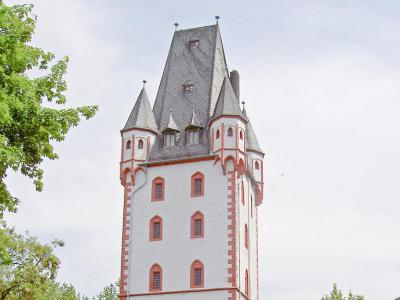
The Wood Tower (Holzturm) in Mainz is one of the remaining medieval structures that once formed part of the city’s fortifications, alongside the Iron and Alexander Towers. Originally constructed in the first half of the 15th century, the tower's Gothic design reflects the architectural style of the period, with its slender proportions emphasizing verticality, typical of the Gothic aesthetic.
The Wood Tower derives its name from the wood market historically held outside its gate and the wood transported down the Rhine River from southern Germany, which was stored on the nearby riverbanks. Initially serving as a watchtower and gate tower, the structure later functioned as a gaol during the late medieval and early modern periods. Among its most infamous prisoners was Johannes Bückler, also known as "Schinderhannes," a notorious bandit who, along with his gang, was held here for over 15 months before being executed in 1803.
Architecturally, the six-story tower is constructed from crushed stone, reinforced with square quoins, and divided by two prominent cornices. It features a steeply pitched hipped roof, a ribbed vault ceiling, and pointed-arch windows typical of Gothic design. Decorative elements include busts of couples-a burgher and his wife, as well as a king and queen-above the windows on the first floor facing the city.
Although severely damaged during World War II, the Wood Tower was meticulously reconstructed in 1961 as part of Mainz’s 2000th-anniversary celebrations. Today, it serves as a venue for various organizations and clubs.
The Wood Tower derives its name from the wood market historically held outside its gate and the wood transported down the Rhine River from southern Germany, which was stored on the nearby riverbanks. Initially serving as a watchtower and gate tower, the structure later functioned as a gaol during the late medieval and early modern periods. Among its most infamous prisoners was Johannes Bückler, also known as "Schinderhannes," a notorious bandit who, along with his gang, was held here for over 15 months before being executed in 1803.
Architecturally, the six-story tower is constructed from crushed stone, reinforced with square quoins, and divided by two prominent cornices. It features a steeply pitched hipped roof, a ribbed vault ceiling, and pointed-arch windows typical of Gothic design. Decorative elements include busts of couples-a burgher and his wife, as well as a king and queen-above the windows on the first floor facing the city.
Although severely damaged during World War II, the Wood Tower was meticulously reconstructed in 1961 as part of Mainz’s 2000th-anniversary celebrations. Today, it serves as a venue for various organizations and clubs.
5) Mainz Cathedral (must see)
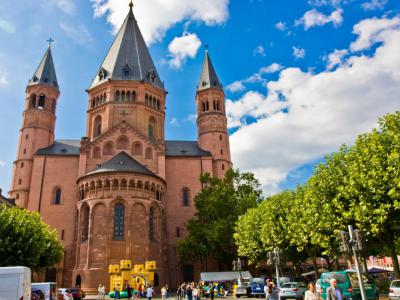
The Mainz Cathedral, a towering symbol of Christianity's long-standing presence in Mainz, traces its roots back to 746 when Saint Boniface introduced Christianity to the region. Archbishop Willigis, inspired by Saint Peter’s Basilica in Rome, ordered the construction of the cathedral, which was unfortunately ravaged by fire on the very day of its consecration in 1009. Despite the damage, the cathedral was repaired by 1036, and over time, it has evolved into a blend of styles that reflect centuries of architectural and historical changes.
The original Romanesque style is still visible in the cathedral’s triple-nave basilica and its bronze door facing the square. Over the years, additional chapels and structures have been added, each showcasing the design trends of their respective eras. One of the more notable additions is Saint Gotthard’s Chapel, built in 1137, which stands out with its lighter stone.
Fire has been a recurring adversary for Mainz Cathedral, striking seven times throughout its history. To prevent further damage, the spire was reconstructed from stone in 1767. The east chancel, the oldest part of the cathedral, features walls over two meters thick, providing a glimpse into its early construction. The Romanesque west chancel, dating to 1239, was later enhanced by a Gothic belfry in the 15th century.
Mainz Cathedral also holds historical significance as a site of royal coronations in the 11th, 12th, and 13th centuries. The Diet of Pentecost, one of the most legendary medieval feasts, was held here. Despite enduring heavy damage during attacks by French and Prussian troops in the late 18th century, as well as during World War II, the cathedral has been meticulously restored over the years. Its foundations were reinforced in the early 20th century after the Rhine River’s correction caused structural issues.
Inside, the cathedral remains a treasure trove of art and history. The Ketteler Chapel is home to an altar dedicated to the Virgin Mary, along with the serene statue of the "Serene Lady of Mainz," a wood-carved figure dating back to 1510. The cathedral also houses the tombs of its bishops and boasts a cherished portrait gallery of ecclesiastical dignitaries.
Today, Mainz Cathedral stands not only as a religious site but also as a testament to the city's resilience and rich history. It continues to be a focal point of Mainz, drawing visitors from around the world to marvel at its architecture, art, and historical significance.
The original Romanesque style is still visible in the cathedral’s triple-nave basilica and its bronze door facing the square. Over the years, additional chapels and structures have been added, each showcasing the design trends of their respective eras. One of the more notable additions is Saint Gotthard’s Chapel, built in 1137, which stands out with its lighter stone.
Fire has been a recurring adversary for Mainz Cathedral, striking seven times throughout its history. To prevent further damage, the spire was reconstructed from stone in 1767. The east chancel, the oldest part of the cathedral, features walls over two meters thick, providing a glimpse into its early construction. The Romanesque west chancel, dating to 1239, was later enhanced by a Gothic belfry in the 15th century.
Mainz Cathedral also holds historical significance as a site of royal coronations in the 11th, 12th, and 13th centuries. The Diet of Pentecost, one of the most legendary medieval feasts, was held here. Despite enduring heavy damage during attacks by French and Prussian troops in the late 18th century, as well as during World War II, the cathedral has been meticulously restored over the years. Its foundations were reinforced in the early 20th century after the Rhine River’s correction caused structural issues.
Inside, the cathedral remains a treasure trove of art and history. The Ketteler Chapel is home to an altar dedicated to the Virgin Mary, along with the serene statue of the "Serene Lady of Mainz," a wood-carved figure dating back to 1510. The cathedral also houses the tombs of its bishops and boasts a cherished portrait gallery of ecclesiastical dignitaries.
Today, Mainz Cathedral stands not only as a religious site but also as a testament to the city's resilience and rich history. It continues to be a focal point of Mainz, drawing visitors from around the world to marvel at its architecture, art, and historical significance.
6) Markt (Market Square) (must see)
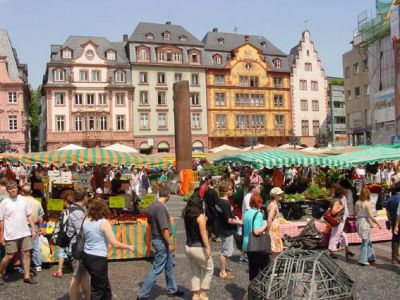
Market Square is Mainz's most popular square and is dominated by the iconic Mainz Cathedral. The square became a popular trading place when the cathedral was built in 975. Traditionally, merchants offered wool, cloth, fur, baked goods, and fruit and vegetables. Products were set out in large baskets on the floor.
The Renaissance market fountain was built in 1526. The water fountain was an important source of fresh water for nearby residents. In 1889, a Madonna figure was added to the fountain.
Most of the houses in the square date to the 18th century. World War II bombs heavily damaged Market Square. In 1975, Mainz celebrated the thousandth anniversary of the cathedral and committed to re-designing and rebuilding the square. Many of the buildings were rebuilt with historical facades.
The market takes place Tuesdays, Fridays, and Saturdays. Market Square hosts a vibrant Christmas Market during the Christmas holiday season.
The Renaissance market fountain was built in 1526. The water fountain was an important source of fresh water for nearby residents. In 1889, a Madonna figure was added to the fountain.
Most of the houses in the square date to the 18th century. World War II bombs heavily damaged Market Square. In 1975, Mainz celebrated the thousandth anniversary of the cathedral and committed to re-designing and rebuilding the square. Many of the buildings were rebuilt with historical facades.
The market takes place Tuesdays, Fridays, and Saturdays. Market Square hosts a vibrant Christmas Market during the Christmas holiday season.
7) Heunensaeule (Heunen Columns)
The Heunen Columns (Heunensäule) are historic sandstone columns that were originally crafted for the reconstruction of the Willigis Cathedral in Mainz after it burned down in 1009. Likely completed in the 11th century in a quarry near Miltenberg, these columns were created before the cathedral project was formally planned, a move showing early business foresight. However, the columns were never used, as alternative supports were chosen for the cathedral's reconstruction.
Over time, the number of Heunen Columns dwindled. By the 18th century, only 14 remained, and by the 1960s, just eight were still standing. Today, the surviving columns are dispersed across several locations, with the most famous one standing as a monument in Mainz. Others can be found in Nuremberg, Munich, and on the waterfront in Miltenberg.
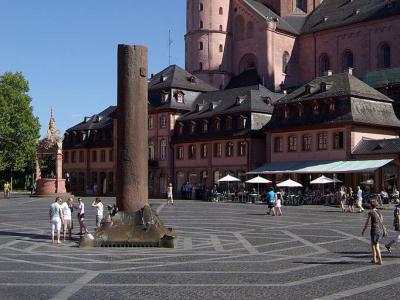
In 1975, to commemorate the 1000th anniversary of the Mainz Cathedral's construction, the city of Miltenberg gifted one of these impressive columns to Mainz. This column, weighing 16 tons and measuring 6.4 meters in height with a diameter of 1.2 meters, now serves as a symbol of the city. It is prominently placed in the middle of the market square, set on a bronze base created by Palatinate sculptor Gernot Rumpf. Rumpf’s design tells the story of Mainz through symbolic headgear, incorporating elements such as a Roman gladiator mask, which includes a fox representing former Mayor Jockel Fuchs. Playful details like three mice, symbolizing political factions, and a rattling Jacobin hat make this sculpture both a historic artifact and a playful homage to Mainz’s civic identity.
Over time, the number of Heunen Columns dwindled. By the 18th century, only 14 remained, and by the 1960s, just eight were still standing. Today, the surviving columns are dispersed across several locations, with the most famous one standing as a monument in Mainz. Others can be found in Nuremberg, Munich, and on the waterfront in Miltenberg.
In 1975, to commemorate the 1000th anniversary of the Mainz Cathedral's construction, the city of Miltenberg gifted one of these impressive columns to Mainz. This column, weighing 16 tons and measuring 6.4 meters in height with a diameter of 1.2 meters, now serves as a symbol of the city. It is prominently placed in the middle of the market square, set on a bronze base created by Palatinate sculptor Gernot Rumpf. Rumpf’s design tells the story of Mainz through symbolic headgear, incorporating elements such as a Roman gladiator mask, which includes a fox representing former Mayor Jockel Fuchs. Playful details like three mice, symbolizing political factions, and a rattling Jacobin hat make this sculpture both a historic artifact and a playful homage to Mainz’s civic identity.
8) Gutenberg Museum (must see)
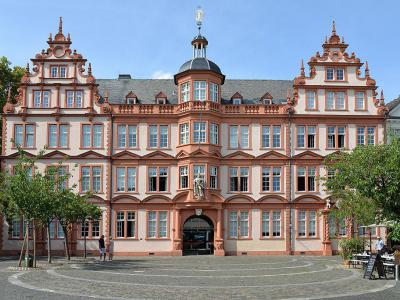
The Gutenberg Museum is dedicated to Johannes Gutenberg, one of Mainz's most famous residents. Gutenberg is known as the "Man of the Millenium" for creating a printing press with movable metal type. Gutenberg's printing press revolutionized the world. The museum also exhibits international printing presses and scripts.
Audio guides are available in English, French, and German, and guided tours are available. Guests can start their visit by watching a short film about Gutenberg's life and work.
The Gutenberg Museum has two priceless copies of the famous original 42-line Gutenberg Bible, printed around 1450. In addition, visitors can see a recreation of Gutenberg's workshop, including a demonstration of how a 15th-century printing press operated.
Additional exhibits include printing presses, typesetting machines, and examples of European book culture from the last 500 years.
Gutenberg Museum houses one of the most impressive bookplate collections in the world. An exhibit displays bookplates from notable figures such as Charles Dickens, Albert Einstein, Charles Lindbergh, and Franklin D. Roosevelt.
The Gutenberg Museum has displays focusing on international printing. One exhibit traces printing in East Asia to the 8th century and another displays Islamic scripts. Additional exhibits show bookbinding, press printing techniques, and paper and color manufacturing.
The museum has exhibits on five floors, including the wonderful gift shop. Visit the education workshop to try your hand at typesetting and printing. Staff members are available to help you get set up.
Audio guides are available in English, French, and German, and guided tours are available. Guests can start their visit by watching a short film about Gutenberg's life and work.
The Gutenberg Museum has two priceless copies of the famous original 42-line Gutenberg Bible, printed around 1450. In addition, visitors can see a recreation of Gutenberg's workshop, including a demonstration of how a 15th-century printing press operated.
Additional exhibits include printing presses, typesetting machines, and examples of European book culture from the last 500 years.
Gutenberg Museum houses one of the most impressive bookplate collections in the world. An exhibit displays bookplates from notable figures such as Charles Dickens, Albert Einstein, Charles Lindbergh, and Franklin D. Roosevelt.
The Gutenberg Museum has displays focusing on international printing. One exhibit traces printing in East Asia to the 8th century and another displays Islamic scripts. Additional exhibits show bookbinding, press printing techniques, and paper and color manufacturing.
The museum has exhibits on five floors, including the wonderful gift shop. Visit the education workshop to try your hand at typesetting and printing. Staff members are available to help you get set up.
9) Kurfürstliches Schloss (Electoral Palace)
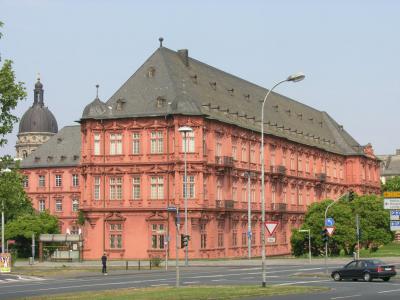
The Electoral Palace in Mainz (Kurfürstliches Schloss zu Mainz) is a former residence of the Prince-elector and Archbishop of Mainz, representing one of Germany's significant Renaissance structures. Construction began in 1627 under Archbishop Georg Friedrich von Greiffenklau. However, due to disruptions from the Thirty Years' War and the War of the Grand Alliance, its completion was delayed. The Rhine wing, initially started in 1627, was only completed in 1678.
The original design is unknown, but it was likely intended as a four-winged building, similar to Schloss Johannisberg’s 1604 renovations. Construction of the north wing began in 1687 and finished by 1752, with interiors furnished gradually. Later expansions, particularly under Archbishops Johann Friedrich Karl von Ostein and Friedrich Karl Josef von Erthal, occurred before political shifts during the Napoleonic period moved the archbishopric's seat to Regensburg. War delays and competition for resources, including the destruction of Lustschloss Favorite in 1793, hindered progress. The palace was neglected after the last Elector’s expulsion but restored in 1827 by Hesse-Darmstadt.
During World War II, the palace was heavily damaged in the 1945 air raid, leaving only the exterior walls. It was restored between 1948 and 1949 and reopened for public use by the end of 1949. The palace served as the main venue for Mainz's Carnival activities until the opening of Rheingold Hall in 1968.
Architecturally, the palace is among the last examples of German Renaissance design. Its northern wing, built later, remains true to this style, with richly ornamented exteriors, particularly around the windows. The palace once housed the Grand Staircase, a Baroque masterpiece by Balthasar Neumann, removed during the French occupation. Today, the east wing hosts the Roman-Germanic Central Museum (Römisch-Germanisches Zentralmuseum), while the north wing contains the hall used for the renowned Mainz carnival broadcast, Mainz remains Mainz, as it sings and laughs (Mainz bleibt Mainz, wie es singt und lacht).
Managed by Congress Centrum Mainz, the Electoral Palace offers a variety of spaces for events, accommodating up to 1,700 guests across seven halls and smaller rooms.
The original design is unknown, but it was likely intended as a four-winged building, similar to Schloss Johannisberg’s 1604 renovations. Construction of the north wing began in 1687 and finished by 1752, with interiors furnished gradually. Later expansions, particularly under Archbishops Johann Friedrich Karl von Ostein and Friedrich Karl Josef von Erthal, occurred before political shifts during the Napoleonic period moved the archbishopric's seat to Regensburg. War delays and competition for resources, including the destruction of Lustschloss Favorite in 1793, hindered progress. The palace was neglected after the last Elector’s expulsion but restored in 1827 by Hesse-Darmstadt.
During World War II, the palace was heavily damaged in the 1945 air raid, leaving only the exterior walls. It was restored between 1948 and 1949 and reopened for public use by the end of 1949. The palace served as the main venue for Mainz's Carnival activities until the opening of Rheingold Hall in 1968.
Architecturally, the palace is among the last examples of German Renaissance design. Its northern wing, built later, remains true to this style, with richly ornamented exteriors, particularly around the windows. The palace once housed the Grand Staircase, a Baroque masterpiece by Balthasar Neumann, removed during the French occupation. Today, the east wing hosts the Roman-Germanic Central Museum (Römisch-Germanisches Zentralmuseum), while the north wing contains the hall used for the renowned Mainz carnival broadcast, Mainz remains Mainz, as it sings and laughs (Mainz bleibt Mainz, wie es singt und lacht).
Managed by Congress Centrum Mainz, the Electoral Palace offers a variety of spaces for events, accommodating up to 1,700 guests across seven halls and smaller rooms.
10) Kupferberg Boutique
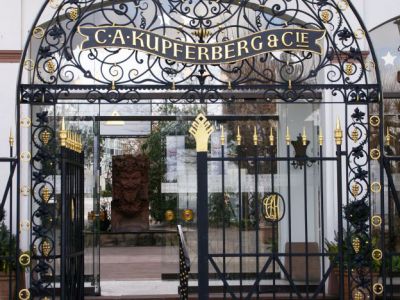
The Kupferberg Boutique in Mainz offers a charming escape for tourists, set amidst tranquil surroundings by a beautiful park. Here, visitors can indulge in a glass of sparkling wine, sourced from a winery with a rich heritage dating back to 1850. The boutique itself is a treasure trove of gift ideas, featuring exquisite wines, sekt, champagne, and a wide range of wine glasses and flutes.
Kupferberg’s terrace, perched high above Mainz, provides stunning views and is a favorite destination for both locals and visitors. Below the main building, the winery houses the deepest sparkling wine cellar in the world, opened in 1888, descending seven storeys into the earth. These cellars, some dating back to medieval times, stretch across 60 different chambers and now form part of a museum that showcases the rich history of sparkling wine production.
Founded by Christian Adalbert Kupferberg, the winery quickly became a symbol of premium sekt in Germany, even securing the "Kupferberg Gold" trademark in 1852. The winery played a prominent role in international fairs and maintained strong connections with notable figures such as Otto von Bismarck. Although the brand is now owned by Henkell, the historic site remains a testament to the legacy of Kupferberg. The museum’s unique collection of champagne glasses, along with exhibits like the stunning Art Nouveau "Hall of Grapes," make it a must-see destination in Mainz.
Kupferberg’s terrace, perched high above Mainz, provides stunning views and is a favorite destination for both locals and visitors. Below the main building, the winery houses the deepest sparkling wine cellar in the world, opened in 1888, descending seven storeys into the earth. These cellars, some dating back to medieval times, stretch across 60 different chambers and now form part of a museum that showcases the rich history of sparkling wine production.
Founded by Christian Adalbert Kupferberg, the winery quickly became a symbol of premium sekt in Germany, even securing the "Kupferberg Gold" trademark in 1852. The winery played a prominent role in international fairs and maintained strong connections with notable figures such as Otto von Bismarck. Although the brand is now owned by Henkell, the historic site remains a testament to the legacy of Kupferberg. The museum’s unique collection of champagne glasses, along with exhibits like the stunning Art Nouveau "Hall of Grapes," make it a must-see destination in Mainz.
11) Kupferberg Museum
The Kupferberg Museum in Mainz offers a captivating blend of history, architecture, and sparkling wine tradition. Situated on the Kupferberg Terrace, this museum is part of the Kupferberg sparkling wine cellars, which were founded in 1850 by Christian Adalbert Kupferberg. It sits on a hill once utilized by Roman soldiers in 12 BC, a site still known today as Kästrich.
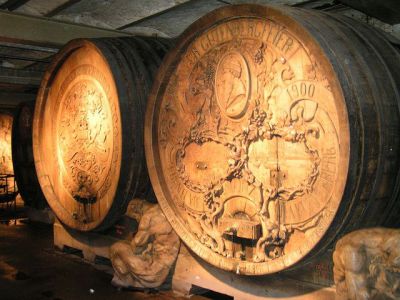
Visitors can explore 7 levels of vaulted cellars, reaching depths of up to 50 meters beneath the surface. These medieval cellars house one of the largest wooden barrels in the world, capable of holding 100,000 liters of wine. The museum also features a remarkable collection of over 2,000-year-old wine amphoras and jugs found during excavations.
A key highlight of the museum is its sparkling wine and champagne glass collection, one of the largest in the world, showcasing pieces from the Renaissance to modern times. Additionally, the Grape Hall, an Art Nouveau masterpiece reconstructed from the Paris World Exhibition of 1900, offers a glimpse into the luxurious design of the time.
The site also pays homage to historical figures such as Otto von Bismarck, who once stayed here in 1870, using the famous "Bismarck Room" as his office. Today, guided tours provide a thorough exploration of this fascinating combination of wine culture and history, making it a must-see in Mainz.
Visitors can explore 7 levels of vaulted cellars, reaching depths of up to 50 meters beneath the surface. These medieval cellars house one of the largest wooden barrels in the world, capable of holding 100,000 liters of wine. The museum also features a remarkable collection of over 2,000-year-old wine amphoras and jugs found during excavations.
A key highlight of the museum is its sparkling wine and champagne glass collection, one of the largest in the world, showcasing pieces from the Renaissance to modern times. Additionally, the Grape Hall, an Art Nouveau masterpiece reconstructed from the Paris World Exhibition of 1900, offers a glimpse into the luxurious design of the time.
The site also pays homage to historical figures such as Otto von Bismarck, who once stayed here in 1870, using the famous "Bismarck Room" as his office. Today, guided tours provide a thorough exploration of this fascinating combination of wine culture and history, making it a must-see in Mainz.
