Custom Walk in Providence, Rhode Island by hopevbest_d597a9 created on 2026-03-24
Guide Location: USA » Providence
Guide Type: Custom Walk
# of Sights: 7
Tour Duration: 1 Hour(s)
Travel Distance: 1.8 Km or 1.1 Miles
Share Key: 5K84P
Guide Type: Custom Walk
# of Sights: 7
Tour Duration: 1 Hour(s)
Travel Distance: 1.8 Km or 1.1 Miles
Share Key: 5K84P
How It Works
Please retrieve this walk in the GPSmyCity app. Once done, the app will guide you from one tour stop to the next as if you had a personal tour guide. If you created the walk on this website or come to the page via a link, please follow the instructions below to retrieve the walk in the app.
Retrieve This Walk in App
Step 1. Download the app "GPSmyCity: Walks in 1K+ Cities" on Apple App Store or Google Play Store.



Step 2. In the GPSmyCity app, download(or launch) the guide "Providence Map and Walking Tours".
Step 3. Tap the menu button located at upper right corner of the "Walks" screen and select "Retrieve custom walk". Enter the share key: 5K84P
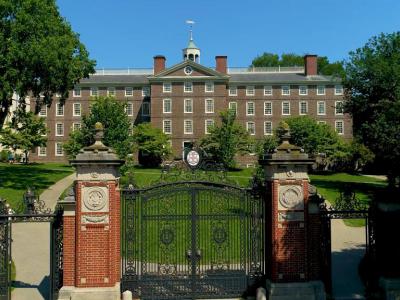
1) Brown University (must see)
Founded in 1764, Brown University is one of the oldest Ivy League schools in the U.S., and it made history early on as the first to admit students without regard to religious affiliation. Even its charter broke new ground by ensuring no sectarian bias would influence the selection of trustees.
Originally established as the College in the English Colony of Rhode Island and Providence Plantations, Brown relocated to College Hill in 1770. The campus offers a mix of historic and contemporary architecture, with 235 buildings in total. University Hall, erected in 1770, remains the oldest structure, and many other buildings reflect the Georgian and Richardsonian Romanesque styles.
Brown is celebrated for its Open Curriculum, introduced in 1969, which encourages students to chart their own academic paths, free from traditional general education requirements, as well as to embrace independent thought and creative exploration.
The university encompasses the College, the Graduate School, the Warren Alpert Medical School, the School of Engineering, and the School of Public Health. Together, these schools offer over 40 academic departments and a wide array of programs, cementing Brown’s reputation for interdisciplinary research and innovation.
At the heart of the campus, the John Carter Brown Library serves as a world-class resource dedicated to the early history of the Americas. Since its founding in 1846, this independently funded library has amassed an extraordinary collection of rare books, manuscripts, and maps.
Originally established as the College in the English Colony of Rhode Island and Providence Plantations, Brown relocated to College Hill in 1770. The campus offers a mix of historic and contemporary architecture, with 235 buildings in total. University Hall, erected in 1770, remains the oldest structure, and many other buildings reflect the Georgian and Richardsonian Romanesque styles.
Brown is celebrated for its Open Curriculum, introduced in 1969, which encourages students to chart their own academic paths, free from traditional general education requirements, as well as to embrace independent thought and creative exploration.
The university encompasses the College, the Graduate School, the Warren Alpert Medical School, the School of Engineering, and the School of Public Health. Together, these schools offer over 40 academic departments and a wide array of programs, cementing Brown’s reputation for interdisciplinary research and innovation.
At the heart of the campus, the John Carter Brown Library serves as a world-class resource dedicated to the early history of the Americas. Since its founding in 1846, this independently funded library has amassed an extraordinary collection of rare books, manuscripts, and maps.
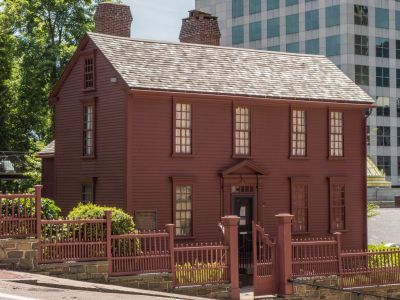
2) Governor Stephen Hopkins House (must see)
Step into Providence’s oldest surviving home, a living monument to early American history. Known as the Stephen Hopkins House, this residence honors its remarkable namesake. Hopkins wasn’t just any colonist: he signed the Declaration of Independence, served as Rhode Island’s Governor not once but ten times, and even held roles as Chief Justice and a delegate to both the Colonial and Continental Congresses.
In 1743, Hopkins bought and expanded this home, residing here until his death in 1785. He played a key role in shaping Providence’s civic and economic foundation. By the time he added his signature to the Declaration of Independence, he was nearly 70 and battling what is thought to have been Parkinson’s Disease. Despite his trembling hand, he famously declared, “My hand trembles, my heart does not.”
One of the house’s most memorable moments came on April 5, 1776, when George Washington himself stayed overnight. Hopkins himself was away, so his daughter-in-law hosted the General. Local lore has it she refused to borrow fine china for the occasion, saying what was good enough for her father-in-law was good enough for Washington.
Today, visitors can stand in the room where Washington slept and learn about Hopkins’ extraordinary life. The home, recognized as both a National Register site and a National Historic Landmark, preserves the legacy of a man who dedicated himself to both Rhode Island and the founding of a new nation.
In 1743, Hopkins bought and expanded this home, residing here until his death in 1785. He played a key role in shaping Providence’s civic and economic foundation. By the time he added his signature to the Declaration of Independence, he was nearly 70 and battling what is thought to have been Parkinson’s Disease. Despite his trembling hand, he famously declared, “My hand trembles, my heart does not.”
One of the house’s most memorable moments came on April 5, 1776, when George Washington himself stayed overnight. Hopkins himself was away, so his daughter-in-law hosted the General. Local lore has it she refused to borrow fine china for the occasion, saying what was good enough for her father-in-law was good enough for Washington.
Today, visitors can stand in the room where Washington slept and learn about Hopkins’ extraordinary life. The home, recognized as both a National Register site and a National Historic Landmark, preserves the legacy of a man who dedicated himself to both Rhode Island and the founding of a new nation.
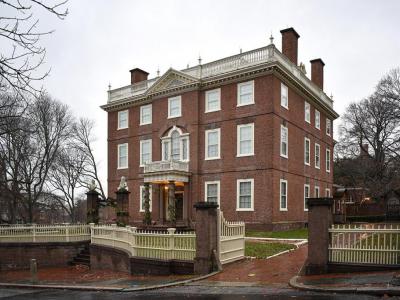
3) John Brown House Museum
The John Brown House is the first mansion built in Providence. It is located along Power Street on College Hill, which is adjacent to the borders of Brown University. The house is named after the original owner and one of the early benefactors of the University, the early American merchant and statesman John Brown. It was declared a National Historic Landmark in 1968.
John Quincy Adams considered the house "the most magnificent and elegant private mansion that I have ever seen on this continent." The original structure was built in 1786 by John Brown. Notable guests during this time include George Washington, who is reported to have visited for tea. The house was sold in 1901 to the prominent Rhode Island industrialist and banker Marsden J. Perry. Under Marsden's supervision, the extension was renovated to add in modern bathrooms and central heating systems.
In 1942, the Brown family donated the house to the Rhode Island Historical Society for preservation. The house was restored to its original colonial decor. The museum now contains many original furniture pieces provided by the Brown family estate.
John Quincy Adams considered the house "the most magnificent and elegant private mansion that I have ever seen on this continent." The original structure was built in 1786 by John Brown. Notable guests during this time include George Washington, who is reported to have visited for tea. The house was sold in 1901 to the prominent Rhode Island industrialist and banker Marsden J. Perry. Under Marsden's supervision, the extension was renovated to add in modern bathrooms and central heating systems.
In 1942, the Brown family donated the house to the Rhode Island Historical Society for preservation. The house was restored to its original colonial decor. The museum now contains many original furniture pieces provided by the Brown family estate.
Sight description based on Wikipedia.
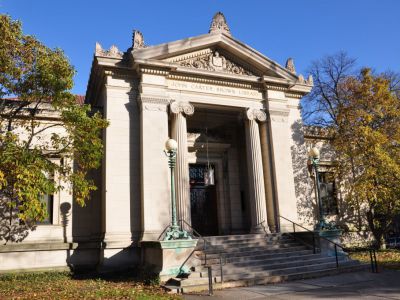
4) John Carter Brown Library
Established in 1904, this independent institution houses an extraordinary collection of historical sources pertaining to the Americas-both North and South-from the 15th through the early 19th centuries. It began with the passion of John Carter Brown, a University alumnus who dedicated himself to assembling a collection centered on what he called “the Great Subject.” After his passing, his son, John Nicholas Brown, carried the torch. In 1901, the family’s collection, along with funds for a purpose-built building, was gifted to Brown University. What emerged was the first independent private library in the U.S. situated within a university campus.
Today, the library boasts a remarkable assemblage of nearly 50,000 rare books, maps, and manuscripts, encompassing over 200 languages and offering more than three centuries of insight into early American history. Among the highlights are colonial-era maps, materials in indigenous languages, and foundational texts documenting the exploration and settlement of the Americas. These invaluable works are frequently brought into public view through carefully curated exhibitions held in the MacMillan Reading Room and the Maury A. Bromsen-Simón Bolívar Room. Visitors interested in delving deeper are encouraged to consult the library’s website for current hours, exhibit schedules, and access guidelines.
The library’s architecture is another point of pride. Initially described as “German Ionic,” the building exudes a timeless serenity. A significant expansion in the 1990s doubled its size while maintaining the original aesthetic harmony, ensuring that the structure continues to be a fitting home for its unparalleled collection.
Today, the library boasts a remarkable assemblage of nearly 50,000 rare books, maps, and manuscripts, encompassing over 200 languages and offering more than three centuries of insight into early American history. Among the highlights are colonial-era maps, materials in indigenous languages, and foundational texts documenting the exploration and settlement of the Americas. These invaluable works are frequently brought into public view through carefully curated exhibitions held in the MacMillan Reading Room and the Maury A. Bromsen-Simón Bolívar Room. Visitors interested in delving deeper are encouraged to consult the library’s website for current hours, exhibit schedules, and access guidelines.
The library’s architecture is another point of pride. Initially described as “German Ionic,” the building exudes a timeless serenity. A significant expansion in the 1990s doubled its size while maintaining the original aesthetic harmony, ensuring that the structure continues to be a fitting home for its unparalleled collection.
5) Brown University Sciences Library
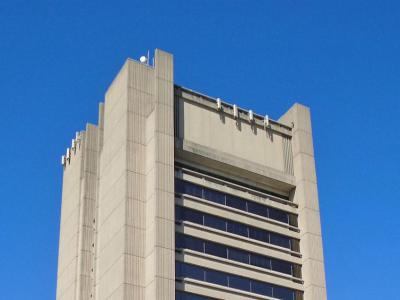
Rising dramatically above its surroundings, the Sciences Library makes quite a statement. Dubbed the “SciLi” by locals, this 180-foot tower is not only Brown University’s primary science library but also holds the distinction of being the world’s first high-rise library. Designed in the Brutalist style, it opened in 1971 during a peak period for this architectural movement.
Its sharp, geometric form and rough concrete facade stand in stark contrast to the historic homes and shops nearby, giving it a polarizing reputation. Critics have described the building as imposing and out of step with the area’s character, even likening it to Soviet-era housing blocks. Yet, fans of Brutalism see it as an important survivor of a once-celebrated and now endangered style. With many similar structures being demolished, the SciLi remains a rare example of Brutalist architecture’s uncompromising vision.
Beyond its architectural significance, the building serves as a vibrant hub of activity. In addition to housing vast library collections, it’s home to the Science Center, the Writing Center, the Center for Language Studies, and the Map Collection. Students can also find resources through the Friedman Study Center, which provides a café on the lower floor.
Its sharp, geometric form and rough concrete facade stand in stark contrast to the historic homes and shops nearby, giving it a polarizing reputation. Critics have described the building as imposing and out of step with the area’s character, even likening it to Soviet-era housing blocks. Yet, fans of Brutalism see it as an important survivor of a once-celebrated and now endangered style. With many similar structures being demolished, the SciLi remains a rare example of Brutalist architecture’s uncompromising vision.
Beyond its architectural significance, the building serves as a vibrant hub of activity. In addition to housing vast library collections, it’s home to the Science Center, the Writing Center, the Center for Language Studies, and the Map Collection. Students can also find resources through the Friedman Study Center, which provides a café on the lower floor.
6) Brown University's Conservatory
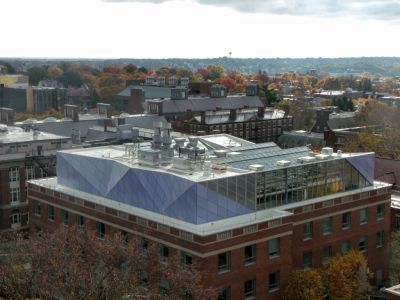
When you need a tropical escape but don’t have time to hop on a plane, the Brown University Plant Environment Center’s Conservatory is a lush haven just minutes away. Inside this cozy glasshouse, a warm, verdant jungle thrives. Delicate African violets share the space with shiny begonia leaves as large as serving platters, while an overhead cluster of small green bananas quietly hangs above. The towering trees brush the glass ceiling, and in a corner, a group of prickly cacti adds a desert twist. Everything is carefully arranged by botanical family, creating a space that feels organized yet entirely natural.
This 1,800-square-foot slice of greenery is kept tropical year-round, making it an ideal spot for a brief, serene getaway. And the best part? It’s open to everyone-students, staff, faculty, and the general public. Just take the elevator to the fourth floor, and you’ll find yourself in this quiet oasis. If you’re unsure where it’s located, just glance up from the street.
This 1,800-square-foot slice of greenery is kept tropical year-round, making it an ideal spot for a brief, serene getaway. And the best part? It’s open to everyone-students, staff, faculty, and the general public. Just take the elevator to the fourth floor, and you’ll find yourself in this quiet oasis. If you’re unsure where it’s located, just glance up from the street.
7) Faunce House (Stephen Robert '62 Campus Center)
What once started as Rockefeller Hall, thanks to a generous gift from John D. Rockefeller Jr., class of 1897, soon became Faunce House after a 1931 expansion and a name change in honor of Brown’s president from 1899 to 1929, Dr. William Herbert Perry Faunce. Initially packed with turn-of-the-century comforts like a smoking room, billiard hall, and even a barber shop, the building grew to include a cafeteria and the “Pine Room” grill, a spot that might as well have been transported from a colonial tavern.
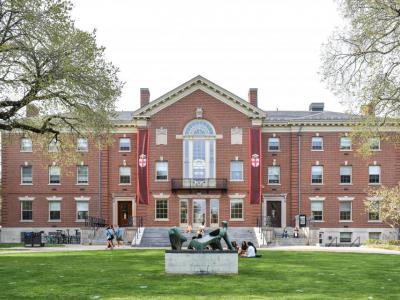
Architecturally, Faunce House is a love letter to Colonial Revival style, with its dignified red brick facade and timeless classical detailing. The 1931 expansion didn’t miss a beat, connecting seamlessly to the original design through the striking Faunce Arch. This main thoroughfare acts as both a literal and symbolic gateway, bridging the Main Green and the heart of campus life.
In 2010, a major renovation funded by Stephen Robert brought a fresh face to the building, including a floor-to-ceiling glass entryway that makes the Faunce Arch shine as a welcoming “front door” to the campus. Inside, students and visitors can now enjoy updated dining areas and the Blue Room café-all without losing a single ounce of the building’s historic charm.
Highlights include the Leung Family Gallery, a second-floor lounge offering sweeping campus views; the Faunce Memorial Room, designed for quiet reflection and adorned with a portrait of President Faunce himself; and, of course, the Faunce Arch, not just an architectural landmark but a treasured link between Brown’s storied past and its dynamic present.
Architecturally, Faunce House is a love letter to Colonial Revival style, with its dignified red brick facade and timeless classical detailing. The 1931 expansion didn’t miss a beat, connecting seamlessly to the original design through the striking Faunce Arch. This main thoroughfare acts as both a literal and symbolic gateway, bridging the Main Green and the heart of campus life.
In 2010, a major renovation funded by Stephen Robert brought a fresh face to the building, including a floor-to-ceiling glass entryway that makes the Faunce Arch shine as a welcoming “front door” to the campus. Inside, students and visitors can now enjoy updated dining areas and the Blue Room café-all without losing a single ounce of the building’s historic charm.
Highlights include the Leung Family Gallery, a second-floor lounge offering sweeping campus views; the Faunce Memorial Room, designed for quiet reflection and adorned with a portrait of President Faunce himself; and, of course, the Faunce Arch, not just an architectural landmark but a treasured link between Brown’s storied past and its dynamic present.
