Custom Walk in Brussels, Belgium by timythy86_a5cdff created on 2026-03-25
Guide Location: Belgium » Brussels
Guide Type: Custom Walk
# of Sights: 6
Tour Duration: 1 Hour(s)
Travel Distance: 2.5 Km or 1.6 Miles
Share Key: QW4GR
Guide Type: Custom Walk
# of Sights: 6
Tour Duration: 1 Hour(s)
Travel Distance: 2.5 Km or 1.6 Miles
Share Key: QW4GR
How It Works
Please retrieve this walk in the GPSmyCity app. Once done, the app will guide you from one tour stop to the next as if you had a personal tour guide. If you created the walk on this website or come to the page via a link, please follow the instructions below to retrieve the walk in the app.
Retrieve This Walk in App
Step 1. Download the app "GPSmyCity: Walks in 1K+ Cities" on Apple App Store or Google Play Store.



Step 2. In the GPSmyCity app, download(or launch) the guide "Brussels Map and Walking Tours".
Step 3. Tap the menu button located at upper right corner of the "Walks" screen and select "Retrieve custom walk". Enter the share key: QW4GR
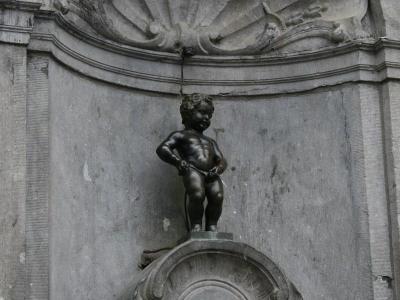
1) Manneken Pis (Little Boy Peeing) (must see)
The small bronze statue of a little boy faithfully relieving himself atop a fountain has paradoxically emerged as an unexpected symbol of Brussels.
The site has been a water fountain since the 13th century, but the statue in its current baroque form was crafted in 1619 to replace an earlier version. Throughout history, the Little Boy Peeing has been stolen and thrown into the canal multiple times. What we see today is a copy made in 1965. The original statue is safeguarded in the Brussels City Museum to protect it from any further mishaps.
This enduring sculpture exemplifies the typical Brussels sense of humor and its capacity to poke fun at its own image. Apart from its humor, however, the statue is renowned for various legends associated with it.
One story claims that it commemorates a brave young boy who urinated on a burning fuse, preventing an explosive charge from detonating and potentially destroying the city's fortification walls. In another account, a wealthy merchant, after an extensive citywide search for his missing son, who was eventually found joyfully urinating in a garden, presented the statue, as a token of his appreciation, to the townspeople who aided in the search. Yet another version of the tale suggests that a young boy woke up to find a fire in the king's castle and promptly used his urine to douse the flames, thus preventing it from burning to the ground.
For about one-third of the year, the statue is dressed up in various costumes by an official dresser who has been appointed by the city since 1755. The current dresser, Nicolas Edelman, is the 13th since the 18th century. In 2014, he volunteered for the job which implies dressing up the statue for about 130 events annually. The role demands flexibility, requiring early mornings or late evenings, regardless of weather or day.
The costumes, donated by various entities, must meet quality standards and not serve political, commercial, or religious agendas. To date, the peeing boy has donned over 500 different outfits, ranging from the earliest-known attire, a Louis XV-provided ensemble portraying him as an elegant 17th-century gentleman, to a samurai robe celebrating the friendship between Belgium and Japan.
Little Boy Peeing has two companion statues: Little Girl Peeing (depicting a urinating girl, installed in 1987 in an alleyway near the Grand Square) and Little Dog Peeing (portraying a urinating dog, erected in 1998 in Dansaert, modeled after a real dog owned by the sculptor). Both of them are located approximately 550 meters away from the Little Boy Peeing but in different directions.
The site has been a water fountain since the 13th century, but the statue in its current baroque form was crafted in 1619 to replace an earlier version. Throughout history, the Little Boy Peeing has been stolen and thrown into the canal multiple times. What we see today is a copy made in 1965. The original statue is safeguarded in the Brussels City Museum to protect it from any further mishaps.
This enduring sculpture exemplifies the typical Brussels sense of humor and its capacity to poke fun at its own image. Apart from its humor, however, the statue is renowned for various legends associated with it.
One story claims that it commemorates a brave young boy who urinated on a burning fuse, preventing an explosive charge from detonating and potentially destroying the city's fortification walls. In another account, a wealthy merchant, after an extensive citywide search for his missing son, who was eventually found joyfully urinating in a garden, presented the statue, as a token of his appreciation, to the townspeople who aided in the search. Yet another version of the tale suggests that a young boy woke up to find a fire in the king's castle and promptly used his urine to douse the flames, thus preventing it from burning to the ground.
For about one-third of the year, the statue is dressed up in various costumes by an official dresser who has been appointed by the city since 1755. The current dresser, Nicolas Edelman, is the 13th since the 18th century. In 2014, he volunteered for the job which implies dressing up the statue for about 130 events annually. The role demands flexibility, requiring early mornings or late evenings, regardless of weather or day.
The costumes, donated by various entities, must meet quality standards and not serve political, commercial, or religious agendas. To date, the peeing boy has donned over 500 different outfits, ranging from the earliest-known attire, a Louis XV-provided ensemble portraying him as an elegant 17th-century gentleman, to a samurai robe celebrating the friendship between Belgium and Japan.
Little Boy Peeing has two companion statues: Little Girl Peeing (depicting a urinating girl, installed in 1987 in an alleyway near the Grand Square) and Little Dog Peeing (portraying a urinating dog, erected in 1998 in Dansaert, modeled after a real dog owned by the sculptor). Both of them are located approximately 550 meters away from the Little Boy Peeing but in different directions.
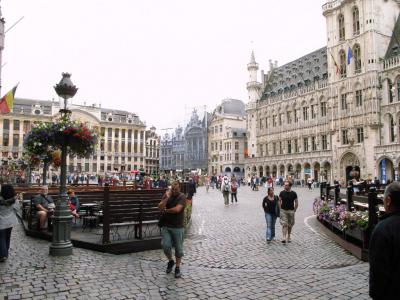
2) Grand Place (Grand Square) (must see)
Grand Square-Brussels’ pride and joy-is the biggest show-off move of the Belgian capital. Some say it's the most beautiful square in Europe. Others say the world. Either way, it’s hard to argue when you’re standing there, dwarfed by a 15th-century Gothic Town Hall that looks like it got dressed for the Met Gala... and the neo-Gothic King's House-also charmingly called the Bread House (because apparently even royal buildings get carb cravings).
This cobblestoned stunner has been in the spotlight since the 11th century. Back then, it was a humble marketplace. A few hundred years later, it had a front-row seat to history-picture Inquisition bonfires and a couple of unfortunate noble executions (some sort of “light afternoon entertainment” for the medieval crowd)...
As Brussels bloomed, so did the square’s bling. Surrounding it are guildhalls that practically scream, “We have money and good taste!” Each one was built by a different trade-from haberdashers to bakers to brewers-and while the jobs have changed, the beauty hasn’t. Take Number 10, for example-once a brewers’ headquarters, now home to the Brewers Museum, so yes, beer still lives there. Circle of life.
Now, not everything has been smooth sailing here. In 1695, the French decided Brussels needed a “makeover.” So they bombarded the square for 36 hours straight. Miraculously, several buildings were rebuilt after that even better. Like Number 3, once run by tallow merchants, and Number 5, home of the archers’ guild, proudly rocking a phoenix on its façade-a little "burn me once" statement piece.
Today, in addition to being a history lesson with a stunning backdrop, the Grand Square is a vibe. Alleyways nearby are filled with centuries-old bars serving the holy trinity: Belgian beer, chocolate, and gossip. Butchers Street is your go-to for mussels and souvenirs and maybe some stretchy pants.
And if you time it right, you’ll catch the square in full party mode. There’s the biennial Flower Carpet-a psychedelic begonia explosion, the medieval cosplay of Ommegang, Christmas lights that would make the North Pole jealous, and concerts that echo through time.
Tip:
Visit in daylight to admire every gold-leafed flourish, and come back after dark for the light show. Around 10:20 PM, this square doesn’t just sparkle-it sings.
This cobblestoned stunner has been in the spotlight since the 11th century. Back then, it was a humble marketplace. A few hundred years later, it had a front-row seat to history-picture Inquisition bonfires and a couple of unfortunate noble executions (some sort of “light afternoon entertainment” for the medieval crowd)...
As Brussels bloomed, so did the square’s bling. Surrounding it are guildhalls that practically scream, “We have money and good taste!” Each one was built by a different trade-from haberdashers to bakers to brewers-and while the jobs have changed, the beauty hasn’t. Take Number 10, for example-once a brewers’ headquarters, now home to the Brewers Museum, so yes, beer still lives there. Circle of life.
Now, not everything has been smooth sailing here. In 1695, the French decided Brussels needed a “makeover.” So they bombarded the square for 36 hours straight. Miraculously, several buildings were rebuilt after that even better. Like Number 3, once run by tallow merchants, and Number 5, home of the archers’ guild, proudly rocking a phoenix on its façade-a little "burn me once" statement piece.
Today, in addition to being a history lesson with a stunning backdrop, the Grand Square is a vibe. Alleyways nearby are filled with centuries-old bars serving the holy trinity: Belgian beer, chocolate, and gossip. Butchers Street is your go-to for mussels and souvenirs and maybe some stretchy pants.
And if you time it right, you’ll catch the square in full party mode. There’s the biennial Flower Carpet-a psychedelic begonia explosion, the medieval cosplay of Ommegang, Christmas lights that would make the North Pole jealous, and concerts that echo through time.
Tip:
Visit in daylight to admire every gold-leafed flourish, and come back after dark for the light show. Around 10:20 PM, this square doesn’t just sparkle-it sings.
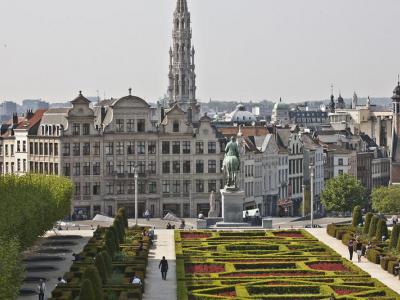
3) Mont des Arts (Mount of the Arts)
The Mount of the Arts is an urban complex and historic site, home to several important venues like the Royal Library of Belgium, the National Archives of Belgium, and the Square – Brussels Meeting Centre. It is also known for its beautiful public garden.
This part of the city has a long history, dating back to the Middle Ages. Originally, it hosted Jewish communities, who settled here until the 14th century. A remnant of that period is the old "Jewish Stairs", a series of four steep staircases still in place, leading to Brussels' upper town.
By the late 19th century, King Leopold II envisioned this district as a cultural hub. According to his plan, in 1899, the area underwent a significant transformation. In large part, this was spurred by the Brussels International Exposition of 1910. A temporary garden then established eventually became a permanent, cherished green space. The site underwent further changes in the 1950s and 60s, replacing older structures with modernist buildings like the Congress Palace.
Apart from these attractions, The Mount of the Arts offers one of Brussels' finest views. Though the glass-and-steel cube, that forms the new entrance to the Convention Centre, has altered the upper section of the complex, the perspective conceived by architects in the 1950s has largely been preserved. The iconic Town Hall tower in Grand Square is prominently visible from this elevated vantage point. On a sunny day, you can even catch a glimpse of the Sacred Heart Basilica and the Atomium.
Rising to the west is the bronze equestrian statue of Albert I, inaugurated in 1951. The king earned national hero status for his unwavering resistance against the Germans during World War I. His tragic death in a climbing accident near Namur, in southern Belgium, in 1934, elicited a genuine outpouring of grief. Across the square from the king's monument, stands a statue of his wife, Queen Elizabeth.
The place is also popular with fans of punk, hard rock, and other music, who meet here regularly.
This part of the city has a long history, dating back to the Middle Ages. Originally, it hosted Jewish communities, who settled here until the 14th century. A remnant of that period is the old "Jewish Stairs", a series of four steep staircases still in place, leading to Brussels' upper town.
By the late 19th century, King Leopold II envisioned this district as a cultural hub. According to his plan, in 1899, the area underwent a significant transformation. In large part, this was spurred by the Brussels International Exposition of 1910. A temporary garden then established eventually became a permanent, cherished green space. The site underwent further changes in the 1950s and 60s, replacing older structures with modernist buildings like the Congress Palace.
Apart from these attractions, The Mount of the Arts offers one of Brussels' finest views. Though the glass-and-steel cube, that forms the new entrance to the Convention Centre, has altered the upper section of the complex, the perspective conceived by architects in the 1950s has largely been preserved. The iconic Town Hall tower in Grand Square is prominently visible from this elevated vantage point. On a sunny day, you can even catch a glimpse of the Sacred Heart Basilica and the Atomium.
Rising to the west is the bronze equestrian statue of Albert I, inaugurated in 1951. The king earned national hero status for his unwavering resistance against the Germans during World War I. His tragic death in a climbing accident near Namur, in southern Belgium, in 1934, elicited a genuine outpouring of grief. Across the square from the king's monument, stands a statue of his wife, Queen Elizabeth.
The place is also popular with fans of punk, hard rock, and other music, who meet here regularly.
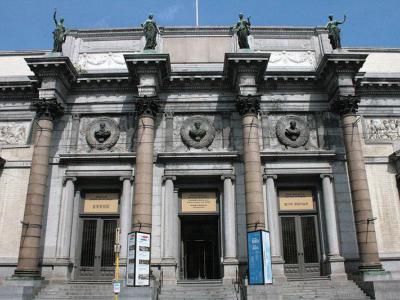
4) Royal Museums of Fine Arts (must see)
The Royal Museums of Fine Arts are situated in downtown Brussels, on the small hill of Coudenberg (Koudenberg), and comprise four museums under the umbrella of the Royal Museum of Belgium. Two of them, such as the Museum of Ancient Art and the Museum of Modern Art, are in the main building, while the other two – the Museum Constantin Meunier and the Antoine Wiertz Museum – are found in different locations, considerably smaller and dedicated to specific Belgian artists.
The Royal Museum contains over 20,000 drawings, sculptures, and paintings spanning from the early 15th century to the present. The museum has an extensive collection of Flemish paintings, among them the works of Bruegel, Rogier van der Weyden, Robert Campin, Anthony van Dyck, and Jacob Jordaens. A particular pride of the museum is the "Rubens Room" housing more than 20 works of the artist.
Why You Should Visit:
An easy choice for an afternoon in Brussels, the combination of The Old Masters Museum, Modern Museum, and Magritte Museum is a veritable steal for the cost of admission and although at times clustered, the variety and expanse of the collection is something that needs to be seen. Not free, but inexpensive and the extra charge for the audio guide is well worth it. You can buy entry to all the collections or just one.
The Royal Museum contains over 20,000 drawings, sculptures, and paintings spanning from the early 15th century to the present. The museum has an extensive collection of Flemish paintings, among them the works of Bruegel, Rogier van der Weyden, Robert Campin, Anthony van Dyck, and Jacob Jordaens. A particular pride of the museum is the "Rubens Room" housing more than 20 works of the artist.
Why You Should Visit:
An easy choice for an afternoon in Brussels, the combination of The Old Masters Museum, Modern Museum, and Magritte Museum is a veritable steal for the cost of admission and although at times clustered, the variety and expanse of the collection is something that needs to be seen. Not free, but inexpensive and the extra charge for the audio guide is well worth it. You can buy entry to all the collections or just one.
Sight description based on Wikipedia.
5) Palais Royal (Royal Palace) (must see)
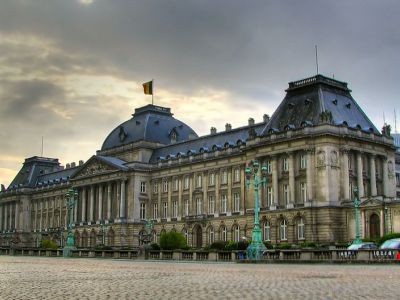
Just around the corner from the Royal Square stands the grand and somewhat unwieldy Royal Palace, a rather solemn conversion of late 18th-century townhouses from the 19th century. The extensive project was initiated by King William I, who ruled both Belgium and the Netherlands from 1815 to 1830. However, the Belgian rebellion of 1830 marked the end of the joint kingdom, and since then, the kings of independent Belgium have spent little time in this palace. In fact, while it remains their official residence, the royal family resides at the Royal Castle of Laeken, just outside Brussels.
Each year, during the summer months (usually from late July to early September), the Royal Palace opens its doors to the public. Visitors can tour several of the palace's rooms and learn about the history of the Belgian monarchy.
A visit here can be worthwhile for a few reasons: the tapestries designed by Goya; the magnificent chandeliers in the Throne Room; and the captivating "Heaven of Delight" ceiling fresco, in the Mirror Room, composed of over a million jewel scarab beetles in radiating green and blue colors.
An even more intriguing option is to explore one of the mansions within the Royal Palace complex, the Hôtel Bellevue, at the corner of Palace Square and Royal Street. This mansion has been transformed into the BELvue Museum, which delves into the brief history of independent Belgium, with corridor displays focusing on the country's kings and rooms dedicated to Belgium as a whole.
The building's location is historically significant, as it was from here that rebellious Belgians fired upon the Dutch army as it attempted to cross Brussels Park in 1830. Original artifacts such as photographs, documents, and letters are on display.
Each year, during the summer months (usually from late July to early September), the Royal Palace opens its doors to the public. Visitors can tour several of the palace's rooms and learn about the history of the Belgian monarchy.
A visit here can be worthwhile for a few reasons: the tapestries designed by Goya; the magnificent chandeliers in the Throne Room; and the captivating "Heaven of Delight" ceiling fresco, in the Mirror Room, composed of over a million jewel scarab beetles in radiating green and blue colors.
An even more intriguing option is to explore one of the mansions within the Royal Palace complex, the Hôtel Bellevue, at the corner of Palace Square and Royal Street. This mansion has been transformed into the BELvue Museum, which delves into the brief history of independent Belgium, with corridor displays focusing on the country's kings and rooms dedicated to Belgium as a whole.
The building's location is historically significant, as it was from here that rebellious Belgians fired upon the Dutch army as it attempted to cross Brussels Park in 1830. Original artifacts such as photographs, documents, and letters are on display.
6) Parc de Bruxelles (Brussels Park)
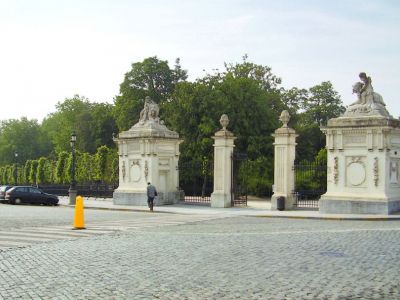
Brussels Park, often still called the Royal Park, is the largest urban public park in Brussels, spanning over 13 hectares. The city’s first public park is bordered by major streets and the Belgian House of Parliament. The park is landscaped with plane, chestnut, maple, beech, and trellised lime trees and has a central pond linked by avenues that provide views toward the city's key landmarks such as the Palace of Justice and the Royal Palace.
The park's origins trace back to the former Palace of Coudenberg's gardens, used since the Middle Ages as hunting grounds by the Dukes of Brabant. Under the reign of Archduchess Maria Elisabeth of Austria, the governor of the Austrian Netherlands, the area was adorned with water basins, fountains, imitation rock caves, and numerous statues, making it one of Europe's most beautiful parks. Between 1776 and 1783, it was redesigned in a neoclassical style, featuring a complete overhaul with the felling and replanting of thousands of trees.
Throughout its history, Brussels Park has witnessed significant events, from destruction during the French Revolution to serving as a refuge during the Belgian Revolution. The year 1830 marked a pivotal moment in history when the park saw a major confrontation between revolutionary forces and the Dutch army which ultimately led to Belgian independence from the Netherlands. The revolutionaries emerged victorious, and on September 27, 1830, the nation of Belgium was born.
Inside the park, there are several significant cultural structures like the Royal Park Theatre and Vauxhall of Brussels. The former, established in 1782 at the park's northern end, initially served as a literary hub and a venue for diverse performances, including ballets and operas. After a fire in 1998, it underwent renovations, in the year 2000, to enhance its classical theatre focus. Adjacent to it, the Vauxhall, constructed in the 1780s, has been a prestigious site for concerts and social gatherings. It was revitalized in 1913, featuring distinctive green trelliswork. Nearby, the Vauxhall bandstand, redesigned in 1913 in a neo-Moorish style, briefly hosted summer concerts. The park's primary bandstand, built in 1841, as well as two historic water basins adorned with fountains and busts of Hermes, further exemplify the blend of artistic and natural beauty.
Brussels Park also features around sixty sculptures, mostly Greco-Roman mythological figures. Originally sourced from the Castle of Tervuren's park, these statues bore the brunt of wars, vandalism, and pollution, leading to most of them being replaced by replicas.
The park's origins trace back to the former Palace of Coudenberg's gardens, used since the Middle Ages as hunting grounds by the Dukes of Brabant. Under the reign of Archduchess Maria Elisabeth of Austria, the governor of the Austrian Netherlands, the area was adorned with water basins, fountains, imitation rock caves, and numerous statues, making it one of Europe's most beautiful parks. Between 1776 and 1783, it was redesigned in a neoclassical style, featuring a complete overhaul with the felling and replanting of thousands of trees.
Throughout its history, Brussels Park has witnessed significant events, from destruction during the French Revolution to serving as a refuge during the Belgian Revolution. The year 1830 marked a pivotal moment in history when the park saw a major confrontation between revolutionary forces and the Dutch army which ultimately led to Belgian independence from the Netherlands. The revolutionaries emerged victorious, and on September 27, 1830, the nation of Belgium was born.
Inside the park, there are several significant cultural structures like the Royal Park Theatre and Vauxhall of Brussels. The former, established in 1782 at the park's northern end, initially served as a literary hub and a venue for diverse performances, including ballets and operas. After a fire in 1998, it underwent renovations, in the year 2000, to enhance its classical theatre focus. Adjacent to it, the Vauxhall, constructed in the 1780s, has been a prestigious site for concerts and social gatherings. It was revitalized in 1913, featuring distinctive green trelliswork. Nearby, the Vauxhall bandstand, redesigned in 1913 in a neo-Moorish style, briefly hosted summer concerts. The park's primary bandstand, built in 1841, as well as two historic water basins adorned with fountains and busts of Hermes, further exemplify the blend of artistic and natural beauty.
Brussels Park also features around sixty sculptures, mostly Greco-Roman mythological figures. Originally sourced from the Castle of Tervuren's park, these statues bore the brunt of wars, vandalism, and pollution, leading to most of them being replaced by replicas.
