Custom Walk in Interlaken, Switzerland by sharaf4484_6665dc created on 2026-04-07
Guide Location: Switzerland » Interlaken
Guide Type: Custom Walk
# of Sights: 5
Tour Duration: 1 Hour(s)
Travel Distance: 2.3 Km or 1.4 Miles
Share Key: 883GR
Guide Type: Custom Walk
# of Sights: 5
Tour Duration: 1 Hour(s)
Travel Distance: 2.3 Km or 1.4 Miles
Share Key: 883GR
How It Works
Please retrieve this walk in the GPSmyCity app. Once done, the app will guide you from one tour stop to the next as if you had a personal tour guide. If you created the walk on this website or come to the page via a link, please follow the instructions below to retrieve the walk in the app.
Retrieve This Walk in App
Step 1. Download the app "GPSmyCity: Walks in 1K+ Cities" on Apple App Store or Google Play Store.



Step 2. In the GPSmyCity app, download(or launch) the guide "Interlaken Map and Walking Tours".
Step 3. Tap the menu button located at upper right corner of the "Walks" screen and select "Retrieve custom walk". Enter the share key: 883GR
1) Covered Bridge
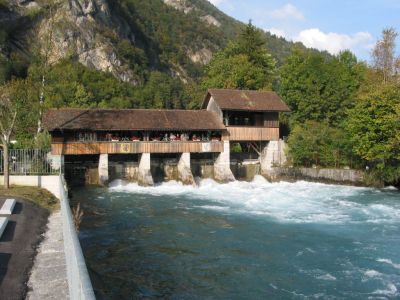
The Covered Bridge in Interlaken, also known as Wooden Bridge Unterseen (Holzbrücke Unterseen), is a charming wooden structure that spans the Aare River, linking the picturesque town of Unterseen with central Interlaken. Originally constructed in the early 1800s, this pedestrian bridge is a fine example of traditional Swiss carpentry, using local timber materials to create an aesthetically pleasing yet sturdy structure. Over the years, the bridge has undergone several restorations to maintain its integrity, each time preserving its historical character.
One of the unique features of the Covered Bridge is its gabled roof, which provides shelter for those crossing and protects the wooden planks below from the elements. The interior showcases intricate wooden trusses, a hallmark of Swiss engineering, which not only enhance its visual appeal but also reinforce the bridge’s durability. As visitors walk through, they can admire the craftsmanship up close and even observe engravings and carvings that tell stories of the local history and past renovations.
The bridge’s setting is equally captivating, offering panoramic views of the Aare River’s calm waters, the lush greenery along its banks, and the towering peaks of the Bernese Oberland in the distance. It’s a popular spot for photographers, particularly during the early morning or late afternoon when the light creates a magical interplay of shadows on the wooden beams and the river surface.
Today, the Covered Bridge serves both as a functional crossing for pedestrians and as a historical monument. It symbolizes the harmonious coexistence of nature and human creation in Interlaken. Its preservation reflects the town's commitment to maintaining its cultural heritage, ensuring that future generations can continue to enjoy this beautiful piece of Swiss history.
One of the unique features of the Covered Bridge is its gabled roof, which provides shelter for those crossing and protects the wooden planks below from the elements. The interior showcases intricate wooden trusses, a hallmark of Swiss engineering, which not only enhance its visual appeal but also reinforce the bridge’s durability. As visitors walk through, they can admire the craftsmanship up close and even observe engravings and carvings that tell stories of the local history and past renovations.
The bridge’s setting is equally captivating, offering panoramic views of the Aare River’s calm waters, the lush greenery along its banks, and the towering peaks of the Bernese Oberland in the distance. It’s a popular spot for photographers, particularly during the early morning or late afternoon when the light creates a magical interplay of shadows on the wooden beams and the river surface.
Today, the Covered Bridge serves both as a functional crossing for pedestrians and as a historical monument. It symbolizes the harmonious coexistence of nature and human creation in Interlaken. Its preservation reflects the town's commitment to maintaining its cultural heritage, ensuring that future generations can continue to enjoy this beautiful piece of Swiss history.
2) Jungfrau Region Tourism Museum (must see)
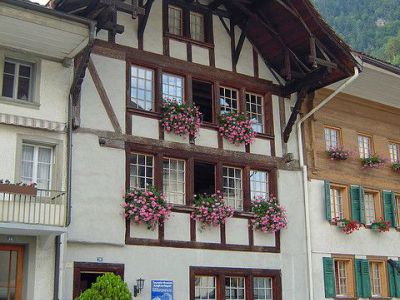
The Jungfrau Region Tourism Museum is the only museum exclusively dedicated to the history of tourism in the Alpine region. The museum was opened in 1980 to display the hundreds of years of development in tourism of the region.
The building that now contains the Jungfrau Region Tourism Museum was previously home to the parish priest. This house was built in 1630 and served as both a home and an inn for travelers. Renovations took place in 1979 in preparation for the opening of the museum.
The museum offers three floors of exhibits that focus on eight primary areas of tourism. These areas are discovery of the Alps, steam ships and railways, the hotel industry, road traffic, winter sports, the souvenir business, constructing the mountain railways and Alpinism. The newest exhibits show how the railroad helped to boost tourism and how winter tourism became popular.
A popular exhibit in the Jungfrau Region Tourism Museum is Goethe's 2nd Trip to Switzerland. This exhibit takes patrons on the journey with him. Using personal letters and diary entries, the museum attempts to recreate some of the experiences Goethe had on his visit to the country.
Objects and artifacts within the museum are mostly photos and maps. There is also a model of the first steam engine train, the Bellevue. The museum contains a large number of winter sports equipment and memorabilia as well.
The museum is located on the northwest side of the Aare River. It is an easy walk across the pedestrian-friendly streets from central Interlaken to the museum's location in Unterseen.
Tips:
The museum is closed on Mondays and Tuesdays. During the remainder of the week, Jungfrau Region Tourism Museum is open from 2 PM to 5 PM.
The building that now contains the Jungfrau Region Tourism Museum was previously home to the parish priest. This house was built in 1630 and served as both a home and an inn for travelers. Renovations took place in 1979 in preparation for the opening of the museum.
The museum offers three floors of exhibits that focus on eight primary areas of tourism. These areas are discovery of the Alps, steam ships and railways, the hotel industry, road traffic, winter sports, the souvenir business, constructing the mountain railways and Alpinism. The newest exhibits show how the railroad helped to boost tourism and how winter tourism became popular.
A popular exhibit in the Jungfrau Region Tourism Museum is Goethe's 2nd Trip to Switzerland. This exhibit takes patrons on the journey with him. Using personal letters and diary entries, the museum attempts to recreate some of the experiences Goethe had on his visit to the country.
Objects and artifacts within the museum are mostly photos and maps. There is also a model of the first steam engine train, the Bellevue. The museum contains a large number of winter sports equipment and memorabilia as well.
The museum is located on the northwest side of the Aare River. It is an easy walk across the pedestrian-friendly streets from central Interlaken to the museum's location in Unterseen.
Tips:
The museum is closed on Mondays and Tuesdays. During the remainder of the week, Jungfrau Region Tourism Museum is open from 2 PM to 5 PM.
3) Hohematte Park (must see)
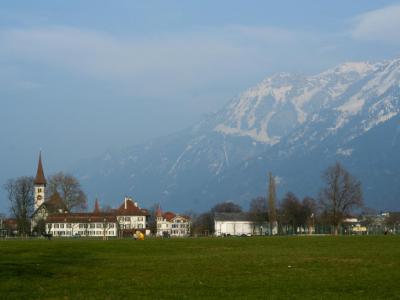
Hohematte Park is a large park in the heart of Interlaken. The land originally belonged to the Augustinian convent. It was purchased by locals in 1860 to ensure it remained an undeveloped, open space. It is a good spot for those who want ample space to play outdoor games, run through the grass, have an outdoor picnic or see spectacular views of the Alps.
The 35-acre park offers many unique features. Some of these include a state of Hindi director Yash Chopra and a working clock made entirely out of flowers. One of the most outstanding features of Hohematte Park is the abundance of paragliders. The park is landing ground for these adventure sport aficionados.
Those who visit Interlaken in the winter will find an ice skating rink in Hohematte Park. There is also a small playground for children that has swings, slides and climbing structures. In addition, park offers walkways, flower beds, park benches and fountains.
The park is open 24 hours, seven days per week.
The 35-acre park offers many unique features. Some of these include a state of Hindi director Yash Chopra and a working clock made entirely out of flowers. One of the most outstanding features of Hohematte Park is the abundance of paragliders. The park is landing ground for these adventure sport aficionados.
Those who visit Interlaken in the winter will find an ice skating rink in Hohematte Park. There is also a small playground for children that has swings, slides and climbing structures. In addition, park offers walkways, flower beds, park benches and fountains.
The park is open 24 hours, seven days per week.
4) Schlosskirche (Castle Church) (must see)
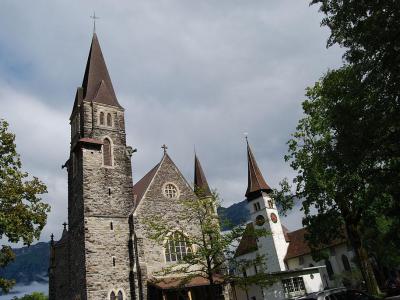
Schlosskirche, sometimes called Reformierte Schlosskirche or "the reformed church," is one of the oldest building in Interlaken. Originally an Augustinian monastery, the castle church was built in 1133. Today, Schlosskirche is used as a convent and is one of the city's most visited places.
The church was used as a monastery for many years but it wasn't always as revered as it is now. During the 16th century, the church was used as a storage for carriages, barrels and wine. The nave was even used as a granary.
It wasn't until the 19th century that Schlosskirke was used as a church again. The church was restored with the aid of architect Adolf Muhlemann and re-dedicated in 1911.
Visitors to Interlaken can tour Schlosskirche to see the beautiful stained glass windows, the private garden and the medieval clock, which tolls on the hour. Church services are held every Sunday at 10 AM.
The church was used as a monastery for many years but it wasn't always as revered as it is now. During the 16th century, the church was used as a storage for carriages, barrels and wine. The nave was even used as a granary.
It wasn't until the 19th century that Schlosskirke was used as a church again. The church was restored with the aid of architect Adolf Muhlemann and re-dedicated in 1911.
Visitors to Interlaken can tour Schlosskirche to see the beautiful stained glass windows, the private garden and the medieval clock, which tolls on the hour. Church services are held every Sunday at 10 AM.
5) Hoheweg Boulevard (must see)
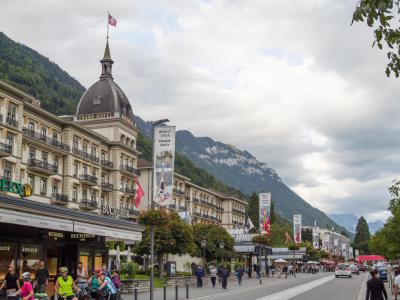
Hoheweg Boulevard is a notable street in Interlaken. It runs east to west from Lanzenan to Harderstrasse following the geographical curve of the Aare River. Visitors to Interlaken should seek out Hoheweg Boulevard for easy access to various spots in the city, plenty of shopping opportunities and dining options.
Some of the notable locations along Hoheweg Boulevard include Interlaken Centre, the Swiss Chocolate Chalet and numerous gardens. The gardens include the English Garden, the Japanese Garden and Schlosspark.
The Hohe Promenade is a smaller, quieter street that circles back to Hoheweg Boulevard. Visitors can stop to take in the serenity of the Mersmann-Brunnen fountain before they return to the busier boulevard.
Hoheweg Boulevard is a good, central point for a walking tour of the city. Visitors will find that their favorite spots, like Casino Interlaken and Hohematte park are only minutes away by foot.
Some of the notable locations along Hoheweg Boulevard include Interlaken Centre, the Swiss Chocolate Chalet and numerous gardens. The gardens include the English Garden, the Japanese Garden and Schlosspark.
The Hohe Promenade is a smaller, quieter street that circles back to Hoheweg Boulevard. Visitors can stop to take in the serenity of the Mersmann-Brunnen fountain before they return to the busier boulevard.
Hoheweg Boulevard is a good, central point for a walking tour of the city. Visitors will find that their favorite spots, like Casino Interlaken and Hohematte park are only minutes away by foot.
