Custom Walk in Brussels, Belgium by kwhitmer4_88cf2 created on 2026-04-08
Guide Location: Belgium » Brussels
Guide Type: Custom Walk
# of Sights: 11
Tour Duration: 5 Hour(s)
Travel Distance: 12.6 Km or 7.8 Miles
Share Key: YJE8L
Guide Type: Custom Walk
# of Sights: 11
Tour Duration: 5 Hour(s)
Travel Distance: 12.6 Km or 7.8 Miles
Share Key: YJE8L
How It Works
Please retrieve this walk in the GPSmyCity app. Once done, the app will guide you from one tour stop to the next as if you had a personal tour guide. If you created the walk on this website or come to the page via a link, please follow the instructions below to retrieve the walk in the app.
Retrieve This Walk in App
Step 1. Download the app "GPSmyCity: Walks in 1K+ Cities" on Apple App Store or Google Play Store.



Step 2. In the GPSmyCity app, download(or launch) the guide "Brussels Map and Walking Tours".
Step 3. Tap the menu button located at upper right corner of the "Walks" screen and select "Retrieve custom walk". Enter the share key: YJE8L
1) Parc du Cinquantenaire (Jubilee Park) (must see)
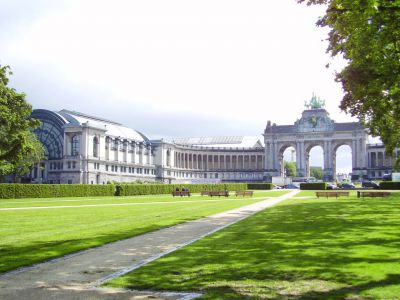
The Jubilee Park features expansive, leafy lawns that slope upward to a colossal triumphal arch crowned with a massive bronze sculpture called "Brabant Raising the National Flag". This arch, along with the two substantial stone buildings it connects, makes up Le Cinquantenaire ("Fiftieth Anniversary"), established by King Léopold II to commemorate the golden jubilee of the Belgian state in 1880. The exhibition at the time showcased products from Belgium and its colonies and was a great success. Today, the park continues to host various shows and trade fairs, while the buildings house extensive collections of art and applied art, weapons, and cars, displayed across three separate museums.
One notable attraction within the park itself is the Pavillon Horta, tucked away in the northwest corner. This Neoclassical structure, covered in graffiti, is known as the "pavilion of human passions" due to the controversial sculpture inside, created by Jef Lambeaux in 1886, which depicts writhing naked figures overseen by a shrouded Death. The pavilion was specifically designed to house this provocative work and was architect Victor Horta's first public commission, quite different from the later organic decorative style for which he became renowned. Interestingly, the building was closed just three days after opening due to the controversy generated by the bold artwork.
Next to the pavilion is a large cream-colored building, which houses Brussels' main mosque. This modern Arabic-style mosque was built in 1978 by a Tunisian architect, serving as a replacement for an earlier structure dating back to 1897.
Why You Should Visit:
A great place to relax, jog, enjoy picturesque views, and explore the diverse range of museums.
It's also a perfect spot for picnicking, especially on weekends when people and dog watching are popular activities.
Tip:
Visitors to the Royal Military Museum can take an elevator to the top of the Arch to enjoy wonderful views of Brussels, and this access is free of charge.
One notable attraction within the park itself is the Pavillon Horta, tucked away in the northwest corner. This Neoclassical structure, covered in graffiti, is known as the "pavilion of human passions" due to the controversial sculpture inside, created by Jef Lambeaux in 1886, which depicts writhing naked figures overseen by a shrouded Death. The pavilion was specifically designed to house this provocative work and was architect Victor Horta's first public commission, quite different from the later organic decorative style for which he became renowned. Interestingly, the building was closed just three days after opening due to the controversy generated by the bold artwork.
Next to the pavilion is a large cream-colored building, which houses Brussels' main mosque. This modern Arabic-style mosque was built in 1978 by a Tunisian architect, serving as a replacement for an earlier structure dating back to 1897.
Why You Should Visit:
A great place to relax, jog, enjoy picturesque views, and explore the diverse range of museums.
It's also a perfect spot for picnicking, especially on weekends when people and dog watching are popular activities.
Tip:
Visitors to the Royal Military Museum can take an elevator to the top of the Arch to enjoy wonderful views of Brussels, and this access is free of charge.
2) Arc de Triomphe (Triumphal Arch) (must see)
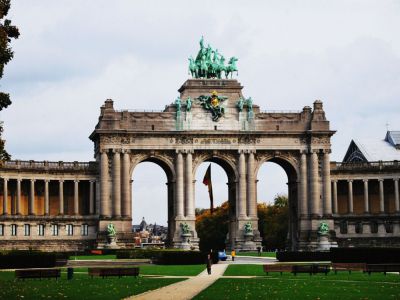
The wide and verdant lawns of Jubilee Park ("Parc du Cinquantenaire") slope upward to meet a grandiose triumphal arch of monumental proportions. Crowning this arch is a colossal bronze statue titled "Brabant Raising the National Flag", featuring a chariot drawn by four horses, symbolizing the Brabant province. Statues representing other provinces are positioned at the base of the columns surrounding the arch, whose sides are adorned with "galleries of the columns", embellished with mosaics illustrating Belgium's commitment to peace.
Le Cinquantenaire, which comprises the arch and the two substantial stone buildings it connects, was established by King Leopold II to commemorate the golden jubilee of the Belgian state in 1880. While the arch was intended to serve as a new entrance gate to the area, its funding and construction sparked controversy, as the king aspired to create an exceedingly extravagant structure, while the government was reluctant to allocate excessive funds. The financing and construction process proved protracted, spanning 25 years until its completion in 1905, with King Leopold II and private donors ultimately covering the costs.
On a positive note, Jubilee Park continues to host a variety of shows and trade fairs, maintaining its role as a versatile public space. The buildings within the park now house extensive collections of art and applied art, weaponry, and automobiles, exhibited across three distinct museums.
Why You Should Visit:
Because the best things in life are free.
Tip:
Just head to the top of the arch to admire Brussels' interesting panorama.
Le Cinquantenaire, which comprises the arch and the two substantial stone buildings it connects, was established by King Leopold II to commemorate the golden jubilee of the Belgian state in 1880. While the arch was intended to serve as a new entrance gate to the area, its funding and construction sparked controversy, as the king aspired to create an exceedingly extravagant structure, while the government was reluctant to allocate excessive funds. The financing and construction process proved protracted, spanning 25 years until its completion in 1905, with King Leopold II and private donors ultimately covering the costs.
On a positive note, Jubilee Park continues to host a variety of shows and trade fairs, maintaining its role as a versatile public space. The buildings within the park now house extensive collections of art and applied art, weaponry, and automobiles, exhibited across three distinct museums.
Why You Should Visit:
Because the best things in life are free.
Tip:
Just head to the top of the arch to admire Brussels' interesting panorama.
3) Musee Royal de l'Armee (Royal Military Museum) (must see)
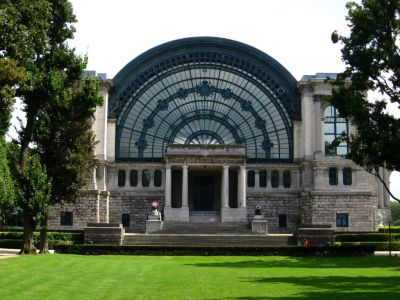
In the northern wing of Jubilee Park, opposite the Triumphal Arch and distinct from the nearby museums, this institution offers a comprehensive exploration of the history of the Belgian armed forces, spanning from their inception to the modern era. It achieves this through an extensive collection of weapons, uniforms, and paintings, presented in a large and well-organized, albeit somewhat formal, manner.
The museum's exhibits encompass a range of historical topics, including the participation of "Belgian" regiments in the Austrian and Napoleonic armies, as well as the pivotal role played by volunteers during the 1830 revolution. Particularly noteworthy is the hall dedicated to World War I, featuring a diverse array of uniforms and equipment representing various nations involved in the conflict. This section also showcases an impressive array of field artillery, an early British tank from 1917, and a replica of a German Fokker aircraft (naturally painted in red).
While the exterior courtyard has a squadron of tanks and armored vehicles from the 1940s, representing British, American, and German forces, the largest hall within the museum focuses on aviation – not only military aircraft but also civilian ones, though the highlights are undoubtedly the jet fighters, including a Belgian air force F16, a Mirage, and a MIG23, as well as iconic World War II aircraft such as the Hurricane and Spitfire.
Overlooking the park, a substantial hall is dedicated to World War II, covering the events leading up to the war, the Belgian experience of fascism and collaboration, and featuring striking photographs of the war's conclusion and liberation. A noteworthy bonus is the opportunity to access the triumphal arch, offering expansive panoramic views of the city from its terrace, accessible via lift or stairs.
Why You Should Visit:
Holds a surprising array of rare and unique artifacts, particularly in its collection of aircraft, tanks, and armored vehicles.
A good reminder of humanity's resource-intensive history in the pursuit of new and inventive ways to wage war.
Tip: Take time to enjoy the surrounding park and its serene ambiance while visiting the museum.
The museum's exhibits encompass a range of historical topics, including the participation of "Belgian" regiments in the Austrian and Napoleonic armies, as well as the pivotal role played by volunteers during the 1830 revolution. Particularly noteworthy is the hall dedicated to World War I, featuring a diverse array of uniforms and equipment representing various nations involved in the conflict. This section also showcases an impressive array of field artillery, an early British tank from 1917, and a replica of a German Fokker aircraft (naturally painted in red).
While the exterior courtyard has a squadron of tanks and armored vehicles from the 1940s, representing British, American, and German forces, the largest hall within the museum focuses on aviation – not only military aircraft but also civilian ones, though the highlights are undoubtedly the jet fighters, including a Belgian air force F16, a Mirage, and a MIG23, as well as iconic World War II aircraft such as the Hurricane and Spitfire.
Overlooking the park, a substantial hall is dedicated to World War II, covering the events leading up to the war, the Belgian experience of fascism and collaboration, and featuring striking photographs of the war's conclusion and liberation. A noteworthy bonus is the opportunity to access the triumphal arch, offering expansive panoramic views of the city from its terrace, accessible via lift or stairs.
Why You Should Visit:
Holds a surprising array of rare and unique artifacts, particularly in its collection of aircraft, tanks, and armored vehicles.
A good reminder of humanity's resource-intensive history in the pursuit of new and inventive ways to wage war.
Tip: Take time to enjoy the surrounding park and its serene ambiance while visiting the museum.
4) Palais Royal (Royal Palace) (must see)
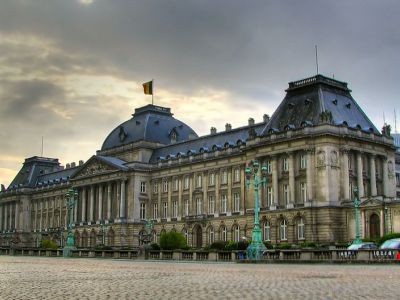
Just around the corner from the Royal Square stands the grand and somewhat unwieldy Royal Palace, a rather solemn conversion of late 18th-century townhouses from the 19th century. The extensive project was initiated by King William I, who ruled both Belgium and the Netherlands from 1815 to 1830. However, the Belgian rebellion of 1830 marked the end of the joint kingdom, and since then, the kings of independent Belgium have spent little time in this palace. In fact, while it remains their official residence, the royal family resides at the Royal Castle of Laeken, just outside Brussels.
Each year, during the summer months (usually from late July to early September), the Royal Palace opens its doors to the public. Visitors can tour several of the palace's rooms and learn about the history of the Belgian monarchy.
A visit here can be worthwhile for a few reasons: the tapestries designed by Goya; the magnificent chandeliers in the Throne Room; and the captivating "Heaven of Delight" ceiling fresco, in the Mirror Room, composed of over a million jewel scarab beetles in radiating green and blue colors.
An even more intriguing option is to explore one of the mansions within the Royal Palace complex, the Hôtel Bellevue, at the corner of Palace Square and Royal Street. This mansion has been transformed into the BELvue Museum, which delves into the brief history of independent Belgium, with corridor displays focusing on the country's kings and rooms dedicated to Belgium as a whole.
The building's location is historically significant, as it was from here that rebellious Belgians fired upon the Dutch army as it attempted to cross Brussels Park in 1830. Original artifacts such as photographs, documents, and letters are on display.
Each year, during the summer months (usually from late July to early September), the Royal Palace opens its doors to the public. Visitors can tour several of the palace's rooms and learn about the history of the Belgian monarchy.
A visit here can be worthwhile for a few reasons: the tapestries designed by Goya; the magnificent chandeliers in the Throne Room; and the captivating "Heaven of Delight" ceiling fresco, in the Mirror Room, composed of over a million jewel scarab beetles in radiating green and blue colors.
An even more intriguing option is to explore one of the mansions within the Royal Palace complex, the Hôtel Bellevue, at the corner of Palace Square and Royal Street. This mansion has been transformed into the BELvue Museum, which delves into the brief history of independent Belgium, with corridor displays focusing on the country's kings and rooms dedicated to Belgium as a whole.
The building's location is historically significant, as it was from here that rebellious Belgians fired upon the Dutch army as it attempted to cross Brussels Park in 1830. Original artifacts such as photographs, documents, and letters are on display.
5) Cathedrale des Saints Michel et Gudule (St. Michael and St. Gudula Cathedral) (must see)
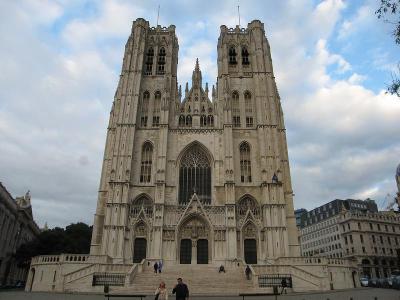
The Cathedral of Saint Michael and Saint Gudula on Treurenberg Hill, Brussels, traces its origins to a 9th-century chapel dedicated to Saint Michael. In 1047, Lambert II, the Duke of Brabant, brought the relics of Saint Gudula to this location, for which purpose a Romanesque-style church was built. Over the course of 300+ years, it had transformed into the striking Brabantine Gothic edifice seen today.
Recognized as Belgium's national church, this cathedral plays a pivotal role in the country's ceremonial life, hosting royal weddings and state funerals, as well as the Te Deum celebration during Belgian National Day. A historic monument since 1936, it underwent multiple restorations, including, most recently, in December 1999, just in time for the wedding of Belgian Crown Prince Philippe to Princess Mathilda. These efforts not only preserved but also uncovered parts of the original 11th-century church which are now visible through strategically placed viewing glass spots on the floor.
Architecturally, the cathedral showcases a French Gothic façade with distinctive twin towers standing 64 meters tall. Unlike traditional designs that feature a rose window, this cathedral’s façade is marked by a large ogival window, enhancing its Brabantine Gothic distinction. The robust structure is supported by double-span flying buttresses adorned with pinnacles and gargoyles.
Approaching the cathedral through a grand staircase, visitors are welcomed into the interior dominated by twelve cylindrical pillars and an array of statues crafted by renowned 17th-century sculptors. The Baroque pulpit, featuring 'Adam and Eve Banished from Paradise' by Flemish sculptor Hendrik Frans Verbruggen, dates back to 1699. The cathedral also contains intricate stained glass windows that chronicle biblical and royal narratives from the 16th to the 19th centuries. In the evening, the window at the nave's base, depicting The Last Judgment, is illuminated from within, creating a captivating spectacle.
Adding to its historic ambiance, the cathedral is also a hub for music, housing two significant pipe organs and a 49-bell carillon in the south tower, along with the bourdon bell named Salvator in the north tower. In recent years, it has also become a conservation site for peregrine falcons which made their nests in its towers. This was further highlighted by the "Falcons for everyone" project featuring live-streaming for public viewing, thus marrying natural history with cultural heritage.
Tips:
Upon entering, be sure to pick up a leaflet providing information about the cathedral's history and details. Access is free, but a small fee is charged if you want to see the archaeological site beneath the existing floors inside the building.
Recognized as Belgium's national church, this cathedral plays a pivotal role in the country's ceremonial life, hosting royal weddings and state funerals, as well as the Te Deum celebration during Belgian National Day. A historic monument since 1936, it underwent multiple restorations, including, most recently, in December 1999, just in time for the wedding of Belgian Crown Prince Philippe to Princess Mathilda. These efforts not only preserved but also uncovered parts of the original 11th-century church which are now visible through strategically placed viewing glass spots on the floor.
Architecturally, the cathedral showcases a French Gothic façade with distinctive twin towers standing 64 meters tall. Unlike traditional designs that feature a rose window, this cathedral’s façade is marked by a large ogival window, enhancing its Brabantine Gothic distinction. The robust structure is supported by double-span flying buttresses adorned with pinnacles and gargoyles.
Approaching the cathedral through a grand staircase, visitors are welcomed into the interior dominated by twelve cylindrical pillars and an array of statues crafted by renowned 17th-century sculptors. The Baroque pulpit, featuring 'Adam and Eve Banished from Paradise' by Flemish sculptor Hendrik Frans Verbruggen, dates back to 1699. The cathedral also contains intricate stained glass windows that chronicle biblical and royal narratives from the 16th to the 19th centuries. In the evening, the window at the nave's base, depicting The Last Judgment, is illuminated from within, creating a captivating spectacle.
Adding to its historic ambiance, the cathedral is also a hub for music, housing two significant pipe organs and a 49-bell carillon in the south tower, along with the bourdon bell named Salvator in the north tower. In recent years, it has also become a conservation site for peregrine falcons which made their nests in its towers. This was further highlighted by the "Falcons for everyone" project featuring live-streaming for public viewing, thus marrying natural history with cultural heritage.
Tips:
Upon entering, be sure to pick up a leaflet providing information about the cathedral's history and details. Access is free, but a small fee is charged if you want to see the archaeological site beneath the existing floors inside the building.
6) Grand Place (Grand Square) (must see)
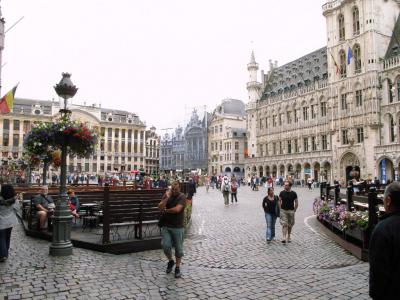
Grand Square-Brussels’ pride and joy-is the biggest show-off move of the Belgian capital. Some say it's the most beautiful square in Europe. Others say the world. Either way, it’s hard to argue when you’re standing there, dwarfed by a 15th-century Gothic Town Hall that looks like it got dressed for the Met Gala... and the neo-Gothic King's House-also charmingly called the Bread House (because apparently even royal buildings get carb cravings).
This cobblestoned stunner has been in the spotlight since the 11th century. Back then, it was a humble marketplace. A few hundred years later, it had a front-row seat to history-picture Inquisition bonfires and a couple of unfortunate noble executions (some sort of “light afternoon entertainment” for the medieval crowd)...
As Brussels bloomed, so did the square’s bling. Surrounding it are guildhalls that practically scream, “We have money and good taste!” Each one was built by a different trade-from haberdashers to bakers to brewers-and while the jobs have changed, the beauty hasn’t. Take Number 10, for example-once a brewers’ headquarters, now home to the Brewers Museum, so yes, beer still lives there. Circle of life.
Now, not everything has been smooth sailing here. In 1695, the French decided Brussels needed a “makeover.” So they bombarded the square for 36 hours straight. Miraculously, several buildings were rebuilt after that even better. Like Number 3, once run by tallow merchants, and Number 5, home of the archers’ guild, proudly rocking a phoenix on its façade-a little "burn me once" statement piece.
Today, in addition to being a history lesson with a stunning backdrop, the Grand Square is a vibe. Alleyways nearby are filled with centuries-old bars serving the holy trinity: Belgian beer, chocolate, and gossip. Butchers Street is your go-to for mussels and souvenirs and maybe some stretchy pants.
And if you time it right, you’ll catch the square in full party mode. There’s the biennial Flower Carpet-a psychedelic begonia explosion, the medieval cosplay of Ommegang, Christmas lights that would make the North Pole jealous, and concerts that echo through time.
Tip:
Visit in daylight to admire every gold-leafed flourish, and come back after dark for the light show. Around 10:20 PM, this square doesn’t just sparkle-it sings.
This cobblestoned stunner has been in the spotlight since the 11th century. Back then, it was a humble marketplace. A few hundred years later, it had a front-row seat to history-picture Inquisition bonfires and a couple of unfortunate noble executions (some sort of “light afternoon entertainment” for the medieval crowd)...
As Brussels bloomed, so did the square’s bling. Surrounding it are guildhalls that practically scream, “We have money and good taste!” Each one was built by a different trade-from haberdashers to bakers to brewers-and while the jobs have changed, the beauty hasn’t. Take Number 10, for example-once a brewers’ headquarters, now home to the Brewers Museum, so yes, beer still lives there. Circle of life.
Now, not everything has been smooth sailing here. In 1695, the French decided Brussels needed a “makeover.” So they bombarded the square for 36 hours straight. Miraculously, several buildings were rebuilt after that even better. Like Number 3, once run by tallow merchants, and Number 5, home of the archers’ guild, proudly rocking a phoenix on its façade-a little "burn me once" statement piece.
Today, in addition to being a history lesson with a stunning backdrop, the Grand Square is a vibe. Alleyways nearby are filled with centuries-old bars serving the holy trinity: Belgian beer, chocolate, and gossip. Butchers Street is your go-to for mussels and souvenirs and maybe some stretchy pants.
And if you time it right, you’ll catch the square in full party mode. There’s the biennial Flower Carpet-a psychedelic begonia explosion, the medieval cosplay of Ommegang, Christmas lights that would make the North Pole jealous, and concerts that echo through time.
Tip:
Visit in daylight to admire every gold-leafed flourish, and come back after dark for the light show. Around 10:20 PM, this square doesn’t just sparkle-it sings.
7) Hotel de Ville (Town Hall) (must see)
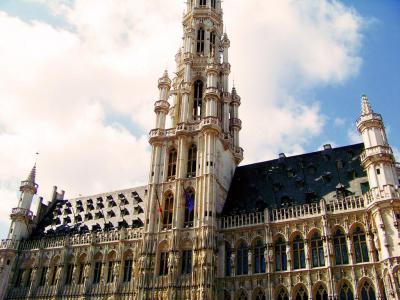
The Brussels Town Hall-part municipal headquarters, part medieval masterpiece, and all-around showoff of the Grand Square. Built between 1401 and 1455, this beauty is the only medieval building still standing in the square. Rich in Brabantine Gothic flair, it was declared a protected monument in 1936 and added to UNESCO’s World Heritage Site list in 1998.
Despite its regal look, the building’s had its fair share of drama. In 1695, during the Nine Years' War, the French heavily bombarded the city. The Town Hall took a hit: fire gutted the interior, torched the archives, and turned priceless artworks into ashes. And yet, like a true diva, it survived.
Its present-day form-a tidy quadrilateral wrapped around a central courtyard-dates from the 18th century, when two extra wings were slapped on the back. Then came the 19th century, when restorers went full "Gothic revival" mode and added nearly 300 statues, gargoyles, and fancy flourishes-because subtlety is not the style for this kind of property. Each ornament nods to Brussels’ proud guild traditions and colorful past.
Speaking of drama, notice that the tower isn’t centered? Legend says that the architect, Jan van Ruysbroek, was so distraught over the lopsided design that he threw himself off the tower. Dark... But let’s be real-it was probably just a classic case of medieval planning chaos.
Crowning the 96-meter tower is a golden spire topped with Saint Michael giving a devil the boot. The current statue is a 1990s replica, but the original goes back to 1455. Inside, it’s all chandeliers, frescoes, and enough historic rooms to make your head spin. Check out the Gothic Room, the Prince’s Gallery, the Mayor’s Cabinet, and the crown jewel-the States of Brabant Room, with a ceiling that deserves its own fan club.
Tip:
You can visit the inside, but only with a guided tour-around 45 minutes long and available in French, English, Dutch, or Spanish. Spots are limited and sell out fast, so grab your ticket early in the day. Tours run on Mondays, Wednesdays, Fridays, Saturdays, and Sundays. Just don’t show up on January 1, May 1, November 1 or 11, or December 25-because even grand old Town Halls need a day off.
Despite its regal look, the building’s had its fair share of drama. In 1695, during the Nine Years' War, the French heavily bombarded the city. The Town Hall took a hit: fire gutted the interior, torched the archives, and turned priceless artworks into ashes. And yet, like a true diva, it survived.
Its present-day form-a tidy quadrilateral wrapped around a central courtyard-dates from the 18th century, when two extra wings were slapped on the back. Then came the 19th century, when restorers went full "Gothic revival" mode and added nearly 300 statues, gargoyles, and fancy flourishes-because subtlety is not the style for this kind of property. Each ornament nods to Brussels’ proud guild traditions and colorful past.
Speaking of drama, notice that the tower isn’t centered? Legend says that the architect, Jan van Ruysbroek, was so distraught over the lopsided design that he threw himself off the tower. Dark... But let’s be real-it was probably just a classic case of medieval planning chaos.
Crowning the 96-meter tower is a golden spire topped with Saint Michael giving a devil the boot. The current statue is a 1990s replica, but the original goes back to 1455. Inside, it’s all chandeliers, frescoes, and enough historic rooms to make your head spin. Check out the Gothic Room, the Prince’s Gallery, the Mayor’s Cabinet, and the crown jewel-the States of Brabant Room, with a ceiling that deserves its own fan club.
Tip:
You can visit the inside, but only with a guided tour-around 45 minutes long and available in French, English, Dutch, or Spanish. Spots are limited and sell out fast, so grab your ticket early in the day. Tours run on Mondays, Wednesdays, Fridays, Saturdays, and Sundays. Just don’t show up on January 1, May 1, November 1 or 11, or December 25-because even grand old Town Halls need a day off.
8) Manneken Pis (Little Boy Peeing) (must see)
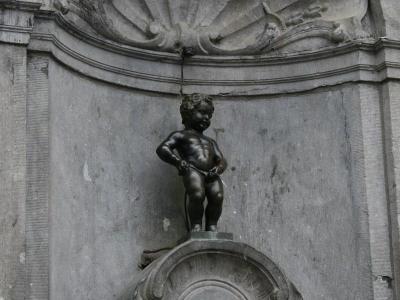
The small bronze statue of a little boy faithfully relieving himself atop a fountain has paradoxically emerged as an unexpected symbol of Brussels.
The site has been a water fountain since the 13th century, but the statue in its current baroque form was crafted in 1619 to replace an earlier version. Throughout history, the Little Boy Peeing has been stolen and thrown into the canal multiple times. What we see today is a copy made in 1965. The original statue is safeguarded in the Brussels City Museum to protect it from any further mishaps.
This enduring sculpture exemplifies the typical Brussels sense of humor and its capacity to poke fun at its own image. Apart from its humor, however, the statue is renowned for various legends associated with it.
One story claims that it commemorates a brave young boy who urinated on a burning fuse, preventing an explosive charge from detonating and potentially destroying the city's fortification walls. In another account, a wealthy merchant, after an extensive citywide search for his missing son, who was eventually found joyfully urinating in a garden, presented the statue, as a token of his appreciation, to the townspeople who aided in the search. Yet another version of the tale suggests that a young boy woke up to find a fire in the king's castle and promptly used his urine to douse the flames, thus preventing it from burning to the ground.
For about one-third of the year, the statue is dressed up in various costumes by an official dresser who has been appointed by the city since 1755. The current dresser, Nicolas Edelman, is the 13th since the 18th century. In 2014, he volunteered for the job which implies dressing up the statue for about 130 events annually. The role demands flexibility, requiring early mornings or late evenings, regardless of weather or day.
The costumes, donated by various entities, must meet quality standards and not serve political, commercial, or religious agendas. To date, the peeing boy has donned over 500 different outfits, ranging from the earliest-known attire, a Louis XV-provided ensemble portraying him as an elegant 17th-century gentleman, to a samurai robe celebrating the friendship between Belgium and Japan.
Little Boy Peeing has two companion statues: Little Girl Peeing (depicting a urinating girl, installed in 1987 in an alleyway near the Grand Square) and Little Dog Peeing (portraying a urinating dog, erected in 1998 in Dansaert, modeled after a real dog owned by the sculptor). Both of them are located approximately 550 meters away from the Little Boy Peeing but in different directions.
The site has been a water fountain since the 13th century, but the statue in its current baroque form was crafted in 1619 to replace an earlier version. Throughout history, the Little Boy Peeing has been stolen and thrown into the canal multiple times. What we see today is a copy made in 1965. The original statue is safeguarded in the Brussels City Museum to protect it from any further mishaps.
This enduring sculpture exemplifies the typical Brussels sense of humor and its capacity to poke fun at its own image. Apart from its humor, however, the statue is renowned for various legends associated with it.
One story claims that it commemorates a brave young boy who urinated on a burning fuse, preventing an explosive charge from detonating and potentially destroying the city's fortification walls. In another account, a wealthy merchant, after an extensive citywide search for his missing son, who was eventually found joyfully urinating in a garden, presented the statue, as a token of his appreciation, to the townspeople who aided in the search. Yet another version of the tale suggests that a young boy woke up to find a fire in the king's castle and promptly used his urine to douse the flames, thus preventing it from burning to the ground.
For about one-third of the year, the statue is dressed up in various costumes by an official dresser who has been appointed by the city since 1755. The current dresser, Nicolas Edelman, is the 13th since the 18th century. In 2014, he volunteered for the job which implies dressing up the statue for about 130 events annually. The role demands flexibility, requiring early mornings or late evenings, regardless of weather or day.
The costumes, donated by various entities, must meet quality standards and not serve political, commercial, or religious agendas. To date, the peeing boy has donned over 500 different outfits, ranging from the earliest-known attire, a Louis XV-provided ensemble portraying him as an elegant 17th-century gentleman, to a samurai robe celebrating the friendship between Belgium and Japan.
Little Boy Peeing has two companion statues: Little Girl Peeing (depicting a urinating girl, installed in 1987 in an alleyway near the Grand Square) and Little Dog Peeing (portraying a urinating dog, erected in 1998 in Dansaert, modeled after a real dog owned by the sculptor). Both of them are located approximately 550 meters away from the Little Boy Peeing but in different directions.
9) Basilique du Sacre-Coeur (Basilica of the Sacred Heart) (must see)
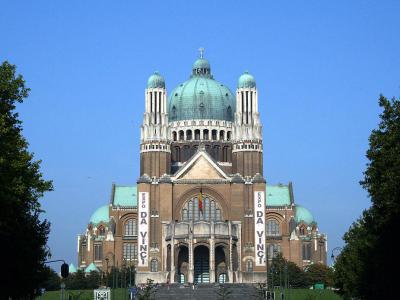
Commissioned by Léopold II, the influential figure behind much of the capital's magnificent architecture, the Sacred Heart Basilica is an immense structure, measuring 140 meters in length and featuring a towering 90-meter-high dome that commands its surroundings and the entire city of Brussels. Construction began in 1905 and, to this day, it remains partially unfinished.
Originally conceived as a neo-Gothic extravagance, the basilica aimed to emulate its namesake in Montmartre, Paris-a monumental edifice that had filled the Belgian king with envy, intensifying his determination to elevate Brussels to a status befitting the finest European capitals. However, the construction costs proved to be staggering, leading to necessary plan modifications. The outcome is a fusion of the original neo-Gothic design with Art Deco elements that were incorporated in the 1920s.
Upon entering, the interior undeniably leaves a strong impression, featuring a modern sensibility that harmonizes with the warm brown bricks and softly filtered light. The atmosphere is unexpectedly soothing, and the church exudes a sense of coziness that may surprise visitors based on their initial impressions from the outside.
Tip:
After exploring the church, ascend to the top of the dome for rewarding panoramic views of the city.
Originally conceived as a neo-Gothic extravagance, the basilica aimed to emulate its namesake in Montmartre, Paris-a monumental edifice that had filled the Belgian king with envy, intensifying his determination to elevate Brussels to a status befitting the finest European capitals. However, the construction costs proved to be staggering, leading to necessary plan modifications. The outcome is a fusion of the original neo-Gothic design with Art Deco elements that were incorporated in the 1920s.
Upon entering, the interior undeniably leaves a strong impression, featuring a modern sensibility that harmonizes with the warm brown bricks and softly filtered light. The atmosphere is unexpectedly soothing, and the church exudes a sense of coziness that may surprise visitors based on their initial impressions from the outside.
Tip:
After exploring the church, ascend to the top of the dome for rewarding panoramic views of the city.
10) Mini-Europe (must see)
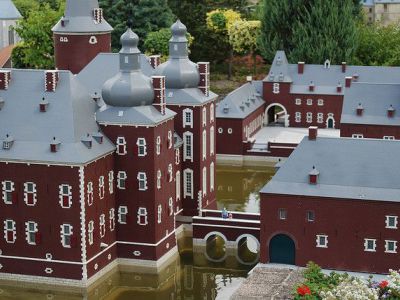
Mini-Europe may not be everyone's cup of tea, but it's a hit with visitors, especially children. This attraction features meticulously crafted miniaturized versions of famous European landmarks, structures, and historical scenes, all built on a 1:25 scale. Among the 350 miniatures on display are iconic sights such as London's Big Ben, the picturesque canals of Venice with gondolas, and the majestic Eiffel Tower in Paris. What sets Mini-Europe apart is its ability to bring history to life, as some models incorporate moving parts, sound effects, and even captivating light displays. For instance, you can re-enact the eruption of Vesuvius or the fall of the Berlin Wall.
Situated at the base of the Atomium, another well-known attraction in Brussels located within Bruparck, Mini-Europe was officially opened in 1989 by Prince Philip of Belgium. It operates from March through October and draws in approximately 350,000 visitors annually. The creation of each individual model is a labor-intensive process, with some costing as much as €350,000 to produce, including a stunning replica of Brussels' Grand-Place. These miniatures are accompanied by informative plaques that offer historical and cultural insights, making the experience not only visually captivating but also educational.
The well-maintained gardens and landscaping enhance the overall atmosphere of the park, making it an inviting setting for leisurely strolls and exploration. Miniature trains crisscross the area, providing a scenic way to view the models from a unique perspective. Additionally, the park offers cafes where you can indulge in snacks, beverages, and meals, ensuring that visitors have a well-rounded and enjoyable experience.
Why You Should Visit:
Cool place to learn quick facts about different European countries, all in one spot.
Tips:
Grab a brochure as you enter to delve into the historical background of each miniature while exploring the models – it will enhance your appreciation of the views. Otherwise, for an extensive day of fun, consider pairing your visit to Mini-Europe with the additional attractions in Bruparck, including the Océade water park, the Kinepolis cinema, and the imposing Atomium, which overlooks Mini-Europe (you can purchase combination tickets for these attractions).
Situated at the base of the Atomium, another well-known attraction in Brussels located within Bruparck, Mini-Europe was officially opened in 1989 by Prince Philip of Belgium. It operates from March through October and draws in approximately 350,000 visitors annually. The creation of each individual model is a labor-intensive process, with some costing as much as €350,000 to produce, including a stunning replica of Brussels' Grand-Place. These miniatures are accompanied by informative plaques that offer historical and cultural insights, making the experience not only visually captivating but also educational.
The well-maintained gardens and landscaping enhance the overall atmosphere of the park, making it an inviting setting for leisurely strolls and exploration. Miniature trains crisscross the area, providing a scenic way to view the models from a unique perspective. Additionally, the park offers cafes where you can indulge in snacks, beverages, and meals, ensuring that visitors have a well-rounded and enjoyable experience.
Why You Should Visit:
Cool place to learn quick facts about different European countries, all in one spot.
Tips:
Grab a brochure as you enter to delve into the historical background of each miniature while exploring the models – it will enhance your appreciation of the views. Otherwise, for an extensive day of fun, consider pairing your visit to Mini-Europe with the additional attractions in Bruparck, including the Océade water park, the Kinepolis cinema, and the imposing Atomium, which overlooks Mini-Europe (you can purchase combination tickets for these attractions).
11) Atomium (must see)
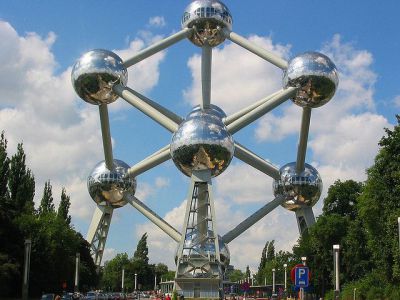
A fascinating model of a molecule magnified 165 billion times, the Atomium structure was originally constructed for the 1958 World Fair in Brussels and has since become an iconic symbol of the city. Its enduring popularity is evident from the long queues on weekends and holidays for the lift to its observation deck and panoramic restaurant.
A visit here is divided into two parts: first, the lift swiftly transports you to the top sphere for fantastic views of the city, followed by an exploration of the other three spheres, accessible via a combination of escalators and stairs. The whole experience exudes retro charm, as the Atomium was a technological marvel of its time, boasting the world's fastest elevator and the world's longest escalator connecting the spheres. You can find reminders of its construction in scattered photographs throughout the structure, and the classy gift shop offers cool 1960s-era items for sale. Meanwhile, the spheres primarily serve as temporary exhibition spaces and house a café.
The Atomium is undeniably impressive when viewed from the ground, and the vistas from the top are as spectacular as you would imagine, with computer screens to help you identify landmarks. However, the truly civilized way to enjoy it is by reserving a prime spot in the top-floor restaurant, which is surprisingly affordable and offers a truly unique dining experience.
Why You Should Visit:
One of the few places where you can enjoy a panoramic view of the entire city, the Atomium offers a distinctive perspective.
Tip:
If you find the ticket line to be long, it's advisable to purchase tickets online. They can be scanned directly from your phone, saving you the hassle of waiting in an additional line.
A visit here is divided into two parts: first, the lift swiftly transports you to the top sphere for fantastic views of the city, followed by an exploration of the other three spheres, accessible via a combination of escalators and stairs. The whole experience exudes retro charm, as the Atomium was a technological marvel of its time, boasting the world's fastest elevator and the world's longest escalator connecting the spheres. You can find reminders of its construction in scattered photographs throughout the structure, and the classy gift shop offers cool 1960s-era items for sale. Meanwhile, the spheres primarily serve as temporary exhibition spaces and house a café.
The Atomium is undeniably impressive when viewed from the ground, and the vistas from the top are as spectacular as you would imagine, with computer screens to help you identify landmarks. However, the truly civilized way to enjoy it is by reserving a prime spot in the top-floor restaurant, which is surprisingly affordable and offers a truly unique dining experience.
Why You Should Visit:
One of the few places where you can enjoy a panoramic view of the entire city, the Atomium offers a distinctive perspective.
Tip:
If you find the ticket line to be long, it's advisable to purchase tickets online. They can be scanned directly from your phone, saving you the hassle of waiting in an additional line.
