Custom Walk in Kuala Lumpur, Malaysia by twistedpickle_fresh5599 created on 2026-04-11
Guide Location: Malaysia » Kuala Lumpur
Guide Type: Custom Walk
# of Sights: 8
Tour Duration: 4 Hour(s)
Travel Distance: 10.6 Km or 6.6 Miles
Share Key: VKS3R
Guide Type: Custom Walk
# of Sights: 8
Tour Duration: 4 Hour(s)
Travel Distance: 10.6 Km or 6.6 Miles
Share Key: VKS3R
How It Works
Please retrieve this walk in the GPSmyCity app. Once done, the app will guide you from one tour stop to the next as if you had a personal tour guide. If you created the walk on this website or come to the page via a link, please follow the instructions below to retrieve the walk in the app.
Retrieve This Walk in App
Step 1. Download the app "GPSmyCity: Walks in 1K+ Cities" on Apple App Store or Google Play Store.



Step 2. In the GPSmyCity app, download(or launch) the guide "Kuala Lumpur Map and Walking Tours".
Step 3. Tap the menu button located at upper right corner of the "Walks" screen and select "Retrieve custom walk". Enter the share key: VKS3R
1) Pavilion Kuala Lumpur (must see)
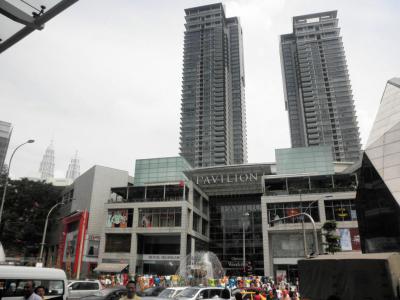
Pavilion Kuala Lumpur is a prominent shopping center located in the vibrant Bukit Bintang district of Kuala Lumpur. This bustling complex was constructed on the site where the historic Bukit Bintang Girls' School once stood. This school, known as the oldest in Kuala Lumpur, was relocated to Cheras in 2000, where it was renamed Sekolah Seri Bintang Utara.
The Pavilion Kuala Lumpur officially opened its doors on September 20, 2007. The extensive development comprises not only a premier shopping center but also includes two blocks of serviced apartments, an office block, and a luxurious 5-star hotel. In 2016, the mall expanded with the addition of Pavilion Elite, a significant extension, and was further enhanced by the development of a new residential block constructed above it.
Further expanding its presence, Pavilion Kuala Lumpur launched a sister mall in the southern suburbs of the city on December 3, 2021. This new mall, named Pavilion Bukit Jalil, boasts an impressive 1.8 million square feet of retail space. It houses notable features such as Malaysia's first Tsutaya Bookstore and the country's longest Muji Store. A distinctive highlight of Pavilion Bukit Jalil is its projection mapping dome located at the center court, adding a unique visual element to the shopping experience.
Continuing its expansion, a third mall under the Pavilion brand opened on October 8, 2023. Named Pavilion Damansara Heights, this mall, though smaller with only 1 million square feet of space, marks another significant addition to the Pavilion Kuala Lumpur's growing portfolio of retail destinations. Each of these malls, with their distinct characteristics and offerings, contributes to the dynamic retail landscape of Kuala Lumpur, drawing both local shoppers and international tourists.
The Pavilion Kuala Lumpur officially opened its doors on September 20, 2007. The extensive development comprises not only a premier shopping center but also includes two blocks of serviced apartments, an office block, and a luxurious 5-star hotel. In 2016, the mall expanded with the addition of Pavilion Elite, a significant extension, and was further enhanced by the development of a new residential block constructed above it.
Further expanding its presence, Pavilion Kuala Lumpur launched a sister mall in the southern suburbs of the city on December 3, 2021. This new mall, named Pavilion Bukit Jalil, boasts an impressive 1.8 million square feet of retail space. It houses notable features such as Malaysia's first Tsutaya Bookstore and the country's longest Muji Store. A distinctive highlight of Pavilion Bukit Jalil is its projection mapping dome located at the center court, adding a unique visual element to the shopping experience.
Continuing its expansion, a third mall under the Pavilion brand opened on October 8, 2023. Named Pavilion Damansara Heights, this mall, though smaller with only 1 million square feet of space, marks another significant addition to the Pavilion Kuala Lumpur's growing portfolio of retail destinations. Each of these malls, with their distinct characteristics and offerings, contributes to the dynamic retail landscape of Kuala Lumpur, drawing both local shoppers and international tourists.
2) Berjaya Times Square
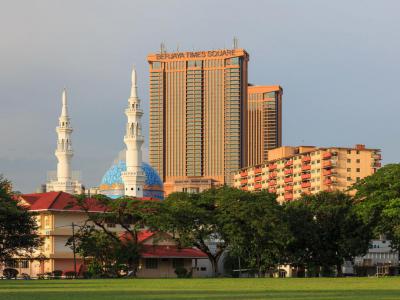
Berjaya Times Square stands tall as a complex in Bukit Bintang, Kuala Lumpur, featuring two identical towers that reach a height of 203 meters (666 feet) and encompass 48 floors. This multifaceted establishment comprises a hotel, condominiums, an indoor amusement park, and a shopping center. It first opened its doors in October 2003.
Remarkably, Berjaya Times Square is presently recognized as the tenth largest building globally in terms of floor space. It also holds the distinction of being hailed as the "world's largest building constructed in a single phase," boasting an expansive built-up floor area spanning 700,000 square meters (7,500,000 square feet). The complex comprises a 19-story shopping mall, commercial offices, and a leisure center, all of which collectively house over 1,000 retail shops, 1,200 luxury service suites, 65 dining establishments, and various entertainment attractions, including the popular Berjaya Times Square Theme Park.
Notably, the land on which Berjaya Times Square now stands originally belonged to the millionaire and philanthropist Cheong Yoke Choy before the outbreak of World War II. His bungalow remained on the property until the entire parcel of land was acquired by Tan Sri Vincent Tan's Berjaya Group for the development of the present-day Berjaya Times Square.
Remarkably, Berjaya Times Square is presently recognized as the tenth largest building globally in terms of floor space. It also holds the distinction of being hailed as the "world's largest building constructed in a single phase," boasting an expansive built-up floor area spanning 700,000 square meters (7,500,000 square feet). The complex comprises a 19-story shopping mall, commercial offices, and a leisure center, all of which collectively house over 1,000 retail shops, 1,200 luxury service suites, 65 dining establishments, and various entertainment attractions, including the popular Berjaya Times Square Theme Park.
Notably, the land on which Berjaya Times Square now stands originally belonged to the millionaire and philanthropist Cheong Yoke Choy before the outbreak of World War II. His bungalow remained on the property until the entire parcel of land was acquired by Tan Sri Vincent Tan's Berjaya Group for the development of the present-day Berjaya Times Square.
3) Bukit Bintang (Bintang Walk) (must see)
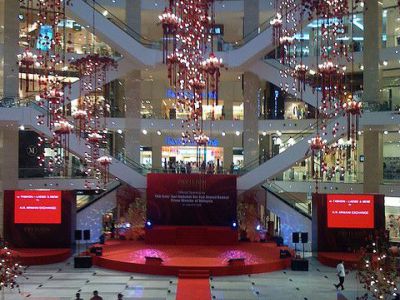
One of the most happening places in Kuala Lumpur is the Bukit Walk, your one-stop destination to a complete Kuala Lumpur shopping experience! Stretching from Jalan Bukit Bintang and Jalan Imbi, all the way to Jalan Pudu, the Bintang Walk is a place you do not want to miss.
No matter what your budget is, the Bukit Walk has something to offer every visitor. Right from upscale classy and glamorous malls and boutiques like the Pavillion and Star Hill Shopping Gallery, to road side bargains, electronic shopping complexes and exclusive shops like the Low Yat Plaza, the Bukit Walk is truly a shopper’s paradise.
But don’t let the excessive shopping put you off. If you are not very keen on peeking into the retail stores, you have plenty of other things to do at the Bukit Walk. Some of Kuala Lumpur finest eateries can be found here. Whatever be your style, you are sure to find the perfect place, menu and cuisine to tempt, tantalize and satisfy your hunger. From hawkers who are famous all over the city for their offerings to specialty restaurants that are known world over, from delicious local fare to alfresco restaurants, the Bukit Walk is the place to get a mouthful of Kuala Lumpur.
No matter what your budget is, the Bukit Walk has something to offer every visitor. Right from upscale classy and glamorous malls and boutiques like the Pavillion and Star Hill Shopping Gallery, to road side bargains, electronic shopping complexes and exclusive shops like the Low Yat Plaza, the Bukit Walk is truly a shopper’s paradise.
But don’t let the excessive shopping put you off. If you are not very keen on peeking into the retail stores, you have plenty of other things to do at the Bukit Walk. Some of Kuala Lumpur finest eateries can be found here. Whatever be your style, you are sure to find the perfect place, menu and cuisine to tempt, tantalize and satisfy your hunger. From hawkers who are famous all over the city for their offerings to specialty restaurants that are known world over, from delicious local fare to alfresco restaurants, the Bukit Walk is the place to get a mouthful of Kuala Lumpur.
4) Petaling Street (Chinatown)
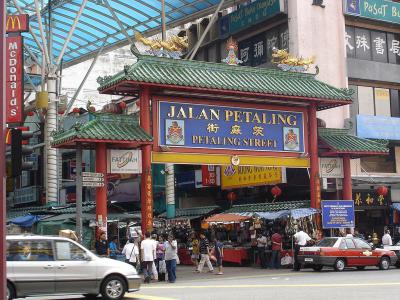
Petaling Street lies at the center of Kuala Lumpur’s Chinatown and reflects the city’s long-standing trading tradition. The area developed in the late 19th century as Chinese miners and merchants settled nearby, creating a network of shops and markets. Over time, Petaling Street grew into one of the city’s busiest commercial areas and remains closely connected to Kuala Lumpur’s early history.
Enter through the main archway and walk into the covered street, where rows of stalls line both sides. As you move forward, you will encounter vendors selling clothing, bags, accessories, electronics, and souvenirs. Bargaining is part of the experience, and the dense layout gives the street a constant sense of movement. The market operates throughout the day, but it becomes more active as evening approaches, when lights and crowds intensify the atmosphere.
Take a moment to look beyond the stalls and notice the surrounding shophouses, many dating from the early 20th century. Their narrow façades and layered signage create a distinct visual rhythm. As you continue, pause at one of the food stalls or small eateries to sample local dishes and snacks. Today, it remains one of Kuala Lumpur’s most recognizable market streets, combining commerce, heritage, and street-level activity in a compact and continuously changing setting.
Enter through the main archway and walk into the covered street, where rows of stalls line both sides. As you move forward, you will encounter vendors selling clothing, bags, accessories, electronics, and souvenirs. Bargaining is part of the experience, and the dense layout gives the street a constant sense of movement. The market operates throughout the day, but it becomes more active as evening approaches, when lights and crowds intensify the atmosphere.
Take a moment to look beyond the stalls and notice the surrounding shophouses, many dating from the early 20th century. Their narrow façades and layered signage create a distinct visual rhythm. As you continue, pause at one of the food stalls or small eateries to sample local dishes and snacks. Today, it remains one of Kuala Lumpur’s most recognizable market streets, combining commerce, heritage, and street-level activity in a compact and continuously changing setting.
5) Kuala Lumpur Butterfly Park
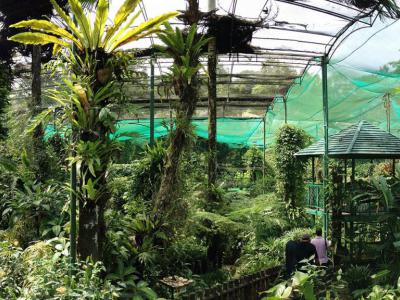
One of Kuala Lumpur’s main attractions is the Perdana Botanical Gardens which manages to get millions of visitors every year from all over the world. But what makes this park special is the variety it offers its visitors. Here, amidst the greenery and nature, you get to see exotic birds, different varieties of orchids and everybody’s favorite, butterflies.
If you are an avid photographer and love macro photography and capturing nature at its best or simply love butterflies, then the Butterfly Park is the place for you. However, you needn’t look through the lenses to enjoy its beauty. Spread across two acres of land, the park encompasses over 6000 different butterflies. With tropical waterfalls cascading through and gazebos that give you the perfect view of it all, the place is truly magical.
Just a stone throw away from the Bird Park; the Butterfly Park is a tropical haven that is tweaked and custom-made for its main residents, the butterflies. With vibrant hued flowers, butterfly-friendly shrubs and trees and a huge net that allows these delicate creatures to roam freely and encompasses it all, the park has definitely gone the extra mile to take care of their star inhabitants.
Tip:
Make sure you examine every nook and corner as some areas are more densely populated with butterflies than others.
If you want the butterflies to land on you, wear bright multi-colored clothes and shoes, but do not wear insect repellant.
Note that it can get very humid and warm inside, too, so try to go early and grab a bottle of water from the entrance area.
If you are an avid photographer and love macro photography and capturing nature at its best or simply love butterflies, then the Butterfly Park is the place for you. However, you needn’t look through the lenses to enjoy its beauty. Spread across two acres of land, the park encompasses over 6000 different butterflies. With tropical waterfalls cascading through and gazebos that give you the perfect view of it all, the place is truly magical.
Just a stone throw away from the Bird Park; the Butterfly Park is a tropical haven that is tweaked and custom-made for its main residents, the butterflies. With vibrant hued flowers, butterfly-friendly shrubs and trees and a huge net that allows these delicate creatures to roam freely and encompasses it all, the park has definitely gone the extra mile to take care of their star inhabitants.
Tip:
Make sure you examine every nook and corner as some areas are more densely populated with butterflies than others.
If you want the butterflies to land on you, wear bright multi-colored clothes and shoes, but do not wear insect repellant.
Note that it can get very humid and warm inside, too, so try to go early and grab a bottle of water from the entrance area.
6) Central Market (must see)
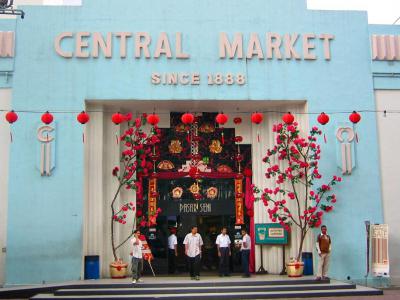
Central Market has grown from a practical marketplace into one of the city’s main cultural attractions. Founded in 1888 during the British period, it originally operated as a wet market serving miners and local residents. The present building, completed in 1937 in an Art Deco style, reflects a shift toward a more permanent and organized structure. Today, it is recognized as a heritage site and a key landmark of Malaysian culture.
Begin your visit at the entrance and step inside to explore the structured layout of the market. The interior is lined with stalls offering handicrafts, textiles, souvenirs, and locally made goods. As you walk through, notice how the ground floor is organized into themed “streets,” such as Lorong Melayu, Lorong Cina, and Lorong India. Items such as batik fabrics, wood carvings, jewelry, and traditional clothing highlight both individual traditions and a shared, distinctly Malaysian character.
Compared to its early days, when it was known as a “wet market” with constantly damp floors, the space is now clean, well-lit, and adapted for visitors. The variety of goods extends beyond crafts to include bags, clothing, sweets, and small gifts, making it a practical stop for souvenirs.
Before leaving, step out toward Kasturi Walk, the covered pedestrian lane at the front of the building. Here, additional vendors and street food stalls create a more casual atmosphere. You may also choose to pause at the food court or nearby cafés to sample local dishes. Together, these spaces present Central Market as both a shopping destination and a compact introduction to Kuala Lumpur’s multicultural character.
Begin your visit at the entrance and step inside to explore the structured layout of the market. The interior is lined with stalls offering handicrafts, textiles, souvenirs, and locally made goods. As you walk through, notice how the ground floor is organized into themed “streets,” such as Lorong Melayu, Lorong Cina, and Lorong India. Items such as batik fabrics, wood carvings, jewelry, and traditional clothing highlight both individual traditions and a shared, distinctly Malaysian character.
Compared to its early days, when it was known as a “wet market” with constantly damp floors, the space is now clean, well-lit, and adapted for visitors. The variety of goods extends beyond crafts to include bags, clothing, sweets, and small gifts, making it a practical stop for souvenirs.
Before leaving, step out toward Kasturi Walk, the covered pedestrian lane at the front of the building. Here, additional vendors and street food stalls create a more casual atmosphere. You may also choose to pause at the food court or nearby cafés to sample local dishes. Together, these spaces present Central Market as both a shopping destination and a compact introduction to Kuala Lumpur’s multicultural character.
7) Petronas Towers (must see)
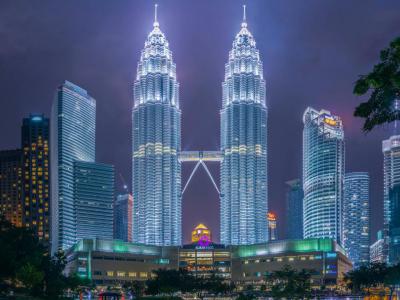
Petronas Twin Towers were completed in 1998 and rise to 1,483 feet, remaining the tallest twin towers in the world. Designed by Argentine architect Cesar Pelli, the structure draws on Islamic geometric patterns, giving the towers a distinct identity that reflects both modern engineering and cultural symbolism. Construction began in 1993 and involved two separate international teams working simultaneously on each tower, contributing to the project’s pace and precision.
From ground level, the scale of the towers becomes immediately apparent. Their façade, made of reinforced concrete, steel, and glass, reflects changing light throughout the day. Midway up, the two towers are connected by a skybridge on the 41st and 42nd floors, which serves both as a structural feature and a viewing platform. The towers are also designed with a double-deck elevator system, allowing efficient movement within the building despite its height.
Visitors can access the towers through a ticketed experience that includes the skybridge and an observation deck on the 86th floor. From these vantage points, Kuala Lumpur spreads out in all directions, revealing a mix of modern developments and older districts. The towers are not only a visual landmark but also a functioning business center, housing offices for major companies, including Malaysia’s national oil company, Petronas, from which they take their name.
From ground level, the scale of the towers becomes immediately apparent. Their façade, made of reinforced concrete, steel, and glass, reflects changing light throughout the day. Midway up, the two towers are connected by a skybridge on the 41st and 42nd floors, which serves both as a structural feature and a viewing platform. The towers are also designed with a double-deck elevator system, allowing efficient movement within the building despite its height.
Visitors can access the towers through a ticketed experience that includes the skybridge and an observation deck on the 86th floor. From these vantage points, Kuala Lumpur spreads out in all directions, revealing a mix of modern developments and older districts. The towers are not only a visual landmark but also a functioning business center, housing offices for major companies, including Malaysia’s national oil company, Petronas, from which they take their name.
8) KLCC Park (must see)
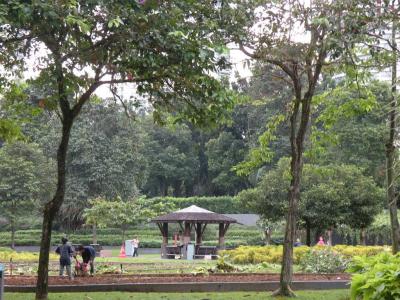
KLCC Park sits directly beside the Petronas Twin Towers and was designed to introduce a natural counterbalance to the surrounding high-rise landscape. Opened in 1998 as part of the KLCC development, the park was conceived by Brazilian landscape architect Roberto Burle Marx. Its design blends structured pathways, water features, and dense planting, creating a space that feels both open and carefully composed.
From the Suria KLCC side, facing south toward the park, begin walking forward along the main promenade. Keep the open lawns to your right and the denser planting to your left as you move toward Symphony Lake, which lies slightly to the south-east. As you approach the water, follow the curved path to the left, bringing you closer to the lake’s edge and aligning your view toward the fountain.
Continue toward the elevated pedestrian bridge that crosses part of the lake from west to east. Step onto the bridge and pause midway, then turn back north for a clear, unobstructed view of the full height of the towers. After crossing, follow the path as it curves south and then west around the lake. On your right, the water remains in view, while to your left, the landscaping becomes denser. Along the eastern edge, slightly set back from the path, the As-Syakirin Mosque adds a quieter architectural presence within the greenery.
As you continue, follow the path turning north-west toward the recreational zones. Near the south-west section of the park, you will reach the children’s pool area, where the Whale Sculpture by Eng Tay is positioned nearby. From here, continue north, keeping the playground to your left and the lake behind you to the south-east. The paths gradually lead back toward the northern edge near Suria KLCC, completing a loop through the park. Throughout the walk, the mix of preserved mature trees and newly planted species creates a layered landscape that supports birdlife and maintains a calm, consistent atmosphere.
From the Suria KLCC side, facing south toward the park, begin walking forward along the main promenade. Keep the open lawns to your right and the denser planting to your left as you move toward Symphony Lake, which lies slightly to the south-east. As you approach the water, follow the curved path to the left, bringing you closer to the lake’s edge and aligning your view toward the fountain.
Continue toward the elevated pedestrian bridge that crosses part of the lake from west to east. Step onto the bridge and pause midway, then turn back north for a clear, unobstructed view of the full height of the towers. After crossing, follow the path as it curves south and then west around the lake. On your right, the water remains in view, while to your left, the landscaping becomes denser. Along the eastern edge, slightly set back from the path, the As-Syakirin Mosque adds a quieter architectural presence within the greenery.
As you continue, follow the path turning north-west toward the recreational zones. Near the south-west section of the park, you will reach the children’s pool area, where the Whale Sculpture by Eng Tay is positioned nearby. From here, continue north, keeping the playground to your left and the lake behind you to the south-east. The paths gradually lead back toward the northern edge near Suria KLCC, completing a loop through the park. Throughout the walk, the mix of preserved mature trees and newly planted species creates a layered landscape that supports birdlife and maintains a calm, consistent atmosphere.
