Custom Walk in Lisbon, Portugal by chowsim99_d4f953 created on 2026-04-13
Guide Location: Portugal » Lisbon
Guide Type: Custom Walk
# of Sights: 12
Tour Duration: 2 Hour(s)
Travel Distance: 3.1 Km or 1.9 Miles
Share Key: Q6FDA
Guide Type: Custom Walk
# of Sights: 12
Tour Duration: 2 Hour(s)
Travel Distance: 3.1 Km or 1.9 Miles
Share Key: Q6FDA
How It Works
Please retrieve this walk in the GPSmyCity app. Once done, the app will guide you from one tour stop to the next as if you had a personal tour guide. If you created the walk on this website or come to the page via a link, please follow the instructions below to retrieve the walk in the app.
Retrieve This Walk in App
Step 1. Download the app "GPSmyCity: Walks in 1K+ Cities" on Apple App Store or Google Play Store.



Step 2. In the GPSmyCity app, download(or launch) the guide "Lisbon Map and Walking Tours".
Step 3. Tap the menu button located at upper right corner of the "Walks" screen and select "Retrieve custom walk". Enter the share key: Q6FDA
1) Miradouro da Senhora do Monte (Our Lady of the Mount Viewpoint) (must see)
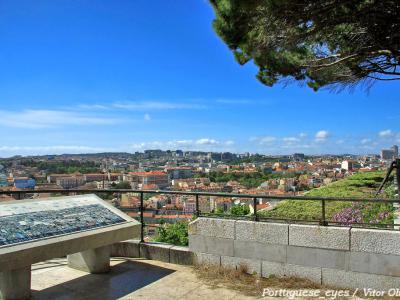
For an elevated cityscape experience, make your way up to the Lady of the Mount viewpoint, a somewhat undiscovered gem among Lisbon's "miradouros", despite its distinction as the highest. From this serene square shaded by pine trees, you'll be treated to a captivating panoramic vista of the entire city. This locale is particularly cherished by avid photographers seeking the perfect shots of the charming old districts of Mouraria, the São Jorge Castle, downtown Lisbon, the Carmo Convent, Monsanto, the Tagus River estuary with the "Sea of Straw" near its mouth, and even farther horizons.
Another noteworthy attraction here, known to the initiated, is the chapel of Our Lady of the Mount, or "Nossa Senhora do Monte." The original chapel, erected in 1147, succumbed to the ravages of an earthquake in 1755 and was replaced by the current structure in the late 1700s. This chapel is renowned for its protective association with women during childbirth, drawing expectant mothers in search of divine blessings. Nearby, you'll find a small statue of the Virgin.
Adding to the charm of the place, there's an ancient wall adorned with the inscription: "Boa viagem. Lisboa espera por ti," which translates to "Have a nice trip! Lisbon awaits you." The tiles on this wall carry the echoes of a bygone era, reminiscent of a time when Portugal was the land of explorers, emigrants, and soldiers.
Why You Should Pay a Visit:
This is one of Lisbon's less-traveled viewpoints, yet it claims the title of the highest, offering some of the most breathtaking city views. It's an ideal spot for capturing memorable photographs. While there isn't a permanent café on-site, you can usually find mobile vendors serving coffee, adult beverages, and snacks, often with more interesting options than the standard kiosk offerings.
Another noteworthy attraction here, known to the initiated, is the chapel of Our Lady of the Mount, or "Nossa Senhora do Monte." The original chapel, erected in 1147, succumbed to the ravages of an earthquake in 1755 and was replaced by the current structure in the late 1700s. This chapel is renowned for its protective association with women during childbirth, drawing expectant mothers in search of divine blessings. Nearby, you'll find a small statue of the Virgin.
Adding to the charm of the place, there's an ancient wall adorned with the inscription: "Boa viagem. Lisboa espera por ti," which translates to "Have a nice trip! Lisbon awaits you." The tiles on this wall carry the echoes of a bygone era, reminiscent of a time when Portugal was the land of explorers, emigrants, and soldiers.
Why You Should Pay a Visit:
This is one of Lisbon's less-traveled viewpoints, yet it claims the title of the highest, offering some of the most breathtaking city views. It's an ideal spot for capturing memorable photographs. While there isn't a permanent café on-site, you can usually find mobile vendors serving coffee, adult beverages, and snacks, often with more interesting options than the standard kiosk offerings.
2) Miradouro da Graca (Grace Viewpoint) (must see)
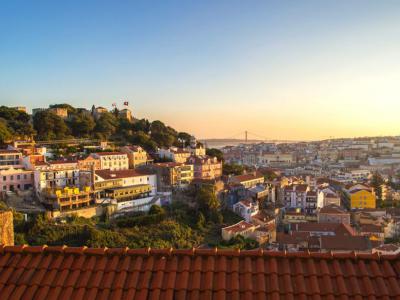
The Grace Viewpoint in Lisbon is a celebrated vantage point situated atop the southern slope of Santo André Hill. It offers panoramic views of the city's historic center stretching, on clear days, to the Tagus River estuary.
This viewpoint is not only a daytime delight but also a magical evening spot as the setting sun casts a golden hue over Lisbon and the city lights begin to twinkle. The atmosphere here is perpetually vibrant, enhanced by performances from local musicians and singers, while the adjacent Esplanada da Graça café remains abuzz with activity.
Though many tourists stop at this viewpoint, they often overlook nearby attractions such as the expansive Grace Convent, noted for its exquisite tile paintings and baroque architecture. Other local sights include the 19th-century Villa Sousa and the serene Cerca Park Garden, with a quaint fountain and a bronze sculpture, positioned below the viewpoint.
From here, visitors can enjoy a 160-degree view encompassing central and western Lisbon. To the southwest, prominent visible landmarks include Saint George's Castle, the Carmo Church ruins, and the April 25 bridge. The viewpoint also overlooks the Mouraria neighborhood and Martim Moniz plaza and offers glimpses of distant sites like the Monsanto Forest and the Amoreiras Towers.
Despite its common designation as the Grace viewpoint, its official title "Sophia de Mello Breyner Andresen" honors the esteemed 20th-century Portuguese poet revered for her fairy tales and the official Portuguese translations of Shakespeare. Her affinity for this location, where she drew much inspiration, led to its renaming following her death in 2004 and is now marked by a bust near the Grace Convent entrance.
This viewpoint frequently marks the conclusion of a journey for those ascending the hill from Alfama and Saint George's Castle. The series of steps leading to it are paved with traditional cobblestone designs.
This viewpoint is not only a daytime delight but also a magical evening spot as the setting sun casts a golden hue over Lisbon and the city lights begin to twinkle. The atmosphere here is perpetually vibrant, enhanced by performances from local musicians and singers, while the adjacent Esplanada da Graça café remains abuzz with activity.
Though many tourists stop at this viewpoint, they often overlook nearby attractions such as the expansive Grace Convent, noted for its exquisite tile paintings and baroque architecture. Other local sights include the 19th-century Villa Sousa and the serene Cerca Park Garden, with a quaint fountain and a bronze sculpture, positioned below the viewpoint.
From here, visitors can enjoy a 160-degree view encompassing central and western Lisbon. To the southwest, prominent visible landmarks include Saint George's Castle, the Carmo Church ruins, and the April 25 bridge. The viewpoint also overlooks the Mouraria neighborhood and Martim Moniz plaza and offers glimpses of distant sites like the Monsanto Forest and the Amoreiras Towers.
Despite its common designation as the Grace viewpoint, its official title "Sophia de Mello Breyner Andresen" honors the esteemed 20th-century Portuguese poet revered for her fairy tales and the official Portuguese translations of Shakespeare. Her affinity for this location, where she drew much inspiration, led to its renaming following her death in 2004 and is now marked by a bust near the Grace Convent entrance.
This viewpoint frequently marks the conclusion of a journey for those ascending the hill from Alfama and Saint George's Castle. The series of steps leading to it are paved with traditional cobblestone designs.
3) Igreja e Convento da Graca (Grace Church and Convent)
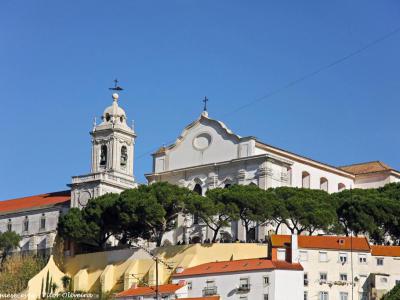
The Church and Convent of Grace in Lisbon is an ecclesiastical complex and historic monument. Originally, it served as the spiritual center for the Order of Saint Augustine, known locally as the Order of the Gracians.
Established during the formation of the Portuguese nation, the Convent of Grace was founded in the era of Afonso Henriques' siege of Lisbon in 1147. It was strategically positioned on the Mount of Saint Gens, an area then called Almofala. Construction of the convent began in 1271 under the patronage of King Afonso III, intending to house 50 hermit friars of Saint Augustine.
By 1291, the convent emerged as the head of the Portuguese Province of the Order of Saint Augustine, maintaining this role until the religious orders were dissolved in 1834. Significant religious events have taken place here, including the miraculous appearance of the Image of Our Lady of Grace in 1362.
The convent was fortified by the Fernandina wall in 1375 and contains chapels established by notable Portuguese figures such as Rui Gomes de Alvarenga (a nobleman of the Council of Kings John I, Duarte, and Afonso V) and Afonso de Albuquerque (a military commander and the second governor of Portuguese India). The latter is also buried here.
The architectural significance of the site includes a blend of styles due to various reconstructions, particularly after the 1755 earthquake which necessitated major restoration efforts, imbuing the structure with late Baroque and rocaille elements. Its interior is lavishly adorned with opulent gilt carvings, grisaille paintings, azulejo tiles from various centuries, and other decorations, notably in the sacristy. Upon entering, you'll be greeted by intriguing elements: an ornate painted ceiling, a somewhat imposing statue of Saint Tomás of Villanova, two finely adorned marble chairs in the sacristy, and a collection of gilded Rococo-style sculptures within the chapels.
The focal point of the church, an image of Christ bearing the cross, has been a fixture in the annual Easter procession since 1587. However, the real treasure awaits in the adjoining convent-a pristine white room adorned with tiled walls hailing from the 16th, 17th, and 18th centuries, depicting grand historical scenes. It's worth noting that there is no admission fee for any of these remarkable sights.
During the 19th century, the convent served as military barracks. Both, the Church and the Convent of Grace were designated a National Monument in 1910. However, this historic site was made accessible to the public only in 2017.
Established during the formation of the Portuguese nation, the Convent of Grace was founded in the era of Afonso Henriques' siege of Lisbon in 1147. It was strategically positioned on the Mount of Saint Gens, an area then called Almofala. Construction of the convent began in 1271 under the patronage of King Afonso III, intending to house 50 hermit friars of Saint Augustine.
By 1291, the convent emerged as the head of the Portuguese Province of the Order of Saint Augustine, maintaining this role until the religious orders were dissolved in 1834. Significant religious events have taken place here, including the miraculous appearance of the Image of Our Lady of Grace in 1362.
The convent was fortified by the Fernandina wall in 1375 and contains chapels established by notable Portuguese figures such as Rui Gomes de Alvarenga (a nobleman of the Council of Kings John I, Duarte, and Afonso V) and Afonso de Albuquerque (a military commander and the second governor of Portuguese India). The latter is also buried here.
The architectural significance of the site includes a blend of styles due to various reconstructions, particularly after the 1755 earthquake which necessitated major restoration efforts, imbuing the structure with late Baroque and rocaille elements. Its interior is lavishly adorned with opulent gilt carvings, grisaille paintings, azulejo tiles from various centuries, and other decorations, notably in the sacristy. Upon entering, you'll be greeted by intriguing elements: an ornate painted ceiling, a somewhat imposing statue of Saint Tomás of Villanova, two finely adorned marble chairs in the sacristy, and a collection of gilded Rococo-style sculptures within the chapels.
The focal point of the church, an image of Christ bearing the cross, has been a fixture in the annual Easter procession since 1587. However, the real treasure awaits in the adjoining convent-a pristine white room adorned with tiled walls hailing from the 16th, 17th, and 18th centuries, depicting grand historical scenes. It's worth noting that there is no admission fee for any of these remarkable sights.
During the 19th century, the convent served as military barracks. Both, the Church and the Convent of Grace were designated a National Monument in 1910. However, this historic site was made accessible to the public only in 2017.
4) Mosteiro de Sao Vicente de Fora (Monastery of St. Vincent Outside the Walls)
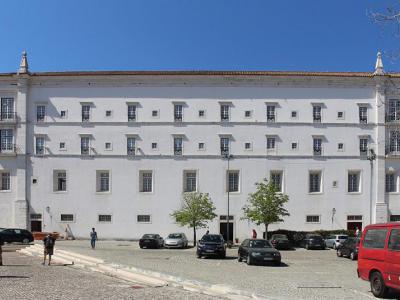
The Church and Monastery of Saint Vincent “Outside the Walls” in Lisbon is a prominent 17th-century Mannerist structure. Originally founded by Afonso Henriques, the first Portuguese King, around 1147 for the Augustinian Order, the monastery was built outside the city walls, hence its name. It was dedicated to Saint Vincent of Saragossa, the patron saint of Lisbon, whose relics were transferred here in the 12th century.
The existing structures are largely due to the reconstruction efforts ordered by King Philip I of Portugal in 1580. The church itself was constructed between 1582 and 1629. The monastery's buildings were completed in the 18th century, following the designs influenced by the Jesuit church of The Gesù in Rome.
A key feature of the church is its austere façade with Mannerist influences, attributed to Portuguese architect Baltazar Álvares. It includes niches with statues of saints, flanked by two towers, and features a Latin cross floor plan with a one-aisled nave and lateral chapels, covered by barrel vaulting and a large dome over the crossing.
The monastery is renowned for its extensive collection of azulejo ceramic tiles, showcasing over 150 panels depicting various scenes from life in the countryside to noble amusements, created during two major periods in the 18th century under King Joao V. The main Baroque-style altarpiece, crafted by one of Portugal's finest sculptors, Joaquim Machado de Castro, and several fine altarpieces in the lateral chapels further enhance its artistic heritage.
Post the 1834 dissolution of monasteries in Portugal, the monastery was repurposed, serving as a palace for the archbishops of Lisbon and later housing the royal pantheon for the Braganza monarchs, initiated by King Ferdinand II. This sequence of resting places spans from João IV, who restored the monarchy in 1640, to Manuel II, the last Portuguese monarch, who passed away in exile in England in 1932. Among these notable figures is also Catherine of Braganza, the widow of England's Charles II, credited with introducing the concept of "teatime" to the British.
The baroque portal and the cloisters, decorated with 18th-century tiles and themes from La Fontaine's fables, along with a sacristy richly adorned with polychrome marble and artwork, contribute to its grandeur.
However, the highlight of your visit is undoubtedly the ascent to the towers' terraces, providing some of the most stunning panoramic views over the Alfama district and the Tagus River.
Tip:
Upon purchasing your ticket, you will receive a leaflet containing a map and a concise history of the monastery. It's highly recommended to follow the map to ensure you don't miss any of the monastery's captivating features.
The existing structures are largely due to the reconstruction efforts ordered by King Philip I of Portugal in 1580. The church itself was constructed between 1582 and 1629. The monastery's buildings were completed in the 18th century, following the designs influenced by the Jesuit church of The Gesù in Rome.
A key feature of the church is its austere façade with Mannerist influences, attributed to Portuguese architect Baltazar Álvares. It includes niches with statues of saints, flanked by two towers, and features a Latin cross floor plan with a one-aisled nave and lateral chapels, covered by barrel vaulting and a large dome over the crossing.
The monastery is renowned for its extensive collection of azulejo ceramic tiles, showcasing over 150 panels depicting various scenes from life in the countryside to noble amusements, created during two major periods in the 18th century under King Joao V. The main Baroque-style altarpiece, crafted by one of Portugal's finest sculptors, Joaquim Machado de Castro, and several fine altarpieces in the lateral chapels further enhance its artistic heritage.
Post the 1834 dissolution of monasteries in Portugal, the monastery was repurposed, serving as a palace for the archbishops of Lisbon and later housing the royal pantheon for the Braganza monarchs, initiated by King Ferdinand II. This sequence of resting places spans from João IV, who restored the monarchy in 1640, to Manuel II, the last Portuguese monarch, who passed away in exile in England in 1932. Among these notable figures is also Catherine of Braganza, the widow of England's Charles II, credited with introducing the concept of "teatime" to the British.
The baroque portal and the cloisters, decorated with 18th-century tiles and themes from La Fontaine's fables, along with a sacristy richly adorned with polychrome marble and artwork, contribute to its grandeur.
However, the highlight of your visit is undoubtedly the ascent to the towers' terraces, providing some of the most stunning panoramic views over the Alfama district and the Tagus River.
Tip:
Upon purchasing your ticket, you will receive a leaflet containing a map and a concise history of the monastery. It's highly recommended to follow the map to ensure you don't miss any of the monastery's captivating features.

5) Casa da Tia Helena
The Sun Gates Viewpoint ("Miradouro das Portas do Sol") provides a fantastic opportunity for those seeking refreshment after their strolls, as they can indulge in the delightful Portuguese and Spanish cuisines offered at Casa da Tia Helena, a charming pub and bar that has been serving the renowned Alfama neighborhood for over 40 years.
Numerous visitors flock to this establishment, enticed by the flavors of grilled sardines, succulent grilled octopus, and delectable salads. Furthermore, don't miss the chance to savor the delightful parfait, intriguing beignets, and superb cheesecake.
At Casa da Tia Helena, patrons can relish in the pleasure of homemade wine, refreshing sangria, or quality beer. Additionally, the establishment serves a superb cup of coffee, ensuring a truly enjoyable dining experience.
Numerous visitors flock to this establishment, enticed by the flavors of grilled sardines, succulent grilled octopus, and delectable salads. Furthermore, don't miss the chance to savor the delightful parfait, intriguing beignets, and superb cheesecake.
At Casa da Tia Helena, patrons can relish in the pleasure of homemade wine, refreshing sangria, or quality beer. Additionally, the establishment serves a superb cup of coffee, ensuring a truly enjoyable dining experience.
6) Miradouro das Portas do Sol (Gates of the Sun Viewpoint)
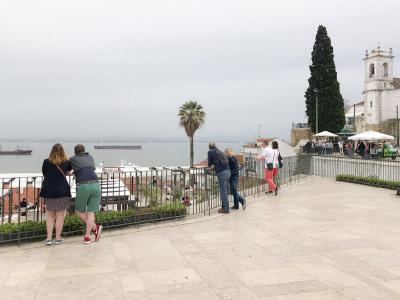
The Gates of the Sun viewpoint, akin to a home’s balcony, sits above the ancient neighborhood Alfama. Just steps away from the Santa Luzia viewpoint, it offers stunning views across Alfama and the Tagus River. The layout of Alfama unfolds below in a picturesque maze of streets, stairways, and alleys, all visible from this panoramic balcony.
Visitors to the Gates of the Sun viewpoint can indulge in authentic Portuguese coffee at the local kiosk, watch the iconic #28 electric tram pass by, and view the statue of Saint Vincent, the patron saint of Lisbon, symbolically holding a boat flanked by two ravens, representing the city. Additionally, from this point, one can see the Church of Saint Vincent and the expanse of the Alfama neighborhood stretching to the Tagus River.
Installed in 1949, a statue of Saint Vincent enhances the cultural significance of the viewpoint. The location is also prime for photographers, who find the backdrop of the Decorative Arts Museum and the panoramic view from Saint Vincent de Fora Monastery to the waterfront irresistibly photogenic.
Tip:
For a unique and enjoyable experience, seek out a flight of stairs and follow the WC (restroom) sign. Descend the stairs and pass under an arch to discover a mural depicting Lisbon's history in a comic-book style.
The view surprises at dusk, when the sun goes down and the colors of Lisbon’s architecture turn another shade.
Visitors to the Gates of the Sun viewpoint can indulge in authentic Portuguese coffee at the local kiosk, watch the iconic #28 electric tram pass by, and view the statue of Saint Vincent, the patron saint of Lisbon, symbolically holding a boat flanked by two ravens, representing the city. Additionally, from this point, one can see the Church of Saint Vincent and the expanse of the Alfama neighborhood stretching to the Tagus River.
Installed in 1949, a statue of Saint Vincent enhances the cultural significance of the viewpoint. The location is also prime for photographers, who find the backdrop of the Decorative Arts Museum and the panoramic view from Saint Vincent de Fora Monastery to the waterfront irresistibly photogenic.
Tip:
For a unique and enjoyable experience, seek out a flight of stairs and follow the WC (restroom) sign. Descend the stairs and pass under an arch to discover a mural depicting Lisbon's history in a comic-book style.
The view surprises at dusk, when the sun goes down and the colors of Lisbon’s architecture turn another shade.
7) Miradouro de Santa Luzia (Santa Luzia Viewpoint)
The Viewpoint de Santa Luzia in Lisbon presents a stunning overlook of the Alfama district and the Tagus River. From this vantage point, visitors can see significant landmarks such as the National Pantheon of Santa Engracia, the Church of Santo Estevao, and the spires of Sao Miguel Church. This viewpoint is noted for offering similarly picturesque, albeit slightly less commanding, views to those at the nearby Gates of the Sun viewpoint.
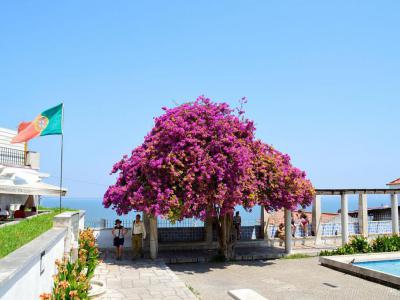
Encompassing the traditional tiled roofs and historical churches of Alfama stretching out towards the Tagus estuary, the view from Santa Luzia is enhanced with its inviting ambiance. This site features a beautifully landscaped garden on multiple levels, with azalea trees, ample seating under pergola-like structures, and walls adorned with traditional blue "azulejo" tiles. One particularly notable azulejo panel illustrates the "Reconquista"-the historical liberation of the Iberian Peninsula from Moorish rule in 1147-which is displayed on the exterior wall of the adjacent Santa Luzia church.
Dating back to the 12th century, this church was largely rebuilt after the devastating 1755 earthquake. Despite its unassuming exterior, it has a cross-shaped layout and a richly decorated Baroque interior. Its façade is highlighted with azulejo tiles that depict important moments of the Portuguese past. Another azulejo mural depicts Commerce Square before it was destroyed in the 1755 earthquake, offering a historical snapshot to visitors.
Conveniently, the Santa Luzia and Gates of the Sun viewpoints are just a short walk from each other, allowing visitors to enjoy both spots in a single trip. The area also includes a small café and restrooms. The latter are found nearby, after a short ascent up the hill, around the corner from the church, and down a set of steps.
Tip:
Visiting the Santa Luzia Viewpoint is recommended either early in the morning or late in the afternoon to catch the exquisite sunrises or sunsets. Summers tend to be crowded and hot, so preparing for high temperatures and sun exposure is crucial. Visiting outside the peak tourist season can offer a cooler and more tranquil experience.
Be sure to keep an eye out for the small market nearby, offering various cork products and textiles, often at more reasonable prices than elsewhere in the city, making it an excellent spot for picking up souvenirs.
Encompassing the traditional tiled roofs and historical churches of Alfama stretching out towards the Tagus estuary, the view from Santa Luzia is enhanced with its inviting ambiance. This site features a beautifully landscaped garden on multiple levels, with azalea trees, ample seating under pergola-like structures, and walls adorned with traditional blue "azulejo" tiles. One particularly notable azulejo panel illustrates the "Reconquista"-the historical liberation of the Iberian Peninsula from Moorish rule in 1147-which is displayed on the exterior wall of the adjacent Santa Luzia church.
Dating back to the 12th century, this church was largely rebuilt after the devastating 1755 earthquake. Despite its unassuming exterior, it has a cross-shaped layout and a richly decorated Baroque interior. Its façade is highlighted with azulejo tiles that depict important moments of the Portuguese past. Another azulejo mural depicts Commerce Square before it was destroyed in the 1755 earthquake, offering a historical snapshot to visitors.
Conveniently, the Santa Luzia and Gates of the Sun viewpoints are just a short walk from each other, allowing visitors to enjoy both spots in a single trip. The area also includes a small café and restrooms. The latter are found nearby, after a short ascent up the hill, around the corner from the church, and down a set of steps.
Tip:
Visiting the Santa Luzia Viewpoint is recommended either early in the morning or late in the afternoon to catch the exquisite sunrises or sunsets. Summers tend to be crowded and hot, so preparing for high temperatures and sun exposure is crucial. Visiting outside the peak tourist season can offer a cooler and more tranquil experience.
Be sure to keep an eye out for the small market nearby, offering various cork products and textiles, often at more reasonable prices than elsewhere in the city, making it an excellent spot for picking up souvenirs.
8) Castelo de Sao Jorge (Saint George's Castle) (must see)
Saint George’s Castle is a historic fortress in Lisbon’s Santa Maria Maior district. Its hilltop location has been occupied since the 8th century BC, with fortifications dating back to the 2nd century BC. Over time, the site reflected influences from the Celts, Phoenicians, Greeks, Carthaginians, Romans, Suebi, Visigoths, and Moors. The Berbers added the so-called “Moorish Encirclement” walls in the 10th century, and the Moors held the castle until the Christian Reconquista.
The castle played a pivotal role during the 1147 Siege of Lisbon when it was captured in a major Second Crusade victory. This fortified stronghold became a royal residence in 1255 and was named after Saint George in the 14th century by King John I to symbolize ties with England. In the later period, it served as a military barracks and home to Portugal’s National Archive. Although damaged in the 1755 earthquake, the 20th-century restorations regained its prominence as a national monument and cultural site.
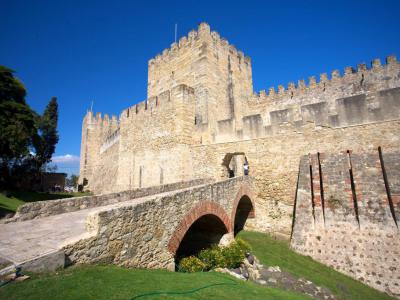
Within this castle complex, you'll find medieval architecture with ten towers, a dry moat, and steep hillsides for natural defense. Highlights include the terraced Arms Square with cannons and a statue of Afonso Henriques, the first king of Portugal, and the Tower of Ulysses, which houses a camera obscura offering shows (every 20 minutes) in various languages, including English, Portuguese, and Spanish. The citadel's primary entrance features a 19th-century gate adorned with Portugal's coat of arms, Queen Maria II's name, and the date 1846.
Inside, visitors can enjoy a range of amenities, including restaurants, cafes, a wine bar, an ice cream stand, and public restrooms. Peacocks roam freely throughout the grounds, particularly in one of the primary dining areas. While dining within the castle walls may be slightly pricier than in the surrounding areas, it is not excessively so. Alternatively, you have the option of bringing your own food and beverages. Admission is reasonably priced and children enter for free.
Saint George’s Castle also includes the ruins of a royal palace, such as the Casa Ogival, which is now home to the Olissipónia multimedia exhibit detailing Lisbon’s history. Gardens and historical artifacts enhance the experience, making the castle a symbol of Lisbon’s rich past and an essential cultural landmark.
Tip:
Although the journey to the castle involves a steep uphill climb, it provides a delightful stroll through the narrow streets of historic Lisbon, with numerous opportunities to stop and savor local cuisine. Alternatively, you can take cable car #28 to admire the neighborhood's charming and diverse architecture, providing excellent photo opportunities.
The castle played a pivotal role during the 1147 Siege of Lisbon when it was captured in a major Second Crusade victory. This fortified stronghold became a royal residence in 1255 and was named after Saint George in the 14th century by King John I to symbolize ties with England. In the later period, it served as a military barracks and home to Portugal’s National Archive. Although damaged in the 1755 earthquake, the 20th-century restorations regained its prominence as a national monument and cultural site.
Within this castle complex, you'll find medieval architecture with ten towers, a dry moat, and steep hillsides for natural defense. Highlights include the terraced Arms Square with cannons and a statue of Afonso Henriques, the first king of Portugal, and the Tower of Ulysses, which houses a camera obscura offering shows (every 20 minutes) in various languages, including English, Portuguese, and Spanish. The citadel's primary entrance features a 19th-century gate adorned with Portugal's coat of arms, Queen Maria II's name, and the date 1846.
Inside, visitors can enjoy a range of amenities, including restaurants, cafes, a wine bar, an ice cream stand, and public restrooms. Peacocks roam freely throughout the grounds, particularly in one of the primary dining areas. While dining within the castle walls may be slightly pricier than in the surrounding areas, it is not excessively so. Alternatively, you have the option of bringing your own food and beverages. Admission is reasonably priced and children enter for free.
Saint George’s Castle also includes the ruins of a royal palace, such as the Casa Ogival, which is now home to the Olissipónia multimedia exhibit detailing Lisbon’s history. Gardens and historical artifacts enhance the experience, making the castle a symbol of Lisbon’s rich past and an essential cultural landmark.
Tip:
Although the journey to the castle involves a steep uphill climb, it provides a delightful stroll through the narrow streets of historic Lisbon, with numerous opportunities to stop and savor local cuisine. Alternatively, you can take cable car #28 to admire the neighborhood's charming and diverse architecture, providing excellent photo opportunities.
9) Igreja de Santo Antonio de Lisboa (St. Anthony's Church)
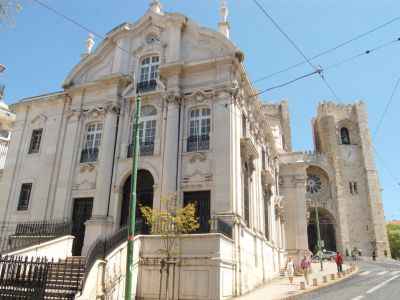
The Church of Saint Anthony of Lisbon, a Roman Catholic church, is a tribute to Saint Anthony of Lisbon, also known as Saint Anthony of Padua. It is famously located at the site where the saint was born in 1195 and has been designated a National Monument. The church's origins trace back to a 15th-century chapel built over Saint Anthony's family home, near the Lisbon Cathedral. This structure underwent several reconstructions, the most notable being during King Manuel I's reign, in the early 16th century, and later, in the 18th century, under King John V.
The 1755 Lisbon earthquake devastated the church, leaving only the main chapel intact. It was subsequently rebuilt in a Baroque-Rococo style post-1767. Unique funding efforts for the rebuild included collections from the city’s children who asked for "a small coin for Saint Anthony." The tradition of venerating Saint Anthony continues robustly with crafted thrones and altars in his honor during Lisbon’s popular June festivities, dedicated to him.
Saint Anthony is deeply revered in Lisbon, not only as the patron saint but also as a matchmaker. Traditionally, couples visit the church on their wedding day to seek blessings for their marriage. Each year on June 13, Saint Anthony's feast day, a procession significant to the city’s cultural and religious calendar, starts from this church, passing the Lisbon Cathedral, and meandering through the Alfama neighborhood.
Pope John Paul II visited the church on May 12, 1982. He inaugurated a statue of Saint Anthony and prayed in the crypt-the only part of the church dating back to 1195-where a tile panel commemorates his visit. The crypt marks the spot where the saint was born and is a poignant site for pilgrims and visitors.
Tip:
Adjacent to the church, you'll find a small museum housing paintings, sculptures, and manuscripts associated with Saint Anthony. Museum admission is fairly cheap, with free entry on Sundays until 2 pm and when using the Lisboa Card. If you have a penchant for acquiring religious souvenirs during your travels, you'll discover a selection of medals, statues, and other items available at the church as well.
The 1755 Lisbon earthquake devastated the church, leaving only the main chapel intact. It was subsequently rebuilt in a Baroque-Rococo style post-1767. Unique funding efforts for the rebuild included collections from the city’s children who asked for "a small coin for Saint Anthony." The tradition of venerating Saint Anthony continues robustly with crafted thrones and altars in his honor during Lisbon’s popular June festivities, dedicated to him.
Saint Anthony is deeply revered in Lisbon, not only as the patron saint but also as a matchmaker. Traditionally, couples visit the church on their wedding day to seek blessings for their marriage. Each year on June 13, Saint Anthony's feast day, a procession significant to the city’s cultural and religious calendar, starts from this church, passing the Lisbon Cathedral, and meandering through the Alfama neighborhood.
Pope John Paul II visited the church on May 12, 1982. He inaugurated a statue of Saint Anthony and prayed in the crypt-the only part of the church dating back to 1195-where a tile panel commemorates his visit. The crypt marks the spot where the saint was born and is a poignant site for pilgrims and visitors.
Tip:
Adjacent to the church, you'll find a small museum housing paintings, sculptures, and manuscripts associated with Saint Anthony. Museum admission is fairly cheap, with free entry on Sundays until 2 pm and when using the Lisboa Card. If you have a penchant for acquiring religious souvenirs during your travels, you'll discover a selection of medals, statues, and other items available at the church as well.
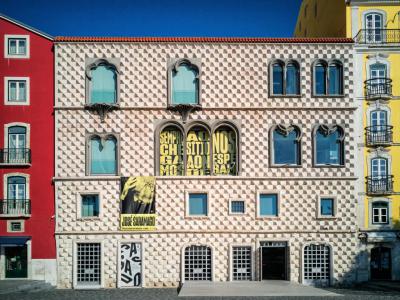
10) Casa dos Bicos (House of Spikes)
Standing out among the buildings in Lisbon's Alfama area, the House of Spikes catches the eye with its diamond-shaped stones (known as "bicos"), offering a glimpse into the opulence of pre-1755 Lisbon. Constructed in 1523 for Brás de Albuquerque, the illegitimate son of Afonso, the Viceroy of India and ruler of Goa and Malacca, the façade reflects the popular architectural style of the 16th century across Europe.
Following the devastating earthquake of 1755, the top two floors of the building fell into ruin; however, in the 1980s, meticulous efforts were undertaken to restore these levels, recreating the original appearance based on old views of Lisbon depicted in tile panels and engravings. Interestingly, in the interim period, the building served as a location for salting fish, as evidenced by the name of the street it stands on-Rua dos Bacalhoeiros, meaning "street of the cod fishermen".
Today, following a comprehensive renovation in the 20th century, the House of Spikes houses the headquarters of the José Saramago Foundation. Within its walls, visitors can explore a permanent exhibition dedicated to the life and literary works of José Saramago, the acclaimed Portuguese author and Nobel Prize laureate who passed away in 2010. As a testament to the writer's wishes, his ashes find their final resting place beneath the shade of an ancient olive tree, creating a poignant and fitting tribute to his memory.
The building also serves as a vibrant cultural hub, hosting a wide array of events such as concerts, plays, book releases, seminars, debates, and engaging talks. Meanwhile, the ground floor has been thoughtfully preserved as an archaeological area where visitors can marvel at sections of a third-century Roman wall and a fish-processing plant that were excavated from beneath. A must-see in this corner of Lisbon, especially since there is lots of information in English.
Tip:
Be sure to observe the elephant footprint, a tribute to one of José Saramago's renowned literary works, "The Elephant's Journey." Additionally, pay attention to the subtle distinctions in the exterior design between the original lower two floors and the newer upper two floors.
Following the devastating earthquake of 1755, the top two floors of the building fell into ruin; however, in the 1980s, meticulous efforts were undertaken to restore these levels, recreating the original appearance based on old views of Lisbon depicted in tile panels and engravings. Interestingly, in the interim period, the building served as a location for salting fish, as evidenced by the name of the street it stands on-Rua dos Bacalhoeiros, meaning "street of the cod fishermen".
Today, following a comprehensive renovation in the 20th century, the House of Spikes houses the headquarters of the José Saramago Foundation. Within its walls, visitors can explore a permanent exhibition dedicated to the life and literary works of José Saramago, the acclaimed Portuguese author and Nobel Prize laureate who passed away in 2010. As a testament to the writer's wishes, his ashes find their final resting place beneath the shade of an ancient olive tree, creating a poignant and fitting tribute to his memory.
The building also serves as a vibrant cultural hub, hosting a wide array of events such as concerts, plays, book releases, seminars, debates, and engaging talks. Meanwhile, the ground floor has been thoughtfully preserved as an archaeological area where visitors can marvel at sections of a third-century Roman wall and a fish-processing plant that were excavated from beneath. A must-see in this corner of Lisbon, especially since there is lots of information in English.
Tip:
Be sure to observe the elephant footprint, a tribute to one of José Saramago's renowned literary works, "The Elephant's Journey." Additionally, pay attention to the subtle distinctions in the exterior design between the original lower two floors and the newer upper two floors.
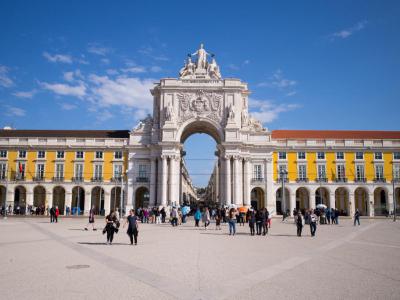
11) Arco da Rua Augusta (Augusta Street Arch)
The Augusta Street Arch, located in Lisbon’s Commerce Plaza, is a historical landmark symbolizing the city’s reconstruction after the devastating 1755 earthquake. Originally envisioned as a bell tower, its design evolved into a grand triumphal arch over more than a century. The structure boasts six 11-meter-tall columns and a rich display of Portuguese historical and cultural motifs.
Atop the arch, a sculptural group symbolizes Glory bestowing laurel leaves upon Valor and Genius, alongside a bell that can be rung. The centerpiece, Glory, stands 7 meters tall, dressed in classical peplos, holding two crowns. Valor is personified by an Amazon figure with dragon-emblazoned armor, representing the Portuguese Royal House of Braganza. Genius, accompanied by a statue of Jupiter and symbols of writing and art, completes the trio. The arch’s height necessitated colossal proportions for these statues, enhancing their visual impact.
Four additional statues stand over the columns, honoring key figures in Portuguese history: the 14th-century general Nuno Álvares Pereira, 18th-century statesman Marquis of Pombal, Medieval Portuguese navigator and explorer Vasco da Gama, and Viriatus, a Lusitanian leader who fought against the Romans in the 2nd century BC. Reclining figures below symbolize the rivers Tagus and Douro, while inscriptions celebrate the Portuguese Empire's grandeur and achievements, including the phrase “To the Virtues of the Greatest, so that it may serve as a lesson to all. Dedicated at public expense.”
Since 2013, visitors can ascend the arch to enjoy panoramic views of Lisbon. A lift takes visitors most of the way, with additional steep stairs and stop-and-go traffic lights managing congestion. Informative displays on landings detail the arch’s history and the development of the area, including the story of an old clock.
Tip:
If you have the Lisbon Card, admission is free, and credit cards are accepted.
It's advisable to go early to avoid both the scorching heat and the crowds.
Atop the arch, a sculptural group symbolizes Glory bestowing laurel leaves upon Valor and Genius, alongside a bell that can be rung. The centerpiece, Glory, stands 7 meters tall, dressed in classical peplos, holding two crowns. Valor is personified by an Amazon figure with dragon-emblazoned armor, representing the Portuguese Royal House of Braganza. Genius, accompanied by a statue of Jupiter and symbols of writing and art, completes the trio. The arch’s height necessitated colossal proportions for these statues, enhancing their visual impact.
Four additional statues stand over the columns, honoring key figures in Portuguese history: the 14th-century general Nuno Álvares Pereira, 18th-century statesman Marquis of Pombal, Medieval Portuguese navigator and explorer Vasco da Gama, and Viriatus, a Lusitanian leader who fought against the Romans in the 2nd century BC. Reclining figures below symbolize the rivers Tagus and Douro, while inscriptions celebrate the Portuguese Empire's grandeur and achievements, including the phrase “To the Virtues of the Greatest, so that it may serve as a lesson to all. Dedicated at public expense.”
Since 2013, visitors can ascend the arch to enjoy panoramic views of Lisbon. A lift takes visitors most of the way, with additional steep stairs and stop-and-go traffic lights managing congestion. Informative displays on landings detail the arch’s history and the development of the area, including the story of an old clock.
Tip:
If you have the Lisbon Card, admission is free, and credit cards are accepted.
It's advisable to go early to avoid both the scorching heat and the crowds.
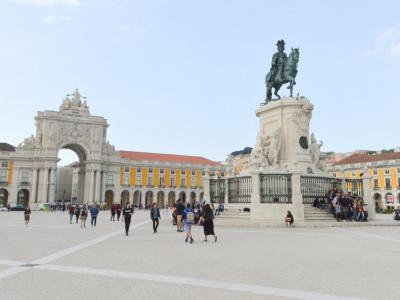
12) Praca do Comercio (Commerce Square) (must see)
Commerce Square in Lisbon is a landmark of historical and architectural significance. Spanning 30,600 square meters, this plaza is situated along the Tagus River and was once the site of the Royal Palace of Ribeira, which was destroyed in the 1755 Lisbon earthquake. This catastrophe also obliterated the royal archive, containing over 200,000 books and centuries of records.
The area's reconstruction was spearheaded by the Marquis of Pombal as part of his revitalization of the Baixa district. The result was a U-shaped layout with symmetrical government buildings flanking the square and opening towards the river. Its new occupants, customs and port authorities, gave rise to the square's new name – "Commerce." The design included ground-floor arcades and two towers inspired by the former Ribeira Palace.
At the center of the square stands an equestrian statue of King José I, unveiled in 1775. The statue honors the King’s role in rebuilding Lisbon and features motifs such as an elephant, symbolizing Portugal's colonial empire.
The plaza’s northern side is marked by the triumphal Augusta Street Arch. Completed in the 19th century, this arch celebrates Lisbon's resilience with sculptures of historical figures such as Vasco da Gama and the Marquis of Pombal.
Adjacent to the square is the Columns Pier. Its marble steps once served as a ceremonial entrance to the city during Portugal’s maritime era.
Tragedy touched the square in 1908 when King Carlos I and his heir Luís Filipe were assassinated here. This event presaged the fall of the Portuguese monarchy and the establishment of the Republic in 1910. Today, a plaque commemorates this pivotal moment in Portuguese history.
The western tower of Commerce Square contains a branch of the Museum of Lisbon.
The square itself is a vibrant hub of activity. Its arcades house souvenir shops, cafes, and Lisbon’s oldest café, Martinho da Arcada. Commerce Square hosts annual events like Portugal Day celebrations and offers visitors a chance to enjoy views of the Tagus River, the 25th of April Bridge, and passing ships. Accessible via trams and ferries, the plaza is both a historic site and a bustling meeting point for locals and tourists.
Tip:
For a glimpse of what the square looked like before the 1755 earthquake, you can find reproductions of contemporary engravings from the 17th and 18th centuries and a modern ceramic tile mural at the Santa Luzia Viewpoint in Alfama.
The area's reconstruction was spearheaded by the Marquis of Pombal as part of his revitalization of the Baixa district. The result was a U-shaped layout with symmetrical government buildings flanking the square and opening towards the river. Its new occupants, customs and port authorities, gave rise to the square's new name – "Commerce." The design included ground-floor arcades and two towers inspired by the former Ribeira Palace.
At the center of the square stands an equestrian statue of King José I, unveiled in 1775. The statue honors the King’s role in rebuilding Lisbon and features motifs such as an elephant, symbolizing Portugal's colonial empire.
The plaza’s northern side is marked by the triumphal Augusta Street Arch. Completed in the 19th century, this arch celebrates Lisbon's resilience with sculptures of historical figures such as Vasco da Gama and the Marquis of Pombal.
Adjacent to the square is the Columns Pier. Its marble steps once served as a ceremonial entrance to the city during Portugal’s maritime era.
Tragedy touched the square in 1908 when King Carlos I and his heir Luís Filipe were assassinated here. This event presaged the fall of the Portuguese monarchy and the establishment of the Republic in 1910. Today, a plaque commemorates this pivotal moment in Portuguese history.
The western tower of Commerce Square contains a branch of the Museum of Lisbon.
The square itself is a vibrant hub of activity. Its arcades house souvenir shops, cafes, and Lisbon’s oldest café, Martinho da Arcada. Commerce Square hosts annual events like Portugal Day celebrations and offers visitors a chance to enjoy views of the Tagus River, the 25th of April Bridge, and passing ships. Accessible via trams and ferries, the plaza is both a historic site and a bustling meeting point for locals and tourists.
Tip:
For a glimpse of what the square looked like before the 1755 earthquake, you can find reproductions of contemporary engravings from the 17th and 18th centuries and a modern ceramic tile mural at the Santa Luzia Viewpoint in Alfama.
