Custom Walk in Budapest, Hungary by kimpink100_75c6d9 created on 2026-04-17
Guide Location: Hungary » Budapest
Guide Type: Custom Walk
# of Sights: 9
Tour Duration: 3 Hour(s)
Travel Distance: 6.6 Km or 4.1 Miles
Share Key: BERB3
Guide Type: Custom Walk
# of Sights: 9
Tour Duration: 3 Hour(s)
Travel Distance: 6.6 Km or 4.1 Miles
Share Key: BERB3
How It Works
Please retrieve this walk in the GPSmyCity app. Once done, the app will guide you from one tour stop to the next as if you had a personal tour guide. If you created the walk on this website or come to the page via a link, please follow the instructions below to retrieve the walk in the app.
Retrieve This Walk in App
Step 1. Download the app "GPSmyCity: Walks in 1K+ Cities" on Apple App Store or Google Play Store.



Step 2. In the GPSmyCity app, download(or launch) the guide "Budapest Map and Walking Tours".
Step 3. Tap the menu button located at upper right corner of the "Walks" screen and select "Retrieve custom walk". Enter the share key: BERB3
1) Chain Bridge (must see)
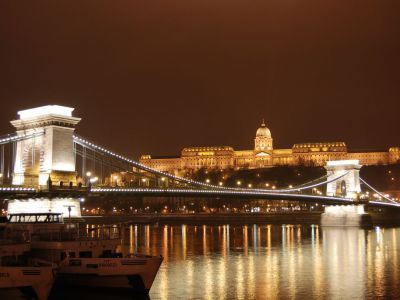
The Chain Bridge isn’t just a way across the Danube-it’s Budapest’s ultimate “glow-up” moment. Opened in 1849, it was the first permanent link between Buda and Pest, finally sparing locals the hassle of ferries, boats, or heroic swims to cross the river. Credit goes to Count István Széchenyi, who, after being famously stranded for a week by bad weather, decided enough was enough. He brought in English engineer William Clark to design the bridge, and Scottish engineer Adam Clark to actually build it.
At the time, the Chain Bridge was considered a marvel of modern engineering, with giant iron chains strung between massive stone towers. It wasn’t just practical, but also stylish enough to stir a bit of envy among Europe’s grandest cities. Its opening marked a major step toward the modernization of Hungary, both economically and socially.
History, however, wasn’t kind. During World War II, retreating German troops blew it apart. But in true Budapest spirit, the city painstakingly rebuilt the bridge, reopening it in 1949, exactly a century after its original debut.
Walk across today and you’ll be rewarded with some of the best views in town. On the Buda side, you’re at the foot of Castle Hill, a short stroll from the Fisherman’s Bastion and Matthias Church. Cross over to Pest, and you’ll land near the stunning Gresham Palace and Széchenyi Square.
And then there are the lions-those fierce stone guardians stading at both ends. Local legend says they don’t have tongues, but spoiler alert: they do, just cleverly hidden from view.
Especially at night, when it’s lit up, the Chain Bridge feels like the heartstring tying Budapest together. Don't miss the chance to walk it, and feel the heartbeat of Budapest under your feet.
At the time, the Chain Bridge was considered a marvel of modern engineering, with giant iron chains strung between massive stone towers. It wasn’t just practical, but also stylish enough to stir a bit of envy among Europe’s grandest cities. Its opening marked a major step toward the modernization of Hungary, both economically and socially.
History, however, wasn’t kind. During World War II, retreating German troops blew it apart. But in true Budapest spirit, the city painstakingly rebuilt the bridge, reopening it in 1949, exactly a century after its original debut.
Walk across today and you’ll be rewarded with some of the best views in town. On the Buda side, you’re at the foot of Castle Hill, a short stroll from the Fisherman’s Bastion and Matthias Church. Cross over to Pest, and you’ll land near the stunning Gresham Palace and Széchenyi Square.
And then there are the lions-those fierce stone guardians stading at both ends. Local legend says they don’t have tongues, but spoiler alert: they do, just cleverly hidden from view.
Especially at night, when it’s lit up, the Chain Bridge feels like the heartstring tying Budapest together. Don't miss the chance to walk it, and feel the heartbeat of Budapest under your feet.
2) Vaci Street
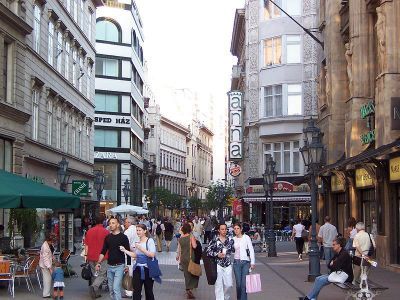
Stretching across more than fifteen blocks through the very heart of Pest, Váci Street is a pedestrian avenue that takes about half an hour to walk from end to end. For over a century, it has been the go-to place for locals to see and be seen. Every few steps reveals another inviting spot: shops, restaurants, cafés, bars, and boutiques, each doorway tempting you to step inside.
If pressed for time, you can easily skip the more generic stops and keep an eye out for the beautiful Art Nouveau facades presented here in abundance. Behind many of them are antique stores, art galleries, souvenir shops, and a good number of currency exchange offices, handy if you need a few extra Hungarian Forints. In the warmer months, street performers add their own flair to the experience, turning a casual stroll into an open-air cultural show.
At the northern end, Vörösmarty Square greets you with impressive architecture and famous cafés like Gerbeaud, one of Budapest’s oldest and most beloved pastry shops. Wander toward the southern end, and you’ll come across the striking Central Market Hall, an indoor market where you can browse for fresh produce, local crafts, and traditional Hungarian delicacies like sausages and paprika.
Váci Street is perfect not just for shopping, but also for people-watching or enjoying a meal on a terrace. Many restaurants serve Hungarian specialties, and some offer live folk music in the evenings, adding even more charm. Also, keep an eye out for the side streets, where beautiful Art Nouveau buildings and hidden courtyards are waiting to be discovered.
If pressed for time, you can easily skip the more generic stops and keep an eye out for the beautiful Art Nouveau facades presented here in abundance. Behind many of them are antique stores, art galleries, souvenir shops, and a good number of currency exchange offices, handy if you need a few extra Hungarian Forints. In the warmer months, street performers add their own flair to the experience, turning a casual stroll into an open-air cultural show.
At the northern end, Vörösmarty Square greets you with impressive architecture and famous cafés like Gerbeaud, one of Budapest’s oldest and most beloved pastry shops. Wander toward the southern end, and you’ll come across the striking Central Market Hall, an indoor market where you can browse for fresh produce, local crafts, and traditional Hungarian delicacies like sausages and paprika.
Váci Street is perfect not just for shopping, but also for people-watching or enjoying a meal on a terrace. Many restaurants serve Hungarian specialties, and some offer live folk music in the evenings, adding even more charm. Also, keep an eye out for the side streets, where beautiful Art Nouveau buildings and hidden courtyards are waiting to be discovered.
3) Central Market Hall (Nagyvasarcsarnok) (must see)
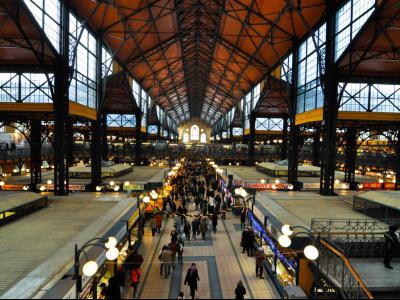
Budapest’s Central Market is a must-visit for anyone new to the Hungarian capital. As the largest and oldest marketplace in the city, it traces its origins back to the late 19th century, when Budapest’s first mayor, Karl Kamermayer, helped fund its construction out of his own pocket. Under Kamermayer’s leadership, the city rose to become not only Hungary’s political and economic heart but also one of Europe’s thriving cultural centers.
Complete with a grand neo-Gothic entrance gate, the market’s steel-framed structure stretches across three floors and covers around ten thousand square meters. One of its most distinctive features is the roof, restored in the 1990s and decorated with colorful tiles. After suffering heavy damage during both world wars, the structure lay dormant for years, but careful restorations in the 1990s have returned it to its former glory.
Now, if you’re a foodie with a taste for regional specialties, this place will likely feel like paradise. Stalls brim with Hungarian favorites: lángos topped with sour cream and cheese, rich paprika, bottles of golden Tokaji wine, túró rudi snacks, caviar, handcrafted sausages, and pickled specialties like cucumbers, cabbage, beets, and garlic. The ground floor mostly hosts butchers, bakers, spice vendors, and spirit sellers, while the upper level is where you’ll find eateries and souvenir shops. Be sure to stop at the lángos stand upstairs, widely considered the best, and pair the treat with a refreshing regional beer. Down in the basement, a supermarket, a fish market, and rows of pickle vendors complete the offering.
Beyond food, the market also offers a wide range of handicrafts, folk art, porcelain, crystal, and souvenirs of various sort. Prices are generally reasonable, though you might want to browse a bit to find the best deals since many stalls carry similar goods. Most transactions are cash-based, though souvenir vendors often accept both Hungarian Forints and Euros, making shopping somewhat easier.
Complete with a grand neo-Gothic entrance gate, the market’s steel-framed structure stretches across three floors and covers around ten thousand square meters. One of its most distinctive features is the roof, restored in the 1990s and decorated with colorful tiles. After suffering heavy damage during both world wars, the structure lay dormant for years, but careful restorations in the 1990s have returned it to its former glory.
Now, if you’re a foodie with a taste for regional specialties, this place will likely feel like paradise. Stalls brim with Hungarian favorites: lángos topped with sour cream and cheese, rich paprika, bottles of golden Tokaji wine, túró rudi snacks, caviar, handcrafted sausages, and pickled specialties like cucumbers, cabbage, beets, and garlic. The ground floor mostly hosts butchers, bakers, spice vendors, and spirit sellers, while the upper level is where you’ll find eateries and souvenir shops. Be sure to stop at the lángos stand upstairs, widely considered the best, and pair the treat with a refreshing regional beer. Down in the basement, a supermarket, a fish market, and rows of pickle vendors complete the offering.
Beyond food, the market also offers a wide range of handicrafts, folk art, porcelain, crystal, and souvenirs of various sort. Prices are generally reasonable, though you might want to browse a bit to find the best deals since many stalls carry similar goods. Most transactions are cash-based, though souvenir vendors often accept both Hungarian Forints and Euros, making shopping somewhat easier.
4) Nagy Csarnok (The Great Market Hall)
What to buy here: The Hungarian Secret Box.
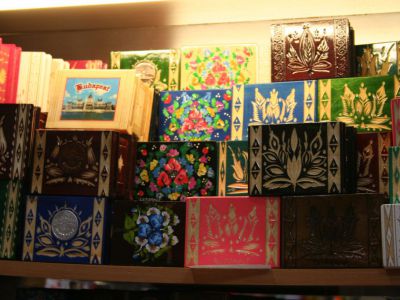
At first glance, you may think these lovely wooden boxes are ordinary jewelry boxes. That is, until you attempt to open one and discover that the lid does not move upon command. Only after the shop keeper has shown you how to slide open the secret panels, uncover the key and the hidden lock, will you have access to the inside of this clever puzzle box. And, if that’s not enough to satisfy your cravings for secrecy, there is a hidden compartment inside the box itself, in which you can store your most treasured possessions. Hand carved out of wood, these boxes make a wonderful gift for anyone who enjoys puzzles or values their privacy.
There are a number of aesthetic choices to make when purchasing this gift: the boxes come in many different sizes -from tiny ring sized boxes to full sized jewelry boxes- some are painted and some retain the original look of the wood they are carved from. Many vendors will also offer to engrave a name and date on the box as well- often at no additional cost. The cost of the boxes runs from $10-$20 and they are widely available throughout the city. They are on sale at many of the stands in the Nagy Csarnok (The Great Market Hall) which is located on the Danube at Fovam Ter.
Designed in 1896, this beautiful market is open Monday from 6:00am-5:00pm, Tuesday- Friday from 6:00am-6:00pm and on Saturday from 6:00am-2:00pm. Please note that the market is closed on Sundays.
At first glance, you may think these lovely wooden boxes are ordinary jewelry boxes. That is, until you attempt to open one and discover that the lid does not move upon command. Only after the shop keeper has shown you how to slide open the secret panels, uncover the key and the hidden lock, will you have access to the inside of this clever puzzle box. And, if that’s not enough to satisfy your cravings for secrecy, there is a hidden compartment inside the box itself, in which you can store your most treasured possessions. Hand carved out of wood, these boxes make a wonderful gift for anyone who enjoys puzzles or values their privacy.
There are a number of aesthetic choices to make when purchasing this gift: the boxes come in many different sizes -from tiny ring sized boxes to full sized jewelry boxes- some are painted and some retain the original look of the wood they are carved from. Many vendors will also offer to engrave a name and date on the box as well- often at no additional cost. The cost of the boxes runs from $10-$20 and they are widely available throughout the city. They are on sale at many of the stands in the Nagy Csarnok (The Great Market Hall) which is located on the Danube at Fovam Ter.
Designed in 1896, this beautiful market is open Monday from 6:00am-5:00pm, Tuesday- Friday from 6:00am-6:00pm and on Saturday from 6:00am-2:00pm. Please note that the market is closed on Sundays.
5) Great Synagogue (Dohany Street Synagogue) (must see)
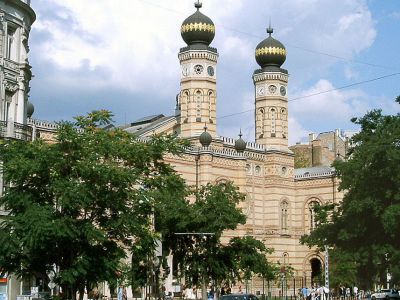
Built in the 1850s for the Neolog Jewish community, this synagogue ranks as the second-largest in the world, second only to Temple Emanu-El in New York. Much like the one on nearby Rumbach Street, it was designed by Viennese architect Ludwig Forster, embracing a richly detailed Moorish Revival style. The building forms part of a larger Jewish Quarter complex that includes the Heroes’ Temple, a graveyard, a Holocaust memorial, and the Jewish Museum. During World War II, Dohány Street marked the boundary of the Budapest Ghetto, and even today, the area carries a profound sense of remembrance.
The synagogue suffered heavy damage during the war and endured years of neglect under communist rule. It wasn’t until the 1990s that an extensive restoration finally returned it to its former grandeur. The twin octagonal towers, flanking the main entrance and crowned with onion domes, now make this structure visible all over the city. Inside, the vast nave stretches nearly 40 feet high, revealing Gothic, Romantic, and Byzantine influences. A new mechanical organ fills the space, replacing the original one crafted in the 19th century.
As is traditional, the ground floor seating is reserved for men, while women are seated in the upper galleries. In all, the building can accommodate up to 3,000 worshippers.
Those curious about Jewish history will find much to explore here. Next door is the Jewish Heroes’ Mausoleum, and upstairs, the museum and archives offer informative and thought-provoking exhibits. In the adjacent graveyard, victims of the Holocaust are laid to rest alongside non-Jews who risked their lives to save others. The neighboring park holds a memorial honoring these courageous individuals.
Tip: The synagogue offers guided group tours in several languages. Visitors are asked to observe a modest dress code; if needed, special coverings are provided at the entrance.
The synagogue suffered heavy damage during the war and endured years of neglect under communist rule. It wasn’t until the 1990s that an extensive restoration finally returned it to its former grandeur. The twin octagonal towers, flanking the main entrance and crowned with onion domes, now make this structure visible all over the city. Inside, the vast nave stretches nearly 40 feet high, revealing Gothic, Romantic, and Byzantine influences. A new mechanical organ fills the space, replacing the original one crafted in the 19th century.
As is traditional, the ground floor seating is reserved for men, while women are seated in the upper galleries. In all, the building can accommodate up to 3,000 worshippers.
Those curious about Jewish history will find much to explore here. Next door is the Jewish Heroes’ Mausoleum, and upstairs, the museum and archives offer informative and thought-provoking exhibits. In the adjacent graveyard, victims of the Holocaust are laid to rest alongside non-Jews who risked their lives to save others. The neighboring park holds a memorial honoring these courageous individuals.
Tip: The synagogue offers guided group tours in several languages. Visitors are asked to observe a modest dress code; if needed, special coverings are provided at the entrance.
6) Szimpla Kert
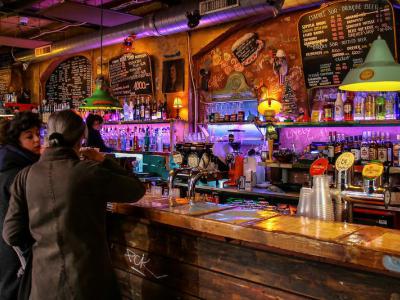
Arguably Budapest's number-one ruin pub, Szimpla Kert also inspired all other pubs of its kind in Budapest. This place is not so much a bar, more a labyrinth of bars in three buildings forming a C-shape with a central courtyard. The bars in the courtyard are serving hundreds of people, so grab a drink at any of them, as you're free to walk with it to any area.
Step up a metal staircase to the mezzanine floor that joins the buildings together in a hard-to-describe network of dozens more bars, tropical plants, hipster art and strange sights, e.g. a woman selling carrots, people on cushions in one room watching a chilled out movie, a futuristic gin laboratory, and rough and ready bars serving up beers/shots for cheap prices.
This bar is perfect for a cool couple's night to get lost in one of the quieter corners and people-watch, or if you're a larger group of friends looking to party hard, you can immerse yourself fully in the experience, crawling from one bar to the next. With staircases, multiple levels and lots of places to get lost, just have a meetup point planned if things get too wild!
Tip:
Don't miss the Sunday farmers' market and all-you-can-eat brunch! The food on offer is fresh, local, delicious and plentiful.
Step up a metal staircase to the mezzanine floor that joins the buildings together in a hard-to-describe network of dozens more bars, tropical plants, hipster art and strange sights, e.g. a woman selling carrots, people on cushions in one room watching a chilled out movie, a futuristic gin laboratory, and rough and ready bars serving up beers/shots for cheap prices.
This bar is perfect for a cool couple's night to get lost in one of the quieter corners and people-watch, or if you're a larger group of friends looking to party hard, you can immerse yourself fully in the experience, crawling from one bar to the next. With staircases, multiple levels and lots of places to get lost, just have a meetup point planned if things get too wild!
Tip:
Don't miss the Sunday farmers' market and all-you-can-eat brunch! The food on offer is fresh, local, delicious and plentiful.
7) Gozsdu Courtyard (Gozsdu-udvar)
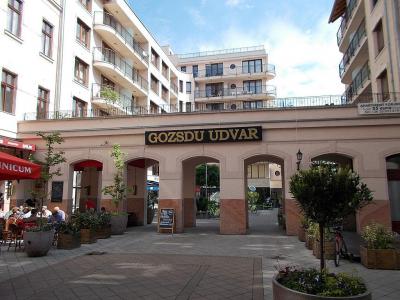
Tucked away in the heart of Budapest’s historic Jewish Quarter, Gozsdu Courtyard is one of the city’s most energetic and eclectic gathering spots. Originally built in the early 1900s, the complex was funded by Emanuil Gojdu, a Romanian-Hungarian lawyer who left his wealth to support local communities. The clever architectural design, with its series of six interconnected courtyards, was both practical and elegant, blending residential living with small shops and artisan workshops.
Today, the courtyard has reinvented itself as a maze of cafés, bars, restaurants, art galleries, and boutique shops. It’s an ideal place for a laid-back brunch, an afternoon stroll through pop-up artisan markets, or diving headfirst into the buzzing nightlife scene. Sipping craft cocktails, catching live music, or simply people-watching from a sunny terrace, you’ll always feel the electric pulse running through the space.
By day, Gozsdu offers a relaxed, family-friendly vibe. Coffee aromas mingle with the sounds of street musicians, and you might stumble upon vintage treasures or quirky art exhibits. But when the sun sets, the atmosphere shifts. Fairy lights flicker overhead, the patios come alive, and a lively soundtrack of laughter, clinking glasses, and music fills the air.
The courtyard’s location also places you right at the heart of the Old Jewish Quarter, just steps from cultural landmarks like the Dohány Street Synagogue, the Jewish Museum, and several important memorials scattered through the neighborhood.
Tip: For a few standout spots, check out DIVINO Wine Bar with its excellent range of Hungarian wines, CAFE VIAN for an impressively varied menu, 2 SPAGHI – one of the best pasta places outside of Italy, and the buzzing SPILER ‘bistropub’ which excels by its unique interior ambiance (plus SPILER SHANGHAI across the street for an Asian twist). Most offer both indoor and outdoor seating-perfect for soaking up the atmosphere any time of day.
Today, the courtyard has reinvented itself as a maze of cafés, bars, restaurants, art galleries, and boutique shops. It’s an ideal place for a laid-back brunch, an afternoon stroll through pop-up artisan markets, or diving headfirst into the buzzing nightlife scene. Sipping craft cocktails, catching live music, or simply people-watching from a sunny terrace, you’ll always feel the electric pulse running through the space.
By day, Gozsdu offers a relaxed, family-friendly vibe. Coffee aromas mingle with the sounds of street musicians, and you might stumble upon vintage treasures or quirky art exhibits. But when the sun sets, the atmosphere shifts. Fairy lights flicker overhead, the patios come alive, and a lively soundtrack of laughter, clinking glasses, and music fills the air.
The courtyard’s location also places you right at the heart of the Old Jewish Quarter, just steps from cultural landmarks like the Dohány Street Synagogue, the Jewish Museum, and several important memorials scattered through the neighborhood.
Tip: For a few standout spots, check out DIVINO Wine Bar with its excellent range of Hungarian wines, CAFE VIAN for an impressively varied menu, 2 SPAGHI – one of the best pasta places outside of Italy, and the buzzing SPILER ‘bistropub’ which excels by its unique interior ambiance (plus SPILER SHANGHAI across the street for an Asian twist). Most offer both indoor and outdoor seating-perfect for soaking up the atmosphere any time of day.
8) Hungarian Parliament Building (must see)
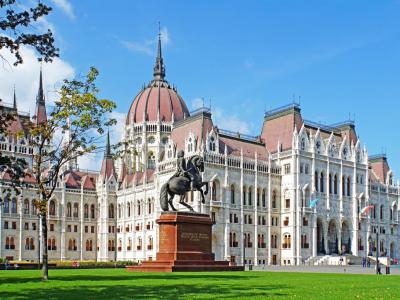
The seat of the Hungarian Parliament is a massive Neo-Gothic edifice along the eastern bank of the Danube. Towering over the city, it’s not only the most recognizable landmark in Budapest but also the largest building in Hungary-and one of the oldest parliamentary structures in Europe.
Built in 1896 to mark Hungary’s millennial anniversary, the Parliament was intended to symbolize the country’s newfound political unity. The scale of the project was staggering: around 100,000 workers contributed to its construction, using 40 million bricks, 40 kilos of gold, and half a million precious stones and decorative elements. Inside and out, the structure dazzles with 242 sculptures, 27 grand entrance gates, 700 roms and an incredible 19 kilometers of stairways and corridors.
At the heart of it all lies the magnificent central hall, home to the Hungarian Coronation Regalia. These priceless treasures-the Holy Crown of Hungary, the orb, the scepter, and a Renaissance-style sword-are displayed under the soaring dome, offering visitors a rare glimpse into the nation’s royal past.
Beyond its grand interiors, the Parliament is also known for its daily Changing of the Guard ceremony, a popular spectacle each afternoon that adds even more life to its regal atmosphere. And once evening falls and the building lights up, it transforms into a glowing centerpiece of the Budapest skyline-resembling, from a distance, an enormous, glittering Christmas tree.
Make sure to carve out some time to experience it up close-you’ll be walking through history under one of the most beautiful roofs in Europe!
Built in 1896 to mark Hungary’s millennial anniversary, the Parliament was intended to symbolize the country’s newfound political unity. The scale of the project was staggering: around 100,000 workers contributed to its construction, using 40 million bricks, 40 kilos of gold, and half a million precious stones and decorative elements. Inside and out, the structure dazzles with 242 sculptures, 27 grand entrance gates, 700 roms and an incredible 19 kilometers of stairways and corridors.
At the heart of it all lies the magnificent central hall, home to the Hungarian Coronation Regalia. These priceless treasures-the Holy Crown of Hungary, the orb, the scepter, and a Renaissance-style sword-are displayed under the soaring dome, offering visitors a rare glimpse into the nation’s royal past.
Beyond its grand interiors, the Parliament is also known for its daily Changing of the Guard ceremony, a popular spectacle each afternoon that adds even more life to its regal atmosphere. And once evening falls and the building lights up, it transforms into a glowing centerpiece of the Budapest skyline-resembling, from a distance, an enormous, glittering Christmas tree.
Make sure to carve out some time to experience it up close-you’ll be walking through history under one of the most beautiful roofs in Europe!
9) Shoes on the Danube Bank (must see)
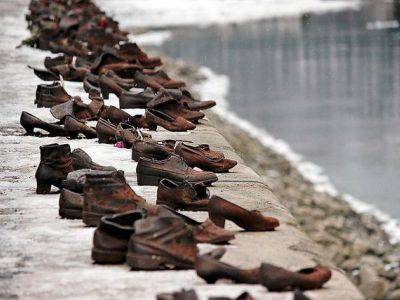
The Shoes on the Danube Bank is a haunting memorial created in 2005 to honor the Jewish victims brutally murdered by the Arrow Cross militia during the Second World War in Budapest. In those grim days, victims were forced to remove their shoes before being shot at the river’s edge. Their bodies fell into the Danube, carried silently away by the current.
Set along the Pest side of the Danube Promenade and just south of the Hungarian Parliament, the memorial captures the heartbreak of those moments with stark simplicity. Sixty pairs of iron shoes, modeled in styles true to the 1940s, line the stone embankment. Each pair tells its own silent story-of lives interrupted, families destroyed, hopes abandoned.
Behind the shoes runs a 40-meter-long stone bench, standing 70 centimeters high. Three cast-iron plaques are placed at intervals, bearing an inscription in Hungarian, English, and Hebrew: “To the memory of the victims shot into the Danube by Arrow Cross militiamen in 1944–45.”
The flowing river beside the memorial deepens the emotional weight of the place, offering a quiet, constant reminder of how easily lives can be swept away. Some memorials speak loudly; this one whispers-and stays with you long after you've moved on.
Set along the Pest side of the Danube Promenade and just south of the Hungarian Parliament, the memorial captures the heartbreak of those moments with stark simplicity. Sixty pairs of iron shoes, modeled in styles true to the 1940s, line the stone embankment. Each pair tells its own silent story-of lives interrupted, families destroyed, hopes abandoned.
Behind the shoes runs a 40-meter-long stone bench, standing 70 centimeters high. Three cast-iron plaques are placed at intervals, bearing an inscription in Hungarian, English, and Hebrew: “To the memory of the victims shot into the Danube by Arrow Cross militiamen in 1944–45.”
The flowing river beside the memorial deepens the emotional weight of the place, offering a quiet, constant reminder of how easily lives can be swept away. Some memorials speak loudly; this one whispers-and stays with you long after you've moved on.
