Custom Walk in Amsterdam, Netherlands by bechtelc_e599e9 created on 2026-04-21
Guide Location: Netherlands » Amsterdam
Guide Type: Custom Walk
# of Sights: 6
Tour Duration: 3 Hour(s)
Travel Distance: 7.5 Km or 4.7 Miles
Share Key: SY7T6
Guide Type: Custom Walk
# of Sights: 6
Tour Duration: 3 Hour(s)
Travel Distance: 7.5 Km or 4.7 Miles
Share Key: SY7T6
How It Works
Please retrieve this walk in the GPSmyCity app. Once done, the app will guide you from one tour stop to the next as if you had a personal tour guide. If you created the walk on this website or come to the page via a link, please follow the instructions below to retrieve the walk in the app.
Retrieve This Walk in App
Step 1. Download the app "GPSmyCity: Walks in 1K+ Cities" on Apple App Store or Google Play Store.



Step 2. In the GPSmyCity app, download(or launch) the guide "Amsterdam Map and Walking Tours".
Step 3. Tap the menu button located at upper right corner of the "Walks" screen and select "Retrieve custom walk". Enter the share key: SY7T6
1) NEMO Science Museum (must see)
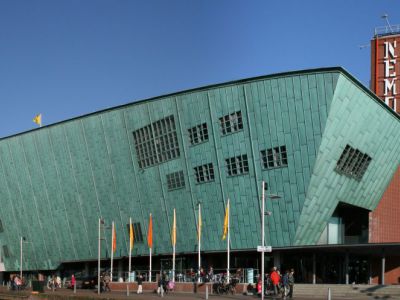
Resembling the inverted bow of a ship, the imposing copper-green raised structure that towers over the entrance to the River IJ tunnel was designed by the renowned Italian architect Renzo Piano in 1997. Within this structure lies NEMO, a sizeable and highly popular science and technology center, which boasts a range of interactive exhibits that make it an outstanding attraction for children, particularly those in the pre-teenage age group.
Spanning three primary levels, NEMO offers a wealth of fascinating content. In the "Life in Universe" section, interactive displays explore the farthest reaches of the globe. Meanwhile, "Sensational Science" sheds light on the principles behind everyday phenomena like light and sound. Among other visitor favorites are exhibits such as "Chain Reaction", "Soap Bubbles", and "Take a Journey through the Mind."
Why You Should Visit:
Not only for the distinctive "Titanic" building but also for the breathtaking views that can be enjoyed from its top deck. Inside, inquisitive minds will find a stimulating environment, with each spacious floor dedicated to different themes and engaging activities.
Spanning three primary levels, NEMO offers a wealth of fascinating content. In the "Life in Universe" section, interactive displays explore the farthest reaches of the globe. Meanwhile, "Sensational Science" sheds light on the principles behind everyday phenomena like light and sound. Among other visitor favorites are exhibits such as "Chain Reaction", "Soap Bubbles", and "Take a Journey through the Mind."
Why You Should Visit:
Not only for the distinctive "Titanic" building but also for the breathtaking views that can be enjoyed from its top deck. Inside, inquisitive minds will find a stimulating environment, with each spacious floor dedicated to different themes and engaging activities.
2) Het Scheepvaartmuseum (National Maritime Museum) (must see)
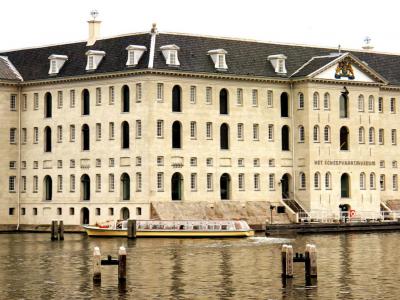
Holding the largest collection of model ships in the world, and crammed with fascinating objects, the former naval storehouse became a museum in 1973 when the Dutch Navy vacated the building. Where sails, ropes and guns were once stored is now an Aladdin’s Cave of nautical treasures. All ages are catered for, with virtual adventures at sea and interactive shows for kids and adults alike.
The courtyard, enclosed with a roof made of glass and an intricate naval compass, is stunning in itself but once inside, the collection offers rich displays of art, scale models, interactive activities and interesting artifacts. The space is nicely broken into three easily accessible sections, each with something to interest everyone.
The replica ship "The Amsterdam" is well worth a visit, especially the interactive activity where visitors put on 3D-glasses and are guided back in time to see what the harbor would have been like in the 1700s.
The restaurant and courtyard are open to everyone, not just those visiting the museum. There is a well-stocked gift shop as well.
Tip:
Be sure not to overlook the free virtual reality show about the East India ship, but remember to pre-book tickets for it online.
The courtyard, enclosed with a roof made of glass and an intricate naval compass, is stunning in itself but once inside, the collection offers rich displays of art, scale models, interactive activities and interesting artifacts. The space is nicely broken into three easily accessible sections, each with something to interest everyone.
The replica ship "The Amsterdam" is well worth a visit, especially the interactive activity where visitors put on 3D-glasses and are guided back in time to see what the harbor would have been like in the 1700s.
The restaurant and courtyard are open to everyone, not just those visiting the museum. There is a well-stocked gift shop as well.
Tip:
Be sure not to overlook the free virtual reality show about the East India ship, but remember to pre-book tickets for it online.
3) Museum Het Rembrandthuis (Rembrandt House Museum) (must see)
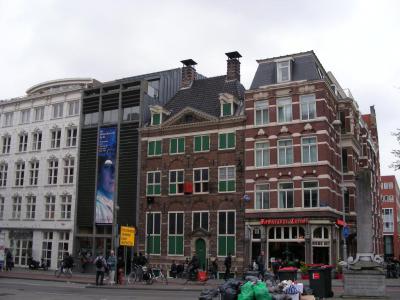
This old house in Amsterdam's Jews Broadway, with an ornate facade adorned with intricate wooden shutters and an elaborate pediment, was once the home and studio of the Dutch painter Rembrandt van Rijn. Commonly known as Rembrandt, he was a prominent 17th-century figure, rightfully acclaimed as one of the foremost artists of the Dutch Golden Age-a period when the Dutch Empire enjoyed the zenith of its power and renown.
Originally built in 1606, the property served as the artist's residence during the pinnacle of his fame, a place where he resided for nearly two decades, from 1639 to 1658, and created some of his most iconic masterpieces, such as "The Night Watch."
However, the lavish expenditure on furnishings ultimately contributed to Rembrandt's financial downfall. After his bankruptcy, the house changed hands and underwent various renovations before it was purchased by Amsterdam's municipality, in 1907, and then restored and converted into a museum by 1911. The building was redesigned in the 20th century based on the inventory drawn up during Rembrandt's bankruptcy.
The museum shows Rembrandt's living and working quarters, giving the visitor an idea of the artist's daily life. Stepping inside here feels akin to entering one of Rembrandt's own paintings, with quintessential Dutch interiors featuring black-and-white tiled floors and traditional box beds. Two particularly captivating highlights include a nearly complete collection of Rembrandt's etchings, exhibited in its modern wing and etching cabinet. In Rembrandt's old house, there are also works of art by his teacher, Pieter Lastman, and his pupils, Ferdinand Bol and Govert Flinck. The museum also hosts temporary exhibitions throughout the year of the works by Rembrandt's contemporaries and (contemporary) followers.
In 2019, research confirmed that two pots found in Rembrandt’s old cesspool were used by him for mixing quartz soil, a unique canvas preparation method. These pots are now on display here.
Tip:
Reserve some time to browse the museum's quaint shop, offering a selection of delightful, high-quality souvenirs at reasonable prices. It is highly likely that you will want to get something as a keepsake for yourself too.
Originally built in 1606, the property served as the artist's residence during the pinnacle of his fame, a place where he resided for nearly two decades, from 1639 to 1658, and created some of his most iconic masterpieces, such as "The Night Watch."
However, the lavish expenditure on furnishings ultimately contributed to Rembrandt's financial downfall. After his bankruptcy, the house changed hands and underwent various renovations before it was purchased by Amsterdam's municipality, in 1907, and then restored and converted into a museum by 1911. The building was redesigned in the 20th century based on the inventory drawn up during Rembrandt's bankruptcy.
The museum shows Rembrandt's living and working quarters, giving the visitor an idea of the artist's daily life. Stepping inside here feels akin to entering one of Rembrandt's own paintings, with quintessential Dutch interiors featuring black-and-white tiled floors and traditional box beds. Two particularly captivating highlights include a nearly complete collection of Rembrandt's etchings, exhibited in its modern wing and etching cabinet. In Rembrandt's old house, there are also works of art by his teacher, Pieter Lastman, and his pupils, Ferdinand Bol and Govert Flinck. The museum also hosts temporary exhibitions throughout the year of the works by Rembrandt's contemporaries and (contemporary) followers.
In 2019, research confirmed that two pots found in Rembrandt’s old cesspool were used by him for mixing quartz soil, a unique canvas preparation method. These pots are now on display here.
Tip:
Reserve some time to browse the museum's quaint shop, offering a selection of delightful, high-quality souvenirs at reasonable prices. It is highly likely that you will want to get something as a keepsake for yourself too.
4) Rijksmuseum (must see)
The Netherlands' magnificent national museum is the most frequently visited museum in Amsterdam, boasting an astounding collection of nearly one million Dutch works of art, though only a fraction of this vast treasure is on public display. Its origins trace back to 1808 when King Louis Napoleon established it within the Royal Palace on the Dam, later relocating to its current site near the Vondelpark in 1885.
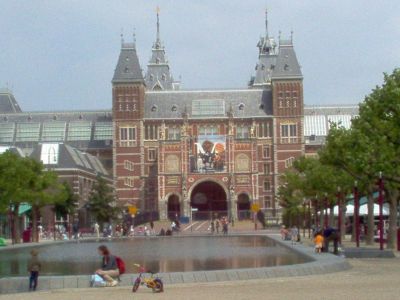
Architect Pierre Cuypers contributed to the museum's distinctive blend of Gothic and Renaissance architecture, resulting in a structure that not only exudes architectural grandeur but also offers an extensive interior space. This expansion was undertaken with the sole purpose of accommodating the entire collection transported from The Hague.
In recent years, the Rijksmuseum has undergone extensive renovations, featuring a remarkable new entrance area. However, the heightened structure has altered the original floor plan, making navigation between sections somewhat challenging. The ground floor, designated as Floor 0, houses a diverse range of exhibits, including early Flemish paintings (1100–1600) on one side and collections encompassing items like delftware, armaments, and ship models on the other. Floor 1 showcases Dutch art from the 18th and 19th centuries, with notable works by artists such as Van Gogh and representatives of the Hague School of landscape artists. Moving upward, Floor 3 provides an overview of 20th-century art and applied art, featuring Dutch luminaries like Karel Appel and Gerrit Rietveld. In the midst of these levels, Floor 2 houses the heart of the collection: the Golden Age paintings, which understandably draw the most attention from visitors, with key works prominently displayed in the expansive Gallery of Honour. Temporary exhibitions are hosted in a separate wing.
When visiting, be sure to pick up a complimentary map at the reception desk. Keep in mind that the Rijksmuseum is exceptionally popular, so it's advisable to arrive early in the day, especially during major temporary exhibitions. Additionally, you can significantly reduce wait times by possessing an I amsterdam card, a Museumkaart, or by booking your visit online.
Why You Should Pay a Visit:
It's the place where the art you've encountered in your art classes and books comes to life.
Tip:
Browse until you've had your fill, then take a break from the art and artifacts at the excellent atrium café before exploring another section.
Architect Pierre Cuypers contributed to the museum's distinctive blend of Gothic and Renaissance architecture, resulting in a structure that not only exudes architectural grandeur but also offers an extensive interior space. This expansion was undertaken with the sole purpose of accommodating the entire collection transported from The Hague.
In recent years, the Rijksmuseum has undergone extensive renovations, featuring a remarkable new entrance area. However, the heightened structure has altered the original floor plan, making navigation between sections somewhat challenging. The ground floor, designated as Floor 0, houses a diverse range of exhibits, including early Flemish paintings (1100–1600) on one side and collections encompassing items like delftware, armaments, and ship models on the other. Floor 1 showcases Dutch art from the 18th and 19th centuries, with notable works by artists such as Van Gogh and representatives of the Hague School of landscape artists. Moving upward, Floor 3 provides an overview of 20th-century art and applied art, featuring Dutch luminaries like Karel Appel and Gerrit Rietveld. In the midst of these levels, Floor 2 houses the heart of the collection: the Golden Age paintings, which understandably draw the most attention from visitors, with key works prominently displayed in the expansive Gallery of Honour. Temporary exhibitions are hosted in a separate wing.
When visiting, be sure to pick up a complimentary map at the reception desk. Keep in mind that the Rijksmuseum is exceptionally popular, so it's advisable to arrive early in the day, especially during major temporary exhibitions. Additionally, you can significantly reduce wait times by possessing an I amsterdam card, a Museumkaart, or by booking your visit online.
Why You Should Pay a Visit:
It's the place where the art you've encountered in your art classes and books comes to life.
Tip:
Browse until you've had your fill, then take a break from the art and artifacts at the excellent atrium café before exploring another section.
5) Van Gogh Museum (must see)
Vincent van Gogh (1853–90) undeniably ranks as one of the most renowned, widely reproduced, and frequently discussed modern artists. Consequently, it comes as no surprise that this museum, housing an exceptional collection of his works, stands as one of Amsterdam's premier attractions.
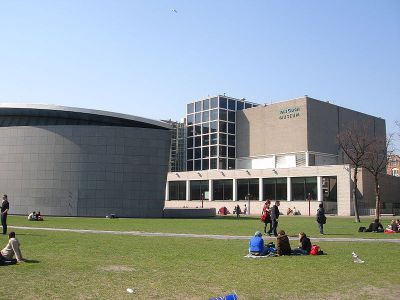
The institution is situated within two contemporary structures positioned on the northern periphery of Museum Square, also known as "Museumplein". The core collection of van Gogh's masterpieces is housed in an angular building designed by the eminent figure of the De Stijl movement, Gerrit Rietveld (1888–1964). This section, spanning four modestly sized floors, serves as an introductory journey into the life and artistry of the painter, primarily featuring paintings that were primarily inherited from Vincent's brother and art dealer, Theo. Complementing these works, you'll often find small supporting exhibitions that contextualize van Gogh's artistic contributions alongside those of his friends and contemporaries. The museum boasts a notable collection of paintings by luminaries such as Toulouse-Lautrec, Cézanne, Gauguin, Pissarro, and Monet.
Towards the rear of Rietveld's architectural masterpiece, a ground-floor escalator connects to the ultramodern 1998 extension. Although somewhat aesthetically controversial, this structure serves as a venue for temporary exhibitions, which typically delve into various facets of van Gogh's art and draw extensively from the permanent collection. Consequently, the paintings on display within the older building undergo regular rotation. The two edifices are seamlessly linked by a striking glass entrance hall, an addition implemented in 2015.
As one might expect, the museum tends to attract substantial crowds, often leading to lengthy queues. To circumvent the congestion, it is advisable to arrive early or consider booking tickets online in advance.
Why You Should Visit:
The main museum for all things Van Gogh, and absolutely the most popular museum in Amsterdam.
Tip:
Proceed directly to the third floor and navigate your visit in a descending manner. This strategic approach will afford you the opportunity to experience a quieter viewing experience on two to three floors.
When purchasing your ticket, make sure to include the audioguide. With this addition, allocating approximately 1.5 to 2 hours should enable you to thoroughly explore all the artworks, rather than limiting your focus solely to the highlights.
The institution is situated within two contemporary structures positioned on the northern periphery of Museum Square, also known as "Museumplein". The core collection of van Gogh's masterpieces is housed in an angular building designed by the eminent figure of the De Stijl movement, Gerrit Rietveld (1888–1964). This section, spanning four modestly sized floors, serves as an introductory journey into the life and artistry of the painter, primarily featuring paintings that were primarily inherited from Vincent's brother and art dealer, Theo. Complementing these works, you'll often find small supporting exhibitions that contextualize van Gogh's artistic contributions alongside those of his friends and contemporaries. The museum boasts a notable collection of paintings by luminaries such as Toulouse-Lautrec, Cézanne, Gauguin, Pissarro, and Monet.
Towards the rear of Rietveld's architectural masterpiece, a ground-floor escalator connects to the ultramodern 1998 extension. Although somewhat aesthetically controversial, this structure serves as a venue for temporary exhibitions, which typically delve into various facets of van Gogh's art and draw extensively from the permanent collection. Consequently, the paintings on display within the older building undergo regular rotation. The two edifices are seamlessly linked by a striking glass entrance hall, an addition implemented in 2015.
As one might expect, the museum tends to attract substantial crowds, often leading to lengthy queues. To circumvent the congestion, it is advisable to arrive early or consider booking tickets online in advance.
Why You Should Visit:
The main museum for all things Van Gogh, and absolutely the most popular museum in Amsterdam.
Tip:
Proceed directly to the third floor and navigate your visit in a descending manner. This strategic approach will afford you the opportunity to experience a quieter viewing experience on two to three floors.
When purchasing your ticket, make sure to include the audioguide. With this addition, allocating approximately 1.5 to 2 hours should enable you to thoroughly explore all the artworks, rather than limiting your focus solely to the highlights.
6) Heineken Experience (must see)
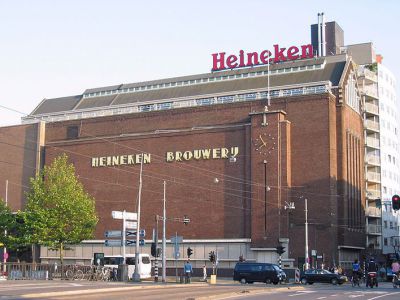
The Heineken Experience stands out as one of Amsterdam's most sought-after attractions, where the distinct flavor of Heineken is undoubtedly at its finest when savored at its source. Housed within the original Heineken brewery, this immersive experience imparts the rich history of Heineken and the world of beer, spanning back over a century and a half. Delve into this history, meander through the brewhouse, and venture to the stables where Shire horses, though primarily for ceremonial purposes, still make beer deliveries.
Following your informative tour, you'll have the delightful opportunity to savor a chilled Heineken, which you pour yourself. For enthusiasts of the brand, it's a delightful and enjoyable stop. However, if your primary aim is to indulge in beverages, you may wish to consider enjoying a beer at a nearby café, often available at a more budget-friendly price point.
Following your informative tour, you'll have the delightful opportunity to savor a chilled Heineken, which you pour yourself. For enthusiasts of the brand, it's a delightful and enjoyable stop. However, if your primary aim is to indulge in beverages, you may wish to consider enjoying a beer at a nearby café, often available at a more budget-friendly price point.
