Custom Walk in Edinburgh, Scotland by kyaa3145959 created on 2026-04-25
Guide Location: Scotland » Edinburgh
Guide Type: Custom Walk
# of Sights: 6
Tour Duration: 3 Hour(s)
Travel Distance: 7.3 Km or 4.5 Miles
Share Key: YJFBU
Guide Type: Custom Walk
# of Sights: 6
Tour Duration: 3 Hour(s)
Travel Distance: 7.3 Km or 4.5 Miles
Share Key: YJFBU
How It Works
Please retrieve this walk in the GPSmyCity app. Once done, the app will guide you from one tour stop to the next as if you had a personal tour guide. If you created the walk on this website or come to the page via a link, please follow the instructions below to retrieve the walk in the app.
Retrieve This Walk in App
Step 1. Download the app "GPSmyCity: Walks in 1K+ Cities" on Apple App Store or Google Play Store.



Step 2. In the GPSmyCity app, download(or launch) the guide "Edinburgh Map and Walking Tours".
Step 3. Tap the menu button located at upper right corner of the "Walks" screen and select "Retrieve custom walk". Enter the share key: YJFBU
1) Edinburgh Castle (must see)
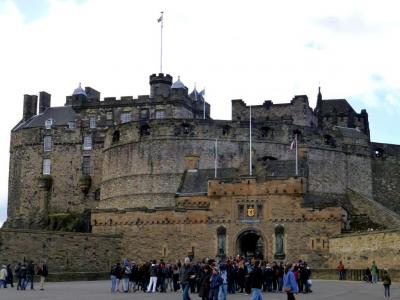
Edinburgh Castle, looming large over the Scottish capital, is the second most visited attraction in the UK (after the Tower of London, which is still number one). The history of Scotland is deeply etched into its ancient stones, making it a timeline in fortress form.
Perched atop Castle Rock (a hardened basaltic plug from an extinct volcano eroded by glaciers), this area has been drawing humans since the 9th millennium BC. The first castle on the site was built in the 12th century by King David I. It remained a royal residence until 1603, when the monarchy packed up and moved to London-presumably for better weather and indoor plumbing...
Indeed, as a fortress, it was virtually impregnable, except for one major-geological-drawback: the basalt rock on which it stands doesn’t hold water (literally). The 28-meter-deep well inside the fortress was about as useful as a chocolate teapot during a siege. So, when the well ran dry, surrender-or dehydration-was the only choice for those inside.
The original castle was mostly destroyed during the Lang Siege of 1573. The only remainder from its early days is St. Margaret’s Chapel. By the 17th century, it had shifted from royal digs to military barracks, housing troops up to the 1920s.
Presently, the castle hosts the Scottish National War Memorial, the National War Museum, and enough regimental museums to keep military buffs busy till closing time. Don't miss the One O’Clock Gun, which is fired daily (except Sundays) at 1 PM with Swiss-watch precision-yes, Edinburgh literally sets its clocks by it...
Also, in the Crown Room, you will see Scotland’s royal bling-crown, scepter, and sword-resting under heavy guard. Period-costumed actors occasionally swoop in to re-enact history with full flair. And if you’re visiting in August, the Military Tattoo takes over the esplanade with kilts, cannons, and bagpipes galore.
Oh, and in the north-east corner of the esplanade, don't miss that rather unassuming little iron fountain. Called Witches' Well, it marks the spot where, back in the day, many women accused of witchcraft were burned at the stake. Spooky, grim, and sadly true...
The panoramic views are postcard-worthy, the historical nooks are endlessly fascinating, and honestly, it just feels epic to stand where centuries of royals, rebels, and rock-solid drama unfolded.
Pro Tips:
The entry is cheaper, and more importantly, faster, if you book online.
Take a free guided tour – running every hour. Otherwise, consider grabbing the £3 audio guide if you like facts with flair.
Being at the mountain's top, it may get breezy, so definitely bring a windproof jacket if visiting in cold weather.
Perched atop Castle Rock (a hardened basaltic plug from an extinct volcano eroded by glaciers), this area has been drawing humans since the 9th millennium BC. The first castle on the site was built in the 12th century by King David I. It remained a royal residence until 1603, when the monarchy packed up and moved to London-presumably for better weather and indoor plumbing...
Indeed, as a fortress, it was virtually impregnable, except for one major-geological-drawback: the basalt rock on which it stands doesn’t hold water (literally). The 28-meter-deep well inside the fortress was about as useful as a chocolate teapot during a siege. So, when the well ran dry, surrender-or dehydration-was the only choice for those inside.
The original castle was mostly destroyed during the Lang Siege of 1573. The only remainder from its early days is St. Margaret’s Chapel. By the 17th century, it had shifted from royal digs to military barracks, housing troops up to the 1920s.
Presently, the castle hosts the Scottish National War Memorial, the National War Museum, and enough regimental museums to keep military buffs busy till closing time. Don't miss the One O’Clock Gun, which is fired daily (except Sundays) at 1 PM with Swiss-watch precision-yes, Edinburgh literally sets its clocks by it...
Also, in the Crown Room, you will see Scotland’s royal bling-crown, scepter, and sword-resting under heavy guard. Period-costumed actors occasionally swoop in to re-enact history with full flair. And if you’re visiting in August, the Military Tattoo takes over the esplanade with kilts, cannons, and bagpipes galore.
Oh, and in the north-east corner of the esplanade, don't miss that rather unassuming little iron fountain. Called Witches' Well, it marks the spot where, back in the day, many women accused of witchcraft were burned at the stake. Spooky, grim, and sadly true...
The panoramic views are postcard-worthy, the historical nooks are endlessly fascinating, and honestly, it just feels epic to stand where centuries of royals, rebels, and rock-solid drama unfolded.
Pro Tips:
The entry is cheaper, and more importantly, faster, if you book online.
Take a free guided tour – running every hour. Otherwise, consider grabbing the £3 audio guide if you like facts with flair.
Being at the mountain's top, it may get breezy, so definitely bring a windproof jacket if visiting in cold weather.
2) Camera Obscura and World of Illusions (must see)
Back in 1835, an entrepreneurial firecracker named Maria Theresa Short decided that Edinburgh needed more science and spectacle. So, she launched what would become the Camera Obscura & World of Illusions, a place where city views met mind-bending visuals long before Instagram filters were a thing.
Short's first venture, called “Short’s Popular Observatory,” was a quirky little spot built from wood, stone, and pure determination up on Calton Hill, near the National Monument. Sadly, the authorities weren’t fans-so, in 1851, they dismantled it. Undeterred, Short relocated to Castlehill, bought the townhouse of the Laird of Cockpen (indeed, this was his name), and stacked two extra floors on top. By 1853, she had rebranded the place as Short’s Observatory, Museum of Science and Art-a title almost as long as the staircase...
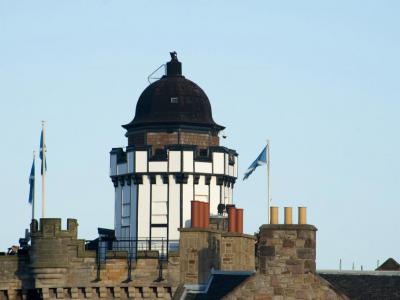
In 1892, the venue came under the management of Patrick Geddes, a forward-thinking Scottish urban planner, sociologist, and ecologist, who gave the building a brainy makeover. He renamed it the Outlook Tower and transformed it into a museum and urban study center. In essence, Geddes filled it with a clever vertical geography lesson: the world at the bottom, Europe and English-speaking countries in the middle, and Edinburgh at the top. Crowning it all, in the topmost room, was a Camera Obscura-because, even in the Victorian era, they already wanted something similar to Google Earth!
The museum ceased operations following Geddes' passing in 1932. In 1966, the University of Edinburgh acquired the site with the intention of establishing the Patrick Geddes Centre and archive. However, in 1982, the building changed ownership to private hands, with a one-room tribute to Geddes remaining on the fourth floor. But that's when the real magic was just getting started.
Today, this tower is Edinburgh’s oldest visitor attraction and still the most delightfully dizzying. It features more than 100 interactive exhibits spread across six floors of illusions, holograms, mirror mazes, vortex tunnels, and hands-on wonders. The rooftop terrace is a camera-ready dream with telescopes and skyline views. The original top-floor Camera Obscura is a 19th-century tech marvel that still gives a live, real-time tour of the city below. It's equally educational, entertaining, and just a little surreal-the kind of place where science meets showbiz and your eyeballs never quite know what hit them.
Short's first venture, called “Short’s Popular Observatory,” was a quirky little spot built from wood, stone, and pure determination up on Calton Hill, near the National Monument. Sadly, the authorities weren’t fans-so, in 1851, they dismantled it. Undeterred, Short relocated to Castlehill, bought the townhouse of the Laird of Cockpen (indeed, this was his name), and stacked two extra floors on top. By 1853, she had rebranded the place as Short’s Observatory, Museum of Science and Art-a title almost as long as the staircase...
In 1892, the venue came under the management of Patrick Geddes, a forward-thinking Scottish urban planner, sociologist, and ecologist, who gave the building a brainy makeover. He renamed it the Outlook Tower and transformed it into a museum and urban study center. In essence, Geddes filled it with a clever vertical geography lesson: the world at the bottom, Europe and English-speaking countries in the middle, and Edinburgh at the top. Crowning it all, in the topmost room, was a Camera Obscura-because, even in the Victorian era, they already wanted something similar to Google Earth!
The museum ceased operations following Geddes' passing in 1932. In 1966, the University of Edinburgh acquired the site with the intention of establishing the Patrick Geddes Centre and archive. However, in 1982, the building changed ownership to private hands, with a one-room tribute to Geddes remaining on the fourth floor. But that's when the real magic was just getting started.
Today, this tower is Edinburgh’s oldest visitor attraction and still the most delightfully dizzying. It features more than 100 interactive exhibits spread across six floors of illusions, holograms, mirror mazes, vortex tunnels, and hands-on wonders. The rooftop terrace is a camera-ready dream with telescopes and skyline views. The original top-floor Camera Obscura is a 19th-century tech marvel that still gives a live, real-time tour of the city below. It's equally educational, entertaining, and just a little surreal-the kind of place where science meets showbiz and your eyeballs never quite know what hit them.
3) Calton Hill (must see)
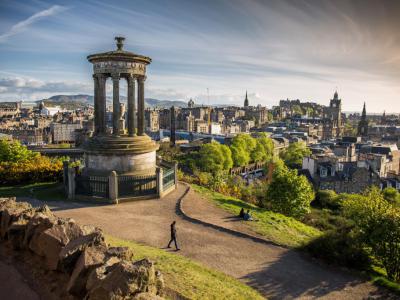
Calton Hill, located in the heart of Edinburgh, extends beyond the eastern terminus of Princes Street and is part of the city's UNESCO World Heritage Site. It is a popular subject for photography and art, both offering scenic vistas of the city and being featured in various depictions of it.
The Scottish Government has its headquarters on Calton Hill, specifically at Saint Andrew's House, situated on the steep southern slope of the hill. Nearby, at the base of the hill, you'll find significant landmarks like the Scottish Parliament Building and Holyrood Palace. Additionally, Calton Hill boasts several iconic monuments and structures, including the National Monument, the Nelson Monument, the Dugald Stewart Monument, the old Royal High School, the Robert Burns Monument, the Political Martyrs' Monument, and the City Observatory.
Calton Hill hosts various events throughout the year, with the most significant being the Beltane Fire Festival occurring annually on April 30th, drawing a crowd of over 12,000 attendees. Additionally, the Dussehra Hindu Festival is celebrated on Calton Hill at the beginning of October, and the Samhuinn Fire Festival takes place there at the end of October. Notably, Calton Hill has served as a filming location for movies like "Sunshine on Leith," where Davy and Yvonne perform "Misty Blue," "Death Defying Acts" featuring Houdini, and "Greyfriars Bobby," offering scenic views of the city.
The Scottish Government has its headquarters on Calton Hill, specifically at Saint Andrew's House, situated on the steep southern slope of the hill. Nearby, at the base of the hill, you'll find significant landmarks like the Scottish Parliament Building and Holyrood Palace. Additionally, Calton Hill boasts several iconic monuments and structures, including the National Monument, the Nelson Monument, the Dugald Stewart Monument, the old Royal High School, the Robert Burns Monument, the Political Martyrs' Monument, and the City Observatory.
Calton Hill hosts various events throughout the year, with the most significant being the Beltane Fire Festival occurring annually on April 30th, drawing a crowd of over 12,000 attendees. Additionally, the Dussehra Hindu Festival is celebrated on Calton Hill at the beginning of October, and the Samhuinn Fire Festival takes place there at the end of October. Notably, Calton Hill has served as a filming location for movies like "Sunshine on Leith," where Davy and Yvonne perform "Misty Blue," "Death Defying Acts" featuring Houdini, and "Greyfriars Bobby," offering scenic views of the city.
4) Holyroodhouse (must see)
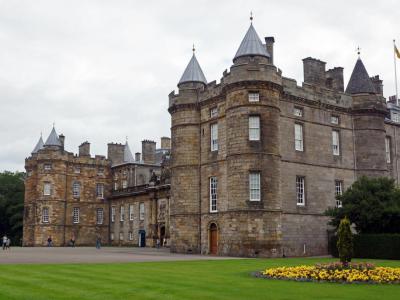
If you're ticking off Edinburgh landmarks, Holyroodhouse is one you can't skip-not unless you're on the run from the crown... Sitting at the royal end of the Royal Mile, this stately pad is the official Scottish residence of the British monarch and once housed none other than Mary, Queen of Scots. That’s right, drama lives here rent-free...
The whole saga begins with King David I, who founded the nearby Holyrood Abbey in 1128 (after a divine deer encounter, according to legend). A few centuries later, precisely by 1501, a palace was built beside the abbey. Now, calling it a “palace”, back then, was maybe a touch ambitious-a grand country house, more like it, rather than Versailles-but it did get bigger in 1532 and 1536. The property was thoroughly renovated in 1633, only to be trashed when Cromwell’s soldiers used it as barracks and then a fire added insult to injury...
Then came the 1670s, when Sir William Bruce, the architectural fixer of the day, rebuilt the place. The abbey chapel became the Chapel Royal, hosting pious activity until 1768, when the roof rather unceremoniously fell in. More restorations followed after that-first in 1822 for a royal visit, and then again in the 20th century when King George V and Queen Mary decided the palace could really use indoor plumbing. Royal flush, anyone?
When the royals are away, the house is open to the public. Inside, you can marvel at ceiling stucco so delicate it practically whispers, and gawk at an entire lineup of Scottish monarchs-some real, some as fictional as their hairlines-painted by the Dutch Golden Age artist Jacob de Wet. Then, dive into the Royal Collection, a five-century mix of armor, jewels, manuscripts, and silverware. Basically, it’s the attic of your dreams-if your attic had Rembrandts and 17th-century clocks.
Oh, and don’t wander off alone unless you're cool with ghosts. Legend has it that Agnes Sampson, accused of witchcraft and executed in 1592, still makes the occasional appearance here. So, if you feel a chill or hear something whispering about herbal remedies... maybe don’t investigate.
Palace, ghosts, ceilings, swords, and sovereign bling-are all here. Holyroodhouse doesn’t just bring the royal drama-it curates it.
The whole saga begins with King David I, who founded the nearby Holyrood Abbey in 1128 (after a divine deer encounter, according to legend). A few centuries later, precisely by 1501, a palace was built beside the abbey. Now, calling it a “palace”, back then, was maybe a touch ambitious-a grand country house, more like it, rather than Versailles-but it did get bigger in 1532 and 1536. The property was thoroughly renovated in 1633, only to be trashed when Cromwell’s soldiers used it as barracks and then a fire added insult to injury...
Then came the 1670s, when Sir William Bruce, the architectural fixer of the day, rebuilt the place. The abbey chapel became the Chapel Royal, hosting pious activity until 1768, when the roof rather unceremoniously fell in. More restorations followed after that-first in 1822 for a royal visit, and then again in the 20th century when King George V and Queen Mary decided the palace could really use indoor plumbing. Royal flush, anyone?
When the royals are away, the house is open to the public. Inside, you can marvel at ceiling stucco so delicate it practically whispers, and gawk at an entire lineup of Scottish monarchs-some real, some as fictional as their hairlines-painted by the Dutch Golden Age artist Jacob de Wet. Then, dive into the Royal Collection, a five-century mix of armor, jewels, manuscripts, and silverware. Basically, it’s the attic of your dreams-if your attic had Rembrandts and 17th-century clocks.
Oh, and don’t wander off alone unless you're cool with ghosts. Legend has it that Agnes Sampson, accused of witchcraft and executed in 1592, still makes the occasional appearance here. So, if you feel a chill or hear something whispering about herbal remedies... maybe don’t investigate.
Palace, ghosts, ceilings, swords, and sovereign bling-are all here. Holyroodhouse doesn’t just bring the royal drama-it curates it.
5) Arthur's Seat (must see)
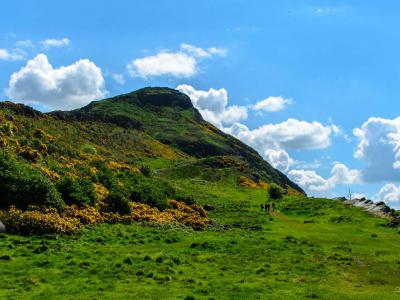
Edinburgh is a busy city, but even here, Scotland doesn’t let you forget its wild origins. To the east of Edinburgh Castle, you will find Arthur’s Seat, a testimony of the ancient land.
About 350 million years ago this main peak of a cluster of hills was an active volcano. During the last Ice Age two million years ago, a huge glacier that moved slowly across the land from west to east eroded the volcano, which was by that time, extinct. Located in Holyrood Park, Arthur’s Seat today is a favourite place for hill walkers as it is relatively easy to climb and you have great views of the city from the top.
The peak’s name comes from a corruption of “Ard-na-Said” which translates roughly as “height of arrows”, although legend likes to claim that this was once the site of Camelot and Arthur’s Round Table. There are remains of old forts on the top of the peak, probably built in the Iron Age by the Votadini, who settled here until after Roman times.
An ancient tradition suggests that if a young girl washes her face in the dew here on May Day, she will become beautiful. The peak today is jealously guarded by the population and no building is allowed here. It is a natural habitat for several wild animals, including foxes, squirrels, weasels and badgers, and for some rather rare species of butterflies.
In 1836, seventeen tiny coffins containing wooden figures were found in a cave on the peak. This led to speculation about the site being used for witch’s rites, but this has never been proved. The coffins and their contents remain a mystery.
Why You Should Visit:
Ruins of an old church, hiking trails, fresh air all around, all on a lovely dormant volcano!
Tip:
Go early in the morning to catch the light over the city and to avoid crowds.
Bring water, snacks, comfortable (closed-toe) shoes, and a light windbreaker too, because it's gusty at the top.
Plan your route carefully, as there are multiple routes up, some more direct and steeper, some more leisurely and meandering.
About 350 million years ago this main peak of a cluster of hills was an active volcano. During the last Ice Age two million years ago, a huge glacier that moved slowly across the land from west to east eroded the volcano, which was by that time, extinct. Located in Holyrood Park, Arthur’s Seat today is a favourite place for hill walkers as it is relatively easy to climb and you have great views of the city from the top.
The peak’s name comes from a corruption of “Ard-na-Said” which translates roughly as “height of arrows”, although legend likes to claim that this was once the site of Camelot and Arthur’s Round Table. There are remains of old forts on the top of the peak, probably built in the Iron Age by the Votadini, who settled here until after Roman times.
An ancient tradition suggests that if a young girl washes her face in the dew here on May Day, she will become beautiful. The peak today is jealously guarded by the population and no building is allowed here. It is a natural habitat for several wild animals, including foxes, squirrels, weasels and badgers, and for some rather rare species of butterflies.
In 1836, seventeen tiny coffins containing wooden figures were found in a cave on the peak. This led to speculation about the site being used for witch’s rites, but this has never been proved. The coffins and their contents remain a mystery.
Why You Should Visit:
Ruins of an old church, hiking trails, fresh air all around, all on a lovely dormant volcano!
Tip:
Go early in the morning to catch the light over the city and to avoid crowds.
Bring water, snacks, comfortable (closed-toe) shoes, and a light windbreaker too, because it's gusty at the top.
Plan your route carefully, as there are multiple routes up, some more direct and steeper, some more leisurely and meandering.
6) Royal Yacht Britannia (must see)
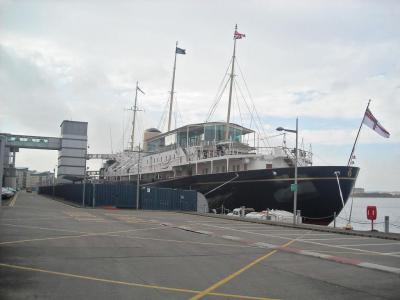
HMY Britannia, also known as Her Majesty's Yacht Britannia, served as the official royal yacht for the British monarchy. This majestic vessel was active in royal service from 1954 to 1997. It holds the distinction of being the 83rd yacht of its kind since King Charles II's reign in 1660 and is the second yacht with the same name, the first being a racing cutter constructed for the Prince of Wales back in 1893.
Over its impressive 43-year career, Britannia covered more than a million nautical miles, visiting over 600 ports in 135 different countries across the globe. Now retired from its royal duties, Britannia is permanently docked at Ocean Terminal in Leith, Edinburgh, Scotland, where it has become a popular tourist attraction, drawing in more than 300,000 visitors each year.
The construction of HMY Britannia took place at the shipyard of John Brown & Company in Clydebank, Dunbartonshire. Queen Elizabeth II performed the launch ceremony on April 16, 1953, and the yacht was officially commissioned on January 11, 1954. The yacht was specially designed with three masts: a 133-foot foremast, a 139-foot mainmast, and a 118-foot mizzenmast. Interestingly, the top aerial on the foremast and the top 20 feet of the mainmast were hinged, allowing the ship to pass under bridges when necessary.
One notable feature of Britannia's design was its adaptability for use as a hospital ship during wartime, although this capability was never put into action. In the event of a nuclear war, the vessel was intended to serve as a refuge for Queen Elizabeth II and Prince Philip, Duke of Edinburgh, off the north-west coast of Scotland.
The crew of Britannia included Royal Navy officers with appointments lasting up to two years. The remainder of the crew were volunteers from the Royal Navy's general service. After serving for 365 days, they had the option to join the Permanent Royal Yacht Service as Royal Yachtsmen, and they could continue to serve until they chose to leave or were discharged due to medical or disciplinary reasons. Consequently, some crew members dedicated more than 20 years to their service on the yacht.
Over its impressive 43-year career, Britannia covered more than a million nautical miles, visiting over 600 ports in 135 different countries across the globe. Now retired from its royal duties, Britannia is permanently docked at Ocean Terminal in Leith, Edinburgh, Scotland, where it has become a popular tourist attraction, drawing in more than 300,000 visitors each year.
The construction of HMY Britannia took place at the shipyard of John Brown & Company in Clydebank, Dunbartonshire. Queen Elizabeth II performed the launch ceremony on April 16, 1953, and the yacht was officially commissioned on January 11, 1954. The yacht was specially designed with three masts: a 133-foot foremast, a 139-foot mainmast, and a 118-foot mizzenmast. Interestingly, the top aerial on the foremast and the top 20 feet of the mainmast were hinged, allowing the ship to pass under bridges when necessary.
One notable feature of Britannia's design was its adaptability for use as a hospital ship during wartime, although this capability was never put into action. In the event of a nuclear war, the vessel was intended to serve as a refuge for Queen Elizabeth II and Prince Philip, Duke of Edinburgh, off the north-west coast of Scotland.
The crew of Britannia included Royal Navy officers with appointments lasting up to two years. The remainder of the crew were volunteers from the Royal Navy's general service. After serving for 365 days, they had the option to join the Permanent Royal Yacht Service as Royal Yachtsmen, and they could continue to serve until they chose to leave or were discharged due to medical or disciplinary reasons. Consequently, some crew members dedicated more than 20 years to their service on the yacht.
