Custom Walk in Lisbon, Portugal by jessica_c_carter93_a464d8 created on 2026-04-27
Guide Location: Portugal » Lisbon
Guide Type: Custom Walk
# of Sights: 6
Tour Duration: 1 Hour(s)
Travel Distance: 2.2 Km or 1.4 Miles
Share Key: DUVJS
Guide Type: Custom Walk
# of Sights: 6
Tour Duration: 1 Hour(s)
Travel Distance: 2.2 Km or 1.4 Miles
Share Key: DUVJS
How It Works
Please retrieve this walk in the GPSmyCity app. Once done, the app will guide you from one tour stop to the next as if you had a personal tour guide. If you created the walk on this website or come to the page via a link, please follow the instructions below to retrieve the walk in the app.
Retrieve This Walk in App
Step 1. Download the app "GPSmyCity: Walks in 1K+ Cities" on Apple App Store or Google Play Store.



Step 2. In the GPSmyCity app, download(or launch) the guide "Lisbon Map and Walking Tours".
Step 3. Tap the menu button located at upper right corner of the "Walks" screen and select "Retrieve custom walk". Enter the share key: DUVJS
1) Castelo de Sao Jorge (Saint George's Castle) (must see)
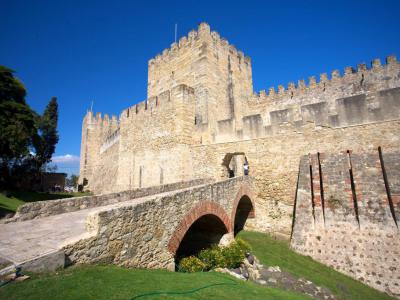
Saint George’s Castle is a historic fortress in Lisbon’s Santa Maria Maior district. Its hilltop location has been occupied since the 8th century BC, with fortifications dating back to the 2nd century BC. Over time, the site reflected influences from the Celts, Phoenicians, Greeks, Carthaginians, Romans, Suebi, Visigoths, and Moors. The Berbers added the so-called “Moorish Encirclement” walls in the 10th century, and the Moors held the castle until the Christian Reconquista.
The castle played a pivotal role during the 1147 Siege of Lisbon when it was captured in a major Second Crusade victory. This fortified stronghold became a royal residence in 1255 and was named after Saint George in the 14th century by King John I to symbolize ties with England. In the later period, it served as a military barracks and home to Portugal’s National Archive. Although damaged in the 1755 earthquake, the 20th-century restorations regained its prominence as a national monument and cultural site.
Within this castle complex, you'll find medieval architecture with ten towers, a dry moat, and steep hillsides for natural defense. Highlights include the terraced Arms Square with cannons and a statue of Afonso Henriques, the first king of Portugal, and the Tower of Ulysses, which houses a camera obscura offering shows (every 20 minutes) in various languages, including English, Portuguese, and Spanish. The citadel's primary entrance features a 19th-century gate adorned with Portugal's coat of arms, Queen Maria II's name, and the date 1846.
Inside, visitors can enjoy a range of amenities, including restaurants, cafes, a wine bar, an ice cream stand, and public restrooms. Peacocks roam freely throughout the grounds, particularly in one of the primary dining areas. While dining within the castle walls may be slightly pricier than in the surrounding areas, it is not excessively so. Alternatively, you have the option of bringing your own food and beverages. Admission is reasonably priced and children enter for free.
Saint George’s Castle also includes the ruins of a royal palace, such as the Casa Ogival, which is now home to the Olissipónia multimedia exhibit detailing Lisbon’s history. Gardens and historical artifacts enhance the experience, making the castle a symbol of Lisbon’s rich past and an essential cultural landmark.
Tip:
Although the journey to the castle involves a steep uphill climb, it provides a delightful stroll through the narrow streets of historic Lisbon, with numerous opportunities to stop and savor local cuisine. Alternatively, you can take cable car #28 to admire the neighborhood's charming and diverse architecture, providing excellent photo opportunities.
The castle played a pivotal role during the 1147 Siege of Lisbon when it was captured in a major Second Crusade victory. This fortified stronghold became a royal residence in 1255 and was named after Saint George in the 14th century by King John I to symbolize ties with England. In the later period, it served as a military barracks and home to Portugal’s National Archive. Although damaged in the 1755 earthquake, the 20th-century restorations regained its prominence as a national monument and cultural site.
Within this castle complex, you'll find medieval architecture with ten towers, a dry moat, and steep hillsides for natural defense. Highlights include the terraced Arms Square with cannons and a statue of Afonso Henriques, the first king of Portugal, and the Tower of Ulysses, which houses a camera obscura offering shows (every 20 minutes) in various languages, including English, Portuguese, and Spanish. The citadel's primary entrance features a 19th-century gate adorned with Portugal's coat of arms, Queen Maria II's name, and the date 1846.
Inside, visitors can enjoy a range of amenities, including restaurants, cafes, a wine bar, an ice cream stand, and public restrooms. Peacocks roam freely throughout the grounds, particularly in one of the primary dining areas. While dining within the castle walls may be slightly pricier than in the surrounding areas, it is not excessively so. Alternatively, you have the option of bringing your own food and beverages. Admission is reasonably priced and children enter for free.
Saint George’s Castle also includes the ruins of a royal palace, such as the Casa Ogival, which is now home to the Olissipónia multimedia exhibit detailing Lisbon’s history. Gardens and historical artifacts enhance the experience, making the castle a symbol of Lisbon’s rich past and an essential cultural landmark.
Tip:
Although the journey to the castle involves a steep uphill climb, it provides a delightful stroll through the narrow streets of historic Lisbon, with numerous opportunities to stop and savor local cuisine. Alternatively, you can take cable car #28 to admire the neighborhood's charming and diverse architecture, providing excellent photo opportunities.
2) Miradouro da Graca (Grace Viewpoint) (must see)
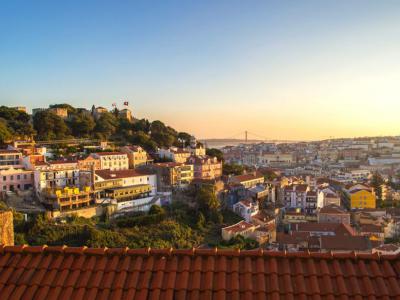
The Grace Viewpoint in Lisbon is a celebrated vantage point situated atop the southern slope of Santo André Hill. It offers panoramic views of the city's historic center stretching, on clear days, to the Tagus River estuary.
This viewpoint is not only a daytime delight but also a magical evening spot as the setting sun casts a golden hue over Lisbon and the city lights begin to twinkle. The atmosphere here is perpetually vibrant, enhanced by performances from local musicians and singers, while the adjacent Esplanada da Graça café remains abuzz with activity.
Though many tourists stop at this viewpoint, they often overlook nearby attractions such as the expansive Grace Convent, noted for its exquisite tile paintings and baroque architecture. Other local sights include the 19th-century Villa Sousa and the serene Cerca Park Garden, with a quaint fountain and a bronze sculpture, positioned below the viewpoint.
From here, visitors can enjoy a 160-degree view encompassing central and western Lisbon. To the southwest, prominent visible landmarks include Saint George's Castle, the Carmo Church ruins, and the April 25 bridge. The viewpoint also overlooks the Mouraria neighborhood and Martim Moniz plaza and offers glimpses of distant sites like the Monsanto Forest and the Amoreiras Towers.
Despite its common designation as the Grace viewpoint, its official title "Sophia de Mello Breyner Andresen" honors the esteemed 20th-century Portuguese poet revered for her fairy tales and the official Portuguese translations of Shakespeare. Her affinity for this location, where she drew much inspiration, led to its renaming following her death in 2004 and is now marked by a bust near the Grace Convent entrance.
This viewpoint frequently marks the conclusion of a journey for those ascending the hill from Alfama and Saint George's Castle. The series of steps leading to it are paved with traditional cobblestone designs.
This viewpoint is not only a daytime delight but also a magical evening spot as the setting sun casts a golden hue over Lisbon and the city lights begin to twinkle. The atmosphere here is perpetually vibrant, enhanced by performances from local musicians and singers, while the adjacent Esplanada da Graça café remains abuzz with activity.
Though many tourists stop at this viewpoint, they often overlook nearby attractions such as the expansive Grace Convent, noted for its exquisite tile paintings and baroque architecture. Other local sights include the 19th-century Villa Sousa and the serene Cerca Park Garden, with a quaint fountain and a bronze sculpture, positioned below the viewpoint.
From here, visitors can enjoy a 160-degree view encompassing central and western Lisbon. To the southwest, prominent visible landmarks include Saint George's Castle, the Carmo Church ruins, and the April 25 bridge. The viewpoint also overlooks the Mouraria neighborhood and Martim Moniz plaza and offers glimpses of distant sites like the Monsanto Forest and the Amoreiras Towers.
Despite its common designation as the Grace viewpoint, its official title "Sophia de Mello Breyner Andresen" honors the esteemed 20th-century Portuguese poet revered for her fairy tales and the official Portuguese translations of Shakespeare. Her affinity for this location, where she drew much inspiration, led to its renaming following her death in 2004 and is now marked by a bust near the Grace Convent entrance.
This viewpoint frequently marks the conclusion of a journey for those ascending the hill from Alfama and Saint George's Castle. The series of steps leading to it are paved with traditional cobblestone designs.
3) Igreja e Convento da Graca (Grace Church and Convent)
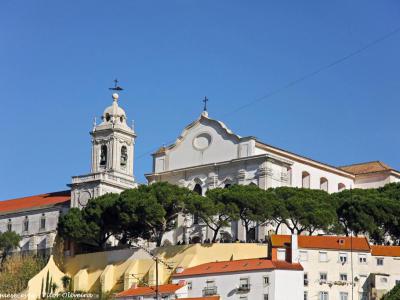
The Church and Convent of Grace in Lisbon is an ecclesiastical complex and historic monument. Originally, it served as the spiritual center for the Order of Saint Augustine, known locally as the Order of the Gracians.
Established during the formation of the Portuguese nation, the Convent of Grace was founded in the era of Afonso Henriques' siege of Lisbon in 1147. It was strategically positioned on the Mount of Saint Gens, an area then called Almofala. Construction of the convent began in 1271 under the patronage of King Afonso III, intending to house 50 hermit friars of Saint Augustine.
By 1291, the convent emerged as the head of the Portuguese Province of the Order of Saint Augustine, maintaining this role until the religious orders were dissolved in 1834. Significant religious events have taken place here, including the miraculous appearance of the Image of Our Lady of Grace in 1362.
The convent was fortified by the Fernandina wall in 1375 and contains chapels established by notable Portuguese figures such as Rui Gomes de Alvarenga (a nobleman of the Council of Kings John I, Duarte, and Afonso V) and Afonso de Albuquerque (a military commander and the second governor of Portuguese India). The latter is also buried here.
The architectural significance of the site includes a blend of styles due to various reconstructions, particularly after the 1755 earthquake which necessitated major restoration efforts, imbuing the structure with late Baroque and rocaille elements. Its interior is lavishly adorned with opulent gilt carvings, grisaille paintings, azulejo tiles from various centuries, and other decorations, notably in the sacristy. Upon entering, you'll be greeted by intriguing elements: an ornate painted ceiling, a somewhat imposing statue of Saint Tomás of Villanova, two finely adorned marble chairs in the sacristy, and a collection of gilded Rococo-style sculptures within the chapels.
The focal point of the church, an image of Christ bearing the cross, has been a fixture in the annual Easter procession since 1587. However, the real treasure awaits in the adjoining convent-a pristine white room adorned with tiled walls hailing from the 16th, 17th, and 18th centuries, depicting grand historical scenes. It's worth noting that there is no admission fee for any of these remarkable sights.
During the 19th century, the convent served as military barracks. Both, the Church and the Convent of Grace were designated a National Monument in 1910. However, this historic site was made accessible to the public only in 2017.
Established during the formation of the Portuguese nation, the Convent of Grace was founded in the era of Afonso Henriques' siege of Lisbon in 1147. It was strategically positioned on the Mount of Saint Gens, an area then called Almofala. Construction of the convent began in 1271 under the patronage of King Afonso III, intending to house 50 hermit friars of Saint Augustine.
By 1291, the convent emerged as the head of the Portuguese Province of the Order of Saint Augustine, maintaining this role until the religious orders were dissolved in 1834. Significant religious events have taken place here, including the miraculous appearance of the Image of Our Lady of Grace in 1362.
The convent was fortified by the Fernandina wall in 1375 and contains chapels established by notable Portuguese figures such as Rui Gomes de Alvarenga (a nobleman of the Council of Kings John I, Duarte, and Afonso V) and Afonso de Albuquerque (a military commander and the second governor of Portuguese India). The latter is also buried here.
The architectural significance of the site includes a blend of styles due to various reconstructions, particularly after the 1755 earthquake which necessitated major restoration efforts, imbuing the structure with late Baroque and rocaille elements. Its interior is lavishly adorned with opulent gilt carvings, grisaille paintings, azulejo tiles from various centuries, and other decorations, notably in the sacristy. Upon entering, you'll be greeted by intriguing elements: an ornate painted ceiling, a somewhat imposing statue of Saint Tomás of Villanova, two finely adorned marble chairs in the sacristy, and a collection of gilded Rococo-style sculptures within the chapels.
The focal point of the church, an image of Christ bearing the cross, has been a fixture in the annual Easter procession since 1587. However, the real treasure awaits in the adjoining convent-a pristine white room adorned with tiled walls hailing from the 16th, 17th, and 18th centuries, depicting grand historical scenes. It's worth noting that there is no admission fee for any of these remarkable sights.
During the 19th century, the convent served as military barracks. Both, the Church and the Convent of Grace were designated a National Monument in 1910. However, this historic site was made accessible to the public only in 2017.
4) Miradouro das Portas do Sol (Gates of the Sun Viewpoint)
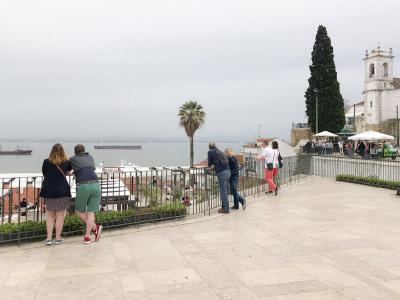
The Gates of the Sun viewpoint, akin to a home’s balcony, sits above the ancient neighborhood Alfama. Just steps away from the Santa Luzia viewpoint, it offers stunning views across Alfama and the Tagus River. The layout of Alfama unfolds below in a picturesque maze of streets, stairways, and alleys, all visible from this panoramic balcony.
Visitors to the Gates of the Sun viewpoint can indulge in authentic Portuguese coffee at the local kiosk, watch the iconic #28 electric tram pass by, and view the statue of Saint Vincent, the patron saint of Lisbon, symbolically holding a boat flanked by two ravens, representing the city. Additionally, from this point, one can see the Church of Saint Vincent and the expanse of the Alfama neighborhood stretching to the Tagus River.
Installed in 1949, a statue of Saint Vincent enhances the cultural significance of the viewpoint. The location is also prime for photographers, who find the backdrop of the Decorative Arts Museum and the panoramic view from Saint Vincent de Fora Monastery to the waterfront irresistibly photogenic.
Tip:
For a unique and enjoyable experience, seek out a flight of stairs and follow the WC (restroom) sign. Descend the stairs and pass under an arch to discover a mural depicting Lisbon's history in a comic-book style.
The view surprises at dusk, when the sun goes down and the colors of Lisbon’s architecture turn another shade.
Visitors to the Gates of the Sun viewpoint can indulge in authentic Portuguese coffee at the local kiosk, watch the iconic #28 electric tram pass by, and view the statue of Saint Vincent, the patron saint of Lisbon, symbolically holding a boat flanked by two ravens, representing the city. Additionally, from this point, one can see the Church of Saint Vincent and the expanse of the Alfama neighborhood stretching to the Tagus River.
Installed in 1949, a statue of Saint Vincent enhances the cultural significance of the viewpoint. The location is also prime for photographers, who find the backdrop of the Decorative Arts Museum and the panoramic view from Saint Vincent de Fora Monastery to the waterfront irresistibly photogenic.
Tip:
For a unique and enjoyable experience, seek out a flight of stairs and follow the WC (restroom) sign. Descend the stairs and pass under an arch to discover a mural depicting Lisbon's history in a comic-book style.
The view surprises at dusk, when the sun goes down and the colors of Lisbon’s architecture turn another shade.
5) Miradouro de Santa Luzia (Santa Luzia Viewpoint)
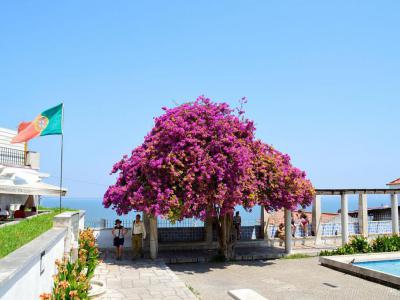
The Viewpoint de Santa Luzia in Lisbon presents a stunning overlook of the Alfama district and the Tagus River. From this vantage point, visitors can see significant landmarks such as the National Pantheon of Santa Engracia, the Church of Santo Estevao, and the spires of Sao Miguel Church. This viewpoint is noted for offering similarly picturesque, albeit slightly less commanding, views to those at the nearby Gates of the Sun viewpoint.
Encompassing the traditional tiled roofs and historical churches of Alfama stretching out towards the Tagus estuary, the view from Santa Luzia is enhanced with its inviting ambiance. This site features a beautifully landscaped garden on multiple levels, with azalea trees, ample seating under pergola-like structures, and walls adorned with traditional blue "azulejo" tiles. One particularly notable azulejo panel illustrates the "Reconquista"-the historical liberation of the Iberian Peninsula from Moorish rule in 1147-which is displayed on the exterior wall of the adjacent Santa Luzia church.
Dating back to the 12th century, this church was largely rebuilt after the devastating 1755 earthquake. Despite its unassuming exterior, it has a cross-shaped layout and a richly decorated Baroque interior. Its façade is highlighted with azulejo tiles that depict important moments of the Portuguese past. Another azulejo mural depicts Commerce Square before it was destroyed in the 1755 earthquake, offering a historical snapshot to visitors.
Conveniently, the Santa Luzia and Gates of the Sun viewpoints are just a short walk from each other, allowing visitors to enjoy both spots in a single trip. The area also includes a small café and restrooms. The latter are found nearby, after a short ascent up the hill, around the corner from the church, and down a set of steps.
Tip:
Visiting the Santa Luzia Viewpoint is recommended either early in the morning or late in the afternoon to catch the exquisite sunrises or sunsets. Summers tend to be crowded and hot, so preparing for high temperatures and sun exposure is crucial. Visiting outside the peak tourist season can offer a cooler and more tranquil experience.
Be sure to keep an eye out for the small market nearby, offering various cork products and textiles, often at more reasonable prices than elsewhere in the city, making it an excellent spot for picking up souvenirs.
Encompassing the traditional tiled roofs and historical churches of Alfama stretching out towards the Tagus estuary, the view from Santa Luzia is enhanced with its inviting ambiance. This site features a beautifully landscaped garden on multiple levels, with azalea trees, ample seating under pergola-like structures, and walls adorned with traditional blue "azulejo" tiles. One particularly notable azulejo panel illustrates the "Reconquista"-the historical liberation of the Iberian Peninsula from Moorish rule in 1147-which is displayed on the exterior wall of the adjacent Santa Luzia church.
Dating back to the 12th century, this church was largely rebuilt after the devastating 1755 earthquake. Despite its unassuming exterior, it has a cross-shaped layout and a richly decorated Baroque interior. Its façade is highlighted with azulejo tiles that depict important moments of the Portuguese past. Another azulejo mural depicts Commerce Square before it was destroyed in the 1755 earthquake, offering a historical snapshot to visitors.
Conveniently, the Santa Luzia and Gates of the Sun viewpoints are just a short walk from each other, allowing visitors to enjoy both spots in a single trip. The area also includes a small café and restrooms. The latter are found nearby, after a short ascent up the hill, around the corner from the church, and down a set of steps.
Tip:
Visiting the Santa Luzia Viewpoint is recommended either early in the morning or late in the afternoon to catch the exquisite sunrises or sunsets. Summers tend to be crowded and hot, so preparing for high temperatures and sun exposure is crucial. Visiting outside the peak tourist season can offer a cooler and more tranquil experience.
Be sure to keep an eye out for the small market nearby, offering various cork products and textiles, often at more reasonable prices than elsewhere in the city, making it an excellent spot for picking up souvenirs.
6) Santa Maria Maior (Cathedral of St. Mary Major)
The Cathedral of Saint Mary Major, often called Lisbon Cathedral or simply the Sé, is a Roman Catholic cathedral and the oldest church in the city. Built in 1147, it has survived many earthquakes and been modified, renovated, and restored numerous times, resulting in a mix of different architectural styles. The seat of the Patriarchate of Lisbon, it has been classified as a National Monument since 1910.
The first cathedral in Lisbon was constructed on the site of the former Moorish mosque shortly after the Second Crusade led by King Afonso Henriquez in the mid-1100s. During this pivotal period, the relics of Saint Vincent of Saragossa, the city's patron saint, were transported from Southern Portugal and enshrined here, remaining undisturbed ever since. Recent excavations in the cathedral's cloister have uncovered Roman, Visigothic, and medieval remains, emphasizing the site's historical layers.
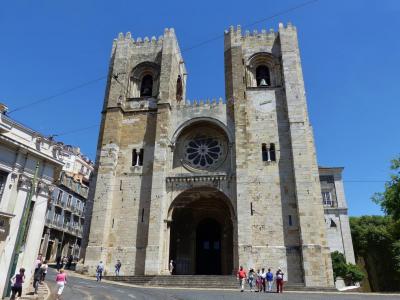
Lisbon Cathedral, a fortress-like structure with a Latin cross layout, maintains its Romanesque roots from the 12th century. The cathedral's robust façade features two towers and crenellations, a design typical of Portuguese cathedrals from the Reconquista era, indicating its historical military significance. The interior preserves the original west façade with a rose window, Romanesque portals, and barrel vaulting.
Transitioning to Gothic architecture in the late 13th century under King Dinis, the cathedral saw the addition of a Gothic cloister, although much of it was later damaged by the 1755 earthquake. Noteworthy Gothic elements include the ambulatory with its radiating chapels and ribbed vaulting, enhancing the structure with ample light and housing significant tombs from the mid-14th century.
The cathedral also hosted the Saint Vincent Panels until the 17th century. The 18th century brought neoclassical and Rococo refurbishments post-earthquake, with significant contributions from the renowned local sculptor Machado de Castro.
Efforts in the 20th century aimed to restore the cathedral's medieval character by removing neoclassical elements. This renovation imbued the structure with a predominantly medieval aesthetic, characterized by robust stone walls and fortress-like towers.
Notable among its chapels is the Chapel of Saint Ildefonso, housing a carved sculpture of one of the first Portuguese Ambassadors, Lopo Pacheco, depicted with a loyal dog at his side. Additionally, the Cathedral includes a chapel dedicated to Saint Anthony of Padua, a celebrated figure born in Lisbon.
Tip:
Admission to the Cathedral is free. For a modest fee, between 10 am and 5 pm, you can also ascend partway up the tower to the Treasury. Please note that it is closed on Sundays.
The first cathedral in Lisbon was constructed on the site of the former Moorish mosque shortly after the Second Crusade led by King Afonso Henriquez in the mid-1100s. During this pivotal period, the relics of Saint Vincent of Saragossa, the city's patron saint, were transported from Southern Portugal and enshrined here, remaining undisturbed ever since. Recent excavations in the cathedral's cloister have uncovered Roman, Visigothic, and medieval remains, emphasizing the site's historical layers.
Lisbon Cathedral, a fortress-like structure with a Latin cross layout, maintains its Romanesque roots from the 12th century. The cathedral's robust façade features two towers and crenellations, a design typical of Portuguese cathedrals from the Reconquista era, indicating its historical military significance. The interior preserves the original west façade with a rose window, Romanesque portals, and barrel vaulting.
Transitioning to Gothic architecture in the late 13th century under King Dinis, the cathedral saw the addition of a Gothic cloister, although much of it was later damaged by the 1755 earthquake. Noteworthy Gothic elements include the ambulatory with its radiating chapels and ribbed vaulting, enhancing the structure with ample light and housing significant tombs from the mid-14th century.
The cathedral also hosted the Saint Vincent Panels until the 17th century. The 18th century brought neoclassical and Rococo refurbishments post-earthquake, with significant contributions from the renowned local sculptor Machado de Castro.
Efforts in the 20th century aimed to restore the cathedral's medieval character by removing neoclassical elements. This renovation imbued the structure with a predominantly medieval aesthetic, characterized by robust stone walls and fortress-like towers.
Notable among its chapels is the Chapel of Saint Ildefonso, housing a carved sculpture of one of the first Portuguese Ambassadors, Lopo Pacheco, depicted with a loyal dog at his side. Additionally, the Cathedral includes a chapel dedicated to Saint Anthony of Padua, a celebrated figure born in Lisbon.
Tip:
Admission to the Cathedral is free. For a modest fee, between 10 am and 5 pm, you can also ascend partway up the tower to the Treasury. Please note that it is closed on Sundays.
