Custom Walk in Berlin, Germany by emurphy_74f69 created on 2026-05-01
Guide Location: Germany » Berlin
Guide Type: Custom Walk
# of Sights: 5
Tour Duration: 2 Hour(s)
Travel Distance: 3.1 Km or 1.9 Miles
Share Key: EFR9Q
Guide Type: Custom Walk
# of Sights: 5
Tour Duration: 2 Hour(s)
Travel Distance: 3.1 Km or 1.9 Miles
Share Key: EFR9Q
How It Works
Please retrieve this walk in the GPSmyCity app. Once done, the app will guide you from one tour stop to the next as if you had a personal tour guide. If you created the walk on this website or come to the page via a link, please follow the instructions below to retrieve the walk in the app.
Retrieve This Walk in App
Step 1. Download the app "GPSmyCity: Walks in 1K+ Cities" on Apple App Store or Google Play Store.



Step 2. In the GPSmyCity app, download(or launch) the guide "Berlin Map and Walking Tours".
Step 3. Tap the menu button located at upper right corner of the "Walks" screen and select "Retrieve custom walk". Enter the share key: EFR9Q
1) Deutsches Historisches Museum (German Historical Museum) (must see)
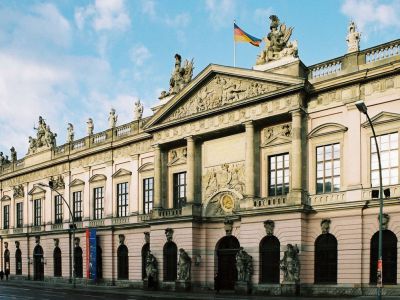
The German Historical Museum, known by the acronym DHM, describes itself as a place of "enlightenment and understanding of the shared history of Germans and Europeans." Often viewed as one of the most important museums in Berlin, it is also one of its most frequented. The museum is located in the Baroque-style Armory building, the oldest on the Unter den Linden, which was completed in 1706.
The DHM was established on 28 October 1987, to commemorate Berlin’s 750th anniversary, and was inaugurated inside the Reichstag. The idea for the museum was supported by Federal Chancellor Helmut Kohl, who considered it a national priority. A committee of historians developed the museum’s concept, emphasizing a multi-perspective approach to German history in an international context.
The DHM was originally planned to be built near the Reichstag. However, the fall of the Berlin Wall in 1989 changed plans, and the museum was moved to the historic Armory on Unter den Linden. This transition was completed in 1991. The Armory underwent extensive restoration from 1994 to 1998 and saw a new hall – for temporary exhibitions, spanning four floors – designed by Chinese-American architect I M Pei.
In addition to it, the museum also features a specialized research library with over 225,000 volumes, including rare books and museum catalogs, housed in a building that previously served as the Prussian Central Cooperative Bank and later a GDR state-run company. The museum’s cinema offers a program focusing on historical and film-historical themes through exhibitions and retrospectives. Since 2004, it has been a venue for the Berlin International Film Festival’s "Retrospective and Homage" screenings.
Inaugurated by Chancellor Angela Merkel in 2006, the museum's Permanent Exhibition remains a key institution for understanding Germany’s past in a global context. Comprehensive explanations for the exhibits are available in both German and English, making it worth a few hours' investment for those intrigued by in-depth German and European history.
Editor's Note:
The Armory is closed for essential renovations and the renewal of the Permanent Exhibition since June 28, 2021. It is expected to reopen to visitors at the end of 2025.
The DHM was established on 28 October 1987, to commemorate Berlin’s 750th anniversary, and was inaugurated inside the Reichstag. The idea for the museum was supported by Federal Chancellor Helmut Kohl, who considered it a national priority. A committee of historians developed the museum’s concept, emphasizing a multi-perspective approach to German history in an international context.
The DHM was originally planned to be built near the Reichstag. However, the fall of the Berlin Wall in 1989 changed plans, and the museum was moved to the historic Armory on Unter den Linden. This transition was completed in 1991. The Armory underwent extensive restoration from 1994 to 1998 and saw a new hall – for temporary exhibitions, spanning four floors – designed by Chinese-American architect I M Pei.
In addition to it, the museum also features a specialized research library with over 225,000 volumes, including rare books and museum catalogs, housed in a building that previously served as the Prussian Central Cooperative Bank and later a GDR state-run company. The museum’s cinema offers a program focusing on historical and film-historical themes through exhibitions and retrospectives. Since 2004, it has been a venue for the Berlin International Film Festival’s "Retrospective and Homage" screenings.
Inaugurated by Chancellor Angela Merkel in 2006, the museum's Permanent Exhibition remains a key institution for understanding Germany’s past in a global context. Comprehensive explanations for the exhibits are available in both German and English, making it worth a few hours' investment for those intrigued by in-depth German and European history.
Editor's Note:
The Armory is closed for essential renovations and the renewal of the Permanent Exhibition since June 28, 2021. It is expected to reopen to visitors at the end of 2025.
2) Pergamon Museum (must see)
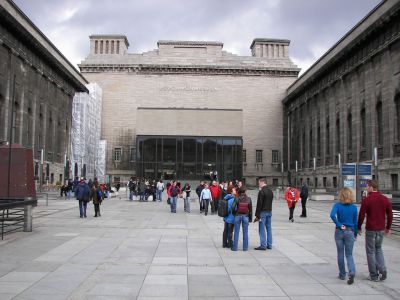
Now, this museum doesn’t just collect history-it reconstructs it, brick by ancient brick... With its crown jewel none other than the mighty Pergamon Zeus Altar (dating back to the 2nd century BC), this place is basically Europe’s VIP lounge for antiquities. Yes, it’s as jaw-dropping as it sounds, with life-sized architectural stunners casually sitting around like it’s no big deal.
Even if partially open, as during the scheduled makeover set to finish by 2026, this museum still has plenty to offer. Seeing everything it has in one go is a full-on epic quest, so bringing snacks is highly recommended.
The museum splits its magic into three power-packed sections. First, the star attraction: the Classical Antiquities Collection. Now, this isn’t just broken pottery and dusty statues. We’re talking the full Gate of Miletus, the legendary Pergamon Altar, and enough Greco-Roman artifacts to make an emperor jealous.
Then there’s the Islamic Art Museum and the Ancient Near East Museum. Picture the 8th-century castle facade from Jordan, the radiant blue Ishtar Gate, and the Babylonian Processional Way-basically ancient urban planning with flair. Add to it some of humanity’s earliest scribbles, delicate ceramics, ancient carpets, and even decorative windows, and you've got yourself a museum buffet.
And just when you think you’ve seen it all-surprise!-there’s the Pergamon Panorama, a separate bonus round just five minutes away on foot. Multi-level, immersive, and totally wild, it’s included in your ticket and might just make your inner history nerd do a happy dance.
Pro tip before you go: Skip the ticket line drama and book online with a time slot. You'll waltz right in like a VIP. And don’t forget the free audio guide-because decoding ancient marvels is way more fun when you’ve got an expert in your ear.
Even if partially open, as during the scheduled makeover set to finish by 2026, this museum still has plenty to offer. Seeing everything it has in one go is a full-on epic quest, so bringing snacks is highly recommended.
The museum splits its magic into three power-packed sections. First, the star attraction: the Classical Antiquities Collection. Now, this isn’t just broken pottery and dusty statues. We’re talking the full Gate of Miletus, the legendary Pergamon Altar, and enough Greco-Roman artifacts to make an emperor jealous.
Then there’s the Islamic Art Museum and the Ancient Near East Museum. Picture the 8th-century castle facade from Jordan, the radiant blue Ishtar Gate, and the Babylonian Processional Way-basically ancient urban planning with flair. Add to it some of humanity’s earliest scribbles, delicate ceramics, ancient carpets, and even decorative windows, and you've got yourself a museum buffet.
And just when you think you’ve seen it all-surprise!-there’s the Pergamon Panorama, a separate bonus round just five minutes away on foot. Multi-level, immersive, and totally wild, it’s included in your ticket and might just make your inner history nerd do a happy dance.
Pro tip before you go: Skip the ticket line drama and book online with a time slot. You'll waltz right in like a VIP. And don’t forget the free audio guide-because decoding ancient marvels is way more fun when you’ve got an expert in your ear.
3) Neues Museum (New Museum) (must see)
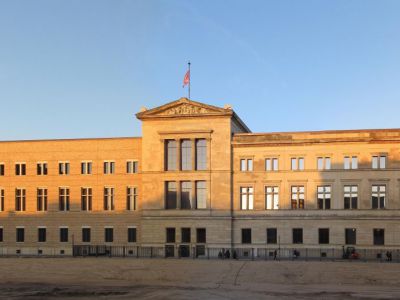
The crown jewel of Museum Island-the New Museum-has been back in action since 2009 and just begging for a deep dive. Not a literal one, of course-security frowns on that. We’re talking about four glorious floors packed with Berlin’s finest archaeological bling. Think global, think ancient, think seriously impressive: from prehistoric bits and bobs to full-on cultural blockbusters-Greeks, Romans, Nubians, and, of course, the ever-iconic Egyptians.
Now, speaking of the Egyptians-yes, the Nefertiti is here! She’s flawless. She’s got cheekbones that could cut glass and a gaze that’s been melting hearts for over 3,000 years. Believe it-you’ll want to admire her from every possible angle. (And no, sadly, selfies are not allowed.)
But don’t stop there-this place is full of surprises. One room even lets you summon ancient papyrus scrolls with the press of a button. It’s like Indiana Jones meets touchscreen tech. Keep an eye out for info cards, too-they’ll tell you which treasures survived World War II unscathed and which ones had a bit of reconstructive “tender loving care.”
On the second floor, there’s more Egyptian art to devour, and one level down is a temple. A whole courtyard. Basically, your inner explorer will be doing cartwheels.
And don’t even think about breezing past the Bronze and Iron Age exhibits. They’re not just pots and pointy sticks-these are ancient multitools, weapons, and mystical relics, served up with excavation pics and diagrams that make you feel like you’re right there in the dirt.
Oh, and then there’s the Golden Hat. Sounds fancy, right? It is. Shiny, mysterious, and probably used to predict eclipses, rule tribes, or host very exclusive dinner parties-no one’s entirely sure.
And if that doesn't impress you much, let the Berlin Green Head, a freakishly lifelike sculpture, stare into your soul. Or wander through rooms of mummies, sarcophagi, treasures from Troy, Nordic myth murals, and tiny blue animal-shaped faience from ancient tombs. It’s basically a time-traveling greatest-hits album.
Tip:
Arrive early. Really early. This place gets busy. A Berlin Card or museum pass will save your wallet and your patience. And when you enter, don’t go rogue-start at the top floor and descend like an archaeological royalty. An audio guide or tour is optional but highly recommended for full nerd-out potential.
Now, speaking of the Egyptians-yes, the Nefertiti is here! She’s flawless. She’s got cheekbones that could cut glass and a gaze that’s been melting hearts for over 3,000 years. Believe it-you’ll want to admire her from every possible angle. (And no, sadly, selfies are not allowed.)
But don’t stop there-this place is full of surprises. One room even lets you summon ancient papyrus scrolls with the press of a button. It’s like Indiana Jones meets touchscreen tech. Keep an eye out for info cards, too-they’ll tell you which treasures survived World War II unscathed and which ones had a bit of reconstructive “tender loving care.”
On the second floor, there’s more Egyptian art to devour, and one level down is a temple. A whole courtyard. Basically, your inner explorer will be doing cartwheels.
And don’t even think about breezing past the Bronze and Iron Age exhibits. They’re not just pots and pointy sticks-these are ancient multitools, weapons, and mystical relics, served up with excavation pics and diagrams that make you feel like you’re right there in the dirt.
Oh, and then there’s the Golden Hat. Sounds fancy, right? It is. Shiny, mysterious, and probably used to predict eclipses, rule tribes, or host very exclusive dinner parties-no one’s entirely sure.
And if that doesn't impress you much, let the Berlin Green Head, a freakishly lifelike sculpture, stare into your soul. Or wander through rooms of mummies, sarcophagi, treasures from Troy, Nordic myth murals, and tiny blue animal-shaped faience from ancient tombs. It’s basically a time-traveling greatest-hits album.
Tip:
Arrive early. Really early. This place gets busy. A Berlin Card or museum pass will save your wallet and your patience. And when you enter, don’t go rogue-start at the top floor and descend like an archaeological royalty. An audio guide or tour is optional but highly recommended for full nerd-out potential.
4) Berliner Dom (Berlin Cathedral) (must see)
Despite what its lofty name suggests, the Berlin Cathedral is... not a cathedral. Yep, never was. Because Berlin never had a Catholic bishop in the house.
Now, rewind to 1451, when Prince-Elector Frederick II-nicknamed "Iron-tooth" because, well, medieval PR was wild-built a castle chapel right here. It started out Catholic, then switched to Lutheran in 1539, and just to keep things spicy, went Calvinist by 1608.
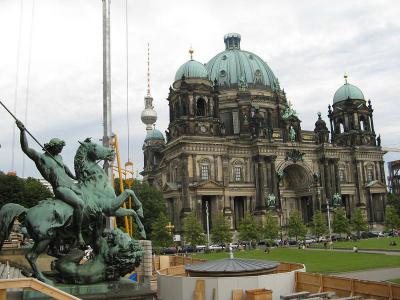
The version we see today is a Neo-Renaissance stunner, built between 1894 and 1905 by order of Emperor Wilhelm II, who basically wanted his very own Protestant answer to the Vatican’s Saint Peter’s Basilica. And what a power move it was: 114 meters long, 73 wide, and 116 tall-this place made everything else in Berlin look like dollhouse furniture.
And it wasn’t just for show, either. The Hohenzollerns-Germany’s royal family-worshipped here and even used the crypt as their final resting place. That lasted until 1918, when Wilhelm II peaced out to the Netherlands after abdicating the throne.
Then came World War II, and let’s just say the cathedral did not come out looking its best. East Germany did some repairs-thanks, GDR-but also tore down the Memorial Church in 1975, which wasn’t their finest hour.
Fast forward to 1993, and voilà: the place got a full glow-up. It now has the majestic pipe organ, pristine acoustics, priceless art, and vibes so divine they practically echo. Today, it’s home to choirs galore, including the English Choir Berlin, which hosts monthly Choral Evensong in true Anglican style.
If you're feeling brave, you can climb the dome! There’s a roomy stairwell, plenty of landings to catch your breath-and yes, actual chairs if you need a moment. At the bottom, history buffs rejoice: the crypt holds 94 royal sarcophagi. It's like Prussian Netflix, but... quieter.
Tip:
Snag the audio guide-it’s a small fee for a big info boost. Or grab a printed guide if you're old school. And in the summer, feel free to stretch out on the lawn across the street, near the fountain. It's the perfect picnic spot, and the cathedral makes a dramatic lunch backdrop.
Now, rewind to 1451, when Prince-Elector Frederick II-nicknamed "Iron-tooth" because, well, medieval PR was wild-built a castle chapel right here. It started out Catholic, then switched to Lutheran in 1539, and just to keep things spicy, went Calvinist by 1608.
The version we see today is a Neo-Renaissance stunner, built between 1894 and 1905 by order of Emperor Wilhelm II, who basically wanted his very own Protestant answer to the Vatican’s Saint Peter’s Basilica. And what a power move it was: 114 meters long, 73 wide, and 116 tall-this place made everything else in Berlin look like dollhouse furniture.
And it wasn’t just for show, either. The Hohenzollerns-Germany’s royal family-worshipped here and even used the crypt as their final resting place. That lasted until 1918, when Wilhelm II peaced out to the Netherlands after abdicating the throne.
Then came World War II, and let’s just say the cathedral did not come out looking its best. East Germany did some repairs-thanks, GDR-but also tore down the Memorial Church in 1975, which wasn’t their finest hour.
Fast forward to 1993, and voilà: the place got a full glow-up. It now has the majestic pipe organ, pristine acoustics, priceless art, and vibes so divine they practically echo. Today, it’s home to choirs galore, including the English Choir Berlin, which hosts monthly Choral Evensong in true Anglican style.
If you're feeling brave, you can climb the dome! There’s a roomy stairwell, plenty of landings to catch your breath-and yes, actual chairs if you need a moment. At the bottom, history buffs rejoice: the crypt holds 94 royal sarcophagi. It's like Prussian Netflix, but... quieter.
Tip:
Snag the audio guide-it’s a small fee for a big info boost. Or grab a printed guide if you're old school. And in the summer, feel free to stretch out on the lawn across the street, near the fountain. It's the perfect picnic spot, and the cathedral makes a dramatic lunch backdrop.
5) Fernsehturm (TV Tower) (must see)
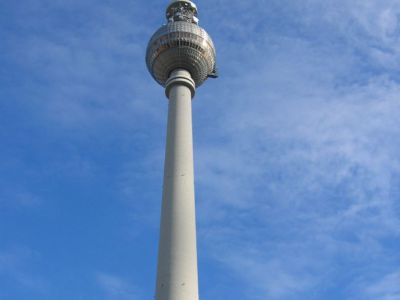
The Berlin Television Tower was built by East Germany in the late 1960s. Inaugurated on October 3, 1969, it is the tallest structure in Germany and the third-tallest in the European Union.
Designated as a monument in 1979, the tower attracts around 1.2 million visitors annually and is one of Germany’s top tourist attractions. It has an observation deck at 203 meters and the rotating restaurant “Sphere” at 207 meters, offering panoramic views of the city, extending up to 40 kilometers (or 25 miles) on a clear day.
The tower’s height increased from 365 to 368 meters in 1997 after a new antenna was added, making it the fourth tallest free-standing structure in Europe, surpassed only by Moscow's Ostankino Tower and TV towers in Kiev and Riga. If you have a mild fear of heights, fear not-the elevator whisks you to the top in a mere 40 seconds. You can also opt for a more adventurous ascent via 985 steps.
Inside, enjoy the authentic Sputnik-era ambiance complete with period-appropriate decor and finishes. If you have specific dietary preferences, particularly as a vegetarian, it's advisable to peruse the restaurant menu on their website before making a reservation. The dining experience itself is quite lovely otherwise, comprising a starter, main course, and dessert, plus a glass of sparkling wine and two glasses of red or white wine, along with unlimited water. Moreover, the restaurant rotates slowly, affording you a comprehensive view of Berlin, making it an ideal setting for photography. A full rotation takes about half an hour, offering ample opportunity to capture the city from a bird's-eye perspective while sipping a coffee.
Presently dubbed "the toothpick" by locals, the tower previously earned the nickname “Pope’s Revenge” because sunlight reflecting off its dome forms a Greek cross, which some saw as a rebuke to East Germany’s anti-religious stance, and was mentioned by the former US president Ronald Reagan in his 1987 “Tear down this wall” speech. For the same reasons, it was also jokingly called "Saint Walter" after Walter Ulbricht, leader of the Socialist Unity Party which governed East Germany.
Originally a symbol of Communist power, the TV tower is now a unified Berlin landmark and a cultural and tourist icon, hosting events like the Festival of Lights.
Designated as a monument in 1979, the tower attracts around 1.2 million visitors annually and is one of Germany’s top tourist attractions. It has an observation deck at 203 meters and the rotating restaurant “Sphere” at 207 meters, offering panoramic views of the city, extending up to 40 kilometers (or 25 miles) on a clear day.
The tower’s height increased from 365 to 368 meters in 1997 after a new antenna was added, making it the fourth tallest free-standing structure in Europe, surpassed only by Moscow's Ostankino Tower and TV towers in Kiev and Riga. If you have a mild fear of heights, fear not-the elevator whisks you to the top in a mere 40 seconds. You can also opt for a more adventurous ascent via 985 steps.
Inside, enjoy the authentic Sputnik-era ambiance complete with period-appropriate decor and finishes. If you have specific dietary preferences, particularly as a vegetarian, it's advisable to peruse the restaurant menu on their website before making a reservation. The dining experience itself is quite lovely otherwise, comprising a starter, main course, and dessert, plus a glass of sparkling wine and two glasses of red or white wine, along with unlimited water. Moreover, the restaurant rotates slowly, affording you a comprehensive view of Berlin, making it an ideal setting for photography. A full rotation takes about half an hour, offering ample opportunity to capture the city from a bird's-eye perspective while sipping a coffee.
Presently dubbed "the toothpick" by locals, the tower previously earned the nickname “Pope’s Revenge” because sunlight reflecting off its dome forms a Greek cross, which some saw as a rebuke to East Germany’s anti-religious stance, and was mentioned by the former US president Ronald Reagan in his 1987 “Tear down this wall” speech. For the same reasons, it was also jokingly called "Saint Walter" after Walter Ulbricht, leader of the Socialist Unity Party which governed East Germany.
Originally a symbol of Communist power, the TV tower is now a unified Berlin landmark and a cultural and tourist icon, hosting events like the Festival of Lights.
