Custom Walk in Munich, Germany by murrswim_af57d2 created on 2026-05-03
Guide Location: Germany » Munich
Guide Type: Custom Walk
# of Sights: 6
Tour Duration: 5 Hour(s)
Travel Distance: 12.6 Km or 7.8 Miles
Share Key: RC6JY
Guide Type: Custom Walk
# of Sights: 6
Tour Duration: 5 Hour(s)
Travel Distance: 12.6 Km or 7.8 Miles
Share Key: RC6JY
How It Works
Please retrieve this walk in the GPSmyCity app. Once done, the app will guide you from one tour stop to the next as if you had a personal tour guide. If you created the walk on this website or come to the page via a link, please follow the instructions below to retrieve the walk in the app.
Retrieve This Walk in App
Step 1. Download the app "GPSmyCity: Walks in 1K+ Cities" on Apple App Store or Google Play Store.



Step 2. In the GPSmyCity app, download(or launch) the guide "Munich Map and Walking Tours".
Step 3. Tap the menu button located at upper right corner of the "Walks" screen and select "Retrieve custom walk". Enter the share key: RC6JY
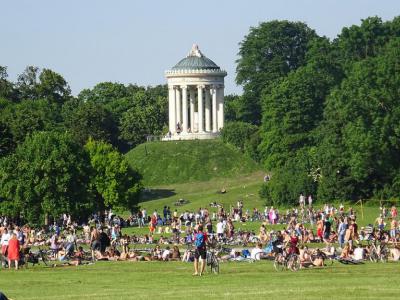
1) Englischer Garten (English Garden) (must see)
Munich’s English Garden is the largest publicly owned park in Europe-and even larger than New York’s Central Park, stretching across an impressive 900 acres, or about three and a half kilometers. The idea came from Archduke Carl Theodore, but it was brought to life by Benjamin Thompson, an American-born British physicist who later became known as Count Rumford.
Once a royal hunting ground for the Wittelsbach family, the land was transformed into a public park in 1792, stretching three miles along the scenic Isar River. Its name comes from the informal landscaping style that mirrors the naturalistic English gardens popular in the 18th and 19th centuries.
Today, the English Garden is a favorite escape for locals-perfect for relaxing, playing sports, or catching up with friends. For the more adventurous, nude sunbathing is also allowed. You’ll find countless paths, riverside spots to cool your feet or go for a swim, as well as live music in the warmer months, and plenty of food options.
Among standout attractions is the Eisbach wave, an artificial surfing spot that’s active year-round, drawing spectators and surfers alike. In summer, make your way to one of the four beer gardens, especially the one near the Chinese Tower. There, you can enjoy a cold draft beer to the sound of traditional Bavarian tunes.
Within the park, you’ll also find a monument to Count Rumford, a serene Japanese Garden created for the Munich Olympics, the elegant Monopteros temple, and an amphitheater tucked away toward the northern edge.
Tip: Sunday’s the big walking day. With most shops closed, locals flood the park-so if you're in town, lace up your shoes and join the crowd. Just keep an eye out for cyclists-they tend to zip by when you least expect it. And if you're planning to swim or surf, don’t forget your gear.
Once a royal hunting ground for the Wittelsbach family, the land was transformed into a public park in 1792, stretching three miles along the scenic Isar River. Its name comes from the informal landscaping style that mirrors the naturalistic English gardens popular in the 18th and 19th centuries.
Today, the English Garden is a favorite escape for locals-perfect for relaxing, playing sports, or catching up with friends. For the more adventurous, nude sunbathing is also allowed. You’ll find countless paths, riverside spots to cool your feet or go for a swim, as well as live music in the warmer months, and plenty of food options.
Among standout attractions is the Eisbach wave, an artificial surfing spot that’s active year-round, drawing spectators and surfers alike. In summer, make your way to one of the four beer gardens, especially the one near the Chinese Tower. There, you can enjoy a cold draft beer to the sound of traditional Bavarian tunes.
Within the park, you’ll also find a monument to Count Rumford, a serene Japanese Garden created for the Munich Olympics, the elegant Monopteros temple, and an amphitheater tucked away toward the northern edge.
Tip: Sunday’s the big walking day. With most shops closed, locals flood the park-so if you're in town, lace up your shoes and join the crowd. Just keep an eye out for cyclists-they tend to zip by when you least expect it. And if you're planning to swim or surf, don’t forget your gear.
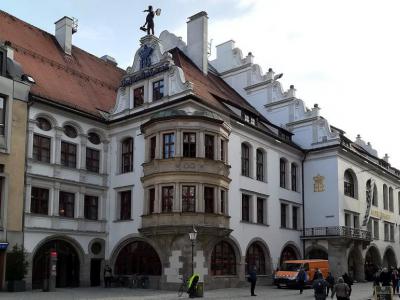
2) Hofbrauhaus Beer Hall (must see)
Arguably the most famous ‘watering hole’ in Munich, this spot is the embodiment of Bavarian tradition and spirit. Its story began in 1589, founded as part of the Royal Brewery by Wilhelm V. Back then, it wasn’t even open to the public-reserved instead for royal use. That changed in 1828, when the doors were finally thrown open to everyone. Today, it's among the city’s most beloved gathering places, steeped in old-world charm.
On the ground floor, long tables fill the hall that can hold 1,000 drinkers while bands belt out folk tunes. The menu is full of Bavarian classics, and the atmosphere is pure celebration. Upstairs, a vaulted ceremonial hall can seat another 1,300 people, with additional side rooms for smaller gatherings. And when the weather’s warm, the beer garden becomes a favorite hangout-with its shady chestnut trees, bubbling fountain, and relaxed outdoor vibe. On a typical day, around 10,000 liters of beer are served here-that’s over 17,000 pints.
True to tradition, the beer follows the Bavarian Beer Purity Law of 1516, which allows only natural ingredients. That standard is still upheld across the city, and the brews here are no exception-crafted with care and full of flavor.
But not all of the building’s history is festive. On February 24, 1920, Adolf Hitler stood here to announce the official program of the then-fledgling Nazi Party. Just over a year later, on July 29, 1921, he was elected as the Party’s leader-right in this very hall. So while the beer house is rightly remembered for joy, music, and beer, it also witnessed one of the more sobering moments of 20th-century history.
On the ground floor, long tables fill the hall that can hold 1,000 drinkers while bands belt out folk tunes. The menu is full of Bavarian classics, and the atmosphere is pure celebration. Upstairs, a vaulted ceremonial hall can seat another 1,300 people, with additional side rooms for smaller gatherings. And when the weather’s warm, the beer garden becomes a favorite hangout-with its shady chestnut trees, bubbling fountain, and relaxed outdoor vibe. On a typical day, around 10,000 liters of beer are served here-that’s over 17,000 pints.
True to tradition, the beer follows the Bavarian Beer Purity Law of 1516, which allows only natural ingredients. That standard is still upheld across the city, and the brews here are no exception-crafted with care and full of flavor.
But not all of the building’s history is festive. On February 24, 1920, Adolf Hitler stood here to announce the official program of the then-fledgling Nazi Party. Just over a year later, on July 29, 1921, he was elected as the Party’s leader-right in this very hall. So while the beer house is rightly remembered for joy, music, and beer, it also witnessed one of the more sobering moments of 20th-century history.
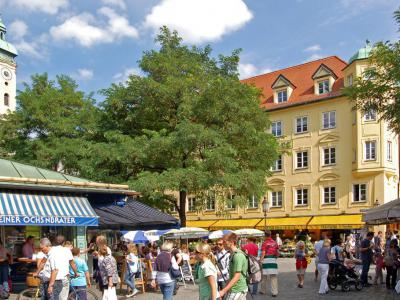
3) Viktualienmarkt (Farmer's Market) (must see)
Welcome to Munich’s oldest and most charming market. Since the early 1800s, it’s been the go-to spot for just about anything edible-fresh produce, dairy, meats, fine French wines, seafood, and rare delicacies from around the globe. Prices tend to be on the higher side, but the variety and quality are hard to beat. Of course, you’ll also find classic Bavarian favorites like pretzels, sausages, and local cheeses, all offering a true taste of the region.
People from all walks of life gather here-locals picking up ingredients for dinner, tourists exploring with wide eyes, and regulars who’ve made it part of their daily routine. Local customs involve eating white sausage, sipping hot soup, and enjoying a cold beer in one of the city’s most beloved beer gardens, set around a decorated maypole. Under the shade of chestnut trees, folks gather to sip cold brews and enjoy a break from the buzz.
But this market is more than a place to shop, drink or snack-it’s actually woven into Munich’s cultural identity. Throughout the year, it plays host to everything from folk dances and live music to seasonal festivals, and an especially lively Mardi Gras parade. The fountain erected to commemorate German cabaret artists emphasizes the spirit that has always animated this place.
In every sense, it’s a feast-for the senses, for the culture, and most definitely for the appetite.
People from all walks of life gather here-locals picking up ingredients for dinner, tourists exploring with wide eyes, and regulars who’ve made it part of their daily routine. Local customs involve eating white sausage, sipping hot soup, and enjoying a cold beer in one of the city’s most beloved beer gardens, set around a decorated maypole. Under the shade of chestnut trees, folks gather to sip cold brews and enjoy a break from the buzz.
But this market is more than a place to shop, drink or snack-it’s actually woven into Munich’s cultural identity. Throughout the year, it plays host to everything from folk dances and live music to seasonal festivals, and an especially lively Mardi Gras parade. The fountain erected to commemorate German cabaret artists emphasizes the spirit that has always animated this place.
In every sense, it’s a feast-for the senses, for the culture, and most definitely for the appetite.
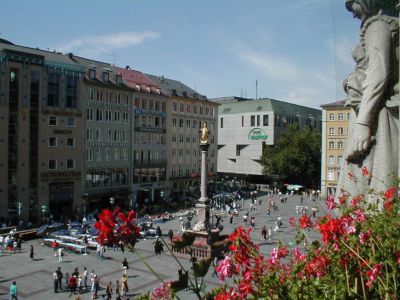
4) Marienplatz (Mary's Square) (must see)
Right in the center of Munich lies Mary’s Square, the city’s lively, historic core. Established back in 1158, it started out as a busy marketplace and a stage for medieval tournaments and public events. These days, it’s still the place where everything seems to converge-a perfect starting point for anyone exploring the city. Grand buildings rise on all sides, cafés spill onto the streets, and the square hums with energy from morning until night.
The star attraction is the New Town Hall, an elaborate neo-Gothic masterpiece brimming with stone figures, ornate carvings, and the famous Glockenspiel. At 11 a.m., noon, and again at 5 p.m. during the warmer months, the Glockenspiel puts on its quirky performance. Thirty-two mechanical figures spin into action, reenacting Bavarian legends to a soundtrack of bells and music. It’s theatrical, a little over-the-top, and completely delightful.
Across the square, you’ll also find the Old Town Hall, with its storybook tower and a toy museum tucked inside-great if you’re traveling with kids or just enjoy a touch of childhood nostalgia. Meanwhile in the center stands the Column of Saint Mary, raised in 1638 to mark the end of Swedish occupation during the Thirty Years' War. A gilded statue of the Virgin crowns the column-a quiet symbol in a bustling space, and the inspiration for the square’s name.
Street musicians, traditional restaurants, souvenir stalls-there’s always something happening around you. Want to shop? Stroll down Kaufinger Street, one of Munich’s busiest pedestrian avenues. If you’re more in the mood for architecture, the city’s Cathedral, with its distinctive twin domes, is just around the corner.
In short, Mary’s Square offers the perfect snapshot of Munich. Don’t rush through it-it’s a place to linger, look up, and let the city reveal itself one detail at a time.
The star attraction is the New Town Hall, an elaborate neo-Gothic masterpiece brimming with stone figures, ornate carvings, and the famous Glockenspiel. At 11 a.m., noon, and again at 5 p.m. during the warmer months, the Glockenspiel puts on its quirky performance. Thirty-two mechanical figures spin into action, reenacting Bavarian legends to a soundtrack of bells and music. It’s theatrical, a little over-the-top, and completely delightful.
Across the square, you’ll also find the Old Town Hall, with its storybook tower and a toy museum tucked inside-great if you’re traveling with kids or just enjoy a touch of childhood nostalgia. Meanwhile in the center stands the Column of Saint Mary, raised in 1638 to mark the end of Swedish occupation during the Thirty Years' War. A gilded statue of the Virgin crowns the column-a quiet symbol in a bustling space, and the inspiration for the square’s name.
Street musicians, traditional restaurants, souvenir stalls-there’s always something happening around you. Want to shop? Stroll down Kaufinger Street, one of Munich’s busiest pedestrian avenues. If you’re more in the mood for architecture, the city’s Cathedral, with its distinctive twin domes, is just around the corner.
In short, Mary’s Square offers the perfect snapshot of Munich. Don’t rush through it-it’s a place to linger, look up, and let the city reveal itself one detail at a time.
5) Kaufinger Street & Neuhauser Street (must see)
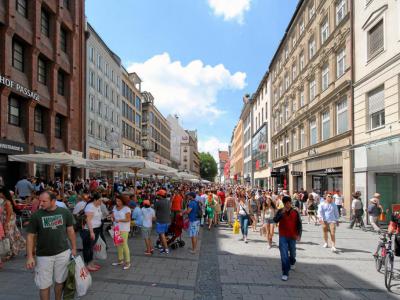
Just west of Mary’s Square lies one of Munich’s oldest streets-Kaufinger. In fact, it holds the title for the city's oldest recorded street name, first mentioned in a document dated May 28, 1239. While it suffered heavy damage during World War II, the decades that followed brought a fresh architectural wave. By the 1990s, many of the utilitarian post-war buildings had been replaced with sleek, postmodern designs. Today, Kaufinger remains a key artery in Munich’s Old Town, forming part of the main west-to-east route through the historic center.
As you continue along, Kaufinger flows directly into Neuhauser, forming a broad thoroughfare. Once a busy traffic route with tram tracks, Neuhauser was transformed into a pedestrian zone in 1972, just ahead of the Munich Summer Olympics. The goal was to accommodate the anticipated crowds-and the result is now the most profitable shopping street in all of Germany.
Naturally, both streets are lined with a rich mix of shops and restaurants. Global brands rub shoulders with local vendors selling everything from fresh flowers and fruit to roasted nuts and souvenirs. Outdoor cafés spill onto the pavement, offering shoppers a place to rest, sip a coffee, enjoy a meal, and take in the architecture, along with the energy of the crowd.
Tip: If you're looking to escape the mainstream retail chains while staying in the city center, make your way to Sendlinger Street. It’s just nearby and offers a more laid-back, boutique shopping experience.
As you continue along, Kaufinger flows directly into Neuhauser, forming a broad thoroughfare. Once a busy traffic route with tram tracks, Neuhauser was transformed into a pedestrian zone in 1972, just ahead of the Munich Summer Olympics. The goal was to accommodate the anticipated crowds-and the result is now the most profitable shopping street in all of Germany.
Naturally, both streets are lined with a rich mix of shops and restaurants. Global brands rub shoulders with local vendors selling everything from fresh flowers and fruit to roasted nuts and souvenirs. Outdoor cafés spill onto the pavement, offering shoppers a place to rest, sip a coffee, enjoy a meal, and take in the architecture, along with the energy of the crowd.
Tip: If you're looking to escape the mainstream retail chains while staying in the city center, make your way to Sendlinger Street. It’s just nearby and offers a more laid-back, boutique shopping experience.
6) Olympiapark (must see)
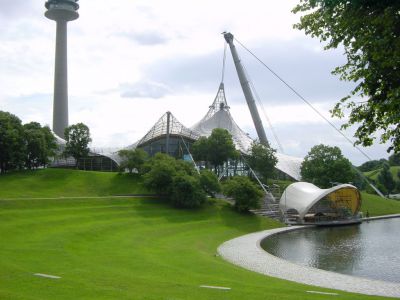
Olympiapark is a sports facility located in Munich, originally constructed for the 1972 Summer Olympics. In the present day, it serves as a venue for various cultural, athletic, and religious gatherings.
Munich was granted the privilege of hosting the 20th Olympic Games by the International Olympic Committee in 1966. To accommodate this prestigious event, the city devised plans to transform the Oberwiesenfeld area into a suitable location. The Oberwiesenfeld had previously functioned as an airfield where debris from the city's WWII bombardment had been deposited. The design and construction of the facility were undertaken by Günther Behmisch, Frei Otto & Partners. Their vision for the arena was conceived with the city's long-term requirements in mind, and it continues to be utilized for sporting events. The distinctive tent-like roof, which envelops much of the park, is crafted from PVC-coated polyester fabric.
Within Olympiapark, one can find amenities such as an ice rink, an indoor pool, and the main stadium. Prior to the opening of the Allianz Arena in 2005, this stadium served as the home ground for the FC Bayern München and TSV 1860 München soccer teams. Today, it is primarily utilized for cultural events. Visitors have the opportunity to take guided tours and even ascend the stadium's roof. Additionally, the park features an artificial hill named the Olympiaberg, standing at a height of 197 feet, as well as the Olympiaturm, a television tower reaching a height of 290 meters. From the summits of these structures, visitors can enjoy breathtaking panoramic views of Munich and Olympiapark.
Why You Should Visit:
A nice place to hang out, whether you want to visit the Tollwood or Theatron festival in summer, dine with great views of Munich at the restaurant on top of the Olympic Tower (make sure to book ahead if you plan to do so!), or just want to sit on top of the hills.
The fair with street foods and sweets, carousels and souvenirs shops makes the place near the Olympic Hall a bit chaotic but may entertain small kids.
Tip:
Don't forget your bathing suit – you can swim in the Olympic pool!
Munich was granted the privilege of hosting the 20th Olympic Games by the International Olympic Committee in 1966. To accommodate this prestigious event, the city devised plans to transform the Oberwiesenfeld area into a suitable location. The Oberwiesenfeld had previously functioned as an airfield where debris from the city's WWII bombardment had been deposited. The design and construction of the facility were undertaken by Günther Behmisch, Frei Otto & Partners. Their vision for the arena was conceived with the city's long-term requirements in mind, and it continues to be utilized for sporting events. The distinctive tent-like roof, which envelops much of the park, is crafted from PVC-coated polyester fabric.
Within Olympiapark, one can find amenities such as an ice rink, an indoor pool, and the main stadium. Prior to the opening of the Allianz Arena in 2005, this stadium served as the home ground for the FC Bayern München and TSV 1860 München soccer teams. Today, it is primarily utilized for cultural events. Visitors have the opportunity to take guided tours and even ascend the stadium's roof. Additionally, the park features an artificial hill named the Olympiaberg, standing at a height of 197 feet, as well as the Olympiaturm, a television tower reaching a height of 290 meters. From the summits of these structures, visitors can enjoy breathtaking panoramic views of Munich and Olympiapark.
Why You Should Visit:
A nice place to hang out, whether you want to visit the Tollwood or Theatron festival in summer, dine with great views of Munich at the restaurant on top of the Olympic Tower (make sure to book ahead if you plan to do so!), or just want to sit on top of the hills.
The fair with street foods and sweets, carousels and souvenirs shops makes the place near the Olympic Hall a bit chaotic but may entertain small kids.
Tip:
Don't forget your bathing suit – you can swim in the Olympic pool!
