Custom Walk in Melbourne, Australia by makerymagic_8748ec created on 2026-05-09
Guide Location: Australia » Melbourne
Guide Type: Custom Walk
# of Sights: 6
Tour Duration: 1 Hour(s)
Travel Distance: 2.3 Km or 1.4 Miles
Share Key: FD5FE
Guide Type: Custom Walk
# of Sights: 6
Tour Duration: 1 Hour(s)
Travel Distance: 2.3 Km or 1.4 Miles
Share Key: FD5FE
How It Works
Please retrieve this walk in the GPSmyCity app. Once done, the app will guide you from one tour stop to the next as if you had a personal tour guide. If you created the walk on this website or come to the page via a link, please follow the instructions below to retrieve the walk in the app.
Retrieve This Walk in App
Step 1. Download the app "GPSmyCity: Walks in 1K+ Cities" on Apple App Store or Google Play Store.



Step 2. In the GPSmyCity app, download(or launch) the guide "Melbourne Map and Walking Tours".
Step 3. Tap the menu button located at upper right corner of the "Walks" screen and select "Retrieve custom walk". Enter the share key: FD5FE
1) Queen Victoria Market (must see)
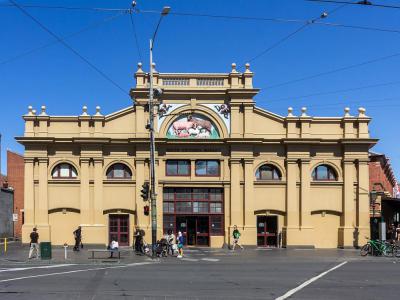
If Melbourne had a heartbeat, you’d probably hear it thumping somewhere between the cheese counters and doughnut queues of the Queen Victoria Market-or “the Queen Vic” to anyone who’s ever bought a snack here. It’s the last major market standing in the Central Business District and the largest open-air market in the entire Southern Hemisphere, which is a fancy way of saying it’s been out-shopping and outlasting everyone else since 1878.
Back in the early days, the city was littered with markets. The Western Market opened in 1841 and instantly packed out, so the Eastern Market appeared soon after and stole the spotlight. The Queen Vic rose from a patchwork of smaller trading spots built around the Old Melbourne Cemetery, where early settlers-including Melbourne founder, John Bateman-were laid to rest. By the 1870s, the city had outgrown its earlier markets, so the Queen Vic expanded with the now-classic A–F sheds, new shops along Elizabeth Street, and that unmistakable Meat and Fish façade.
Today, the Queen Vic is a world unto itself. It runs most days of the week, and when summer rolls in, Wednesday evenings burst into a full-blown Night Market-street food sizzling, music drifting across the sheds, and crowds circling festival bars like moths to a neon flame. With more than 600 small businesses, the market is a parade of produce, seafood, deli treats, handmade crafts, jewelers, artists, coffee brewers, and everything in between.
Many of the original 19th-century buildings still frame the site, including the 1869 Meat Hall and the heritage shopfronts along Elizabeth and Victoria Streets. Inside, regulars swear by the deli section’s meats and cheeses, the mountain of seasonal produce, the French pastries in the Dairy Produce Hall, and the famous doughnut truck that rarely stops steaming.
And here's one insider perk: vendors often drop prices late in the day-so timing your visit just right might score you a bargain along with your brioche.
Back in the early days, the city was littered with markets. The Western Market opened in 1841 and instantly packed out, so the Eastern Market appeared soon after and stole the spotlight. The Queen Vic rose from a patchwork of smaller trading spots built around the Old Melbourne Cemetery, where early settlers-including Melbourne founder, John Bateman-were laid to rest. By the 1870s, the city had outgrown its earlier markets, so the Queen Vic expanded with the now-classic A–F sheds, new shops along Elizabeth Street, and that unmistakable Meat and Fish façade.
Today, the Queen Vic is a world unto itself. It runs most days of the week, and when summer rolls in, Wednesday evenings burst into a full-blown Night Market-street food sizzling, music drifting across the sheds, and crowds circling festival bars like moths to a neon flame. With more than 600 small businesses, the market is a parade of produce, seafood, deli treats, handmade crafts, jewelers, artists, coffee brewers, and everything in between.
Many of the original 19th-century buildings still frame the site, including the 1869 Meat Hall and the heritage shopfronts along Elizabeth and Victoria Streets. Inside, regulars swear by the deli section’s meats and cheeses, the mountain of seasonal produce, the French pastries in the Dairy Produce Hall, and the famous doughnut truck that rarely stops steaming.
And here's one insider perk: vendors often drop prices late in the day-so timing your visit just right might score you a bargain along with your brioche.
2) Melbourne Central
If you ever wanted to see Melbourne’s personality squeezed into a couple of city blocks, Melbourne Central does the job nicely. It’s a shopping complex, a food hall, a transport hub, and-thanks to the architect Kisho Kurokawa-a sci-fi set piece crowned with that unmistakable glass cone. Underneath it rises the 1889 Coops Shot Tower, a stubborn slice of Victorian industry that refused to move, so the designers simply built the future around it. The result looks like a time-travel experiment that accidentally worked. And just to keep things lively, the giant Marionette watch chimes “Waltzing Matilda” every hour, because why not...
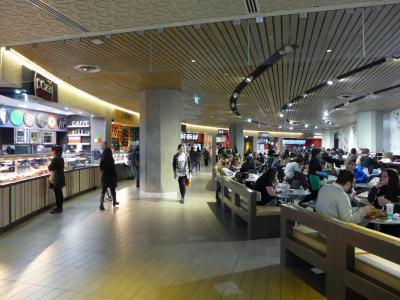
Perched above the Melbourne Central train station, the complex is one of those places you drift into almost by accident. You might be aiming for a laneway café or a museum, and suddenly you’re surrounded by 300 shops and a crowd that looks like it’s on its way to every corner of the city all at once. Shopping is the official headline act, but the food scene is what keeps the place humming.
Down in the food court, it’s a greatest-hits playlist of Melbourne flavours: dumplings, ramen, poke, kebabs, and the kind of fish and chips that make you reconsider your lunch plans. Everything moves quickly, tastes fresh, and caters perfectly to travellers grabbing a bite between wanderings. Bubble tea counters, dessert stalls, and pastry cabinets appear around corners like friendly traps for anyone with a sweet tooth.
Coffee, naturally, is everywhere. Melbourne Central hosts both well-known roasters and indie cafés, each offering its own take on the flat white or a seasonal blend. They’re perfect for a breather without stepping away from the buzz.
Up on the higher levels, sit-down restaurants offer Japanese barbecue, Italian comfort food, burgers, and more, many staying open into the evening. With its landmark architecture and Swanston Street energy, Melbourne Central becomes an easy, flavour-packed shortcut to understanding the city’s broader culinary spirit.
Perched above the Melbourne Central train station, the complex is one of those places you drift into almost by accident. You might be aiming for a laneway café or a museum, and suddenly you’re surrounded by 300 shops and a crowd that looks like it’s on its way to every corner of the city all at once. Shopping is the official headline act, but the food scene is what keeps the place humming.
Down in the food court, it’s a greatest-hits playlist of Melbourne flavours: dumplings, ramen, poke, kebabs, and the kind of fish and chips that make you reconsider your lunch plans. Everything moves quickly, tastes fresh, and caters perfectly to travellers grabbing a bite between wanderings. Bubble tea counters, dessert stalls, and pastry cabinets appear around corners like friendly traps for anyone with a sweet tooth.
Coffee, naturally, is everywhere. Melbourne Central hosts both well-known roasters and indie cafés, each offering its own take on the flat white or a seasonal blend. They’re perfect for a breather without stepping away from the buzz.
Up on the higher levels, sit-down restaurants offer Japanese barbecue, Italian comfort food, burgers, and more, many staying open into the evening. With its landmark architecture and Swanston Street energy, Melbourne Central becomes an easy, flavour-packed shortcut to understanding the city’s broader culinary spirit.
3) Tattersalls Lane
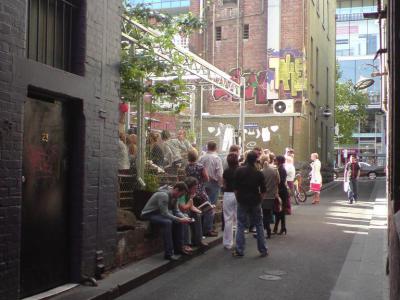
At a glance, Tattersalls Lane may look like a narrow cut-through, but give it a few steps and it turns into a full-blown mood-somewhere between Melbourne’s business core and the bright pull of Chinatown. The laneway takes its name from the old Tattersalls Hotel and Club, though its 19th-century life of brooms, barrels, and back-of-house chores is long gone. Today, it feels more like a compact festival ground that never officially ends. Its location beside Little Bourke Street keeps a steady flow of Chinatown energy drifting in, and that influence colours nearly everything: the food, the pace, and the unapologetically late hours.
The star, of course, is Section 8-a bar built from shipping containers that somehow became one of Melbourne’s most recognisable meeting spots. It sets the tone for the whole lane: open air, slightly chaotic, and effortlessly cool. From there, you’re surrounded by an easy jumble of dumpling joints, Thai and pan-Asian counters, quick-fire noodle kitchens, and snack stalls dishing out skewers, stir-fries, and bubble tea long after office lights go dark. Graffiti wraps the walls, neon hums overhead, and the seating looks like it was collected from five different garages-which is exactly why people love it.
A few venues stand out even in all that colour. The Shanghai Dumpling House remains a crowd magnet, Xiaolong Kan turns hot pots into theatre, and an all-you-can-eat Indian spot adds unexpected spice to the mix. Above the laneway, Ferdydurke serves cocktails with a wink and a view of the action below. Street art completes the backdrop, changing often enough that the lane feels like a rotating exhibition.
For visitors, Tattersalls Lane delivers a concentrated hit of Melbourne’s laneway spirit-informal, multicultural, lively, and best approached with curiosity. It’s a small stretch with a big personality, and it rewards anyone who lets the night unfold one bite, one beat, and one mural at a time...
The star, of course, is Section 8-a bar built from shipping containers that somehow became one of Melbourne’s most recognisable meeting spots. It sets the tone for the whole lane: open air, slightly chaotic, and effortlessly cool. From there, you’re surrounded by an easy jumble of dumpling joints, Thai and pan-Asian counters, quick-fire noodle kitchens, and snack stalls dishing out skewers, stir-fries, and bubble tea long after office lights go dark. Graffiti wraps the walls, neon hums overhead, and the seating looks like it was collected from five different garages-which is exactly why people love it.
A few venues stand out even in all that colour. The Shanghai Dumpling House remains a crowd magnet, Xiaolong Kan turns hot pots into theatre, and an all-you-can-eat Indian spot adds unexpected spice to the mix. Above the laneway, Ferdydurke serves cocktails with a wink and a view of the action below. Street art completes the backdrop, changing often enough that the lane feels like a rotating exhibition.
For visitors, Tattersalls Lane delivers a concentrated hit of Melbourne’s laneway spirit-informal, multicultural, lively, and best approached with curiosity. It’s a small stretch with a big personality, and it rewards anyone who lets the night unfold one bite, one beat, and one mural at a time...
4) MidCity Arcade
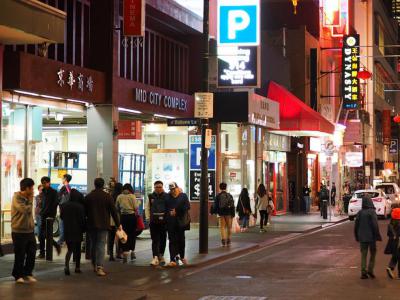
From the outside, MidCity Arcade may appear just like another slender corridor, threading between Bourke Street and Little Bourke Street-one you could easily breeze past without noticing. But doing so would mean missing one of the Central Business District’s most reliable shortcuts to a good meal. Sitting right on the edge of Chinatown and smack in the middle of Melbourne’s busiest shopping zone, it’s essentially the city’s culinary express lane: step in, and you’re already halfway to lunch.
Once inside, the arcade wastes no time announcing its loyalties. The place leans firmly toward Asian flavours, and proudly so. In the space of a short stroll, you’ll pass Japanese ramen bars, Korean barbecue grills, Chinese dumpling shops, bubble-tea counters, and Southeast Asian lunch spots all vying for your attention. It’s the kind of setup where your dinner plans change three times before you reach the escalator. Prices stay friendly, dishes arrive quickly, and portions are built with the hungry wanderer in mind-perfect for anyone darting between museums, retail therapy, or Melbourne’s addictive laneways.
Food may be the arcade’s heartbeat, but it doesn’t stop there. More than 30 retailers squeeze into the mix, including fashion boutiques, tech stores, beauty shops, travel services, and even a cinema for when you need a breather. Sit-down favourites like Kaneda and King’s No. 1 Café add a calmer option amid the bustle, though the overall feel remains brisk and canteen-like. There’s even a parking garage tucked beneath the complex, accessible from Chinatown, for those who prefer to roll straight in.
Most visitors pair MidCity Arcade with two obvious neighbours: Chinatown and the Bourke Street Mall. Together, they form Melbourne’s trifecta of eating, browsing, and people-watching. The arcade simply distills that spirit into one compact, easy-to-navigate slice of the city-no reservations required, no big budget needed, just an appetite and a willingness to follow your nose...
Once inside, the arcade wastes no time announcing its loyalties. The place leans firmly toward Asian flavours, and proudly so. In the space of a short stroll, you’ll pass Japanese ramen bars, Korean barbecue grills, Chinese dumpling shops, bubble-tea counters, and Southeast Asian lunch spots all vying for your attention. It’s the kind of setup where your dinner plans change three times before you reach the escalator. Prices stay friendly, dishes arrive quickly, and portions are built with the hungry wanderer in mind-perfect for anyone darting between museums, retail therapy, or Melbourne’s addictive laneways.
Food may be the arcade’s heartbeat, but it doesn’t stop there. More than 30 retailers squeeze into the mix, including fashion boutiques, tech stores, beauty shops, travel services, and even a cinema for when you need a breather. Sit-down favourites like Kaneda and King’s No. 1 Café add a calmer option amid the bustle, though the overall feel remains brisk and canteen-like. There’s even a parking garage tucked beneath the complex, accessible from Chinatown, for those who prefer to roll straight in.
Most visitors pair MidCity Arcade with two obvious neighbours: Chinatown and the Bourke Street Mall. Together, they form Melbourne’s trifecta of eating, browsing, and people-watching. The arcade simply distills that spirit into one compact, easy-to-navigate slice of the city-no reservations required, no big budget needed, just an appetite and a willingness to follow your nose...
5) Little Bourke Street
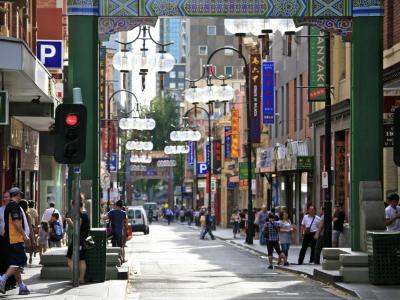
Little Bourke Street may sound modest, but don’t be fooled by its name-this is one of Melbourne’s original east-to-west thoroughfares and the heartbeat of the city’s Chinatown. Heading toward its eastern end, the street suddenly turns into a maze of neon signs, narrow laneways, and arcades that have been buzzing with life since the 1850s, when Chinese immigrants first made this neighbourhood their Australian home.
Today, Chinatown still delivers the classics-dumplings, herbal shops, and sizzling woks-but the menu has expanded far beyond China’s borders. Within a few steps, you can wander from Thai curries to Japanese noodles, Malaysian sweets, Vietnamese grills, Indian spices, and Korean barbecue. Add in annual celebrations like Lunar New Year, and you’ll understand why the area feels like a festival even on a slow afternoon. And if the aromas don’t catch your attention, the architecture will: Victorian-era buildings dressed up with colourful Chinese motifs create a quirky fusion that’s unmistakably Melbourne.
For anyone curious about how Chinese communities shaped the city, pop into the Museum of Chinese Australian History on Cohen Place. It’s compact, engaging, and full of stories that bring the neighbourhood to life. Nearby, the MidCity Arcade offers its own sheltered world of fusion eateries, quirky shops, and splashes of street art-perfect for a wander when the weather can’t make up its mind.
And before you leave, look for the Facing Heaven Archway on Cohen Street. With imperial lions guarding its base and a design inspired by a Ming-dynasty gateway, it’s the kind of landmark that practically insists on being photographed.
Melbourne’s Chinatown may sit on Little Bourke Street-but there’s nothing little about its personality.
Today, Chinatown still delivers the classics-dumplings, herbal shops, and sizzling woks-but the menu has expanded far beyond China’s borders. Within a few steps, you can wander from Thai curries to Japanese noodles, Malaysian sweets, Vietnamese grills, Indian spices, and Korean barbecue. Add in annual celebrations like Lunar New Year, and you’ll understand why the area feels like a festival even on a slow afternoon. And if the aromas don’t catch your attention, the architecture will: Victorian-era buildings dressed up with colourful Chinese motifs create a quirky fusion that’s unmistakably Melbourne.
For anyone curious about how Chinese communities shaped the city, pop into the Museum of Chinese Australian History on Cohen Place. It’s compact, engaging, and full of stories that bring the neighbourhood to life. Nearby, the MidCity Arcade offers its own sheltered world of fusion eateries, quirky shops, and splashes of street art-perfect for a wander when the weather can’t make up its mind.
And before you leave, look for the Facing Heaven Archway on Cohen Street. With imperial lions guarding its base and a design inspired by a Ming-dynasty gateway, it’s the kind of landmark that practically insists on being photographed.
Melbourne’s Chinatown may sit on Little Bourke Street-but there’s nothing little about its personality.
6) Degraves Street
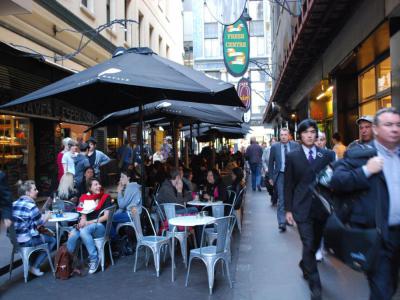
Slip off Flinders Street and onto Degraves, and suddenly Melbourne feels like it’s trying on a little Parisian flair. This narrow cobbled lane is strictly for pedestrians-no cars, just the steady hum of coffee machines, clinking glasses, and people debating which café has the best flat white. If you’re hunting for a sunny table to enjoy lunch outdoors, Degraves practically waves you over. Just don’t mix it up with Centre Place, its equally charming but often confused neighbour.
Look up, and you’ll spot the taller buildings that have been reborn as loft-style apartments, adding residents-and energy-to the laneway below. Down at street level, the soundtrack is classic Melbourne: buskers setting the mood, street art bursting from every corner, and the occasional splash of graffiti reminding you that creativity here comes in all forms.
The name “Degraves” goes back to Charles and William Degraves, merchants from Hobart who arrived here with flour-mill ambitions in 1849. William later dabbled in local politics, proving that even back then, Degraves attracted people who liked to stay busy...
Today, the lane acts as a lively connector between Flinders Street Station and the shopping streets to the north. If you need a shortcut underground, Campbell Arcade-better known to locals as the Degraves Underpass-whisks you beneath the traffic. Keep an eye out for the Platform Artists Group, who regularly turn the space into an ever-changing mini-gallery.
Step in, slow down, and enjoy the show-Degraves is Melbourne’s laneway culture at its most irresistible.
Look up, and you’ll spot the taller buildings that have been reborn as loft-style apartments, adding residents-and energy-to the laneway below. Down at street level, the soundtrack is classic Melbourne: buskers setting the mood, street art bursting from every corner, and the occasional splash of graffiti reminding you that creativity here comes in all forms.
The name “Degraves” goes back to Charles and William Degraves, merchants from Hobart who arrived here with flour-mill ambitions in 1849. William later dabbled in local politics, proving that even back then, Degraves attracted people who liked to stay busy...
Today, the lane acts as a lively connector between Flinders Street Station and the shopping streets to the north. If you need a shortcut underground, Campbell Arcade-better known to locals as the Degraves Underpass-whisks you beneath the traffic. Keep an eye out for the Platform Artists Group, who regularly turn the space into an ever-changing mini-gallery.
Step in, slow down, and enjoy the show-Degraves is Melbourne’s laneway culture at its most irresistible.
