Custom Walk in Bari, Italy by av_martin4285 created on 2026-05-12
Guide Location: Italy » Bari
Guide Type: Custom Walk
# of Sights: 13
Tour Duration: 3 Hour(s)
Travel Distance: 4.1 Km or 2.5 Miles
Share Key: YG2NR
Guide Type: Custom Walk
# of Sights: 13
Tour Duration: 3 Hour(s)
Travel Distance: 4.1 Km or 2.5 Miles
Share Key: YG2NR
How It Works
Please retrieve this walk in the GPSmyCity app. Once done, the app will guide you from one tour stop to the next as if you had a personal tour guide. If you created the walk on this website or come to the page via a link, please follow the instructions below to retrieve the walk in the app.
Retrieve This Walk in App
Step 1. Download the app "GPSmyCity: Walks in 1K+ Cities" on Apple App Store or Google Play Store.



Step 2. In the GPSmyCity app, download(or launch) the guide "Bari Map and Walking Tours".
Step 3. Tap the menu button located at upper right corner of the "Walks" screen and select "Retrieve custom walk". Enter the share key: YG2NR
1) Basilica San Nicola (Basilica of Saint Nicholas) (must see)
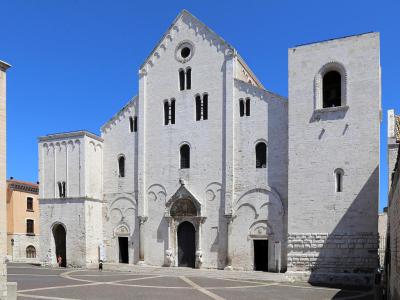
The Basilica of Saint Nicholas in Bari is more than a landmark; it is the story of how a city was transformed by faith, devotion, and legend. The tale begins in 1087, when sailors from Bari set sail for Myra, in present-day Turkey, and returned with the relics of Saint Nicholas, the miracle-working bishop whose reputation had spread across Christendom. Bringing his bones back to Bari was not just a daring act-it was a turning point that placed the city firmly on the map of Europe as a place of pilgrimage. Almost immediately, construction began on a church worthy of the saint, rising over the remains of the old Byzantine governor’s palace.
The man at the heart of all this, Nicholas himself, was born in the 3rd century. Known for his generosity and miracles, he became Bishop of Myra and endured persecution under Diocletian before his reputation as a protector of sailors, children, and the vulnerable took root. When Bari’s merchants brought his relics to Italy, they were greeted with both celebration and awe, and by 1197 the basilica was consecrated in the presence of Emperor Henry VI. From that moment, the city was not only a vital port but also a spiritual destination, visited by both Catholics and Orthodox pilgrims-a rare point of unity in a divided medieval world.
One of Bari’s most enduring traditions still recalls the sailors’ voyage: every May, during the Feast of Saint Nicholas, the saint’s statue is carried through the streets and taken out to sea before returning in a grand procession. The event blends faith and folklore, filling the city with music, fireworks, and prayers, and it remains one of Bari’s proudest celebrations.
Inside the basilica today, visitors find not just frescoes and stone columns but a crypt where pilgrims kneel at the saint’s marble tomb, often alongside curious travelers. Here, history and devotion mingle in a way that feels timeless. For Bari, the basilica was never only about architecture-it was about becoming more than a port, a city anchored in the enduring presence of its patron saint.
The man at the heart of all this, Nicholas himself, was born in the 3rd century. Known for his generosity and miracles, he became Bishop of Myra and endured persecution under Diocletian before his reputation as a protector of sailors, children, and the vulnerable took root. When Bari’s merchants brought his relics to Italy, they were greeted with both celebration and awe, and by 1197 the basilica was consecrated in the presence of Emperor Henry VI. From that moment, the city was not only a vital port but also a spiritual destination, visited by both Catholics and Orthodox pilgrims-a rare point of unity in a divided medieval world.
One of Bari’s most enduring traditions still recalls the sailors’ voyage: every May, during the Feast of Saint Nicholas, the saint’s statue is carried through the streets and taken out to sea before returning in a grand procession. The event blends faith and folklore, filling the city with music, fireworks, and prayers, and it remains one of Bari’s proudest celebrations.
Inside the basilica today, visitors find not just frescoes and stone columns but a crypt where pilgrims kneel at the saint’s marble tomb, often alongside curious travelers. Here, history and devotion mingle in a way that feels timeless. For Bari, the basilica was never only about architecture-it was about becoming more than a port, a city anchored in the enduring presence of its patron saint.
2) Piazza Mercantile (Merchant Square)
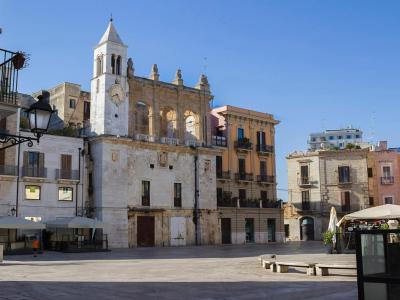
Merchant Square has been the stage for Bari’s public life for centuries, a place where power, trade, and daily routine came together in full view of the Adriatic. Established in the 13th century at the edge of the Old Town, it quickly grew into the city’s commercial heart. Merchants set up stalls, officials read out proclamations, and townspeople crowded the space to hear news or celebrate feast days. It was also the starting point of the Francigena street, the medieval pilgrims’ route leading to the Cathedral of Saint Nicholas, tying the square to both faith and commerce. Linked to the port by the fortified Tower of Sant’Antonio, the square was a gateway for traders and travelers alike.
The square also carried a darker side of justice. For centuries, the Pillar of Justice stood in plain sight, where bankrupt debtors were chained as a warning to others. This ritual of shame left an indelible mark on the memory of the place, a reminder that commerce in Bari was not only opportunity but also risk. Over time, the square took on layers of meaning-Palazzo del Sedile housed the city council, while its clock tower marked the hours of both labor and leisure.
Even catastrophe could not silence the square. After the fire and explosions of 1601, the ruling House of Sforza oversaw a renewal that gave Merchant Square new life, linking it directly to Ferrarese Square and reinforcing its role as the city’s business center.
The square no longer chains debtors, but it still chains people’s attention. Cafés and restaurants spill out onto the stones, and journalist Lino Patruno once compared it to a model that never stops winning hearts, “as if it were for the first time.” For visitors, Merchant Square remains what it always was: the beating civic and social heart of Bari.
The square also carried a darker side of justice. For centuries, the Pillar of Justice stood in plain sight, where bankrupt debtors were chained as a warning to others. This ritual of shame left an indelible mark on the memory of the place, a reminder that commerce in Bari was not only opportunity but also risk. Over time, the square took on layers of meaning-Palazzo del Sedile housed the city council, while its clock tower marked the hours of both labor and leisure.
Even catastrophe could not silence the square. After the fire and explosions of 1601, the ruling House of Sforza oversaw a renewal that gave Merchant Square new life, linking it directly to Ferrarese Square and reinforcing its role as the city’s business center.
The square no longer chains debtors, but it still chains people’s attention. Cafés and restaurants spill out onto the stones, and journalist Lino Patruno once compared it to a model that never stops winning hearts, “as if it were for the first time.” For visitors, Merchant Square remains what it always was: the beating civic and social heart of Bari.
3) Piazza del Ferrarese (Ferrarese Square)
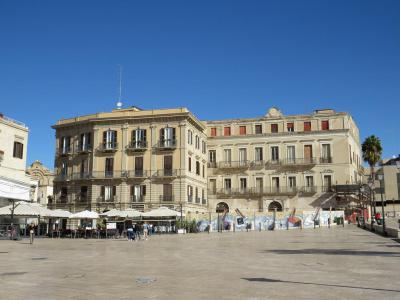
Ferrarese Square, opened in 1612, has always been more than just an open space in Bari-it is where the city’s commercial, spiritual, and social rhythms meet. It owes its name to Stefano Fabri, a 17th-century merchant from Ferrara whose trade house anchored the square and linked it closely to the port. From the beginning, it was conceived as an extension of the Merchant Square, helping to handle the flow of goods and people arriving from the Adriatic. Its position, right at the edge of the old city walls, made it a natural threshold between medieval Bari and the expanding neighborhoods that grew outside the fortifications.
The square’s layered history is still visible today. Parts of the Roman Trajan's Appian Way, the road that once tied Rome to the Adriatic, were uncovered during recent renovations. Baroque facades, 19th-century buildings, and the Vallisa Church apse stand nearby, while the Starita Palace, built over an old arsenal, reminds visitors of Bari’s centuries as a seafaring hub. Over time, Ferrarese Square became the backdrop for markets and gatherings, and it still carries that energy forward, now filled with cafés, restaurants, and the hum of nightlife.
The square also plays a central role in Bari’s devotion to Saint Nicholas. Each May, during the saint’s feast, pilgrims crowd into the square as the statue of the beloved patron arrives by boat, greeted with fireworks over the Adriatic. For many, this moment blends faith with celebration, turning the square into a stage for both devotion and joy.
Today, to linger in Ferrarese Square is to feel Bari’s past and present in one glance: Roman stones underfoot, Venetian and Baroque walls around, and locals chatting over espresso as music and festivals animate the air. It is the kind of place where the city’s story is not just remembered-it is lived.
The square’s layered history is still visible today. Parts of the Roman Trajan's Appian Way, the road that once tied Rome to the Adriatic, were uncovered during recent renovations. Baroque facades, 19th-century buildings, and the Vallisa Church apse stand nearby, while the Starita Palace, built over an old arsenal, reminds visitors of Bari’s centuries as a seafaring hub. Over time, Ferrarese Square became the backdrop for markets and gatherings, and it still carries that energy forward, now filled with cafés, restaurants, and the hum of nightlife.
The square also plays a central role in Bari’s devotion to Saint Nicholas. Each May, during the saint’s feast, pilgrims crowd into the square as the statue of the beloved patron arrives by boat, greeted with fireworks over the Adriatic. For many, this moment blends faith with celebration, turning the square into a stage for both devotion and joy.
Today, to linger in Ferrarese Square is to feel Bari’s past and present in one glance: Roman stones underfoot, Venetian and Baroque walls around, and locals chatting over espresso as music and festivals animate the air. It is the kind of place where the city’s story is not just remembered-it is lived.
4) Teatro Margherita (Margaret Theatre)
Margaret Theatre (Teatro Margherita) is a former theatre in Bari transformed into a museum of contemporary art. Its history dates back to the early 20th century when it was constructed to replace the Varietà Margherita, a wooden theater that faced strong criticism from local entrepreneurs and the Petruzzelli family, who saw it as a potential rival to their own Petruzzelli Theater.
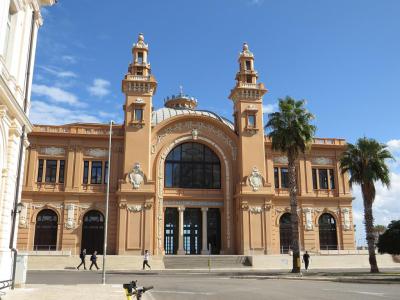
Built between 1912 and 1914 near Bari's Old Port, the Margherita Theater was designed in the Art Nouveau style by architect Francesco De Giglio. It was a pioneering structure in Bari, utilizing reinforced concrete and featuring a unique construction on pillars. To access the theater, a pier connected it to the mainland due to its surrounding water. The grand opening of the theater took place on August 22, 1914.
The building itself showcases Art Nouveau influences, with a rectangular layout and a prominent façade adorned with a wide arch. Flanking the arch are two towers with decorative pinnacles, complemented by large windows bordered by pilasters featuring Corinthian capitals. Upon entering, visitors are greeted by a spacious entrance hall crowned by a dome embellished with stucco and frescoes dating back to its inauguration in 1914.
Built between 1912 and 1914 near Bari's Old Port, the Margherita Theater was designed in the Art Nouveau style by architect Francesco De Giglio. It was a pioneering structure in Bari, utilizing reinforced concrete and featuring a unique construction on pillars. To access the theater, a pier connected it to the mainland due to its surrounding water. The grand opening of the theater took place on August 22, 1914.
The building itself showcases Art Nouveau influences, with a rectangular layout and a prominent façade adorned with a wide arch. Flanking the arch are two towers with decorative pinnacles, complemented by large windows bordered by pilasters featuring Corinthian capitals. Upon entering, visitors are greeted by a spacious entrance hall crowned by a dome embellished with stucco and frescoes dating back to its inauguration in 1914.

5) Lungomare e Murat (Bari Promenade) (must see)
The Bari Promenade stretches for kilometers along the Adriatic, curving like a ribbon between the sea and the city. Its origins lie in the 1920s and ’30s, when Bari was being reshaped under Fascist rule to look modern and monumental. The waterfront, once hemmed in by medieval walls, was opened up into a wide, sweeping promenade meant to show Bari’s role as both a regional capital and a city that embraced the sea. Even as politics and architecture changed, the Lungomare quickly became what locals fondly call their “front porch.”
Generations of Baresi have come here to walk, talk, and watch the horizon. Old photographs show Sunday promenades with families dressed in their best, while fishermen sat on the stone balustrades, swapping news of the day’s catch. One story often repeated is how young couples would sneak away from the crowded squares into the quieter stretches of the Promenade, finding a bench or a corner of sea wall to claim as their own, with the sunset as witness. Such rituals helped make the promenade not just a street but a stage for everyday life.
Along the way, landmarks rise into view: the medieval walls of Bari Vecchia, the Basilica of Saint Nicholas, Ferrarese and Merchant Squares, the Swabian Castle, and the more modern architecture of the Murat Quarter, itself the result of Napoleon’s brother-in-law, Joachim Murat, who ordered a new district built in the early 19th century. The promenade has framed all these layers for nearly a century, giving Bari one long walkway through its history.
The seafront still pulses with life. Cafés spill into the street, fishermen mend their nets in the sun, and at night the lamps curve like pearls along the seafront. For visitors, a stroll here is less about reaching a destination than about stepping into Bari’s rhythm, where sea and city have always belonged to one another.
Generations of Baresi have come here to walk, talk, and watch the horizon. Old photographs show Sunday promenades with families dressed in their best, while fishermen sat on the stone balustrades, swapping news of the day’s catch. One story often repeated is how young couples would sneak away from the crowded squares into the quieter stretches of the Promenade, finding a bench or a corner of sea wall to claim as their own, with the sunset as witness. Such rituals helped make the promenade not just a street but a stage for everyday life.
Along the way, landmarks rise into view: the medieval walls of Bari Vecchia, the Basilica of Saint Nicholas, Ferrarese and Merchant Squares, the Swabian Castle, and the more modern architecture of the Murat Quarter, itself the result of Napoleon’s brother-in-law, Joachim Murat, who ordered a new district built in the early 19th century. The promenade has framed all these layers for nearly a century, giving Bari one long walkway through its history.
The seafront still pulses with life. Cafés spill into the street, fishermen mend their nets in the sun, and at night the lamps curve like pearls along the seafront. For visitors, a stroll here is less about reaching a destination than about stepping into Bari’s rhythm, where sea and city have always belonged to one another.
6) Palazzo dell'Acquedotto Pugliese (Palace of the Apulian Aqueduct)
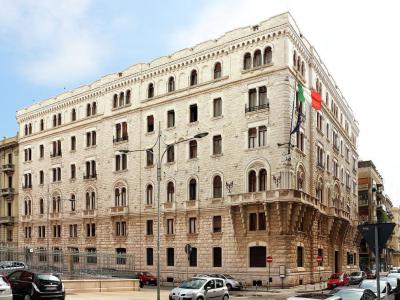
The Palace of the Apulian Aqueduct (Palazzo dell'Acquedotto Pugliese) stands as a remarkable architectural gem in Bari. Designed by the engineer Cesare Brunetti, often referred to as the "architect of the waters," the palace showcases a blend of innovative engineering and Apulian Romanesque architectural style. Another notable engineer Michele Salvati contributed to the design of the reinforced concrete structure, which is one of the first of its kind in Bari.
Adhering to the prevalent Apulian Romanesque style, the palace exterior is adorned with Trani stone, a local limestone renowned for its durability and elegant appearance. This choice of material not only enhances the aesthetic appeal but also pays homage to the architectural traditions of the region.
The interior of the palace features furnishings and decorations crafted to reflect the central theme of water. These captivating elements were designed by Duilio Cambellotti. Cambellotti's artistic vision breathes life into the interiors, creating a harmonious ambiance that resonates with the spirit of the building and its water connection.
In 2000, the Palace of the Apulian Aqueduct underwent significant transformations to accommodate various functions and enhance its utility. The first floor was extensively renovated to house a museum dedicated to the history of the Apulian Aqueduct. Additionally, the palace boasts a conference room and a library, equipped with multimedia archives and photographic collections.
Currently, the Palace of the Apulian Aqueduct serves as the headquarters for the presidency and houses several administrative offices.
Adhering to the prevalent Apulian Romanesque style, the palace exterior is adorned with Trani stone, a local limestone renowned for its durability and elegant appearance. This choice of material not only enhances the aesthetic appeal but also pays homage to the architectural traditions of the region.
The interior of the palace features furnishings and decorations crafted to reflect the central theme of water. These captivating elements were designed by Duilio Cambellotti. Cambellotti's artistic vision breathes life into the interiors, creating a harmonious ambiance that resonates with the spirit of the building and its water connection.
In 2000, the Palace of the Apulian Aqueduct underwent significant transformations to accommodate various functions and enhance its utility. The first floor was extensively renovated to house a museum dedicated to the history of the Apulian Aqueduct. Additionally, the palace boasts a conference room and a library, equipped with multimedia archives and photographic collections.
Currently, the Palace of the Apulian Aqueduct serves as the headquarters for the presidency and houses several administrative offices.
7) Teatro Petruzzelli (Petruzzelli Theatre)
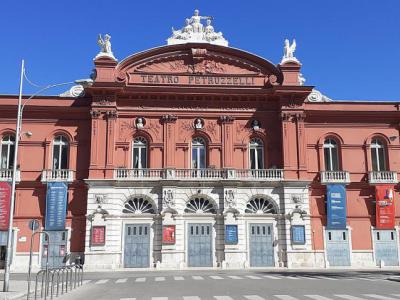
The Petruzzelli Theatre (Teatro Petruzzelli) in Bari has a rich history. It was built by the Petruzzelli family and the city administration. Construction began in 1898 and finished in 1903, making it Bari's largest theater and the fourth largest in Italy.
The theater was frescoed by Raffaele Armenise and decorated in pure gold. Also, the theater was equipped with heating and electric light and it had a capacity of 2,192 seats. On February 14, 1903, the grand opening of the Petruzzelli Theatre took place, featuring a performance of Giacomo Meyerbeer's opera Les Huguenots.
During the 1980s, Petruzzelli Theatre gained international recognition by hosting two significant operatic debuts. The first was Niccolò Piccinni's Iphigénie en Tauride, which had not been performed since its premiere in Paris in 1779. The second was the Neapolitan version of Bellini's opera I Puritani, originally written for renowned Spanish singer Maria Malibran but never performed by her. These events played a pivotal role in establishing the city's reputation.
The Petruzzelli Theatre was not limited to opera; it also presented ballets and major concerts. Numerous renowned international artists graced its stage, including Tito Schipa, Herbert von Karajan, Rudolf Nureyev, Frank Sinatra, Ray Charles, Liza Minnelli, and Juliette Gréco. Distinguished Italian artists such as Eduardo De Filippo, Riccardo Muti, Carla Fracci, Luciano Pavarotti, Piero Cappuccilli, and Giorgio Gaber also performed there.
The theater was frescoed by Raffaele Armenise and decorated in pure gold. Also, the theater was equipped with heating and electric light and it had a capacity of 2,192 seats. On February 14, 1903, the grand opening of the Petruzzelli Theatre took place, featuring a performance of Giacomo Meyerbeer's opera Les Huguenots.
During the 1980s, Petruzzelli Theatre gained international recognition by hosting two significant operatic debuts. The first was Niccolò Piccinni's Iphigénie en Tauride, which had not been performed since its premiere in Paris in 1779. The second was the Neapolitan version of Bellini's opera I Puritani, originally written for renowned Spanish singer Maria Malibran but never performed by her. These events played a pivotal role in establishing the city's reputation.
The Petruzzelli Theatre was not limited to opera; it also presented ballets and major concerts. Numerous renowned international artists graced its stage, including Tito Schipa, Herbert von Karajan, Rudolf Nureyev, Frank Sinatra, Ray Charles, Liza Minnelli, and Juliette Gréco. Distinguished Italian artists such as Eduardo De Filippo, Riccardo Muti, Carla Fracci, Luciano Pavarotti, Piero Cappuccilli, and Giorgio Gaber also performed there.
8) Palazzo Mincuzzi (Mincuzzi Palace)
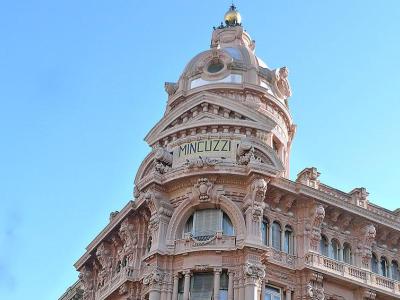
Mincuzzi Palace (Palazzo Mincuzzi), located in the charming city of Bari, stands as a significant historical landmark. This magnificent building, erected between 1926 and 1928, was designed by architect Aldo Forcignanò and engineer Gaetano Palmiotto. The Mincuzzi family, proprietors of the esteemed Mincuzzi department store, commissioned the construction of this architectural gem to serve as the new home for their business.
The architectural design of Mincuzzi Palace showcases a harmonious blend of styles and influences, capturing the essence of the era in which it was constructed. The building's façade exhibits elements of Art Nouveau and Neoclassical architecture, reflecting the prevailing trends of the time. With its ornate decorations, elegant balconies, and meticulously crafted details, the palace exudes an air of grandeur and sophistication.
Upon entering Mincuzzi Palace, visitors are greeted by a spacious and inviting interior. The layout of the building was meticulously planned to accommodate the diverse needs of the department store. Wide corridors and well-lit halls lead patrons through a myriad of shopping areas, each carefully curated to showcase the finest merchandise of the time. The palace quickly became a popular destination for locals and tourists, offering a unique shopping experience in a luxurious setting.
Over the years, Mincuzzi Palace has witnessed the ebb and flow of history, serving as a witness to the evolving commercial landscape of Bari. Despite the passage of time, the building has managed to retain its architectural splendor and remains an iconic structure in the city's urban fabric.
The architectural design of Mincuzzi Palace showcases a harmonious blend of styles and influences, capturing the essence of the era in which it was constructed. The building's façade exhibits elements of Art Nouveau and Neoclassical architecture, reflecting the prevailing trends of the time. With its ornate decorations, elegant balconies, and meticulously crafted details, the palace exudes an air of grandeur and sophistication.
Upon entering Mincuzzi Palace, visitors are greeted by a spacious and inviting interior. The layout of the building was meticulously planned to accommodate the diverse needs of the department store. Wide corridors and well-lit halls lead patrons through a myriad of shopping areas, each carefully curated to showcase the finest merchandise of the time. The palace quickly became a popular destination for locals and tourists, offering a unique shopping experience in a luxurious setting.
Over the years, Mincuzzi Palace has witnessed the ebb and flow of history, serving as a witness to the evolving commercial landscape of Bari. Despite the passage of time, the building has managed to retain its architectural splendor and remains an iconic structure in the city's urban fabric.
9) Teatro Piccinni (Piccinni Theatre)
The Piccinni Theatre, located in Bari, was dedicated to honoring the renowned composer Niccolò Piccinni, who was born in Bari in the eighteenth century.
During the early 19th century, Bari's Municipality had its theater located in the ancient Seat Palace (Palazzo del Sedile), dating back to the 16th century, in the old city. However, this theater was in a deteriorated state and unsuitable for accommodating a large audience. Additionally, with the expansion of the city beyond the old walls due to the establishment of the Murattian village, a new theater was needed.
Construction of the new theater began in 1836 but was only completed in 1854. On May 30th of that year, the theater was inaugurated, though it did not yet have an official name. The opening performance featured Gaetano Donizetti's tragic opera Poliuto.
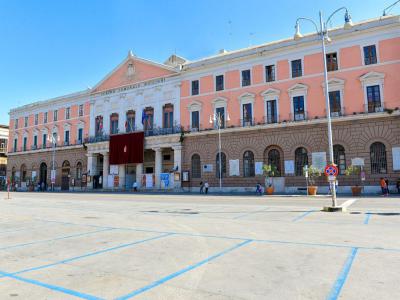
The architecture of the Piccinni Theatre is notable for its grand and elegant design, characteristic of many 19th-century theaters. The façade is impressive and features a Neoclassical style, common in theaters of that era. The exterior is adorned with ornate architectural details, including columns, pediments, and decorative sculptures. These elements add a touch of grandeur to the building and create a sense of anticipation for the artistic experiences that await inside.
Upon entering the theater, visitors are greeted by a spacious and opulent lobby. The interior design reflects the architectural style of the time, with luxurious embellishments and intricate details. The auditorium itself is designed in a traditional horseshoe shape, providing excellent sightlines and acoustics for the audience. The seating arrangement is tiered, allowing for a clear view of the stage from every angle.
During the early 19th century, Bari's Municipality had its theater located in the ancient Seat Palace (Palazzo del Sedile), dating back to the 16th century, in the old city. However, this theater was in a deteriorated state and unsuitable for accommodating a large audience. Additionally, with the expansion of the city beyond the old walls due to the establishment of the Murattian village, a new theater was needed.
Construction of the new theater began in 1836 but was only completed in 1854. On May 30th of that year, the theater was inaugurated, though it did not yet have an official name. The opening performance featured Gaetano Donizetti's tragic opera Poliuto.
The architecture of the Piccinni Theatre is notable for its grand and elegant design, characteristic of many 19th-century theaters. The façade is impressive and features a Neoclassical style, common in theaters of that era. The exterior is adorned with ornate architectural details, including columns, pediments, and decorative sculptures. These elements add a touch of grandeur to the building and create a sense of anticipation for the artistic experiences that await inside.
Upon entering the theater, visitors are greeted by a spacious and opulent lobby. The interior design reflects the architectural style of the time, with luxurious embellishments and intricate details. The auditorium itself is designed in a traditional horseshoe shape, providing excellent sightlines and acoustics for the audience. The seating arrangement is tiered, allowing for a clear view of the stage from every angle.
10) Palazzo Fizzarotti (Fizzarotti Palace)
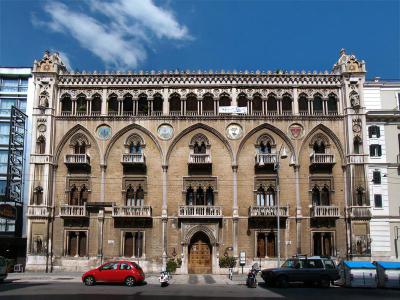
Fizzarotti Palace (Palazzo Fizzarotti), located in Bari, is a notable historical edifice. Constructed in 1910 at the heart of the city, it was commissioned by Emanuele Fizzarotti, a prominent banker and entrepreneur. The design of the building was entrusted to Ettore Bernich, a renowned architect known for his leadership in Italian eclecticism. The palace boasts lavishly adorned interior rooms, each showcasing distinct artistic styles and incorporating a variety of materials and techniques.
Situated above the underground spring known as "Mare Isabella," Fizzarotti Palace exhibits multiple architectural layers. Inside, remnants from the 13th century can be observed, reflecting the presence of former convents and refreshment stations that existed outside the medieval city walls. In 1850, Nicola Lagattola facilitated the connection of two separate areas of land through the demolition of the medieval walls and the expansion of the city into the Murattian quarter.
The palace's four reception rooms are particularly captivating, drawing interest and admiration. These include the Hall of Arts and Crafts (Salone del Arti e del Lavoro), the 14th-century Salone, the Pink Hall (Salone Rosa), and the Fireplace Hall (Salone del Caminetto). Access to the latter is gained through the so-called waiting room, which features a remarkable floor mosaic depicting the winged head of Mercury, the god of Commerce. This portrayal serves as a clear allusion to the prosperous financial activities of the building's owner, who played a significant role in the modernization of Bari.
Situated above the underground spring known as "Mare Isabella," Fizzarotti Palace exhibits multiple architectural layers. Inside, remnants from the 13th century can be observed, reflecting the presence of former convents and refreshment stations that existed outside the medieval city walls. In 1850, Nicola Lagattola facilitated the connection of two separate areas of land through the demolition of the medieval walls and the expansion of the city into the Murattian quarter.
The palace's four reception rooms are particularly captivating, drawing interest and admiration. These include the Hall of Arts and Crafts (Salone del Arti e del Lavoro), the 14th-century Salone, the Pink Hall (Salone Rosa), and the Fireplace Hall (Salone del Caminetto). Access to the latter is gained through the so-called waiting room, which features a remarkable floor mosaic depicting the winged head of Mercury, the god of Commerce. This portrayal serves as a clear allusion to the prosperous financial activities of the building's owner, who played a significant role in the modernization of Bari.
11) Strada delle Orecchiette ("Ears" Pasta Street)
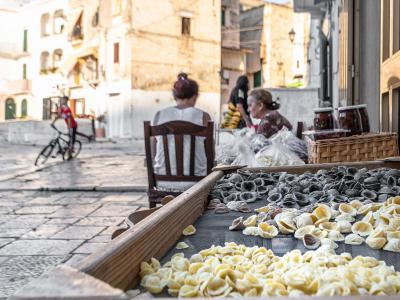
They say that to truly know Bari, you must pass through the Low Arch and find yourself on the Street of the “Little Ears.” This narrow stretch of Old Bari, hidden among twisting lanes, carries a timeless atmosphere where everyday life and tradition unfold openly before visitors’ eyes. Here, the “orecchiette” pasta-so named for its little ear shape-has been made for generations by women who set up wooden tables right outside their doorways. With nimble thumbs, they press and flick the dough into shape, chatting with neighbors, keeping an eye on children, and occasionally selling bags of fresh pasta to passersby. It is not performance, but routine, a tradition woven into family life that has endured for centuries.
The street’s location near the Basilica of Saint Nicholas is telling. For pilgrims who once walked through these alleys, the sight of women working pasta became part of the city’s rhythm-faith, food, and community inseparable. One anecdote often shared is how grandmothers teach their granddaughters the thumb-rolling technique by having them practice on tiny lumps of dough, reminding them that “orecchiette must hold the sauce like a cradle.” In this way, skill and culture are passed down at the kitchen table as naturally as conversation.
Pasta Street is less about sightseeing and more about immersion. The earthy scent of semolina drifts through the air, knives clatter on wooden boards, and the warmth of neighborhood life surrounds you. Buying a bag of fresh orecchiette, or even sitting down for a home-cooked meal, offers not just food but a taste of Bari’s enduring spirit-simple, generous, and alive in its oldest streets.
The street’s location near the Basilica of Saint Nicholas is telling. For pilgrims who once walked through these alleys, the sight of women working pasta became part of the city’s rhythm-faith, food, and community inseparable. One anecdote often shared is how grandmothers teach their granddaughters the thumb-rolling technique by having them practice on tiny lumps of dough, reminding them that “orecchiette must hold the sauce like a cradle.” In this way, skill and culture are passed down at the kitchen table as naturally as conversation.
Pasta Street is less about sightseeing and more about immersion. The earthy scent of semolina drifts through the air, knives clatter on wooden boards, and the warmth of neighborhood life surrounds you. Buying a bag of fresh orecchiette, or even sitting down for a home-cooked meal, offers not just food but a taste of Bari’s enduring spirit-simple, generous, and alive in its oldest streets.

12) Cattedrale di San Sabino (Bari Cathedral) (must see)
Bari Cathedral, formally dedicated to Saint Sabinus, carries the scars and resilience of a city that has been rebuilt more than once. Its story begins in the 6th century, when a basilica first rose on the site, tied to the memory of Bishop Sabinus of Canosa. That early church, however, would not survive the fury of King William I of Sicily-known as “Il Malo,” or “the Wicked.” In 1156, he stormed Bari and razed most of the city, sparing only the Basilica of Saint Nicholas. The cathedral was left in ruins, a victim of conquest and power struggles that defined southern Italy in the Middle Ages.
From that devastation, Bari slowly reclaimed its spirit. Over the following decades, a new cathedral was built in the Apulian Romanesque style, solid and restrained, a clear sign of determination rather than excess. When it was finally consecrated in 1292, the people of Bari had not only rebuilt their place of worship but also reaffirmed their faith and identity. Within its crypt, the relics of Saint Sabinus found a permanent home, making the cathedral an enduring focal point for local devotion. Pilgrims still come to pay respects, their prayers mingling with centuries of whispered hopes that have filled the space since the relics arrived in 844.
Through time, the cathedral bore the marks of change-frescoes added, baroque details layered, bomb damage during World War II repaired-but the core remained the same: a space where daily life unfolded. Baptisms, weddings, funerals, and festivals tied the community to its cathedral in ways that survived wars and rulers alike.
From the relics in the crypt to the steady presence of worshippers, Bari Cathedral embodies endurance. It reminds visitors that cities, like faith, can be shaken but still rise again.
From that devastation, Bari slowly reclaimed its spirit. Over the following decades, a new cathedral was built in the Apulian Romanesque style, solid and restrained, a clear sign of determination rather than excess. When it was finally consecrated in 1292, the people of Bari had not only rebuilt their place of worship but also reaffirmed their faith and identity. Within its crypt, the relics of Saint Sabinus found a permanent home, making the cathedral an enduring focal point for local devotion. Pilgrims still come to pay respects, their prayers mingling with centuries of whispered hopes that have filled the space since the relics arrived in 844.
Through time, the cathedral bore the marks of change-frescoes added, baroque details layered, bomb damage during World War II repaired-but the core remained the same: a space where daily life unfolded. Baptisms, weddings, funerals, and festivals tied the community to its cathedral in ways that survived wars and rulers alike.
From the relics in the crypt to the steady presence of worshippers, Bari Cathedral embodies endurance. It reminds visitors that cities, like faith, can be shaken but still rise again.
13) Chiesa di San Marco dei Veneziani (Church of St. Marcus dei Veneziani)
The Church of Saint Marcus dei Veneziani, located in Bari's historical center, has a fascinating history. It was built around 1002-1003 to celebrate Bari's liberation from the Saracens by Doge Pietro Orseolo II of Venice. First mentioned in 1187, the church is referenced throughout the thirteenth to fifteenth centuries.
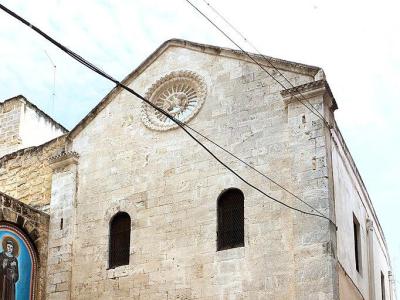
The church's facade, though partially retaining its Romanesque appearance, has undergone alterations. It has a gabled double-pitched roof and two high pilasters that originally divided it into three naves. The facade features a notable rose window with a radial pattern, adorned with garlands and small columns. A small winged lion, possibly sculpted by Pietro Facitolo, is situated at the center. Below the rose window, there are two arched single-lancet windows and a round-arched portal with an intricately designed frame, dating back to the eleventh or twelfth century.
The interior displays artworks spanning different periods, from the late Renaissance to the 18th and 19th centuries. Notable pieces include an altarpiece by Umberto Colonna (1953) depicting Our Lady of the Well with Saint Mark and Saint Anthony, a stoup near the entrance featuring a relief image of Saint Anthony, and an 18th-century altar in the left aisle with a tabernacle. The altar is crowned by a niche housing a wooden statue of the Our Lady of the Well.
The church's facade, though partially retaining its Romanesque appearance, has undergone alterations. It has a gabled double-pitched roof and two high pilasters that originally divided it into three naves. The facade features a notable rose window with a radial pattern, adorned with garlands and small columns. A small winged lion, possibly sculpted by Pietro Facitolo, is situated at the center. Below the rose window, there are two arched single-lancet windows and a round-arched portal with an intricately designed frame, dating back to the eleventh or twelfth century.
The interior displays artworks spanning different periods, from the late Renaissance to the 18th and 19th centuries. Notable pieces include an altarpiece by Umberto Colonna (1953) depicting Our Lady of the Well with Saint Mark and Saint Anthony, a stoup near the entrance featuring a relief image of Saint Anthony, and an 18th-century altar in the left aisle with a tabernacle. The altar is crowned by a niche housing a wooden statue of the Our Lady of the Well.
