Custom Walk in New Orleans, Louisiana by 7891_biz_49de73 created on 2026-05-17
Guide Location: USA » New Orleans
Guide Type: Custom Walk
# of Sights: 11
Tour Duration: 2 Hour(s)
Travel Distance: 2.7 Km or 1.7 Miles
Share Key: M7VHH
Guide Type: Custom Walk
# of Sights: 11
Tour Duration: 2 Hour(s)
Travel Distance: 2.7 Km or 1.7 Miles
Share Key: M7VHH
How It Works
Please retrieve this walk in the GPSmyCity app. Once done, the app will guide you from one tour stop to the next as if you had a personal tour guide. If you created the walk on this website or come to the page via a link, please follow the instructions below to retrieve the walk in the app.
Retrieve This Walk in App
Step 1. Download the app "GPSmyCity: Walks in 1K+ Cities" on Apple App Store or Google Play Store.



Step 2. In the GPSmyCity app, download(or launch) the guide "New Orleans Map and Walking Tours".
Step 3. Tap the menu button located at upper right corner of the "Walks" screen and select "Retrieve custom walk". Enter the share key: M7VHH
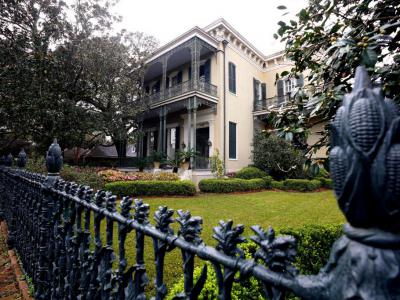
1) Colonel Short's Villa
Built in 1859 for Colonel Robert Short of Kentucky and masterfully designed by Henry Howard, this Italian-Renaissance villa is most renowned for its remarkable ironwork fence, adorned with intricate morning glory and cornstalk motifs. Legend has it that Short's wife expressed her longing for the cornfields of her native Iowa, prompting him to purchase the iconic cornstalk fence, one of only three of its kind in the entire United States. Unlike a similar one on Royal Street, this one has retained its original colors and hasn't been painted over.
During the Civil War, the house was confiscated by federal forces in 1863 and briefly served as the executive mansion for the federal governor of Louisiana before being returned to Short, who continued to reside there for the remainder of his life. After undergoing a painstaking, decade-long restoration, the property was listed for $5 million in 2015, marking it as the most expensive listing in New Orleans at the time. While the villa is a private residence, you can still marvel at the unique fence up close from the sidewalk.
During the Civil War, the house was confiscated by federal forces in 1863 and briefly served as the executive mansion for the federal governor of Louisiana before being returned to Short, who continued to reside there for the remainder of his life. After undergoing a painstaking, decade-long restoration, the property was listed for $5 million in 2015, marking it as the most expensive listing in New Orleans at the time. While the villa is a private residence, you can still marvel at the unique fence up close from the sidewalk.
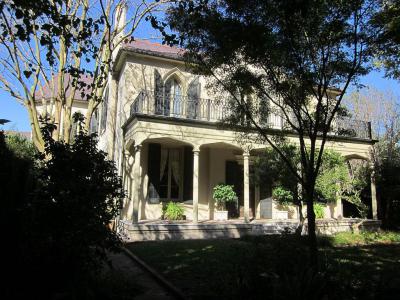
2) Briggs-Staub House
The Briggs-Staub House on Prytania Street defied the conventional architectural style of the Garden District when it was constructed for planter Cuthbert Bullitt in 1849. It notably features Gothic arched windows, a departure from the typical Garden District Protestant American homes of the time. Many in this community avoided Gothic Revival architecture because it reminded them of the Roman Catholicism associated with their Creole rivals.
Upon its completion by architect James Gallier, Jr., Bullitt refused to settle the bill, purportedly due to significant gambling losses. Consequently, the house changed hands and was acquired by Charles Briggs, an English insurance executive. Briggs resided here during a period of Irish immigration to the area and, rather than hold African slaves, opted to hire Irish servants, for whom he built a relatively spacious matching servant quarters. While the interior of the house departs from a strict Gothic room layout, making it better suited for hosting gatherings, Gothic architectural elements are prominently featured both inside and outside the structure.
Upon its completion by architect James Gallier, Jr., Bullitt refused to settle the bill, purportedly due to significant gambling losses. Consequently, the house changed hands and was acquired by Charles Briggs, an English insurance executive. Briggs resided here during a period of Irish immigration to the area and, rather than hold African slaves, opted to hire Irish servants, for whom he built a relatively spacious matching servant quarters. While the interior of the house departs from a strict Gothic room layout, making it better suited for hosting gatherings, Gothic architectural elements are prominently featured both inside and outside the structure.
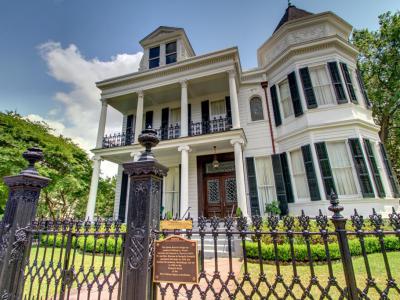
3) Opera Guild Home
Some of the most notable residences in the Garden District blend multiple architectural styles. Designed by architect William A. Freret in 1858, this particular house combines elements of Greek Revival design with additions in the Queen Anne style (the octagonal turret was added in the late 19th century). Its original owner, a wealthy merchant, apparently suffered financial ruin after the Civil War and could not meet his financial obligations. In 1867, Freret repurchased the house at auction for a mere $30,700. Later, in 1944, it was acquired for just $12,500 by Dr. Herman Seebold and his wife Nettie, an affluent couple with a passion for art, music, and worldly travels. They spared no expense in adorning the house with opulent furnishings.
By 1965, the Seebolds had passed away with no heir apparent. In Mrs. Seebold's handwritten will, she bequeathed the magnificent residence and all its contents to the Opera Women's Guild; a stipulation noted that the 18th- and 19th-century treasures inside were not to be sold or removed. Today, the house is available for rent for various events, including weddings, dinners, film shoots, and luncheons, with proceeds going to support the New Orleans Opera Association.
Tip:
Visit the website to reserve a tour!
By 1965, the Seebolds had passed away with no heir apparent. In Mrs. Seebold's handwritten will, she bequeathed the magnificent residence and all its contents to the Opera Women's Guild; a stipulation noted that the 18th- and 19th-century treasures inside were not to be sold or removed. Today, the house is available for rent for various events, including weddings, dinners, film shoots, and luncheons, with proceeds going to support the New Orleans Opera Association.
Tip:
Visit the website to reserve a tour!
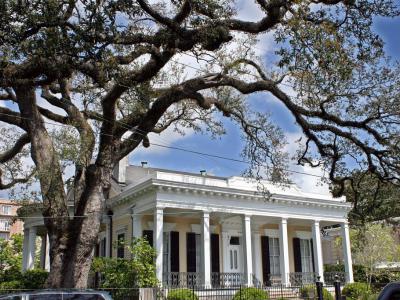
4) Adams-Jones House
Sitting proudly beneath the watchful eyes of some seriously grand live oaks, this house was originally built for John I. Adams, a merchant who must have been feeling pretty fancy when he decided to set up shop in what would later become the Garden District. Adams, with a penchant for prime real estate, purchased this fine piece of property back in 1860. He rolled up his sleeves, put on his best builder's hat, and took up residence in the house, happily living there until 1896.
After Adams, the house had a rollercoaster of owners, probably discussing property values and wallpaper choices over the years. Fast forward to the swinging '60s when Mrs. Hamilton Polk Jones decided it was time for a little house makeover. She lovingly restored it, ensuring it wouldn't be embarrassed to show its face at historical landmark parties. And just to make things official, the New Orleans Landmarks Commission bestowed the title of historical landmark upon it in 1995. So, next time you stroll by, tip your hat to John I. Adams and all the other characters who've waltzed through this grand old dame over the years.
After Adams, the house had a rollercoaster of owners, probably discussing property values and wallpaper choices over the years. Fast forward to the swinging '60s when Mrs. Hamilton Polk Jones decided it was time for a little house makeover. She lovingly restored it, ensuring it wouldn't be embarrassed to show its face at historical landmark parties. And just to make things official, the New Orleans Landmarks Commission bestowed the title of historical landmark upon it in 1995. So, next time you stroll by, tip your hat to John I. Adams and all the other characters who've waltzed through this grand old dame over the years.
5) Louise S. McGehee School
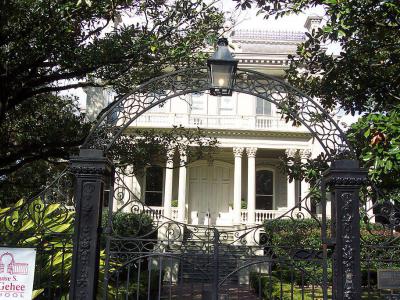
Make sure to have a gander at the Second Empire-style mansion that architect James Freret whipped up for sugar tycoon Bradish Johnson back in 1872. Fronted by mighty Corinthian columns, it's like a grand opera house decided to take root in the Garden District. The crown jewel of sugar planter cribs, it boasted all the ritzy bells and whistles of its era. Just imagine, it had a conservatory (for when you needed some extra oxygen), a marble pantry (to keep your marble collection safe, obviously), a grand circular staircase (perfect for dramatic entrances), and even a fancy-dancy elevator – because nothing says "I'm loaded" like an elevator in the 1800s. Oh, and it's also got a basement – a rare treat in the city.
Since 1929, this place has been put to good use as a private school for girls. They turned a stable into a cafeteria, and the gym? That's a spiffy refurbished carriage house. And let's not forget about the gardens, where you'll find some seriously magnificent magnolias and ginger trees. While you're at it, be sure to admire the steep mansard roof with its wrought-iron parapet and the quirky bull's-eye window right on the front. This mansion doesn't play second fiddle to anyone!
Since 1929, this place has been put to good use as a private school for girls. They turned a stable into a cafeteria, and the gym? That's a spiffy refurbished carriage house. And let's not forget about the gardens, where you'll find some seriously magnificent magnolias and ginger trees. While you're at it, be sure to admire the steep mansard roof with its wrought-iron parapet and the quirky bull's-eye window right on the front. This mansion doesn't play second fiddle to anyone!
6) Anne Rice House (aka Rosegate House)
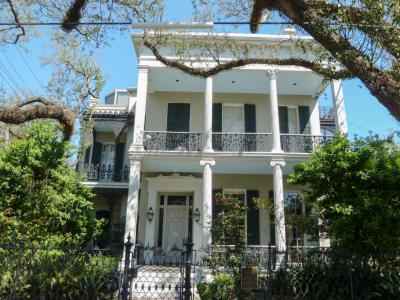
Prepare yourself for a unique opportunity to peek at the stately – and perhaps just a tad spooky – New Orleans residence that once belonged to none other than Anne Rice, the undisputed queen of gothic fiction. Aptly named after the distinctive rosette pattern of its fence, this abode encapsulates how New Orleans's rich history has seamlessly woven itself into American pop culture.
Constructed in 1857 for a “nouveau riche” family, the grand mansion is an intriguing architectural mishmash, borrowing a little something from every style. Its Greek revival columns, Italianate embellishments, and hexagonal window come together in surprising harmony, making it a fitting counterpart to the opulent estates of the Garden District.
While the neighborhood is renowned for its lavish homes, it's equally famous for tales of the paranormal. Stories of spectral waltzes in colonial manors and ghostly brides meandering down the streets have turned the Chestnut and First Street area into a veritable Disneyland of haunted houses. The Rosegate House is no exception, naturally. It's said that Miss Pamela Starr Crapp, a resident in the early 1900s, occasionally makes an appearance in the living room, a claim vigorously supported by the home's owners in the 1950s.
But perhaps the more celebrated supernatural connection to the Rosegate House is not with Pamela but rather the Mayfairs – a fictional family of witches brought to life by none other than Anne Rice herself. She and her husband acquired the house in the late '90s, and Rice used this dwelling as the backdrop for her tales of Louisiana's occult. Every nook and cranny of the Rosegate – from its staircase to the elevator and swimming pool – serves as a backdrop for the narrative of her sorcery sagas. In these tales, the house transcends its physical presence, evolving into a character as vital as Suzanne, Deborah, or Julian Mayfair.
The six-bedroom, 7,609-square-foot home has pastel walls, exquisite stained glass dating to the 1880s, intricate moldings and mantels, and no shortage of crystal chandeliers to illuminate the shadows. Anne Rice bid adieu to her abode in 2010, and since then, the place has floated in and out of the real estate market, its secrets and stories waiting to be unraveled once more.
Constructed in 1857 for a “nouveau riche” family, the grand mansion is an intriguing architectural mishmash, borrowing a little something from every style. Its Greek revival columns, Italianate embellishments, and hexagonal window come together in surprising harmony, making it a fitting counterpart to the opulent estates of the Garden District.
While the neighborhood is renowned for its lavish homes, it's equally famous for tales of the paranormal. Stories of spectral waltzes in colonial manors and ghostly brides meandering down the streets have turned the Chestnut and First Street area into a veritable Disneyland of haunted houses. The Rosegate House is no exception, naturally. It's said that Miss Pamela Starr Crapp, a resident in the early 1900s, occasionally makes an appearance in the living room, a claim vigorously supported by the home's owners in the 1950s.
But perhaps the more celebrated supernatural connection to the Rosegate House is not with Pamela but rather the Mayfairs – a fictional family of witches brought to life by none other than Anne Rice herself. She and her husband acquired the house in the late '90s, and Rice used this dwelling as the backdrop for her tales of Louisiana's occult. Every nook and cranny of the Rosegate – from its staircase to the elevator and swimming pool – serves as a backdrop for the narrative of her sorcery sagas. In these tales, the house transcends its physical presence, evolving into a character as vital as Suzanne, Deborah, or Julian Mayfair.
The six-bedroom, 7,609-square-foot home has pastel walls, exquisite stained glass dating to the 1880s, intricate moldings and mantels, and no shortage of crystal chandeliers to illuminate the shadows. Anne Rice bid adieu to her abode in 2010, and since then, the place has floated in and out of the real estate market, its secrets and stories waiting to be unraveled once more.
7) Walter Grinnan Robinson House
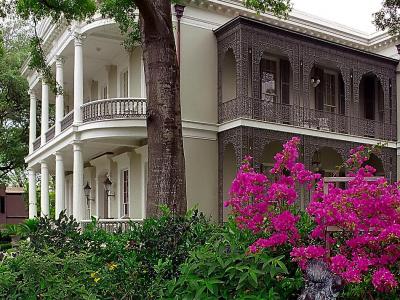
Constructed in 1859 by none other than New Orleans' renowned architect, Henry Howard, the Walter Grinnan Robinson House stands proudly on Third Street, commanding attention amidst a row of relatively modest neighbors. With its stately columns and double-decker design, this house is an ornate gem that seamlessly blends the grandeur of Greek Revival and Italianate architectural styles. In recent times, it has undergone a magnificent restoration, alongside its adjacent servant quarters and stable.
Galleries, or covered walkways, were an integral feature of Garden District residences, and the house doesn't disappoint. Doric columns support the first floor, while Corinthian columns support the second, lending an air of sophistication to the facade. Adding to its charm, the house features a distinctive curved portico and an unconventional roof design that once served as a large water collection vat and cistern. This ingenious setup harnessed gravity to provide water pressure, making it a pioneer of indoor plumbing in the Garden District.
Walter Robinson, hailing from Lynchburg, Virginia, initially ventured south to establish himself as a cotton factor. However, he ultimately returned to his roots as a tobacco merchant, specializing in perique tobacco – a curly variant used in pipes.
Galleries, or covered walkways, were an integral feature of Garden District residences, and the house doesn't disappoint. Doric columns support the first floor, while Corinthian columns support the second, lending an air of sophistication to the facade. Adding to its charm, the house features a distinctive curved portico and an unconventional roof design that once served as a large water collection vat and cistern. This ingenious setup harnessed gravity to provide water pressure, making it a pioneer of indoor plumbing in the Garden District.
Walter Robinson, hailing from Lynchburg, Virginia, initially ventured south to establish himself as a cotton factor. However, he ultimately returned to his roots as a tobacco merchant, specializing in perique tobacco – a curly variant used in pipes.
8) Commander's Palace
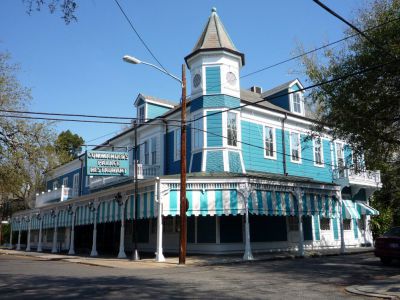
Commander's Palace, the pride of New Orleans, is not just a restaurant; it's a testament to exceptional cuisine, impeccable service, and a historic legacy. Since its inception in 1880 and becoming part of the renowned Brennan family empire in 1974, this establishment has been a bastion of authentic contemporary Cajun cuisine. Housed within a charming blue-and-white Victorian mansion in the heart of the Garden District, a visit to New Orleans is incomplete without savoring a meal here. As soon as you cross the threshold, you'll be impressed with the gracious ambiance and the warm, welcoming staff.
Prepare your taste buds for a delectable journey featuring dishes like turtle soup with sherry, griddle-seared Gulf fish with champagne-poached jumbo lump crab, and the praline parfait – a dessert so divine it might just become the best thing you've ever had that doesn't involve chocolate. Commander's Palace takes its cuisine seriously, thanks in part to its "dirt-to-plate within 100 miles" policy, ensuring that patrons experience the freshest and finest ingredients. But what truly elevates the dining experience is the exceptional culinary team; you'll wish the chef could move into your home!
Throughout the years, Commander's Palace has garnered accolades such as best restaurant (1996), best chef, lifetime achievement, and best wine list (which is carefully curated and offers great value). It's also been named the "most popular restaurant in New Orleans" for an impressive 20 years running. In essence, Commander's Palace is not just a restaurant; it's a city landmark, a culinary institution celebrated for its convivial atmosphere and the whimsical charm that is quintessentially Louisiana.
Tip:
Don't miss the weekend jazz brunches, which have achieved legendary status. Be sure to make advance reservations for any meal, as this immense establishment fills up quickly.
Prepare your taste buds for a delectable journey featuring dishes like turtle soup with sherry, griddle-seared Gulf fish with champagne-poached jumbo lump crab, and the praline parfait – a dessert so divine it might just become the best thing you've ever had that doesn't involve chocolate. Commander's Palace takes its cuisine seriously, thanks in part to its "dirt-to-plate within 100 miles" policy, ensuring that patrons experience the freshest and finest ingredients. But what truly elevates the dining experience is the exceptional culinary team; you'll wish the chef could move into your home!
Throughout the years, Commander's Palace has garnered accolades such as best restaurant (1996), best chef, lifetime achievement, and best wine list (which is carefully curated and offers great value). It's also been named the "most popular restaurant in New Orleans" for an impressive 20 years running. In essence, Commander's Palace is not just a restaurant; it's a city landmark, a culinary institution celebrated for its convivial atmosphere and the whimsical charm that is quintessentially Louisiana.
Tip:
Don't miss the weekend jazz brunches, which have achieved legendary status. Be sure to make advance reservations for any meal, as this immense establishment fills up quickly.
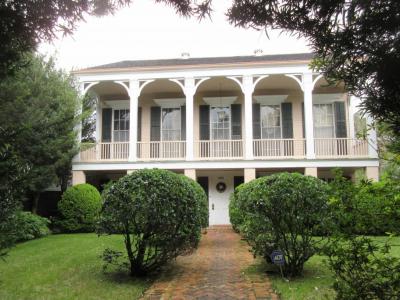
9) George Washington Cable House
Nestled on the whimsical west side of the Garden District, this charming abode was built by George Washington Cable in 1874, during a time when Cable's star was rising to national prominence, thanks to the publication of his short story, "Sieur George". Technically, it's a two-story abode, even though it began its life as a single-story structure with a full-height basement and columns that include an arcade.
George W. Cable, the man of the hour, had quite the backstory himself. Born in New Orleans in 1844, he was the scion of a prosperous plantation owner. However, fortune's wheel took a nosedive after his father's passing, and he found himself in the Confederate Army during the Civil War. In an ironic twist of fate, a two-year tussle with malaria turned him into a wordsmith extraordinaire. You see, during those feverish days, Cable picked up writing as a hobby. Fast forward to 1870, and he joined the staff of the New Orleans Picayune.
The literary world soon witnessed Cable's talents blossom like a bayou flower. In 1873, he birthed his first story, and guess what? New Orleans' multicultural tapestry became a recurring theme in his narratives. But Cable was no ordinary scribe; he championed the cause of racial equality, much to the chagrin of many of his contemporaries. This made him the talk of the town, and not always in a good way.
Faced with a barrage of hostile vibes, Cable decided it was time to bid adieu to the South in 1885 and sought refuge in Massachusetts. He lived on for forty more years, but his legacy endures. Rumor has it that he was chums with none other than the illustrious Mark Twain, who allegedly graced this very house with his presence. Imagine the tales those walls could tell!
George W. Cable, the man of the hour, had quite the backstory himself. Born in New Orleans in 1844, he was the scion of a prosperous plantation owner. However, fortune's wheel took a nosedive after his father's passing, and he found himself in the Confederate Army during the Civil War. In an ironic twist of fate, a two-year tussle with malaria turned him into a wordsmith extraordinaire. You see, during those feverish days, Cable picked up writing as a hobby. Fast forward to 1870, and he joined the staff of the New Orleans Picayune.
The literary world soon witnessed Cable's talents blossom like a bayou flower. In 1873, he birthed his first story, and guess what? New Orleans' multicultural tapestry became a recurring theme in his narratives. But Cable was no ordinary scribe; he championed the cause of racial equality, much to the chagrin of many of his contemporaries. This made him the talk of the town, and not always in a good way.
Faced with a barrage of hostile vibes, Cable decided it was time to bid adieu to the South in 1885 and sought refuge in Massachusetts. He lived on for forty more years, but his legacy endures. Rumor has it that he was chums with none other than the illustrious Mark Twain, who allegedly graced this very house with his presence. Imagine the tales those walls could tell!
10) Magazine Antique Mall
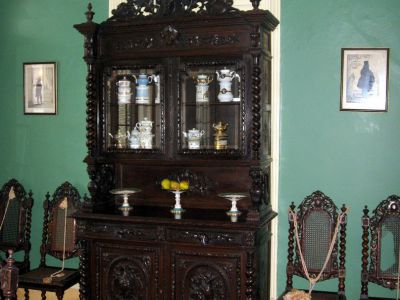
Prepare to take a deep breath if you tend to get overwhelmed easily, especially before stepping into this expansive shop where every available inch of counter and shelf space is brimming with antiques and vintage treasures. Located on the renowned Magazine Street in the Garden District, Magazine Antique Mall stands as the largest and oldest mall in New Orleans and South Louisiana.
Inside, you'll discover a diverse assortment of items, including costume and fine jewelry, vintage photographs, antique clocks, home decor, glassware, clothing, silver, furniture, china and ceramics, as well as various collectibles from numerous vendors. However, if you're a bargain hunter, keep in mind that you may not find many deals here.
Inside, you'll discover a diverse assortment of items, including costume and fine jewelry, vintage photographs, antique clocks, home decor, glassware, clothing, silver, furniture, china and ceramics, as well as various collectibles from numerous vendors. However, if you're a bargain hunter, keep in mind that you may not find many deals here.
11) The Rink Shopping Center
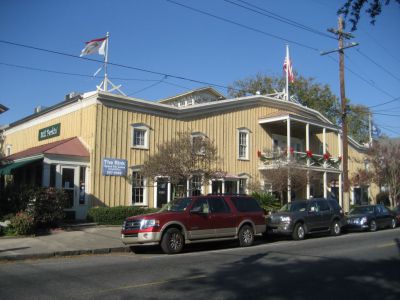
This yellowish building on Prytania Street and Washington Avenue was built in 1884, when New Orleans hosted the World Cotton Centennial Exposition. A roller-skating rink – the first in the South – was built to help entertain the expected crowds; since then, it has been turned into a small parking lot beneath what is now a 21st-century mini-mall. Unexpected and relaxing, it is a wonderful respite for those on their Garden District tour.
Check out the bookstore's strong selection of local titles, fiction, limited editions, and autographed copies, or stop for a cool drink and snack at the coffee shop just outside. Otherwise, besides air-conditioning (appreciated if you're touring the Garden District in summer), you'll also find a public bathroom with a negligible fee.
Check out the bookstore's strong selection of local titles, fiction, limited editions, and autographed copies, or stop for a cool drink and snack at the coffee shop just outside. Otherwise, besides air-conditioning (appreciated if you're touring the Garden District in summer), you'll also find a public bathroom with a negligible fee.
