Custom Walk in Stockholm, Sweden by emurphy_74f69 created on 2026-05-18
Guide Location: Sweden » Stockholm
Guide Type: Custom Walk
# of Sights: 5
Tour Duration: 2 Hour(s)
Travel Distance: 5.2 Km or 3.2 Miles
Share Key: D7RTK
Guide Type: Custom Walk
# of Sights: 5
Tour Duration: 2 Hour(s)
Travel Distance: 5.2 Km or 3.2 Miles
Share Key: D7RTK
How It Works
Please retrieve this walk in the GPSmyCity app. Once done, the app will guide you from one tour stop to the next as if you had a personal tour guide. If you created the walk on this website or come to the page via a link, please follow the instructions below to retrieve the walk in the app.
Retrieve This Walk in App
Step 1. Download the app "GPSmyCity: Walks in 1K+ Cities" on Apple App Store or Google Play Store.



Step 2. In the GPSmyCity app, download(or launch) the guide "Stockholm Map and Walking Tours".
Step 3. Tap the menu button located at upper right corner of the "Walks" screen and select "Retrieve custom walk". Enter the share key: D7RTK
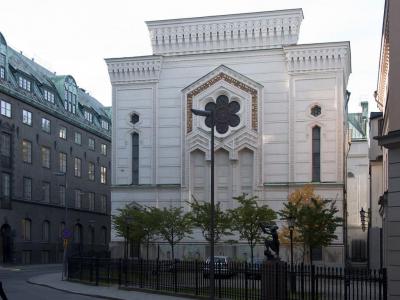
1) Stockholm Synagogue
The Great Synagogue of Stockholm is a full-on architectural sermon. Raised between 1867 and 1870, this landmark was the brainchild of Fredrik Wilhelm Scholander, an architect with a flair for the dramatic and a fondness for “Oriental motifs” (or, as he put it, a paraphrase of ancient styles). Imagine a rectangular sanctuary with four towers-each one hiding a spiral staircase like a secret-and you’ve got a Scandinavian echo of the biblical Temple of Jerusalem. With seating for 850 souls, it’s long been the spiritual headquarters for Stockholm’s Jewish community.
And what's particularly fascinating-there’s more below. Literally. Beneath the synagogue lies the Jewish Community Library, a quiet powerhouse of multilingual knowledge, including the private library of Rabbi Marcus Ehrenpreis, who served as Sweden’s Chief Rabbi for nearly four decades. From Hebrew to French, and yes, a healthy dose of Swedish too, the collection is a literary buffet. The library also acts as a gallery, hosting exhibits and annual events focused on Jewish history and heritage.
Now, just outside the main sanctuary, a deeply moving tribute sits quietly but powerfully: the Holocaust Memorial. Carved into the wall between the synagogue and the community hall, it lists the names of over 8,000 Holocaust victims-relatives of Swedish Jews. In 1998, none other than King Carl XVI Gustaf himself unveiled it, marking its national weight with royal solemnity.
And in the basement, alongside all that knowledge, you’ll also find a mikvah, a ritual bath added in 2017-because tradition doesn’t take a sabbatical...
Step inside and you’ll find Hebrew inscriptions etched into the very walls, whispering stories of faith, resilience, and continuity. Recognized as one of the capital’s most historic buildings, the Great Synagogue proudly holds its place in the Swedish Registry of National Historical Buildings.
And what's particularly fascinating-there’s more below. Literally. Beneath the synagogue lies the Jewish Community Library, a quiet powerhouse of multilingual knowledge, including the private library of Rabbi Marcus Ehrenpreis, who served as Sweden’s Chief Rabbi for nearly four decades. From Hebrew to French, and yes, a healthy dose of Swedish too, the collection is a literary buffet. The library also acts as a gallery, hosting exhibits and annual events focused on Jewish history and heritage.
Now, just outside the main sanctuary, a deeply moving tribute sits quietly but powerfully: the Holocaust Memorial. Carved into the wall between the synagogue and the community hall, it lists the names of over 8,000 Holocaust victims-relatives of Swedish Jews. In 1998, none other than King Carl XVI Gustaf himself unveiled it, marking its national weight with royal solemnity.
And in the basement, alongside all that knowledge, you’ll also find a mikvah, a ritual bath added in 2017-because tradition doesn’t take a sabbatical...
Step inside and you’ll find Hebrew inscriptions etched into the very walls, whispering stories of faith, resilience, and continuity. Recognized as one of the capital’s most historic buildings, the Great Synagogue proudly holds its place in the Swedish Registry of National Historical Buildings.
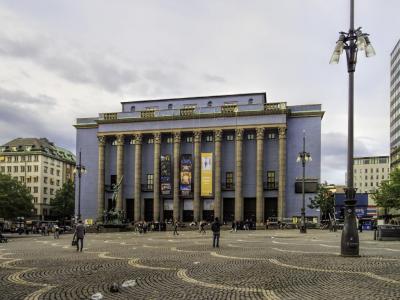
2) Stockholm Concert Hall
The Stockholm Concert Hall, located in the heart of Stockholm, is a prestigious venue renowned for its exquisite orchestral music performances and significant cultural events. Designed by the prominent architect Ivar Tengbom, the hall was constructed in the Neoclassical style, drawing inspiration from the ancient temples of Classical Greece. The building's striking bright blue façade and its elegant courtyard, surrounded by ornate porticos, make it an architectural landmark in the city.
The concert hall first opened its doors in 1926 and has since become the permanent home of the Royal Stockholm Philharmonic Orchestra, one of Sweden's most esteemed musical institutions. Founded in 1902, the orchestra has been captivating classical music lovers with its performances since 1914 and continues to receive support from the Swedish Royal Family. The orchestra plays a central role in the annual Nobel Prize ceremonies, which are held in the concert hall, adding to the venue's global significance.
In addition to hosting the Nobel Prize ceremony, the Stockholm Concert Hall is also the site of the Polar Music Prize, an international award established in 1989. This prestigious prize is awarded annually to one contemporary musician and one classical musician, celebrating their contributions to the world of music. Sir Paul McCartney, a founding member of the Beatles, was among the first to receive this distinguished award.
The Stockholm Concert Hall features two theaters that cater to different audience sizes. The larger theater can accommodate up to 1,600 attendees, while a more intimate adjoining theater seats up to 450 people, offering versatile settings for a variety of performances and events. Tickets for concerts typically go on sale two weeks before performances, allowing patrons to experience the world-class music and cultural experiences that the Stockholm Concert Hall has to offer.
The concert hall first opened its doors in 1926 and has since become the permanent home of the Royal Stockholm Philharmonic Orchestra, one of Sweden's most esteemed musical institutions. Founded in 1902, the orchestra has been captivating classical music lovers with its performances since 1914 and continues to receive support from the Swedish Royal Family. The orchestra plays a central role in the annual Nobel Prize ceremonies, which are held in the concert hall, adding to the venue's global significance.
In addition to hosting the Nobel Prize ceremony, the Stockholm Concert Hall is also the site of the Polar Music Prize, an international award established in 1989. This prestigious prize is awarded annually to one contemporary musician and one classical musician, celebrating their contributions to the world of music. Sir Paul McCartney, a founding member of the Beatles, was among the first to receive this distinguished award.
The Stockholm Concert Hall features two theaters that cater to different audience sizes. The larger theater can accommodate up to 1,600 attendees, while a more intimate adjoining theater seats up to 450 people, offering versatile settings for a variety of performances and events. Tickets for concerts typically go on sale two weeks before performances, allowing patrons to experience the world-class music and cultural experiences that the Stockholm Concert Hall has to offer.
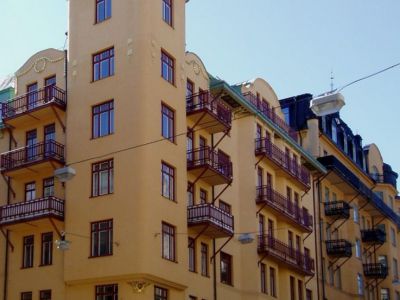
3) Strindberg Museum
The Strindberg Museum, located in the heart of Stockholm, is a cultural gem dedicated to the life and works of the celebrated Swedish playwright, novelist, and painter August Strindberg (1849-1912). Situated in the historic ''Blue Tower'' (''Blå Tornet") the museum occupies Strindberg's last residence, a striking art nouveau building in the Norrmalm borough, specifically in the charming neighborhood of Tegnérlunden.
This museum offers an immersive experience of Strindberg's world, meticulously preserving the atmosphere of his home where he lived from 1908 until he died in 1912. The apartment, located on the fourth floor, includes Strindberg's original bedroom, dining room, and workroom, along with his furniture and belongings, such as his chairs, tables, bed, and piano. The interiors have been carefully reconstructed to reflect the décor from the time he lived there, providing visitors with a genuine glimpse into his life.
In addition to the apartment, the museum features Strindberg's extensive library, housed on the sixth floor, which contains around 3,000 works. The museum also includes an area for temporary exhibitions, with a permanent exhibition titled "Strindberg in the Center," showcasing a collection of his books, photographs, paintings, and other artifacts that highlight his multifaceted contributions to literature and the arts.
Owned by the Strindberg Society of Sweden and operated by a foundation that includes the Strindberg Society, the City of Stockholm, and the Nordic Museum, the Strindberg Museum was inaugurated in 1973. It stands as a testament to Strindberg's enduring legacy, offering a deep and engaging exploration of one of Sweden's most influential cultural figures.
Tip:
Inquire about tours in your language, as very few labels are in English.
The 20-minute biographical video has a version with English subtitles.
The information sheets about the apartment are available in several more languages.
If you want to also see the library on the 6th floor, inquire in the reception.
This museum offers an immersive experience of Strindberg's world, meticulously preserving the atmosphere of his home where he lived from 1908 until he died in 1912. The apartment, located on the fourth floor, includes Strindberg's original bedroom, dining room, and workroom, along with his furniture and belongings, such as his chairs, tables, bed, and piano. The interiors have been carefully reconstructed to reflect the décor from the time he lived there, providing visitors with a genuine glimpse into his life.
In addition to the apartment, the museum features Strindberg's extensive library, housed on the sixth floor, which contains around 3,000 works. The museum also includes an area for temporary exhibitions, with a permanent exhibition titled "Strindberg in the Center," showcasing a collection of his books, photographs, paintings, and other artifacts that highlight his multifaceted contributions to literature and the arts.
Owned by the Strindberg Society of Sweden and operated by a foundation that includes the Strindberg Society, the City of Stockholm, and the Nordic Museum, the Strindberg Museum was inaugurated in 1973. It stands as a testament to Strindberg's enduring legacy, offering a deep and engaging exploration of one of Sweden's most influential cultural figures.
Tip:
Inquire about tours in your language, as very few labels are in English.
The 20-minute biographical video has a version with English subtitles.
The information sheets about the apartment are available in several more languages.
If you want to also see the library on the 6th floor, inquire in the reception.
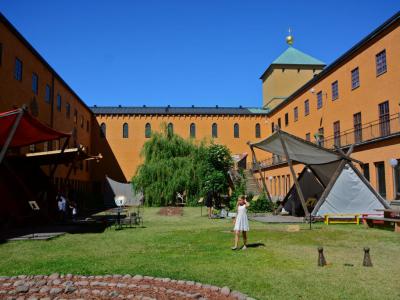
4) Swedish History Museum
The Swedish History Museum in Stockholm is dedicated to showcasing the country's rich archaeological and cultural history, spanning from the Mesolithic period to the present day. Founded in 1866, the museum functions as a government agency with the mission of preserving historical artifacts and making historical knowledge accessible to the public.
The museum's origins trace back to the 16th century with King Gustav Vasa's collection at Gripsholm Castle. Despite losses in the Tre Kronor castle fire, the collection grew over time, notably in the late 18th century. After King Gustaf III died in 1792, it became a public collection, leading to the founding of the Royal Museum. The Swedish History Museum was established in 1866 by Bror Emil Hildebrand. In 1929, the government proposed converting Storgatan's military barracks into a museum, with construction completed between 1935 and 1940 following a 1930 architectural competition.
The museum's main building, designed by Romare and Scherman, combines modern and historical architectural styles. It features four block-like structures around a central courtyard, resembling a fortress. The façade is decorated with sculptures by Bror Marklund and reliefs by Robert Nilsson, while Carl Frisendahl's "Näcken" sculpture stands in the courtyard. Inside, spacious galleries host permanent and special exhibitions, with pre-Christian collections on the ground floor and artifacts from 800 AD onward upstairs. The entrance hall, renovated in 1994, offers a modern take on a Medieval knight's hall.
The museum's collections are extensive, with over 10 million artifacts, including more than 6,200 items on display. It is one of Sweden's largest museums, with a significant online presence that provides access to information on hundreds of thousands of objects. Among the museum's most notable collections is the Vikings exhibit, featuring objects from 800–1050 AD, including weapons, religious items, and everyday artifacts. The Gold Room showcases a wealth of treasures, including collars made from Roman gold coins, Viking silver jewelry, and medieval reliquaries.
The museum also houses an extensive collection of ecclesiastical art from the 12th century onwards, including the famous Viklau Madonna, and a Textile Chamber with medieval church textiles, highlighted by the 13th-century Skog tapestry.
Tip:
In order to attend a (free) guided tour, you need to come to the info desk and ask for a free ticket for the nearest time (or check online).
During the summer months, there are guided tours, games and activities in the courtyard as well.
Note that the Viking exhibition is temporarily closed. A brand new one will open spring 2020.
The museum's origins trace back to the 16th century with King Gustav Vasa's collection at Gripsholm Castle. Despite losses in the Tre Kronor castle fire, the collection grew over time, notably in the late 18th century. After King Gustaf III died in 1792, it became a public collection, leading to the founding of the Royal Museum. The Swedish History Museum was established in 1866 by Bror Emil Hildebrand. In 1929, the government proposed converting Storgatan's military barracks into a museum, with construction completed between 1935 and 1940 following a 1930 architectural competition.
The museum's main building, designed by Romare and Scherman, combines modern and historical architectural styles. It features four block-like structures around a central courtyard, resembling a fortress. The façade is decorated with sculptures by Bror Marklund and reliefs by Robert Nilsson, while Carl Frisendahl's "Näcken" sculpture stands in the courtyard. Inside, spacious galleries host permanent and special exhibitions, with pre-Christian collections on the ground floor and artifacts from 800 AD onward upstairs. The entrance hall, renovated in 1994, offers a modern take on a Medieval knight's hall.
The museum's collections are extensive, with over 10 million artifacts, including more than 6,200 items on display. It is one of Sweden's largest museums, with a significant online presence that provides access to information on hundreds of thousands of objects. Among the museum's most notable collections is the Vikings exhibit, featuring objects from 800–1050 AD, including weapons, religious items, and everyday artifacts. The Gold Room showcases a wealth of treasures, including collars made from Roman gold coins, Viking silver jewelry, and medieval reliquaries.
The museum also houses an extensive collection of ecclesiastical art from the 12th century onwards, including the famous Viklau Madonna, and a Textile Chamber with medieval church textiles, highlighted by the 13th-century Skog tapestry.
Tip:
In order to attend a (free) guided tour, you need to come to the info desk and ask for a free ticket for the nearest time (or check online).
During the summer months, there are guided tours, games and activities in the courtyard as well.
Note that the Viking exhibition is temporarily closed. A brand new one will open spring 2020.
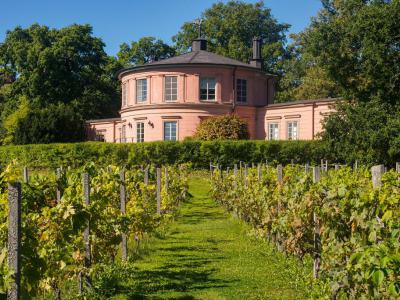
5) Rosendals Trädgård (Rosendal's Garden)
Rosendal's Garden (Rosendals Trädgård) is a picturesque and culturally significant garden located on Djurgården, just west of Rosendal Palace in the heart of Stockholm. This serene oasis is open to the public, offering visitors an opportunity to connect with nature and explore the rich history of gardening practices influenced by various cultural traditions. The garden is dedicated to biodynamic agriculture and serves as an educational hub for sustainable gardening practices.
Owned and operated by the "Rosendals Trädgårds Stiftelse" trust fund, Rosendal's Garden is much more than just a place of beauty; it is a thriving ecosystem that demonstrates the principles of organic farming and the importance of living in harmony with the environment. Visitors to the garden can explore several different areas, each with its unique offerings.
One of the highlights is the Plantboden, a garden shop where visitors can find a variety of tools and supplies essential for gardening. The Trädgårdsbutik is another popular spot where fresh, organic vegetables grown in the garden are available for purchase. Perhaps the most beloved attraction is the Rosendal Trädgårds bakery, known for its delicious baked goods made with ingredients sourced directly from the garden.
Among the garden's many features, the fruit garden stands out, particularly for its impressive collection of nearly one hundred apple trees, each bearing different varieties of apples that ripen in the autumn. This orchard is a testament to the garden's long-standing commitment to cultivating fruit trees.
The rose garden, established in 1988, is another key attraction, boasting over 100 species of roses. Situated on a slope next to the historic orangery, this garden is particularly well-suited for growing bush roses, which are hardy enough to thrive in Sweden's challenging climate.
In keeping with its biodynamic philosophy, Rosendal's Garden also engages in the production of biodynamic wine. The vineyard, which surrounds the orangery, features seven different grape varieties, most of which are sourced from the Baltic region. The wine is produced without any chemical additives, relying solely on natural processes driven by the sun and the earth.
Owned and operated by the "Rosendals Trädgårds Stiftelse" trust fund, Rosendal's Garden is much more than just a place of beauty; it is a thriving ecosystem that demonstrates the principles of organic farming and the importance of living in harmony with the environment. Visitors to the garden can explore several different areas, each with its unique offerings.
One of the highlights is the Plantboden, a garden shop where visitors can find a variety of tools and supplies essential for gardening. The Trädgårdsbutik is another popular spot where fresh, organic vegetables grown in the garden are available for purchase. Perhaps the most beloved attraction is the Rosendal Trädgårds bakery, known for its delicious baked goods made with ingredients sourced directly from the garden.
Among the garden's many features, the fruit garden stands out, particularly for its impressive collection of nearly one hundred apple trees, each bearing different varieties of apples that ripen in the autumn. This orchard is a testament to the garden's long-standing commitment to cultivating fruit trees.
The rose garden, established in 1988, is another key attraction, boasting over 100 species of roses. Situated on a slope next to the historic orangery, this garden is particularly well-suited for growing bush roses, which are hardy enough to thrive in Sweden's challenging climate.
In keeping with its biodynamic philosophy, Rosendal's Garden also engages in the production of biodynamic wine. The vineyard, which surrounds the orangery, features seven different grape varieties, most of which are sourced from the Baltic region. The wine is produced without any chemical additives, relying solely on natural processes driven by the sun and the earth.
