Custom Walk in Chicago, Illinois by dimmergluck_da4382 created on 2026-05-19
Guide Location: USA » Chicago
Guide Type: Custom Walk
# of Sights: 9
Tour Duration: 1 Hour(s)
Travel Distance: 1.6 Km or 1 Miles
Share Key: DFQZQ
Guide Type: Custom Walk
# of Sights: 9
Tour Duration: 1 Hour(s)
Travel Distance: 1.6 Km or 1 Miles
Share Key: DFQZQ
How It Works
Please retrieve this walk in the GPSmyCity app. Once done, the app will guide you from one tour stop to the next as if you had a personal tour guide. If you created the walk on this website or come to the page via a link, please follow the instructions below to retrieve the walk in the app.
Retrieve This Walk in App
Step 1. Download the app "GPSmyCity: Walks in 1K+ Cities" on Apple App Store or Google Play Store.



Step 2. In the GPSmyCity app, download(or launch) the guide "Chicago Map and Walking Tours".
Step 3. Tap the menu button located at upper right corner of the "Walks" screen and select "Retrieve custom walk". Enter the share key: DFQZQ
1) 190 South LaSalle
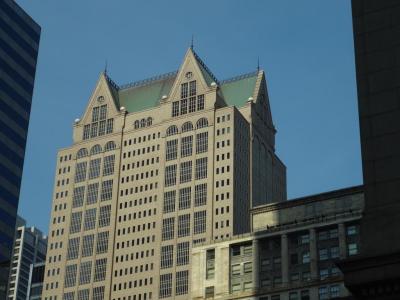
Strolling down LaSalle Street in Chicago’s financial district for the first time, you might just miss 190 South LaSalle. Its base plays it cool, all calm masonry and buttoned-up elegance, blending in like a banker at a board meeting. But look up, and boom-there’s that unmistakable green gabled roof, crashing the skyline party like it forgot it was supposed to be “understated.”
Designed by the dynamic duo of Philip Johnson and John Burgee, this skyscraper is pure Postmodern swagger. This style, emerging in the 1980s and 90s, represents a departure from the restrained International Style championed by Mies van der Rohe. Gone are the clean, no-nonsense lines, as if to say, “Why be minimal when you can be memorable?” And 190 South LaSalle gets the memo loud and clear, with grand gestures, oversized flourishes, and a rooftop that practically winks at you through the clouds.
What makes it fun is the contrast: from the sidewalk, it’s all composed and corporate; from afar, it’s theatrical and proud. It borrows from tradition but isn’t afraid to turn up the volume, making it a playful love letter to Chicago’s architectural past, dressed in the 1980s attitude.
So, exploring this part of the Loop, don’t forget to look up-because 190 South LaSalle is proof that even the most modest facades can hide a flair for the dramatic.
Designed by the dynamic duo of Philip Johnson and John Burgee, this skyscraper is pure Postmodern swagger. This style, emerging in the 1980s and 90s, represents a departure from the restrained International Style championed by Mies van der Rohe. Gone are the clean, no-nonsense lines, as if to say, “Why be minimal when you can be memorable?” And 190 South LaSalle gets the memo loud and clear, with grand gestures, oversized flourishes, and a rooftop that practically winks at you through the clouds.
What makes it fun is the contrast: from the sidewalk, it’s all composed and corporate; from afar, it’s theatrical and proud. It borrows from tradition but isn’t afraid to turn up the volume, making it a playful love letter to Chicago’s architectural past, dressed in the 1980s attitude.
So, exploring this part of the Loop, don’t forget to look up-because 190 South LaSalle is proof that even the most modest facades can hide a flair for the dramatic.
2) Rookery Building
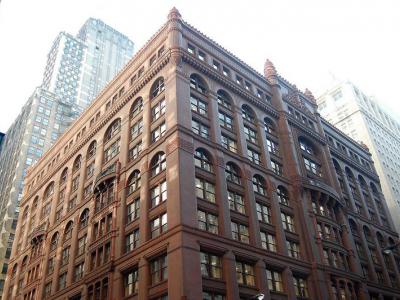
Ah, the Rookery Building-Chicago’s architectural mic drop. Built in 1888 by Daniel Burnham and John Wellborn Root, it is where old-school charm meets cutting-edge-for-its-time innovation. Think of it as the stylish grandparent of modern office buildings-Romanesque bones, steel nerves, and a serious obsession with natural light.
Now, about that name. After the Great Fire of 1871, the city set up a temporary city hall on this very spot, right next to a water tank that, apparently, was the hottest hangout for local crows. People dubbed it “The Rookery,” a cheeky nod to both the birds and the shady politicians nesting inside. Classic Chicago...
When Burnham and Root came in, they kept the name and turned the site into an 11-story marvel. Root even carved a pair of rooks into the stone entrance, just in case you missed the reference. Inside is an architectural mixtape: fireproofing, elevators, electric lights, and a glass-roofed central light court that would make your inner plant absolutely thrive.
In 1905, Frank Lloyd Wright entered the chat. Hired to revamp the interior, he ditched Root’s ironwork and went full diva with white Carrara marble, gold-leafed arabesques, and a vibe that screams “gilded age glow-up.” The double staircase spirals like a mechanical dream, and the second-floor balcony feels like you’re walking through the inside of a very elegant watch.
Outside, it’s all brick, marble, and terra cotta-layered like an architectural tiramisu, blending Romanesque, Queen Anne, Roman Revival, and even some Art Deco from a 1931 facelift.
Want in? The Frank Lloyd Wright Trust offers tours Monday through Friday, and Inside Chicago keeps the doors open daily for curious walkers and film buffs-yes, The Untouchables and Home Alone 2 were all filmed here.
So, feel free to look up, look in, and maybe bring a rook call-just for the old time’s sake...
Now, about that name. After the Great Fire of 1871, the city set up a temporary city hall on this very spot, right next to a water tank that, apparently, was the hottest hangout for local crows. People dubbed it “The Rookery,” a cheeky nod to both the birds and the shady politicians nesting inside. Classic Chicago...
When Burnham and Root came in, they kept the name and turned the site into an 11-story marvel. Root even carved a pair of rooks into the stone entrance, just in case you missed the reference. Inside is an architectural mixtape: fireproofing, elevators, electric lights, and a glass-roofed central light court that would make your inner plant absolutely thrive.
In 1905, Frank Lloyd Wright entered the chat. Hired to revamp the interior, he ditched Root’s ironwork and went full diva with white Carrara marble, gold-leafed arabesques, and a vibe that screams “gilded age glow-up.” The double staircase spirals like a mechanical dream, and the second-floor balcony feels like you’re walking through the inside of a very elegant watch.
Outside, it’s all brick, marble, and terra cotta-layered like an architectural tiramisu, blending Romanesque, Queen Anne, Roman Revival, and even some Art Deco from a 1931 facelift.
Want in? The Frank Lloyd Wright Trust offers tours Monday through Friday, and Inside Chicago keeps the doors open daily for curious walkers and film buffs-yes, The Untouchables and Home Alone 2 were all filmed here.
So, feel free to look up, look in, and maybe bring a rook call-just for the old time’s sake...
3) Chicago Board of Trade Building
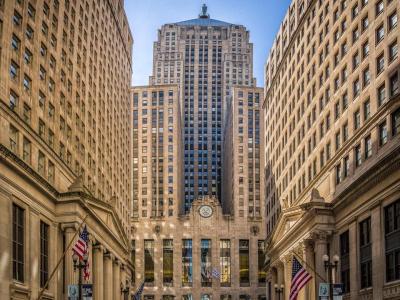
Standing tall like a stone sentinel at the heart of Chicago’s financial district, the Chicago Board of Trade Building doesn’t whisper authority but shouts it in bold syllables. This 45-story tower, conceived during the height of the Art Deco era by architects John A. Holabird and John Wellborn Root Jr., made its grand entrance in 1930, right when ziggurats and geometric glam were all the rage.
Clad in gray Indiana limestone and shadowy recesses, the facade shoots upward with the confidence of a stockbroker on a winning streak. It’s all about vertical drama-lean, clean, and mean. Art Deco lovers, get ready: the crisp lines, stylized ornamentation, and throne-like silhouette make this building less of an office block and more of a sculpted sermon in stone.
But wait-look up. Capping it all off like a literal cherry on top is a pyramidal crown, stoically guarded by a faceless aluminum goddess: Ceres, the Roman deity of agriculture. Sculpted by John Storrs, she’s got no face-because who needs one when you’ve got that kind of industrial-era mystique? Her smooth gown and robotic vibe scream 1930s modernism, wrapped in a toga.
In short, this building is a temple to commerce, a monument to style, and a prime example of how Chicago doesn't just build high-it builds with swagger.
Clad in gray Indiana limestone and shadowy recesses, the facade shoots upward with the confidence of a stockbroker on a winning streak. It’s all about vertical drama-lean, clean, and mean. Art Deco lovers, get ready: the crisp lines, stylized ornamentation, and throne-like silhouette make this building less of an office block and more of a sculpted sermon in stone.
But wait-look up. Capping it all off like a literal cherry on top is a pyramidal crown, stoically guarded by a faceless aluminum goddess: Ceres, the Roman deity of agriculture. Sculpted by John Storrs, she’s got no face-because who needs one when you’ve got that kind of industrial-era mystique? Her smooth gown and robotic vibe scream 1930s modernism, wrapped in a toga.
In short, this building is a temple to commerce, a monument to style, and a prime example of how Chicago doesn't just build high-it builds with swagger.
4) Marquette Building
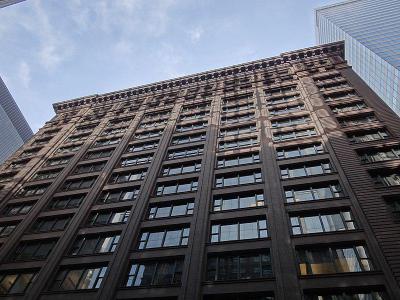
Imagine slipping a sleek, tailored cover over an iron skeleton-that’s the Marquette Building, constructed in 1895. Underneath its crisp, geometric skin hides a tough steel frame, one of the early hallmarks of Chicago’s vertical ambitions. The base is rugged stone. The crown is an ornate cornice that looks like it belongs on a royal pastry. But most of the façade sticks to business: form follows function, with clean lines that echo the structure’s bones. Inside, every office hugs the building’s arms, ensuring that each room gets a slice of sunlight, either from the street or the central light well. Think efficiency with a touch of elegance...
The building takes its name from Jacques Marquette, the Jesuit priest and explorer whose 1674–75 journal gave Europe its first written peek at what we now call Chicago. Owen F. Aldis-part real estate developer, part amateur historian, full-on fanboy-translated the journal in 1891 and made it the heart and soul of the building. That’s why you’ll spot reliefs on the exterior showing scenes from Marquette’s adventures, as if the building’s wearing a historic graphic novel on its face.
Inside the lobby, you may feel like you’re in a jewel box: bronze fixtures gleam under a Tiffany glass mosaic that narrates Marquette’s journey with serious flair. Over the elevators are bronze reliefs of French explorers and Native Americans mid-expedition. And if you wander just a bit farther, you’ll find a mini-exhibit on the building’s history and recent restoration-brought to you by the MacArthur Foundation, which, fittingly, is one of the tenants here.
All of this came from the minds of Holabird & Roche, two architects who started out as draftsmen for the guy who basically invented skyscrapers, William Le Baron Jenney. Indeed, these guys didn’t just raise buildings-they raised the bar...
The building takes its name from Jacques Marquette, the Jesuit priest and explorer whose 1674–75 journal gave Europe its first written peek at what we now call Chicago. Owen F. Aldis-part real estate developer, part amateur historian, full-on fanboy-translated the journal in 1891 and made it the heart and soul of the building. That’s why you’ll spot reliefs on the exterior showing scenes from Marquette’s adventures, as if the building’s wearing a historic graphic novel on its face.
Inside the lobby, you may feel like you’re in a jewel box: bronze fixtures gleam under a Tiffany glass mosaic that narrates Marquette’s journey with serious flair. Over the elevators are bronze reliefs of French explorers and Native Americans mid-expedition. And if you wander just a bit farther, you’ll find a mini-exhibit on the building’s history and recent restoration-brought to you by the MacArthur Foundation, which, fittingly, is one of the tenants here.
All of this came from the minds of Holabird & Roche, two architects who started out as draftsmen for the guy who basically invented skyscrapers, William Le Baron Jenney. Indeed, these guys didn’t just raise buildings-they raised the bar...
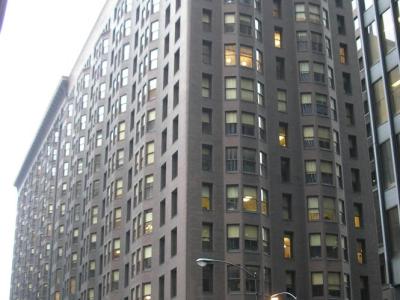
5) Monadnock Building
If buildings could talk, the Monadnock would probably argue with itself. Why? Because this Chicago landmark is literally two buildings in one-a tale of architectural evolution told in brick, steel, and just a bit of stubbornness.
The northern half, finished in 1891 by Burnham & Root, is all about muscle and minimalism. Here, thick brick walls-six feet at the corners-do the heavy lifting like the architectural equivalent of a bodybuilder in a turtleneck. It’s bold, it’s stripped-down, and those curvy bay windows supported by sneaky cantilevered steel quietly hint at the modern era to come. There’s something ancient about it, too-its battered base and massive lines recall Egyptian temples, if pharaohs had high-rises...
Now pivot south, and the building gets a little more refined. Completed in 1893 by Holabird & Roche, this section looks as if saying, “Why carry weight with bricks when steel can do the job?” Here, the brick and terra cotta are just decorative icing on a rigid metal frame cake. It’s sleeker, smarter, and structurally way ahead of its time. Think of it as the moment architecture traded in its overalls for a tailored suit.
Together, these two halves tell a story of transition-from traditional load-bearing walls to steel skeletons, from masonry might to modern grace. In essence, this building is a brick-and-mortar argument about the future.
Come to think of it, strolling by the Monadnock, you may as well give it a wink, for you’re not just looking at architecture-you’re eavesdropping on a 19th-century design debate still standing tall in the 21st.
The northern half, finished in 1891 by Burnham & Root, is all about muscle and minimalism. Here, thick brick walls-six feet at the corners-do the heavy lifting like the architectural equivalent of a bodybuilder in a turtleneck. It’s bold, it’s stripped-down, and those curvy bay windows supported by sneaky cantilevered steel quietly hint at the modern era to come. There’s something ancient about it, too-its battered base and massive lines recall Egyptian temples, if pharaohs had high-rises...
Now pivot south, and the building gets a little more refined. Completed in 1893 by Holabird & Roche, this section looks as if saying, “Why carry weight with bricks when steel can do the job?” Here, the brick and terra cotta are just decorative icing on a rigid metal frame cake. It’s sleeker, smarter, and structurally way ahead of its time. Think of it as the moment architecture traded in its overalls for a tailored suit.
Together, these two halves tell a story of transition-from traditional load-bearing walls to steel skeletons, from masonry might to modern grace. In essence, this building is a brick-and-mortar argument about the future.
Come to think of it, strolling by the Monadnock, you may as well give it a wink, for you’re not just looking at architecture-you’re eavesdropping on a 19th-century design debate still standing tall in the 21st.
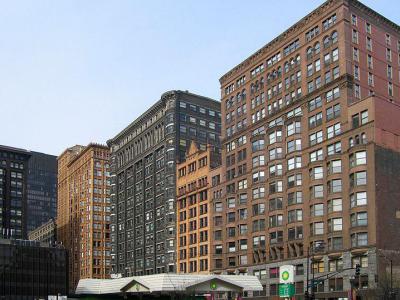
6) Fisher Building
Standing 275 feet tall with the attitude of a sea monster in Sunday best, the Fisher Building has loomed over Chicago’s Loop since 1896. Back then, it was one of just two 18-story titans in the city-the other being the now-vanished Masonic Building. The Fisher, on the other hand, has refused to go quietly. It’s still the oldest surviving 18-story structure in town, proudly holding its steel frame like a seasoned actor refusing to exit the stage.
Back in 1998, instead of a wrecking ball, the Fisher got a facelift. Sold and converted from a tired office space into stylish rental apartments, the building went full glow-up. Its ornate façade-crawling with eagles, dragons, and sea creatures (a tribute to its nautical-loving developer, Lucius G. Fisher)-was painstakingly restored. And we’re not talking some minor touch-ups, no-over 6,000 terra-cotta pieces were remade and replaced, like rebuilding a ceramic jigsaw puzzle with mythical flair.
The main entrances on Dearborn and Plymouth, previously lost to time (and bad decisions), were brought back to life. Meanwhile, 1,200 wood-frame windows-classic examples of the Chicago School style-were either carefully restored or swapped out. Inside, you’ll find mosaic floors and Carrara marble walls whispering tales of 19th-century ambition, all wrapped up in a lobby that gracefully mixes the old with the tastefully new.
In short, the Fisher didn’t just survive-it evolved. From office block to apartment icon, it’s a living fossil with a great paint job.
Back in 1998, instead of a wrecking ball, the Fisher got a facelift. Sold and converted from a tired office space into stylish rental apartments, the building went full glow-up. Its ornate façade-crawling with eagles, dragons, and sea creatures (a tribute to its nautical-loving developer, Lucius G. Fisher)-was painstakingly restored. And we’re not talking some minor touch-ups, no-over 6,000 terra-cotta pieces were remade and replaced, like rebuilding a ceramic jigsaw puzzle with mythical flair.
The main entrances on Dearborn and Plymouth, previously lost to time (and bad decisions), were brought back to life. Meanwhile, 1,200 wood-frame windows-classic examples of the Chicago School style-were either carefully restored or swapped out. Inside, you’ll find mosaic floors and Carrara marble walls whispering tales of 19th-century ambition, all wrapped up in a lobby that gracefully mixes the old with the tastefully new.
In short, the Fisher didn’t just survive-it evolved. From office block to apartment icon, it’s a living fossil with a great paint job.
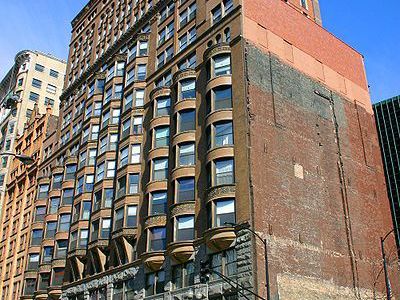
7) Manhattan Building
After the Great Chicago Fire of 1871 turned downtown into a giant bonfire of hopes and timber, a curious thing happened: architects flocked to the smoldering ruins like bees to a blueprint. Why? Well, it was a designer’s dream-no pesky rules, endless demand, and a wide-open playing field. As the ashes were still warm, a certain William Le Baron Jenney stepped up, rolled up his sleeves, and quietly began inventing the future.
Now, Jenney wasn’t just some guy with a drawing board-he was the grand architect-dad of the Chicago School. His genius move was ditching the massive stone walls and using an internal steel skeleton to hold up the building instead. It was revolutionary, it was bold... and sadly, his 1885 Home Insurance Building-the so-called first skyscraper-no longer graces the skyline. But despair not, architectural fans! His Manhattan Building of 1891 still stands tall and proud, like an elderly titan flexing its bones of steel.
Back in the day, people called it “Hercules” when they saw it at the 1893 World’s Fair-and not without reason. This beauty was the first tall building to go full skeleton-mode, the first U.S. structure to hit sixteen stories, and even enjoyed a brief moment as the tallest building on Earth. It also introduced fancy new wind bracing-because even Hercules needs help standing up in Chicago’s famous gusts. The bay windows-smart move. Granite on the bottom, brick on top-even smarter. Cantilevered bays, so the neighboring buildings didn’t crumble-the smartest.
In short, the Manhattan Building wasn’t just ahead of its time-it practically invented it.
Now, Jenney wasn’t just some guy with a drawing board-he was the grand architect-dad of the Chicago School. His genius move was ditching the massive stone walls and using an internal steel skeleton to hold up the building instead. It was revolutionary, it was bold... and sadly, his 1885 Home Insurance Building-the so-called first skyscraper-no longer graces the skyline. But despair not, architectural fans! His Manhattan Building of 1891 still stands tall and proud, like an elderly titan flexing its bones of steel.
Back in the day, people called it “Hercules” when they saw it at the 1893 World’s Fair-and not without reason. This beauty was the first tall building to go full skeleton-mode, the first U.S. structure to hit sixteen stories, and even enjoyed a brief moment as the tallest building on Earth. It also introduced fancy new wind bracing-because even Hercules needs help standing up in Chicago’s famous gusts. The bay windows-smart move. Granite on the bottom, brick on top-even smarter. Cantilevered bays, so the neighboring buildings didn’t crumble-the smartest.
In short, the Manhattan Building wasn’t just ahead of its time-it practically invented it.
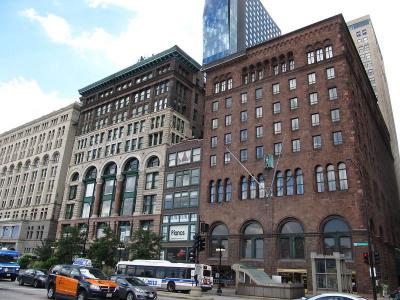
8) Fine Arts Building
Built around 1884, this stone-clad beauty kicked off the architectural groove along South Michigan Avenue. Picture a chunky Romanesque base, elegant arches perched on beefy red granite columns, and voilà-instant showroom glam for Studebaker carriages on the first five floors. These arches didn’t just look good-they functioned like giant picture windows for horsepower on wheels. And up top-a shift in tempo: smaller, clustered windows marking the spaces where carriages and wagons were once assembled, piece by clunky piece...
Years later, Studebaker exited the stage, and in waltzed Charles C. Curtiss-a music publisher with a taste for reinvention. He commissioned architect Beman to turn the place into a one-stop creative playground. Out went the wheels, in came the arts. The building grew up-literally-gaining three new skylit floors to house studios and artistic ambition. Eventually, this revamped gem even hosted suffragettes and, by the 1920s, found itself at the heart of Chicago’s literary whirl.
Step inside today, and you're in for a maze of wood-paneled hallways humming with history. There’s the whimsical Venetian Court, a vertical slice of charm complete with internal balconies, plus original Art Nouveau murals that refuse to be ignored. The building now houses ten floors of artistic energy-painters, pianists, dancers, and dreamers all under one roof. Pop by the FAB Second Floor Art Gallery or listen for the gentle piano echoes from PianoForte down below.
There may be no curtain calls or dance classes for visitors, but art is everywhere here, if you know where to look. So, given the opportunity, don't hesitate to take a stroll through the courtyard, let the soaring sopranos and brooding baritones serenade you, and enjoy the sweet chaos of artists doing what they do best-creating magic in broad daylight.
Years later, Studebaker exited the stage, and in waltzed Charles C. Curtiss-a music publisher with a taste for reinvention. He commissioned architect Beman to turn the place into a one-stop creative playground. Out went the wheels, in came the arts. The building grew up-literally-gaining three new skylit floors to house studios and artistic ambition. Eventually, this revamped gem even hosted suffragettes and, by the 1920s, found itself at the heart of Chicago’s literary whirl.
Step inside today, and you're in for a maze of wood-paneled hallways humming with history. There’s the whimsical Venetian Court, a vertical slice of charm complete with internal balconies, plus original Art Nouveau murals that refuse to be ignored. The building now houses ten floors of artistic energy-painters, pianists, dancers, and dreamers all under one roof. Pop by the FAB Second Floor Art Gallery or listen for the gentle piano echoes from PianoForte down below.
There may be no curtain calls or dance classes for visitors, but art is everywhere here, if you know where to look. So, given the opportunity, don't hesitate to take a stroll through the courtyard, let the soaring sopranos and brooding baritones serenade you, and enjoy the sweet chaos of artists doing what they do best-creating magic in broad daylight.
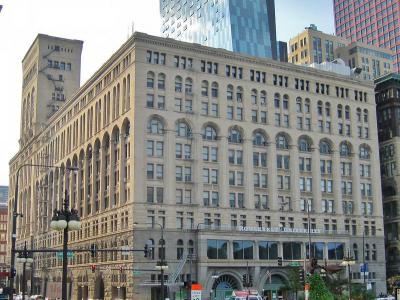
9) Auditorium Building
If buildings could take a bow, Chicago’s Auditorium Building would still be taking curtain calls. A crown jewel of the Chicago School architectural style, it’s most famous for its jaw-dropping, 4,000-seat theatre-so acoustically perfect and visually flawless that the legendary Modernist maestro Frank Lloyd Wright, never one for casual compliments, called it “the greatest room for music and opera in the world.”
Constructed in 1889 by the architectural dream team of Louis Sullivan and Dankmar Adler, the building launched them into the architectural stratosphere. Adler brought the theatre savvy, Sullivan brought the flair, and together they built a masterpiece that would make modernist hearts flutter for decades.
The plan was to create a home for Chicago’s cultural elite-opera, symphony, high society, and all that jazz-while sneaking in a 400-room hotel, office space, and retail to pay the bills. Grand idea! Sadly, within ten years, the glam had faded, and the building went from high notes straight into disrepair, with its lowest point marked by a transformation into a recreational center for soldiers who ingeniously repurposed the stage as a makeshift bowling alley.
Luckily, in 1946, Roosevelt University stepped in to rescue the ailing beauty. By the 1960s, restoration efforts hit their stride, and in 1989, the theater celebrated its 100th anniversary with a musical bang-Les Misérables show. Then came a 2001 revamp, complete with forensic paint matching, delicate stencil work, and a lovingly revived mural. In 2002, the original stage (bless its battered soul) was replaced just in time for the sold-out run by the Bolshoi Ballet, which garnered critical acclaim.
So, even if your schedule is tighter than a soprano’s corset, try and squeeze in a tour of this historic gem-you’ll walk through history, acoustics, and just a little architectural drama.
Constructed in 1889 by the architectural dream team of Louis Sullivan and Dankmar Adler, the building launched them into the architectural stratosphere. Adler brought the theatre savvy, Sullivan brought the flair, and together they built a masterpiece that would make modernist hearts flutter for decades.
The plan was to create a home for Chicago’s cultural elite-opera, symphony, high society, and all that jazz-while sneaking in a 400-room hotel, office space, and retail to pay the bills. Grand idea! Sadly, within ten years, the glam had faded, and the building went from high notes straight into disrepair, with its lowest point marked by a transformation into a recreational center for soldiers who ingeniously repurposed the stage as a makeshift bowling alley.
Luckily, in 1946, Roosevelt University stepped in to rescue the ailing beauty. By the 1960s, restoration efforts hit their stride, and in 1989, the theater celebrated its 100th anniversary with a musical bang-Les Misérables show. Then came a 2001 revamp, complete with forensic paint matching, delicate stencil work, and a lovingly revived mural. In 2002, the original stage (bless its battered soul) was replaced just in time for the sold-out run by the Bolshoi Ballet, which garnered critical acclaim.
So, even if your schedule is tighter than a soprano’s corset, try and squeeze in a tour of this historic gem-you’ll walk through history, acoustics, and just a little architectural drama.
