Custom Walk in Chicago, Illinois by brian_stehle_f56868 created on 2026-05-20
Guide Location: USA » Chicago
Guide Type: Custom Walk
# of Sights: 8
Tour Duration: 8 Hour(s)
Travel Distance: 22.4 Km or 13.9 Miles
Share Key: MRJ5S
Guide Type: Custom Walk
# of Sights: 8
Tour Duration: 8 Hour(s)
Travel Distance: 22.4 Km or 13.9 Miles
Share Key: MRJ5S
How It Works
Please retrieve this walk in the GPSmyCity app. Once done, the app will guide you from one tour stop to the next as if you had a personal tour guide. If you created the walk on this website or come to the page via a link, please follow the instructions below to retrieve the walk in the app.
Retrieve This Walk in App
Step 1. Download the app "GPSmyCity: Walks in 1K+ Cities" on Apple App Store or Google Play Store.



Step 2. In the GPSmyCity app, download(or launch) the guide "Chicago Map and Walking Tours".
Step 3. Tap the menu button located at upper right corner of the "Walks" screen and select "Retrieve custom walk". Enter the share key: MRJ5S
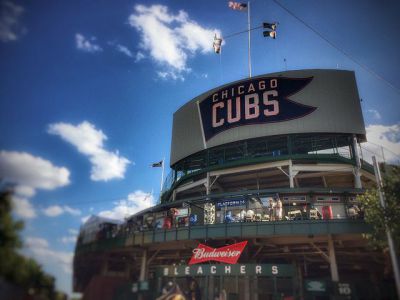
1) Wrigley Field
Wrigley Field, the nation's second-oldest major league ballpark, is an iconic gem draped in ivy that hosted its inaugural major league game in 1914 and has been the cherished home of the Chicago Cubs since 1916. Despite renovations that have introduced modern elements, the ballpark's enduring charm remains unaltered. The original scoreboard, manually displaying score-by-innings, players' numbers, strikes, outs, hits, and errors, remains in use.
As you gaze along Sheffield and Waveland Avenues beyond the bleachers, you'll spot rooftop patios where avid baseball fans gladly pay a premium to cheer on the home team. Devoted "ball hawks" perch in lawn chairs on Sheffield, eagerly awaiting foul balls.
While exploring the ballpark, don't miss the Harry Caray statue, a tribute to the late Cubs announcer. During the seventh-inning stretch, fans unite to sing "Take Me Out to the Ballgame" in his memory.
Guided tours of the park and dugouts are available from April to October. Additionally, when the team is away, the stadium hosts major concerts featuring renowned artists like Elton John and Bruce Springsteen.
As you gaze along Sheffield and Waveland Avenues beyond the bleachers, you'll spot rooftop patios where avid baseball fans gladly pay a premium to cheer on the home team. Devoted "ball hawks" perch in lawn chairs on Sheffield, eagerly awaiting foul balls.
While exploring the ballpark, don't miss the Harry Caray statue, a tribute to the late Cubs announcer. During the seventh-inning stretch, fans unite to sing "Take Me Out to the Ballgame" in his memory.
Guided tours of the park and dugouts are available from April to October. Additionally, when the team is away, the stadium hosts major concerts featuring renowned artists like Elton John and Bruce Springsteen.
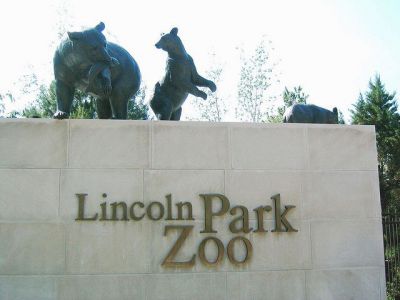
2) Lincoln Park Zoo (must see)
In this urban oasis near the shores of Lake Michigan, you can witness snow monkeys relaxing in the soothing hot springs of the Regenstein Macaque Forest or marvel at gorillas and chimpanzees in the expansive Regenstein Center for African Apes. This primate paradise boasts three distinct habitats complete with bamboo groves, termite mounds, and a sprawling 5,000-foot network of swinging vines.
Fear not, the mighty big cats are close by but safely separated by a sturdy window, outside the Pepper Family Wildlife Center. This area underwent a redesign in 2021, driven by data collected from an app that observed the intriguing behaviors of these star residents.
If you have a soft spot for creatures both scaly (like pythons) and quirky (like sloths), you'll find them residing within the glass-domed Regenstein Small Mammal and Reptile House. Meanwhile, the real heavyweights of the animal kingdom, including hippos, giraffes, and black rhinos, can be found in the Regenstein African Journey section.
For those with a passion for feathered friends, don't miss the McCormick Bird House, which houses several extremely rare species, including the Bali mynah, Guam rail, and Guam Micronesian kingfisher – some of which are sadly extinct in the wild.
Families with little adventurers in tow should make a pit stop at Farm-in-the-Zoo, where they can mingle with barnyard animals and explore informative learning centers. And don't forget to set aside some time for a spin (or two) on the Endangered Species Carousel, featuring a delightful collection of 48 rare and endangered animals.
Why You Should Visit:
Admission is free, and the zoo is compact enough to provide a full, enriching experience without the need for marathon walks.
The beautifully landscaped grounds enhance your visit, offering not only animal encounters but also visually pleasing surroundings.
Tip:
Don't forget to check out the bridge just outside the South Gate – it offers great skyline views of the city!
Fear not, the mighty big cats are close by but safely separated by a sturdy window, outside the Pepper Family Wildlife Center. This area underwent a redesign in 2021, driven by data collected from an app that observed the intriguing behaviors of these star residents.
If you have a soft spot for creatures both scaly (like pythons) and quirky (like sloths), you'll find them residing within the glass-domed Regenstein Small Mammal and Reptile House. Meanwhile, the real heavyweights of the animal kingdom, including hippos, giraffes, and black rhinos, can be found in the Regenstein African Journey section.
For those with a passion for feathered friends, don't miss the McCormick Bird House, which houses several extremely rare species, including the Bali mynah, Guam rail, and Guam Micronesian kingfisher – some of which are sadly extinct in the wild.
Families with little adventurers in tow should make a pit stop at Farm-in-the-Zoo, where they can mingle with barnyard animals and explore informative learning centers. And don't forget to set aside some time for a spin (or two) on the Endangered Species Carousel, featuring a delightful collection of 48 rare and endangered animals.
Why You Should Visit:
Admission is free, and the zoo is compact enough to provide a full, enriching experience without the need for marathon walks.
The beautifully landscaped grounds enhance your visit, offering not only animal encounters but also visually pleasing surroundings.
Tip:
Don't forget to check out the bridge just outside the South Gate – it offers great skyline views of the city!
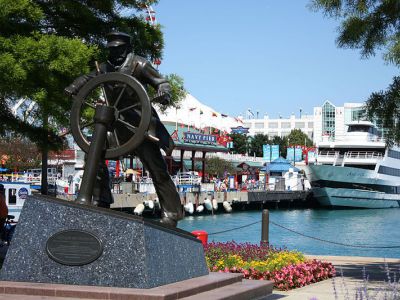
3) Navy Pier (must see)
Navy Pier in Chicago, originally known as the "Municipal Pier," was designed by well-known architect Charles Sumner Frost. Located along the shore of Lake Michigan, the Navy Pier is 3,300 feet long. It was first opened to the public in 1916 and renamed Navy Pier in 1927 in tribute to World War I Navy veterans.
There is plenty to see and do during a visit to the pier. At Pier Park, you'll find a variety of fun rides, games, and other amusements. Ride a hand-painted horse on the delightful musical carousel. You can't miss the iconic Centennial Wheel that debuted in 2016, honoring the 100th anniversary of the pier. This Ferris wheel is close to 200 feet tall and offers panoramic city views from the top.
Attractions at Navy Pier include the Chicago Children's Museum boasting three floors of exploration for kids. See live plays, musicals, and events at the Chicago Shakespeare Theater. Get lost in the 4,000-square-foot Funhouse Maze. During the summer, Navy Pier puts on a spectacular fireworks show that is a favorite with visitors and locals.
Hungry visitors will find a wide array of foods available, including hot dogs, burgers, pizza, popcorn, and ice cream. The waterfront Beer Garden, open seasonally, offers craft beer and live music performances. The pier also features shopping and special events.
There is plenty to see and do during a visit to the pier. At Pier Park, you'll find a variety of fun rides, games, and other amusements. Ride a hand-painted horse on the delightful musical carousel. You can't miss the iconic Centennial Wheel that debuted in 2016, honoring the 100th anniversary of the pier. This Ferris wheel is close to 200 feet tall and offers panoramic city views from the top.
Attractions at Navy Pier include the Chicago Children's Museum boasting three floors of exploration for kids. See live plays, musicals, and events at the Chicago Shakespeare Theater. Get lost in the 4,000-square-foot Funhouse Maze. During the summer, Navy Pier puts on a spectacular fireworks show that is a favorite with visitors and locals.
Hungry visitors will find a wide array of foods available, including hot dogs, burgers, pizza, popcorn, and ice cream. The waterfront Beer Garden, open seasonally, offers craft beer and live music performances. The pier also features shopping and special events.
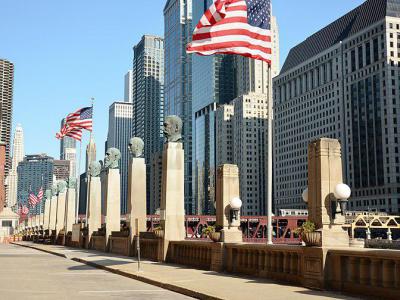
4) Magnificent Mile (must see)
Strolling down the expansive stretch of Michigan Avenue north of the Chicago River is a must-do for nearly every visitor to the city. Known as one of the world's most renowned shopping districts, the Magnificent Mile boasts a rich assortment of mainstream retailers, major department stores, and shopping centers. Even if you aren't inclined to shop, there's much to captivate your interest here. The southern end of this bustling strip is anchored by the iconic Wrigley Building skyscraper, featuring two elaborately designed towers constructed between 1920 and 1924, as well as the Tribune Tower, a 36-floor neo-Gothic skyscraper. At the northern terminus stands the impressive 100-storey John Hancock Center, with the famous Water Tower situated in between.
Apart from being one of Chicago's premier spots for people-watching, the Magnificent Mile is also a haven for food enthusiasts, offering a wide array of dining choices, including renowned and critically acclaimed restaurants. However, if you come to Chicago with a specific craving for the city's famous local pizza, be sure to explore Gino's East and Lou Malnati's, among other locations, as they provide some of the finest Chicago-Style deep dish pizza experiences available in the city.
Apart from being one of Chicago's premier spots for people-watching, the Magnificent Mile is also a haven for food enthusiasts, offering a wide array of dining choices, including renowned and critically acclaimed restaurants. However, if you come to Chicago with a specific craving for the city's famous local pizza, be sure to explore Gino's East and Lou Malnati's, among other locations, as they provide some of the finest Chicago-Style deep dish pizza experiences available in the city.
5) Millennium Park (must see)
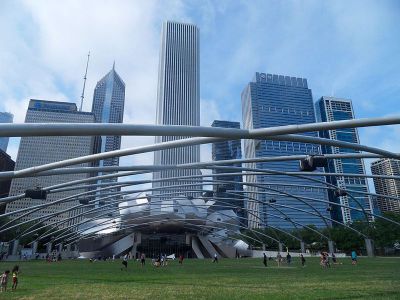
In 2004, when Anish Kapoor's colossal, gleaming Cloud Gate sculpture, the lively fountains, the captivating Crown Fountain, and a Disney-esque music pavilion all came together in this park, they quickly won the affection of both Chicagoans and tourists. This public space, which cost $250 million more than planned and opened four years later than scheduled, stands out as Chicago's most dazzling, showcasing contemporary architecture and design. Paul Goldberger, the architecture critic for The New York Times, hailed it as "one of the great new models for a kind of urban park." It has been embraced by locals and visitors alike and is widely considered the most impressive public project in Chicago since the 1893 World's Fair.
The park's origins trace back to a moment when Mayor Richard M. Daley conceived of it while sitting in his dentist's chair across the street, gazing at the sea of parking lots and railyards that occupied the site until the late 1990s. The initial design, created by the globally renowned Skidmore, Owings and Merrill firm based in Chicago, adhered to the traditional style of Grant Park, featuring formal fountains and gardens. However, private donors who had pledged to supplement public funding for the park's construction rejected this design as too conservative. Cindy Pritzker, a prominent Chicago philanthropist and the spouse of the late Jay Pritzker, the founder of the Hyatt hotel chain and the esteemed Pritzker Prize in architecture, eventually persuaded Frank Gehry (a previous Pritzker Prize laureate) to design the park's central pavilion, along with a bridge leading to the lake across Columbus Avenue. Gehry's involvement attracted other exceptional talents to the project, resulting in an impressively diverse yet cohesive masterpiece.
The star attraction undoubtedly lies in Gehry's remarkable Jay Pritzker Pavilion, featuring striking ribbons of stainless steel soaring 40 feet into the sky, resembling petals enveloping the music stage. Other notable elements include the Harris Theater for Music and Dance, offering an indoor option for performing arts enthusiasts, the McCormick Tribune Ice Rink, and the Lurie Garden, a year-round delight.
The park's origins trace back to a moment when Mayor Richard M. Daley conceived of it while sitting in his dentist's chair across the street, gazing at the sea of parking lots and railyards that occupied the site until the late 1990s. The initial design, created by the globally renowned Skidmore, Owings and Merrill firm based in Chicago, adhered to the traditional style of Grant Park, featuring formal fountains and gardens. However, private donors who had pledged to supplement public funding for the park's construction rejected this design as too conservative. Cindy Pritzker, a prominent Chicago philanthropist and the spouse of the late Jay Pritzker, the founder of the Hyatt hotel chain and the esteemed Pritzker Prize in architecture, eventually persuaded Frank Gehry (a previous Pritzker Prize laureate) to design the park's central pavilion, along with a bridge leading to the lake across Columbus Avenue. Gehry's involvement attracted other exceptional talents to the project, resulting in an impressively diverse yet cohesive masterpiece.
The star attraction undoubtedly lies in Gehry's remarkable Jay Pritzker Pavilion, featuring striking ribbons of stainless steel soaring 40 feet into the sky, resembling petals enveloping the music stage. Other notable elements include the Harris Theater for Music and Dance, offering an indoor option for performing arts enthusiasts, the McCormick Tribune Ice Rink, and the Lurie Garden, a year-round delight.
6) The Field Museum
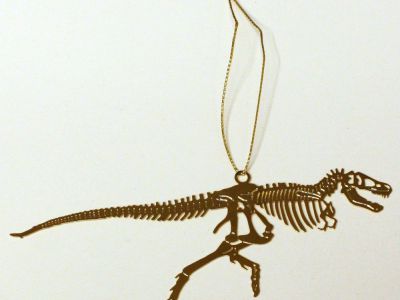
What to buy here: Sue Gold-Plated Ornament.
Sue is the center attraction of the Field Museum quite literally – the 40 ½-feet-long, 3,922-pound T-rex skeleton towers over visitors in the museum atrium. The 67 million-year-old skeleton was unveiled in May 2000 as the most complete and best preserved T-rex skeleton ever discovered. The skeleton is named in honor of fossil hunter Sue Hendrickson who discovered the bones in South Dakota. Bring the famed dinosaur into your home with a Sue gold-plated ornament. The 24K gold-plated brass will catch the light in the window, or bring a bit of Chicago and prehistory to your Christmas tree. The 5 ½-inch-long ornament costs $14 and comes in an attractive box for the perfect gift. The Field Museum store at 1400 S. Lake Shore Dr. has Sue merchandise for everyone, from Sue replica claws and teeth for the serious collector or a paintable Sue figurine kit for kids. The museum is open 9 a.m. to 5 p.m. every day except Christmas. While you’re on the museum campus, don’t miss the Shedd Aquarium or Adler Planetarium. Be sure to take in the lakeside view of the city, great for photo ops.
Sue is the center attraction of the Field Museum quite literally – the 40 ½-feet-long, 3,922-pound T-rex skeleton towers over visitors in the museum atrium. The 67 million-year-old skeleton was unveiled in May 2000 as the most complete and best preserved T-rex skeleton ever discovered. The skeleton is named in honor of fossil hunter Sue Hendrickson who discovered the bones in South Dakota. Bring the famed dinosaur into your home with a Sue gold-plated ornament. The 24K gold-plated brass will catch the light in the window, or bring a bit of Chicago and prehistory to your Christmas tree. The 5 ½-inch-long ornament costs $14 and comes in an attractive box for the perfect gift. The Field Museum store at 1400 S. Lake Shore Dr. has Sue merchandise for everyone, from Sue replica claws and teeth for the serious collector or a paintable Sue figurine kit for kids. The museum is open 9 a.m. to 5 p.m. every day except Christmas. While you’re on the museum campus, don’t miss the Shedd Aquarium or Adler Planetarium. Be sure to take in the lakeside view of the city, great for photo ops.
7) Field Museum (must see)
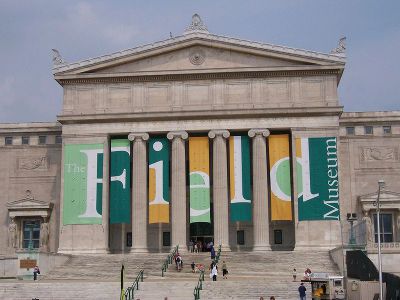
Spanning over 400,000 square feet of exhibition space, this immense museum delves into the diverse cultures and environments found across the globe. Its architectural design draws inspiration from Greek temples, with the caryatids bearing a striking resemblance to those found on the ancient Erechtheion in Athens. The central hall, an imposing neoclassical space encircled by Ionic columns, stands as one of Chicago's most magnificent neoclassical settings, simultaneously grand and tranquil.
Inside, interactive displays delve into a wide array of subjects, from unraveling the enigmas of Egyptian mummies to showcasing the artistry and innovations of ancient American civilizations and tracing the evolutionary tapestry of life on our planet. Notably, the Grainger Hall of Gems houses a mesmerizing collection of rare jewels from across the world, accompanied by a splendid Louis Comfort Tiffany stained glass window.
Originally bankrolled by Marshall Field, a prominent Chicago retailer, the museum's origins trace back to 1893 when it was established to house materials amassed for the World's Columbian Exposition. Its present residence, an architectural marvel in itself, opened its doors in 1921. While the museum boasts the world's premier dinosaur collections, the star attraction remains "Sue", a 67-million-year-old 'Tyrannosaurus rex' fossil that holds the distinction of being the largest, most complete, and best-preserved specimen of its kind ever unearthed. So, don't miss the chance to snap a selfie with Sue, savor a meal at the on-site café or bistro, or enjoy your own picnic outdoors while taking in panoramic vistas of the city skyline and the serene lake.
Why You Should Visit:
This museum caters to all ages, appealing to kids, adults, scientists, and history enthusiasts alike. There's a wealth of knowledge to explore across various domains. It's renowned for its dinosaur exhibits, boasting more than 80% of real skeleton reconstructions, along with the meticulously recreated Egyptian tomb.
Tip:
Be sure to keep an eye out for information regarding special events, guided tours, and activities scheduled throughout the museum.
Inside, interactive displays delve into a wide array of subjects, from unraveling the enigmas of Egyptian mummies to showcasing the artistry and innovations of ancient American civilizations and tracing the evolutionary tapestry of life on our planet. Notably, the Grainger Hall of Gems houses a mesmerizing collection of rare jewels from across the world, accompanied by a splendid Louis Comfort Tiffany stained glass window.
Originally bankrolled by Marshall Field, a prominent Chicago retailer, the museum's origins trace back to 1893 when it was established to house materials amassed for the World's Columbian Exposition. Its present residence, an architectural marvel in itself, opened its doors in 1921. While the museum boasts the world's premier dinosaur collections, the star attraction remains "Sue", a 67-million-year-old 'Tyrannosaurus rex' fossil that holds the distinction of being the largest, most complete, and best-preserved specimen of its kind ever unearthed. So, don't miss the chance to snap a selfie with Sue, savor a meal at the on-site café or bistro, or enjoy your own picnic outdoors while taking in panoramic vistas of the city skyline and the serene lake.
Why You Should Visit:
This museum caters to all ages, appealing to kids, adults, scientists, and history enthusiasts alike. There's a wealth of knowledge to explore across various domains. It's renowned for its dinosaur exhibits, boasting more than 80% of real skeleton reconstructions, along with the meticulously recreated Egyptian tomb.
Tip:
Be sure to keep an eye out for information regarding special events, guided tours, and activities scheduled throughout the museum.
8) Museum of Science and Industry (must see)
The Museum of Science and Industry stands as one of Chicago's most popular attractions, and rightfully so. This expansive facility spans 14 acres across three floors, featuring ever-evolving exhibits that could easily occupy an entire day of exploration. The topics covered here range from manufacturing and glaciers to robots and engineering marvels. Among the permanent displays, you'll find the US-505 Submarine, a rare capture from World War II, and there are regularly changing exhibits, including a colossal Lego room. Additionally, there are convenient dining options on-site, including a café and cafeteria.
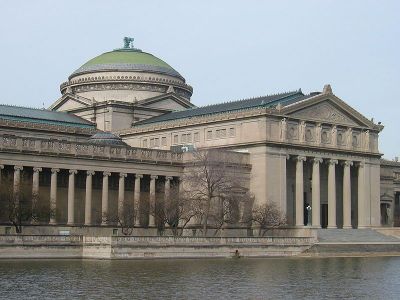
The museum's cutting-edge interior contrasts with its Classical Revival façade, originally designed in 1892 to house the Palace of Fine Arts for the World's Columbian Exposition. Remarkably, this is the sole remaining structure from that grand 1893 fair, and also its only fireproof building. Adorned with Ionic colonnades, caryatid porches, and domed roofs, it epitomizes the classicism that defined the fair's White City of marble temples. Architect George W. Maher once praised the Palace's architecture as "unequaled since the Age of Pericles."
Tip:
If you're in need of some tranquility, venture into the beautifully landscaped Jackson Park, home to the serene Osaka Garden with its Japanese-style ambiance, located just behind the museum.
The museum's cutting-edge interior contrasts with its Classical Revival façade, originally designed in 1892 to house the Palace of Fine Arts for the World's Columbian Exposition. Remarkably, this is the sole remaining structure from that grand 1893 fair, and also its only fireproof building. Adorned with Ionic colonnades, caryatid porches, and domed roofs, it epitomizes the classicism that defined the fair's White City of marble temples. Architect George W. Maher once praised the Palace's architecture as "unequaled since the Age of Pericles."
Tip:
If you're in need of some tranquility, venture into the beautifully landscaped Jackson Park, home to the serene Osaka Garden with its Japanese-style ambiance, located just behind the museum.
