Custom Walk in Rotterdam, Netherlands by misunshine1017_7786b9 created on 2026-05-22
Guide Location: Netherlands » Rotterdam
Guide Type: Custom Walk
# of Sights: 12
Tour Duration: 4 Hour(s)
Travel Distance: 7.7 Km or 4.8 Miles
Share Key: 32NTX
Guide Type: Custom Walk
# of Sights: 12
Tour Duration: 4 Hour(s)
Travel Distance: 7.7 Km or 4.8 Miles
Share Key: 32NTX
How It Works
Please retrieve this walk in the GPSmyCity app. Once done, the app will guide you from one tour stop to the next as if you had a personal tour guide. If you created the walk on this website or come to the page via a link, please follow the instructions below to retrieve the walk in the app.
Retrieve This Walk in App
Step 1. Download the app "GPSmyCity: Walks in 1K+ Cities" on Apple App Store or Google Play Store.



Step 2. In the GPSmyCity app, download(or launch) the guide "Rotterdam Map and Walking Tours".
Step 3. Tap the menu button located at upper right corner of the "Walks" screen and select "Retrieve custom walk". Enter the share key: 32NTX
1) Erasmusbrug (Erasmus Bridge) (must see)
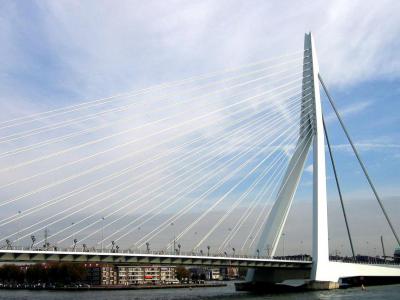
Erasmus Bridge crosses the Nieuwe Mass River. This combination cable-stayed and bascule bridge was completed in 1996. The modern bridge was named after Desiderius Erasmus, a Renaissance humanist and Catholic priest. Erasmus was born in Rotterdam in 1446 and is considered one of the greatest scholars of the northern Renaissance.
Erasmus Bridge is Rotterdam's most iconic landmark and is featured in the city's logo. The bridge is 802 meters (2,631 feet) long. The cable-stayed portion has a 139-meter (456-foot) asymmetrical bent pylon with an eye-catching horizontal base. This striking feature has earned it "The Swan" nickname.
The south portion of the bridge has an 89-meter (292-foot) long bascule bridge to allow large ships to pass under the bridge.
The bridge has been featured in films and events. It was in Jackie Chan's 1998 film Who Am I?. Several planes dramatically flew under the bridge during the 2005 Red Bull Air Race.
Erasmus Bridge is Rotterdam's most iconic landmark and is featured in the city's logo. The bridge is 802 meters (2,631 feet) long. The cable-stayed portion has a 139-meter (456-foot) asymmetrical bent pylon with an eye-catching horizontal base. This striking feature has earned it "The Swan" nickname.
The south portion of the bridge has an 89-meter (292-foot) long bascule bridge to allow large ships to pass under the bridge.
The bridge has been featured in films and events. It was in Jackie Chan's 1998 film Who Am I?. Several planes dramatically flew under the bridge during the 2005 Red Bull Air Race.
2) Koningin Emmaplein
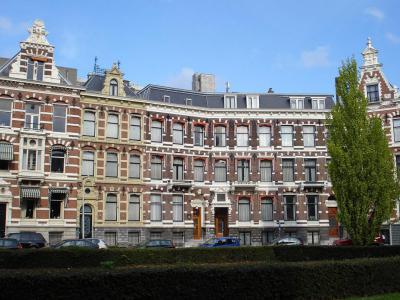
Koningin Emmaplein (Queen Emma Square) graces the Scheepvaartkwartier (Shipping Quarter) district in Rotterdam. Nestled alongside the Westzeedijk, it stands in direct opposition to the Museum Park.
Originating between 1888 and 1891, the Koningin Emmaplein was conceived under the architectural guidance of J.C. from the local vicinity. This square boasts a symmetrical arrangement of 15 opulent mansions, crafted in the exquisite Neo-Renaissance style. These grand structures offer vistas of Schoonoord Park at their rear and the then-undeveloped expanse of Land van Hoboken at their front. These mansions were inhabited by esteemed members of the Rotterdam business elite, a fact that combined with the somewhat sheltered positioning, earned the square the affectionate moniker "Rijkeluishofje" (Rich People's Courtyard).
Adorning the square, a monumental red beech tree (Fagus sylvatica Atropuni) stands tall, accompanied by an ornate vase from 1890, artistically conceived by Berlage. In 1956, when Rotterdam was established as an independent diocese, Koningin Emmaplein became the residence and office of the bishop. Adjacent to this edifice stood the Saint Laurentius and Ignatius Cathedral, serving as the primary church of the diocese.
Recognized as a national treasure, the Koningin Emmaplein holds the status of a protected cityscape within the broader framework of the Scheepvaartkwartier (Shipping Quarter).
Originating between 1888 and 1891, the Koningin Emmaplein was conceived under the architectural guidance of J.C. from the local vicinity. This square boasts a symmetrical arrangement of 15 opulent mansions, crafted in the exquisite Neo-Renaissance style. These grand structures offer vistas of Schoonoord Park at their rear and the then-undeveloped expanse of Land van Hoboken at their front. These mansions were inhabited by esteemed members of the Rotterdam business elite, a fact that combined with the somewhat sheltered positioning, earned the square the affectionate moniker "Rijkeluishofje" (Rich People's Courtyard).
Adorning the square, a monumental red beech tree (Fagus sylvatica Atropuni) stands tall, accompanied by an ornate vase from 1890, artistically conceived by Berlage. In 1956, when Rotterdam was established as an independent diocese, Koningin Emmaplein became the residence and office of the bishop. Adjacent to this edifice stood the Saint Laurentius and Ignatius Cathedral, serving as the primary church of the diocese.
Recognized as a national treasure, the Koningin Emmaplein holds the status of a protected cityscape within the broader framework of the Scheepvaartkwartier (Shipping Quarter).
3) Kunsthal (Art Hall) (must see)
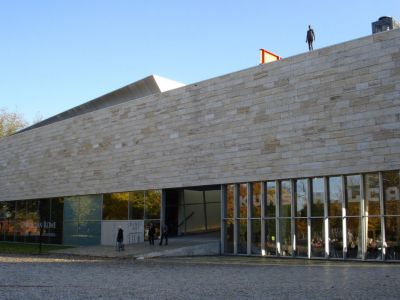
Art Hall is an art museum that opened in 1992. The museum features a variety of temporary exhibits throughout seven exhibition spaces. In addition, the museum has a cafe.
Koolhaas designed the museum. The architecture is distinctive, and the building resembles a box while the interior has a sloping, spiraling floor. The main gallery is designed to appear like it is hovering above street level. Koolhaas used unique materials such as raw concrete, corrugated plastic, galvanized steel, and roughly sawn tree trunks.
Exhibitions range from 20th-century artists to modern artists. Exhibitions have included exhibits focusing on artists such as Andy Warhol, Chuck Close, and Arne Quinze. In addition, the museum often features current event art exhibits like the recent Drawn: Rotterdam! One-And-A-Half-Meter-Society which focused on the Covid-19 pandemic.
The Art Hall is adjacent to the Museum Park, a beautifully landscaped outdoor area. The park has sculptures and an artistic bridge to nowhere.
Tip:
The outside museum park is great for a stroll and less touristy than expected – visit the Rose Garden!
Koolhaas designed the museum. The architecture is distinctive, and the building resembles a box while the interior has a sloping, spiraling floor. The main gallery is designed to appear like it is hovering above street level. Koolhaas used unique materials such as raw concrete, corrugated plastic, galvanized steel, and roughly sawn tree trunks.
Exhibitions range from 20th-century artists to modern artists. Exhibitions have included exhibits focusing on artists such as Andy Warhol, Chuck Close, and Arne Quinze. In addition, the museum often features current event art exhibits like the recent Drawn: Rotterdam! One-And-A-Half-Meter-Society which focused on the Covid-19 pandemic.
The Art Hall is adjacent to the Museum Park, a beautifully landscaped outdoor area. The park has sculptures and an artistic bridge to nowhere.
Tip:
The outside museum park is great for a stroll and less touristy than expected – visit the Rose Garden!
4) Museum Boijmans Van Beuningen
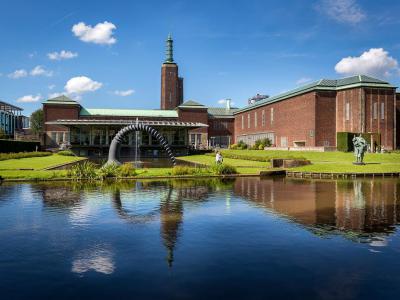
The Municipal Museum Boijmans Van Beuningen stands as an art institution situated within Rotterdam. The museum's name is a tribute to its principal benefactors, Frans Jacob Otto Boijmans and Daniël George van Beuningen. Nestled within the Museumpark in the Rotterdam Centrum district, it shares proximity with the Kunsthal and the Natural History Museum.
Established in 1849, the museum serves as a repository for the remarkable collections amassed by Frans Jacob Otto Boijmans (1767–1847) and Daniël George van Beuningen (1877–1955). Accumulating over 170 years, the museum has been entrusted with more than 151,000 artworks. Encompassing a diverse range from medieval to contemporary art, the collection boasts pieces from luminaries like Rembrandt, Claude Monet, Vincent van Gogh, and Salvador Dalí. Notable highlights encompass the 'Achilles series' masterpieces by Peter Paul Rubens and Jacob van Ruisdael's 'A Cornfield, in the Background the Zuiderzee.'
Designed by Adriaan van der Steur, the museum seamlessly blends with its surroundings. The use of brick, natural stone, and copper creates an inviting structure. Flexible exhibition spaces take center stage, easily morphing to accommodate various displays, especially suited for modern art. Well-lit with soft overhead lighting, the rooms offer glimpses of the garden through large windows, sometimes diverting attention from the art. Elaborate ceiling designs add to the museum's ambiance.
The Depot Museum Boijmans Van Beuningen's construction commenced in 2017 and was inaugurated by King Willem-Alexander on November 5, 2021. Distinguished as the world's inaugural fully accessible art depot, the structure encapsulates the museum's commitment to preserving and sharing artistic heritage.
Established in 1849, the museum serves as a repository for the remarkable collections amassed by Frans Jacob Otto Boijmans (1767–1847) and Daniël George van Beuningen (1877–1955). Accumulating over 170 years, the museum has been entrusted with more than 151,000 artworks. Encompassing a diverse range from medieval to contemporary art, the collection boasts pieces from luminaries like Rembrandt, Claude Monet, Vincent van Gogh, and Salvador Dalí. Notable highlights encompass the 'Achilles series' masterpieces by Peter Paul Rubens and Jacob van Ruisdael's 'A Cornfield, in the Background the Zuiderzee.'
Designed by Adriaan van der Steur, the museum seamlessly blends with its surroundings. The use of brick, natural stone, and copper creates an inviting structure. Flexible exhibition spaces take center stage, easily morphing to accommodate various displays, especially suited for modern art. Well-lit with soft overhead lighting, the rooms offer glimpses of the garden through large windows, sometimes diverting attention from the art. Elaborate ceiling designs add to the museum's ambiance.
The Depot Museum Boijmans Van Beuningen's construction commenced in 2017 and was inaugurated by King Willem-Alexander on November 5, 2021. Distinguished as the world's inaugural fully accessible art depot, the structure encapsulates the museum's commitment to preserving and sharing artistic heritage.
5) Witte de Withstraat Street (must see)
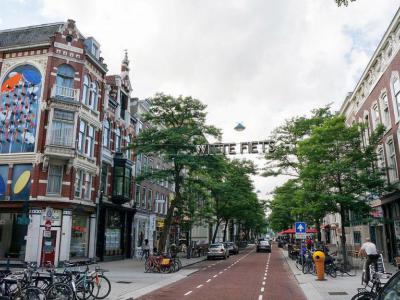
Witte de Withstraat Street, spanning approximately 320 meters, was named after Witte Cornelisz de With, a 17th-century Dutch naval officer. During the 1990s, its transformation into an "Art Axis" - a designated cultural and artistic district linking the Park Museum and the Maritime Museum - helped reshape its identity as one of the city’s cultural and nightlife centres.
Here, you'll find Rotterdam Bazar, a lively restaurant offering international dishes; Vivu, which serves delicious Vietnamese cuisine; and Oliva, known for its Italian fare. For a casual bite, Bagel Bakery is the perfect stop for a bagel and a quick coffee. The highly regarded burger spot Ter Marsch & Co serves some of the Netherlands’ best hamburgers. For a different vibe, the Nieuw Rotterdams Café, housed in a grand former newspaper building, offers a stylish setting for cocktails or dinner.
The shopping scene is as diverse as the food offerings. You'll discover independent boutiques like Betsy Palmer, a well-known shoe shop, and RSI The Attraction, which specializes in adventure gear such as skateboards, snowboards, and kites.
Artists and gallery-goers will feel right at home here, too. Kunstinstituut Melly hosts international exhibitions and educational programs. Other galleries in the area include Ecce Gallery and van Eijk Gallery, which features modern art, ceramics, and sculpture. Around the side streets, you’ll also encounter murals and street-art installations.
In earlier decades, the street had a rougher reputation, once home to less savory cafés and illegal gambling houses in the 1970s. However, its revival has helped shape Witte de Withstraat Street into a hub for art, design, and nightlife energy.
Here, you'll find Rotterdam Bazar, a lively restaurant offering international dishes; Vivu, which serves delicious Vietnamese cuisine; and Oliva, known for its Italian fare. For a casual bite, Bagel Bakery is the perfect stop for a bagel and a quick coffee. The highly regarded burger spot Ter Marsch & Co serves some of the Netherlands’ best hamburgers. For a different vibe, the Nieuw Rotterdams Café, housed in a grand former newspaper building, offers a stylish setting for cocktails or dinner.
The shopping scene is as diverse as the food offerings. You'll discover independent boutiques like Betsy Palmer, a well-known shoe shop, and RSI The Attraction, which specializes in adventure gear such as skateboards, snowboards, and kites.
Artists and gallery-goers will feel right at home here, too. Kunstinstituut Melly hosts international exhibitions and educational programs. Other galleries in the area include Ecce Gallery and van Eijk Gallery, which features modern art, ceramics, and sculpture. Around the side streets, you’ll also encounter murals and street-art installations.
In earlier decades, the street had a rougher reputation, once home to less savory cafés and illegal gambling houses in the 1970s. However, its revival has helped shape Witte de Withstraat Street into a hub for art, design, and nightlife energy.
6) Rotterdam Centraal Station
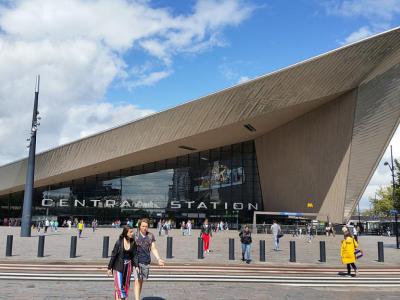
Rotterdam Centraal Station stands as the primary railway hub within Rotterdam, situated in the South Holland region. The contemporary station complex, situated at Station Square, gained official inauguration in March 2014.
Before World War II, Rotterdam had four separate railway stations spread across the city center. One of them, Delftse Poort, was badly damaged in the Rotterdam Blitz bombings. The new Centraal station was then built slightly west of the original location, designed by architect Sybold van Ravesteyn. It was completed on 13 March 1957 and officially opened on 21 May. This station operated until 2007 and was demolished the following year, making it the first major post-war Dutch railway station to be replaced. The new station was constructed and opened in 2014.
The station's full completion was on March 13, 2014, celebrated with a reopening attended by King Willem-Alexander. It was renamed Rotterdam Centraal Station as requested by the city's residents, echoing the original typography from Architect Van Ravensteyn's design. This name change holds significance, as the station's location on the international high-speed railway connecting to Belgium positions it for global recognition.
As one of the Netherlands' main railway hubs, it connects to cities all across the country, including Amsterdam, The Hague, Utrecht, and more. It's also a key international junction, with frequent connections to Antwerp, Brussels, Paris, and even Disneyland Paris.
Before World War II, Rotterdam had four separate railway stations spread across the city center. One of them, Delftse Poort, was badly damaged in the Rotterdam Blitz bombings. The new Centraal station was then built slightly west of the original location, designed by architect Sybold van Ravesteyn. It was completed on 13 March 1957 and officially opened on 21 May. This station operated until 2007 and was demolished the following year, making it the first major post-war Dutch railway station to be replaced. The new station was constructed and opened in 2014.
The station's full completion was on March 13, 2014, celebrated with a reopening attended by King Willem-Alexander. It was renamed Rotterdam Centraal Station as requested by the city's residents, echoing the original typography from Architect Van Ravensteyn's design. This name change holds significance, as the station's location on the international high-speed railway connecting to Belgium positions it for global recognition.
As one of the Netherlands' main railway hubs, it connects to cities all across the country, including Amsterdam, The Hague, Utrecht, and more. It's also a key international junction, with frequent connections to Antwerp, Brussels, Paris, and even Disneyland Paris.
7) City Hall
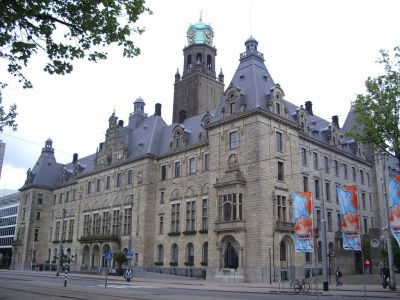
Constructed from 1914 to 1920 under the guidance of architect Henri Evers, Rotterdam City Hall stands as a resilient relic amid the heart of Rotterdam, having withstood the destructive assault of the May 14, 1940 bombing. A testament to its historical significance, it was officially designated a National Monument on October 10, 2000.
The initial city hall of Rotterdam was located on Hoogstraat, nestled within a timeworn 14th-century urban boarding house. However, as the 19th century drew to a close, the building could no longer adequately serve the needs of municipal endeavors. Thus, a decision was reached in 1905 to erect a new structure, dedicated to housing the council chamber, along Coolsingel. To make way for this ambitious construction project, the entire Zandstraat neighborhood, home to approximately 2,400 residents, was razed.
Henri Evers created initial plans in 1911. The final design was presented to the city council and approved in 1913. Construction began in 1914, with the foundation stone laid on July 15, 1915, in the presence of Queen Wilhelmina. The official inauguration took place after completion, during a city council assembly on September 1, 1920. Despite surviving a 1940 bombing, the building's concrete structure suffered damage from the generated heat.
Embracing a rich amalgamation of styles including Beaux-Arts, Byzantine, Romanesque, and Art Deco, the edifice sprawls across a 86 by 106 meter expanse (9,116 square meters). Its composition primarily features concrete cloaked in porous sandstone and durable stone. Dominating the principal facade on Coolsingel, the clock tower ascends from the building's central hall, reaching a height of 71 meters. At its pinnacle rests a gilded statue portraying an angel, an artistic creation by sculptor Johan Keller.
The initial city hall of Rotterdam was located on Hoogstraat, nestled within a timeworn 14th-century urban boarding house. However, as the 19th century drew to a close, the building could no longer adequately serve the needs of municipal endeavors. Thus, a decision was reached in 1905 to erect a new structure, dedicated to housing the council chamber, along Coolsingel. To make way for this ambitious construction project, the entire Zandstraat neighborhood, home to approximately 2,400 residents, was razed.
Henri Evers created initial plans in 1911. The final design was presented to the city council and approved in 1913. Construction began in 1914, with the foundation stone laid on July 15, 1915, in the presence of Queen Wilhelmina. The official inauguration took place after completion, during a city council assembly on September 1, 1920. Despite surviving a 1940 bombing, the building's concrete structure suffered damage from the generated heat.
Embracing a rich amalgamation of styles including Beaux-Arts, Byzantine, Romanesque, and Art Deco, the edifice sprawls across a 86 by 106 meter expanse (9,116 square meters). Its composition primarily features concrete cloaked in porous sandstone and durable stone. Dominating the principal facade on Coolsingel, the clock tower ascends from the building's central hall, reaching a height of 71 meters. At its pinnacle rests a gilded statue portraying an angel, an artistic creation by sculptor Johan Keller.
8) St. Laurenskerk (St. Lawrence Church)
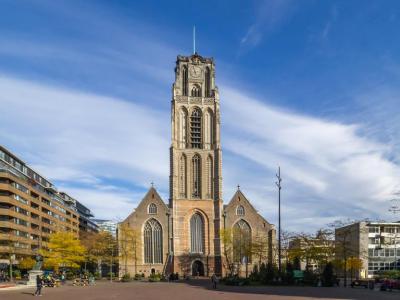
Saint Lawrence Church is Rotterdam’s only remaining medieval building. Construction began in 1449 and was completed in 1525. It was also the city’s first all-stone structure. The tower, originally added in 1621, has been rebuilt several times over the centuries.
When the Reformation reached Rotterdam in 1572, the church was converted from Catholic to Protestant worship. During the Second World War, the building suffered severe damage in the Rotterdam Blitz-only the tower and outer walls remained standing. For years, citizens debated whether to restore or demolish it, but restoration began in 1952 and was completed in 1968. The present church blends preserved medieval masonry with postwar reconstruction.
Among its notable features is the copper choir fence dating from 1713. Inside, visitors can see memorials to Dutch naval heroes such as admirals Kortenaar, Witte de With, and officer Van Brakel. The bronze doors, designed by Italian sculptor Giacomo Manzù, depict themes of war and peace and mark one of the church’s most admired details. In front of the church stands a statue of Desiderius Erasmus, the famous Rotterdam-born humanist and theologian, who remains one of the city’s most celebrated historical figures. The statue, installed in 1622, miraculously survived the World War II bombing that destroyed the surrounding area.
Religious services resumed in 1971 with the founding of the Laurenspastoraat community. Today, Saint Lawrence Church continues to serve as a place of worship for both the Laurenspastoraat and the Open Grenzen congregations. The church also houses a permanent exhibition dedicated to Rotterdam’s history. Spread across 20 side chapels, the displays combine artifacts, photographs, and audiovisual installations that trace the city’s medieval beginnings, the devastation of World War II, and its subsequent rebirth.
When the Reformation reached Rotterdam in 1572, the church was converted from Catholic to Protestant worship. During the Second World War, the building suffered severe damage in the Rotterdam Blitz-only the tower and outer walls remained standing. For years, citizens debated whether to restore or demolish it, but restoration began in 1952 and was completed in 1968. The present church blends preserved medieval masonry with postwar reconstruction.
Among its notable features is the copper choir fence dating from 1713. Inside, visitors can see memorials to Dutch naval heroes such as admirals Kortenaar, Witte de With, and officer Van Brakel. The bronze doors, designed by Italian sculptor Giacomo Manzù, depict themes of war and peace and mark one of the church’s most admired details. In front of the church stands a statue of Desiderius Erasmus, the famous Rotterdam-born humanist and theologian, who remains one of the city’s most celebrated historical figures. The statue, installed in 1622, miraculously survived the World War II bombing that destroyed the surrounding area.
Religious services resumed in 1971 with the founding of the Laurenspastoraat community. Today, Saint Lawrence Church continues to serve as a place of worship for both the Laurenspastoraat and the Open Grenzen congregations. The church also houses a permanent exhibition dedicated to Rotterdam’s history. Spread across 20 side chapels, the displays combine artifacts, photographs, and audiovisual installations that trace the city’s medieval beginnings, the devastation of World War II, and its subsequent rebirth.
9) Markthal (Market Hall) (must see)
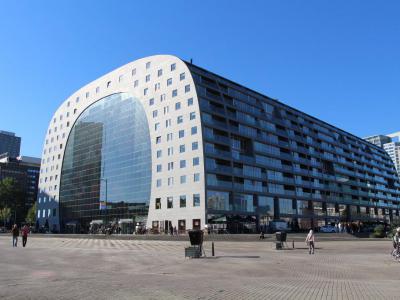
The Market Hall is a multi-use complex that combines apartments, offices, retail spaces, and one of Rotterdam’s most popular markets, all under a single monumental arch. Opened in 2014, the building is celebrated for its dramatic horseshoe-shaped arch and its massive glass facades composed of smaller window panels. A 34-metre high steel cable structure supports these glass walls, making it Europe’s largest cable-supported glass façade. Beneath it lies an extensive underground parking garage that adds to its functional design.
Inside, visitors are greeted by a space of vivid artwork covering the interior arch. Created by Dutch artists Arno Coenen and Iris Roskam, Horn of Plenty depicts giant fruits, vegetables, fish, flowers, and insects in dazzling colour. The digital artwork was so enormous that the artists had to borrow computing power from Pixar Studios. This spectacular mural has earned the Market Hall nicknames such as “The Largest Artwork in the World” and “The Sistine Chapel of Rotterdam”.
During the building’s construction, archaeologists unearthed the remains of a 10th-century farmstead, including a house with two stoves and several fireplaces. A small exhibition beside the central staircases displays these finds, offering visitors a glimpse of Rotterdam’s early settlement history.
Today, the Market Hall stands as the largest indoor market in the Netherlands. It hosts more than 100 produce stalls, 15 food shops, and eight restaurants. Shoppers can browse local cheeses, fresh fish, fruit and vegetables, poultry, flowers, and plants. For those eager to sample their purchases, plenty of indoor seating areas are available-making the Market Hall both a culinary destination and a modern architectural icon.
Inside, visitors are greeted by a space of vivid artwork covering the interior arch. Created by Dutch artists Arno Coenen and Iris Roskam, Horn of Plenty depicts giant fruits, vegetables, fish, flowers, and insects in dazzling colour. The digital artwork was so enormous that the artists had to borrow computing power from Pixar Studios. This spectacular mural has earned the Market Hall nicknames such as “The Largest Artwork in the World” and “The Sistine Chapel of Rotterdam”.
During the building’s construction, archaeologists unearthed the remains of a 10th-century farmstead, including a house with two stoves and several fireplaces. A small exhibition beside the central staircases displays these finds, offering visitors a glimpse of Rotterdam’s early settlement history.
Today, the Market Hall stands as the largest indoor market in the Netherlands. It hosts more than 100 produce stalls, 15 food shops, and eight restaurants. Shoppers can browse local cheeses, fresh fish, fruit and vegetables, poultry, flowers, and plants. For those eager to sample their purchases, plenty of indoor seating areas are available-making the Market Hall both a culinary destination and a modern architectural icon.
10) Kubuswoningen (Cube Houses)
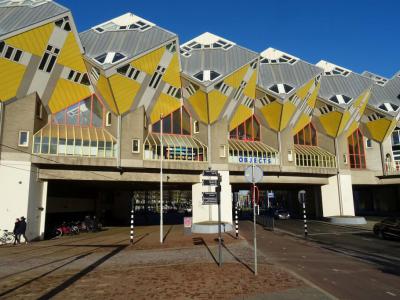
Few buildings capture Rotterdam’s spirit of creativity quite like the Cube Houses, the city’s most playful architectural experiment. Designed by Dutch architect Piet Blom, these yellow cubes seem to balance on their tips, tilted 45 degrees as if defying gravity. Blom’s goal was to create an “urban forest”, where each cube represents a tree and together they form a sculptural canopy above the streets below.
Built in the 1980s as part of a larger urban renewal project, the Cube Houses were conceived in collaboration with city planners who wanted to bring life and imagination back to Rotterdam. Each Cube House rises three stories high. The lower level contains a kitchen and living room, the middle floor holds two bedrooms and a bathroom, and the top level often serves as a small garden, workspace, or viewing area.
The complex also functions as a pedestrian bridge across a busy intersection, maintaining a car-free environment. Around the cubes, visitors will find a lively community of cafés, restaurants, small offices, studios, and even a playground.
Those curious about what life is like inside one of these tilted wonders can visit the Show Cube Museum, which offers a peek into their design and history. And for the truly adventurous, a few of the cubes have been converted into overnight accommodations-perfect for anyone eager to experience Rotterdam from a slightly different angle.
Built in the 1980s as part of a larger urban renewal project, the Cube Houses were conceived in collaboration with city planners who wanted to bring life and imagination back to Rotterdam. Each Cube House rises three stories high. The lower level contains a kitchen and living room, the middle floor holds two bedrooms and a bathroom, and the top level often serves as a small garden, workspace, or viewing area.
The complex also functions as a pedestrian bridge across a busy intersection, maintaining a car-free environment. Around the cubes, visitors will find a lively community of cafés, restaurants, small offices, studios, and even a playground.
Those curious about what life is like inside one of these tilted wonders can visit the Show Cube Museum, which offers a peek into their design and history. And for the truly adventurous, a few of the cubes have been converted into overnight accommodations-perfect for anyone eager to experience Rotterdam from a slightly different angle.
11) Oude Haven (Old Harbor)
The Old Harbor is one of Rotterdam's oldest port areas, with its origins dating back to the early 14th century. The first jetty was constructed around 1350, marking the beginning of the city’s development as a major maritime hub. Over the centuries, the harbor played a vital role in Rotterdam’s growth, facilitating trade and commerce. However, the devastation of World War II heavily damaged much of the area, leaving only a few historical structures standing.
The Old Harbor is one of Rotterdam's oldest areas, now the city's entertainment hub. With its cafés and restaurants lining the water, the area offers a perfect mix of historic charm and modern appeal. Many of the establishments feature outdoor terraces, allowing visitors to relax and watch the boats. As night falls, Old Harbor comes alive with a nightlife scene popular for the ones looking to enjoy a drink or dance along the water.
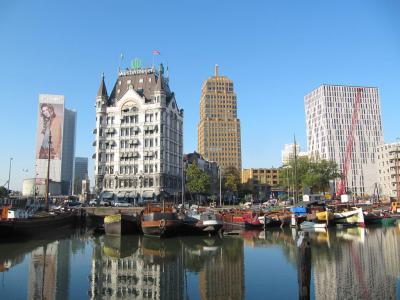
The harbor’s rich history is still visible today through the traditional sailing boats moored along the docks. One of the most prominent landmarks in Old Harbor is the White House-standing at 43 meters tall, it was once Europe’s tallest skyscraper when it was completed in 1898. The White House, one of the few buildings to survive the bombings of World War II, can be admired for its distinctive Art Nouveau architecture.
The Old Harbor is one of Rotterdam's oldest areas, now the city's entertainment hub. With its cafés and restaurants lining the water, the area offers a perfect mix of historic charm and modern appeal. Many of the establishments feature outdoor terraces, allowing visitors to relax and watch the boats. As night falls, Old Harbor comes alive with a nightlife scene popular for the ones looking to enjoy a drink or dance along the water.
The harbor’s rich history is still visible today through the traditional sailing boats moored along the docks. One of the most prominent landmarks in Old Harbor is the White House-standing at 43 meters tall, it was once Europe’s tallest skyscraper when it was completed in 1898. The White House, one of the few buildings to survive the bombings of World War II, can be admired for its distinctive Art Nouveau architecture.
12) Maritime Museum of Rotterdam (must see)
The Maritime Museum Rotterdam focuses on the city’s maritime and shipping history, offering visitors both modern exhibits and access to an extensive collection of artifacts. Founded in 1874 by Prince Henry of the Netherlands, it consists of two linked components: the indoor museum and the adjacent Museum Harbour.
Inside the museum, exhibitions designed for all ages include stories of ships, offshore platforms and maritime innovation. Among the standout pieces are the Mataró ship model, over six centuries old and Europe’s oldest ship model; The Itinerario by the Dutch explorer Jan Huygen van Linschoten, one of the world’s most important travel journals; pen‑and‑ink drawings by Willem van de Velde the Younger, a renowned Dutch maritime artist; and a set of sea charts by Joan Blaeu, a leading 17th‑century cartographer. The museum’s collection spans over one million objects, covering six centuries of Dutch maritime history.
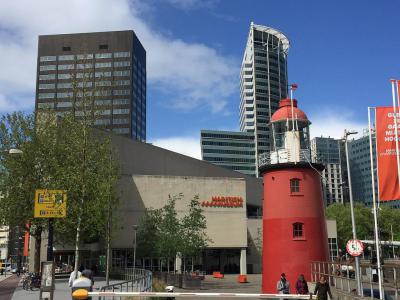
The Museum Harbour offers an outdoor experience in the oldest and largest museum harbour in the Netherlands, located where the port of Rotterdam first took shape. Visitors can explore historic vessels such as steam tugs, a grain elevator, and the red cast‑iron lighthouse known as the Low Light of the Hook of Holland, which once guided ships up the New Waterway. In addition to its permanent collection, the museum hosts rotating exhibitions, educational programs, and special events aimed at exploring Rotterdam's pivotal role in global shipping and trade.
Tip: Some of the ships in the outer harbour section can be boarded and explored free of charge. A café and museum shop are available on site, and the museum’s library houses the Netherlands’ most comprehensive maritime‑related book collection, open by appointment for rare materials.
Inside the museum, exhibitions designed for all ages include stories of ships, offshore platforms and maritime innovation. Among the standout pieces are the Mataró ship model, over six centuries old and Europe’s oldest ship model; The Itinerario by the Dutch explorer Jan Huygen van Linschoten, one of the world’s most important travel journals; pen‑and‑ink drawings by Willem van de Velde the Younger, a renowned Dutch maritime artist; and a set of sea charts by Joan Blaeu, a leading 17th‑century cartographer. The museum’s collection spans over one million objects, covering six centuries of Dutch maritime history.
The Museum Harbour offers an outdoor experience in the oldest and largest museum harbour in the Netherlands, located where the port of Rotterdam first took shape. Visitors can explore historic vessels such as steam tugs, a grain elevator, and the red cast‑iron lighthouse known as the Low Light of the Hook of Holland, which once guided ships up the New Waterway. In addition to its permanent collection, the museum hosts rotating exhibitions, educational programs, and special events aimed at exploring Rotterdam's pivotal role in global shipping and trade.
Tip: Some of the ships in the outer harbour section can be boarded and explored free of charge. A café and museum shop are available on site, and the museum’s library houses the Netherlands’ most comprehensive maritime‑related book collection, open by appointment for rare materials.
