Custom Walk in Coimbra, Portugal by michelle_barnea1_ac8595 created on 2026-06-03
Guide Location: Portugal » Coimbra
Guide Type: Custom Walk
# of Sights: 5
Tour Duration: 1 Hour(s)
Travel Distance: 1.4 Km or 0.9 Miles
Share Key: YBDNY
Guide Type: Custom Walk
# of Sights: 5
Tour Duration: 1 Hour(s)
Travel Distance: 1.4 Km or 0.9 Miles
Share Key: YBDNY
How It Works
Please retrieve this walk in the GPSmyCity app. Once done, the app will guide you from one tour stop to the next as if you had a personal tour guide. If you created the walk on this website or come to the page via a link, please follow the instructions below to retrieve the walk in the app.
Retrieve This Walk in App
Step 1. Download the app "GPSmyCity: Walks in 1K+ Cities" on Apple App Store or Google Play Store.



Step 2. In the GPSmyCity app, download(or launch) the guide "Coimbra Map and Walking Tours".
Step 3. Tap the menu button located at upper right corner of the "Walks" screen and select "Retrieve custom walk". Enter the share key: YBDNY
1) Santa Cruz Park
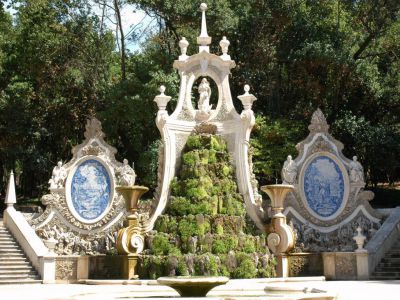
Santa Cruz Park, also known as Jardim da Sereia (Garden of the Mermaid), is an 18th-century Baroque garden nestled in the heart of Coimbra. Originally part of the Santa Cruz Monastery, this green sanctuary sits at the top of Avenida Sa da Bandeira, offering a tranquil escape from the city's bustle.
The park welcomes visitors through a grand triumphal arch, crowned by three statues symbolizing Faith, Hope, and Charity. A majestic staircase, lined with traditional azulejo-covered benches, leads to an ornate fountain, where a statue of Triton, the Greek sea god, opens his mouth toward a dolphin. Despite its name, the park’s most famous figure is not a mermaid but a Triton, adding a mythical touch to the scenery.
Beyond its elegant sculptures, Santa Cruz Park boasts lush greenery, including exotic trees, flower beds, and a cascading waterfall, creating a serene atmosphere for visitors. The park features picnic tables, making it a popular spot for both locals and university students looking for a quiet retreat.
Throughout the year, the park serves as a stage for academic gatherings, cultural events, and community activities, further solidifying its role in Coimbra’s social and historical fabric. Whether you're here for a peaceful stroll, a picnic, or to admire the Baroque artistry, Santa Cruz Park offers a perfect blend of history, nature, and relaxation in one of Portugal’s most charming cities.
The park welcomes visitors through a grand triumphal arch, crowned by three statues symbolizing Faith, Hope, and Charity. A majestic staircase, lined with traditional azulejo-covered benches, leads to an ornate fountain, where a statue of Triton, the Greek sea god, opens his mouth toward a dolphin. Despite its name, the park’s most famous figure is not a mermaid but a Triton, adding a mythical touch to the scenery.
Beyond its elegant sculptures, Santa Cruz Park boasts lush greenery, including exotic trees, flower beds, and a cascading waterfall, creating a serene atmosphere for visitors. The park features picnic tables, making it a popular spot for both locals and university students looking for a quiet retreat.
Throughout the year, the park serves as a stage for academic gatherings, cultural events, and community activities, further solidifying its role in Coimbra’s social and historical fabric. Whether you're here for a peaceful stroll, a picnic, or to admire the Baroque artistry, Santa Cruz Park offers a perfect blend of history, nature, and relaxation in one of Portugal’s most charming cities.
2) University of Coimbra Courtyard (must see)
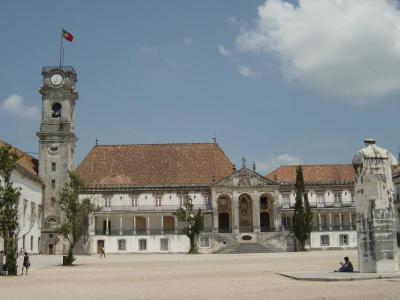
Coimbra University was founded in 1290 by King Dinis. The university moved fitfully between Lisbon and Coimbra until 1537. Then, in the reign of John III, it moved permanently to Coimbra. It was housed in the Alcacova Palace. The palace was subsequently purchased from the Royal Family in 1597.
The library was a gift of King John V. King John could afford it. Gold from Brazil made him the richest king in the world. The library holds 200,000 or more books. In the library are tiny bats that feed on bookworms at night. Bat guano is swept up in the morning by library staff.
The University's crenelated clock tower is 112 feet high. It was formerly used for astronomical observations. It is roofless. Visitors are permitted at the top to get a great view of the city. The clock tower has two bells. One, called "the Goat", rings at 6 pm. The second, called "the Bitch" rings at 7:30 am, waking students for class.
Access to the University courtyard is through the Porta Ferrea ("Iron Gate"), the old gate to the palace. Before entering, one will encounter a stone pavement portrait of the goddess Minerva. She is the goddess of wisdom, medicine, commerce, artisanship, poetry and art. She looks serene, guarding piles of books. She doesn't need bats.
The courtyard, known as Courtyard of Schools, is a vast open area surrounded by buildings of the old campus. There is a statue of King John III. His back is turned to the city. He faces the university. The statues in the courtyard include King Dinis I and Denosthenes offering some words, silently.
Not all parts of the University are open to the public. No more than 60 people are allowed to visit at a time.
Why You Should Visit:
The square offers great views of the city below and access to the original historic buildings, such as the Joanina Library, the Royal Palace, the Chapel and the great Bell Tower.
Tips:
Some fees may be charged to visit the buildings. Make tour reservations early. If you climb the tower wear strong shoes.
The library was a gift of King John V. King John could afford it. Gold from Brazil made him the richest king in the world. The library holds 200,000 or more books. In the library are tiny bats that feed on bookworms at night. Bat guano is swept up in the morning by library staff.
The University's crenelated clock tower is 112 feet high. It was formerly used for astronomical observations. It is roofless. Visitors are permitted at the top to get a great view of the city. The clock tower has two bells. One, called "the Goat", rings at 6 pm. The second, called "the Bitch" rings at 7:30 am, waking students for class.
Access to the University courtyard is through the Porta Ferrea ("Iron Gate"), the old gate to the palace. Before entering, one will encounter a stone pavement portrait of the goddess Minerva. She is the goddess of wisdom, medicine, commerce, artisanship, poetry and art. She looks serene, guarding piles of books. She doesn't need bats.
The courtyard, known as Courtyard of Schools, is a vast open area surrounded by buildings of the old campus. There is a statue of King John III. His back is turned to the city. He faces the university. The statues in the courtyard include King Dinis I and Denosthenes offering some words, silently.
Not all parts of the University are open to the public. No more than 60 people are allowed to visit at a time.
Why You Should Visit:
The square offers great views of the city below and access to the original historic buildings, such as the Joanina Library, the Royal Palace, the Chapel and the great Bell Tower.
Tips:
Some fees may be charged to visit the buildings. Make tour reservations early. If you climb the tower wear strong shoes.
3) Rua de Quebra Costas (Backbreak Street)
Is it popular for the challenge of a climb? The only thing that is certain is that Breakback Street is indeed one of the most popular streets in Coimbra. It can be found in the historical center of the city. Take the Ferreira Borges Street to the Almedina Arch. Pass through the Arch to Quebra Costas Street.
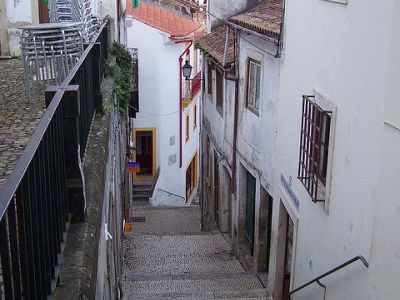
It is a narrow whitewashed street that winds steeply upward. There are stairs, and more stairs. The street seems to narrow more and more as one ascends. At the top of the hill is the Old Cathedral of Coimbra and the University. Climbing to the top one may develop a thirst. Hooray, there are bars, gift shops and great views.
What goes up must come down. Descending, the wise walker will mind his/her footing. Altogether, the Backbreaker Street is a popular socializing spot for visitors and locals alike. All along the way there are options for coffee, Portuguese egg custard tart and tapas.
It is a narrow whitewashed street that winds steeply upward. There are stairs, and more stairs. The street seems to narrow more and more as one ascends. At the top of the hill is the Old Cathedral of Coimbra and the University. Climbing to the top one may develop a thirst. Hooray, there are bars, gift shops and great views.
What goes up must come down. Descending, the wise walker will mind his/her footing. Altogether, the Backbreaker Street is a popular socializing spot for visitors and locals alike. All along the way there are options for coffee, Portuguese egg custard tart and tapas.
4) Praça do Comercio (Commerce Square)
What goes on in Commerce Square? That's a good question. The answer is, not so much in terms of commerce as there used to be. For centuries it was the Marketplace, the place where local people came to shop. These days it is a quiet place to take a break. Most of the shopping now takes place in the mall across the river.
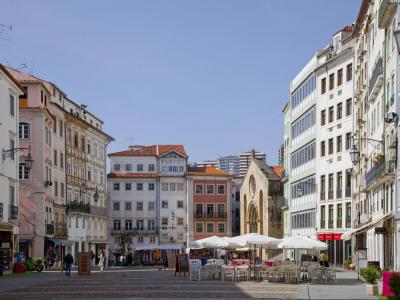
The square is reached by climbing steps from pedestrianized Ferreira Borges Street. At each end of the square are the old churches of Sao Tiago and Sao Bartolomeu. Sao Bartolomeu is in the baroque style of the 18th century but the church itself goes back to the 10th century.
Saint Bart's faces the square. Facing Saint Bart's is a faithful reproduction of the "Pelourinho", the Pillory, from the 15th century. The pillory is two stone pillars. A common sight in Portuguese towns of yore, the pillars were signs of municipal power and used at times to chain criminals. An edifying sight as one leaves church of a Sunday.
Commerce Square, no longer a busy hive of commerce, is now called Praca Velha ("Old Square"). In the 16th century it was the location of the Royal Hospital. In 1790 most of the the hospital was moved to the Jesuit college by the new Cathedral. Not much is left in the Square.
The square today is a quiet place to relax at a table under one of the many umbrellas between the two churches. Rest, eat, drink and think about shopping.
The square is reached by climbing steps from pedestrianized Ferreira Borges Street. At each end of the square are the old churches of Sao Tiago and Sao Bartolomeu. Sao Bartolomeu is in the baroque style of the 18th century but the church itself goes back to the 10th century.
Saint Bart's faces the square. Facing Saint Bart's is a faithful reproduction of the "Pelourinho", the Pillory, from the 15th century. The pillory is two stone pillars. A common sight in Portuguese towns of yore, the pillars were signs of municipal power and used at times to chain criminals. An edifying sight as one leaves church of a Sunday.
Commerce Square, no longer a busy hive of commerce, is now called Praca Velha ("Old Square"). In the 16th century it was the location of the Royal Hospital. In 1790 most of the the hospital was moved to the Jesuit college by the new Cathedral. Not much is left in the Square.
The square today is a quiet place to relax at a table under one of the many umbrellas between the two churches. Rest, eat, drink and think about shopping.
5) Á Capella
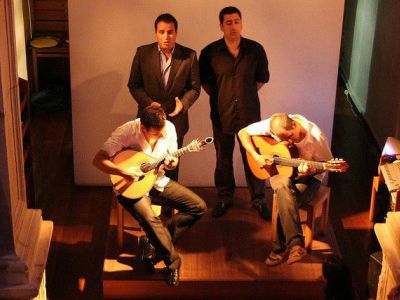
Tucked away in Coimbra’s old Jewish quarter, Á Capella is a unique cultural gem where history and music merge. This 14th-century chapel, once home to a medieval synagogue, has been transformed into an intimate cocktail lounge and one of the city’s premier fado houses. Every night, visitors are treated to a serenade of Coimbra Fado, a distinct variation of Portugal’s iconic genre, performed exclusively by male university students clad in traditional black capes.
What makes Á Capella truly special is its acoustics-the former chapel’s vaulted ceilings and candlelit ambiance create the perfect setting for the melancholic tones of the Portuguese guitar and heartfelt vocals. Unlike Lisbon’s fado, Coimbra’s style is often instrumental or deeply poetic, with themes of longing, love, and academic life.
Beyond the music, Á Capella offers a relaxed atmosphere with a bar, tapas service, and a pleasant terrace-a welcome retreat from the city's more tourist-heavy venues. Guests can enjoy fine drinks, soak in the historic charm, and experience fado in its purest form. For those eager to explore Coimbra’s fado heritage further, the nearby Torre de Anto museum showcases the history of the genre, displaying instruments and memorabilia from renowned musicians.
Whether you're a fado enthusiast or simply seeking a memorable night in Coimbra, Á Capella delivers an authentic and enchanting experience in a setting unlike any other.
What makes Á Capella truly special is its acoustics-the former chapel’s vaulted ceilings and candlelit ambiance create the perfect setting for the melancholic tones of the Portuguese guitar and heartfelt vocals. Unlike Lisbon’s fado, Coimbra’s style is often instrumental or deeply poetic, with themes of longing, love, and academic life.
Beyond the music, Á Capella offers a relaxed atmosphere with a bar, tapas service, and a pleasant terrace-a welcome retreat from the city's more tourist-heavy venues. Guests can enjoy fine drinks, soak in the historic charm, and experience fado in its purest form. For those eager to explore Coimbra’s fado heritage further, the nearby Torre de Anto museum showcases the history of the genre, displaying instruments and memorabilia from renowned musicians.
Whether you're a fado enthusiast or simply seeking a memorable night in Coimbra, Á Capella delivers an authentic and enchanting experience in a setting unlike any other.
